A Payroll Management System helps modern businesses handle payroll with accuracy, consistency, and confidence. As teams grow, payroll management becomes more complex, with salaries, deductions, compliance, and reporting all demanding close attention. Relying on manual methods or disconnected tools often leads to errors that affect employees and the business. A structured management system brings payroll data, calculations, and approvals into one reliable workflow.
Businesses gain better control over payroll operations while reducing administrative effort. With the right payroll management system, companies ensure employees receive correct and timely pay, maintain compliance, and support smoother financial management. This guide explains how payroll systems work, why payroll management matters, and how businesses choose solutions that match their size, goals, and operational needs.
What Is A Payroll Management System
A Payroll Management System is software that helps businesses manage payroll processes in a structured and reliable way. Payroll management software handles salary calculations, deductions, tax rules, and payment schedules from a single interface. Unlike basic payroll software, a complete payroll system also supports approvals, records, and reporting that management teams rely on for accuracy and compliance.
Modern management software centralizes payroll data to reduce errors and manual effort. Businesses use payroll systems to ensure employees receive correct pay on time while keeping financial records organized. With payroll software in place, companies gain better visibility into payroll operations, improve consistency across pay cycles, and support smoother coordination between finance, HR, and management teams.
How A Payroll Management System Works
A payroll management system follows a structured payroll management process that ensures employees receive accurate and timely pay. Each stage connects data, approvals, and calculations into a reliable flow that replaces manual payroll management.
Employee Data Collection And Setup
The payroll management process starts with employee data collection. The system stores employee details such as salary structure, work hours, tax information, and benefits. An accurate setup ensures payroll processing runs smoothly later. Changes like promotions, deductions, or role updates reflect instantly within the payroll system. Centralized data reduces dependency on spreadsheets and emails. With clean employee records in place, businesses avoid errors that often appear during payroll runs.

Time, Attendance, And Pay Inputs
Payroll processing depends on correct input data. The system collects work hours, overtime, leave records, and other pay-related inputs. Automated payroll tools pull this data directly from connected time or attendance sources. Manual payroll management often struggles at this stage due to missing or incorrect entries. A structured system validates inputs before calculations begin, which improves accuracy and consistency across pay cycles.
Payroll Calculation And Validation
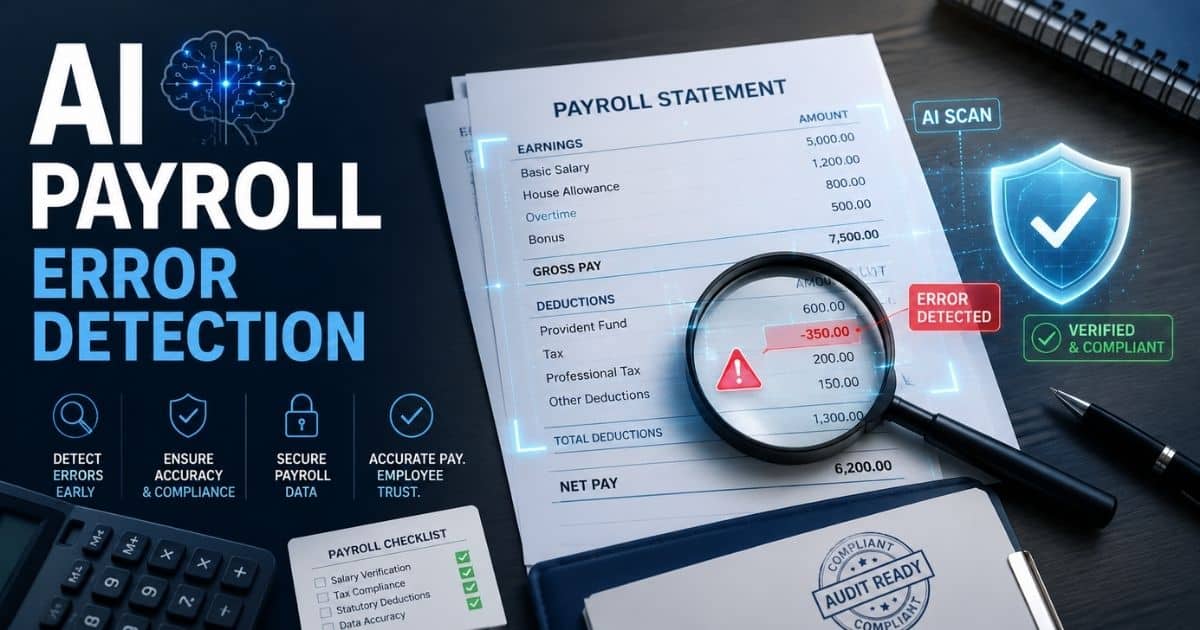
Once inputs are ready, the system performs payroll calculations. Automated payroll applies salary rules, deductions, taxes, and benefits based on predefined settings. Validation checks flag inconsistencies or missing data before finalization. Payroll teams review summaries to confirm accuracy. Automation reduces calculation errors that commonly occur during manual payroll management. Consistent rules ensure fairness and compliance across the workforce.
Running Payroll And Approvals
After validation, finance teams run payroll within the system. Approval workflows ensure authorized review before payments process. Managers and payroll administrators confirm totals, deductions, and compliance requirements. Automated payroll systems speed up approvals and reduce last-minute corrections. Running payroll through a structured workflow improves accountability and prevents unauthorized changes. Clear approval stages protect both the business and employees.
Payments, Records, And Reporting
Once payroll runs successfully, the system processes payments and updates records. Employees receive salaries through approved payment methods on schedule. Payroll reports generate automatically for accounting, audits, and compliance needs. Historical data remains accessible for reviews and planning. Compared to manual payroll management, automated systems deliver faster processing, cleaner records, and better visibility. End-to-end automation completes the payroll cycle with confidence and control.
Key Features Of A Payroll Management System
A strong payroll management system supports accuracy, transparency, and control across payroll operations. The right features help businesses manage employee data, streamline processes, and deliver a better experience for both payroll teams and employees.
Centralized Employee Data Management
Employee data forms the foundation of every payroll system. A payroll management system stores personal details, salary structures, tax information, and employment status in one secure location. Centralized employee data reduces duplication and prevents inconsistencies across departments. Updates such as promotions, role changes, or compensation adjustments are reflected immediately in payroll calculations. Accurate employee records ensure payroll runs remain reliable and compliant. Central management also simplifies audits and reporting by keeping all payroll-related information organized and accessible.
Detailed Employee Profiles
Employee profiles provide a complete view of each individual within the payroll system. Profiles include pay history, deductions, benefits, and leave balances alongside core employee data. Payroll teams rely on these profiles to review changes and verify calculations before payroll runs. Clear profiles reduce confusion during payroll processing and support faster issue resolution. Managers also gain visibility into the compensation structure without accessing sensitive system-wide data. Well-maintained employee profiles strengthen accuracy and accountability across payroll cycles.
Employee Self-Service Access
Employee self-service improves transparency and reduces administrative workload. Through self-service tools, employees access their own payroll information without contacting HR or finance teams. Staff update personal details, view pay statements, and track payment history directly within the system. Controlled access ensures data security while improving convenience. Employee self-service reduces routine queries and allows payroll teams to focus on higher-value tasks. Empowering employees with direct access builds trust and improves overall payroll experience.
Clear And Accessible Pay Statements
Pay statements provide employees with a detailed breakdown of earnings, deductions, and net pay. A payroll management system generates digital pay statements automatically after each payroll run. Clear formatting helps employees understand how pay amounts are calculated and reduces disputes. Historical pay statements remain accessible for future reference, loan applications, or tax filing. Consistent pay statement delivery supports transparency and compliance while improving employee confidence in payroll accuracy.
Self Service Tools For Payroll Efficiency
Self-service tools extend beyond employee access and support broader payroll efficiency. Managers approve changes, review summaries, and track payroll status through role-based tools. Payroll administrators manage adjustments and approvals without switching platforms. These tools reduce dependency on emails and manual follow-ups. Streamlined access shortens payroll cycles and improves coordination across teams. Effective self-service tools support faster decisions while maintaining control and audit readiness.
Strong Reporting Capabilities
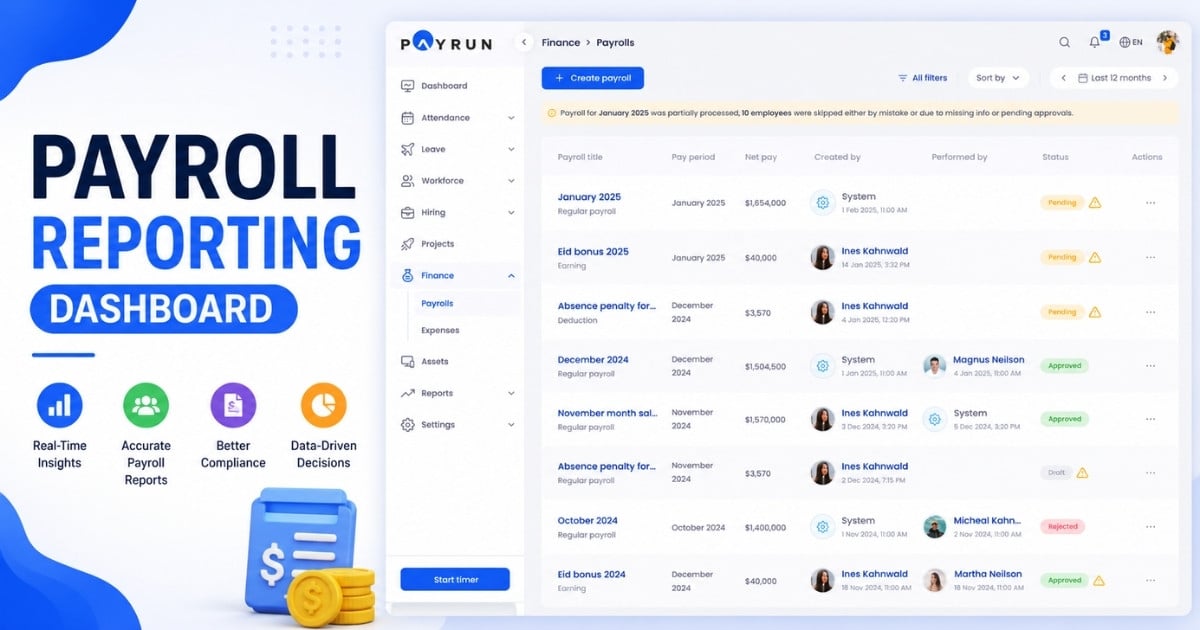
Reporting capabilities transform payroll data into actionable insights. A payroll management system generates reports on payroll costs, deductions, taxes, and employee compensation trends. Finance teams use reports for budgeting, forecasting, and compliance checks. Leadership relies on payroll reports to understand workforce costs and support planning decisions. Accurate reporting also simplifies audits and regulatory submissions. Strong reporting capabilities ensure payroll data supports both operational needs and strategic analysis.
Benefits Of Using A Payroll Management System
A payroll management system delivers measurable advantages for businesses that want reliable payroll operations and better control. Beyond salary processing, the system supports efficiency, accuracy, and a stronger employee experience.
Save Time Across Payroll Cycles
Payroll tasks consume significant time when handled manually or across disconnected tools. A payroll management system automates calculations, validations, and approvals within one workflow. Payroll teams save time by reducing repetitive steps and manual checks. Faster payroll cycles allow finance teams to focus on analysis rather than data entry. Automation also shortens approval timelines and minimizes last-minute corrections. Time savings grow as employee numbers increase, which makes automation essential for long-term efficiency.
Streamline Operations And Workflows
Streamlined operations create consistency across payroll activities. A payroll management system connects employee data, calculations, approvals, and payments in a single process. Clear workflows replace emails, spreadsheets, and informal approvals. Teams follow defined steps that reduce confusion and delays. Standardized operations also improve collaboration between HR, finance, and management. With structured workflows in place, payroll runs become predictable and easier to manage.
Improve Accuracy And Reduce Errors
Payroll accuracy affects employee trust and compliance. Automated systems improve accuracy by applying predefined rules for salaries, deductions, and taxes. Validation checks flag inconsistencies before payroll runs finalize. Compared to manual methods, automated calculations reduce human error significantly. Accurate payroll records support clean reporting and audit readiness. Improved accuracy protects the business from disputes, corrections, and regulatory issues.
Strengthen Employee Experience
Employee experience improves when payroll runs smoothly and transparently. A payroll management system ensures employees receive correct pay on time and access clear pay statements. Self-service access allows employees to view payroll details without delays. Reduced errors and faster resolutions build trust and confidence. Reliable payroll contributes directly to morale and engagement. A positive payroll experience reinforces professionalism and organizational credibility.
Support Better Decision Making
Payroll data offers valuable insight into workforce costs and trends. A payroll management system centralizes payroll information for reporting and analysis. Leadership uses payroll reports to evaluate compensation costs, plan budgets, and assess growth impact. Accurate data supports informed decision-making across hiring, expansion, and cost control. Reliable payroll insights help businesses align workforce strategy with financial goals.
How A Payroll Management System Supports SMBs
A payroll management system helps small businesses manage payroll efficiently using automated payroll software, improve accurate financial records, ensure compliance support, and simplify HR tasks while handling tax forms and employee wages.
Payroll Software Accuracy
Payroll management software reduces manual entry and ensures that payroll processes are accurate. Automated payroll software helps calculate employee wages, track gross wages, and generate pay stubs. Small businesses gain better control over payroll functions while improving efficiency and reducing costly payroll errors.
HR Payroll Integration
HR and payroll software combines payroll and HR into one payroll solution. It supports HR professionals in managing HR tasks, tracking employee wages, and improving employee’s net calculations. Integrated systems simplify operations and help small businesses maintain structured workforce management.
Compliance And Taxes
Compliance support ensures alignment with legal regulations and proper handling of tax forms. Payroll services assist in processing payroll, managing tax filings, and working with appropriate government agencies. Small businesses maintain accurate financial records without struggling with complex regulatory requirements.
Growth And Scalability
Payroll solution platforms support business growth by adapting to expected growth and workforce changes. They manage payroll efficiently for independent contractors and expanding teams. Scalable systems help small businesses maintain timely compensation and structured payroll operations as they grow.
Operations And Efficiency
Payroll functions improve efficiency by automating processing payroll and reducing manual entry workload. Attendance tools and HR tasks become easier to manage within one system. Payroll services ensure timely compensation, cost fit budgets, and smooth day-to-day payroll operations for small businesses.
Common Challenges In Payroll Management
Payroll management demands accuracy, consistency, and regulatory awareness. Many businesses struggle with recurring issues that affect payroll efficiency, compliance, and employee trust as operations scale.

Manual Data Entry And Tedious Tasks
Data entry remains one of the biggest payroll challenges. Manual input of employee information, hours worked, and payroll deductions increases the risk of errors. Tedious tasks such as updating spreadsheets and reconciling figures consume valuable time. Repetitive work also causes fatigue, which leads to mistakes that affect payroll accuracy. As employee numbers grow, manual payroll processes become harder to sustain. Businesses often spend more effort fixing payroll errors than preventing them. Reducing dependence on manual data entry becomes essential for reliable payroll management.
Time Sheets And Attendance Accuracy
Payroll accuracy depends heavily on correct time sheets and attendance data. Employees submit hours worked through various formats, which creates inconsistencies. Missing or incorrect attendance data leads to underpayment or overpayment. Time tracking issues also affect overtime calculations and compliance. Manual review of time sheets adds an administrative burden and delays payroll runs. Without reliable time tracking systems, payroll teams struggle to validate work hours. Accurate attendance data remains critical for fair pay and employee confidence.
Payroll Tax Complexity And Liability
Payroll taxes present a major challenge for businesses of all sizes. Tax rates, thresholds, and deductions vary by location and employee category. Payroll tax liability increases when calculations contain errors or filings miss deadlines. Businesses face penalties, interest charges, and audits due to incorrect tax handling. Managing payroll taxes manually increases risk and stress. Consistent calculation and monitoring of payroll tax liability require up-to-date systems and expertise. Tax complexity grows as businesses expand across regions.
Payroll Deductions And Regulatory Changes
Payroll deductions must follow current tax regulations and labor laws. Changes in tax regulations affect withholding rules, benefits, and exemptions. Payroll teams must update systems frequently to remain compliant. Manual tracking of regulatory updates increases the chance of missed changes. Incorrect deductions lead to employee disputes and legal exposure. Staying current with regulatory changes requires structured payroll processes and reliable data management. Compliance becomes harder without centralized control.
Tax Filings And Remittance Pressure
Filing taxes on time represents a recurring challenge in payroll management. Businesses must file payroll taxes accurately and remit taxes to authorities within strict deadlines. Delays or incorrect filings trigger penalties and compliance issues. Manual processes complicate filing taxes due to fragmented records and calculation errors. Payroll teams face pressure during peak filing periods. Clear records and structured workflows support accurate tax filings and timely remittance. Effective systems reduce stress and improve compliance confidence.
Top 5 Payroll Management Software
Modern SMBs rely on payroll management software to automate payroll, reduce manual work, and manage HR tasks in one system. Gusto, Payrun, BambooHR, Rippling, and Zoho People offer scalable solutions with compliance support.
1. Gusto
Built for small businesses, Gusto combines payroll, benefits, and core HR tools into one system, offering simple workflows and reliable automation for handling payroll, taxes, and employee management efficiently.
Payroll Management Features
- Automatic payroll tax calculations and filings
- Direct deposit and digital pay stubs
- Employee onboarding and profile management
- Benefits administration and compliance tools
- Time tracking and paid time off management
Price
Pricing starts with Simple at $49/month + $6 per person, Plus at $80/month + $12 per person, and Premium at $180/month + $22 per person with transparent monthly billing.
Best For
Startups and small businesses that need a simple payroll system with automated tax filing, benefits, and easy employee management without requiring complex HR features.
2. Payrun
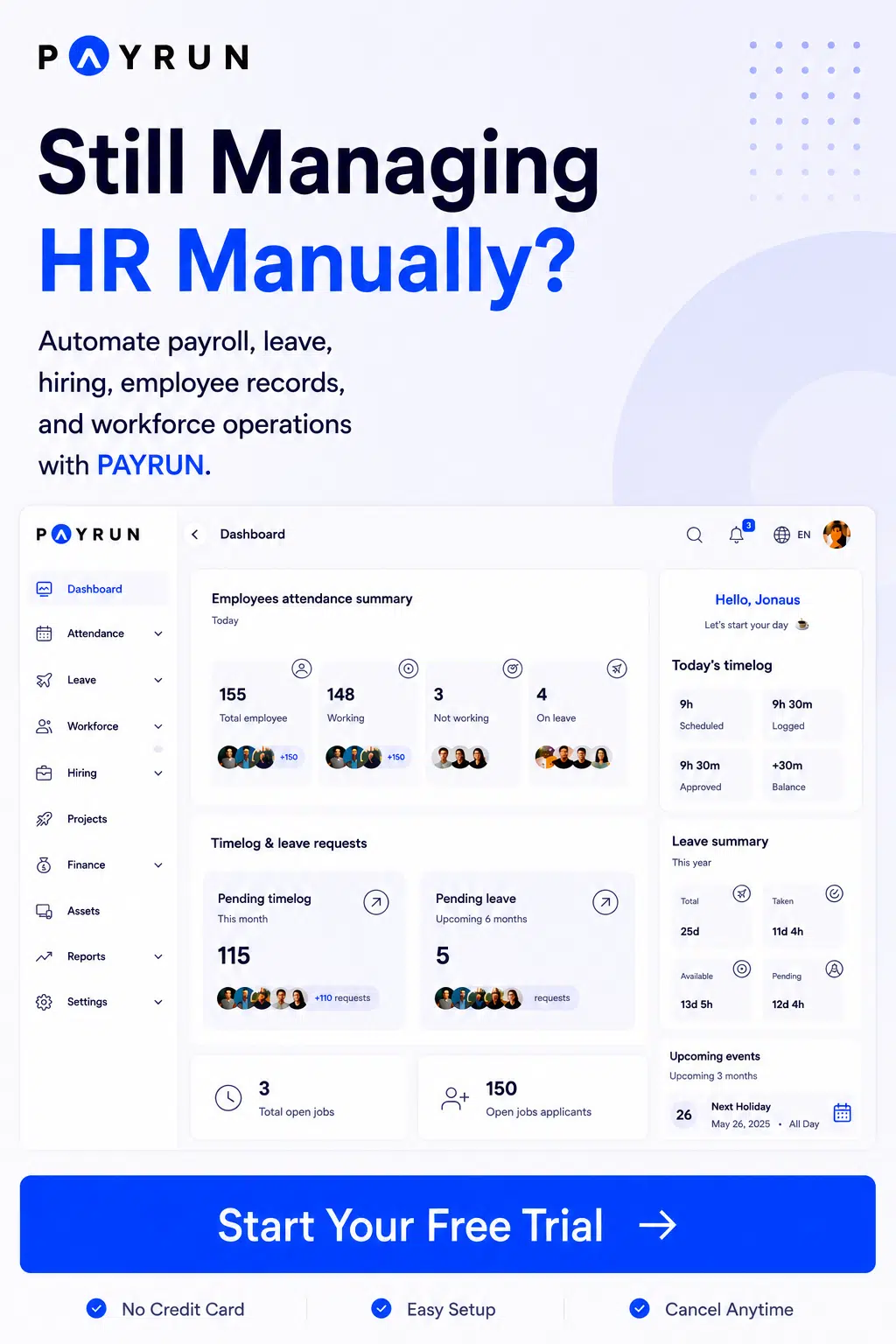
For small and growing teams, Payrun delivers a balanced payroll solution by combining HR and payroll in one platform, focusing on automation, employee data accuracy, and reducing repetitive administrative tasks.
Payroll Management Features
- Centralized employee records and payroll data
- Attendance and time tracking integration
- Automated payroll processing workflows
- Leave management and hiring workflows
- Reduced manual data entry through automation
Price
A free plan is available, while paid tiers include Starter at $29/month, Pro at $49/month, and Enterprise at $99/month when billed yearly, with scalable add-ons for growing businesses.
Best For
Small and growing businesses looking for an affordable payroll solution with strong HR integration, especially teams aiming to automate workflows and manage payroll alongside employee data.
3. BambooHR
A strong HR-focused platform, BambooHR helps businesses manage employee records, hiring, and payroll together, offering a clean interface and structured workflows for better organization.
Payroll Management Features
- Automatic tax calculations and payroll filings
- Direct deposit and multi-state payroll support
- Employee self-service capabilities
- Time-off tracking and onboarding tools
- Detailed payroll and HR reporting
Price
Plans typically start around $250/month for small teams, with per-employee pricing for larger companies. Final pricing varies based on features and requires a custom quote.
Best For
Growing teams that need strong HR tools with payroll integration, especially businesses focused on employee records, onboarding, and maintaining organized HR processes.
4. Rippling
An all-in-one workforce platform, Rippling connects payroll, HR, and IT systems, allowing businesses to manage employee data and payroll processes through automation and integrations.
Payroll Management Features
- Automated payroll and tax filing
- Integration with HR and business systems
- Global employee and contractor support
- Real-time payroll data visibility
- Benefits and onboarding management
Price
Pricing begins at about $40/month base plus around $8 per employee per month, with additional costs depending on modules like payroll, benefits, and compliance features.
Best For
Small to mid-sized businesses that want a unified system for payroll and HR, especially teams planning to scale and reduce reliance on multiple disconnected tools.
5. Zoho People
Designed for flexibility, Zoho People supports HR operations with payroll integration, helping businesses manage employee data, attendance, and workflows within a customizable ecosystem.
Payroll Management Features
- Employee records and centralized data management
- Leave and attendance tracking tools
- Workflow automation and approvals
- Integration with payroll systems
- Performance and onboarding management
Price
A free plan is available for up to 5 users, while paid plans start at $1.25 per user per month and go up to $4.50 depending on selected features and plan tier.
Best For
Small businesses and budget-conscious teams that need customizable HR tools with payroll integration, especially those already using Zoho products for daily operations.
How To Choose The Right Payroll Management System
Choosing the right payroll management system requires careful evaluation of business needs, compliance demands, and long-term goals. A well-chosen system supports accuracy, trust, and sustainable payroll operations.
Evaluate Business Needs And Payroll Complexity
Every business has unique payroll requirements based on size, structure, and workforce type. The right payroll management system should match current payroll volume while supporting future growth. Businesses with diverse pay structures, multiple locations, or contract workers need flexible solutions. Understanding internal workflows helps narrow down payroll providers that align with operational needs. Clear evaluation prevents overpaying for features that offer limited value or underinvesting in critical payroll capabilities.
Review Payroll Providers And Reputation
Payroll providers vary in reliability, support quality, and system stability. Provider’s reputation plays a critical role in long-term success. Reviews, client feedback, and industry recognition offer insight into provider performance. Established payroll providers demonstrate consistent service and product improvement. Strong reputation also signals trustworthiness in handling sensitive payroll data. Selecting a provider with proven credibility reduces risk and ensures dependable payroll support.
Assess Compliance Assistance And Regulatory Support
Payroll compliance remains a top priority for every business. The right payroll management system should include strong compliance assistance features. Automatic alerts help payroll teams respond to regulatory changes before issues arise. Systems that track regulatory requirements across regions reduce manual monitoring effort. Built-in guidance supports accurate calculations and reporting. Effective compliance tools help businesses stay compliant with labor laws and tax obligations without constant oversight.
Check Integration And Employee Empowerment Features
Payroll systems should integrate smoothly with HR, accounting, and time tracking tools. Seamless data flow reduces errors and duplicate work. Empowering employees through self service access improves transparency and reduces administrative requests. Employees view pay details, update information, and access records without delays. Integration and empowerment features improve efficiency across departments and enhance payroll experience.
Verify Government Reporting And Data Security
Payroll systems must support accurate reporting to appropriate government agencies. Reliable systems generate compliant reports and support filings with government agencies on schedule. Strong security measures protect sensitive payroll data from breaches. Encryption, access controls, and audit trails strengthen trust and compliance. Selecting a system with robust reporting and security capabilities ensures payroll operations meet legal and organizational standards.
Why Payrun Is The Right Payroll Management System

Payrun helps businesses pay employees accurately while keeping payroll operations simple and reliable. The system supports direct deposit across every pay period, with clear calculations for gross pay, taxes, and net pay. Employees receive the correct net amounts on time, which builds trust and consistency. Payrun manages tax payments and payroll-related payments without disrupting accounting workflows. Built-in accounting alignment keeps payroll data clean and audit-ready.
Payrun also supports managing benefits, including paid time, workers' comp, and open enrollment processes. HR teams manage benefits and payroll from one platform, which reduces coordination gaps. Support for talent acquisition and new hires ensures payroll setup stays accurate from day one. With structured data handling and intuitive controls, Payrun helps teams manage payroll efficiently while supporting growth, compliance, and employee confidence.
FAQs
What Does A Payroll Management System Do For Businesses?
A payroll management system helps businesses manage payroll activities such as calculating pay, handling taxes, managing benefits, and processing payments. The system centralizes payroll data, reduces errors, and supports consistent payroll operations across teams.
Can A Payroll Management System Help Pay Employees Accurately?
Yes, a payroll management system calculates gross pay, deductions, and employees’ net pay based on predefined rules. Automated calculations reduce errors and ensure employees receive correct pay every pay period.
Does A Payroll Management System Support Direct Deposit Payments?
Yes, most payroll management systems support direct deposit to ensure faster and more reliable payments. Direct deposit reduces manual handling and helps employees receive pay on time without delays.
How Does A Payroll Management System Handle Taxes And Tax Payments?
Payroll systems calculate payroll taxes, apply current tax rules, and prepare records for tax payments. The system supports accurate tax filings and helps businesses meet regulatory requirements without relying on manual calculations.
Can Payroll Management Systems Manage Benefits And Paid Time?
Yes, payroll management systems support managing benefits such as paid time, workers' comp, and benefit deductions. Centralized benefit data improves accuracy during payroll runs and simplifies open enrollment processes.
Is A Payroll Management System Useful For New Hires And Growing Teams?
No single system fits every situation automatically. A payroll management system works best when configured properly to manage new hires, employee data, and changing payroll needs as teams grow.