Payroll looks simple from the outside. Salaries go out, and employees get paid. But behind every payday sits a detailed process that keeps everything accurate and compliant. Errors can lead to unhappy teams, penalties, and lost trust.
Growing teams often struggle to keep payroll smooth. More employees mean more data, deductions, and rules to manage. Manual work quickly becomes risky and time-consuming.
A clear understanding of how payroll works helps you stay in control. You can reduce errors, save time, and ensure every payment runs without friction.
What Is Payroll
Payroll refers to the complete system a business uses for paying employees accurately and on time. It includes tracking employee wages, calculating wages, and managing the entire payroll process from start to finish. Every pay period, businesses calculate gross pay, apply payroll deductions, and determine net pay. Payroll also involves maintaining payroll records, handling payroll data, and ensuring employees are paid correctly through methods like direct deposit into bank accounts.
Payroll also covers payroll taxes and tax compliance. Businesses must calculate payroll taxes, including federal income taxes, social security and medicare, and state and local taxes. Tax withholdings, mandatory payroll deductions, and voluntary deductions all affect employee’s gross pay and employee’s net pay. Following tax laws, labor laws, and federal and state regulations ensures accurate payroll calculations and smooth tax filing with tax authorities.
How Payroll Works Step By Step In Real Business Scenarios
Payroll does not start on payday. A structured payroll process runs behind every cycle. Each step connects payroll data, compliance, and payments. Teams must follow a clear payroll schedule to ensure employees are paid correctly and on time without delays or errors.
Step 1: Collect Employee Data And Set Payroll Foundations
Every payroll system begins with accurate employee data. Details include employee wages, annual salary, bank accounts, and tax forms. The human resources department records information for hourly employees and salaried employees. This step also defines the pay period and payroll schedule.
Clean payroll records reduce risks later. Businesses must follow labor laws like the Fair Labor Standards Act for minimum wage and overtime pay. Accurate payroll data supports efficient payroll management and ensures smooth payroll tasks from the start.
Step 2: Calculate Gross Pay And Total Earnings
Gross pay forms the base of payroll calculations. Businesses calculate gross pay using hourly rates, overtime pay, or fixed annual salary. Employee’s gross pay may also include bonuses, commissions, and other earnings.
Errors at this stage can affect the entire payroll process. Studies show payroll mistakes impact nearly 33% of small business owners each year. A reliable payroll system or payroll management software helps ensure accurate payroll calculations and consistent payroll expenses.
Step 3: Apply Payroll Deductions And Taxes
Payroll deductions come after gross pay. Businesses deduct federal income taxes, state and local taxes, and social security and medicare under the Federal Insurance Contributions Act. Other deductions include retirement plans and voluntary deductions.
Employers must also pay payroll taxes such as unemployment taxes under the Federal Unemployment Tax Act. Proper tax compliance ensures correct tax withholdings, reduces risk, and helps meet federal and state regulations without penalties.
Step 4: Determine Net Pay And Distribute Payments
Net pay reflects the final amount employees receive. Employee’s net pay comes after all payroll deductions and tax withholdings. Businesses process payroll and transfer funds through direct deposit or payroll services into employee bank accounts.
Employees expect accurate and timely payments. Reports show over 80% of workers prefer direct deposit for speed and reliability. Distributing employee wages on time supports trust and improves overall payroll management.
Step 5: Manage Payroll Reporting And Compliance
Payroll does not end after paying employees. Businesses must maintain payroll records, track payroll expenses, and complete tax filing with federal, state, and local tax authorities. Proper documentation supports audits and long-term compliance.
Companies must follow tax laws, labor regulations, and federal and state regulations at every step. Strong payroll compliance reduces penalties and errors. Many teams use a payroll provider or payroll services to manage the entire payroll process efficiently.
Key Components That Define How Payroll Works
Payroll relies on several core elements that keep the entire payroll process accurate and compliant. Each component affects payroll calculations, tax compliance, and employee wages. Clear structure helps businesses manage payroll efficiently and ensure employees are paid correctly every pay period.
Employee Compensation Structure And Pay Types
Employee wages depend on how compensation is structured. Businesses pay hourly employees based on hours worked, including overtime pay. Salaried employees receive a fixed annual salary. Some roles also include bonuses, commissions, or incentives.
Clear compensation structure helps in determining gross pay. It also ensures compliance with minimum wage laws under the Fair Labor Standards Act. Accurate setup supports efficient payroll management and reduces errors in payroll calculations.
Payroll Taxes And Statutory Requirements
Payroll taxes form a major part of the payroll system. Employers must handle federal income taxes, state and local taxes, and social security and medicare under the Federal Insurance Contributions Act. Tax withholdings vary based on employee details.
Businesses must also pay payroll taxes such as unemployment taxes under the Federal Unemployment Tax Act. Compliance with federal and state regulations ensures smooth tax filing and avoids penalties from tax authorities.
Payroll Deductions And Benefits Management
Payroll deductions include both mandatory and voluntary deductions. Mandatory payroll deductions cover income taxes, medicare taxes, and federal taxes. Voluntary deductions may include retirement plans, insurance, and other benefits.
These deductions impact gross and net pay. Accurate payroll deductions ensure employees receive correct employee’s net pay. Proper tracking also supports payroll compliance and improves accuracy across the entire payroll process.
Payroll Schedule And Pay Period Setup
A payroll schedule defines when employees are paid. Common pay periods include monthly, weekly, or biweekly cycles. The chosen schedule affects payroll tasks, payroll expenses, and cash flow.
Consistent payroll schedule ensures accurate and timely payments. Reports show that over 60% of businesses prefer biweekly or monthly cycles for efficient payroll management. A structured approach helps businesses manage payroll without delays.
Payroll Systems And Software Integration
A modern payroll system improves efficiency and accuracy. Payroll management system and payroll management software automate payroll calculations, tax deductions, and direct deposit. This reduces manual errors and saves time.
Many small business owners now rely on payroll services or a payroll provider. Studies show over 70% of businesses use payroll software to process payroll. Automation supports accurate payroll calculations, secure payroll data, and better compliance with tax laws and labor regulations.
How Payroll Works Across Different Pay Schedules
Pay schedule shapes how payroll works in real scenarios. It affects payroll calculations, cash flow, and employee expectations. Each pay period changes how businesses process payroll, manage payroll taxes, and ensure accurate and timely payments across teams.
Monthly Payroll
Monthly payroll is common for salaried employees. Businesses process payroll once each month. Employee wages combine into a single payout, which simplifies payroll tasks and reduces administrative effort.
This structure supports easier payroll management and fewer payroll calculations. However, errors can have a bigger impact since corrections take longer. Many companies prefer monthly payroll for stable payroll expenses and simpler tax filing. It works well for organizations with predictable annual salary structures.
Weekly Payroll
Weekly payroll suits hourly employees and industries with variable hours. Businesses process payroll every week. This ensures employees are paid quickly based on actual work hours and overtime pay.
Frequent cycles increase payroll tasks and payroll expenses. Employers must calculate payroll taxes and handle payroll deductions more often. Despite the workload, reports show many workers prefer faster pay cycles for better cash flow and financial stability.
Biweekly Payroll
Biweekly payroll runs every two weeks. It is one of the most popular payroll schedules. Many small business owners choose this model to balance payroll management and employee satisfaction.
This approach reduces payroll processing frequency compared to weekly cycles. It still maintains regular payments for employees. Businesses can manage payroll calculations, tax withholdings, and payroll compliance more efficiently while ensuring employees are paid consistently.
Semimonthly Payroll
Semimonthly payroll pays employees twice a month on fixed dates. It is often used for salaried employees. This system aligns well with budgeting and financial planning.
Payroll calculations can become complex for hourly employees. Overtime pay and variable hours require careful tracking. Still, many companies use this model to align payroll with accounting cycles and maintain structured payroll records and reporting.
Payroll Calculation Explained With Real Examples
Payroll calculations form the core of how payroll works in any business. Each pay period involves determining gross pay, applying payroll deductions, and finalizing net pay. Accurate payroll calculations ensure employees are paid correctly and help maintain payroll compliance with tax laws and regulations.
Gross Pay Calculation With Real Scenarios
Gross pay is the starting point of the payroll process. Businesses calculate gross pay based on employee wages, hours worked, or annual salary. For hourly employees, pay includes regular hours plus overtime pay. For salaried employees, the amount stays fixed per pay period.
A simple example helps. An hourly employee works 40 hours at $15 and 5 overtime hours at a higher rate. That total becomes the employee’s gross pay. Accurate calculation of gross pay supports proper payroll management and avoids costly payroll errors.
Payroll Deductions And Tax Withholding Example
After gross pay, payroll deductions apply. These include federal income taxes, state and local taxes, and social security and medicare under the Federal Insurance Contributions Act. Employers must also include other deductions like retirement plans and benefits.
For example, if an employee’s gross pay is $1,000, tax withholdings and other deductions may reduce it by 20–30%. Reports show payroll errors often come from incorrect tax deductions. Accurate payroll calculations help meet tax compliance and reduce issues during tax filing.
Net Pay Calculation And Take-Home Salary
Net pay is what employees receive after all payroll deductions. It reflects the final employee’s net pay deposited into bank accounts through direct deposit or payroll services. Clear breakdown helps employees understand gross and net pay differences.
For instance, if total deductions equal $250 from a $1,000 gross pay, the net pay becomes $750. Businesses must ensure accurate and timely payments. Errors in net pay can damage trust and lead to compliance issues with tax authorities.
Payroll Accuracy And Real Business Impact
Accurate payroll calculations directly affect business performance. Studies show nearly 33% of small business owners face payroll errors each year. Mistakes can increase payroll expenses and create compliance risks.
Reliable payroll systems and payroll management software reduce errors. Payroll automation software improves accuracy in calculating wages, tax withholdings, and payroll taxes. Efficient payroll management ensures employees are paid correctly while meeting federal and state regulations consistently.
Payroll Compliance Requirements Businesses Must Follow
Payroll compliance keeps the entire payroll process accurate and legally sound. Each pay period must follow tax laws, labor laws, and federal and state regulations. Strong compliance ensures employees are paid correctly and protects businesses from penalties and audits.
Payroll Tax Obligations
Payroll taxes are a core part of compliance. Businesses must handle federal income taxes, state and local taxes, and social security and medicare under the Federal Insurance Contributions Act. Tax withholdings depend on employee data and tax forms.
Employers must also pay payroll taxes such as unemployment taxes under the Federal Unemployment Tax Act. Payroll tax errors remain one of the most common issues. Accurate payroll calculations help ensure smooth tax filing and reduce penalties from tax authorities.
Wage Law Compliance
Wage laws define how businesses pay employees. The Fair Labor Standards Act sets rules for minimum wage and overtime pay. These rules affect hourly employees and overall payroll calculations.
Failure to follow wage laws can lead to serious penalties. Reports show wage violations cost businesses billions each year. Accurate payroll management ensures employee wages meet labor regulations and that employees are paid correctly every pay period.
Payroll Record Keeping
Payroll records must stay complete and accurate. Businesses must maintain payroll data, employee wages, tax forms, and employee payroll records for compliance. These records support audits and ensure transparency.
Many regulations require records to be stored for years. Organized payroll management helps track payroll expenses and tax withholdings. Clear documentation reduces compliance risks and supports the entire payroll process.
Tax Filing Duties
Tax filing is a critical payroll task. Businesses must submit payroll taxes, income taxes, and withholding taxes to the federal government and tax authorities, often relying on payroll compliance software to handle complexity. Deadlines depend on payroll schedule and reporting rules.
Late filings can result in penalties and compliance issues. Many small business owners face challenges with tax compliance. Accurate payroll systems help ensure timely tax filing and reduce errors in payroll calculations.
Labor Data Regulations
Labor laws and data rules also affect payroll compliance. Businesses must protect payroll data and follow labor regulations across regions. This includes handling employee information securely.
Data risks continue to rise. Studies show over 60% of businesses face payroll data security concerns. A strong payroll system or payroll provider helps ensure compliance while maintaining accurate and timely payments.
Common Payroll Mistakes That Impact Accuracy And Compliance
Payroll errors can disrupt the entire payroll process and create serious compliance risks. Even small mistakes affect payroll calculations, tax filing, and employee trust, especially as new payroll mistakes emerge. Clear awareness of common issues helps businesses manage payroll better and ensure accurate and timely payments.
Incorrect Employee Data
Accurate payroll data is the foundation of payroll management. Errors in employee wages, tax forms, or bank accounts can lead to wrong payments. Missing details also affect payroll calculations and payroll records.
Reports show that data entry errors are one of the top causes of payroll mistakes. Inaccurate data can impact tax withholdings and payroll taxes. A reliable payroll system or payroll management software helps maintain clean payroll data and reduce risks across the entire payroll process.
Wrong Payroll Calculations
Payroll calculations must be precise. Errors in calculating wages, overtime pay, or annual salary can affect gross pay and net pay. These mistakes often lead to incorrect employee’s net pay.
Studies show nearly 33% of small business owners face payroll errors each year. Manual processes increase the risk when teams process payroll manually. Automated payroll systems help ensure accurate payroll calculations and reduce costly payroll expenses.
Tax Withholding Errors
Tax withholdings must follow current tax laws. Mistakes in federal income taxes, state and local taxes, or social security and medicare under the Federal Insurance Contributions Act can lead to compliance issues.
Incorrect payroll taxes also affect tax filing with tax authorities. Businesses must pay payroll taxes such as unemployment taxes under the Federal Unemployment Tax Act. Accurate tax calculations ensure proper payroll compliance and avoid penalties.
Missed Payroll Deadlines
Payroll schedule delays can disrupt employee payments. Late payroll affects employee wages and damages trust. Employees expect accurate and timely payments every pay period.
Missed deadlines also impact tax filing and compliance. Late submissions can result in fines from the federal government and other tax authorities. A structured payroll schedule and efficient payroll management help avoid delays and maintain smooth payroll operations.
Poor Record Management
Payroll records must stay organized and complete. Missing payroll data or incomplete records can create issues during audits. It also affects payroll compliance with federal and state regulations.
Many businesses struggle with record-keeping. Reports suggest compliance issues often arise from poor documentation. A strong payroll system or payroll provider helps maintain accurate payroll records and supports efficient payroll management across growing teams.
How Payroll Works In Startups Vs Scaling Organizations
Payroll needs change as a business grows. Early-stage teams manage simple payroll processing, often with manual processes. Scaling organizations face complex payroll calculations, compliance, and reporting. Clear systems and tools become essential to ensure employees are paid correctly and on time.
Aspect | Startups | Scaling Organizations |
|---|---|---|
Payroll Process | Simple and often manual. Teams may process payroll manually with spreadsheets. | Structured and automated payroll process with defined workflows and approvals. |
Payroll System | Basic tools or no dedicated payroll system. | Advanced payroll system or payroll management software with integrations. |
Payroll Calculations | Limited complexity. Focus on basic gross pay and net pay. | Complex payroll calculations with bonuses, overtime pay, and multiple pay structures. |
Payroll Taxes | Basic handling of payroll taxes and tax withholdings. | Full tax compliance with federal income taxes, state and local taxes, and global rules if needed. |
Compliance Requirements | Minimal exposure but higher risk due to lack of expertise. | Strong payroll compliance aligned with tax laws, labor laws, and federal and state regulations. |
Payroll Schedule | Flexible but sometimes inconsistent pay periods. | Fixed payroll schedule with strict deadlines and structured pay periods. |
Employee Types | Small team with mostly salaried employees. | Mix of hourly employees and salaried employees across departments and regions. |
Payroll Records | Basic payroll records with limited documentation. | Detailed payroll records for audits, reporting, and tax filing. |
Payroll Tools | Limited use of payroll software or payroll services. | Heavy reliance on payroll software, payroll provider, or professional payroll services. |
Payroll Automation And Software In Modern Workflows
Modern businesses rely on automation to simplify how payroll works. Manual processes no longer scale with growing teams. Automated payroll software reduces errors, improves speed, and ensures payroll compliance. Efficient systems help manage payroll tasks and deliver accurate and timely payments every pay period.
Role Of Payroll Software
Payroll software plays a central role in payroll management. It helps process payroll, manage employee wages, and store payroll records in one place. Payroll software features shows how teams can calculate gross pay, apply payroll deductions, and track payroll expenses without manual effort.
Recent reports show over 70% of businesses now use payroll management software. This shift reduces errors and improves accuracy in payroll calculations. A strong payroll system ensures employees are paid correctly while maintaining compliance with tax laws and labor regulations.
Automation In Payroll Calculations
Automation improves accuracy in payroll calculations. Payroll processing software can calculate payroll taxes, tax withholdings, and other deductions instantly. This reduces mistakes in gross and net pay and ensures employee’s net pay is correct.
Manual errors remain a major issue for small business owners. Studies show nearly 33% face payroll errors each year. Automated payroll systems help maintain accurate payroll calculations and support smooth tax filing with tax authorities.
Compliance And Tax Management
Payroll software helps maintain payroll compliance with changing tax laws. Systems automatically update federal income taxes, state and local taxes, and social security and medicare under the Federal Insurance Contributions Act. This ensures correct tax withholdings.
Employers must also manage payroll taxes like unemployment taxes under the Federal Unemployment Tax Act. Automation reduces compliance risks and supports timely tax filing. Businesses can stay aligned with federal and state regulations without manual tracking.
Efficiency And Business Impact
Automation improves overall payroll efficiency. Teams can manage payroll faster and reduce time spent on payroll tasks. Direct deposit ensures employee wages reach bank accounts quickly and securely.
Reports show automation can cut payroll processing time by up to 60%. It also improves payroll data accuracy and reduces payroll expenses caused by errors. Efficient payroll management supports business growth and ensures employees are paid on time every pay period.
How Payroll Works For Remote And Global Teams
Remote and global teams change how payroll works in practice. Businesses must handle multiple pay periods, currencies, and tax laws. HR and payroll software for SaaS and software businesses and a structured payroll system help manage payroll tasks, ensure payroll compliance, and deliver accurate and timely payments across locations.
Global Payroll Structure
Global payroll combines multiple payroll systems into one process. Businesses must manage employee wages across countries with different payroll schedules and labor laws. Each region has unique payroll rules that affect payroll calculations and payroll taxes.
Companies often use a payroll provider or payroll services to simplify operations. Reports show over 60% of global companies outsource payroll to manage complexity. A centralized payroll system helps maintain consistent payroll records and supports efficient payroll management.
Multi-Country Tax Compliance
Tax compliance becomes more complex with global teams. Businesses must handle federal state and local rules in each country. Payroll taxes, income taxes, and tax withholdings vary based on local tax laws and regulations.
Failure to meet compliance can lead to penalties from tax authorities. Companies must follow labor regulations and ensure accurate tax filing. A strong payroll system helps calculate payroll taxes correctly and supports compliance across multiple regions.
Currency And Payment Management
Global payroll requires handling multiple currencies. Businesses must convert employee wages and ensure employees are paid correctly in local currency. Exchange rates can impact payroll expenses and payroll calculations.
Direct deposit remains the most common payment method. Reports show over 80% of employees prefer digital payments into bank accounts. Reliable payroll software ensures accurate and timely payments while reducing errors in currency conversion.
Data Security And Workforce Management
Remote payroll increases the need for secure payroll data. Businesses must protect employee information and follow data regulations across regions. Payroll records must remain accurate and accessible for audits and reporting.
Data risks continue to grow. Studies show over 60% of companies face payroll data security concerns. Payroll management software helps secure payroll data, manage payroll tasks, and support efficient payroll management for distributed teams.
Payroll Data Security And Confidentiality Practices
Payroll data holds sensitive employee and financial details. Any breach can disrupt the payroll process and damage trust. Strong security practices and innovative HR and payroll features protect payroll records, ensure payroll compliance, and support accurate and timely payments across every pay period.
Payroll Data Protection
Payroll data includes employee wages, bank accounts, tax forms, and payroll records. Unauthorized access can expose sensitive details. Businesses must protect payroll data at every stage of the payroll process.
Reports show over 60% of companies face risks related to data breaches. A secure payroll system or payroll management software helps control access and protect information. Strong data protection ensures employees are paid correctly and builds trust in payroll management.
Access Control Systems
Access control limits who can view or edit payroll data. Not every team member needs full access to payroll tasks. The human resources department and finance teams usually manage payroll systems.
Role-based access reduces errors and misuse. It also supports payroll compliance with data regulations. Businesses that use structured access systems reduce internal risks and maintain secure payroll records across the entire payroll process.
Encryption And Secure Payments
Encryption protects payroll data during transfers. It secures direct deposit transactions and prevents unauthorized access to employee wages. Secure systems ensure payroll calculations and payment data remain safe.
Digital payment methods continue to grow. Reports show over 80% of employees prefer direct deposit into bank accounts. Strong encryption in payroll software helps maintain accurate and timely payments while protecting sensitive financial data.
Compliance And Data Regulations
Data security must align with labor laws and data regulations. Businesses must follow federal and state regulations when handling payroll data. Compliance ensures payroll records remain accurate and protected.
Failure to meet data compliance can lead to penalties and trust issues. Studies show compliance failures increase operational risks. A reliable payroll provider or payroll system helps maintain security, support tax compliance, and ensure efficient payroll management.
Challenges Businesses Face In Payroll Management
Payroll management becomes complex as teams grow and regulations evolve. Each pay period brings new payroll tasks, calculations, and compliance checks, making payroll software for startups increasingly important. Businesses must balance accuracy, speed, and cost while ensuring employees are paid correctly and on time.
Complex Payroll Calculations
Payroll calculations can become difficult as employee structures expand. Businesses must calculate gross pay, overtime pay, bonuses, and other deductions across different roles. Errors in calculating wages affect both gross and net pay.
Studies show nearly 33% of small business owners face payroll errors each year. Manual processes increase this risk. A strong payroll system or payroll management software helps ensure accurate payroll calculations and reduces mistakes across the entire payroll process.
Changing Tax Regulations
Tax laws change frequently. Businesses must stay updated with federal income taxes, state and local taxes, and social security and medicare under the Federal Insurance Contributions Act. These evolving rules, including new payroll regulations for growing companies, affect payroll taxes and tax withholdings.
Failure to adapt can lead to compliance issues. Employers must also manage unemployment taxes under the Federal Unemployment Tax Act. Accurate tax handling ensures proper tax filing and avoids penalties from tax authorities.
Payroll Compliance Risks
Payroll compliance requires strict adherence to labor laws and federal and state regulations. Small businesses in particular benefit from a structured payroll compliance guide. Businesses must follow wage rules under the Fair Labor Standards Act, including minimum wage and overtime pay.
Non-compliance can result in fines and legal issues. Reports show compliance failures are a major risk for growing companies. Strong payroll management ensures employees are paid correctly and supports accurate payroll records and reporting.
Data Management Issues
Payroll data must remain accurate and secure. Businesses handle large volumes of payroll records, tax forms, and employee data. Poor data management can lead to errors and compliance risks.
Studies show over 60% of companies face data-related payroll challenges. Incomplete or incorrect payroll data affects payroll calculations and tax filing. A reliable payroll system helps manage payroll data efficiently and supports better payroll management.
Time And Resource Constraints
Payroll tasks require time and skilled resources. Small teams often struggle to manage payroll manually while handling other responsibilities, which is why simple payroll software is so valuable. This can delay payroll schedule and impact employee wages.
Reports show automation can reduce payroll processing time by up to 60%. Many businesses use payroll services or a payroll provider to save time. Efficient payroll management ensures accurate and timely payments without increasing operational burden.
Best Practices To Improve Payroll Accuracy And Efficiency
Payroll accuracy and efficiency depend on clear processes and reliable systems. Each pay period requires consistent payroll calculations, clean payroll data, and strong compliance. Smart practices help businesses manage payroll better and ensure employees are paid correctly and on time.
Standard Payroll Processes
Clear payroll processes reduce confusion and errors. Businesses should define each payroll task, from collecting employee data to distributing employee wages. A structured payroll process ensures consistency across every pay period.
Standard workflows improve payroll management and reduce manual mistakes. Teams can process payroll faster and maintain accurate payroll records. A defined system also supports payroll compliance with tax laws and labor regulations.
Regular Payroll Audits
Payroll audits help identify errors early. Businesses should review payroll calculations, payroll deductions, and tax withholdings regularly. Effective payroll audit strategies ensure employee wages and employee’s net pay remain accurate.
Reports show payroll errors affect nearly 33% of small business owners each year. Regular checks reduce this risk. Audits also improve tax compliance and support smooth tax filing with tax authorities.
Use Payroll Automation Tools
Automation improves efficiency in payroll management. Payroll software and payroll management software handle payroll calculations, tax deductions, and direct deposit automatically. This reduces manual work and improves accuracy.
Studies show that over 70% of businesses use payroll software today. Automated systems help calculate payroll taxes, manage payroll records, and ensure accurate and timely payments. This supports efficient payroll management across growing teams.
Integrate Payroll Systems
Integrated systems improve payroll efficiency. Businesses can simplify HR by replacing disconnected tools and connect payroll systems with HR and finance tools. This helps manage employee data, payroll expenses, and reporting in one place.
Integration reduces duplicate work and errors in payroll data. It also improves visibility across the entire payroll process. A connected payroll system ensures smooth payroll tasks and better decision-making for small business owners and growing organizations.
How Payrun Makes Payroll Simple For Teams
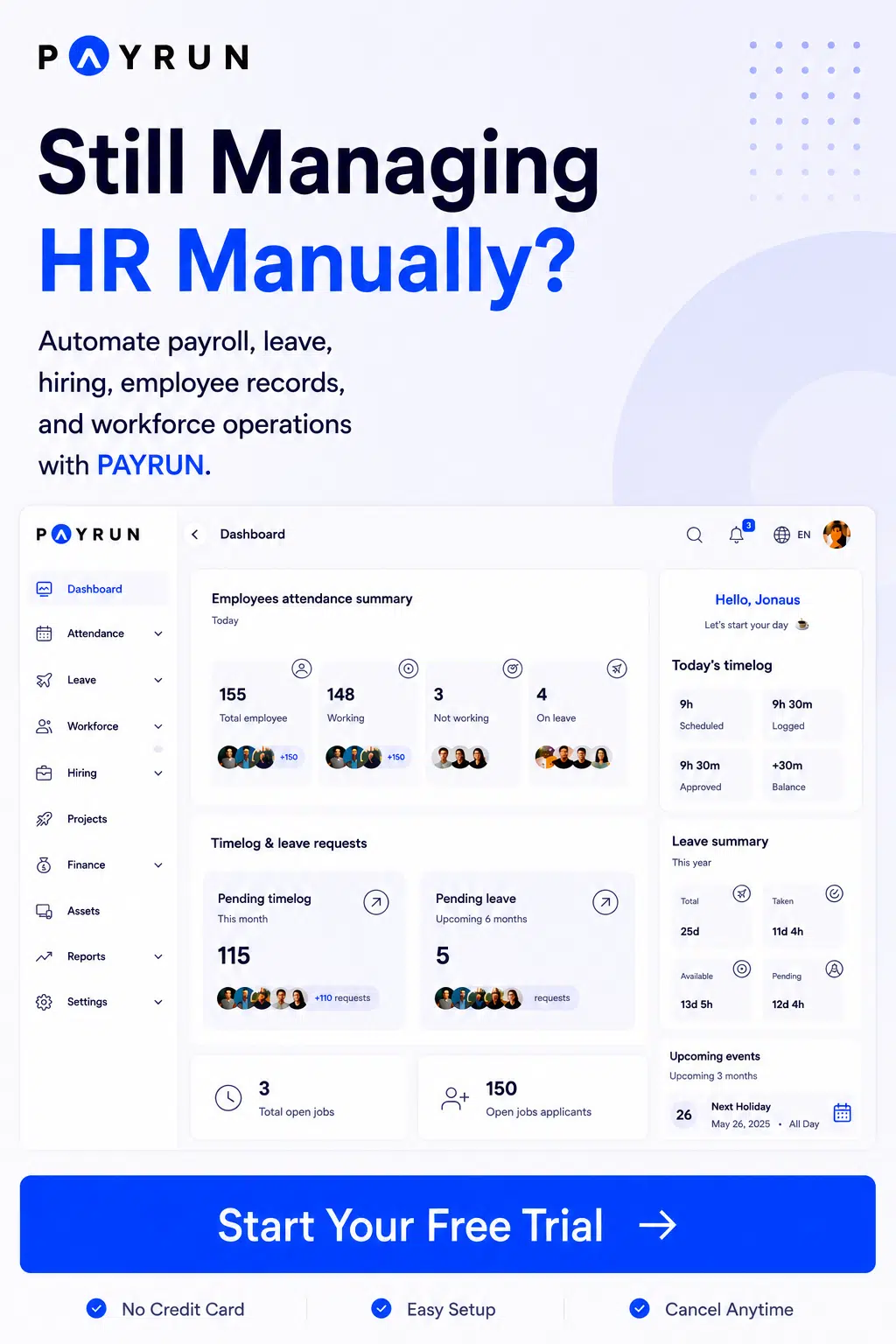
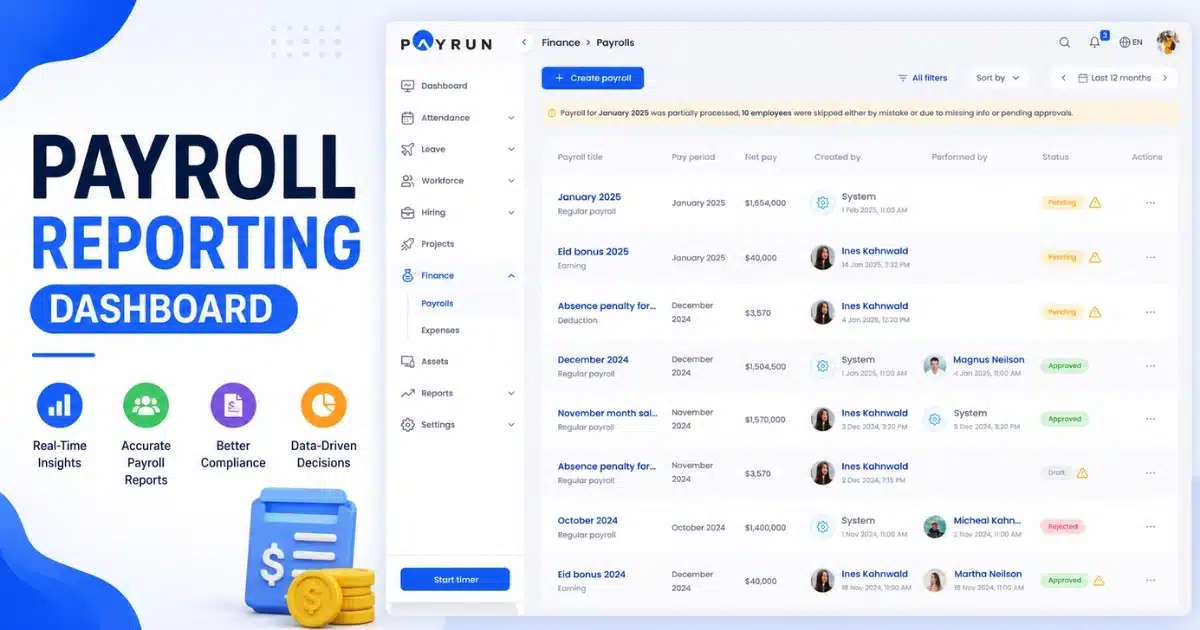
Payrun brings everything into one system to simplify how payroll works. As a trustworthy partner in HR management, it connects payroll data, employee records, and payroll tasks in a single platform. Payrun’s HR software for small businesses helps teams manage payroll, ensure payroll compliance, and deliver accurate and timely payments without manual effort.
Payrun automates the entire payroll process. It helps calculate gross pay, apply payroll deductions, and calculate payroll taxes with built-in rules. The system reduces errors and ensures employees are paid correctly every pay period. Automated workflows also reduce manual work and improve payroll calculations accuracy.
The platform also supports payroll management at scale. It centralizes payroll records, tracks employee wages, and syncs attendance data for accurate payroll calculations as part of an all-in-one HR platform. Businesses can handle tax filing, tax withholdings, and payroll taxes while staying compliant with tax laws and labor regulations. Payrun also improves efficiency, with some teams reporting up to 40% faster compliance reporting and smoother payroll operations.
FAQs
How Do Multi-Country Payroll Taxes Affect Payroll Accuracy?
Yes, multi-country payroll taxes can impact accuracy. Different tax laws, rates, and deadlines across regions increase complexity. Businesses must calculate payroll taxes based on location, or errors in tax withholdings and payroll calculations can occur.
Can Payroll Systems Handle Real-Time Compliance Updates Automatically?
Yes, modern payroll software can handle real-time compliance updates. Advanced payroll systems track changes in tax laws and apply correct tax deductions automatically. This reduces manual errors and ensures payroll compliance across the entire payroll process.
What Role Does Employee Classification Play In Payroll Compliance?
Employee classification affects payroll taxes, overtime pay, and tax compliance. Misclassification can lead to penalties and incorrect payroll deductions. Businesses must align classifications with labor laws to ensure accurate payroll calculations and proper payroll records.
Is Manual Payroll Processing Still Viable For Growing Teams?
No, manual payroll processing becomes risky as teams grow. Process payroll manually increases errors in payroll calculations, payroll taxes, and payroll records. Automation improves efficient payroll management and ensures employees are paid correctly every pay period.
How Do Global Remote Teams Increase Payroll Complexity?
Remote teams add complexity to how payroll works. Businesses must manage payroll data, currency conversion, and tax compliance across jurisdictions. Different labor laws and tax authorities increase payroll tasks and require strong payroll systems for accurate and timely payments.