Employment policies are changing faster than ever, and growing businesses feel the impact first. New rules around wages, working hours, employee classification, remote work, and benefits are being introduced to reflect how modern teams actually work. For businesses that are scaling, these changes are not just legal updates.
They directly affect hiring decisions, payroll accuracy, contracts, and daily operations. Many teams struggle to keep up while focusing on growth. Missing a policy update can lead to payroll errors, compliance risks, or employee dissatisfaction.
Understanding what new employment policies mean and how they affect your business in practice is essential. This guide breaks down the changes in simple terms and explains what growing businesses need to pay attention to right now.
What “New Employment Policies” Usually Include, In Plain Terms
New employment policies usually focus on how businesses hire, pay, manage, and support employees. They often include updates to minimum wage rules, overtime limits, and how working hours are tracked. Many policies also clarify employee classification, especially the difference between full-time staff, part-time workers, and contractors.
Other common areas include paid leave, sick days, parental leave, and workplace benefits. With more remote and hybrid work, policies now address flexible schedules, remote work rights, and employee data protection. Some updates also strengthen record-keeping and reporting requirements for employers. In simple terms, new employment policies aim to protect workers while giving businesses clearer rules to follow as work environments continue to change.
What Changes First When You Start Hiring Fast
When a business starts hiring quickly, internal systems feel the pressure almost immediately. Payroll, employment contracts, and employee records are usually the first areas to show cracks if processes are not ready.
Payroll becomes more complex overnight
As headcount grows, payroll moves from a simple monthly task to a complex operation. Different salary levels, joining dates, overtime, bonuses, and deductions must be handled accurately. Even small mistakes can lead to late payments or incorrect salaries, which affects employee trust. Payroll also needs to reflect new tax rules, benefits, and statutory deductions. When hiring happens fast, manual payroll processes struggle to keep up, increasing the risk of errors and compliance issues.
Employment contracts need structure and consistency
Hiring one or two people informally may work early on, but rapid hiring demands standardized contracts. Each employee must have clear terms covering role, pay, working hours, leave, and notice periods. Without consistency, businesses risk confusion, disputes, or misclassification issues. New employment policies often require contract updates, so using outdated templates can create legal exposure. Clear, compliant contracts help protect both the business and employees as teams expand.
Employee records grow and become harder to manage
Employee records include personal details, contracts, payroll history, leave balances, and compliance documents. When hiring increases, managing these records manually becomes time-consuming and error-prone. Missing or incorrect records can cause problems during audits or policy reviews. Accurate record keeping is often a legal requirement, and new employment policies usually tighten these expectations. Organized records help businesses stay compliant and respond quickly to requests.
Compliance checks become more frequent
As businesses grow, they attract more attention from regulators and auditors. Payroll accuracy, tax filings, and employee documentation are reviewed more closely. New employment policies often introduce updated reporting requirements or deadlines. Without proper systems, keeping up with these checks becomes stressful. Regular compliance reviews help identify gaps early and reduce the risk of penalties.
Internal processes must scale with hiring
Fast hiring exposes weak internal processes. Approval flows, payroll timelines, and document management need to scale with team size. What worked for a small team often fails under higher volume. Businesses that invest early in structured payroll, clear contracts, and reliable record keeping are better prepared to grow without disruption.
The Real Risks For Growing Businesses
When businesses grow quickly, compliance risks grow with them. Small payroll or contract mistakes that once seemed minor can turn into serious problems, leading to financial loss, legal trouble, and damaged employee trust.
Penalties for missing or late compliance filings
New employment policies often introduce stricter reporting rules and deadlines. When payroll filings, tax submissions, or statutory payments are late or incorrect, businesses can face fines and penalties. These costs increase as team size grows. Repeated non-compliance can also trigger audits or closer regulatory attention. For growing businesses, staying on top of deadlines becomes harder without structured processes, making penalties one of the first and most common risks.
Employee misclassification issues
Misclassification happens when workers are incorrectly labeled as contractors, part-time staff, or full-time employees. As hiring increases, businesses may use contractors or temporary workers to move faster, but new employment policies often tighten classification rules. Misclassified workers may be entitled to benefits, overtime, or tax contributions that were not provided. This can lead to back payments, fines, and legal disputes. Correct classification is critical for avoiding long-term liability.
Wage and overtime calculation errors
As teams expand, wage structures become more complex. Different pay rates, overtime rules, bonuses, and allowances must be calculated accurately. Errors in wage or overtime calculations are common when payroll is handled manually. Underpayments can lead to employee complaints and legal claims, while overpayments affect cash flow. New employment policies often change overtime thresholds or pay rules, increasing the risk of mistakes if payroll systems are not updated.
Inconsistent application of policies
Growing teams often apply employment policies unevenly. One department may follow updated rules while another uses outdated practices. This inconsistency creates confusion and perceived unfairness among employees. It can also lead to compliance issues if policies are not applied equally. Clear documentation and centralized processes help ensure policies are followed consistently across the organization.
Poor record-keeping and missing documentation
Accurate records are essential for compliance. Missing contracts, incomplete payroll records, or incorrect employee details can cause serious issues during audits or disputes. New employment policies often require stronger documentation and longer record retention. Poor record-keeping increases the risk of penalties and makes it harder to defend the business if issues arise.
Damage to trust and employer reputation
Compliance failures do not just result in fines. They also affect employee trust and employer reputation. Late salaries, incorrect pay, or unclear contracts can damage morale and increase turnover. In competitive job markets, reputation matters. Growing businesses that fail to manage employment risks may struggle to attract and retain talent, slowing long-term growth.
Practical Compliance Checklist For Growing Teams
As teams grow, staying compliant becomes a routine responsibility, not a one-time task. A simple weekly and monthly checklist helps businesses catch issues early, stay organized, and reduce compliance risks as employment policies change.
Review payroll data for accuracy every week
Each week, review payroll inputs such as attendance, working hours, overtime, and leave records. Small errors often start here and grow into bigger issues if ignored. Check new joiners, role changes, and salary updates to ensure everything is recorded correctly. Regular reviews reduce last-minute payroll fixes and help maintain employee trust.
Monitor employee classification and contracts
Weekly checks should include reviewing employee roles and contract types. Make sure contractors, part-time workers, and full-time employees are classified correctly. When job responsibilities change, contracts may need updates. Keeping classifications accurate helps prevent misclassification risks and ensures compliance with current employment policies.
Track leave balances and absences
Leave policies are frequently updated, especially around paid leave and sick time. Each week, confirm leave requests, approvals, and balances. Accurate tracking prevents payroll discrepancies and ensures employees receive the benefits they are entitled to. It also helps managers plan workloads without surprises.
Confirm payroll and statutory payments monthly
Before running payroll each month, double check salary calculations, deductions, and benefits. After payroll is processed, confirm that taxes and statutory contributions are submitted on time. Late or incorrect payments are one of the most common compliance failures for growing businesses. Monthly reviews reduce this risk significantly.
Review policy updates and legal changes
Employment policies change regularly. Set time each month to review any updates related to wages, working hours, or benefits. Even small changes can affect payroll or contracts. Assign clear responsibility for tracking updates so nothing is missed. Staying informed helps businesses adjust processes before issues arise.
Audit records and reports for completeness
Once a month, review employee records, payroll reports, and compliance documents. Check that contracts, tax forms, and payment records are complete and properly stored. Organized records make audits easier and protect the business during disputes. Regular audits ensure your compliance process stays strong as the team grows.
How Payrun Helps Teams Stay Ready As Policies Change (Hr + Payroll Essentials)
Employment policies change regularly, and growing teams need systems that can adapt without disruption. Payrun helps businesses manage payroll and HR essentials in a structured way, so compliance stays under control as rules evolve.
Centralized payroll and employee data
Payrun brings payroll and employee information into one place. Salaries, contracts, attendance, and employee details are stored together, reducing the risk of missing or inconsistent data. When policy changes affect payroll calculations or employee records, teams can update information quickly without searching across spreadsheets or separate tools. Centralized data creates clarity and saves time.
Automated payroll calculations aligned with regulations
Manual payroll is one of the biggest compliance risks for growing businesses. Payrun automates salary calculations, deductions, and statutory contributions based on current rules. This reduces errors caused by outdated formulas or manual entry. When employment policies change, automated payroll helps ensure calculations remain accurate and consistent across the entire team.
Clear handling of employee types and contracts
As teams grow, managing full-time employees, part-time staff, and contractors becomes more complex. Payrun supports clear employee classification and contract management. Teams can track roles, pay structures, and contract terms in one system. This helps reduce misclassification risks and ensures payroll aligns correctly with each employment type.
Reliable records and audit readiness
New employment policies often bring stricter record-keeping requirements. Payrun maintains organized payroll reports, payment history, and employee records. This makes it easier to respond to audits, internal reviews, or regulatory requests. Having accurate and accessible records reduces stress and protects the business if questions arise.
Timely payroll runs and statutory payments
Late salaries or missed statutory payments can damage trust and lead to penalties. Payrun helps teams follow consistent payroll schedules and track payment deadlines. Clear workflows ensure payroll is processed on time, even as headcount grows. This reliability supports both employee satisfaction and compliance obligations.
Scalable support for growing teams
What works for a small team often breaks as the business grows. Payrun is built to scale with hiring and policy changes. New employees, pay structures, and compliance requirements can be added without rebuilding processes. This flexibility allows growing businesses to stay focused on expansion while remaining confident that HR and payroll operations are aligned with current employment policies.
Competitor Playbook: How The Big Tools Handle Compliance Updates (And What To Learn)
Large payroll and HR platforms invest heavily in compliance because their customers operate across regions, headcounts, and policy changes. Looking at how big tools handle updates offers clear lessons for growing businesses.
How Gusto handles payroll law updates
Gusto focuses on automatic updates for tax rates, wage rules, and statutory deductions. When regulations change, payroll calculations adjust without user intervention. The key takeaway is automation. Growing businesses should reduce manual payroll logic and rely on systems that update rules in the background.
How ADP manages large-scale compliance
ADP operates across many regions and industries, so compliance is built into every payroll workflow. They emphasize standardized processes, audit trails, and detailed reporting. The lesson here is structure. Clear workflows and consistent records matter more as headcount increases.
How Rippling connects HR and payroll changes
Rippling links HR data directly with payroll. When employee details, roles, or contracts change, payroll updates automatically. This reduces mismatches between HR records and payroll output. The key learning is integration. Compliance improves when HR and payroll systems are tightly connected.
How Deel handles worker classification
Deel focuses heavily on employee and contractor classification, especially across borders. They provide clear frameworks to avoid misclassification risks. The lesson for growing teams is clarity. Correct classification and documented contracts are essential when policies tighten.
How BambooHR supports policy documentation
BambooHR places strong emphasis on policy documentation, employee records, and approvals. While not payroll first, it ensures policy changes are clearly communicated and recorded. The takeaway is visibility. Teams should document policies and updates clearly so nothing is applied inconsistently.
What growing businesses should learn from these tools
Big platforms succeed by combining automation, structured workflows, accurate records, and clear ownership. Growing businesses do not need complex enterprise systems, but they do need the same principles. Payroll accuracy, integrated HR data, and up-to-date compliance logic are what keep teams ready as employment policies continue to change.
Picking The Right Setup: Lightweight Vs Full-Suite Hr And Payroll
Choosing the right HR and payroll setup depends on your business stage, team size, and compliance needs. Many growing businesses struggle between lightweight tools and full-suite platforms, often choosing more complexity than they actually need.
When lightweight HR and payroll make sense
Lightweight setups focus on core needs like payroll processing, employee records, and basic compliance. They are easier to implement, faster to adopt, and more cost-effective for small to mid-sized teams. Growing businesses benefit because there is less setup time, fewer features to manage, and a lower risk of misconfiguration. Lightweight tools work best when teams want clarity, speed, and reliability without enterprise-level overhead.
Where full-suite platforms add complexity
Full-suite HR and payroll systems offer everything from performance management to learning tools and advanced analytics. While powerful, they often require long setup times, dedicated admins, and higher costs. For growing businesses, this can slow teams down. Many features remain unused, while payroll and compliance still demand daily attention. Complexity increases training needs and makes simple updates harder.
Why payroll and compliance should come first
No matter the setup, payroll accuracy and compliance are non-negotiable. Late salaries, incorrect deductions, or outdated records create risk quickly. Growing businesses should prioritize tools that handle payroll smoothly, stay aligned with policy changes, and maintain clean records. Advanced HR features can be added later when the organization is ready.
How Payrun fits growing businesses
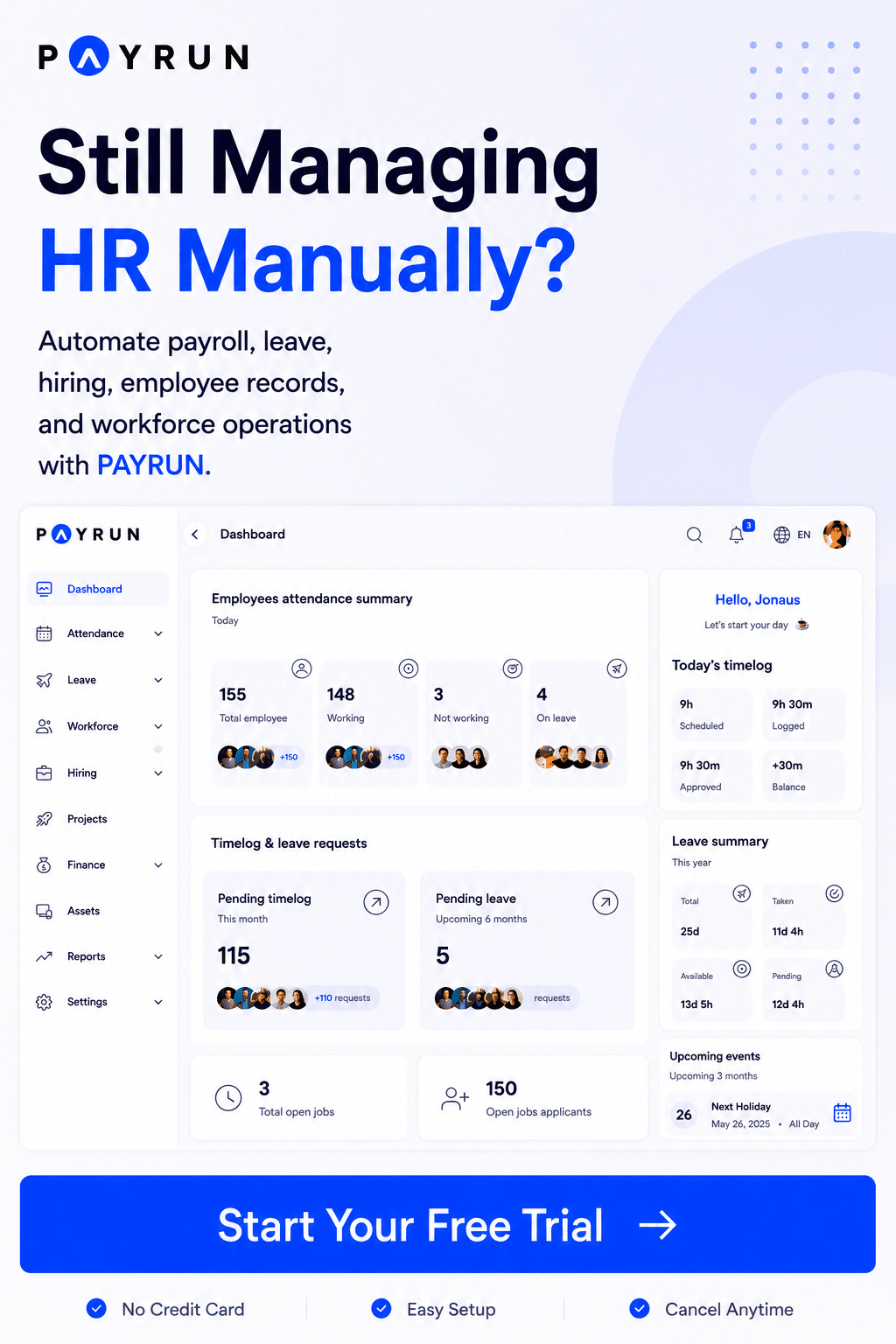
Payrun is designed for teams that want essential HR and payroll features without unnecessary complexity. It focuses on accurate payroll, employee records, and compliance-ready processes. Teams can manage salaries, contracts, and statutory requirements in one system, without the burden of a full enterprise suite. As policies change and teams grow, Payrun scales naturally without disrupting workflows.
Making the practical choice
For most growing businesses, a lightweight but reliable setup is the smarter choice. It reduces risk, saves time, and keeps teams focused on growth. Tools like Payrun provide the balance many businesses need, covering HR and payroll essentials today while staying flexible enough for tomorrow.
FAQs
Do employment policy changes affect existing employees or only new hires
Employment policy changes usually apply to both existing employees and new hires. Businesses often need to update payroll calculations, benefits, or records for current staff to stay compliant.
How often should growing businesses review their employment policies
Policies should be reviewed at least quarterly, or whenever there is a legal or regulatory update. Regular reviews help prevent outdated practices from affecting payroll or employee management.
Can payroll mistakes be fixed after salaries are paid
Some payroll mistakes can be corrected, but fixes often require adjustments, back payments, or revised reports. Repeated corrections increase compliance risk and can reduce employee confidence.
Do remote or hybrid teams face different compliance challenges
Yes, remote and hybrid teams often face additional rules around working hours, data protection, and location-based regulations. These factors can affect payroll and record-keeping requirements.
Is manual payroll still manageable for growing teams
Manual payroll becomes risky as teams grow. More employees mean more variables, which increases the chance of errors, missed deadlines, and compliance gaps.
How do policy changes impact employee benefits and leave
New policies may change leave entitlements, benefit eligibility, or accrual rules. Payroll and HR systems need to reflect these changes accurately to avoid disputes or underpayments.
What should businesses look for in a payroll system during policy changes
Businesses should look for accuracy, automation, clear records, and easy updates. A system that adapts quickly to policy changes helps reduce risk and saves time for growing teams.