Payroll Tax Compliance: A Practical Guide For Growing Employers
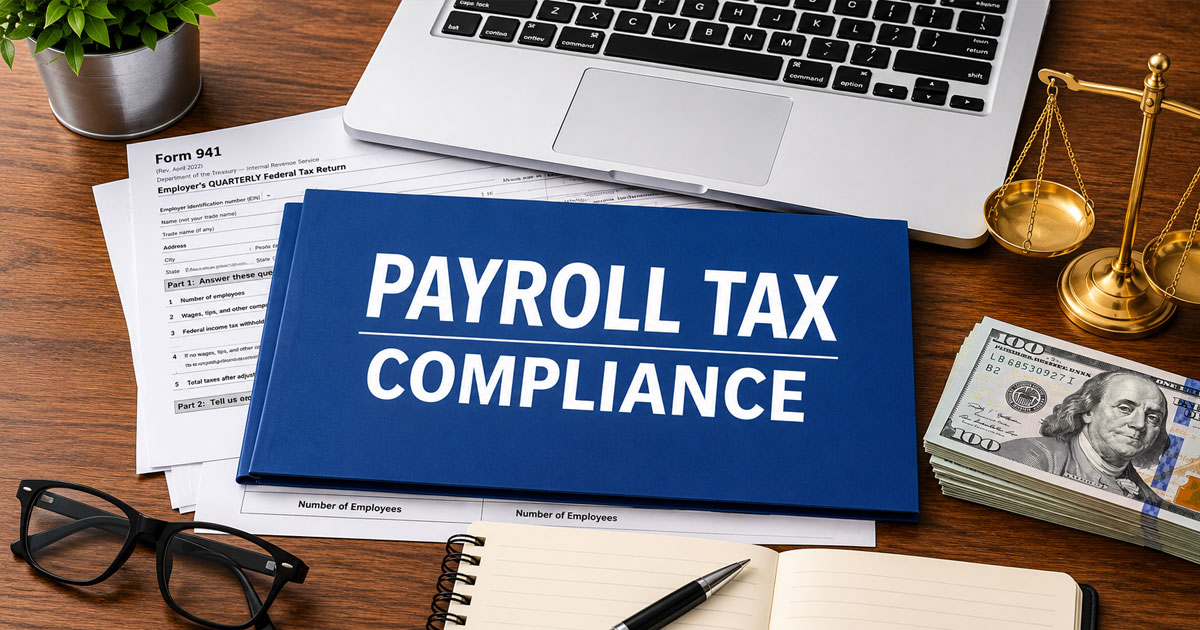
Table of Contents
Running payroll sounds simple until you realize every pay period comes with a stack of tax obligations, filing deadlines, and regulatory requirements that can trip up even experienced business owners. Payroll tax compliance is not just an annual checkbox. It is an ongoing responsibility that touches every time you pay employees, from calculating the right withholdings to depositing funds on time and filing the correct forms with federal, state, and local authorities.
This guide breaks down what payroll tax compliance means in practice, the common mistakes that cost businesses real money, and how to build processes that keep you on the right side of tax regulations year after year.

Key Takeaways
- Payroll tax compliance means calculating, withholding, paying, and reporting all payroll taxes correctly at federal, state, and local levels every pay period.
- Key 2025-2026 deadlines include Form 941 quarterly filings, Form 940 annual FUTA returns, and W-2 distribution to employees by January 31. Penalties often start from the first late day and can reach double-digit percentages of the unpaid tax.
- The biggest real-world risks come from misclassifying employees as independent contractors, missed deposit deadlines, poor record-keeping, and failing to keep up with new rules for remote and multistate employees working from different locations.
- Streamlined, automated payroll processes and periodic internal audits dramatically reduce compliance errors and save time for founders and finance teams.
- Payrun’s payroll platform automates calculations, filings, and payments, especially for New Zealand and multijurisdictional setups, helping small businesses stay compliant without hiring a full-time payroll specialist.
What Payroll Tax Compliance Means In Practice
Payroll tax compliance is about meeting every legal obligation each time wages paid to employees hit their bank accounts. This is not something you handle once a year at tax time. It is a continuous process that runs alongside every pay period your business operates.
In practical terms, compliance includes maintaining accurate employee data, applying the correct tax treatment to each payment, making on-time deposits to the relevant authorities, and filing all required returns and summaries by their deadlines.
The taxes involved vary by jurisdiction but typically include federal income tax withholding, social security and medicare contributions (known as FICA taxes in the U.S.), PAYE in New Zealand, and employer-paid levies like unemployment insurance or ACC-style contributions. Both the employer and employee share responsibility for some of these contributions, while others fall entirely on the employer.
Here is something founders need to understand clearly: in many jurisdictions, if you withhold payroll taxes from an employee’s wages but fail to remit those funds to the authorities, you can be held liable personally. This is not just a business risk. It is a personal one.
Key Payroll Tax Types And Core Rules
Every time you run payroll, several different tax types come into play at once. Each has its own rate structure, wage base limit, and reporting requirements. Getting familiar with these is the foundation of compliance.
For U.S. employers, the primary federal taxes include FICA (which covers the social security tax and medicare tax withheld from employee’s wages plus matching employer contributions), federal income tax withholding based on each employee’s W-4 form, and FUTA tax under the federal unemployment tax act.
For New Zealand employers, the focus shifts to PAYE income tax, KiwiSaver deductions, and student loan repayments where applicable.
Looking at 2025-2026 specifics, the U.S. Social Security tax applies only up to the annual wage base limit, which is approximately $176,100 for 2025. Wages above that threshold are not subject to social security contributions, though there is no cap on medicare tax. The federal unemployment tax under FUTA is charged on the first $7,000 of wages per employee, with potential credits available for state unemployment tax contributions.
State income tax and local payroll taxes can apply simultaneously and must be handled based on where each employee works, not just where your company is headquartered. For employers with employees working in multiple states, this creates layered obligations that require careful tracking.
Tax tables published by authorities like the IRS, along with employee declarations such as the W-4 in the U.S. or the IR330 in New Zealand, drive the correct tax withholding amounts for each paycheck.
Withholding And Depositing Payroll Taxes
Compliance has two distinct stages that happen on different timelines. First, you calculate and withhold the correct amount on payday. Second, you deposit those withheld taxes to the appropriate authorities according to required schedules.
In the U.S., your deposit frequency depends on your tax liability during a lookback period. Smaller employers may deposit monthly, while larger employers face semi-weekly deposit requirements. Missing these deadlines triggers immediate penalties and interest charges that compound over time.
New Zealand operates under a payday filing regime where electronic filing happens monthly or twice-monthly depending on your situation.
The practical solution here is automation. Setting up automated bank payments tied to your payroll system and using calendar alerts linked to each pay run prevents the kind of deadline slippage that leads to penalties. Manual processes leave too much room for human error when deposit schedules are tight.
Annual And Periodic Payroll Tax Filings
Accurate periodic and annual reports are just as critical as the payments themselves. Authorities use these filings to verify that what you deposited matches what you should have deposited.
Key filing requirements include quarterly forms such as Form 941 for U.S. employers, annual employer returns like Form 940 covering FUTA tax, and employee summaries like W-2s distributed by January 31 or IRD employee income statements in New Zealand. State-level reconciliations and year-end summaries add another layer for jurisdictions with state income tax.
The figures on your tax filings must reconcile with your payroll records and general ledger totals. Mismatches between deposits, filings, and internal records raise audit red flags and can trigger detailed examinations.
If you discover errors after filing, submit corrected returns quickly. Amendment forms exist for this purpose, and prompt correction demonstrates good faith while limiting additional penalties.
Employment Laws That Shape Payroll Tax Compliance
Tax rules do not exist in isolation. They interact with employment laws that govern how you pay employees, what counts as taxable compensation, and how you document your practices. Staying compliant requires understanding both sets of rules, not just tax tables.
The federal minimum wage under the fair labor standards act stands at $7.25 per hour in 2025, though many states and cities set higher rates that you must follow. New Zealand and other countries adjust minimum wage through periodic reviews, often annually.
Overtime pay rules under hour rules established by federal legislation require non-exempt U.S. employees to receive 1.5 times their regular hourly rate for hours worked beyond 40 in a workweek. Some countries mandate additional pay for weekend or public holiday work.
Paid leave creates its own compliance requirements. Whether employees are on holiday, paid parental leave, or sick leave, correct taxes still need to be withheld from those payments. Unpaid leave, on the other hand, affects taxable earnings and contribution calculations differently.
The equal pay act and related transparency laws require that pay rates and bonus structures be documented and defensible. These requirements affect how you set and record compensation, which in turn feeds into your payroll tax obligations.
Worker Classification And Exempt Status
Getting worker status right is one of the most important compliance decisions you will make. The tax and wage rules differ sharply depending on whether someone is an employee or an independent contractor.
Employees require withholding of income tax and employment tax contributions. They may also receive benefits and protections under labor laws. Independent contractors typically invoice your business and handle their own tax obligations, including self employment tax.
Tax authorities like the IRS, Inland Revenue, and HMRC use multi-factor tests focusing on control over how work is done, financial risk, and integration with the business to determine proper classification. Misclassifying employees as contractors to avoid payroll taxes is one of the most common and costly compliance failures.
Within your employee population, employee classifications also matter for overtime purposes. Exempt employees (typically executive, administrative, or professional roles) are not entitled to overtime pay, while non-exempt employees must receive it. Misclassifying someone as exempt to avoid paying overtime pay can lead to back pay claims plus penalties.
Public cases illustrate the stakes. Companies like FedEx and Uber have paid settlements in the hundreds of millions over misclassification disputes. Reclassification during an audit often triggers back taxes, interest, and reputational damage that far exceeds the original tax savings.
Common Payroll Tax Compliance Mistakes To Avoid
Even diligent small businesses stumble over the same issues repeatedly. Understanding these common mistakes helps you avoid them before they become expensive problems.
The most damaging errors include misclassifying contractors and employees, which leads to unpaid payroll taxes and missing benefits. Using outdated tax rates or brackets because you missed new legislation updates is another frequent issue. Ignoring multistate or remote-work rules and withholding only in your home state creates liability in states where employees are located.
Treating all fringe benefits and stock options as non-taxable when many are partially or fully taxable leads to underreporting. Losing or failing to organize detailed records makes it impossible to defend your figures during an audit.
Between 2022 and 2024, several companies faced large settlements for unpaid overtime and worker misclassification. These cases reinforced that authorities at both federal level and state levels are actively pursuing non compliance, particularly in industries with high contractor usage.
Record-Keeping And Documentation Gaps
Strong records are the backbone of compliance and make audits far less stressful. Without proper documentation, you cannot prove that your calculations and filings were accurate.
Employers need to keep core records for at least four to seven years depending on jurisdiction and record type. These records include timesheets or time-tracking data, payroll registers and pay slips, tax forms and filings along with payment confirmations, and employee tax declarations and contracts.
Digital storage with secure backups and controlled access is far more reliable than paper folders. It also makes retrieval faster when you need to respond to questions from authorities.
Regular internal reviews where finance or HR compares payroll records with bank transactions and tax receipts help spot gaps early. These reviews prevent small discrepancies from becoming major problems discovered during external audits.
Remote And Multistate Employees
Since 2020, remote and hybrid work has turned once-simple single-state payroll into a multijurisdiction puzzle for many small teams. An employee moving to or working from another state or country can establish tax nexus and trigger registration requirements with new tax and labor agencies. It can also change tax withholding obligations and unemployment tax contributions.
Some U.S. states have reciprocal income tax agreements with neighboring states that simplify withholding. However, convenience-of-the-employer rules in places like New York can require withholding in the employer’s state even for remote workers physically located elsewhere.
The practical solution is location tracking and formal policies requiring employees to notify HR before changing their primary work location. Without this information, you cannot ensure compliance with the correct state’s rules. South Dakota and other states without income tax create different considerations than states with complex withholding requirements.
Misclassifying Employees And Contractors
Worker misclassification remains one of the most expensive payroll tax compliance mistakes. Treating employees as independent contractors may seem convenient, but it often leads to unpaid payroll taxes, missed benefits, and penalties. Many businesses rely on job titles or contracts alone, instead of evaluating control, work structure, and dependency.
Tax authorities look closely at how work is performed, not how the role is labeled. When misclassification comes to light, businesses may face back taxes, interest, and legal disputes. Clear classification reviews and proper documentation help reduce this risk and protect both the business and workers.
Using Outdated Tax Rates And Regulatory Rules
Payroll tax rules change frequently, and relying on outdated rates or thresholds creates compliance gaps. Small businesses often miss updates related to income tax brackets, social contributions, or local levies.
Even a minor delay in applying new rates can lead to underpayment across multiple payroll cycles. Over time, these errors accumulate and become difficult to correct. Regular updates, trusted tax resources, and automated payroll tools help ensure calculations stay accurate and aligned with current regulations.
Mishandling Taxable Benefits And Payroll Adjustments
Fringe benefits often create confusion during payroll processing. Benefits such as bonuses, allowances, stock options, or reimbursements may be partially or fully taxable. Treating all benefits as non taxable leads to underreported income and incorrect filings.
Payroll adjustments for retroactive pay, bonuses, or corrections also require careful handling to avoid reporting errors. Clear benefit policies and accurate payroll adjustments ensure proper tax treatment and reduce audit exposure.
Practical Steps To Stay Compliant Year After Year
Staying compliant year after year requires consistency, ownership, and attention to detail. Businesses that treat compliance as an ongoing responsibility avoid disruption, protect cash flow, and reduce long-term risk. Clear processes, informed teams, and regular reviews help ensure payroll and tax obligations stay accurate and up to date.
Understand And Monitor Payroll Tax Laws Regularly
Payroll tax laws change more often than many businesses expect. Updates to rates, thresholds, and reporting rules can occur at both federal and state levels. When teams rely on outdated information, even small calculation errors can repeat across multiple pay cycles. Monitoring payroll tax laws on a regular schedule helps prevent these silent mistakes from building over time.
Assigning responsibility for tracking updates is essential. Whether the task sits with finance, HR professionals, or external advisors, someone must own it. Subscribing to official announcements and reviewing changes quarterly helps teams stay informed. Awareness allows businesses to adjust processes early rather than reacting after issues surface.
Build Strong Payroll Compliance Processes
Payroll compliance depends on structure, not effort alone. Clear workflows for calculating wages, withholding taxes, and submitting filings reduce guesswork. Documented processes help teams follow the same steps every pay period, regardless of staff changes or workload pressure.
Well-defined payroll compliance processes also support audits and internal reviews. When records match established workflows, it becomes easier to explain decisions and calculations. Consistency builds confidence and reduces the likelihood of missing deadlines or misapplying rules during busy periods.
Reduce Risk From Manual Processes And Errors
Manual processes increase exposure to mistakes, even in experienced teams. Spreadsheets, emails, and informal approvals create gaps where data can be missed or entered incorrectly. As payroll regulations grow more complex, relying on memory or manual checks becomes unsustainable.
Reducing manual handling helps ensure accuracy across payroll calculations and tax filings. Structured systems and validation steps limit human error and support consistency. Fewer manual steps also make it easier to identify where problems occur and correct them before payments or filings go out.
Support HR Professionals With Clear Roles And Tools
HR professionals influence compliance through employee classifications, wage updates, and policy enforcement. Without clear responsibilities, critical tasks can fall between teams. Defining ownership for each HR and payroll function prevents overlap and confusion.
Providing the right tools and access to accurate data empowers HR professionals to act confidently. Clear processes and reliable systems reduce dependence on workarounds and personal knowledge. When HR teams feel supported, they are better positioned to maintain compliance and protect both employees and the business.
Review Compliance Risks Before Penalties Appear
Compliance issues rarely appear overnight. Small discrepancies often exist long before authorities take notice. Regular internal reviews help catch gaps early, whether related to filings, payments, or record keeping. These checks reduce the chance of serious consequences later.
Businesses that delay reviews often face fines, interest, or enforcement actions once problems surface. Comparing payroll reports, tax filings, and payment confirmations helps identify risks while they remain manageable. Proactive reviews turn compliance into a controlled process rather than a reactive response.
Treating compliance as an ongoing discipline supports stability and growth. Clear ownership, updated knowledge, and reliable processes help businesses meet obligations confidently year after year.
How Payrun Helps Businesses Stay On Top Of Payroll Tax Compliance
Payrun is built specifically to reduce the daily compliance burden for growing businesses. Instead of tracking tax changes manually or worrying about deposit deadlines, you can rely on a platform designed to handle these requirements systematically.
Payrun keeps tax rules and rates current through automatic updates when Inland Revenue or other authorities change thresholds or brackets. There is no need for manual spreadsheet maintenance when 2026 rules arrive. The system updates, and your next pay run reflects the new requirements.
Ongoing compliance becomes streamlined through automated PAYE and other withholding calculations each pay cycle, built-in support for employer contributions, levies, and common deductions, and direct integration or file exports for electronic tax filing and payment.
Features specifically designed to cut the risk of common errors include centralised employee records with tax settings, KiwiSaver and student loan information in one place. Configurable pay calendars ensure weekly, fortnightly, and monthly runs always align with reporting requirements. Consistent handling of bonuses, allowances, and leave payments means you are not reinventing formulas each time.
For distributed and scaling teams, Payrun offers tools to handle multiple pay groups and locations with clear reporting that finance teams can reconcile against ledgers and bank accounts.
Using Payrun lets founders and finance leaders spend more resources on strategy and less time checking whether each pay run meets every payroll tax rule. The platform handles the compliance mechanics so you can stay informed without being overwhelmed.
FAQ
What Is The Difference Between Payroll Tax Compliance And General Tax Compliance?
Payroll tax compliance focuses specifically on taxes tied to paying employees. This includes income tax withholding, social security contributions, medicare tax, and unemployment or ACC-type levies. General tax compliance also covers company income tax, GST or VAT, and other non-payroll obligations. The key distinction is that payroll taxes follow the wage cycle, so errors can accumulate every pay period rather than just once a year. A single miscalculation repeated across 26 pay periods creates 26 times the exposure.
How Often Should A Small Business Review Its Payroll Settings?
Payroll settings should be reviewed at least once a year before new tax rates take effect, and after any major law change or lock in letter from authorities. Additional reviews are warranted when the business starts hiring in a new state or country, or introduces new benefits like bonuses or allowances. Spot-checking a few payslips every quarter to ensure withholding tax amounts still look reasonable is also good practice. This prevents small configuration errors from compounding over many pay periods.
Do I Still Need An Accountant If I Use Payroll Software Like Payrun?
Modern payroll software greatly reduces manual work and error risk, but does not replace professional advice for complex or unusual scenarios. Using an accountant makes sense for questions about optimal business structure, fringe benefit policies, equal work compensation structures, or cross-border hiring. The combination of an automated platform plus periodic expert input provides the most robust approach for many growing businesses. The software handles routine compliance while the accountant addresses strategic decisions and edge cases.
What Should I Do If I Discover A Payroll Tax Mistake From A Prior Year?
Start by correcting internal records so the true figures are clear and documented. Then file amended payroll tax returns and pay taxes on any shortfall promptly to limit penalties and interest charges. Dissatisfied employees who were affected may need to receive corrected tax forms as well. If the error spans several years or multiple jurisdictions, contacting a tax professional is advisable before making filings. Prompt correction demonstrates good faith and typically results in lower penalties than waiting for authorities to discover the issue.
How Long Do I Need To Keep Payroll Tax Records?
Many authorities expect employers to retain payroll and tax records for at least four years, and often up to seven depending on record type and jurisdiction. The fair labor standards act requires employers to keep certain records for three years while others must be kept for two years. State requirements may extend these periods. Secure digital storage with reliable backups makes long-term retention practical and low-effort while ensuring you can produce documentation if questions arise years later.