Job posting software gives employers a faster, more organized way to attract top talent across the industry. With just a few clicks or a single click, businesses can publish job posting content to multiple job boards, niche communities, and social platforms like Google, Facebook, and LinkedIn. Modern job board software helps employers reach job seekers who actively search to find jobs, explore new jobs, and join growing companies.
This software improves job posting performance by distributing open positions through a career portal, company website, own domain, and trusted networks. Employers gain access to more qualified candidates without hours of manual work or paid advertising guesswork.
Strong features support hiring teams, directors, and recruiters who focus on data, brand value, and results. The right platform helps businesses attract applicants, match talent to jobs, and support long-term growth, revenue, and customer success.
What Is Job Posting Software
Job posting software is a digital platform that helps employers create, manage, and distribute job posting content across multiple job boards and online channels from one place. Instead of manual advertise tasks, businesses use job board software to publish open positions to job seekers with a single click or just a few clicks. This software supports hiring teams by centralizing tools, resources, and data needed to attract qualified candidates efficiently.
Modern job posting software connects company websites, career portals, and its own domain listings with major platforms like Google, Facebook, and LinkedIn. It improves job posting performance by reaching niche communities, professional associations, and large talent networks. Employers gain access to more qualified candidates, reduce paid marketing costs, and keep the recruiting process organized, scalable, and ready for business growth.
How Job Posting Software Simplifies Hiring Workflows
Job posting software brings structure, speed, and clarity to modern hiring hr workflows. It replaces scattered tools with a single platform that supports job posting, distribution, and candidate management, so employers reach qualified candidates faster and keep the recruiting process fully organized.
Centralized Job Creation And Distribution
Job posting software allows employers to create job postings once and distribute them across multiple job boards, niche communities, and social platforms with a single click. This centralized approach removes manual work and ensures consistent brand messaging across every channel.
Teams can customize postings for different locations, departments, and roles without technical expertise. Distribution through company websites, career portals, and own domain listings improves visibility among job seekers who actively search for new jobs. As a result, employers attract more qualified candidates while saving hours every week that previously went into manual posting and updates.
Automated Job Board And Social Publishing
Automation plays a critical role in simplifying hiring workflows. Job board software connects directly with popular job boards, Google, Facebook, and LinkedIn to publish jobs instantly. Employers no longer switch between platforms or manage separate logins.
Automated publishing improves job posting performance by placing open positions where top talent already spends time. Paid and organic options remain easy to manage from one hr dashboard software. This level of control helps businesses advertise jobs efficiently, reduce marketing waste, and reach applicants who match role requirements more accurately. It can be simplified by a role permission system.
Organized Applicant And Candidate Management
Job posting software keeps all candidates, applicants, and resumes inside a single system. Each job posting creates a structured pipeline where employers track applications, review details, and compare talent without chaos.
Clear visibility into candidate data supports faster decisions and better collaboration across the hiring team. Directors, HR managers, and recruiters stay aligned on progress, feedback, and next steps. This organized approach reduces delays, improves candidate experience, and strengthens trust with job seekers throughout the hiring journey.
Faster Screening And Better Talent Matching
Smart filtering and matching tools help employers identify qualified candidates faster. Job posting software analyzes applications based on skills, experience, location, and role relevance, so teams focus only on high-value profiles.
This process reduces time spent on manual review and supports consistent hiring standards across the company. Better talent matching leads to stronger interviews, improved hiring outcomes, and higher long-term value for the business. Employers gain confidence that open positions reach candidates who truly fit the role and company culture.
Seamless Integration With Hiring Tools
Modern job posting software integrates easily with ATS platforms, HR systems, and internal tools. These integrations remove data silos and create a smooth flow between job posting, hiring, and onboarding stages.
Hiring teams benefit from shared access to data, performance insights, and candidate history. Integration reduces errors, improves reporting accuracy, and supports scalable growth. Businesses spend less time managing tools and more time building strong teams that support revenue and long-term success.
Clear Insights And Performance Tracking
Built-in analytics give employers clear insight into job posting performance. Teams track views, applications, source effectiveness, and conversion rates across job boards and platforms.
These insights help businesses refine job descriptions, adjust distribution strategies, and invest budget where results appear strongest. Data-driven decisions improve hiring outcomes and reduce paid advertising waste. With better visibility, employers attract top talent faster and maintain full control over their recruiting process.
Key Features To Look For In Job Posting Software
The right job posting software depends on features that support speed, reach, and control. Strong platforms help employers attract qualified candidates, manage jobs efficiently, and improve job posting performance across job boards, career portals, and social networks without technical expertise or wasted hours.
Multi-Channel Job Distribution
Multi-channel distribution allows employers to publish job posting content across multiple job boards, niche communities, and social platforms with a single click. This feature ensures open positions appear where job seekers actively search to find jobs and explore new jobs.
Consistent distribution across Google, LinkedIn, Facebook, and industry networks improves visibility and attracts more qualified candidates. Employers avoid repetitive manual work while maintaining control over where jobs appear. This reach helps businesses connect with top talent faster and reduce paid advertising dependency.
Custom Career Portal And Own Domain
A customizable career portal hosted on a company website or own domain strengthens employer brand and trust. Job seekers prefer a clear, organized space to explore careers, jobs, and company values in detail.
Job posting software with customization options allows employers to match brand style, location needs, and industry focus. This feature supports better applicant experience, higher conversion rates, and stronger engagement from candidates who align with company culture and long-term goals.
Centralized Job And Candidate Management
Centralized management keeps all jobs, applicants, and candidate data in one platform. Employers review resumes, track application status, and manage communication without switching tools or platforms.
This structure supports hiring teams, directors, and recruiters who need clarity and speed. Organized workflows reduce errors, save hours each week, and ensure no qualified candidates slip through the process. Better visibility leads to smarter decisions and consistent hiring standards.
Smart Screening And Candidate Matching
Smart screening tools help employers focus on candidates who match role requirements. Job posting software evaluates applications based on skills, experience, location, and relevance to open positions.
This feature reduces manual review time and improves job posting performance. Hiring teams spend more time connecting with high-quality applicants and less time logging mismatched profiles. Better matching increases interview quality and strengthens overall hiring outcomes.
Analytics And Job Performance Insights
Built-in analytics provide clear data on job posting performance across job boards and platforms. Employers track views, applications, source effectiveness, and conversion trends in real time.
These insights support better decisions around distribution, budget, and content optimization. Data-driven hiring helps businesses attract more qualified candidates while reducing wasted spend. Clear reporting also supports long-term planning and continuous improvement.
Integration With Hiring And HR Tools
Integration with ATS, HR systems, and internal tools creates a smooth recruiting process from job posting to hiring. Shared data reduces duplication and keeps teams aligned across stages.
This feature supports scalability as businesses grow. Employers manage jobs, candidates, and hiring workflows without friction. Seamless integration allows teams to focus on talent, value creation, and business results instead of tool management.
Benefits Of Job Posting Software For Growing Businesses
Job posting software helps growing businesses hire faster without adding complexity. It centralizes job posting, improves reach across job boards, and supports organized hiring workflows, so teams attract qualified candidates, control costs, and focus on building long-term talent value.
Faster Access To Qualified Candidates
Job posting software gives growing businesses immediate access to qualified candidates across major job boards, niche communities, and social platforms. With a single click, open positions reach job seekers who actively search to find jobs and explore new careers. This speed matters when teams expand and roles remain open for weeks.
Wider distribution improves job posting performance and attracts more qualified candidates without manual effort. Employers spend less time waiting for applicants and more time reviewing strong profiles. Faster access to talent helps businesses maintain momentum, meet deadlines, and support revenue growth without overloading internal teams.
Lower Hiring And Marketing Costs
Manual job advertising often leads to wasted paid spend and unclear results. Job posting software reduces these costs by centralizing distribution, tracking performance, and limiting unnecessary postings. Employers gain clear insight into which job boards and platforms deliver value.
Better control over marketing spend allows businesses to attract applicants at a fraction of traditional costs. Organic reach through career portals, own domain listings, and social networks reduces dependency on paid campaigns. This cost efficiency supports sustainable hiring as the company grows week after week.
Stronger Employer Brand And Visibility
A strong employer brand attracts top talent before roles even open. Job posting software supports branded career portals, company websites, and customized job pages that reflect values, culture, and industry focus. Job seekers trust employers who present clear and organized information.
Consistent branding across job boards, Google, LinkedIn, and Facebook improves recognition and credibility. This visibility helps growing businesses compete with larger employers. A professional presence attracts candidates who align with company goals, team culture, and long-term vision. To further strengthen messaging, some businesses use a free slogan generator to create clear and engaging employer branding statements that resonate with potential candidates.
Simplified Hiring For Small Teams
Growing businesses often manage hiring with limited HR resources. Job posting software simplifies the recruiting process by centralizing job posting, applicant tracking, and communication in one platform. Teams avoid juggling multiple tools or spreadsheets.
Clear workflows help directors, managers, and recruiters stay aligned. Candidate data remains organized, searchable, and accessible. This simplicity saves hours every week and reduces hiring stress. Small teams operate with the efficiency of larger organizations while staying focused on core business priorities.
Better Hiring Decisions Through Data
Data-driven hiring leads to better outcomes. Job posting software provides analytics on views, applications, source quality, and candidate match rates. Employers understand which jobs attract top talent and which platforms deliver results.
These insights support smarter decisions around job descriptions, distribution strategies, and budget allocation. Businesses reduce guesswork and improve consistency across roles. Better decisions lead to stronger hires, improved retention, and higher long-term value from each recruiting effort.
Scalable Hiring As The Business Grows
Growth demands systems that scale. Job posting software adapts as hiring volume increases, new locations open, or teams expand across departments. Employers manage more jobs, candidates, and data without adding complexity.
Integration with HR tools and internal systems supports smooth transitions from job posting to hiring. Scalable workflows allow businesses to grow confidently while maintaining quality and control. This flexibility ensures hiring supports expansion, customer demand, and future revenue goals.
Job Posting Software Vs Manual Job Advertising
Job posting software and manual job advertising deliver very different hiring outcomes. Manual methods rely on repetitive effort and limited reach, while job board software centralizes tools, improves job posting performance, and helps employers connect with qualified candidates across platforms more efficiently.
Speed And Time Efficiency
Manual job advertising requires employers to publish jobs separately on each job board, website, or social platform. Every update, edit, or repost adds extra hours and slows access to job seekers who search for new jobs daily. Delays often extend time-to-hire and increase pressure on hiring teams.
Job posting software reduces effort by allowing distribution with a single click or just a few clicks. Open positions reach multiple job boards, career portals, and networks instantly. Faster publishing helps employers engage candidates earlier and shorten hiring cycles.
Reach And Candidate Visibility
Manual advertising limits exposure because jobs appear only on selected platforms. Employers often miss niche communities, professional associations, and wider talent networks where skilled candidates stay active. Limited reach reduces the chance of attracting top talent.
Job board software expands visibility across Google, LinkedIn, Facebook, and industry-specific platforms. Broader distribution improves access to job seekers across locations and roles. Better reach leads to more qualified candidates and stronger overall hiring results.
Cost Control And Paid Advertising
Manual job advertising depends heavily on paid postings without clear performance insight. Employers spend budget across platforms with little understanding of return or value. Poor visibility often leads to wasted marketing spend.
Job posting software offers centralized cost tracking and analytics. Employers compare paid and organic results across job boards and channels. Smarter budget control helps businesses attract applicants at a fraction of traditional advertising costs.
Organization And Workflow Management
Manual hiring relies on emails, spreadsheets, and disconnected tools to manage applicants. Missed resumes, delayed responses, and inconsistent follow-ups often follow. Poor organization affects candidate experience and internal efficiency.
Job posting software centralizes jobs, applicants, and candidate data in one platform. Hiring teams track progress, review details, and collaborate smoothly. Organized workflows improve communication and keep the recruiting process structured.
Quality Of Candidates And Matching
Manual advertising often attracts a high volume of unfiltered applicants. Screening takes longer, and qualified candidates become harder to identify. Hiring teams lose focus on high-value profiles.
Job posting software supports better matching through targeted distribution, filters, and performance data. Employers focus on candidates aligned with skills, experience, and location needs. Higher-quality applications lead to stronger hiring decisions.
Scalability For Business Growth
Manual job advertising struggles to support growth as hiring volume increases. Each new role adds complexity and increases the risk of inconsistency across postings and platforms.
Job posting software scales easily with business expansion. Employers manage multiple jobs, locations, and teams from one system. Scalable workflows support long-term hiring goals and consistent results.
How Job Posting Software Improves Candidate Reach
Job posting software expands candidate reach by distributing jobs across multiple channels from one platform. Employers connect with job seekers faster through job boards, social networks, career portals, and niche communities, which improves visibility, job posting performance, and access to qualified candidates.
Multi-Channel Job Board Distribution
Job posting software allows employers to publish jobs across multiple job boards at once. Wider distribution ensures open positions appear where job seekers actively search to find jobs and explore new careers. Manual posting limits reach, while centralized software removes that barrier completely.
Consistent placement across general and industry-specific job boards improves exposure to diverse talent pools. Employers gain access to candidates across locations, experience levels, and roles without additional effort. Better reach leads to more qualified candidates and stronger hiring outcomes for growing teams.
Access To Niche Communities And Networks
Niche communities often hold highly skilled and specialized talent. Job posting software connects employers with professional associations, industry networks, and targeted platforms that manual advertising often overlooks.
Targeted distribution places jobs in front of candidates who already match role requirements. Employers attract applicants with relevant skills, technical expertise, and industry knowledge. Strong alignment between jobs and audiences improves candidate quality and reduces time spent screening mismatched profiles.
Social Media And Search Visibility
Job seekers increasingly rely on Google, LinkedIn, and Facebook to discover new jobs. Job posting software integrates with these platforms to improve visibility across search results and social feeds.
Automated distribution ensures jobs appear where candidates spend time daily. Better visibility increases clicks, applications, and overall job posting performance. Employers reach both active and passive candidates without extra marketing effort or complex setup.
Branded Career Portals And Company Websites
A branded career portal on a company website or its own domain strengthens trust and attracts serious applicants. Job posting software supports customized career pages that showcase jobs, company culture, and growth opportunities.
Job seekers prefer organized portals that provide clear job details and easy application access. Strong branding improves conversion rates and encourages candidates to explore multiple open positions. Employers benefit from higher-quality applications and improved employer reputation.
Location-Based And Role-Specific Targeting
Job posting software supports precise targeting by location, role, and experience level. Employers reach candidates who meet geographic and functional requirements without unnecessary exposure.
Targeted distribution improves efficiency and relevance. Candidates receive jobs that match preferences, while employers attract applicants aligned with business needs. Better targeting reduces noise, improves engagement, and strengthens overall recruiting results.
Performance Data And Reach Optimization
Analytics play a key role in improving candidate reach. Job posting software tracks views, clicks, applications, and source performance across platforms.
Clear data helps employers refine distribution strategies and focus on high-performing channels. Continuous optimization increases reach over time and ensures jobs connect with the right talent. Data-driven decisions support scalable hiring and consistent access to qualified candidates.
Common Hiring Problems Solved By Job Posting Software
Hiring challenges often slow growth, drain resources, and reduce access to top talent. Job posting software addresses these issues by centralizing job posting, improving reach across job boards, and keeping the recruiting process organized, efficient, and results-focused for modern employers.
Limited Reach To Qualified Candidates
Many employers struggle to reach qualified candidates because job postings appear on only a few platforms. Manual advertising misses job seekers active on niche communities, professional networks, and social platforms. Limited exposure reduces job posting performance and delays hiring.
Job posting software solves this problem by distributing jobs across multiple job boards, Google, LinkedIn, and Facebook with a single click. Broader reach connects employers with more qualified candidates across locations and roles. Better visibility ensures open positions reach talent who actively search for jobs that match skills and experience.
Excessive Time Spent On Manual Posting
Manual job posting consumes hours each week through repetitive tasks such as creating listings, logging into platforms, and updating job details. Small teams often lose focus on higher-value hiring decisions because of administrative work.
Job board software centralizes job creation and distribution in one platform. Employers publish, edit, and manage jobs efficiently without technical expertise. Faster workflows reduce delays, shorten time-to-hire, and allow hiring teams to focus on candidate evaluation and business priorities.
Disorganized Applicant Management
Scattered resumes, emails, and spreadsheets create confusion during hiring. Employers lose track of applicants, miss follow-ups, and deliver inconsistent candidate experiences. Poor organization affects both hiring speed and employer reputation.
Job posting software keeps all applicants and candidate data in one system. Clear pipelines help teams review profiles, track progress, and collaborate effectively. Organized management improves communication, builds trust with job seekers, and supports consistent hiring decisions.
High Volume Of Unqualified Applicants
Job postings without targeted distribution often attract a large number of mismatched applicants. Screening consumes valuable time, and qualified candidates risk getting lost in the process.
Job posting software improves candidate quality through targeted job board selection, role-based distribution, and performance insights. Employers focus on applicants who align with skills, location, and experience needs. Better matching leads to stronger interviews and improved hiring outcomes.
Lack Of Visibility Into Hiring Performance
Many employers struggle to understand which job boards or platforms deliver results. Manual hiring provides little insight into views, applications, or source effectiveness. Decisions rely on guesswork rather than data.
Job posting software provides clear analytics on job posting performance. Employers track reach, applications, and conversion rates across platforms. Data-driven insight supports smarter distribution, better budget control, and continuous improvement in hiring results.
How To Choose The Right Job Posting Software
Choosing the right job posting software requires a clear focus on hiring goals, reach, and usability. The right platform helps employers attract qualified candidates, improve job posting performance, and manage recruiting workflows efficiently without unnecessary complexity or wasted resources.
Hiring Goals And Business Size
Every business hires for different reasons, volumes, and timelines. Job posting software should align with company size, hiring frequency, and long-term growth plans. Small teams often need simplicity, while fast-growing businesses require scalability and control.
Clear hiring goals help employers select software that supports current needs and future expansion. Platforms designed for volume hiring, niche roles, or multi-location jobs deliver better results when matched correctly. Alignment between business goals and software capabilities prevents overspending and ensures consistent hiring outcomes.
Job Board Coverage And Reach
Strong job board coverage plays a major role in attracting qualified candidates. Job posting software should support distribution across major job boards, niche communities, and social platforms like Google, LinkedIn, and Facebook.
Wider reach improves visibility among job seekers who search for new jobs across different channels. Employers should review supported platforms, industry networks, and geographic reach. Better coverage increases access to top talent and reduces reliance on manual advertising methods.
Ease Of Use And Setup
Ease of use determines how quickly teams adopt job posting software. Platforms with intuitive dashboards, clear workflows, and simple controls reduce training time and errors.
Employers benefit from software that requires minimal technical expertise. Quick setup allows teams to publish jobs, manage candidates, and track performance without delays. User-friendly design saves hours each week and keeps hiring teams focused on candidate quality rather than tool management.
Customization And Branding Options
Employer brand plays a key role in attracting applicants. Job posting software should offer customization for job pages, career portals, and company websites on an own domain.
Brand-aligned job postings build trust and improve candidate engagement. Custom layouts, messaging, and visuals help employers stand out in competitive industries. Strong branding attracts candidates who align with company culture, values, and long-term vision.
Candidate Management And Screening Tools
Effective candidate management keeps hiring organized and efficient. Job posting software should centralize applicants, resumes, and communication in one platform.
Screening tools that support role-based filters, location criteria, and experience matching improve candidate quality. Employers spend less time sorting profiles and more time connecting with qualified candidates. Strong management tools support consistent, fair, and timely hiring decisions.
Analytics And Performance Reporting
Data-driven insight separates average hiring from successful hiring. Job posting software should provide clear analytics on views, applications, source performance, and conversion rates.
Performance data helps employers refine job descriptions, adjust distribution strategies, and control marketing spend. Better reporting supports continuous improvement and ensures hiring decisions rely on measurable results rather than assumptions.
Integration And Long-Term Scalability
Hiring systems must scale as businesses grow. Job posting software should integrate smoothly with ATS platforms, HR tools, and internal systems.
Integration reduces data duplication and supports a seamless recruiting process from job posting to hiring. Scalable software adapts to higher job volumes, new locations, and expanding teams. Long-term flexibility ensures hiring technology continues to deliver value as business needs evolve.
Future Trends In Job Posting Software For 2026
Job posting software continues to evolve as hiring becomes more competitive and data-driven. Trends in 2026 focus on smarter distribution, deeper insights, and stronger candidate experiences that help employers attract qualified candidates, improve job posting performance, and hire with confidence.
AI-Driven Job Distribution And Matching
AI-powered features shape how job posting software connects employers with candidates. Smart algorithms analyze job details, skills, and past performance data to distribute jobs across the most effective job boards and platforms.
Better matching improves access to qualified candidates and reduces irrelevant applications. Employers benefit from faster hiring decisions and higher-quality talent pipelines. AI-driven distribution helps businesses reach top talent across locations, industries, and niche communities with greater precision.
Personalized Candidate Experiences
Candidate experience becomes a key differentiator in 2026. Job posting software now supports personalized job recommendations, tailored career portals, and role-specific messaging for job seekers.
Personalization helps candidates discover jobs that align with skills, interests, and location preferences. Better experiences increase application completion rates and improve employer brand perception. Employers attract applicants who feel understood and valued throughout the recruiting process.
Expanded Integration Across Hiring Platforms
Job posting software increasingly connects with ATS, HR systems, payroll tools, and internal platforms. Strong integration creates a unified hiring ecosystem that reduces manual data handling and errors.
Shared access to candidate data improves collaboration across teams. Employers manage job posting, candidate tracking, and hiring workflows from one connected system. Deeper integration supports scalable hiring and long-term operational efficiency.
Advanced Analytics And Predictive Insights
Analytics move beyond basic metrics in 2026. Job posting software offers predictive insights that forecast candidate supply, application trends, and hiring outcomes.
Employers use data to plan hiring timelines, optimize distribution strategies, and control marketing spend. Predictive analytics support proactive decisions and reduce reliance on guesswork. Data-driven hiring leads to better talent acquisition and stronger business results.
Stronger Focus On Compliance And Data Security
Data privacy and compliance remain critical concerns for employers. Job posting software in 2026 emphasizes secure data handling, regional compliance, and transparent candidate consent.
Improved security builds trust with candidates and protects the employer's reputation. Compliance-focused features help businesses operate confidently across regions and industries. Strong data protection ensures long-term reliability and credibility in competitive hiring environments.
Why Payrun Is A Smart Choice For Job Posting Software
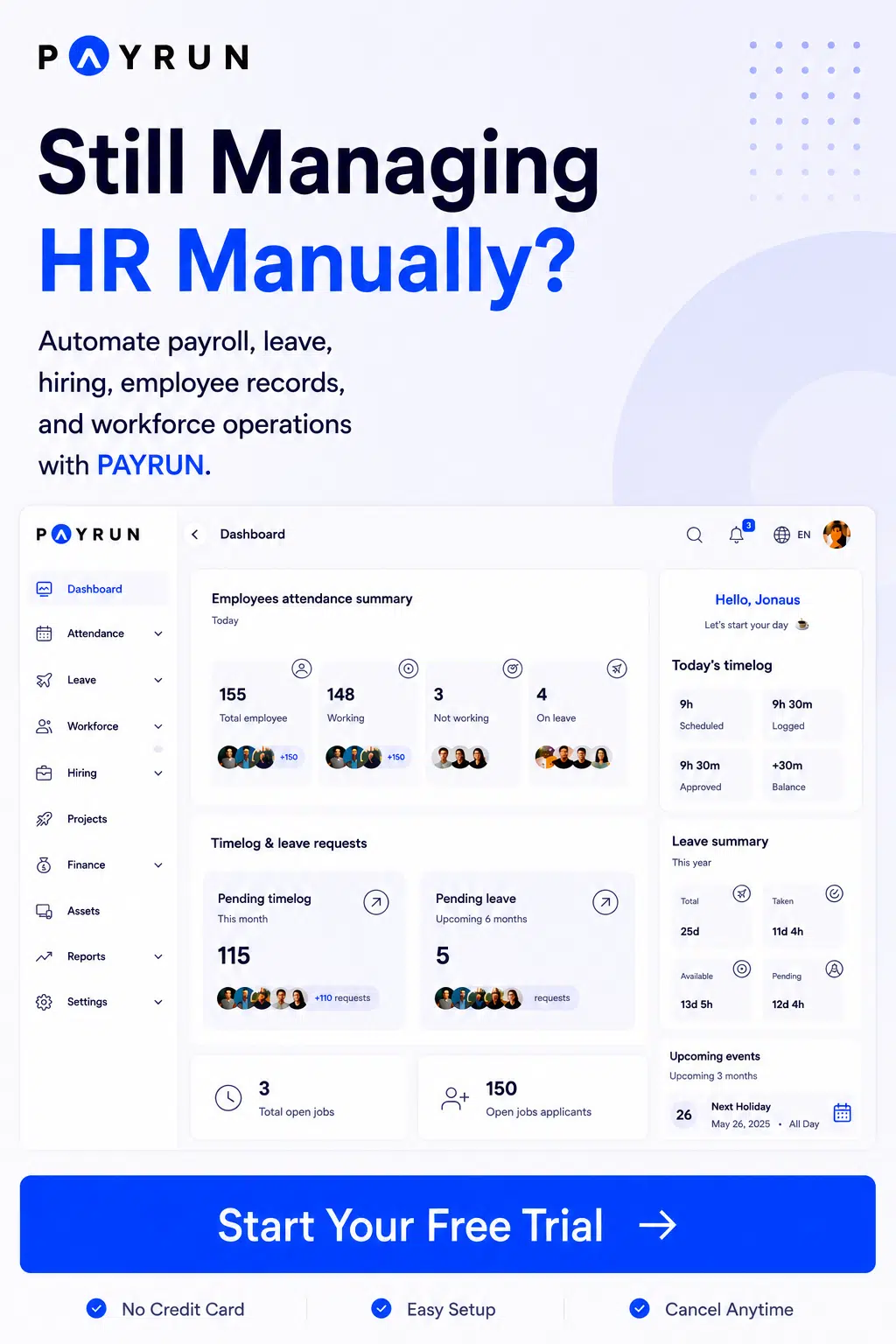
Payrun stands out as a smart choice for job posting software because it combines speed, control, and reach in one reliable platform. Businesses publish job posting content across job boards, niche communities, and social channels with a single click, which helps employers reach qualified candidates faster. A branded career portal on its own domain improves trust among job seekers and supports stronger job posting performance. Clear workflows reduce hours spent on manual tasks, so hiring teams stay focused on talent, customers, and revenue. As an organization, Payrun delivers tools that fit growing teams without technical barriers.
Payrun also delivers long-term value through data-driven features and real customer proof. Verified testimonials highlight measurable results, with some employers reaching millions of job seekers across networks. From first launch date to daily use, the platform supports customization without coding, removes the need to build from scratch, and keeps every role organized in one box. Clear reporting, flexible class-based roles, and scalable design help businesses grow confidently. You can enjoy these features at a suitable price.
FAQs
Does Job Posting Software Work For Small Businesses?
Yes, job posting software fits small businesses very well. Centralized job posting, access to job boards, and simple workflows help small teams attract qualified candidates without extra tools or technical expertise.
Can Job Posting Software Reduce Time-To-Hire?
Yes, job posting software shortens time-to-hire by distributing jobs quickly across platforms. Faster reach to job seekers and better candidate matching reduces delays and manual follow-ups.
Is Job Posting Software Useful For Niche Or Industry-Specific Roles?
Yes, job posting software supports niche communities and industry networks. Targeted distribution helps employers reach specialized talent with the right skills, experience, and location fit.
Does Job Posting Software Replace An ATS?
No, job posting software does not replace an ATS. It focuses on job distribution and reach, while ATS tools handle deeper applicant tracking and hiring workflows.
How Does Job Posting Software Help Employer Branding?
Job posting software supports branded career portals and its own domain job pages. Consistent branding across job boards and platforms builds trust with candidates and improves application quality.
Can Job Posting Software Improve Job Posting Performance Over Time?
Yes, job posting software improves performance through analytics and optimization. Employers use data to refine distribution, adjust content, and focus on high-performing job boards.
Is Technical Expertise Required To Use Job Posting Software?
No technical expertise is required for most platforms. Modern job posting software offers a simple setup, intuitive dashboards, and tools that allow teams to manage jobs efficiently without coding.