HR Software Vs Spreadsheets: The Better Payroll Choice For Modern Teams
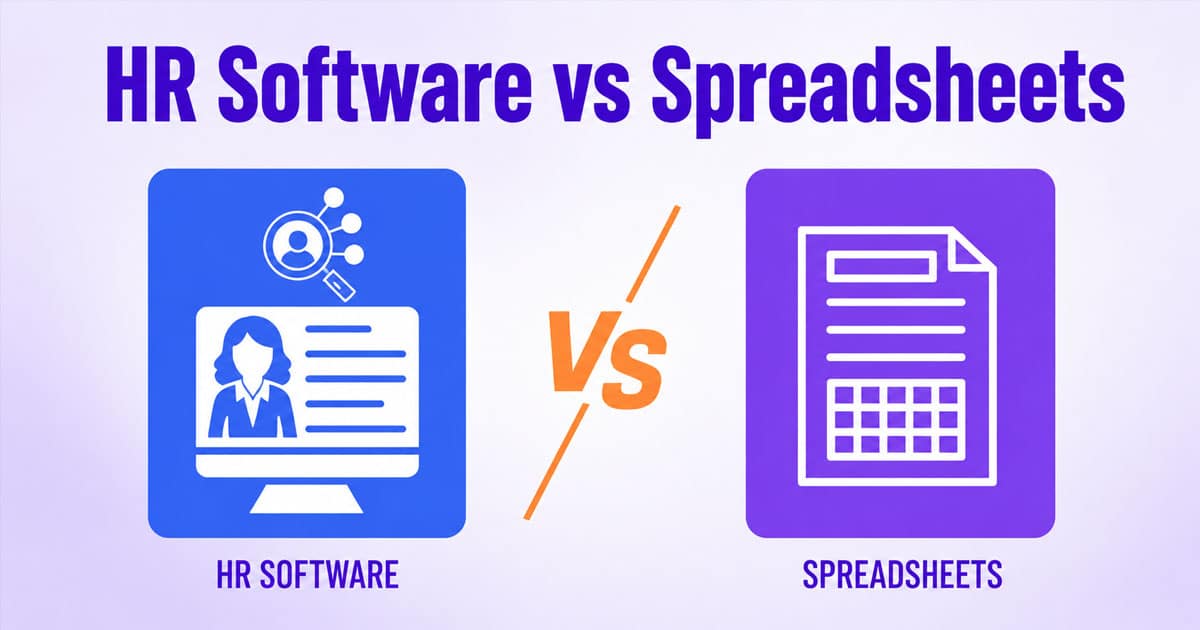
Table of Contents
The choice between HR software and spreadsheets remains a critical decision for modern organizations. Despite rapid advances in HR technology, around 56% of companies still depend on spreadsheets to manage core HR and payroll processes. This reliance comes with clear risks. Research indicates that nearly 88% of spreadsheets contain errors, and human mistakes account for an estimated 25% of business data loss.
Instead of focusing on strategic initiatives, HR teams often spend valuable time maintaining complex formulas and manual updates. By contrast, companies that adopt integrated payroll and time tracking software report up to 7% higher revenue performance while maintaining strong data security and compliance with standards such as GDPR. This article examines the key differences between HR software and spreadsheets, helping organizations identify the right payroll approach as they scale.

What Is HR Software?
HR software is a centralized digital system that helps businesses manage employees, payroll, and compliance efficiently. It replaces manual HR tasks with automated, accurate, and secure processes.
HR software, also known as HRMS or HCM, brings payroll, employee records, attendance, performance, and compliance into one platform. It reduces manual data entry and creates a single, reliable source of employee information. This approach allows HR teams to spend less time on administration and more time on strategic workforce planning.
Modern employee management software also plays a critical role in payroll and compliance. Automated salary calculations, tax handling, and integrated time tracking reduce errors common in spreadsheets. Built-in compliance rules, audit-ready reports, and secure access controls protect sensitive data and help businesses meet regulatory requirements as they scale.
What Is Spreadsheet?
A spreadsheet is a grid-based digital file used to organize, calculate, and analyze data manually. Businesses often rely on spreadsheets for basic HR and payroll tasks due to their simplicity and low cost.
In HR, spreadsheets track employee records, attendance, payroll calculations, and basic reporting. Tools like Microsoft Excel and Google Sheets allow teams to customize formulas, templates, and shared files with minimal setup. This familiarity makes spreadsheets attractive for small teams with simple payroll needs and limited budgets.
However, spreadsheets create hr challenges in payroll management as teams grow. Manual data entry increases error risk, with studies showing most spreadsheets contain mistakes. Limited security, poor version control, and a lack of compliance automation expose sensitive data and make payroll accuracy harder to maintain at scale.
HR Software Vs Spreadsheets: Key Difference
The basic difference between HR software and spreadsheets shows up in how they handle core HR functions. Four critical areas highlight why many teams no longer rely on traditional spreadsheet-based processes.
HR Software Vs Spreadsheets Comparison Table
| Feature | HR Software | Spreadsheets |
|---|---|---|
| Automation | Automates payroll, tax, attendance, and workflows | Manual calculations and data entry |
| Manual Workload | Significantly reduced through automation | High due to repetitive tasks |
| Data Accuracy | High accuracy with validation and error checks | High error risk from formulas and manual input |
| Error Rate | Minimal and system-controlled | Up to 88% error occurrence |
| Security | Encrypted data with role-based access control | Limited protection and shared access risks |
| Compliance | Built-in tax and labor law compliance | Manual tracking of regulations |
| Scalability | Supports growth from small to large teams | Becomes inefficient as teams grow |
| Reporting | Real-time dashboards and analytics | Static and time-consuming reports |
| Integration | Integrates with payroll, time tracking, and HR tools | Limited or no system integration |
| Best For | Growing and compliance-focused teams | Very small teams with simple needs |
Automation And Manual Workload
Excel spreadsheets eat up too much employee time for HR tasks. HR Executive reports that repetitive HR tasks take 6-8 hours weekly from teams, about 400 hours each year. This waste of time keeps HR professionals from focusing on what matters, like boosting employee engagement or making onboarding better.
Traditional spreadsheets can't automate tasks. This means endless manual data entry and more chances for mistakes. Without automated calculations, immediate updates, and standard formats, spreadsheets make HR processes and decisions more complex than they need to be.
HR software changes everything through workflow automation. Teams save roughly 5 hours every week with automated features like employee onboarding and leave management. This lets HR focus on strategic work instead of pushing papers.
Data Accuracy And Error Rates
Spreadsheet errors hit businesses where it hurts - their wallet. Ernst & Young found that SMBs lose an average of $12,000 yearly from payroll errors and compliance mistakes. A single wrong entry in salary calculations or leave counts can spark payroll disputes and wrong payments or government fines.
Research shows that:
- 88% of spreadsheets have errors
- Businesses lose about 25% of their data through human error
- Error rates jump 30% when Excel handles more than 100 employees
HR software fixes these problems by automating data entry with validation tools that keep payroll and employee records accurate. The system catches mistakes before they become expensive problems. This prevents costly blunders like Eastman Kodak's $11 million severance pay mistake caused by one spreadsheet typo.
Security And Access Control
Excel's security measures don't cut it for protecting sensitive employee data. Statista reports a 15% rise in GDPR penalties in 2025, with small and medium businesses facing fines for poor data protection.
Missing encryption or access controls leave spreadsheet data open to security breaches. This can seriously damage a company's reputation. Anyone in the organization might access spreadsheets stored in a central location, which increases data breach risks.
HR software protects data through encryption and role-based access controls while staying GDPR compliant. Only authorized users can access information, striking the right balance between security and accessibility.
Scalability For Growing Teams
Employee record management becomes messy for growing SMBs using multiple spreadsheet versions. Teams struggle to work together because of data silos and poor integration, especially in hybrid setups. SHRM data shows errors increase by 30% when Excel manages more than 100 employees.
Your small team of ten might soon grow to twenty or hundreds. Soon you'll juggle dozens of spreadsheets with no clear master version. This creates unnecessary stress and security risks.
HR software grows smoothly from 10 to 1,000+ employees. Its central database removes silos, and integration with payroll and other systems supports business growth. Forward-thinking organizations choose HR software over spreadsheets because it adapts as they expand.
Compliance And Regulatory Management
Payroll compliance becomes harder as regulations change across regions. Spreadsheets rely entirely on manual updates, making it easy to miss tax rate changes, statutory deductions, or labor law updates. This increases the risk of penalties and audit failures.
HR software embeds compliance rules directly into payroll workflows. It applies current tax laws, statutory policies, and reporting requirements automatically. Built-in alerts and audit-ready logs help businesses stay compliant without constant manual oversight.
Reporting And Decision-Making Insights
Spreadsheets limit payroll reporting to static data views that require manual formulas and updates. Generating accurate reports takes time and often results in outdated or inconsistent insights.
HR software delivers real-time payroll and workforce reports through dashboards. Leaders gain visibility into payroll costs, overtime trends, and headcount data instantly. These insights support faster, data-driven decisions that spreadsheets struggle to provide.
Advantages And Disadvantages Of HR Software Vs Spreadsheets
Your organization's efficiency and payroll compliance depend on picking the right HR management system. Let's take a closer look at both options to help you make an informed choice.
Advantages Of Using HR Software
Modern HR software saves substantial time through automation. HR departments spend about 18 hours weekly managing spreadsheets manually. This time could be better spent on strategic initiatives with the right software. Automated systems also cut down on human errors in data entry and provide instant updates that keep HR insights reliable.
These systems excel at security with reliable protection features like encryption, detailed permissions, and activity tracking. They automatically adapt to regulatory changes and generate reports that keep your business compliant.
The software also enables employees through self-service portals. Staff members can check their payslips, request time off, and update their information on their own. This reduces the workload for HR teams. A central database eliminates scattered information and helps spot trends through advanced analytics for informed decisions.
Disadvantages Of Using HR Software
Small businesses often struggle with the high upfront costs of HR software. The expenses go beyond just licensing - you might need to upgrade hardware and change infrastructure too.
New users face a tough learning curve and need extensive training. Teams might see a temporary drop in productivity as they get used to the new system. The system needs regular updates and maintenance to work properly, which could mean paying for external IT help.
These systems don't always fit every business process perfectly. You might need special configurations to match your specific needs. Complex systems often require specialized support, adding to the costs.
Advantages Of Using Spreadsheets
Spreadsheets give organizations flexibility and familiarity. Small teams are starting get a cheap solution that handles simple math tasks easily. Businesses with tight budgets find them particularly appealing.
Teams can quickly customize spreadsheets to fit their needs. When regular software falls short, spreadsheets can fill the gap. Most employees already know tools like Excel, so training needs are minimal.
Disadvantages Of Using Spreadsheets
Errors pose the biggest problem with spreadsheet-based HR processes. Field audits show that most business spreadsheets have mistakes. Research reveals 88% contain some type of error. Even careful reviews often miss these mistakes.
Security gaps create more risks. Spreadsheets often move through email or shared folders, which can lead to data breaches. Past incidents show how a single misdirected Excel file can expose thousands of employees' personal information, resulting in possible fines.
Version control creates another headache. Multiple people working with different copies leads to confusion about the latest data. This causes mismatched rates, missing hours, and mixed-up adjustments that hurt payroll accuracy.
Spreadsheets also don't scale well. Managing data becomes harder as your employee count grows, and larger spreadsheets mean more chances for errors.
When To Choose HR Software
The switch from spreadsheets to dedicated HR software marks a key turning point for growing businesses. You'll know it's time to upgrade after looking at what works and what doesn't.
If Your Team Is Growing Fast
Your spreadsheets start showing their limits once your business hits certain numbers. Research shows Excel users make 30% more mistakes when managing over 100 employees. The risks get bigger as your team grows.
I've watched companies struggle with version control and data accuracy. A system that works for 10 people falls apart with 50 or 100 employees. Your manual systems break down as you hire more people and your processes get complex.
Growing businesses face these common problems:
- Nobody knows which version has the right information
- You can't keep up with all the job candidates
- Employee files end up scattered everywhere
Moving to HR software during growth phases is a big deal. Modern HR systems keep all employee data in one place and stay accurate, regardless of your team size. These systems work just as well for small teams as they do for big organizations.
When You Need Better Compliance
Getting compliance wrong can get pricey. To cite an instance, mistakes on Form I-9 paperwork lead to fines between $281 and $2,789 for each violation. The Department of Labor got back $149.90 million in wages that companies owed to more than 125,000 workers in just one year.
Manual processes make these risks much worse. The most expensive mistakes happen when companies don't pay minimum wage or label workers as exempt when they shouldn't. Companies also face big penalties when they miss state rules about workers' comp and required paid leave.
HR software cuts these risks by offering:
Tools that help you plan instead of fixing problems after they happen. These systems build legal requirements into your daily work and flag issues before they become violations.
Document systems that keep records organized based on how long you need to keep them, which makes audits easier. You'll have all the information ready when auditors come knocking.
Resource centers with current information about federal, state, and local employment laws. This helps you stay on top of changing regulations.
If You Want To Save Time On Payroll
HR software saves real time and money. Companies save up to 20 hours each week by combining payroll with HR systems. This adds up to $20,000 in saved costs yearly just from less paperwork.
Doing payroll with spreadsheets wastes time your team could spend on better things. HR teams typically spend 6-8 hours every week on repetitive tasks - that's 400 hours a year. Automation frees your team to focus on making employees happier and helping them grow.
Connecting HR with payroll systems really pays off. You won't need to enter data twice, you'll make fewer mistakes, and all your systems will show the same information. When time tracking connects straight to payroll, people get paid right away without manual checks.
Small teams with simple payroll needs might do fine with spreadsheets for now. As you grow, though, you'll need proper HR software - it's just a matter of when.
Payrun helps you figure out the right time to move from spreadsheets to HR systems, so you can make the switch before manual processes cause problems.
When To Choose Spreadsheets
Sophisticated HR software has many advantages, but traditional spreadsheets still work great in certain business scenarios. You can save money on unnecessary investments by knowing the right time to use these simpler tools.
For Very Small Teams
Spreadsheets work perfectly for businesses with a small workforce. Companies with 10 or fewer employees in states with simple labor and tax laws can manage payroll just fine in Excel. These tools are ideal for new businesses that need a simple system to track employee information.
Small teams usually have:
- A simple organizational structure
- Direct communication lines
- Fewer compliance needs
Spreadsheets can be a practical choice for freelancers, contractors, or small businesses with few employees. The game changes completely as your team expands - what works for five employees doesn't scale well to fifty.
When Money Is Tight
Money constraints are probably the best reason to pick spreadsheets over dedicated HR software. Excel and Google Sheets are either free or cost much less than specialized accounting software. It makes them a great fit for startups running on tight margins.
You'll save money by avoiding costs that come with specialized software. You won't need:
- Outside consultants
- Long training sessions
- Extra hardware purchases
Many businesses start with spreadsheets because they don't have much money to spend. The hidden costs of entering data by hand often outweigh the original savings as revenue grows.
If Your Payroll Is Simple
Spreadsheets often do the job for organizations with straightforward pay structures. You can meet your needs with manual spreadsheet calculations if you mostly pay hourly wages or simple salaries without complex benefits or deductions.
Templates with pre-filled tax rates and overtime formulas make things even easier. These ready-to-use solutions handle basic math and need minimal tweaking.
Spreadsheets work great for simple payroll situations like:
- Regular work schedules without complex time changes
- Basic overtime tracking
- Few or no special deductions
- Operations in one state without multi-state complications
Excel makes it easy to manage employee data, but it's best only for very small businesses with simple payroll and tax needs. The limits of traditional spreadsheets become clear quickly once your needs get more complex.
How HR Software Improves Payroll Efficiency
Payroll processing is one of the most critical and time-consuming parts of HR operations. A comparison between HR software and spreadsheets shows clear advantages in how companies manage their payroll.
Automated Calculations And Tax Handling
HR software has reshaped the scene by making calculations faster, reducing errors, and giving HR teams more time for other tasks. Modern systems now handle:
- Tax calculations and filings at the federal, state, and local levels
- Wage garnishment management and benefits deductions
- Overtime calculations based on set rules
- Year-end tax form generation (W-2s, 1099s)
The software's accuracy makes a huge difference. Traditional spreadsheets have errors 88% of the time, but automated systems eliminate these calculation mistakes. The systems also stay up to date with the newest tax laws and HR regulations at both the federal and state levels. This eliminates human error in applying complex tax codes that change often.
Integration With Time Tracking
The connection between time tracking and payroll systems is a great way to get better efficiency. This merger removes the need for manual data entry that often causes errors in spreadsheet systems.
Employees can log their time through digital interfaces, usually on mobile devices with GPS verification. These hours then flow directly into payroll calculations with the right job codes and pay rates. Your payroll team can focus on strategic tasks instead of processing timecards.
Companies that use integrated time tracking with payroll see fewer mismatches between planned shifts and actual hours worked. This setup prevents payments from getting too high or too low while following labor laws about overtime and breaks.
Real-Time Payroll Reporting
HR software gives immediate access to payroll data, unlike static spreadsheets. Managers can check results mid-period with immediate updates on live data. This helps them fix issues before they become problems.
Custom reports help identify where money might be spent unnecessarily. Reports can be exported to Excel or PDF with just one click, combining flexibility with the benefits of specialized software.
Businesses can see all their workforce costs clearly. This helps finance teams understand what drives payroll costs and make informed decisions. The transparency helps with workforce planning and ensures accurate pay for every employee.
Why HR Software Is Better Than Spreadsheets For Modern Teams
The workplace has changed a lot over the last several years. Teams now work more remotely and digitally. Organizations need tools that can keep up with these changes. Old ways of handling HR tasks face new challenges that show why modern solutions work better.
Better Employee Experience
People now expect more from their workplace technology. Team members can update their details, check their pay, and ask for time off through self-service portals and mobile apps without waiting for HR. This freedom helps boost how much people participate at work.
Employees feel more connected to their company when they can easily check their information. People who feel involved stay longer, do better work, and tell others about their workplace. This improved experience brings real business benefits in today's world, where keeping talent is significant.
Fewer Errors And Delays
Payroll mistakes can hurt a business more than you might think. About 94% of business spreadsheets have serious errors. These mistakes happen when people enter data by hand or use the wrong formulas. Such errors can get pricey and cause problems with rules and regulations.
All-in-one HR platforms cut down these issues. The system spots possible problems before they reach employees through automatic calculations, data checks, and built-in safeguards. Research shows HR automation can reduce payroll errors by up to 90%. This protects your money and your employees' trust.
Supports Remote And Hybrid Workflows
Today's work setups need tools that work from anywhere. Remote and hybrid teams depend on central systems where information stays current and available. HR software offers a single source of truth that helps managers and HR teams work well in spread-out teams.
Remote employees get steady support throughout their work experience through well-laid-out digital processes:
- New hires feel more welcome with automated resources ready before they start
- Performance tracking continues naturally with digital goals and feedback tools
- Teams stay connected through built-in surveys and check-ins
Advantages Of Using HR Software
HR software does more than just make things run smoothly. Leaders can see workforce trends, check how engaged people are, and spot who might leave through central dashboards. This evidence-based information helps create better policies and improve work practices in ways spreadsheets can't match.
Cloud-based HR solutions really shine when you need mobile access. Teams can handle people-related tasks from any location. This reduces dependence on office systems and supports true workplace flexibility. Organizations moving to modern work models find this feature essential.
How Payrun Helps Businesses Make The Right Payroll Choice
Need help deciding between HR software and spreadsheets? Payrun solves this dilemma with a modern cloud-based platform that caters to growing businesses needing reliable payroll processing.
Payrun stands out as an all-in-one solution that keeps employee data secure in one place. This eliminates the scattered information issues that make traditional spreadsheets problematic. The system stores employee records, salary structures, and tax details to create a single source of truth. Users won't face the version control problems common with Excel files anymore.
Payrun's automation capabilities set it apart from other solutions. The platform applies the right salary formulas, calculates earnings and adjustments, and makes sure employees get their correct payments each cycle. This organized approach eliminates manual entry errors that affect 88% of spreadsheets.
Companies moving away from traditional methods will find Payrun's setup process straightforward. Users can configure core salary structures, allowances, and deductions right in the platform. The system then takes care of repetitive calculations that take up much time when managed in spreadsheets. They have many key features for your business needs.
FAQs
What Are The Key Differences Between HR Software And Spreadsheets For Payroll Management?
HR software delivers automation, higher data accuracy, stronger security, and better scalability. It reduces manual effort, limits payroll errors, applies role-based access, and supports team growth more effectively than spreadsheets.
When Should A Company Switch From Spreadsheets To HR Software?
A company should switch when payroll complexity increases due to growth, compliance pressure, or time constraints. Teams with over 100 employees or multiple regulations gain the most immediate value.
What Are The Main Advantages Of HR Software For Payroll Processing?
HR software automates salary calculations, tax deductions, and compliance tasks. It integrates with attendance systems, reduces payroll errors, and offers real-time visibility into workforce costs.
Are Spreadsheets Still Suitable For Payroll Management?
Spreadsheets suit very small teams with basic payroll needs and limited budgets. As headcount or compliance demands increase, spreadsheets become inefficient and error-prone.
How Does HR Software Improve The Employee Experience?
HR software offers employee self-service for payslips, leave requests, and personal data access. This autonomy boosts transparency, reduces HR workload, and supports remote work environments.
How Does HR Software Help With Payroll Compliance?
HR software applies local tax rules, statutory deductions, and reporting standards automatically. It reduces compliance risks by keeping payroll aligned with regulatory updates.
Does HR Software Save Time Compared To Spreadsheet Payroll?
HR software cuts payroll processing time through automation and integrations. HR teams avoid repetitive manual tasks and complete payroll cycles faster with fewer corrections