HRIS Vs HRMS: What Is The Real Difference In 2026?
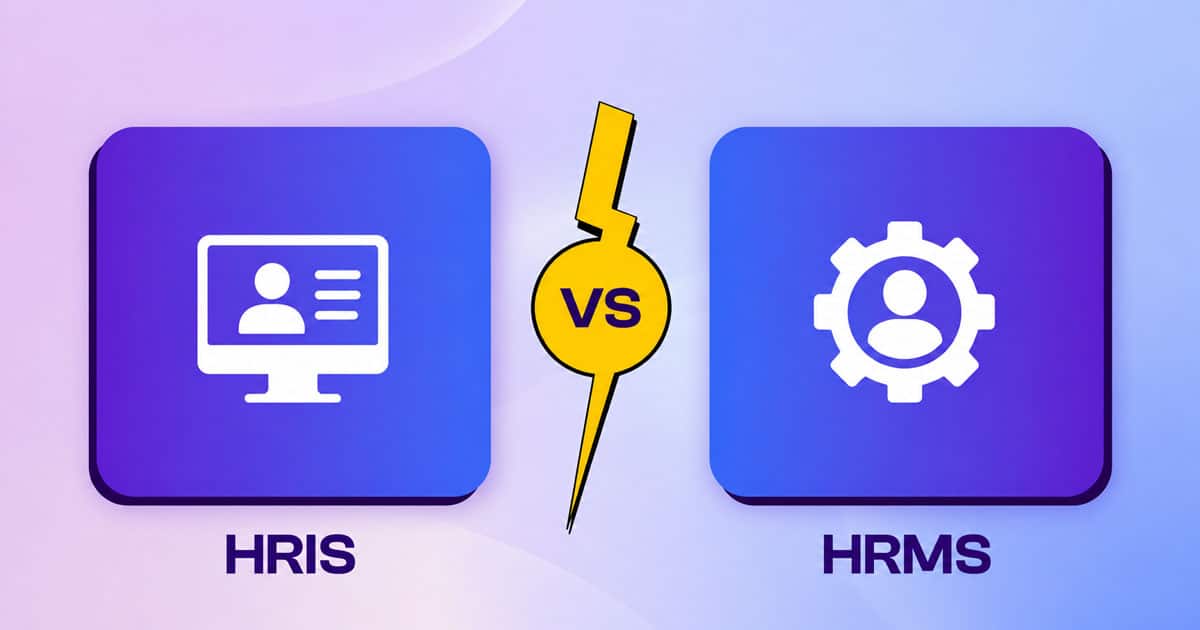
Table of Contents
The HRIS vs HRMS discussion often creates confusion for many HR professionals. Both HR systems support human resources, but they serve different purposes. Companies rely on HR technology to manage employee data, improve HR operations, and organize core HR processes across HR departments.
A human resource information system focuses on employee data management and essential HR functions such as payroll processing, benefits administration, and attendance tracking. HRIS systems help HR teams manage employee information and handle routine HR tasks through reliable HR software.
A human resource management system goes further. HRMS platforms support talent management, workforce management, and performance management across the entire employee lifecycle. Understanding HRIS and HRMS helps HR leaders choose the right HR solution for workforce planning, employee experience, and long-term HR strategies.

What Is An HRIS
A human resource information system (HRIS) is a type of HR software that helps hr teams manage employee data and handle core hr functions. HRIS systems store employee information, support payroll processing, and assist with benefits administration. Many hr departments rely on this hr technology to simplify routine hr tasks and improve employee data management across hr operations.
An HRIS focuses on basic hr functions such as employee information management, attendance tracking, and document management. It helps hr professionals manage employee data, maintain workforce data, and support essential hr processes. Employee self-service portals, time tracking, and simple data analytics also appear as common HRIS features.
What Is An HRMS
A human resource management system (HRMS) is advanced HR software that supports many HR functions across human resources. HRMS systems combine employee data management, payroll processing, benefits administration, and workforce management in one platform. Many HR teams rely on HRMS platforms to manage employee data, organize HR processes, and improve daily HR operations.
An HRMS expands beyond basic HR functions. It supports talent management, performance management, employee development, and talent acquisition across the entire employee lifecycle. Many HRMS solutions also include attendance tracking, time tracking, employee self-service portals, and performance management tools. HR departments use these HR systems to improve workforce productivity and employee experience.
HRIS Vs HRMS: Key Differences
Understanding the difference between HRIS and HRMS requires dissecting how each system approaches workforce management and operational complexity. The key differences lie in their scope, feature depth, and strategic orientation within organizations.
Feature Set Comparison
HRIS focuses on storing, managing, and tracking employee-related data to support core HR processes. These systems cover essential HR functions that include secure storage for employee data, automated payroll processing, organization of resumes and applications, onboarding processes, time-off tracking, benefits tracking and enrollment, and employee self-service portals. HRMS expands on these capabilities and offers tools for managers related to performance management, analytics, and employee engagement in addition to HRIS capabilities.
HRMS platforms include navigation of laws and regulations, recruiting assistance, performance management tools, high-level reporting, employee engagement analytics, support for learning and development initiatives, automation capabilities, and vast integration options. Both systems support functions like payroll and time tracking, but HRMS offers more advanced features that cater to a broader range of HR processes across the entire employee lifecycle.
Scope And Complexity Levels
The scope difference separates administrative focus from strategic workforce planning. HRIS serves as the foundational HR software type and concerns itself with simple HR administration, compliance, and records. HRMS is wider in its focus and performs those same HR operations, but adds value through employee engagement, workforce administration, and leadership development.
HRMS systems tend to have higher implementation complexity due to their broader scope and require more training and change management. HRIS platforms focus on perfecting core HR data management functions, while HRMS systems prioritize integration across multiple HR disciplines within a unified platform. This architectural approach distinguishes the systems in terms of deployment requirements and operational readiness.
Integration Capabilities
HRIS solutions offer simple integrations with other systems and allow a merged connection with enterprise systems such as accounting or time-tracking software. HRMS platforms feature advanced integration with workforce planning, performance analytics, and multiple data sources to create detailed, user-friendly, secure, and compliant data repositories. HRMS systems integrate data from various sources to support strategic goals with advanced quantitative and qualitative analytics.
Customization Options
Modern HRIS should be configurable out-of-the-box and adapt to organizational processes without needing custom development. Configuration allows adjustments to system settings, workflows, fields, and permissions using built-in tools without altering core software. Most HRMS include customizable options to fit company needs and cover functions for the entire suite of HR tasks, data, and analytics. Customization involves modifying source code or underlying architecture and requires developer involvement, which results in longer development timelines and higher costs.
Cost And Budget Considerations
HRIS systems prove more economical and suitable for small businesses with straightforward requirements. Research suggests allocating between USD 150.00 and USD 460.00 per employee per year, depending on organization size. HRMS represents a higher investment due to additional functionalities. The total cost of ownership includes the license or monthly subscription fee, labor costs for internal and external staff, data cleansing and migration, updates and maintenance, and staff training. Cloud-based subscription costs increase month by month, whereas license fees are one-off expenses. At around the seven-year mark, the TCO of different pricing models meets, and after that point, the license model becomes cheaper overall.
HRIS Vs HRMS: Comparison Table
A comparison table helps HR teams quickly understand the key differences between HRIS and HRMS. Each system supports different HR needs, from managing employee records to handling broader functions like performance tracking, workforce planning, and HR process automation.
| Attribute | HRIS (Human Resources Information System) | HRMS (Human Resource Management System) |
|---|---|---|
| Primary Focus | Manages employee data and supports core HR operations. | Covers broader HR management across the entire employee lifecycle. |
| Core HR Functions | Employee data management, payroll processing, attendance tracking, benefits administration. | Includes HRIS functions plus talent management, performance management, and employee development. |
| Scope And Complexity | Focused on basic HR administration and compliance. | Wider HR scope with workforce management and leadership development tools. |
| Analytics And Reporting | Basic reporting for workforce trends and HR data. | Advanced workforce analytics, KPIs, and predictive insights. |
| Integration Capabilities | Simple integrations with payroll or time tracking tools. | Advanced integrations with workforce planning and performance analytics systems. |
| Cost And Implementation | Lower cost and easier implementation for small teams. | Higher investment with more complex setup and training. |
| Best Use Cases | Small businesses needing core HR process management. | Mid-sized and enterprise companies with complex workforce needs. |
Advantages And Disadvantages Of HRIS And HRMS
HRIS and HRMS both support human resources, but they offer different capabilities. A quick comparison of their advantages and disadvantages helps HR teams understand how each HR system supports HR processes, workforce management, and employee data management.
Advantages And Disadvantages Of HRIS
HRIS systems focus on core HR functions and employee data management. They help HR teams manage HR processes efficiently but may offer limited strategic HR capabilities for growing organizations.
| Advantages Of HRIS | Disadvantages Of HRIS |
|---|---|
| Centralized employee data management | Limited talent management features |
| Automates core HR functions | Basic workforce analytics only |
| Supports payroll and attendance tracking | Limited strategic workforce planning |
| Improves HR data accuracy | Not ideal for large organizations |
| Simplifies routine HR tasks | May require additional HR systems later |
Advantages And Disadvantages Of HRMS
HRMS platforms provide broader human resource management capabilities. They support advanced HR processes, workforce analytics, and talent management across the entire employee lifecycle.
| Advantages Of HRMS | Disadvantages Of HRMS |
|---|---|
| Supports full human capital management | Higher implementation complexity |
| Includes talent and performance management | Higher software and setup cost |
| Provides advanced workforce analytics | Requires training for HR teams |
| Integrates multiple HR processes | Ongoing system maintenance |
| Supports the entire employee lifecycle | Overkill for small businesses |
When To Use HRIS For Your Business
HRIS works best when organizations need better control over employee data and core HR processes. Many businesses adopt HRIS systems once manual spreadsheets slow HR operations. The right HR software helps HR teams manage workforce data, payroll processing, and routine HR tasks with more accuracy.
Small Business Growth
Small businesses often reach a point where manual HR management becomes difficult. Research from SelectSoftware Reviews shows companies usually adopt HRIS systems when their workforce reaches 30 to 50 employees. At that stage, spreadsheets struggle to handle employee information and HR data.
HRIS software helps HR teams manage employee data, payroll processing, and attendance tracking in one HR system. HR departments gain better control over employee records and HR processes. A human resource information system keeps HR operations organized while supporting essential HR functions.
Core HR Process Needs
Many organizations choose HRIS platforms when they want a reliable system for core HR functions. Payroll processing, benefits administration, and employee information management require consistent HR technology. Manual tracking often leads to errors in workforce data.
HRIS solutions automate routine HR tasks and improve HR operations. HR professionals can track time tracking records, leave requests, and attendance systems through one HR software platform. Centralized employee data management improves accuracy and supports everyday HR practices.
Compliance And HR Data Control
Compliance management becomes more complex as organizations grow. HR teams must track employee records, tax data, and labor regulations accurately. A human resource information system stores HR data in a secure and structured format.
Studies indicate that over 60% of HR leaders adopt HR technology to reduce compliance risk and improve data accuracy. HRIS platforms create a centralized database for employee information management. Reliable workforce data helps HR departments maintain compliance and strengthen HR strategies.
Budget-Friendly HR Technology
HRIS solutions often cost less than full HRMS platforms. Industry data shows HR software typically ranges between $35 and $160 per user per month, depending on features and company size. Many startups and small businesses prefer HRIS software because it supports essential HR functions without a high investment.
HRIS focuses on employee data management, payroll processing, and workforce management. HR teams gain automation for routine HR tasks while maintaining simple HR systems. This balance makes HRIS a practical HR solution for organizations that want efficient HR technology without complex HRMS systems.
When To Use HRMS For Your Business
HRMS becomes valuable when organizations need more than basic HR data management. Growing companies often require deeper workforce analytics, talent management, and employee development tools. A human resource management system helps HR teams manage complex HR processes across the entire employee lifecycle.
Large Workforce Needs
Large organizations often manage hundreds or thousands of employees across departments. Manual HR processes cannot handle large volumes of workforce data. HRMS systems help HR teams organize employee data, payroll processing, and workforce management in one platform.
Research from Deloitte shows that over 56% of large enterprises use integrated HRMS platforms to manage complex HR operations. HRMS platforms connect multiple HR systems and improve employee information management. HR leaders gain better visibility into workforce productivity and employee experience.
Talent And Performance Management
Companies with structured growth plans need stronger talent management tools. HRMS systems include performance management, goal tracking, and employee development programs. HR teams can support talent acquisition and track employee progress across the entire employee lifecycle.
A report from Gartner shows that organizations using performance management tools see up to 24% higher employee productivity. HRMS platforms help HR departments connect employee engagement with development programs. Strong HR technology supports long-term human capital management strategies.
Strategic Workforce Planning
Modern HR departments rely on workforce analytics to guide HR strategies. HRMS systems provide advanced workforce analytics and data analytics tools. HR leaders can track workforce trends, employee satisfaction, and skill gaps through centralized HR data.
LinkedIn Global Talent research shows 92% of HR leaders say workforce data improves strategic workforce planning. HRMS platforms help HR teams plan hiring, identify talent gaps, and support long-term workforce management goals.
Multi-Location Operations
Organizations with multiple offices face complex HR operations. Different locations may follow different payroll rules, compliance requirements, and workforce policies. HRMS systems help HR departments manage these complexities from one HR platform.
Cloud-based HRMS solutions allow HR teams to manage employee data, attendance tracking, and benefits administration across locations. HR professionals gain consistent HR processes while maintaining accurate workforce data. A unified HR system improves employee experience and reduces administrative workload.
How To Choose Between HRIS And HRMS
HR leaders often compare HRIS vs HRMS when selecting the right HR software. Both HR systems support employee data management and HR operations, but their capabilities differ. A clear evaluation of HR processes, workforce size, and long-term HR strategies helps businesses choose the right HR technology.
Business Size And Workforce
Business size often determines whether HRIS or HRMS fits better. Small teams usually need simple HR systems to manage employee data and payroll processing. HRIS platforms focus on core HR functions such as attendance tracking and benefits administration.
Growth changes HR needs quickly. Data from SelectSoftware Reviews shows companies often adopt HR software once their workforce reaches 30–50 employees. Larger organizations with complex workforce management usually prefer HRMS platforms for broader human capital management.
Core HR Process Needs
Every organization should review its daily HR processes before choosing HR software. HR teams must manage employee information, payroll processing, time tracking, and compliance tasks. HRIS systems handle these essential HR functions well.
Companies with more complex HR operations often require advanced HR technology. HRMS systems support talent management, employee development, and workforce management. A clear list of HR processes helps HR departments determine which HR solution fits best.
Technology Stack Compatibility
Modern companies use multiple digital tools. Payroll systems, accounting software, and recruitment platforms must connect with HR systems. Integration plays an important role in HR technology decisions.
HRIS platforms usually offer simple integrations with payroll and time tracking tools. HRMS platforms provide deeper integrations with workforce analytics and performance management tools. Gartner research reports over 70% of organizations prioritize software integrations when selecting HR technology.
Workforce Analytics Needs
Data plays a major role in modern human resources. HR leaders rely on workforce analytics to understand employee productivity, retention trends, and workforce planning.
HRIS systems provide basic data analytics and reporting on HR data. HRMS platforms deliver advanced workforce analytics and predictive insights. Deloitte research shows people analytics can improve workforce productivity by up to 25% when organizations use advanced HR technology.
Budget And Total Cost
Budget often shapes the final HR software decision. HRIS systems usually cost less because they focus on core HR processes and employee data management.
Industry benchmarks show HR software pricing ranges from $35 to $160 per user per month depending on features. HRMS platforms require higher investment because they include talent management, workforce analytics, and human capital management tools.
Future Business Growth
Business growth should influence HR system selection. A company that plans rapid expansion needs HR technology that can scale with workforce growth.
HRIS platforms support core HR functions well, but HRMS systems offer stronger scalability. SHRM reports that over 60% of growing companies upgrade their HR systems within five years as workforce complexity increases.
Vendor Support And Training
Vendor support plays a major role in successful HR software adoption. HR teams must learn how to use HR systems efficiently. Training and onboarding support improve employee experience and HR operations.
McKinsey research shows about 70% of digital transformation projects fail without strong user adoption. HR departments should evaluate vendor training, support services, and product updates before choosing between HRIS and HRMS platforms.
How Payrun Simplifies HRIS And HRMS For Modern Teams
Payrun works as a powerful HR solution that brings HRIS and HRMS capabilities into one platform. HR teams can manage employee data, payroll processing, attendance tracking, and benefits administration from a single HR system. The platform supports core HR functions while improving employee data management and HR operations. HR departments can store employee information, organize workforce data, and simplify routine HR tasks through one reliable HR software.
Payrun also supports broader human resource management needs. HR professionals can handle workforce management, time tracking, and employee self-service portals through automated systems. The platform improves HR processes and helps HR teams focus on strategic tasks instead of manual work.
In many HRIS vs HRMS discussions, the key difference appears in scope. Payrun bridges that gap by combining HRIS capabilities with modern HRMS platforms to support workforce planning, employee experience, and human capital management across the entire employee lifecycle.
FAQs
Does HRIS Support Employee Self-Service Portals For HR Teams?
Yes, most HRIS systems include employee self-service portals. Employees can update employee information, check payroll processing details, and manage time tracking or leave requests. This feature reduces routine HR tasks and improves employee data management for HR teams.
Can HRMS Improve Employee Development And Talent Management?
Yes, HRMS systems support talent management and employee development across the entire employee lifecycle. HRMS platforms include performance management tools, development programs, and workforce analytics. HR departments use these capabilities to strengthen employee engagement and workforce productivity.
Is HRIS Software Enough For Startups And Small Businesses?
Yes, HRIS software often works well for startups and small teams. HRIS platforms focus on core HR functions such as employee data management, payroll processing, and attendance tracking. Many small businesses rely on HRIS solutions to manage HR operations without complex HR systems.
Do HRMS Platforms Replace Multiple HR Systems In An Organization?
Yes, HRMS platforms can replace several separate HR systems. A human resource management system combines workforce management, talent acquisition, payroll processing, and performance management in one HR solution. This integration improves HR processes and simplifies HR technology across HR departments.
Which System Handles Workforce Analytics Better: HRIS Or HRMS?
HRMS systems usually provide stronger workforce analytics. Advanced HRMS solutions include deeper data analytics, workforce trends analysis, and strategic workforce planning tools. HRIS systems mainly focus on basic HR data reporting and core HR processes.