HR Process Improvement For Better Productivity And Compliance
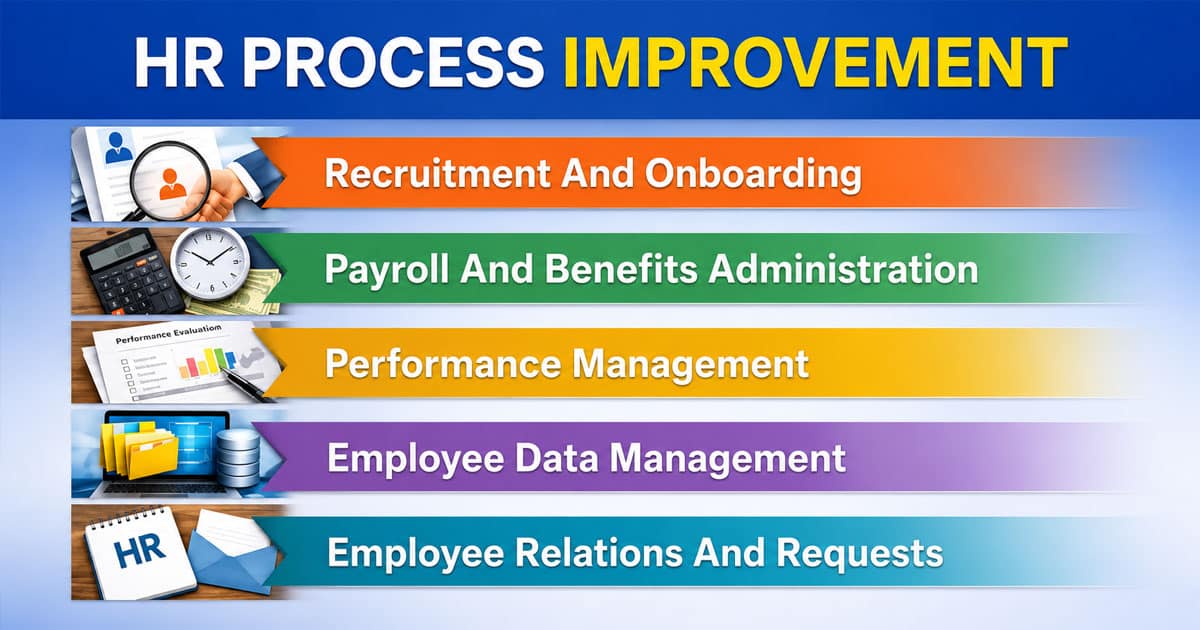
Table of Contents
HR process improvement helps human resources teams work smarter. Many HR departments struggle with repetitive tasks, manual data entry, and duplicate data entry. Human error and process inefficiencies slow HR operations. Employee requests get delayed. Employee experience and employee satisfaction suffer.
HR process improvement strategies focus on streamlining HR processes and optimizing HR workflows. A structured process starts with reviewing current HR processes and identifying pain points. Process maps, focus groups, and feedback from key stakeholders support data-driven decision-making.
HR automation and modern HR systems reduce routine tasks and improve data integrity. Automate repetitive tasks in the onboarding process, benefits administration, and performance management. Improved processes boost efficiency, increase productivity, and support broader business goals. Strong improvement efforts align HR strategies with business objectives and organizational performance.
In this article, you will explore proven ways to drive HR process improvement and build efficient, scalable HR functions.

What Is HR Process Improvement
HR process improvement is a structured approach to improve HR processes across human resources. It focuses on reviewing current HR processes and removing process inefficiencies. Many HR departments deal with repetitive tasks, manual data entry, and duplicate data entry. Human error affects data integrity and employee data. HR process improvement strategies aim to streamline HR workflows and optimize HR operations.
A clear framework helps HR teams map existing processes and identify pain points. Process maps, focus groups, and feedback from key stakeholders support data-driven decision-making. HR automation and HR software reduce routine tasks in the onboarding process, benefits administration, and performance management. Improved processes boost efficiency, increase productivity, and strengthen employee experience. Strong improvement efforts align HR strategies with broader business goals and organizational performance.
Why HR Process Improvement Is Important
HR process improvement shapes how human resources support business objectives. Many HR processes rely on manual tasks and outdated systems. Process inefficiencies reduce operational efficiency and slow service delivery. A structured process helps HR teams align HR strategies with broader business goals and improve organizational performance.
Boost Operational Efficiency
HR process improvement reduces routine tasks across HR operations. Manual data entry and duplicate data entry waste time and increase human error. Improved processes remove bottlenecks in existing processes. Clear approval HR workflows support standardized processes across HR departments.
HR automation and automation tools help automate repetitive tasks. Administrative tasks in benefits administration and employee requests move faster. HR staff focus on strategic priorities instead of paperwork. Boost efficiency supports smoother service delivery and stronger organizational performance.
Enhance Employee Experience
Employee experience improves when HR services are fast and accurate. Delays in the onboarding process or employee onboarding create frustration. Process improvement ensures clear communication channels and structured HR workflows.
Improved processes support employee relations and employee engagement. Accurate employee data protects data integrity. HR professional teams respond to employee requests without delays. Employee satisfaction increases when HR functions work without errors.
Strengthen Data Accuracy
HR systems often suffer from manual tasks and scattered employee data. Human error affects payroll, benefits administration, and performance management. HR process improvement strategies focus on data integrity and standardized processes.
Clear process maps and defined HR workflows reduce duplicate data entry. HR software supports consistent records across existing systems. Reliable employee data improves data-driven decision-making and protects compliance.
Support Strategic HR Goals
HR strategies must align with broader business goals. Many HR departments stay busy with administrative tasks. Improvement efforts free HR staff from repetitive tasks.
Improved processes allow HR teams to focus on employee development and organizational performance. Clear HR functions support business objectives and strategic priorities. A strong change management strategy ensures a smooth transition to new processes.
Reduce Cost And Risk
Process inefficiencies increase operational costs. Manual data entry leads to payroll errors and compliance risks. HR process improvement reduces risk through structured process design.
HR automation lowers dependence on paper and manual tasks. Standardized processes protect HR departments from compliance issues. Fewer errors mean lower financial risk and higher customer satisfaction.
Enable Continuous Improvement
Continuous improvement keeps HR operations adaptable. Current HR processes may not match future business objectives. HR process improvement examples show how small improvement ideas create long-term impact.
Project teams and key stakeholders must involve stakeholders across HR departments. Feedback from focus groups highlights pain points. Regular reviews of existing processes drive HR process improvement and ensure increased productivity over time.
Core HR Processes That Need Improvement
Many HR departments manage multiple HR functions at once. Several HR processes rely on manual tasks and outdated HR systems. Process inefficiencies reduce operational efficiency and affect employee experience. A structured review of current HR processes helps HR teams identify pain points and prioritize improvement efforts that align with business objectives.
Recruitment And Onboarding
Recruitment and onboarding process often suffer from delays and manual data entry. Studies show that companies with a strong employee onboarding process improve new hire retention by up to 82%. Poor HR workflows increase duplicate data entry and human error.
HR process improvement strategies focus on standardized processes and clear communication channels. HR automation and HR software reduce repetitive tasks during employee onboarding. Improved processes ensure accurate employee data and faster service delivery. Strong recruitment systems support employee engagement and long-term organizational performance.
Payroll And Benefits Administration
Payroll errors affect employee satisfaction and trust. Research indicates that nearly 27% of payrolls contain errors due to manual data entry and outdated systems. Many HR departments still depend on routine tasks that increase compliance risk.
HR process improvement reduces human error through automation tools. Streamlining repetitive tasks improves data integrity and supports smooth benefits administration. Improved HR systems align payroll operations with broader business goals. Accurate payroll management boosts employee experience and protects business objectives.
Performance Management
Performance management connects employee performance with strategic priorities. Yet many HR teams rely on outdated HR workflows and inconsistent review cycles. Gallup reports that only 21% of employees strongly agree that performance reviews inspire improvement.
HR process improvement examples show that structured processes increase employee engagement. Clear performance management systems support employee development and data-driven decision-making. HR automation helps track goals and employee data in real time. Improved processes strengthen organizational performance and align HR strategies with business objectives.
Employee Data Management
Employee data management remains a major challenge in HR operations. Duplicate data entry and scattered existing systems reduce data integrity. Inaccurate records lead to compliance issues and poor decision-making.
HR process improvement strategies focus on centralized HR software and standardized processes. Clear process maps reduce manual tasks and improve data accuracy. Reliable employee data supports improved processes, better reporting, and increased productivity across HR departments.
Employee Relations And Requests
Employee relations depend on timely responses to employee requests. Many HR teams struggle with slow service delivery due to process inefficiencies. Routine administrative tasks limit focus on employee experience.
HR process improvement helps automate repetitive tasks and create structured communication channels. Focus groups and feedback from key stakeholders reveal pain points in existing processes. Improved HR services increase employee satisfaction and customer satisfaction. Strong HR operations build trust and support long-term organizational performance.
How To Audit Your Current HR Processes
An HR process audit reveals gaps in HR operations and service delivery. Many HR departments rely on manual tasks and outdated HR systems. A structured process helps HR teams evaluate current HR processes, reduce process inefficiencies, and align improvement efforts with business objectives and strategic priorities.
Define Audit Scope And Goals
Clear goals guide effective HR process improvement. HR teams must identify which HR functions need review. Focus on recruitment, onboarding process, benefits administration, and performance management. Align audit goals with broader business goals and organizational performance.
Research shows that companies with defined HR strategies are 1.4 times more likely to outperform competitors. Set measurable KPIs such as cycle time, error rates, and employee satisfaction. Defined objectives support data-driven decision-making and structured improvement efforts.
Map Existing HR Workflows
Process maps provide visibility into HR workflows. Document each step in current HR processes. Identify manual data entry, duplicate data entry, and routine tasks. Highlight delays in employee requests and communication channels.
Studies indicate that process mapping can reduce operational inefficiency by up to 30%. Clear visualization helps HR staff detect pain points. Standardized processes reduce human error and improve data integrity across existing systems.
Collect Data And Feedback
Accurate employee data strengthens HR process improvement strategies. Review error rates, service delivery times, and compliance records. Analyze performance management outcomes and onboarding metrics. Use HR software reports for evidence.
Involve stakeholders from HR departments and project teams. Focus groups uncover hidden process inefficiencies. Surveys improve employee engagement and employee experience. Data-driven decision-making ensures that improvement ideas target real issues.
Identify Risks And Gaps
Audit findings often reveal compliance risks and outdated HR systems. Manual tasks increase payroll errors and benefits administration issues. Nearly 27% of payroll errors stem from poor data integrity. Risk analysis protects business objectives.
Evaluate HR operations against industry benchmarks. Compare cycle times and error frequency. Structured risk assessment supports change management strategy and ensures smooth transition to new processes.
Develop Action Plan
Audit results must lead to improved processes. Prioritize high-impact HR process improvement examples. Automate repetitive tasks through automation tools. Streamlining repetitive tasks increases operational efficiency and productivity.
Assign responsibilities to HR professional teams and key stakeholders. Set timelines and performance targets. Moreover, you need to do a proper employee timeline tracking. Continuous improvement ensures optimized HR processes over time. Clear accountability helps drive HR process improvement and align HR strategies with broader business goals.
Role Of Automation In HR Process Improvement
Automation plays a critical role in HR process improvement. Many HR departments still depend on manual tasks and outdated systems. HR automation reduces process inefficiencies and supports structured HR workflows. Modern HR systems help optimize HR processes and align HR operations with business objectives.
Reduce Manual Workload
Manual data entry and duplicate data entry consume valuable time. Research shows that HR staff spend up to 40% of their time on administrative tasks. Routine tasks increase human error and slow service delivery.
HR automation helps automate repetitive tasks across HR functions. Payroll, benefits administration, and employee requests move faster with automation tools. Streamlining repetitive tasks boosts efficiency and allows HR teams to focus on strategic priorities and employee development.
Improve Data Accuracy
Employee data accuracy supports strong decision-making. Manual tasks often lead to payroll errors and compliance risks. Studies show that automation can reduce data errors by up to 30%.
HR software centralizes employee data and improves data integrity. Standardized processes reduce process inefficiencies across existing systems. Reliable data supports performance management and data-driven decision-making. Accurate records strengthen organizational performance and employee experience.
Speed Up HR Workflows
Slow HR workflows affect employee onboarding and service delivery. Delays in the onboarding process reduce employee engagement and satisfaction. Automation shortens approval cycles and improves communication channels.
Automated HR systems handle employee onboarding, leave management system, and employee relations efficiently. If you track employee productivity, you will see good results. Improved processes increase productivity and support smoother transitions during the change management strategy. Faster workflows align HR strategies with broader business goals.
Enhance Compliance And Control
Compliance failures create financial and legal risk. Manual processes often lack audit trails and clear documentation. Nearly 45% of organizations report compliance challenges due to outdated HR systems.
HR automation provides structured process controls and automated alerts. Standardized processes ensure consistent policy application. Clear records protect HR departments and key stakeholders. Improved monitoring reduces risk and strengthens trust across HR operations.
Support Strategic HR Focus
Administrative tasks limit HR professionals' impact. Automation frees HR teams from repetitive tasks and manual tasks. Improved processes create time for employee development and employee engagement initiatives.
HR process improvement strategies supported by automation align HR strategies with business objectives. Project teams can focus on improvement ideas and broader business goals. Continuous improvement becomes sustainable when HR systems handle routine operations with accuracy and speed.
Compliance And Risk Considerations In HR Process Improvement
Compliance and risk management are central to HR process improvement. Many HR processes handle sensitive employee data and regulatory obligations. Weak HR workflows increase exposure to fines and legal disputes. A structured process helps HR departments reduce risk and protect business objectives.
Data Privacy And Protection
Employee data includes payroll records, benefits administration details, and performance management reports. Data breaches cost organizations an average of USD 4.45 million per incident, according to IBM. Poor data integrity and manual data entry increase exposure.
HR process improvement strategies must strengthen data protection controls. HR systems should centralize employee data and restrict access. Standardized processes reduce duplicate data entry and human error. Secure HR software supports data-driven decision-making and protects employee experience.
Payroll And Tax Compliance
Payroll errors create financial penalties and employee dissatisfaction. Studies show that nearly 27% of payrolls contain errors due to manual tasks and outdated systems. Compliance gaps damage trust and service delivery.
HR automation reduces routine tasks and improves calculation accuracy. Structured HR workflows ensure correct tax deductions and timely payments. Improved processes align payroll operations with broader business goals and reduce compliance risk across HR departments.
Policy Standardization
Inconsistent policies create legal exposure. Many HR departments operate without standardized processes. Gaps in communication channels increase process inefficiencies and confusion.
HR process improvement requires clear documentation of HR functions and policies. Process maps define approval flows and responsibilities. Standardized processes ensure equal treatment in employee relations and the onboarding process. Consistency protects organizational performance and strengthens employee satisfaction.
Audit Trails And Documentation
Lack of documentation weakens compliance defense. Regulatory bodies often require detailed records of HR operations. Manual tasks make audit preparation slow and unreliable.
HR software and automation tools create automatic audit trails. Digital records improve data integrity and reduce risk. Clear documentation supports change management strategy and smooth transition to new processes. Strong records protect key stakeholders and business objectives.
Risk Assessment And Monitoring
Risk identification must be continuous. Many HR processes change with new laws and strategic priorities. Without monitoring, process inefficiencies return.
HR teams should review current HR processes against regulatory updates. Use data-driven decision-making to track error rates and compliance metrics. Project teams can involve stakeholders to evaluate pain points. Continuous improvement ensures improved processes that reduce risk and support operational efficiency.
How To Reduce Costs Through HR Process Improvement
Cost control remains a top priority for HR departments. Many HR processes include manual tasks, duplicate data entry, and outdated HR systems. Process inefficiencies increase labor costs and compliance risk. HR process improvement helps align HR operations with business objectives while protecting service delivery quality.
Cut Administrative Overhead
Administrative tasks consume a large share of HR staff time. Research shows that HR teams spend up to 40% of their time on routine tasks and manual data entry. Such inefficiencies increase labor costs without adding strategic value.
HR automation and automation tools help automate repetitive tasks across HR functions. Streamlining repetitive tasks in benefits administration and employee requests reduces workload. Improved processes free HR professional teams to focus on employee development and broader business goals.
Reduce Payroll Errors
Payroll comliance mistakes create direct financial loss. Studies indicate that nearly 27% of payrolls contain errors due to manual tasks and weak HR workflows. Errors lead to rework, penalties, and lower employee satisfaction.
HR process improvement strategies strengthen data integrity through standardized processes. Modern HR software reduces duplicate data entry and human error. Accurate employee data supports data-driven decision-making and lowers compliance costs across HR departments.
Optimize Recruitment Costs
Inefficient recruitment increases cost per hire. The average cost per hire exceeds USD 4,000 in many industries. Delays in the onboarding process also reduce productivity.
HR process improvement examples show that structured HR workflows shorten hiring cycles. Automation speeds up employee onboarding and reduces paperwork. You can do it by using a hiring automation software. Improved processes enhance employee experience and increase productivity faster. Strong recruitment systems support organizational performance and business objectives.
Improve Workforce Productivity
Low productivity increases operational expenses. Process inefficiencies in performance management and employee relations waste time. HR teams often spend hours on manual tasks instead of strategic priorities.
Optimized HR systems improve service delivery and employee engagement. Clear process maps align HR strategies with broader business goals. Increased productivity across HR operations lowers indirect costs and supports long-term financial stability.
Prevent Compliance Penalties
Compliance failures result in heavy fines and legal costs. Manual data entry and inconsistent existing processes raise regulatory risk. Nearly 45% of organizations report HR challenges due to outdated systems.
HR process improvement reduces risk through structured process controls. Automated alerts and standardized processes ensure timely reporting and documentation. Continuous improvement strengthens monitoring and protects business objectives. Reduced penalties directly support cost savings and operational efficiency.
Common Challenges In HR Process Improvement
HR process improvement often faces internal resistance and system limitations. Many HR departments operate with legacy HR systems and manual tasks. Process inefficiencies remain hidden inside existing processes. Clear planning and stakeholder alignment are essential to drive HR process improvement successfully.
Resistance To Change
Change creates uncertainty among HR staff and employees. Studies show that nearly 70% of change initiatives fail due to resistance and weak change management strategy. HR teams may prefer familiar HR workflows.
A structured process and clear communication channels reduce fear. Involve stakeholders early in improvement efforts. Focus groups and feedback sessions build employee engagement. Strong leadership supports smooth transition to new processes and improved HR services.
Limited Budget And Resources
Budget constraints slow HR process improvement strategies. Many HR departments operate with tight financial limits. Investment in HR automation and HR software may seem costly at first.
However, manual data entry and routine tasks increase long-term expenses. You can track these by using a expense tracking system. Automation tools often reduce administrative tasks by up to 30%. Clear ROI analysis helps align improvement ideas with business objectives and broader business goals.
Outdated HR Systems
Legacy HR systems create data silos and duplicate data entry. Poor integration reduces data integrity and service delivery quality. Research shows that over 40% of organizations struggle with disconnected HR systems.
Modern HR systems centralize employee data and support standardized processes. Improved processes reduce human error and strengthen operational efficiency. System upgrades support data-driven decision-making and better organizational performance.
Lack Of Clear Metrics
Many HR teams lack defined KPIs for HR operations. Without metrics, improvement efforts become unclear. Process inefficiencies remain unnoticed.
Performance management data and onboarding process metrics provide measurable insights. Clear benchmarks support continuous improvement. Structured evaluation of current HR processes ensures that HR strategies align with strategic priorities and business objectives.
Poor Process Documentation
Unclear HR workflows cause confusion. Existing processes may rely on informal steps and manual tasks. Documentation gaps increase compliance risk and slow service delivery.
Process maps help visualize HR functions and employee requests. Standardized processes reduce errors and duplicate data entry. Clear records improve data integrity and protect HR departments from audit issues.
Data Quality Issues
Inaccurate employee data affects payroll and benefits administration. Manual tasks increase human error and reduce trust. Studies suggest that poor data quality costs organizations millions annually.
HR process improvement strategies must focus on data validation and automation. HR automation has many benefits like it reduces repetitive tasks and strengthens employee data accuracy. Reliable data support employee experience, employee satisfaction, and informed decision-making.
Weak Stakeholder Alignment
HR process improvement requires support from key stakeholders. Lack of coordination between HR departments and leadership slows progress. Project teams may struggle to align HR strategies with broader business goals.
Involve stakeholders through workshops and regular updates. Clear communication channels improve collaboration. Shared accountability ensures improved processes that support organizational performance and long-term business objectives.
How Payrun Improves HR Process For Your Business
Payrun strengthens HR process improvement through smart HR automation and connected HR systems. Many HR departments struggle with manual tasks, duplicate data entry, and scattered employee data. Payrun centralizes HR workflows into one structured process. Payrun has several key features that simplifies your HR management. It reduces human error and improves data integrity across payroll, benefits administration, and employee onboarding.
Automated HR functions help HR teams automate repetitive tasks and speed up service delivery. Employee requests move faster through clear communication channels. Real-time dashboards support data-driven decision-making and performance management. Improved processes boost efficiency, increase productivity, and enhance employee experience. Payrun aligns HR operations with broader business goals and supports continuous improvement across human resources. You can enjoy Payrun at a suitable price.
FAQs
How Long Does HR Process Improvement Take?
HR process improvement timelines depend on the size of HR departments and the complexity of current HR processes. Small teams may see results in a few months. Larger organizations may require phased improvement efforts across multiple HR functions and systems.
Is HR Process Improvement Only For Large Enterprises?
No, HR process improvement benefits businesses of all sizes. Small and mid sized companies can streamline HR processes and reduce manual tasks. Even basic HR automation and standardized processes can boost efficiency and support business objectives.
Can HR Process Improvement Increase Employee Retention?
Yes, improved HR workflows enhance employee experience and employee satisfaction. Efficient onboarding process, accurate payroll, and clear performance management systems support employee engagement. Strong HR services contribute to higher retention and organizational performance.
Does HR Automation Replace HR Staff?
No, HR automation supports HR teams rather than replacing them. Automation tools handle repetitive tasks and manual data entry. HR professionals can then focus on employee relations, employee development, and strategic priorities.
What KPIs Measure HR Process Improvement Success?
Common KPIs include cycle time, error rates, employee satisfaction, and service delivery speed. Data driven decision making depends on reliable employee data. Clear metrics help align HR strategies with broader business goals.
Can Improved HR Processes Support Business Growth?
Yes, optimized HR operations align with business objectives and strategic priorities. Improved processes reduce process inefficiencies and increase productivity. Strong HR systems help scale HR functions as the organization grows.
Is External Consultation Necessary For HR Process Improvement?
No, many HR teams can drive HR process improvement internally. Clear process maps, stakeholder feedback, and structured HR process improvement strategies provide direction. External support may help in complex HR systems or compliance heavy environments.