HR Challenges, Risks & Operational Mistakes & Solutions
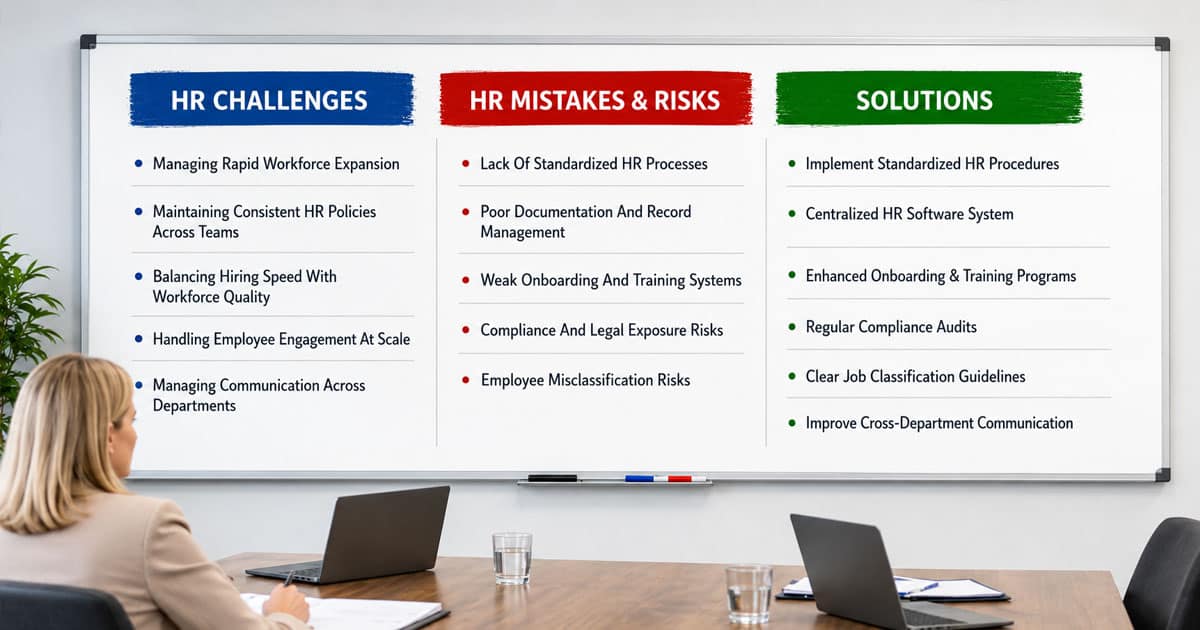
Table of Contents
Managing people, processes, and compliance has become one of the most complex operational challenges for modern organizations. HR challenges now extend far beyond administration into workforce planning, talent management, and regulatory oversight. As companies grow, managing operational risk becomes critical because small gaps in internal workflows can quickly disrupt business operations.
Growth also exposes organizations to external events, changing labor requirements, and evolving workforce expectations. Without strong risk management practices, HR teams struggle to identify potential risks early and maintain stability. Hidden potential risks such as inconsistent policies, weak documentation, and unclear responsibilities often increase operational pressure.
Addressing risks proactively brings potential benefits like better process control and workforce visibility. This guide explores key HR challenges, common mistakes, and practical solutions that help businesses scale efficiently while reducing compliance exposure.

What Do HR Challenges Means?
HR challenges refer to the practical obstacles human resources departments face in managing people, processes, and compliance within organizations. These challenges encompass everything from talent acquisition and retention to navigating regulatory changes and integrating technology.
In 2026, HR challenges are shaped by hybrid work arrangements, cross border hiring, AI tools, and fast changing labor laws. The complexity now outpaces informal approaches, creating risks in employee relations, documentation, manager consistency, and defensible decision making frameworks. A reliable employee record management system keeps this documentation centralized and audit-ready as teams scale.
Consider a concrete example. A company needs to onboard 50 employees in Q1 2026 across the UK, EU, and UAE. Each region has different employment rules, contract requirements, holiday entitlements, and data protection obligations. Managing this without structured systems creates compliance gaps and inconsistent experiences.
HR challenges affect both small businesses without dedicated HR teams and larger companies with specialized HR professionals. A startup founder handling HR alongside operations faces different obstacles than an HR manager at a 200-person company. However, both need clear processes, reliable data, and compliance confidence.
The following sections provide a structured guide to the most common HR challenges and how to reduce them effectively.
Top HR Challenges For Growing Companies
Fast growing companies scaling from 20 to 150 employees within 18 to 24 months face concentrated HR pressure. These challenges appear earliest in tech startups, agencies, and multi location retailers. However, they apply to any firm experiencing rapid expansion.
The most critical growth related HR challenges show up in day to day operations. They affect hiring workflows, policy consistency, employee engagement, and internal communication. Understanding these challenges helps HR leaders and business leaders take proactive steps rather than reacting to crises.
Managing Rapid Workforce Expansion
Headcount can double between January 2025 and June 2026, overwhelming manual HR workflows. Tasks like offer letters, contract generation, background checks, and provisioning access to systems multiply quickly. What took one HR professional a few hours per week now requires dedicated attention.
Rushed hiring creates concrete risks. Companies miss compliance steps, use inconsistent contracts, and delay onboarding. New hires start without proper equipment, account access, or clear expectations. These gaps slow productivity and create early frustration.
Growing companies need standardized hiring workflows and checklists that can be repeated across roles and locations. Tying workforce planning to quarterly revenue targets and budget prevents ad hoc hiring requests from managers that strain resources.
Maintaining Consistent HR Policies Across Teams
As companies open new offices or remote hubs, local managers often improvise their own time off rules and benefits. This creates perceived unfairness and increases operational risk.
Consider a London team and a Warsaw remote team operating under different interpretations of flexible working hours. When employees compare notes, inconsistencies become visible and trust erodes. HR teams struggle to keep handbooks, policy PDFs, and internal documentation current after each law change or internal update.
Creating a single policy source of truth reviewed at least twice per year and shared with all employees addresses this challenge. Recording employee acknowledgements for key policies such as code of conduct and data protection provides documentation for compliance purposes.
Balancing Hiring Speed With Workforce Quality
Pressure to fill roles within two to three weeks often shortens interviews, reference checks, and skills assessments. HR teams and hiring managers face competing priorities. Speed becomes the focus while quality suffers.
The cost of bad hires in 2026 includes roughly six months of salary loss, recruitment fees, and damaged team morale. When skills gaps affect over half of workers needing new capabilities, quick hires without proper evaluation compound existing problems.
Structured interviews, consistent scorecards, and clear decision criteria for every role improve outcomes. HR teams should track metrics like time to hire, quality of hire, and six month attrition by role and department. Aligning recruiters, hiring managers, and finance on realistic timelines prevents rushed decisions.
Handling Employee Engagement At Scale
The shift from informal engagement in teams under 20 people to structured programs happens once headcount exceeds 80 to 100 employees. What worked through casual conversations and all hands meetings no longer reaches everyone effectively.
Practical tactics include quarterly engagement surveys, pulse checks after big changes, and regular one to one meetings. When a 2025 reorganization causes engagement scores to drop, HR teams need data to identify problems and create action plans.
Acting on survey data with visible timelines matters more than collecting responses. Linking engagement improvements to leadership KPIs and manager performance reviews creates accountability. Employee well being encompasses financial stress, mental health, and performance. Research shows 25% of employees consider leaving due to mental health concerns and 72% face financial stress.
Managing Communication Across Departments
HR updates on benefits, policy changes, or holiday calendars get lost across Slack, Teams, and email. Employees miss enrollment deadlines or misunderstand hybrid work rules because information reaches them inconsistently.
Creating a predictable communication rhythm helps. A monthly HR newsletter and dedicated HR channel provide consistent touchpoints. Simple visual formats like timelines, checklists, and FAQs work better than lengthy policy documents for major announcements.
Keeping a searchable archive of HR announcements in one central location reduces repeated questions and ensures employees can find information when needed.
Most Common HR Mistakes That Impact Operations
Recurring HR mistakes compound into operational slowdowns, payroll errors, and legal exposure. These mistakes often emerge when HR is under resourced or handled part time by finance or operations leaders.
The following sections cover process, documentation, performance, onboarding, and conflict resolution gaps. Use this list as a self audit checklist for HR operations in 2025 and 2026.
Lack Of Standardized HR Processes
Every manager using a different approach to hiring, onboarding, or performance reviews creates confusion. Different offer templates, varied interview steps, and ad hoc promotion criteria make outcomes inconsistent and unpredictable.
Mapping core HR processes on a simple flow diagram covering hiring, onboarding, performance, and exits provides clarity. Step by step SOPs that include owners, timelines, and required documents for each stage reduce dependence on individual memory. Standardization reduces human error and makes processes repeatable.
Poor Documentation And Record Management
Storing contracts, right to work checks, and salary changes in scattered folders or email threads creates significant risk. Companies fail audits or cannot prove compliance after disputes when documentation is incomplete.
Using a secure HR system or structured cloud storage with clear naming and access rules addresses this challenge. Maintaining an up to date employee file for each person including job history, pay changes, and key agreements provides a reliable record. Retention timelines based on local regulations matter. In the UK, payroll records should be kept for at least six years.
Inconsistent Performance Evaluation Practices
Some teams run quarterly reviews while others provide feedback only at year end or not at all. This creates perceived favoritism, unclear promotion paths, and demotivated high performers.
A unified company wide cadence with mid year and annual reviews supported by regular one to one meetings provides consistency. Shared review templates with goals, feedback, and development sections ensure fair evaluation. Linking performance management outcomes to clear salary, bonus, and promotion guidelines removes ambiguity.
Weak Onboarding And Training Systems
A rushed onboarding experience where laptops are missing, accounts are not ready, and no schedule exists wastes time and frustrates new hires. Impact on time to productivity means new employees may take three to four extra weeks to ramp fully.
Building a standardized 30 60 90 day onboarding plan per role group with checklists and training modules sets clear expectations. Assigning buddies or mentors for at least the first 60 days provides support. Tracking onboarding feedback via short surveys after week one and month one identifies problems early.
Delayed Conflict Resolution Mechanisms
Growing companies often lack clear routes for employees to raise issues about managers, pay, or workload. Unresolved issues from 2024 or 2025 can evolve into grievances, turnover, or legal claims in 2026.
Defining clear escalation paths including informal conversations, formal complaints, and investigation steps provides structure. Documenting meetings, agreed actions, and timelines in each case protects both employees and the organization. Training managers on basic conflict resolution and when to involve HR early prevents escalation.
HR Problems During Rapid Team Growth
Rapid revenue growth or funding rounds trigger hiring spikes that stretch HR capacity. These problems typically appear when hiring more than five to ten people per month without updating HR structure.
Look for these warning signs during or after fast hiring phases such as post Series A or market expansion.
Hiring Without Strategic Workforce Planning
Each new project or client triggering urgent unplanned hiring requests creates reactive patterns. This leads to mismatched skills, overstaffing in some teams, and gaps in others. Many organizations fall into this trap when growth accelerates.
Building a rolling 12 month workforce plan aligned with revenue forecasts and product roadmap prevents reactive hiring. Working with finance to define hiring budgets and salary bands by role and location creates structure. Quarterly reviews of the hiring plan adjust for market or strategy changes.
Role Confusion And Responsibility Overlaps
When teams grow quickly, job descriptions often lag what people do daily. Two managers both claiming responsibility for customer onboarding or product pricing creates conflict and inefficiency.
Maintaining clear, updated job descriptions and RACI matrices for key processes provides clarity. Running alignment workshops after big hires or reorganizations resets expectations. Role clarity directly supports fair performance evaluation.
Cultural Alignment Challenges During Expansion
Adding new offices or remote regions can fragment culture if values are not clearly defined and lived. Different attitudes to working hours, feedback style, and meeting etiquette create friction.
Codifying company values with concrete behaviors and real examples helps. Using onboarding, leadership training, and internal communications reinforces culture consistently. Local adaptation of rituals works as long as core values remain non negotiable.
Communication Breakdowns Across Teams
Information travels informally in small companies but breaks down once headcount passes about 50 employees. Project changes not reaching customer support or policy changes not reaching frontline staff causes operational disruption.
Defining which channels are used for what provides structure. Email works for formal changes while chat handles quick updates. Regular cross functional meetings or all hands with clear agendas and recordings maintain alignment. Documenting decisions and making them easy to find after meetings prevents information loss.
Leadership Capability Gaps In Scaling Organizations
High performing individual contributors often get promoted to managers without training. Risks include inconsistent feedback, burnout, and high turnover under inexperienced leaders.
Basic manager training covering one to one meetings, feedback, performance, and HR basics builds capability. Mentoring and peer learning circles for first time managers provide support. Defining a leadership competency framework guides promotions and development plans.
Biggest HR Risks Companies Often Ignore
Some HR risks remain invisible until a regulator visit, lawsuit, or public issue arises. These risks grow as companies expand into new countries, use more contractors, and digitize employee data.
Reviewing current practices at least annually with legal and compliance support helps identify risks early. Senior management needs visibility into these areas.
Compliance And Legal Exposure Risks
Missing mandatory documents, policies, or training can trigger inspections or fines. Mismanaged working time rules, unpaid overtime, or mishandled terminations create legal exposure.
Maintaining a compliance calendar with key dates for filings, training renewals, and policy reviews provides structure. Conducting periodic internal audits of contracts, payroll, and working hours against labor laws identifies gaps. Involving employment lawyers early in new country launches or restructures prevents problems.
Compliance programs require continuous monitoring as regulations change. Only 37% of leaders feel confident in their compliance assessments. This gap creates significant business risk.
Employee Misclassification Risks
The difference between employees, contractors, and gig workers matters legally. Recent cases in the EU, US, and UK highlight consequences including back taxes, benefits liabilities, and penalties.
Using clear criteria and decision trees when deciding engagement status helps, especially for remote roles. Documenting classification rationale and reviewing long term contractor arrangements at least annually provides protection. HR should coordinate with payroll and finance to ensure consistent treatment across systems.
Data Privacy And Security Risks In HR Systems
HR stores sensitive data including IDs, addresses, salaries, and health information. Regulations like GDPR in Europe and local data protection acts elsewhere impose strict requirements.
Using secure, access controlled HR platforms instead of spreadsheets shared by email reduces risk. Defining who can access which data fields and implementing regular permission reviews strengthens data protection. Regular data backups, incident response plans, and staff awareness training about phishing and data breaches build resilience.
Employee Retention Risks From Poor Experiences
Inconsistent experiences in onboarding, feedback, or benefits push key talent to leave within the first 12 to 18 months. High performers may start exploring external offers after repeated frustrations, even with competitive pay.
Tracking early attrition, exit interview themes, and internal mobility data identifies patterns. Designing clear career paths and regular development conversations improves employee satisfaction. Small improvements in manager behavior and processes often reduce retention risk significantly. Data shows 75% of industries see rising voluntary turnover of high potential employees.
Reputation Risks Linked To HR Failures
Public reviews on platforms, social media posts, or legal cases can harm employer brand. Negative Glassdoor ratings after mishandled layoffs damage the company’s reputation and future recruiting.
Transparent, fair procedures for promotions, restructures, and disciplinary actions protect reputation. Coordinating HR, legal, and communications teams in high risk situations like site closures or mass redundancies prevents missteps. A strong, consistent employee experience becomes a defensive asset when issues surface.
How Poor HR Processes Hurt Business Growth
Weak HR operations directly impact missed revenue targets and lower margins. Poor processes are not only an HR problem but a whole company performance problem.
Leaders should quantify HR related delays and costs where possible. Days to hire, cost per termination, and productivity losses provide concrete metrics.
Productivity Loss From Inefficient Workflows
Employees waiting days for approvals, access, or information due to manual HR processes lose productive time. Manual leave approvals in spreadsheets cause scheduling conflicts or overtime.
Mapping and streamlining approval chains removes unnecessary steps. Self service tools for basic requests such as payslips, address changes, and leave balances reduce wait times. The compound effect of small delays across hundreds of employees each month adds up significantly.
Increased Costs From High Employee Turnover
Weak HR processes create frustration that leads to resignations, especially among new hires. Recruitment fees, onboarding costs, and lost productivity per leaver create substantial associated costs.
Tracking monthly and annualized turnover segmented by team, role, and seniority reveals patterns. Stay interviews and pulse surveys detect issues before people decide to leave. Investing in HR systems and ongoing training reduces turnover and pays back quickly.
Delayed Decision Making Due To Data Gaps
Leadership teams often lack accurate, up to date data on headcount, vacancies, and salary spend. Inconsistent job titles, missing start dates, or fragmented data between HR and payroll creates confusion.
Consolidating core people data in a single system or well maintained master file provides a foundation. Simple dashboards or reports for monthly reviews showing headcount by department and cost by location support planning. Reliable HR data improves planning for hiring, promotions, and restructuring.
Lack Of Workforce Visibility For Leadership
Senior leaders need insight into skills, succession plans, and critical roles to make strategic choices. Limited visibility causes surprises like unexpected resignations in key roles.
Creating basic talent maps identifying critical positions and potential successors addresses this gap. Periodic talent reviews with HR and department heads discuss readiness and risk. Better visibility supports investments in training and internal mobility.
Reduced Organizational Agility
Rigid or manual HR processes make it slower to reassign people, change structures, or launch new projects. A company unable to move staff quickly to a new product line due to outdated contracts or role definitions loses competitive advantage.
Designing flexible role frameworks and cross training programs increases adaptability. Maintaining up to date skills data allows teams to be reconfigured rapidly when priorities change. Agile HR processes become a competitive advantage in volatile markets.
Operational HR Bottlenecks That Reduce Efficiency
HR bottlenecks are recurring tasks that consume time and delay outcomes for the wider business. Many of these bottlenecks are manual and repetitive, making them ideal candidates for automation.
Estimating how many hours per month the HR team spends on each bottleneck area reveals opportunities for improvement.
Heavy Manual Administrative Workload
Typical manual tasks include data entry for new hires, contract editing, and file uploads. HR staff may spend several hours each week copying data between systems.
Cataloguing all repetitive weekly and monthly tasks with time estimates provides baseline measurements. Standardizing templates and using bulk operations where available in existing tools saves time. Reducing admin work frees HR capacity for strategic work like engagement and development.
Fragmented HR Tools And Systems
Using separate tools for recruitment, HR records, payroll, and time tracking creates duplication. Mismatched names or salaries between ATS and payroll cause errors and require manual reconciliation.
Consolidating systems where possible or implementing integrations and data syncs improves accuracy. Defining a system of record for each data type ensures teams know where to update information. Tool consolidation also simplifies training and support for managers.
Inefficient Payroll And Benefits Coordination
Monthly rush periods when HR must send last minute spreadsheet updates to payroll teams create stress and errors. Missed salary changes, incorrect tax codes, or late benefit deductions damage employee trust.
Defining clear cut off dates and standardized handover formats between HR and payroll creates predictability. Using integrated systems where HR changes automatically feed into payroll calculations reduces errors. Consistent accuracy in pay and benefits maintains employee confidence.
Delayed HR Reporting And Analytics Access
Many HR teams produce ad hoc reports manually, causing delays when leaders request data. Manually counting headcount by department for every board meeting wastes time.
Identifying a core set of recurring reports and automating their generation improves efficiency. Storing latest versions in a shared dashboard or folder accessible to leadership provides timely access. HR analytics support faster, evidence based decision making.
Limited Automation In Routine HR Tasks
Simple tasks such as sending contract templates, onboarding reminders, or probation check prompts often remain manual. Even lightweight automation using current tools or simple workflows can remove dozens of steps each month.
Starting with high volume, low complexity processes like leave approvals, document signatures, and reminders delivers quick wins. Piloting automation in one department before rolling it out company wide reduces risk. Automation reduces error rates and provides clearer audit trails for compliance.
HR Compliance Challenges In Modern Organizations
Compliance has become more complex due to hybrid work, international hires, and new regulations. Failing to keep up can result in financial losses, legal disputes, and reputational harm.
Treating HR compliance as a continuous process rather than a one time project prevents gaps.
Constantly Changing Labor Regulations
Recent and upcoming changes include minimum wage rules, working time regulations, and remote work guidance in key regions. Pay transparency requirements, AI security regulations, and multistate leave laws add complexity.
HR teams must monitor developments at national and sometimes regional levels. Subscribing to legal updates, using professional networks, or partnering with advisors provides regular briefings. Scheduling formal compliance reviews at least twice a year aligns with common legislative cycles. Updating contracts, policies, and training materials promptly after changes maintains compliance.
Multi Location Compliance Complexity
Managing employees in multiple countries, each with its own contract and benefits requirements, creates operational risk. Different holiday entitlements or notice periods across locations like Germany, India, and the UAE require careful tracking.
Creating location specific policy annexes while keeping a global framework consistent balances flexibility with standardization. Maintaining a matrix of key legal requirements by country including probation limits and mandatory benefits provides reference. Local partners or specialists add value when entering new markets.
Documentation And Audit Readiness Issues
Regulators or auditors may request proof of right to work checks, contracts, and working time records. Missing or outdated documents in older employee files create exposure.
Conducting periodic file audits starting with high risk roles or locations identifies gaps. Using checklists for onboarding and offboarding ensures all documents are captured and stored. Clearly labelled, easy to retrieve digital records support any investigation.
Risk Of Financial Penalties From Errors
Incorrect payroll, unpaid overtime, or missed social contributions can lead to fines and back payments. A company forced to repay several years of underpaid overtime after an audit faces significant financial impact.
Reconciling payroll data regularly with HR records and time tracking systems catches errors early. Documenting how calculations are made and who signs off each monthly run provides audit trail. Prompt correction of discovered errors and transparent communication with affected staff builds trust.
Importance Of Compliance Monitoring Systems
Relying on memory or manual calendars for compliance tasks is unsustainable beyond a small headcount. Failed internal processes create exposure that grows with organizational complexity.
Setting up systematic monitoring including checklists, dashboards, and automated reminders for key obligations prevents missed deadlines. Assigning clear ownership for each compliance category such as payroll, workplace safety, and training creates accountability. Centralized HR platforms track completion rates for mandatory tasks like policy acknowledgements. Continuous monitoring reduces surprise issues and supports safer growth.
HR Automation Benefits For Scalable Operations
Automation has become essential for HR teams handling larger, distributed workforces. Automation does not replace human resources professionals but shifts focus from data entry to strategy and employee experience.
Starting with simple, high impact automations delivers value quickly without requiring full transformation.
Reduction In Manual HR Workload
Automating offer letters, approvals, and reminders saves several hours per week for each HR team member. Automatically generating contracts based on role and location templates eliminates repetitive work.
Tracking time spent on key tasks before automation demonstrates savings to leadership. Reinvesting freed capacity into initiatives like engagement programs and manager coaching creates additional value. Automation is especially valuable during seasonal hiring peaks or rapid expansion.
Improved Accuracy In Employee Data Management
Automated data flows reduce double entry and the risk of inconsistent records across systems. Errors like mismatched start dates or outdated salary data are prevented through validation rules.
Using validation rules and required fields improves data quality at the point of entry. Periodic automated checks flag missing documents or expired right to work records. Accurate data underpins reliable payroll, reporting, and compliance.
Faster HR Decision Making With Analytics
Automated data collection feeds live dashboards on metrics like headcount, turnover, and hiring speed. Leaders access updated HR insights without waiting for manual reports.
Identifying a small set of core HR KPIs and building automated views provides focus. Combining HR metrics with finance and operations data reveals fuller business impact. Fast access to people data helps leadership respond quickly to trends such as rising attrition. Key risk indicators become visible earlier when reporting is automated.
Better Employee Experience Through Self Service Tools
Employees increasingly expect to access payslips, leave balances, and personal data online at any time. Self service features include updating addresses, requesting time off, or downloading tax documents.
Designing interfaces that are mobile friendly and intuitive for non technical users improves adoption. Including clear guidance, tooltips, and help content within the tools reduces support requests. Self service reduces email traffic to HR and speeds up response times for employees.
Stronger Compliance Tracking And Reporting
Automation tracks completion of required training, policy sign offs, and documentation tasks. Automated reminders for expiring certifications or visas prevent compliance gaps.
Configuring alerts for overdue compliance tasks visible to HR and managers creates accountability. Generating audit ready reports showing completion rates and timestamps for key obligations supports regulatory discussions. Automated tracking enables confident conversations with regulators and auditors.
How Payrun Helps Businesses Overcome HR Challenges
Modern HR operations involve complex compliance demands, data accuracy requirements, and evolving workforce risks. Payrun helps businesses manage risk efficiently while strengthening operational stability, decision clarity, and long term workforce resilience.
Strengthening Operational Risk Management In HR Workflows
Payrun supports operational risk management by centralizing HR and payroll data within a single platform. This structure helps businesses identify risk exposure early and reduce errors caused by fragmented systems or manual processes.
Through built in tracking tools, HR teams can manage risk related to payroll calculations, employee records, and reporting accuracy. Internal controls embedded in workflows ensure approvals, validations, and audit trails remain consistent. Such risks as human error, data inconsistencies, and delayed reporting become easier to detect and resolve.
Supporting Enterprise Risk Management And Strategic Oversight
Effective operational risk management requires alignment with enterprise risk management goals. Payrun provides visibility into workforce metrics that help leadership assess risks alongside strategic risk and market risk considerations.
Risk assessment dashboards allow organizations to monitor key HR indicators, track compliance gaps, and evaluate potential vulnerabilities. This insight supports better risk identification across HR functions while ensuring decision makers maintain clear oversight of workforce stability and performance trends.
Reducing Risks From External Factors And Technology Challenges
HR risks often stem from external factors such as regulatory changes, economic shifts, and natural disasters that disrupt workforce operations. Payrun helps organizations respond quickly by automating compliance updates and maintaining accurate payroll records during business disruptions.
Technology risk and system failures also present major concerns for HR teams. Payrun reduces such risks through secure infrastructure, reliable data backups, and consistent performance monitoring. These protections support business continuity while minimizing operational losses caused by unexpected technical disruptions.
Enabling Proactive Risk Management Strategies And Compliance Controls
Payrun empowers HR leaders to implement strong risk management strategies through real time reporting, automated alerts, and process standardization. These features help organizations manage risk proactively instead of reacting after issues escalate.
By supporting structured business practices, Payrun improves compliance visibility and strengthens governance frameworks. HR teams can track regulatory updates, monitor payroll accuracy, and maintain documentation required for audits. This proactive approach reduces uncertainty, enhances workforce stability, and supports sustainable organizational growth.
FAQs
What Causes Most HR Operational Failures In Companies?
Most HR failures occur due to weak risk analysis, poor documentation, and lack of structured management strategies. When organizations ignore past incidents or overlook specific risks, small issues can escalate into operational losses. Inadequate internal oversight also increases exposure to external fraud and internal fraud, especially when payroll, employee records, and approvals rely heavily on manual processes. Without strong monitoring, system failures and technology failures may disrupt operations and lead to costly compliance problems.
How Do HR Risks Affect Long Term Business Growth?
HR risks influence growth by increasing operational losses, reducing workforce stability, and limiting strategic decision making. Unmanaged risks can lead to employee dissatisfaction, legal complications, and unnecessary risk exposure. Over time, recurring business disruptions weaken productivity and raise associated costs. Companies that fail to align HR risk management with their organization’s objectives often struggle to maintain sustainable growth.
Why Do Growing Companies Struggle With HR Compliance?
Rapid expansion often creates more risk because HR teams face increasing compliance complexity. External threats such as changing regulations, economic shifts, and workforce diversity challenges require constant monitoring. When companies lack structured business continuity plans, compliance gaps appear. These gaps increase risk levels and expose organizations to penalties that disrupt operations and financial stability.
How Can Businesses Identify Hidden HR Risks Early?
Organizations can identify hidden risks through scenario analysis, continuous risk analysis, and monitoring key risk indicators KRIs. Tracking workforce data trends helps HR teams detect unusual patterns before they escalate. Reviewing past incidents and evaluating specific risks related to payroll, compliance, and employee relations improves early detection. Regular audits also support proactive risk identification.
What Role Does Automation Play In Reducing HR Mistakes?
Automation reduces more risk by eliminating repetitive manual tasks and improving data accuracy. Automated systems help prevent unnecessary risk caused by human error and inconsistent reporting. They also support faster risk decisions by providing real time insights. Automated alerts highlight potential compliance gaps and reduce the chances of business disruptions caused by overlooked issues.
How Do External Factors Create HR Operational Risks?
External factors such as natural disasters, regulatory changes, and global scale workforce operations introduce unpredictable risks. These conditions can disrupt operations, damage physical assets, and create workforce availability challenges. Companies must monitor these risks carefully to maintain business continuity and avoid operational instability during unexpected events.
Why Is Proactive Risk Management Important For HR Stability?
Proactive risk management helps organizations control risk taking and maintain stable workforce operations. By using structured management strategies and clear monitoring frameworks, businesses can reduce exposure to technology failures, compliance gaps, and workforce disruptions. A proactive approach also improves long term resilience and protects organizational performance.