Multi Company HR Software Explained For Modern Businesses
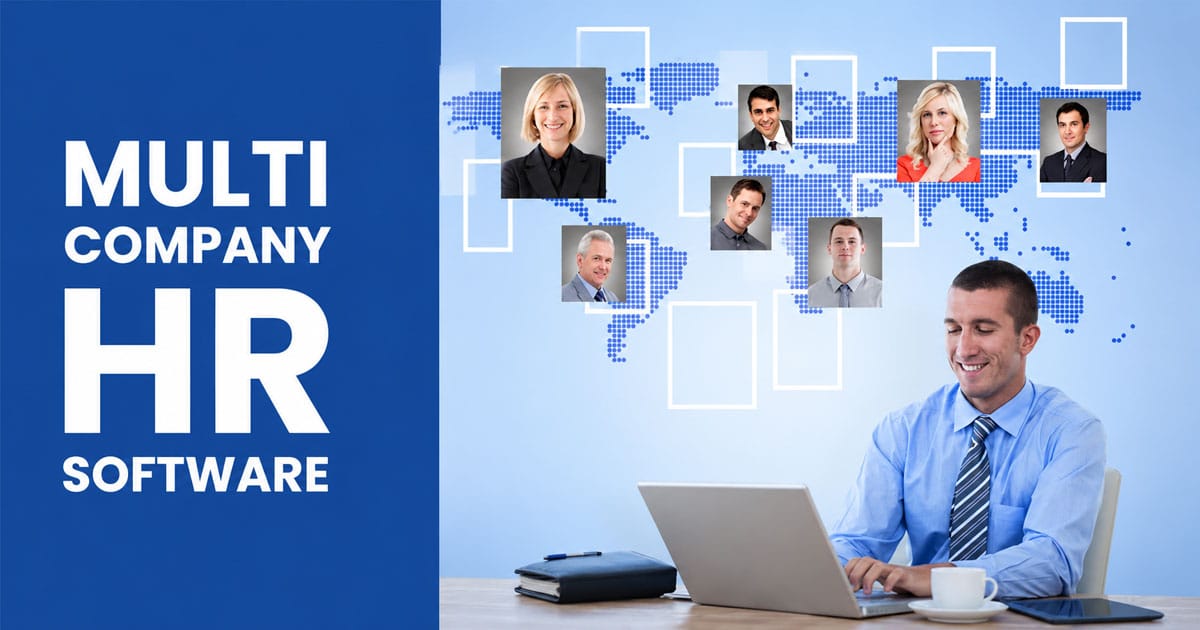
Table of Contents
Managing HR across multiple companies feels like juggling flaming torches while riding a unicycle. Multi-company HR software has revolutionized this chaos into smooth operations. Large enterprises report that HR software substantially improves their organizational performance - nearly 60% according to recent studies.
Companies that implement enterprise HR software reduce their administrative tasks by 20-25%. HR teams handling multiple entities find this time savings invaluable. Your team likely struggles with duplicate data entry and compliance headaches without the right HR software designed for large companies.
HR software vendors' landscape has changed dramatically over the years. Modern platforms now provide specialized solutions that unite multiple companies under one system. In this article, we will explore how these unified platforms eliminate administrative overhead while each entity's unique identity remains intact within your business structure.

What Is Multi Company HR Software
Multi company HR software helps organizations manage multiple companies through one unified platform without los control over structure, compliance, or company culture. This type of HR software centralizes employee data, people data, and administrative tasks across the entire workforce, covering the entire employee lifecycle from recruitment and new hires to performance management, compensation, and benefits. A single platform reduces administrative overhead, improves data accuracy, and supports business continuity across departments, locations, and countries.
For multi company management, a centralized platform provides real-time visibility, custom reports, and a holistic view of operations. HR teams, managers, and executives gain informed decisions through one system that supports accurate payroll, employee self-service, automated workflows, and compliance. This approach saves time, limits blind spots, and improves the overall employee experience across the organization.
Why Businesses Manage Multiple Companies Under One HR System
Running separate HR systems for each company under your corporate umbrella is like having multiple houses when you could have one efficient mansion. Companies are now finding the benefits of uniting their HR operations. Surveys show that an average company uses over 16 different HR systems. Here's why businesses are moving toward centralized HR solutions for their multi-entity structures.
Centralized Oversight Across Entities
A unified platform gives you clear visibility into your entire workforce. You won't need to piece together information from scattered sources anymore. The centralized approach gives immediate insights across all business units. Executives can make better decisions based on complete data.
One centralized HR system will give a consistent way to apply policies and procedures across all entities. Without proper oversight, "changes to regulatory or internal business practices could be applied haphazardly and inconsistently across local offices". Companies can control compliance better while staying flexible enough to meet local needs.
Cost Efficiency And Resource Sharing
A centralized human resources department saves money in several ways. Companies reduce expenses on:
- Duplicate systems and technology infrastructure
- Multiple administrative teams doing similar tasks
- Redundant recruiting, payroll processing, and benefits administration
These savings make a big difference. Studies show HR outsourcing (a form of centralization) boosted productivity by 55% across European companies. HR teams could "halve the resources needed for admin". Companies can do more with less through centralization.
Unified Employee Experience
The most compelling benefit is how multi company HR software creates consistency for employees in all locations. Current statistics paint a concerning picture about fragmented systems. About 70% of employees need 4-7 apps to complete a single HR task. 60% say their HR tools are "disjointed, difficult or outdated".
A unified platform removes this digital friction. Employees can manage their information, track training progress, and request leave without HR's help. This setup reduces HR's workload and makes employees happier by giving them more control.
Core Features Of Multi Company HR Software For Growing Organizations
Your HR software toolbox needs specific core features as your business grows to handle multiple legal entities. The right solution should grow with your organization without creating administrative bottlenecks. Here are the key components that make multi-company HR software work.
Multi-EIN And Entity Management
A strong multi-company HR software's foundation lies in its ability to handle multiple Employer Identification Numbers (EINs) in one system. Your business can manage different legal entities from a single platform.
Your HR team can process payroll for each entity separately while maintaining complete oversight with advanced multi-EIN features. The system lets employees work for multiple entities in your organization. Their hours get tracked and paid through the right business unit. Each entity generates separate pay documents for employees working under multiple EINs, yet the administrative process stays efficient through one central platform.
The software lets you add new company entities smoothly to support business expansion. Each entity maintains its own ledger while offering combined reporting to help executives make decisions.
Custom Workspaces And Role-Based Access
Each department or entity can have its own dedicated environment through custom workspace features that maintain security and independence. HR, Finance, and other teams can use a single service management platform without risking data integrity.
Role-based access control (RBAC) serves as these systems' security foundation. Users can only access information they need for their specific roles. RBAC never gives permissions directly to users - they come with assigned roles instead. This approach makes common IT tasks easier, such as adding new users, changing departments, or removing access. This benefit matters especially for organizations managing multiple entities.
Administrators can use proper workspace setup to:
- Let workspace administrators manage their teams' service delivery
- Keep department-specific data separate
- Monitor workspace access in detail
Automated Tax And Compliance Tools
Tax management becomes more complex with multiple entities, especially across different jurisdictions. Multi-company HR software has automated tax calculation features that cut down errors and possible penalties. These tools handle federal, state, and local tax submissions and create detailed audit trails for regulatory questions.
The system does more than calculate - it watches for legislative changes and updates tax forms. Your HR team won't need constant manual alertness to stay compliant.
Integrated Payroll And Time Tracking
Direct time logging in the system replaces error-prone spreadsheets. Approved timesheets connect automatically with payroll to ensure accurate pay across your workforce.
The advanced payroll system handles complex cases like employees working for multiple entities. You can run batch payroll with flexible chart-of-accounts mapping. The system supports different payment schedules while keeping separate ledgers for each company.
Audit Trails And Reporting Tools
The HR system logs every action to create a clear historical record that helps with security and compliance. These logs show who did what and when, which helps resolve disputes or investigations.
The reporting tools turn this data into applicable information through custom reports based on users, time periods, or actions. Managers can schedule regular monitoring or run specific investigations to see operations across all entities.
The best audit systems keep logs unchangeable and secure to maintain their integrity for compliance. This feature ensures your multi-company HR records stay accurate and reliable as your organization grows.
Benefits Of Multi Company HR Software For HR And Finance Teams
Multi company HR software gives HR and finance teams a centralized platform to manage complex operations across multiple companies. By unifying HR, payroll, and people data on one system, teams reduce errors, save time, and gain real time visibility to support informed decisions across the entire organization.
Reduced Administrative Workload
Multi company HR software reduces administrative overhead by automating routine HR management tasks across entities. HR teams no longer manage spreadsheets, duplicate employee data, or switch between tools for different companies. One unified platform handles core modules such as employee records, PTO accrual, org charts, and open positions for the entire workforce.
With automated workflows, administrative tasks like onboarding new hires, updating employee data, and managing hours take less effort and fewer resources. This time savings allows the HR team to focus on company culture, development, and performance instead of repetitive data entry and manual coordination across departments.
Accurate Payroll And Benefits Processing
Accurate payroll becomes easier with one system that supports multiple companies under separate compliance and pay structures. Multi company HR software calculates pay, taxes, and benefits automatically while maintaining clean data for each entity. Finance teams can run payroll with confidence across locations and countries.
A single source of truth ensures compensation, benefits, and deductions stay aligned across the entire employee lifecycle. Fewer manual steps improve data accuracy, reduce payroll errors, and support business continuity for enterprises with complex payroll operations and distributed workforces.
Centralized Employee Data Management
A centralized platform gives HR teams complete control over employee data migration across companies. All people data lives on one platform, reducing blind spots and IT infrastructure complexity. Managers and executives gain a holistic view of employees, departments, and locations without relying on disconnected systems.
This centralized approach supports compliance, data security, and consistency while allowing flexibility for company size and structure. With one platform, HR teams manage users, roles, and access while preserving data separation between entities where required.
Real Time Visibility For Leaders
Multi company HR software provides real time visibility across the organization. Executives and managers access custom reports, dashboards, and performance data from a single platform. This visibility supports faster decisions related to workforce planning, compensation, and operations.
Unified reporting removes delays caused by manual consolidation and outdated data. Leaders can compare performance across companies, track trends, and identify risks early. Real-time access to accurate data helps organizations stay agile in complex multi company environments.
Better Employee Experience Across Entities
Employee self-service tools improve the employee experience by giving workers access to pay, benefits, PTO, and performance data on one system. Employees no longer deal with confusion caused by multiple platforms or inconsistent processes between companies.
A consistent experience supports company culture while respecting differences across departments and locations. Employees feel more connected to the organization, which improves engagement, performance, and retention across the distributed workforce.
Stronger Compliance And Risk Control
Multi company HR software simplifies compliance by managing policies, payroll rules, and reporting requirements across countries and legal entities. HR and finance teams reduce risk by relying on one system that enforces rules automatically.
Central oversight helps organizations respond quickly to audits, regulatory changes, and internal reviews. With accurate data, automated processes, and clear visibility, businesses reduce operational risk while maintaining control over complex multi company management.
How Multi Company HR Software Simplifies Payroll And Compliance
Running multiple companies brings two major headaches - payroll and compliance. Multi company hr software changes these complex tasks into simplified processes. Companies in California face at least 20 different minimum-wage ordinances based on location. HR teams find themselves lost in this regulatory maze without the right tools while trying to keep accurate records of their workforce.
Automated Tax Calculations Per Jurisdiction
Tax management becomes a nightmare for companies with distributed teams working across different jurisdictions. A 2015 Bloomberg study revealed that tax compliance topped the list of concerns for multistate employers. Multi company hr software solves these problems by calculating federal, state, and local payroll taxes for each jurisdiction automatically. The best systems can handle over 300 million tax rules across 19,000+ jurisdictions worldwide.
Your software spots when employees work in different states and helps you manage reciprocity agreements that stop double taxation. HR teams can skip manual research and avoid pricey mistakes that lead to penalties.
Batch Payroll Processing Across Entities
You can process payroll for all your companies at once with modern multi company hr software while keeping separate books for each entity. Each company keeps its unique identity for accounting purposes, but the administrative work drops dramatically.
Different pay schedules and company-specific deductions don't need separate calculations anymore. Better platforms make it easy to map charts-of-accounts and handle transactions between companies, which saves time during reconciliation.
Compliance With Local, State, And Federal Laws
Your organization faces more compliance hurdles as it grows. Multi company hr software keeps track of law changes in every jurisdiction where you do business. Tax forms and compliance requirements update automatically without anyone lifting a finger.
The software helps you handle different state rules about overtime, minimum wages, and paid leave programs. The federal minimum wage hasn't changed from $7.25 since 2009, but many states and cities now require higher rates. Smart hr software figures out the right wage floor based on where your employees work.
Year-End Reporting And Filing Support
Year-end tasks create plenty of stress for hr teams managing several companies. Multi company hr software eases this burden with automatic yearly reports that work for all jurisdictions. You get signature-ready tax returns with e-filing options that match what your business needs.
The software prepares accurate W-2s and 1099s for companies in multiple states while keeping each entity's reports separate. This central system helps you avoid common mistakes like missed deadlines or incomplete filings that could cost you money or hurt your standing.
Data Security And Access Control In Multi Company HR Software
Managing sensitive employee data gets trickier as your organization grows across multiple companies. Your databases hold countless records with social security numbers, salary details, disciplinary notes, and medical information. The stakes are high. You need to handle this information properly not just to prevent breaches but to maintain your workforce's trust.
Role-Based Permissions
Multi-company HR software works best with Role-Based Access Control (RBAC). System administrators give permissions based on business functions rather than individual identities. Users can only perform actions their specific role requires. They cannot change their assigned permission levels.
This setup is a great way to get control over multiple entities. Take an HR director who needs full visibility across all companies. Location managers, on the other hand, can only see their direct reports. The best platforms provide flexible, context-based security that looks at job titles, location, and access timing before granting permissions.
Data Segmentation By Entity
Data segmentation creates clear boundaries between your companies. Your HR data gets organized into specific groups based on type, sensitivity, or purpose. This limits any potential damage if one part of your system gets compromised.
Good segmentation means the right people see only what they need. A recruiter doesn't need medical histories, but payroll specialists must have compensation data. Many systems protect information with industry-standard encryption during transfer and storage. This makes data unreadable to anyone who shouldn't have access.
Audit Logs And Access History
Your multi-company HR software should track every action carefully. Detailed audit logging captures who accessed what information, their changes, and exact timing. These permanent, unchangeable logs create a clear history that helps you:
- Keep everyone accountable across your organization
- Spot suspicious activities or potential security issues
- Back up internal investigations with solid evidence
- Show proper documentation during compliance checks
Compliance With Data Protection Laws
Your HR software must follow data protection rules wherever you operate. Modern systems come with breach notification features and safeguards to prevent data incidents.
Check if your vendor provides detailed Data Processing Agreements. These should clearly show them as processors while your organization stays the controller. The vendor should also offer consent tracking, automated retention periods, and encryption to help meet regulations.
How Multi Company HR Software Supports Scalability And Expansion
Business growth creates new chances but also adds complexity when managing multiple entities. Your HR software must evolve with your expanding organization without creating administrative bottlenecks or compliance risks. Modern multi company hr software builds the foundation you need to scale seamlessly, whether you add locations, acquire businesses, or expand globally.
Adding New Entities Without Disruption
Growing organizations must know how to incorporate new business units without operational interruption. Advanced multi company hr software lets you add entities within your existing system and maintains business continuity throughout expansion periods. Your administrators can configure additional workspaces while keeping your established hr workflows instead of setting up entirely new platforms.
Entity management functionality builds a solid foundation for business expansion by maintaining separate ledgers for each company under a unified system. HR teams can centralize processes across regions while supporting consistent policy application with effective platforms. New acquisitions or subsidiaries quickly integrate into your established operations without disrupting existing entities.
Flexible Licensing And User Management
Organizations need licensing models that adapt to changing workforce needs as they scale. Forward-thinking multi company hr software provides:
- Predetermined expansion pricing that prevents price increases during growth periods
- License portability that fits changing staffing patterns across locations
- Incremental scaling options that add licenses in small batches rather than large blocks
You can manage costs effectively during periods of fluctuation with this flexibility. You can scale your hr software for multiple companies exactly as needed rather than paying for unused capacity during gradual growth. The software addresses merger and acquisition considerations through provisions that prevent compliance issues or penalties during corporate restructuring.
Support For Global Teams And Remote Workforces
Remote and hybrid work has transformed workforce management fundamentally. Multi company hr software helps organizations find talent worldwide and benefit from diverse teams while giving employees more flexibility. These platforms make communication between employees and managers easier whatever their location.
Cloud-based solutions provide the flexibility and remote accessibility that organizations with hybrid teams need. You can tailor workflows based on your company's evolving needs with easy customization. Proper integration with other business software improves efficiency by eliminating manual data entry and reducing errors.
Multi company hr software creates a centralized dashboard for all your legal entities. This unified view maintains visibility across your entire workforce and makes tracking salaries, benefits, and allowances easier from a single interface. Your hr team can support continued growth while maintaining the unified employee experience that stimulates engagement and employee productivity.
Common Challenges Solved By Multi Company HR Software
Managing HR processes in multiple companies without unified software is like herding cats in a thunderstorm. Your business growth only adds to this administrative nightmare. Scattered employee records and payroll chaos affect the whole workforce when your multi company management depends on separate systems. The right hr software can turn these challenges into smooth operations.
Duplicate Data Entry
Research shows that HR professionals spend $4.86 on a single manual data entry. This cost grows faster throughout your employee lifecycle when each entity uses different systems. Your team must repeatedly input identical information, new hire details, compensation changes, time off requests, across multiple platforms without integrated hr software. This repetitive task not only wastes time but creates inconsistencies. An employee might have different information in various systems, which leads to administrative burden and payroll mistakes.
Manual Reconciliation Errors
About 84% of organizations still heavily depend on manual tasks and spreadsheets for reconciliation. This method leads to frequent mistakes, 18% of accounting professionals make errors daily. Multi company hr software with automated reconciliation eliminates calculation errors and ensures accurate payroll across entities. Companies that use automated systems see 75% fewer errors than those using manual processes.
Inconsistent Reporting Across Entities
A complete overview becomes almost impossible when entities use different accounting systems or charts of accounts. About 75% of finance managers say their financial close processes don't work due to manual workflows and fragmented systems. Multi company hr software creates standard data structures and reporting templates. This helps executives make informed decisions based on accurate, company-wide information instead of combining mismatched reports.
Onboarding Across Multiple Locations
New hires at different locations receive uneven training levels without standard protocols, which creates gaps in job readiness. Studies show that employees who go through structured onboarding are 58% more likely to stay with the organization after three years. Multi company hr software creates consistent onboarding workflows while adapting to location-specific needs. This ensures every employee gets the same quality experience at any location. This is very important for an employee management system.
How To Choose The Right Multi Company HR Software For Your Business
Your company needs more than a simple feature checklist to pick the right multi-company HR software. A solution that lines up with your business structure will serve your workforce better.
Assessing Your Entity Structure And Needs
Start by scrutinizing your current HR processes to identify pain points. Your HR team should answer key questions: Which tasks take too much time? What causes the most errors? Which processes need standardization across entities? These answers will help you define requirements before you reach out to vendors or send RFPs.
Evaluating HR Software Providers
Make a priority list that separates must-have features from nice-to-have ones. Pick technologies that match your company's culture. The software's customization options, reporting tools, mobile access, and ease of setup should guide your choice. These factors will help you shortlist 3-5 potential vendors.
Requesting Demos And Testing Scenarios
You should guide the demo process with scenarios that reflect your multi-company management needs. Get hands-on trial access to test user-friendliness. Watch how the system handles entity switching, combined reporting, and compliance across jurisdictions during demonstrations.
Checking Integration With Existing Systems
The software must work with your current tech stack. Check if it connects to your payroll system, time tracking tools, and accounting platforms. Good integration removes manual data entry. Your employee data will flow smoothly between systems, which creates a single source of truth throughout the employee lifecycle.
Why Payrun Fits Multi Company HR Software Needs
Payrun supports multi company HR software requirements through a single platform designed for multi company management. The system allows multiple companies to operate on one platform while keeping employee data, payroll, and compliance fully separated. HR teams gain real time visibility across the entire workforce, reduce administrative overhead, and maintain data accuracy from one centralized platform.
Built-in multi-entity, multicurrency, and compliance tools simplify HR management, accurate payroll, and reporting across locations and countries. Automated workflows, custom reports, and employee self service improve the employee experience and support business continuity. Payrun helps HR and finance teams make informed decisions using reliable people data, fewer tools, and one system that scales with company size and complexity.
FAQs
Does Multi Company HR Software Support Different Company Cultures?
Yes. Multi company HR software allows each company to maintain its own company culture, policies, and workflows while operating on one centralized platform. This balance supports consistency without forcing uniform rules across teams.
Can Small Businesses Use Multi Company HR Software Effectively?
Absolutely. Small businesses that manage multiple entities benefit from one system that reduces complexity, improves data accuracy, and limits administrative overhead as operations grow.
How Does Multi Company HR Software Handle Employee Transfers?
The system allows employees to move between companies without losing employee data or history. This supports business continuity and creates a smoother employee experience across the entire employee lifecycle.
Does Multi Company HR Software Work For A Distributed Workforce?
Yes. A unified platform supports employees across locations, countries, and time zones. Providing visibility while managers handle hours, payroll, and performance from one platform.
What Role Does IT Infrastructure Play In Multi Company HR Software?
Modern HR software reduces IT infrastructure strain by replacing multiple tools with a single platform. This simplifies management, improves security, and supports scalable operations.
Can Executives Access Group-Level Insights Without Data Conflicts?
Yes. Executives receive a holistic view through custom reports and real time dashboards while each company retains clean and separated data within the same system.
How Does Multi Company HR Software Improve Recruitment And Workforce Planning?
The platform tracks open positions, new hires, and org charts across companies. HR teams use people data to support informed decisions, reduce blind spots, and plan growth efficiently.