Hiring automation software has become essential as the modern hiring process grows more complex and competitive. Businesses manage increasing volumes of job openings, job applications, and job postings across job boards, career site pages, and referral programs, while hiring managers expect faster access to qualified candidates. Recruitment automation software and recruitment automation tools reduce manual tasks such as resume screening, resume parsing, interview scheduling, and candidate communication, allowing recruiters to focus on more strategic aspects of talent acquisition.
Through applicant tracking systems, candidate sourcing, and a candidate matching tool, recruiting automation software helps recruiting teams manage candidate data, engage passive candidates, and identify the most qualified candidates efficiently. Automated processes such as self-scheduling interviews and automated interview scheduling improve candidate experience, keep candidates engaged, and support a positive candidate experience throughout the hiring journey, from job search to the final evaluation process.
What Is Hiring Automation Software
Hiring automation software is a technology solution that helps businesses streamline the hiring process by replacing manual search and repetitive tasks with automated processes. It supports recruiting teams by managing job postings, job applications, and candidate data across multiple job boards and career site channels. Through recruitment automation tools such as applicant tracking systems, resume parsing, and candidate sourcing, organizations can attract suitable candidates faster while reducing administrative burden on hiring managers.
Recruitment automation software also improves candidate communication, interview scheduling, and applicant tracking throughout the recruiting process. Features like automated interview scheduling, self-scheduling interviews, and a candidate matching tool help identify the most qualified candidates based on job requirements and soft skills. By automating tasks and enabling flexible automation, recruiting automation software allows recruiters to focus on more strategic aspects of talent acquisition, create a positive candidate experience, and keep candidates engaged from initial job search to final candidate feedback.
Key Features Of Hiring Automation Software
Hiring automation software combines automation tools, data intelligence, and workflow management to simplify the recruitment process end-to-end. Each feature removes administrative burden, reduces manual tasks, and improves candidate experience while helping hiring managers and recruiting teams focus on strategic aspects of talent acquisition.
Applicant Tracking And Workflow Management
Applicant tracking systems act as the foundation of hiring automation software. Centralized applicant tracking allows recruiting teams to manage candidates across job applications, job postings, and job boards in one system. Studies show that companies using applicant tracking reduce time-to-hire by nearly 30%. Structured recruiting workflows help organize the hiring funnel, track candidate data, and maintain visibility across every recruitment effort. Clear workflow management ensures hiring managers move qualified applicants forward without delays or manual follow-ups.
Resume Screening And Resume Parsing
Resume screening automation replaces manual search with intelligent resume parsing. Recruitment automation tools scan thousands of resumes in minutes, extracting job requirements, soft skills, and experience data with over 95% accuracy. Automation software filters suitable candidates based on predefined criteria, allowing recruiters to focus on the most qualified candidates early. This approach shortens the evaluation process and increases recruiter productivity, especially when handling high-volume job openings across staffing firms and internal recruiting teams.
Candidate Sourcing And Matching
Candidate sourcing tools expand reach beyond active job seekers to include passive candidates. Hiring automation software uses AI-driven candidate matching tools to compare candidate profiles against job descriptions and historical hiring data. Research indicates that automated candidate sourcing increases access to top talent by 40%.
Candidates based on skills, experience, and behavior data surface faster, enabling recruiting automation software to deliver the best candidates without relying solely on job postings or staffing agencies.
Automated Interview Scheduling
Interview scheduling automation eliminates back-and-forth emails and calendar conflicts. Automated interview scheduling and self-scheduling interviews allow candidates and hiring managers to select available slots instantly.
Companies using automated processes report up to 60% faster scheduling cycles. This feature improves candidate engagement, keeps candidates engaged throughout the hiring journey, and supports a positive candidate experience. Reduced delays also help recruiting teams secure qualified candidates before competitors act.
Candidate Communication And Engagement
Consistent candidate communication plays a critical role in recruitment success. Recruitment automation software sends personalized messages, status updates, and interview reminders at scale while preserving human interaction. Data shows that timely communication improves candidate experience by over 50%.
Automation tools support candidate feedback, hiring events updates, and follow-ups, ensuring candidates are engaged across the recruiting process. Clear communication reduces drop-off rates and builds trust with potential candidates.
Analytics And Actionable Insights
Hiring automation software delivers actionable insights across recruitment efforts. Built-in analytics track hiring funnel performance, source effectiveness, and recruiter efficiency. Metrics such as cost-per-hire, time-to-fill, and candidate conversion rates guide smarter decisions.
Organizations using data-driven recruitment software improve hiring quality by nearly 20%. These insights help hiring managers refine recruiting workflows, optimize job search strategies, and align talent acquisition with business goals.
Vendor And Referral Management
Vendor management system features support collaboration with staffing agencies and staffing firms. Centralized tools track submissions, performance metrics, and compliance data in one platform. Referral programs integrated into hiring automation software increase qualified applicants by up to 45%.
This feature simplifies candidate sourcing, reduces administrative overhead, and ensures recruiting teams maintain control over external recruitment channels while scaling efficiently with minimal effort.
Benefits Of Hiring Automation Software
Hiring automation software delivers measurable value across the recruitment process by reducing manual tasks, improving workflow management, and supporting better hiring decisions. From faster candidate sourcing to stronger candidate experience, automation software enables recruiting teams to achieve consistent results at scale.
Faster Time To Hire
Hiring automation software accelerates the hiring process by replacing manual search and repetitive tasks with automated processes. Resume screening, applicant tracking, and interview scheduling occur within minutes instead of days. Research shows organizations using recruitment automation tools reduce time-to-hire by up to 40%.
Shorter hiring cycles help recruiting teams secure top talent before competitors. Automated interview scheduling and self-scheduling interviews remove delays, allowing hiring managers to focus on the evaluation process quality rather than administrative coordination.
Higher Quality Candidates
Recruiting automation software improves access to qualified candidates through data-driven candidate sourcing and candidate matching tools. AI-assisted screening evaluates job requirements, soft skills, and experience consistently, reducing bias in early hiring stages. Studies indicate automated candidate matching increases quality-of-hire by nearly 25%.
Better filtering ensures suitable candidates enter the hiring funnel earlier. Hiring managers gain confidence when shortlists include the most qualified candidates aligned with both role expectations and long-term business needs.
Improved Candidate Experience
Candidate experience improves significantly when recruitment automation software manages candidate communication and interview scheduling efficiently. Automated updates, personalized messages, and clear timeline tracking reduce uncertainty for job seekers. Data shows that 70% of candidates value fast and transparent communication during the recruiting process.
Positive candidate experience keeps candidates engaged throughout the hiring journey. Smooth interactions across job applications, job postings, and career site touchpoints increase acceptance rates and strengthen employer brand perception.
Reduced Administrative Burden
Hiring automation software minimizes administrative burden by automating tasks such as resume parsing, applicant tracking, and candidate data management. Recruiters spend up to 30% less time on manual tasks after adopting recruitment management software.
Workflow management tools centralize recruiting workflows, job applications, and candidate feedback. Reduced operational workload allows recruiting teams to focus on strategic aspects like talent acquisition planning and stakeholder collaboration.
Scalable Recruitment Operations
Automation software supports scalable recruitment efforts without proportional increases in headcount. High-volume hiring across job openings, hiring events, and staffing agencies becomes manageable through flexible automation. Organizations report handling up to 50% more candidates using the same recruiting team size.
Scalable recruiting automation ensures consistent hiring standards. Workflow management maintains structured evaluation processes even as hiring demand increases across departments or regions.
Better Data And Insights
Recruitment automation tools provide actionable insights into the recruiting process through real-time analytics. Metrics such as cost-per-hire, source performance, and hiring funnel efficiency support informed decision-making. Data-driven recruitment efforts improve hiring outcomes by approximately 20%.
Clear visibility into candidate data and recruiting workflows helps hiring managers refine job descriptions, optimize job postings, and strengthen future recruitment strategies.
Stronger Collaboration And Compliance
Hiring automation software improves collaboration between recruiting teams, hiring managers, and external staffing firms. Shared applicant tracking systems and vendor management system tools maintain transparency and accountability. Compliance risks decrease by nearly 35% through standardized approval workflows and audit trails.
Consistent recruitment processes ensure fair evaluation and secure candidate data handling. Strong collaboration supports better hiring outcomes while meeting regulatory and organizational requirements.
Use Cases Of A Hiring Automation Software
Hiring automation software adapts to industry-specific recruitment needs by streamlining workflows, reducing manual tasks, and improving candidate experience. From high-volume hiring to specialized talent acquisition, recruitment automation software supports faster decisions, better candidate matching, and consistent recruitment processes at scale.
Technology And SaaS Companies
Technology and SaaS companies manage continuous job openings and compete heavily for top talent. Hiring automation software supports candidate sourcing, resume screening, and leave tracking across multiple job boards and career site channels. Reports show that tech firms using recruitment automation tools reduce time-to-hire by nearly 35%.
AI-assisted candidate matching tools evaluate job requirements, soft skills, and experience efficiently. Automated interview scheduling and personalized candidate communication help keep candidates engaged in a fast-moving hiring journey.
Retail And Hospitality Businesses
Retail and hospitality industries rely on high-volume recruitment with tight timelines. Hiring automation software handles large volumes of job applications during seasonal hiring events with minimal effort. Studies indicate automation software increases recruiter capacity by up to 50% in volume-driven environments.
Applicant tracking systems organize candidate data and support quick evaluation processes. Automated processes such as self-scheduling interviews improve candidate experience while reducing administrative burden on hiring managers and frontline recruiting teams.
Healthcare And Life Sciences
Healthcare organizations require qualified applicants while meeting strict compliance standards. Hiring automation software supports credential tracking, candidate data management, and structured recruiting workflows. Research shows that healthcare recruiters using automation reduce hiring delays by approximately 30%.
Recruitment automation software also improves candidate communication and scheduling interviews across multiple stakeholders. Clear workflows help identify suitable candidates faster while maintaining regulatory and data privacy requirements.
Staffing Agencies And Staffing Firms
Staffing agencies manage multiple clients, job postings, and candidate pools simultaneously. Hiring automation software centralizes applicant tracking, vendor management system functions, and candidate sourcing activities. Agencies using recruiting automation software place candidates up to 40% faster than manual processes.
Automation tools support passive candidates, manage candidates across active roles, and provide actionable insights for recruitment efforts. Streamlined workflows allow staffing firms to scale placements without increasing administrative workload.
Hiring Automation Software And Manual Hiring Comparison
Hiring automation software replaces manual search and repetitive tasks with automated processes that improve speed, accuracy, and candidate experience. The comparison below highlights how recruitment automation software and automation tools outperform traditional manual hiring across the recruitment process.
| Aspect | Hiring Automation Software | Manual Hiring |
|---|---|---|
| Hiring process speed | Automated processes reduce time-to-hire by up to 40% through applicant tracking, resume screening, and automated interview scheduling | Manual tasks slow the recruiting process due to email coordination and spreadsheet tracking |
| Candidate sourcing | Uses candidate sourcing tools, job boards, and candidate matching tools to reach qualified candidates and passive candidates | Relies on manual search and limited job postings |
| Resume screening | Resume parsing filters qualified applicants based on job requirements and soft skills | Recruiters review resumes manually, increasing the evaluation process time |
| Interview scheduling | Self-scheduling interviews and automated interview scheduling improve candidate engagement | Scheduling interviews requires repeated follow-ups |
| Candidate communication | Personalized messages and automated updates keep candidates engaged | Inconsistent communication affects candidate experience |
| Applicant tracking | Centralized applicant tracking systems manage candidate data and the hiring funnel | Fragmented tracking through emails and documents |
| Recruitment scalability | Flexible automation supports more candidates with minimal effort | Scaling requires additional recruiters and resources |
How To Choose Hiring Automation Software
Hiring automation software plays a strategic role for growing companies that manage rising job openings, expanding recruiting teams, and complex hiring workflows. The right recruitment automation software supports scalability, improves candidate experience, and reduces administrative burden while aligning with long-term talent acquisition goals.
Scalability And Flexible Automation
Scalability defines the long-term value of hiring automation software. Growing companies often increase recruitment efforts rapidly, requiring automation software that supports more candidates without operational strain. Flexible automation adapts recruiting workflows, applicant tracking, and candidate sourcing based on hiring volume.
Industry data shows that scalable recruitment automation tools help teams handle up to 50% more job applications without adding recruiters. Flexible workflow management ensures hiring managers maintain structured evaluation processes as the hiring funnel expands across departments or locations.
Core Automation And Workflow Features
Core features determine how effectively recruitment automation software reduces manual tasks. Applicant tracking systems, resume parsing, automated interview scheduling, and candidate communication should work together seamlessly. These automation tools replace manual search and repetitive tasks across the recruiting process.
Companies using integrated recruiting automation software reduce administrative effort by nearly 30%. Strong workflow management ensures consistent candidate data flow, clear status visibility, and smooth coordination between recruiters and hiring managers throughout the hiring journey.
Candidate Experience And Engagement
Candidate experience directly influences acceptance rates and employer branding. Hiring automation software should support personalized messages, self-scheduling interviews, and timely updates across job applications and job postings. Studies show that 65% of job seekers value transparent communication during the recruitment process.
Automation tools that keep candidates engaged reduce drop-off rates significantly. Positive candidate experience across career site interactions and interview stages helps attract suitable candidates and retain top talent in competitive markets.
Data, Analytics, And Actionable Insights
Data-driven decision-making remains essential for growing companies. Recruitment automation software should provide actionable insights across applicant tracking, candidate sourcing, and hiring funnel performance. Metrics such as time-to-hire, source effectiveness, and quality-of-hire guide strategic improvements.
Organizations using recruitment software analytics improve hiring accuracy by up to 20%. Clear visibility into candidate data supports better job descriptions, optimized job postings, and more informed evaluation processes for long-term talent acquisition success.
Integration With Existing HR Systems
Seamless integration ensures hiring automation software fits within existing HR ecosystems. Compatibility with payroll systems, HR management tools, and vendor management system platforms reduces data silos. Integrated recruitment software improves operational efficiency and compliance.
Research indicates companies with integrated automation tools experience 25% fewer data errors. Unified systems help recruiting teams manage candidates, coordinate with staffing agencies, and maintain consistent candidate data across the recruitment process.
Compliance, Security, And Data Privacy
Compliance and data protection remain critical for growing organizations. Hiring automation software must support regulatory requirements, secure candidate data, and provide audit trails across recruiting workflows. Applicant tracking systems with compliance controls reduce legal risk.
Automation software with built-in security features lowers compliance incidents by nearly 35%. Strong data privacy measures build trust with job seekers while ensuring recruitment efforts meet industry and regional standards.
Vendor Support And Long-Term Value
Vendor reliability influences long-term success. Recruitment automation software providers should offer ongoing support, regular updates, and clear onboarding resources. Strong vendor partnerships reduce adoption friction and improve recruiter productivity tracking.
Companies that choose supported automation tools report 40% faster implementation. Long-term value comes from software that evolves with recruitment needs, supports hiring managers consistently, and enables sustainable talent acquisition growth.
How Automation Software Impacts Compliance, Accuracy, And Scalability
Automation software strengthens recruitment operations by standardizing processes, reducing human error, and supporting consistent growth. In hiring automation software, structured workflows, data controls, and recruitment automation tools help organizations meet compliance standards while managing higher recruitment volumes efficiently.
Recruitment Compliance And Risk Control
Hiring automation software enforces compliance through standardized recruiting workflows and applicant tracking systems. Automated processes ensure consistent job descriptions, fair screening criteria, and documented evaluation processes across all candidates. Research shows organizations using recruitment automation software reduce compliance-related risks by nearly 30%.
Built-in audit trails, permission controls, and secure candidate data storage support regulatory requirements such as data privacy and equal hiring practices. Consistent workflow management protects recruiting teams and hiring managers from manual errors and compliance gaps.
Data Accuracy And Decision Quality
Automation software improves accuracy by eliminating manual data entry and fragmented records. Resume parsing, applicant tracking, and candidate matching tools capture candidate data with over 95% accuracy. Recruitment automation tools ensure consistent evaluation against job requirements and soft skills.
Accurate candidate data supports better hiring decisions. Hiring managers gain reliable insights into suitable candidates, enabling fair comparisons and stronger selection outcomes. Improved data quality also enhances actionable insights across the recruitment process.
Scalable Hiring Operations
Hiring automation software enables scalable recruitment without proportional increases in recruiter workload. Automated processes manage higher volumes of job applications, job postings, and candidate communication efficiently. Organizations report handling up to 50% more candidates after adopting recruitment automation tools.
Workflow management ensures hiring funnel consistency across departments and locations. Scalable automation allows recruiting teams to maintain quality standards while expanding recruitment efforts rapidly during growth phases.
Consistency Across Hiring Teams
Automation software ensures consistent hiring practices across recruiting teams, staffing agencies, and hiring managers. Centralized applicant tracking systems align recruiting workflows, evaluation criteria, and communication standards. Studies indicate standardized recruitment processes improve hiring efficiency by approximately 25%.
Consistency reduces bias, supports compliance, and improves candidate experience. Unified workflows help organizations manage candidates effectively while maintaining accuracy and transparency throughout the hiring journey.
How Payrun Autmates Recruitment System For Faster Hiring
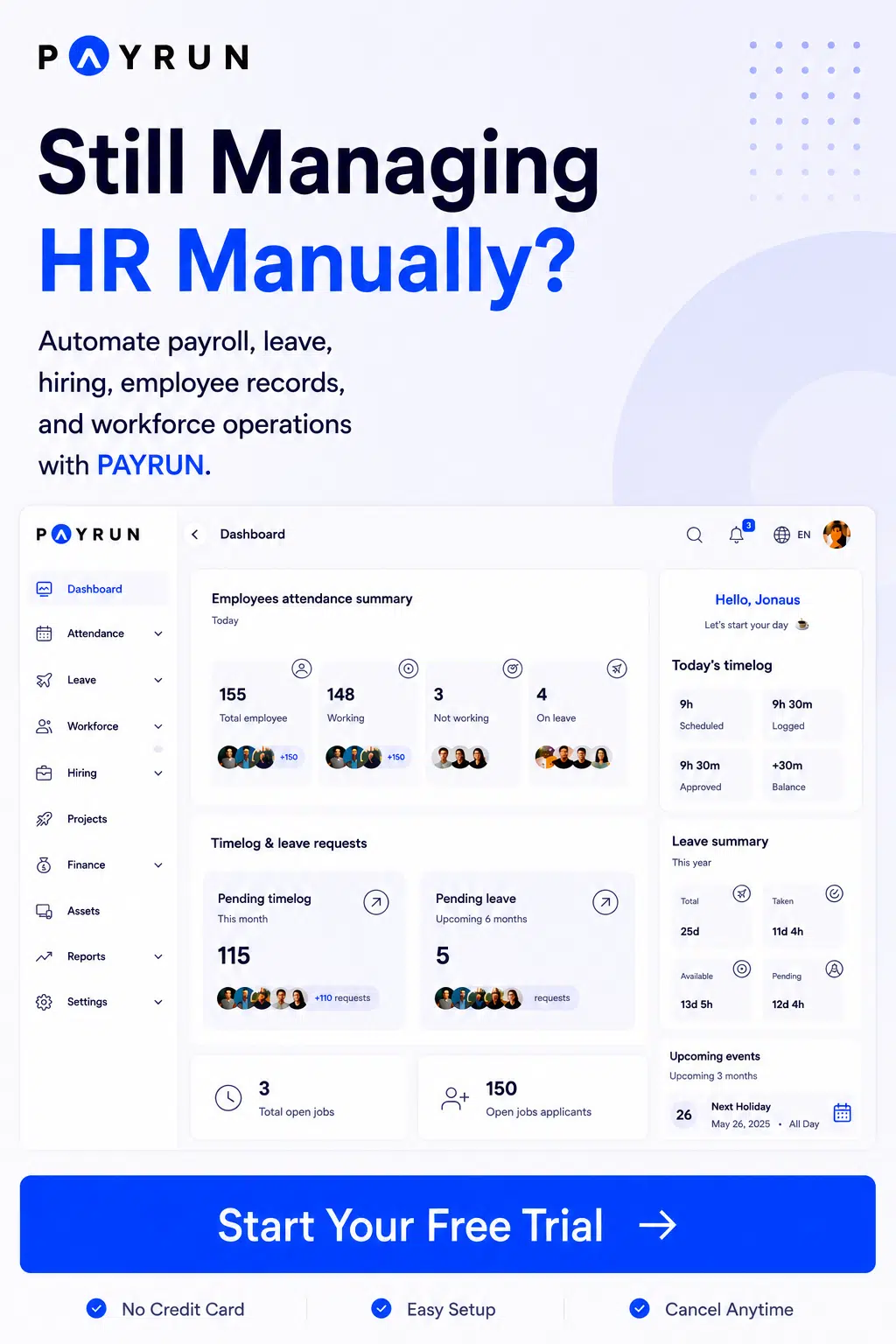
Hiring automation software using Payrun helps growing businesses manage the hiring process with speed, structure, and compliance. Through recruitment automation tools, Payrun centralizes job postings, job applications, candidate data, and leave management while reducing manual tasks across recruiting workflows. Hiring managers gain better visibility into applicant tracking, resume screening, and candidate communication without relying on disconnected systems.
Payrun combines recruitment software with automation software to support accurate hiring decisions and regulatory alignment. Automated interview scheduling, clear evaluation processes, and structured hiring funnels improve candidate experience and keep candidates engaged throughout the hiring journey. With built-in workflow management and data accuracy controls, recruiting teams focus on qualified candidates and strategic aspects of talent acquisition while maintaining compliance and reducing administrative burden across recruitment efforts. You can enjoy these features at a suitable price.
FAQs
u003cstrongu003eIs Hiring Automation Software Suitable For Small Businesses?u003c/strongu003e
Yes. Hiring automation software supports small businesses by reducing manual tasks, improving applicant tracking, and managing job applications efficiently. Recruitment automation tools help small teams access qualified candidates without expanding recruiting staff or increasing administrative burden.
u003cstrongu003eCan Hiring Automation Software Reduce Hiring Bias?u003c/strongu003e
Yes. Recruitment automation software applies consistent screening criteria based on job requirements and candidate data. Automated resume screening and candidate matching tools reduce subjective decisions and support fair evaluation across the hiring process.
u003cstrongu003eDoes Hiring Automation Software Replace Human Recruiters?u003c/strongu003e
No. Automation software supports recruiters by handling repetitive tasks such as resume parsing and interview scheduling. Human interaction remains essential for evaluating soft skills, cultural fit, and final hiring decisions.
u003cstrongu003eHow Does Hiring Automation Software Improve Candidate Engagement?u003c/strongu003e
Hiring automation software improves candidate engagement through timely candidate communication, personalized messages, and automated interview scheduling. These features keep candidates engaged throughout the hiring journey and strengthen candidate experience.
u003cstrongu003eCan Recruitment Automation Tools Handle High-Volume Hiring?u003c/strongu003e
Yes. Recruitment automation tools manage large volumes of job postings, job applications, and candidate data efficiently. Automated processes and workflow management help recruiting teams scale recruitment efforts without delays.
u003cstrongu003eDoes Hiring Automation Software Support Compliance Requirements?u003c/strongu003e
Yes. Applicant tracking systems and workflow controls support data privacy, audit trails, and standardized evaluation processes. Automation software reduces compliance risks while maintaining accurate candidate records.
u003cstrongu003eWhat Role Does AI Play In Hiring Automation Software?u003c/strongu003e
AI assistant features support resume screening, candidate sourcing, and candidate matching tools. AI-driven insights help recruiting teams identify the most qualified candidates faster while improving accuracy across the recruiting process.