Employee engagement plays a major role in employee satisfaction, productivity, and retention. Organizations with engaged employees often experience stronger workplace culture, better collaboration, and improved business performance. However, keeping employees motivated requires more than occasional recognition or annual surveys.
Effective employee engagement strategies focus on communication, career growth, recognition, flexibility, and meaningful feedback. When businesses invest in employee engagement, employees feel valued, connected, and motivated to contribute to organizational success.
Many companies now prioritize employee engagement strategies to create healthier workplaces and support long-term growth. Whether you manage a small team or a large workforce, the right approach can improve employee engagement and strengthen relationships across the organization. The following strategies can help build engaged employees and create a happier, more productive workforce.
What Is An Employee Engagement Strategy
An employee engagement strategy is a plan that helps organizations improve employee engagement and create a better workplace experience. It focuses on communication, recognition, career growth, and feedback to keep employees informed and motivated.
Companies often measure employee engagement through surveys and discussions to understand employee satisfaction and job satisfaction. Strong employee engagement efforts lead to highly engaged employees, higher productivity, and better employee retention, helping businesses build a more committed and successful workforce.
Why Most Employee Engagement Programs Fall

Employee engagement programs often fail because organizations focus on activities instead of long-term culture. Many businesses invest in surveys, rewards, or events but overlook the factors that truly increase employee engagement. Understanding these challenges helps companies build a stronger engagement strategy and create a workplace where employees feel valued.
Lack Of Leadership Support
Leadership plays a major role in employee engagement. When managers and executives do not actively support engagement initiatives, employees often lose interest. Leaders who communicate openly, recognize contributions, and empower employees help foster employee engagement throughout the organization.
Without visible leadership involvement, even the best programs struggle to improve employee morale and engagement and retention.
One-Size-Fits-All Initiatives
Most employee engagement strategies fail because they treat every employee the same. Different teams, roles, and generations have different expectations. A single approach rarely meets everyone's needs.
Some employees prioritize career development, while others value work life balance or flexible schedules. Involving employees in the planning process allows businesses to create more effective employee engagement strategies that address real workplace concerns.
Poor Employee Communication
Communication problems often weaken engagement efforts. Employees who lack information about company goals, decisions, or changes may feel disconnected from the organization.
Regular updates, knowledge sharing, and open discussions help keep employees informed and engaged. Strong communication also encourages employee feedback and creates opportunities for collaboration. Employee engagement strategies are important because they build trust and strengthen workplace relationships.
Missing Recognition And Feedback
Employee recognition is one of the strongest drivers of engagement. Employees want their efforts to be acknowledged and appreciated. When recognition is missing, motivation often declines.
Regular employee feedback also plays an important role. Organizations that encourage feedback conversations and conduct regular employee engagement surveys gain valuable insights into employee needs. Recognition and feedback help employees feel valued and improve overall employee morale.
No Measurement Or Follow-Up
Many organizations launch an engagement strategy but fail to measure results. Without data, it becomes difficult to understand what works and what needs improvement.
Regular employee engagement surveys, feedback sessions, and performance discussions help organizations measure progress. Reviewing employee feedback allows businesses to adjust their approach and increase employee engagement over time.
Successful engagement programs require continuous improvement, consistent communication, and a commitment to supporting employees at every stage of their journey.
Employee Engagement Strategies To Build A Happier Workforce

Employee engagement directly influences workplace culture, productivity, and retention. Employees worldwide expect more than competitive salaries. They want meaningful work, growth opportunities, recognition, and supportive leadership. Organizations that prioritize strong employee engagement often experience better business outcomes, improved company performance, and greater organizational success.
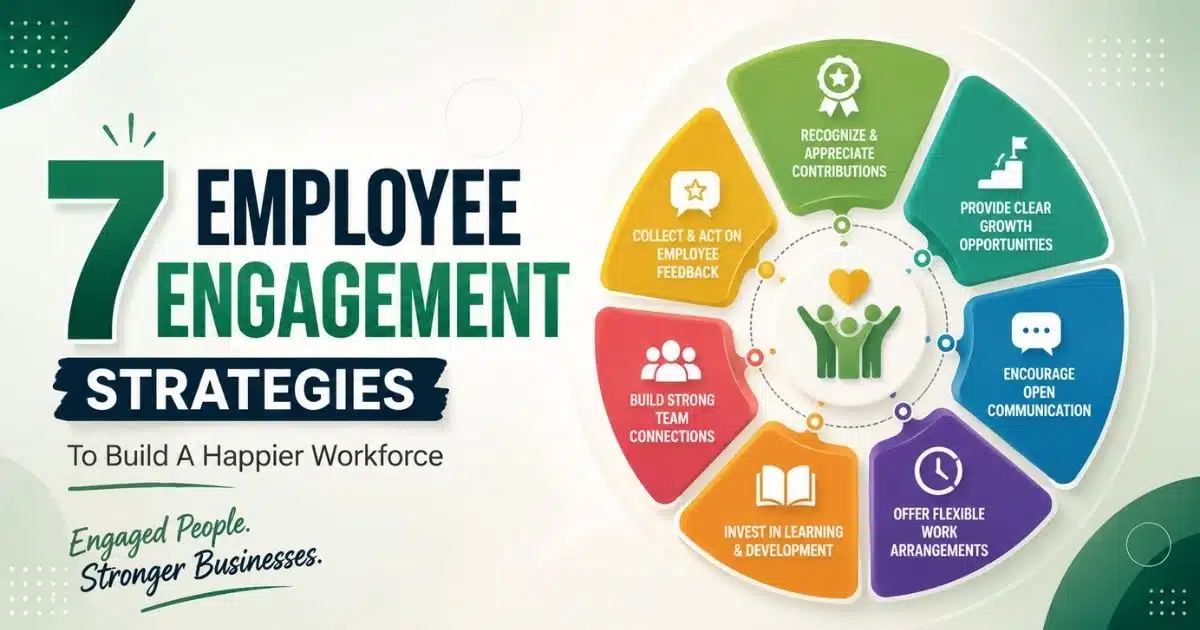
1. Foster Open And Transparent Communication
Transparent communication builds trust throughout the entire organization. Employees want to understand company goals, leadership decisions, and the reasons behind major changes. Sharing the "why" behind decisions helps employees feel connected to the company's success.
Two-way feedback channels are equally important. Employees should have opportunities to ask questions, share concerns, and provide ideas. Senior leaders who communicate openly create a positive work environment and strengthen workplace culture. Unclear expectations often create confusion, reduce motivation, and lower employee engagement levels.
2. Recognize And Reward Contributions Consistently
Recognition remains one of the most effective ways to reward employees and improve engagement. Many organizations focus only on annual awards, but regular appreciation often delivers better results.
Managers can recognize outstanding performance through public appreciation, peer recognition, small rewards, or simple thank-you messages. Informal recognition helps employees feel valued and reinforces company values. Frequent appreciation also improves employee participation and contributes to a stronger company culture.
Consistent recognition demonstrates that employee engagement is important across every level of the business.
3. Invest In Career Growth And Development
Career development strongly influences retention and long-term engagement. Employees want opportunities to learn new skills, advance their careers, and take on new responsibilities.
Organizations can support career growth through mentorship programs, training opportunities, upskilling initiatives, and clear progression paths. Employees who understand their future within the company are more likely to remain engaged and committed.
Investing in career development improves the employee experience while helping organizations retain valuable talent. Employees who see growth opportunities often contribute more effectively to the company's success.
4. Prioritize Flexibility And Work-Life Balance
Work-life balance has become a major factor in employee satisfaction. Flexible schedules, remote work options, and respectful leave policies help employees manage both personal and professional responsibilities.
Supporting mental health and preventing burnout should also remain a priority. Employees perform better when they feel supported and have time to recover from work-related stress.
HR systems such as Payrun and dedicated leave management software can help organizations manage leave requests, attendance, and time-off policies more efficiently. Flexible policies create a positive work environment and contribute to higher employee engagement levels.
5. Strengthen The Manager-Employee Relationship
Managers have a significant impact on employee engagement. Regular one-on-one meetings often provide more value than annual performance reviews.
Employees feel more connected when managers listen, provide guidance, and offer constructive feedback. Strong relationships encourage trust, improve communication, and help employees overcome challenges.
Managers who support career development, recognize achievements, and encourage open discussions contribute directly to strong employee engagement. Positive relationships also improve workplace culture across the entire organization.
6. Shift From Annual Surveys To Continuous Feedback
Annual surveys provide limited engagement data because they capture employee opinions only once each year. Continuous feedback allows organizations to identify issues much earlier.
Pulse surveys, informal conversations, and regular check-ins help leaders understand employee concerns and monitor employee engagement levels. Acting quickly on employee feedback demonstrates that the organization values employee opinions.
Closing the feedback loop also encourages greater employee participation and helps employees feel their voices matter.
7. Use HR Technology To Support Engagement At Scale
As organizations grow, manual processes and disconnected HR tools can create frustration and administrative burdens. HR technology helps reduce friction and improve the employee experience.
Self-service portals, centralized records, leave management, and digital HR tools make information more accessible. Employees can use an employee self-service portal to update information, access records, and complete routine tasks independently.
Technology also helps organizations monitor engagement data and support company performance. By reducing administrative work, HR teams can focus more on people, culture, and engagement initiatives.
Building strong employee engagement requires consistent effort, supportive leadership, and a commitment to creating a workplace where employees feel valued. Organizations that invest in engagement often see better business outcomes, stronger company culture, and long-term organizational success.
How To Roll Out Employee Engagement Strategies Without Hurting Adoption

Rolling out employee engagement strategies requires careful planning. Even the best engagement initiatives can fail if employees feel overwhelmed or excluded from the process. Organizations that introduce changes gradually and implement scalable HR software for small and medium businesses often see stronger adoption, better team engagement, and improved long-term results.
Start With Small Pilot Programs
Launching every initiative at once can create confusion and resistance. Small pilot programs allow organizations to test new ideas before expanding them across the company.
For example, a department can test flexible schedules, recognition programs, or feedback sessions before a company-wide rollout. Pilot programs help leaders gather honest feedback and identify potential issues early. They also allow teams to adjust engagement initiatives based on real employee experiences.
Involve Employees In The Process
Employee engagement works best when employees actively participate in shaping the experience. Asking for ideas, concerns, and suggestions helps create a sense of ownership.
Feedback employees provide during planning often reveals challenges that leaders may overlook. Involving employees in decision-making also supports employee autonomy and increases trust. When employees feel their opinions matter, they are more likely to support new initiatives and contribute to successful implementation, especially in small organizations using HR software built for small businesses.
Cross functional projects can also encourage collaboration between departments and strengthen workplace relationships.
Communicate The Purpose Clearly
Employees need to understand why engagement initiatives are being introduced. Poor communication often creates uncertainty and lowers participation.
Leaders should explain how the changes support employees, improve workplace experiences, and contribute to business goals. The direct manager plays an important role in communicating these messages.
Clear communication helps employees understand how engagement programs support internal mobility, career growth, and team engagement. Transparency also encourages employees to share honest feedback throughout the process.
Train Managers Before Teams
Managers often determine whether engagement programs succeed or fail. Since employees interact most frequently with their direct manager, leadership training should happen before company-wide implementation.
Managers should learn how to encourage discussions, recognize outstanding performance, support employee autonomy, and address employee concerns. Well-trained managers create stronger relationships and help employees feel comfortable participating in new programs.
Strong management support also reduces employee turnover and improves adoption rates.
Measure Results And Adjust Continuously
Employee engagement should never become a one-time project. Organizations must regularly evaluate participation, feedback, and business outcomes.
Tracking engagement data helps leaders identify what is working and what requires improvement. Regular surveys, discussions, and performance reviews, supported by modern leave management software, provide valuable insights.
Adjusting programs based on employee feedback helps maintain trust and ensures engagement initiatives continue to support employees and organizational goals over time.
The 3-Pillar Engagement Framework

Employee engagement becomes stronger when organizations focus on the core factors that influence employee experience. A simple framework built around trust, growth, and continuous feedback helps create long-term engagement and better workplace relationships.
Pillar 1: Trust And Communication
Trust forms the foundation of employee engagement. Employees want honest communication, clear expectations, and transparency from leaders. When managers share company goals, explain decisions, and encourage open discussions, employees feel more connected to the organization.
Regular communication also helps employees understand their role and contribution to business success. Organizations that encourage feedback and maintain two-way communication often build stronger workplace relationships and improve employee confidence.
Pillar 2: Growth And Recognition
Employees stay engaged when they see opportunities to learn, grow, and receive recognition for their contributions. Career development, mentoring, training programs, and internal advancement opportunities help employees build long-term careers.
Recognition is equally important. Regular appreciation, small rewards, and acknowledgment of achievements help employees feel valued. Organizations that invest in growth and recognition often experience better retention, stronger motivation, and improved employee performance.
Pillar 3: Systems And Feedback
Strong engagement requires the right systems and continuous feedback. Implementing an employee management system alongside HR processes, self-service tools, regular check-ins, and employee surveys helps organizations understand employee needs and identify areas for improvement.
Feedback should not happen only once a year. Continuous conversations allow leaders to address concerns quickly and improve workplace experiences. Effective systems also reduce administrative challenges, giving managers more time to support employees and strengthen engagement across the organization.
Signs Your Workforce Has Low Employee Engagement

Low employee engagement often appears long before employees resign. Changes in behavior, communication, and performance can indicate that engagement efforts are not working. Recognizing these warning signs early helps organizations improve workplace culture and support employees more effectively.
High Turnover Rates
Frequent resignations often indicate deeper engagement problems. Employees who do not feel valued or supported may begin searching for opportunities elsewhere. High turnover disrupts teams, increases hiring costs, and affects morale. Organizations where employees feel recognized typically experience stronger retention and better workplace stability.
Low Participation Levels
Employees who stop contributing ideas or avoid company activities may become disengaged. Limited employee input during meetings, surveys, or projects often signals declining engagement. Encouraging participation and creating psychological safety allow employees to share opinions openly and become more involved in organizational decisions.
Reduced Productivity
Disengaged employees frequently show lower motivation and declining performance. Missed deadlines, reduced focus, and lower work quality can result in lost productivity. Monitoring engagement metrics alongside broader HR challenges and modern solutions helps leaders identify potential issues before they affect business outcomes.
Poor Collaboration
Weak teamwork often reflects engagement problems. Poor internal communication, limited knowledge sharing, and reduced cooperation between departments can damage workplace relationships. Employees who feel valued are generally more willing to collaborate, support colleagues, and contribute to team success.
Increased Absenteeism
Frequent absences may indicate burnout, stress, or dissatisfaction. Healthy employees who feel supported often maintain stronger attendance and workplace commitment. Organizations that prioritize well-being, psychological safety, and employee recognition can reduce absenteeism while creating a more positive work environment.
How To Engage Frontline And Deskless Employees Effectively

Frontline and deskless employees often work away from traditional office environments, making engagement more challenging. Limited access to information, communication gaps, and inconsistent feedback can reduce motivation. Organizations that focus on accessibility, communication, and inclusion—and use HRM software to manage remote workforces- can create stronger engagement and help employees stay connected to the workplace.
Improve Mobile Workplace Communication
Deskless employees need quick access to information regardless of location. Using multiple communication channels such as mobile apps, messaging platforms, and automated attendance management systems helps keep teams informed. Clear communication strengthens the emotional connection between employees and the organization. Leaders should encourage managers to communicate regularly and share updates that matter to frontline teams.
Recognize Contributions In Real Time
Recognition should happen when achievements occur, not months later during annual reviews. Real-time appreciation helps employees feel valued and motivates continued performance. Simple recognition messages, team acknowledgments, and supervisor feedback contribute to fostering engagement. Employees who receive regular recognition often remain actively engaged and connected to company goals.
Provide Flexible Shift Feedback Channels
Frontline employees often work different schedules, making traditional meetings difficult. Flexible feedback methods such as pulse surveys, mobile forms, and digital check-ins allow employees to share concerns and suggestions at convenient times. Regular feedback helps organizations monitor engagement trends and identify issues before they become larger problems.
Deliver Training In Accessible Formats
Training programs should fit employee schedules and work environments. Mobile learning, short videos, digital resources, and on-demand content make training easier to access. Accessible learning opportunities support skill development while helping employees remain engaged. A mobile HR app for employee self-service that integrates with existing HR systems can also simplify training management and progress tracking.
Build Inclusion Across Every Team Location
Employees working in different locations should feel equally connected to the organization. Consistent communication, shared company updates, and inclusive recognition programs help build stronger workplace relationships. Organizations that encourage managers to involve remote and frontline teams in discussions and follow best practices for leave management in remote teams create a stronger sense of belonging. Inclusion helps employees remain actively engaged and strengthens long-term engagement across the entire workforce.
How Payrun Supports Employee Engagement
About Payrun explains how the company helps organizations create a better employee experience by simplifying everyday HR processes. As an all-in-one HR platform, the system centralizes employee information, making it easier for teams to access records, manage leave requests, and handle HR tasks from one place.
The platform also supports performance management and employee feedback processes, helping managers track progress and maintain regular communication with employees. By automating administrative tasks such as leave management, attendance tracking software with real-time views, and employee self-service, Payrun reduces manual work for HR teams and managers. Employees can access important information independently, which improves transparency and convenience.
Streamlined HR operations powered by Payrun's innovative HR features allow organizations to spend less time on administrative tasks and more time supporting employee engagement, development, and workplace satisfaction.
FAQs
How Often Should Employee Engagement Be Measured?
Employee engagement should be measured regularly instead of relying only on annual surveys. Many organizations conduct quarterly assessments or use pulse surveys to gather ongoing feedback. Frequent measurement helps leaders identify concerns early, track engagement levels, and make improvements before problems affect employee morale or productivity.
Can Small Businesses Improve Employee Engagement Without Large Budgets?
Yes, small businesses can improve employee engagement without significant spending. Regular recognition, open communication, flexible work arrangements, and career development opportunities often have a greater impact than expensive programs. Employees appreciate feeling valued, supported, and included in workplace decisions regardless of company size.
What Role Do Managers Play In Employee Engagement?
Managers play a critical role in employee engagement because they interact with employees daily. Supportive managers provide feedback, recognize achievements, and encourage communication. Regular one-on-one conversations help employees feel heard and supported. Strong manager relationships often lead to higher motivation, trust, and workplace satisfaction.
How Does Employee Engagement Affect Employee Retention?
Employee engagement has a direct impact on retention. Employees who feel valued, recognized, and connected to their work are more likely to stay with an organization. Strong engagement reduces turnover, improves job satisfaction, and helps businesses retain experienced employees while lowering recruitment costs.
Can HR Software Help Improve Employee Engagement?
HR software can support employee engagement by simplifying HR processes and improving communication. Features such as employee self-service, leave management, feedback tools, and performance tracking reduce administrative work and create a better employee experience. For SaaS and software companies, specialized HR and payroll software ensures these processes scale smoothly as teams grow. Technology allows HR teams to focus more on engagement initiatives and employee development.