Payroll processing plays an essential role in every business. Employees expect accurate salaries and timely payments every pay cycle. Even a small mistake can create frustration for staff and lead to compliance problems for the company. A clear payroll system keeps compensation accurate and builds trust inside the workplace.
Many businesses follow a biweekly payroll schedule in the United States, which means 26 pay periods each year. Payroll management includes several tasks such as calculating wages, deducting taxes, and keeping payroll records organized.
A structured payroll process makes salary management easier and reduces errors. In this article, we will explain the key payroll processing steps and practical ways businesses can manage payroll more efficiently.
What Is Payroll Processing?
Payroll processing refers to the structured method businesses use for paying employees and managing compensation data. A payroll process involves calculating wages, determining an employee's gross pay, and applying mandatory payroll deductions such as income taxes, social security and medicare, and health insurance premiums. After deductions, the result becomes the employee's net pay. Companies follow a defined payroll schedule and pay period, so employees receive their paychecks through methods like direct deposit into a bank account.
Processing payroll also includes payroll calculations, maintaining payroll records, and preparing tax forms required by the Internal Revenue Service and other government agencies. Businesses must pay payroll taxes such as medicare taxes and employment tax obligations under the Federal Insurance Contributions Act and the Federal Unemployment Tax Act.
Many companies rely on payroll automation software or automated payroll software today. A payroll processing system reduces manual data entry and improves accurate payroll calculations. It also supports payroll compliance with state and federal regulations, minimum wage laws, wage and hour laws, and the Labor Standards Act (FLSA).
How Does Payroll Processing Work?
To understand how payroll processing works, you need to look at three distinct stages that form a complete cycle. The payroll reconciliation process exceeds three primary stages: pre-payroll, payroll processing and post payroll. Each stage builds on the previous one to ensure employees receive accurate compensation on time.
Pre-Payroll Activities
Pre-payroll activities refer to the tasks and processes that need completion before running the actual payroll for employees. This stage sets the foundation upon which all payroll data will be reconciled.
Start by gathering all data on employee hours worked and verify that the data is accurate and up-to-date. This involves collecting timesheets, overtime approvals, paid time off data and sick leave approvals, ideally through timesheet apps for employees that streamline tracking. Employers should confirm that any new hires or terminations are factored in and that all employees within the system have the correct salary or hourly rate.
Process any changes to employee information next. This has completed Form W-4s for any new hires, state withholding forms if applicable, terminations, and final pay calculations, plus updates to payroll deductions or contributions, such as a change in 401(k) election or health insurance coverage. If new tax laws have been released, ensure that those laws are reflected in your payroll run.
The Actual Payroll Process
Employers must review the payroll register before approving payroll to ensure all expected changes are recorded. This step involves comparing the current pay cycle to the previous one, confirming gross to net pay calculations, and double-checking voluntary and statutory deductions. Any large variances found should be further inspected.
Calculate gross pay and withhold taxes, and apply any other deductions or benefits contributions. Taxes are paid to federal and state governments, except for AK, FL, NV, NH, SD, TN, TX, WA, and WY, which do not have income tax, and sometimes to local governments like counties or cities as well.
Once all payroll data has been double-checked, it is time to submit your payroll. At this point, whether you issue physical paychecks or you pay via direct deposit, you should feel confident that compensation is correct for each employee and that all information on employee paystubs is accurate.
Post-Payroll Activities
Post-payroll reconciliation involves transcribing the debits, credits, and accruals from the payroll ledger to the general ledger. Financial transactions are categorized into assets, liabilities, capital, revenue, and expenses within the general ledger, with employee wages treated as an expense and deductions being treated as credits, all of which depend on accurate employee payroll records.
Employers at this stage will also want to check their bank records to ensure the funds released match the payroll output. Submit withheld federal income taxes, FICA (Social Security and Medicare), and the employer-paid portion of payroll taxes, which includes FUTA.
Retain records in a secure place. Keep detailed payroll records for each pay period and ensure they are stored securely but are available for audits or employee questions. The Department of Labor, in conjunction with the Fair Labor Standards Act, makes maintaining these records an employer responsibility for at least three years.
Essential Payroll Processing Steps You Need to Follow
A clear payroll process helps businesses pay employees accurately and on time. Every payroll cycle includes several steps, from collecting payroll data to tax payments and distributing employee wages. Each step supports payroll compliance, accurate payroll calculations, and smooth payroll operations.
Employee Information And Payroll Data Setup
A reliable payroll system starts with accurate employee information. Every company must collect payroll data such as employee name, bank account details, annual salary, hourly rate, tax forms, and a federal employer identification number. Payroll records must also include employment eligibility verification and retirement plan documents when applicable.
A payroll department also defines the payroll policy, payroll schedule, and pay period before running payroll. The typical payroll cycle in the United States is biweekly with 26 pay periods each year. Clear records help maintain payroll compliance with federal regulations, state and local laws, and government agencies such as the internal revenue service.
Employee Wages And Gross Pay Calculation
Accurate payroll calculations start with calculating gross pay. Gross pay refers to the employee's total earnings before payroll deductions and taxes withheld. Payroll teams calculate wages differently for hourly employees and salaried employees. Hourly employees receive payment based on hours worked and overtime pay.
Federal law under the Fair Labor Standards Act requires overtime pay at 1.5 times the regular rate after 40 hours per week. Payroll calculations must also follow minimum wage laws and wage and hour laws. Accurate calculations ensure correct employee wages and reduce payroll errors.
Payroll Deductions And Payroll Taxes
Payroll deductions include mandatory payroll deductions and voluntary deductions. Mandatory payroll deductions include federal income tax, social security and medicare taxes, and employment tax obligations under the Federal Insurance Contributions Act. Employers must also follow the federal unemployment tax act requirements.
State and local deductions may also apply depending on business location. Additional deductions may include health insurance premiums, retirement plan contributions, and company benefits. Payroll teams must calculate taxes withheld carefully. Accurate payroll deductions ensure compliance with federal state and local tax laws.
Payroll Payments And Employee Paychecks
After payroll calculations, companies distribute employee wages. Employee's net pay equals gross pay minus payroll deductions and payroll taxes. Businesses usually send payments through direct deposit into an employee's bank account. Direct deposit remains the most common payment method in the United States.
Research from the American Payroll Association shows that more than 93 percent of employees receive pay through direct deposit. Companies also maintain a separate payroll bank account to manage payroll expenses and tax payments. A structured payroll schedule ensures employees receive paychecks on time every pay period.
Payroll Records And Compliance Management
Payroll processing work does not end after paying employees. Businesses must maintain payroll records for tax reporting and legal compliance, following detailed payroll compliance guidelines for small businesses. The internal revenue service generally requires payroll records to remain stored for at least four years.
Payroll teams also submit employment tax reports and tax payments to the federal government and state agencies. Payroll compliance requires adherence to labor laws, federal regulations, and state and federal regulations. Payroll software or payroll processing software helps companies track payroll data, reduce manual payroll processing, and maintain organized records for audits.
Documents and Information Required for Payroll
Getting the right documents arranged upfront saves headaches later. Employment tax forms, banking details, benefit elections and attendance tracking all feed into your payroll software system.
Employee Tax Forms (W-4, W-9, I-9)
Form W-4 tells you how much federal income tax to withhold from employee paychecks. Employees should complete a new Form W-4 each year and when their personal or financial situation changes. The form collects their name, Social Security number, address, marital status and withholding adjustments such as claiming dependents.
Form I-9 verifies identity and employment authorization for individuals hired in the United States. All U.S. employers must complete Form I-9 for every individual they hire, including citizens and aliens. Both employees and employers must complete the form. Employees attest to their employment authorization and present acceptable documents as evidence of identity. You must retain Form I-9 for three years after the date of hire, or for one year after employment is terminated, whichever is later.
Form W-9 applies to independent contractors rather than employees. Use this form to collect the correct Taxpayer Identification Number from contractors who receive payments.
Bank Information for Direct Deposit
Direct deposit requires specific banking details from employees. Each employee must provide the bank name, account type (checking or savings), account number, and routing number. Employers gather this information through a direct deposit authorization form.
Employees can find their account and routing numbers by logging into their online banking portal. The authorization remains in effect until the employee provides written notice to cancel it.
Benefits and Deductions Authorization
Benefit deductions need written employee consent. Authorization forms document employee agreement to withhold amounts for health insurance, retirement savings contributions and other benefits. The form specifies whether deductions are taken on a pre-tax or after-tax basis.
Employees select benefit types and corresponding deduction amounts. This authorization protects employers from legal disputes by demonstrating that deductions were authorized. Modern leave systems such as Payrun’s leave management solution also rely on clear approvals. Deduction cancelation requests must be received eight work days prior to the effective pay date.
Time and Attendance Records
The Fair Labor Standards Act requires keeping accurate time and pay records. Records must include the employee's full name and social security number, hours worked each day, total hours worked each workweek, regular hourly pay rate, total overtime earnings for the workweek, and all additions to or deductions from wages. Employers must preserve payroll records for at least three years. Records on which wage computations are based should be retained for two years, including time cards and work schedules, which is far easier when you replace disconnected HR tools with one system.
Different Methods to Process Payroll
Choosing the right approach for your payroll processing system depends on your business size, budget, and internal resources. Three main methods exist, each with distinct advantages and trade-offs.
Manual Payroll Processing
Manual payroll processing involves calculating wages and deductions by hand or using spreadsheets. This method can be budget-friendly for very small businesses with fewer than 10 employees, but HR software is usually a better choice than spreadsheets once payroll becomes more complex. You handle everything yourself, from tracking hours to calculating federal income tax withholding and Social Security and Medicare taxes.
The manual approach requires attention to detail and knowledge of federal regulations and labor laws. You'll spend time on administrative work, calculating gross pay manually, processing payroll taxes, and ensuring payroll compliance. The process is time-consuming and prone to errors. Mistakes in tax calculations or employee's net pay can lead to penalties from government agencies that get pricey without automated checks.
Manual payroll processing becomes difficult to scale as you add employees. What works for a handful of workers quickly becomes overwhelming when your team grows.
Payroll Software Solutions
Payroll processing software automates the whole process, from tracking employee hours to calculating wages, processing payments, and filing tax forms. For small and medium-sized businesses, modern HR software with integrated payroll handles federal unemployment tax act reporting, state and local tax withholdings, and mandatory payroll deductions on its own.
Automated payroll software reduces processing time by a lot, often to under an hour, by handling payroll calculations and direct deposit. Companies that manage payroll expenses using software save an average of 4.64%. You can save 4-8 hours per pay period to use on other business activities.
Many payroll systems integrate naturally with accounting software and time clocks. For small businesses, choosing HR tools with a strong HR software feature set ensures this synchronization produces more accurate payroll calculations and eliminates manual data entry.
Outsource to a Payroll Service Provider
Payroll outsourcing is hiring external specialists to handle your business's payroll tasks instead of managing them in-house. A full-service provider manages wage calculations, tax withholdings and deposits, and reporting, helping you avoid common payroll mistakes businesses must avoid.
Outsourcing helps businesses save time and money while improving accuracy, which means less risk of financial penalties. Nearly two-thirds of customers feel ADP helps their company better comply with payroll taxes and federal, state, and local regulations than their previous provider.
Payroll outsourcing costs $20-100 per employee each month, depending on your business size and service level.
Common Payroll Processing Challenges and How to Avoid Them
Payroll processing often looks simple on the surface, but several issues can disrupt the payroll cycle. Errors in payroll calculations, tax payments, or payroll data can affect employee trust and business compliance. A structured payroll system helps businesses reduce risks and maintain accurate payroll operations.
Payroll Data Errors And Manual Entry Issues
Payroll data errors often occur during manual payroll processing. Manual data entry increases the risk of incorrect employee wages, wrong payroll deductions, or missing payroll records. Small mistakes can create inaccurate payroll calculations and lead to compliance problems, which is why HR workflow automation is becoming essential for modern teams.
Research from the American Payroll Association shows that payroll error rates can reach up to 1–8% in companies that process payroll manually. A payroll processing system or automated payroll software reduces these risks. Payroll software automates calculations and keeps payroll data organized inside a centralized payroll system.
Complex Payroll Tax Compliance
Payroll taxes remain one of the most complex parts of payroll processing work. Employers must pay payroll taxes that include federal income tax, social security, and medicare taxes under the Federal Insurance Contributions Act, and obligations under the Federal Unemployment Tax Act. State and local employment tax rules also vary across regions.
The Internal Revenue Service reports that about 40% of small businesses face penalties each year due to payroll tax errors. Payroll software helps manage tax forms, taxes withheld, and tax payments, especially when paired with structured approval workflows in HR and payroll. A structured payroll system supports payroll compliance with federal, state, and local regulations.
Overtime Pay And Wage Law Violations
Overtime errors often happen when businesses fail to follow wage and hour laws. The fair labor standards act requires overtime pay of 1.5 times the regular rate after 40 hours per week. Incorrect payroll calculations can lead to underpaid employees and legal disputes.
The federal government reported over $213 million in back wages recovered for workers in 2023 due to wage violations. Companies must track employee hours carefully. Accurate payroll calculations, proper payroll records, and robust payroll automation software help businesses comply with labor laws, minimum wage laws, and the Labor Standards Act (FLSA) requirements.
Inconsistent Payroll Schedule Management
An inconsistent payroll schedule can create confusion for employees and the payroll department. A typical payroll cycle includes weekly, biweekly, or monthly pay periods. Many businesses choose a biweekly payroll schedule with 26 pay periods each year.
Late payroll processing can delay employees' paychecks and damage employee trust. Businesses must maintain a clear payroll policy and payroll process. Payroll processing software helps automate payroll calculations and ensures that employees receive their net pay through direct deposit into their bank accounts on time.
Payroll Record And Reporting Problems
Payroll compliance requires detailed payroll records and accurate payroll reporting. Businesses must store payroll data, tax forms, and employment eligibility verification documents. The Internal Revenue Service requires companies to keep payroll records for at least four years.
Poor documentation can create issues during audits by government agencies. Payroll software automates payroll reporting and organizes payroll expenses, tax payments, and payroll deductions, especially when paired with a modern employee record management system. A structured payroll processing system also supports payroll outsourcing for businesses that prefer to outsource payroll operations to specialized providers.
How Payrun Improves Payroll Processing For Modern Businesses
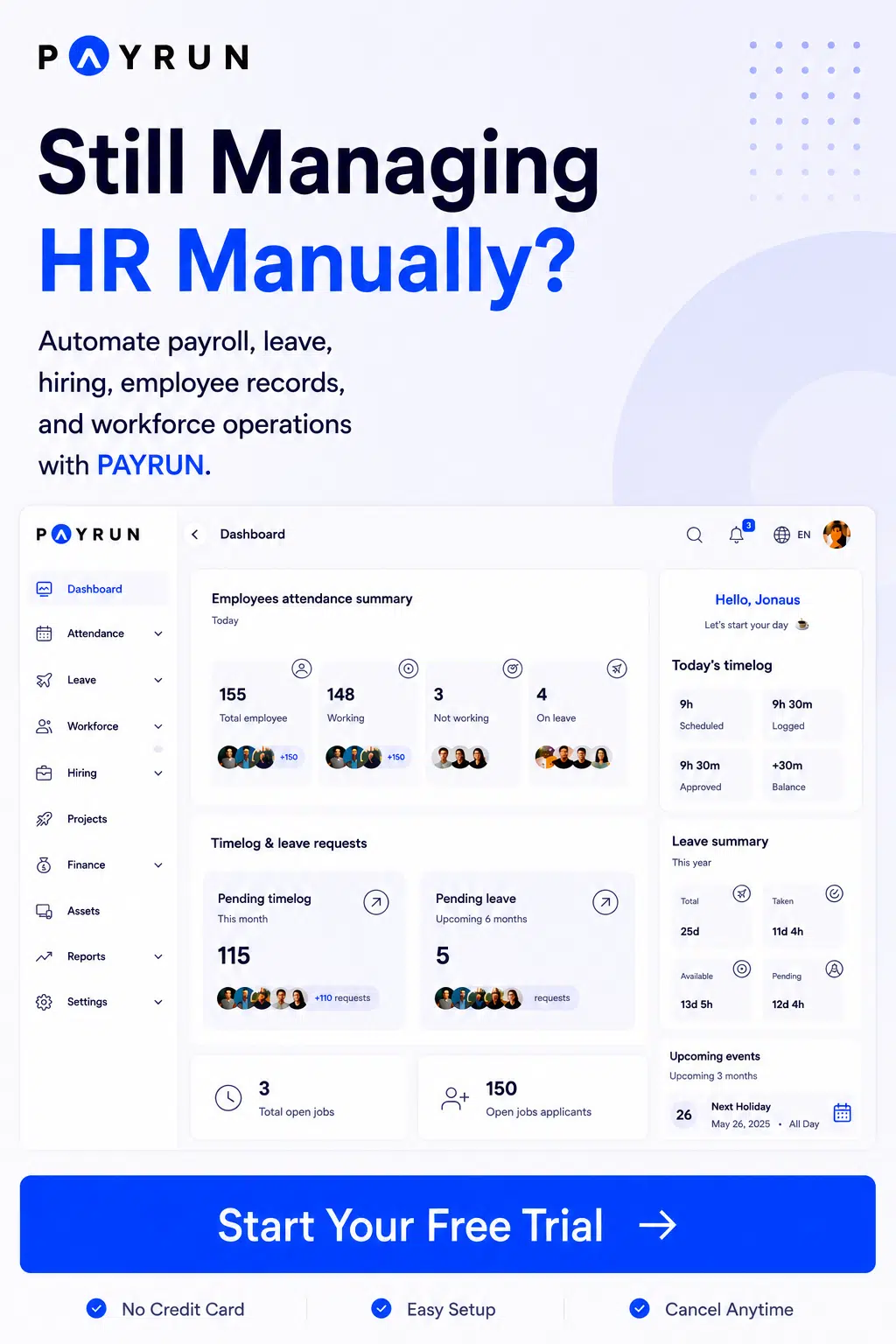
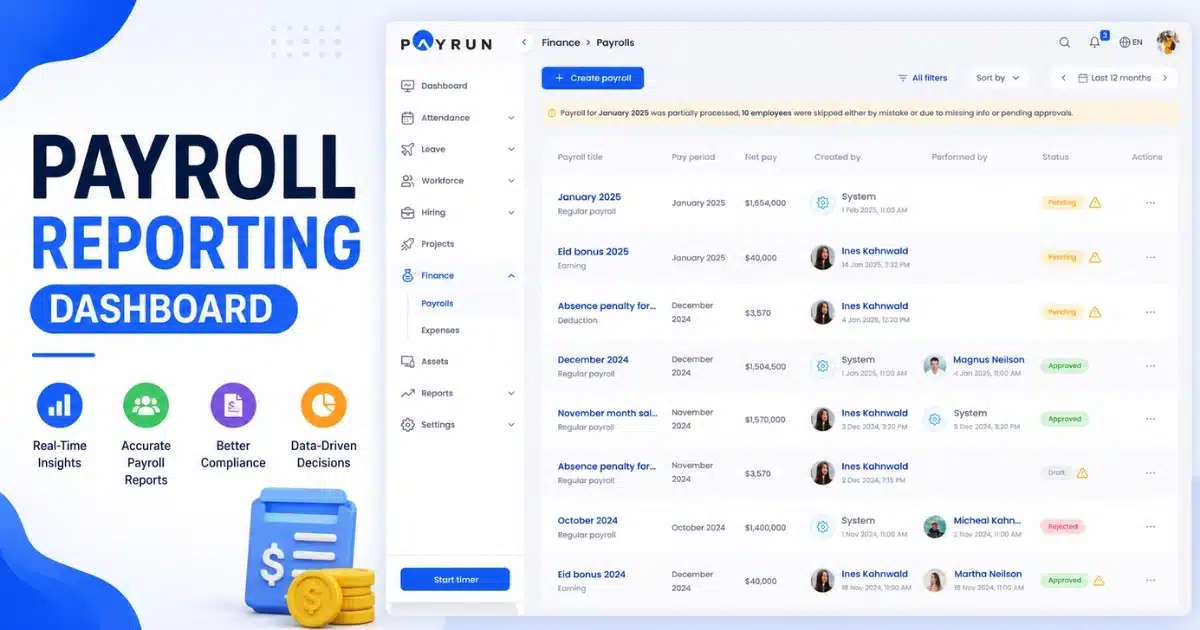
Payrun helps businesses manage payroll processing through a structured and automated payroll system. As an all-in-one HR platform, HR teams can store payroll data, employee details, and payroll records in one platform. The system supports accurate payroll calculations for hourly employees and salaried employees. It also helps calculate gross pay, payroll deductions, and employees’ net pay across every pay period. Companies can manage payroll schedules and distribute employees' paychecks through direct deposit to a bank account.
The platform also supports payroll compliance with federal, state, and local regulations. Businesses can track payroll taxes, taxes withheld, and employment tax requirements such as social security and Medicare under the Federal Insurance Contributions Act. Payrun's innovative HR features mean that payroll software automates payroll calculations and reduces manual payroll processing.
Payrun also helps the payroll department manage payroll expenses, payroll reports, and payroll data. As a trustworthy HR management partner, it provides a structured payroll processing system that improves accuracy and saves time during every payroll cycle.
FAQs
Can Payroll Processing Software Handle Multi-State Payroll Compliance For Remote Teams?
Yes. Modern payroll processing software supports payroll compliance across multiple states. The system calculates payroll taxes, state and local deductions, and employment tax rules automatically. Automated payroll software also tracks federal, state, and local regulations and maintains payroll records for audits, which is especially valuable for small businesses using dedicated HR software.
Does A Separate Payroll Bank Account Improve Payroll Expense Tracking?
Yes. A dedicated payroll bank account helps the payroll department manage payroll expenses, tax payments, and payroll deductions more clearly. It separates payroll data from operational finances and simplifies payroll reporting during each pay period.
How Do Businesses Audit Payroll Data To Detect Errors In Payroll Calculations?
Payroll teams usually review payroll records, payroll reports, and tax forms to verify accurate payroll calculations. Internal audits also compare gross pay, payroll deductions, and employees’ net pay with payroll data stored in the payroll processing system.
Can Automated Payroll Software Reduce Employment Tax Penalties From The Internal Revenue Service?
Yes. Automated payroll software helps businesses calculate payroll taxes, track taxes withheld, and submit tax payments on time. The payroll processing system also prepares tax forms required by the Internal Revenue Service and supports payroll compliance with federal regulations.
What Role Do Retirement Plan Contributions Play In Advanced Payroll Processing Systems?
Retirement plan contributions appear as payroll deductions in the payroll system. Payroll software tracks retirement plan documents, deduction amounts, and payroll calculations. The system also ensures correct tax treatment under federal insurance contributions rules and employment tax regulations.