Coffee Badging: What HR Teams Need To Know
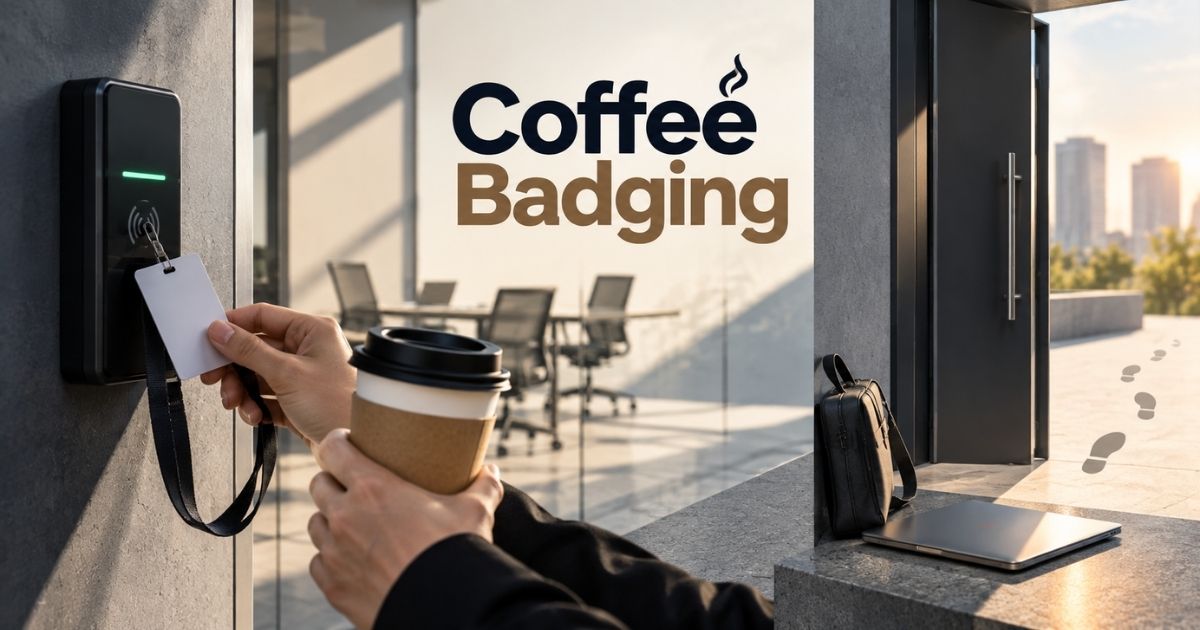
Table of Contents
A short office visit can look like a normal part of hybrid work. An employee arrives, says hello, grabs a coffee, checks in, and heads home a few hours later. The workday continues remotely. For many hybrid workers, that routine has become known as coffee badging.
The trend became more common as companies introduced return-to-office mandates and stricter office attendance requirements. Owl Labs reported that 44% of workers coffee-badged in 2024, while 70% of those employees said their employers had caught them.
But coffee badging raises a bigger question: What makes employees want to leave the office in the first place? Understanding the reasons behind the practice can help employers create better policies, improve office culture, and make in-office time more meaningful.

What Is Coffee Badging?
Coffee badging refers to a workplace practice where employees visit the office for a short time, often just long enough to swipe their badge, grab a coffee, talk with coworkers, and show their presence. They then leave the office to finish work remotely. The term became popular through Owl Labs in 2023 as hybrid work and return-to-office mandates changed office attendance expectations.
For coffee badgers, the goal is often to meet attendance requirements without spending a full day at their desks. The practice can help workers maintain some social connection while keeping the flexibility of remote work. Owl Labs found that 58% of hybrid workers reported coffee badging in 2023.
Coffee badging does not refer to the coffee industry. It describes a growing workplace trend shaped by hybrid work, office culture, and changing expectations around where employees should work.
Why Are Employees Coffee Badging?
Coffee badging rarely happens for just one reason. Many employees want to meet office attendance requirements without giving up the flexibility of remote work. Long commutes, rigid policies, and limited reasons to stay can all shape the choice.
They Want More Flexibility
Many employees became used to the freedom of remote work and now value control over where they finish work. Coffee badging can offer a middle ground. Workers can show up at the office, meet attendance requirements, and return home to complete tasks.
Owl Labs found that 44% of US workers coffee badged in 2024. The research also found that 59% of workers caught coffee badging said their employer did not mind.
The Commute Takes A Toll
A long commute can make office attendance feel harder to justify. Workers may spend hours on the road, pay for transport, and lose time that could go toward work or personal needs. Coffee badging gives them a way to limit that burden.
Owl Labs reported that many workers felt office trips were not worth the time and money when they were doing the same tasks they could complete from home, especially when compared with options like a GPS attendance system that supports remote presence.
The Office Adds Little Value
Some employees find limited value in spending a full day at the office. They may sit at a desk, join online meetings, and complete tasks alone. For them, physical presence does not always improve employee productivity.
Coffee badging can happen when workers feel they can deliver the same work remotely. Owl Labs also found that 60% of hybrid workers in its 2023 research said they were more productive at home.
They Want To Keep Their Autonomy
Strict return to office mandates can make employees feel they have less control over their workday. Coffee badging can become a way to reclaim some of that autonomy without openly rejecting the company's policy.
Owl Labs found that 41% of employees felt workplace policies about where and when people work were not applied equally. Among hybrid workers, that figure rose to 52%, and similar concerns can surface around unclear leave management for remote teams.
They Still Want Social Connection
Coffee badging does not always mean employees dislike the office. Some workers still value meeting colleagues, having a quick chat, or grabbing a coffee together. The problem can arise when employees see little reason to stay after those social moments.
Owl Labs describes coffee badging as a way to show face before returning home to work remotely. The practice can therefore reflect a simple balance between social connection and the flexibility that hybrid workers want.
Why Has Coffee Badging Become More Common?
Coffee badging has grown alongside hybrid work and stricter office attendance rules. Many workers still value remote work, while employers continue to push return to office policies. That gap has made short office visits more common.
Hybrid Work Is Now Common
Hybrid work has become a lasting part of the workplace. Owl Labs reported that 28% of US workers were hybrid in 2025, while 63% worked fully in-office. Among hybrid employees, 39% went to the office three days a week, making flexible schedules a normal part of work culture.
Coffee badging fits into that setup. Employees can keep some office presence while doing part of their work remotely. The practice gives hybrid workers more control over their time and location without fully stepping away from the office.
RTO Rules Push Employees Back
Many companies still use return to office mandates to increase office attendance. Some require employees to spend three or four days each week at their desks. Others have slowly raised attendance requirements without a major policy change.
Owl Labs found that 23% of US employers changed their remote or hybrid policies in 2025. The same report found that 40% of workers would start looking for another job if flexible work disappeared.
Flexibility Still Matters
Employees have not stopped valuing the freedom that remote work provides. A short office visit can help workers meet attendance rules while keeping part of that freedom.
Owl Labs found that 40% of workers would look for a new job if remote or hybrid work were no longer allowed. Another 22% would expect higher pay.
For some employees, coffee badging offers a middle ground. They can show up, connect with coworkers, and then return home to finish work.
Office Time May Feel Less Useful
Coffee badging can also signal that employees do not see enough value in staying for a full day. A worker may have online meetings, focused tasks, or deadlines that are easier to handle at home.
The issue is not always employee productivity. Owl Labs found that workers attend an average of five online or hybrid meetings each week. In 2025, 27% said they lose at least 10 minutes per hybrid meeting because of setup problems.
Workers Want More Control
Workplace expectations have changed. Many employees now want more freedom over when and where they work. Coffee badging can give workers some control when office policies feel too rigid.
Owl Labs found that 73% of US workers said their company had not changed its remote or hybrid policy during the past year. Yet 40% said they would look for a more flexible job if that option disappeared, making robust remote attendance tracking for distributed teams increasingly important.
The growing practice can therefore reflect a wider shift in work culture. Employees still want office connection, but many also want autonomy over how they use their time.
How Does Coffee Badging Affect The Workplace?
Coffee badging can affect both employees and employers. A short office visit may support social connection and flexibility, but it can also create gaps in attendance data, collaboration, and office use. The impact depends on how companies manage hybrid work.
Office Data Can Become Less Clear
Coffee badging can make office attendance data harder to read. A badge swipe may show that a person entered the office, but it does not show how long they stayed or what work they completed, highlighting the need for more accurate hybrid attendance tracking for flexible workplaces.
That matters for companies that use attendance data to plan office space and resources. A person may appear in the data as an office worker after staying for only a few hours. Employers can then get a false picture of actual office use.
Collaboration May Take A Hit
Short office visits can limit face-to-face collaboration. A worker may arrive for a quick chat, attend one meeting, and then return home. Colleagues may miss chances to solve problems together or share ideas in person.
New employees can feel the effect even more. They often need time with managers and coworkers to learn how work gets done. SHRM notes that brief office visits can reduce hands-on learning and cooperation when teams need regular in-person contact.
Flexibility Can Improve
Coffee badging can also have a positive side. Employees may avoid a long commute while still meeting some office attendance expectations. They can connect with coworkers, grab a coffee, and then finish work from home.
Owl Labs reported that 59% of US workers who had been caught coffee badging said their employer did not mind. The same report found that 44% of workers still coffee badged in 2024.
Office Culture Can Change
A workplace needs more than desks and meeting rooms to build a strong office culture. Regular face-to-face contact can help employees form relationships and share knowledge. Short visits can make those connections less consistent.
At the same time, strict attendance rules can create their own problems. Owl Labs found that 61% of hybrid workers had felt pressure from employers to return to the office during the previous three years. Such pressure can affect how employees view office attendance and workplace policies.
Productivity Is Not So Simple
Coffee badging does not automatically mean lower productivity. A worker may leave the office and complete focused tasks more effectively at home. Another worker may need the office for meetings, teamwork, or support from managers.
Owl Labs says the long-term effect on employee productivity remains unclear. Its research also found that 44% of workers coffee badged in 2024. The data suggests that companies should look beyond physical presence when they measure productivity and workplace performance.
How Can HR Teams Identify Coffee Badging?
HR teams need more than a badge swipe to understand office attendance. Coffee badging can hide behind normal check-in data, so employers should compare attendance patterns with work schedules, team activity, and employee feedback, often supported by a modern attendance management system for flexible teams, before drawing conclusions.
Review Attendance Patterns
Badge data can help HR spot unusual office attendance patterns. A person who regularly enters the office for a short period and then leaves may need a closer look. However, badge records alone cannot confirm coffee badging.
Owl Labs reported that 70% of workers who coffee badged in 2024 said their employers had caught them. The figure shows that companies are already paying attention to physical presence. HR should use attendance data as a starting point, not as proof of poor performance.
Compare Office And Work Data
Office attendance tells only part of the story. HR teams can compare office entry data with schedules, meeting records, employee time log reports, project work, and agreed hybrid work plans. A short office visit may still support valuable work.
For example, an employee might come in for a team meeting and finish focused tasks at home. HR should avoid treating every short visit as a problem. Employee productivity depends on the work delivered, not just the number of hours spent at a desk.
Check Team Patterns
One person's attendance may not tell the full story. HR teams should look at wider team patterns. If several workers arrive briefly on the same days, the pattern may point to an office culture or policy issue rather than individual behavior.
Owl Labs found that 43% of hybrid workers in its 2025 research said they sometimes went to the office for only a few hours to show their faces. Another 12% said they wanted to try coffee badging.
Ask Employees Directly
Employee feedback can reveal why coffee badging happens. Short surveys, one-to-one conversations, and manager check-ins can help HR understand whether workers face long commutes, rigid attendance requirements, or limited reasons to stay in the office.
SHRM describes coffee badging as a signal that can reveal a gap between employee autonomy and organizational culture. HR teams can use that feedback to understand what employees need from office time instead of relying only on attendance data.
Avoid Relying On Badge Data
Badge systems can show when a person enters a workplace. They cannot show whether that person is productive, engaged, or collaborating, which underlines the difference between time tracking vs attendance tracking. HR teams should keep that limit in mind before using attendance data for performance decisions.
Owl Labs found that 46% of workers said their companies had increased employee productivity or activity monitoring software use in 2024. The same research found that 86% believed employers should disclose when such tools are used, especially when companies introduce new employee performance tracking software.
How Should Employers Respond To Coffee Badging?
Coffee badging can signal a gap between what employers demand and what employees need. A better response starts with understanding the reason behind short office visits, then improving workplace policies, purpose, trust, and flexibility.
Make Office Time Purposeful
Employees are less likely to stay if the office adds little value. Companies can plan office days around work that benefits from face-to-face contact. Team meetings, mentoring, brainstorming, and project planning can give people a clear reason to attend.
SHRM recommends purpose-driven office days rather than treating physical presence as the main goal. A clear purpose can also improve the sense of connection between employees and their teams. Leaders should explain why people need to be there and what they can achieve together.
Review Attendance Rules
Rigid attendance policies can lead employees to look for ways around them. Employers should review whether their attendance requirements match the actual needs of each role, and where needed, implement an automated attendance management system in your business to better align policy with practice. A blanket rule may not make sense for every team or person.
Owl Labs found that 44% of US workers admitted to coffee badging in 2024. Among those workers, 59% said their employer did not mind after catching them. For smaller organizations, an attendance management system for small businesses can make it easier to distinguish acceptable flexibility from problematic patterns. The data suggests that some organizations may already see short office visits as acceptable.
Improve The Office Experience
A better office environment can give employees a real reason to stay. Companies can provide comfortable work areas, useful meeting spaces, good technology, and places for informal conversations. Social connection also matters.
Owl Labs found that 58% of hybrid employees coffee-badged in 2023, while 94% said they could be convinced to come to the office. The finding suggests that employers have room to create an office experience that people actually want to use.
Give Teams More Choice
Not every role needs the same office schedule. Leaders can let teams decide which activities need physical presence and which tasks work better remotely. A clear hybrid policy can give employees more autonomy without removing structure.
HR teams should also make exceptions easy to understand. Employees need to know who can approve them and when they apply. Clear rules reduce confusion and can lower the risk of informal workarounds.
Measure Work, Not Just Presence
A badge swipe can prove that someone entered the office. It cannot prove that they were productive. Employers should look at completed work, employee timeline tracking, team goals, service levels, and other relevant outcomes instead of treating office hours as a simple productivity measure.
Coffee badging can distort office data because a person may stay only long enough to meet an attendance rule. Better measurement helps businesses notice whether office policies actually deliver value. Ultimately, the goal should be useful work and strong teams, not simply full desks.
How Can Companies Reduce Coffee Badging?
Coffee badging rarely disappears because of stricter rules alone. Companies need to understand why employees leave early and fix the issues behind it. A purposeful office, clear expectations, and more autonomy can make physical presence feel worthwhile.
Give Office Days A Purpose
Employees are less likely to stay if the office offers little value. Companies can plan office days around work that benefits from face-to-face contact. Team planning, mentoring, problem-solving, and social activities can give people a clear reason to stay.
SHRM recommends purpose-driven office days as a way to make workplace presence more meaningful. Leaders can also decide which tasks need an office and which work can happen remotely. A clear purpose can reduce the need to stay at the office just long enough to meet an attendance rule.
Improve The Office Experience
A better office environment can change how employees feel about coming in. Comfortable desks, useful meeting rooms, reliable technology, and spaces for social connection can make office time more useful and support broader employee retention strategies that reduce turnover.
Owl Labs found that 43% of workers in 2025 admitted they sometimes go to the office for only a few hours just to show their faces. The same report found that hybrid workers spend about $55 per day when they work from the office. Companies should recognize that time and money matter when they ask workers to commute.
Review Attendance Rules
Rigid attendance policies can create a simple problem: employees may focus on proving they were present instead of making the visit useful. HR teams should review whether each attendance requirement has a clear business reason.
Owl Labs reported that 23% of employers changed their remote or hybrid policies in 2025. At the same time, 40% of workers said they would look for another job if flexible work disappeared. Using clear HR policy templates, a policy review can help organizations find a better balance between business needs and employee autonomy.
Give Employees More Choice
Not every worker needs the same office schedule. Companies can give teams more freedom to decide when physical presence matters most. Managers can set clear goals while allowing employees some control over location and timing.
Flexible choices can also reduce the risk of informal workarounds. SHRM notes that coffee badging can signal a gap between employee autonomy and organizational culture. Leaders can use that sign to fix the policy instead of simply adding more monitoring.
Measure Results, Not Badges
A badge swipe can prove that a person entered the office. It cannot prove that the person was productive. Companies should look at completed work, team goals, service quality, and other results that actually matter.
The need is important because coffee badging can distort office utilization data. SHRM notes that short visits can inflate perceived office presence and make space planning harder, which calls for stronger workforce calendar management. Gallup also estimates that low employee engagement and active disengagement represent an $8.8 trillion global productivity opportunity.
Final Discussion
Coffee badging is more than a quick office visit for coffee. The practice reflects how employees and employers are still finding the right balance between office attendance and remote work. Many workers want flexibility, while companies want stronger collaboration, social connection, and a clear return on office space.
A strict policy may get employees through the office door, but it may not give them a reason to stay. Companies can take a better approach by making office days purposeful, improving the workplace experience, and giving teams more control over where work happens. HR teams should also look beyond badge data when they measure productivity and attendance. Ultimately, coffee badging can act as a useful sign. It can help leaders recognize where workplace policies may need a better fit for both employees and business goals.