HR risk management plays a critical role in modern businesses. Every organization faces HR risks that affect workplace safety, compliance risks, and financial risk. Human resources risk management focuses on identifying risks, managing HR risk, and building an effective HR risk management strategy that aligns with the overall HR strategy and operational processes.
HR risk management is important for protecting sensitive employee data, preventing compliance failures, and reducing legal risks such as discrimination claims or legal claims. Employment laws and labor laws create compliance challenges that HR professionals and HR leaders must handle with proactive compliance and clear workplace policies.
In this article, you will explore key types of HR risks, practical risk management techniques, and proven strategies to build an effective HR risk management framework for long-term business stability.
What Is HR Risk Management
HR risk management is the process of identifying risks that affect human resources and overall business performance. It focuses on managing HR risk related to employment practices, employee behavior, compensation and benefits, and workplace safety. Human resources risk management helps HR professionals reduce compliance risks, legal risks, and financial risk. It supports a structured risk management process that protects both employees and the organization.
An effective HR risk management strategy includes risk identification, HR risk assessment, and a clear risk management plan. It helps ensure compliance with employment laws and labor laws while reducing legal exposure and reputational risks. HR risk management matters because even small compliance failures or workplace incidents can lead to significant costs and legal claims.
A strong HR risk management framework supports proactive compliance, data security, and continuous monitoring to address potential risks early.
Types Of HR Risks Organizations Face
HR risks exist across every stage of the employee lifecycle. Human resources risk management requires clear risk identification and structured HR risk assessment. A strong HR risk management framework helps HR teams address potential risks before they create legal exposure, financial risk, or reputational risks.
Compliance And Legal Risks
Compliance risks remain one of the most significant risks for HR teams. Employment laws and labor laws change often. HR professionals must ensure compliance with legal guidelines and workplace policies. Failure leads to legal claims, discrimination claims, and serious legal challenges.
Poor documentation increases legal exposure. Weak HR policies create compliance failures. A clear risk management plan reduces these risks. Regularly review employment practices and employee handbook updates. Proactive compliance protects the company’s reputation and avoids high costs.
Payroll And Compensation Risks
Payroll errors create financial risk and compliance challenges. Mistakes in compensation and benefits damage employee relations. Late payments lead to employee complaints and legal claims. HR risk management is important for payroll accuracy and tax compliance.
An effective HR risk management strategy includes payroll audits. HR systems must support data accuracy and operational processes. Adequate training reduces processing errors. Strong risk management techniques help HR leaders control workforce risks linked to payroll.
Workplace Safety Risks
Workplace safety affects physical safety and occupational safety standards. Weak safety protocols increase workplace incidents and legal exposure. HR risk management supports compliance with health and safety regulations.
Safety failures create financial risk and reputational risks. HR teams must enforce clear workplace policies. Adequate training and ongoing training reduce accidents. A crisis management plan helps address risks during emergencies. Effective HR risk management supports a productive workplace.
Employee Relations Risks
Employee relations problems create operational risks and high employee turnover. Poor communication harms work-life balance and the employee management system. Conflicts lead to employee complaints and legal claims.
HR professionals must address risks linked to employee behavior. Fair performance management reduces disputes. Clear HR policies and transparent employment practices build trust. Human resources risk management strengthens a positive work environment and protects the company’s reputation.
Data Privacy And Security Risks
Sensitive employee data requires strict data security controls. Weak HR systems expose organizations to payroll compliance mistakes. Data breaches create financial risk and reputational risks.
HR risk assessment must include cyber and privacy threats. Legal guidelines require secure record management. Continuous monitoring reduces potential risks. Effective HR risk management ensures compliance and limits legal exposure linked to data misuse.
Talent And Workforce Risks
Workforce risks include skill gaps and high employee turnover. Poor workforce planning affects operational processes. Recruitment mistakes increase significant costs.
HR risk management strategy must align with business goals. Risk assessment helps HR leaders prepare for future risks. Mental health support and clear career paths encourage employees. A structured risk management framework supports long-term stability and workforce retention.
Why HR Risk Management Is Important?
HR risk management protects organizations from legal exposure, financial risk, and reputational risks. Human resources risk management helps HR teams address risks early. A clear HR risk management framework supports compliance, stability, and long-term business growth.
Protects Against Legal Exposure
Legal risks remain a major threat to organizations. Employment laws and labor laws change frequently. Compliance failures can lead to legal claims and discrimination claims. Legal challenges often result in significant costs.
HR risk management is important for ensuring compliance with legal guidelines. A structured risk management process reduces compliance risks. Regular HR risk assessment prevents gaps in employment practices. Proactive compliance protects the company’s reputation and limits legal exposure.
Reduces Financial Risk
Financial risk increases when HR risks go unmanaged. Payroll errors, compensation disputes, and legal claims create heavy losses. High employee turnover also raises recruitment and training costs.
An effective HR risk management strategy reduces unexpected expenses. Risk identification helps HR leaders detect potential risks early. A strong risk management plan prevents operational risks from escalating. Managing HR risk protects profitability and long-term sustainability.
Strengthens Workplace Culture
Employee behavior and workplace incidents affect team morale. Poor employee relations damage trust and employee productivity. Weak workplace policies create confusion and conflict.
Human resources risk management promotes clear HR policies and fair performance management. Adequate training supports workplace safety and mental health support. Clear communication encourages employees to meet expectations. A positive work environment supports a productive workplace and reduces workforce risks.
Supports Strategic HR Planning
HR strategy must align with business goals. Unmanaged HR risks disrupt operational processes and growth plans. Future risks require preparation and structured oversight.
An effective HR risk management framework guides decision-making. Continuous monitoring supports better risk assessment and risk identification. A well-defined HR risk management plan ensures compliance and business continuity. HR risk management matters for building resilient and future-ready organizations.
HR Risk Assessment Framework And Risk Matrix
An HR risk assessment framework gives structure to human resources risk management. It supports clear risk identification and consistent evaluation. A defined HR risk management framework helps HR teams reduce legal exposure, compliance risks, and financial risk across operational processes.
Define Risk Categories
Clear categories improve risk identification. HR professionals review employment practices, workplace policies, and compensation and benefits. Compliance risks linked to employment laws and labor laws require close review. Sensitive employee data and workplace safety also demand attention.
This step highlights significant risks that affect the company’s reputation. Workforce risks such as high employee turnover also matter. A structured approach strengthens the overall risk management strategy.
Conduct HR Risk Assessment
HR risk assessment evaluates the likelihood and impact. Each risk receives a priority score. Legal risks and discrimination claims often rank high. Data security gaps also create serious legal exposure.
A proper risk assessment supports better decision-making. HR leaders must document findings clearly. Regularly review results to address future risks. Continuous monitoring improves effective HR risk management.
Use A Risk Matrix
A risk matrix visualizes potential risks. It compares probability against impact. High probability and high impact risks require immediate action. Lower-level risks need monitoring and control measures.
The matrix supports a structured risk management process. It improves communication within HR teams. Clear scoring helps allocate resources effectively. A defined matrix strengthens proactive compliance.
Create Action Plans
Each high-priority risk needs a risk management plan. Controls should align with HR strategy and legal guidelines. Adequate training reduces compliance failures and workplace incidents.
HR teams must ensure compliance through clear HR policies. Crisis management plan steps should address urgent threats. Managing HR risk becomes easier with documented procedures.
Monitor And Review Regularly
Regular review keeps the framework effective. Operational risks change as businesses grow. New compliance challenges emerge with updated labor laws.
Continuous monitoring reduces legal claims and financial risk. HR systems should track key metrics. Effective HR risk management remains an ongoing process that protects long-term stability.
KPIs And Metrics For Measuring HR Risk
Clear KPIs help organizations evaluate HR risk management performance. Metrics support accurate HR risk assessment and stronger risk identification. HR leaders use data to reduce compliance risks, financial risk, and legal exposure. Measurable insights improve the overall risk management process.
Compliance Violation Rate
Compliance violation rate measures breaches of employment laws and labor laws. It highlights gaps in HR compliance and workplace policies. Frequent violations signal weak human resources risk management.
HR professionals must track compliance failures across departments. Legal claims and discrimination claims often follow policy gaps. A lower violation rate reflects effective HR risk management. Regular audits strengthen proactive compliance and reduce legal risks.
Employee Turnover Rate
Employee turnover rate reveals workforce risks and culture issues. High employee turnover increases recruitment and training costs. It also signals poor employee relations or weak performance management.
HR risk management is important for addressing turnover drivers. Risk assessment should evaluate work-life balance and employee expectations. A stable retention rate supports a productive workplace. Managing HR risk reduces significant costs linked to attrition.
Payroll Error Frequency
Payroll error frequency tracks mistakes in compensation and benefits. Errors create financial risk and employee complaints. Repeated issues damage trust and raise compliance challenges.
HR systems must ensure data accuracy and timely payments. Risk management techniques such as internal audits reduce operational risks. Fewer payroll errors reflect a strong risk management strategy. Accurate payroll supports ensure compliance and protects the company’s reputation.
Workplace Incident Rate
Workplace incident rate measures safety-related events. It reflects physical safety and occupational safety standards. Frequent incidents increase legal exposure and reputational risks.
HR teams must enforce safety protocols and adequate training. A crisis management plan supports a quick response. Lower incident rates show an effective HR risk management framework. Continuous monitoring improves workplace safety and operational processes.
Employee Complaint Volume
Employee complaint volume highlights potential risks in employee behavior. High complaint levels signal weak workplace policies or poor communication. Legal challenges often follow unresolved disputes.
HR risk assessment should review complaint trends regularly. Clear HR policies and fair employment practices reduce conflicts. A controlled complaint rate reflects a positive work environment. Strong human resources risk management protects long-term stability.
HR Risk Management In Payroll Compliance And Tax Regulations
Payroll compliance and tax regulations create serious HR risks for organizations. Errors increase financial risk, compliance risks, and legal exposure. Strong HR risk management ensures compliance with labor laws and tax rules. A structured risk management process protects operational stability and reputation.
Payroll Accuracy Controls
Payroll errors damage trust and create employee complaints. Incorrect compensation and benefits affect employee relations. Mistakes also lead to compliance failures and legal claims.
HR professionals must implement strict review procedures. A clear HR risk management plan reduces operational risks. Automated HR systems improve data accuracy. Effective HR risk management lowers financial risk and protects the company’s reputation.
Tax Filing Compliance
Tax errors result in penalties and legal challenges. Late filings increase financial risk and reputational risk. Labor laws require strict adherence to payroll tax rules.
Human resources risk management must include tax compliance checks. HR risk assessment should review reporting timelines. Regular audits strengthen proactive compliance. A clear risk management strategy helps ensure compliance with tax regulations.
Employee Classification Risks
Incorrect employee classification creates major compliance risks. Misclassifying workers violates employment laws. Legal exposure increases when benefits and taxes are mishandled.
HR leaders must conduct proper risk identification. A structured HR risk management framework supports correct classification. Risk management techniques reduce potential risks linked to contractors and full-time staff. Accurate classification protects against discrimination claims and legal claims.
Data Security In Payroll
Sensitive employee data requires strict data security controls. Payroll management systems store financial and personal records. Data breaches create financial risk and reputational risks.
HR teams must enforce strong access controls. Continuous monitoring reduces cyber-related risks. A crisis management plan supports quick response. Effective HR risk management ensures compliance with legal guidelines on data protection.
Audit And Reporting Procedures
Regular audits strengthen HR compliance and reduce compliance challenges. Transparent reporting supports better risk assessment. Weak oversight leads to compliance failures and significant costs.
HR risk management is important for structured audit cycles. A clear risk management plan defines review timelines. Monitoring payroll metrics improves operational processes. Managing HR risk through audits protects long-term stability and legal safety.
How To Create an HR Risk Management Plan
A structured HR risk management plan protects organizations from legal exposure and financial risk. Clear steps improve risk identification and risk assessment. Human resources risk management requires alignment with HR strategy, compliance goals, and operational processes.
Set Clear Objectives
Clear objectives guide the entire risk management process. HR leaders must define scope and priorities. Focus areas may include compliance risks, workplace safety, and data security.
Objectives should align with the overall HR strategy. A defined purpose supports effective HR risk management. Clear goals help HR teams address risks systematically.
Identify Key HR Risks
Risk identification forms the foundation of the plan. HR professionals must review employment practices and workplace policies. Evaluate compensation and benefits, employee relations, and payroll compliance.
Identify potential risks linked to labor laws and employment laws. Consider workforce risks such as high employee turnover. Early identification reduces significant risks and legal challenges.
Conduct Risk Assessment
HR risk assessment evaluates the likelihood and impact. Each risk should receive a priority level. Legal risks and financial risk often require urgent attention.
Use a structured HR risk management framework. Document findings clearly for leadership review. Proper assessment strengthens proactive compliance and limits legal exposure.
Develop Control Measures
Control measures reduce compliance failures and operational risks. HR policies must address employee behavior and workplace incidents. Safety protocols support physical safety and occupational safety standards.
Adequate training and ongoing training improve compliance. HR systems should support continuous monitoring. Strong controls protect the company’s reputation and reduce legal claims.
Create Response Plans
A response plan prepares the organization for crisis events. Include steps for data breaches and payroll errors. Scalable challenges require clear escalation procedures.
A crisis management plan reduces reputational risks. HR teams must define responsibilities clearly. Quick response limits financial risk and operational disruption.
Monitor And Review
Regular review keeps the risk management plan effective. Compliance challenges evolve with new labor laws. Future risks require ongoing evaluation.
Continuous monitoring improves human resources risk management. HR leaders should track KPIs and audit results. Managing HR risk remains an ongoing process that supports long-term stability.
Communicate And Train
Communication strengthens plan execution across departments. HR professionals must educate staff on HR policies. Clear guidance reduces employee complaints and misunderstandings.
Encourage employees to report concerns early. Adequate training supports workplace safety and compliance. A well-informed workforce supports effective HR risk management and a productive workplace.
Best Practices Of HR Risk Management
Effective HR risk management requires structured processes and strong leadership oversight. Clear policies reduce compliance risks and financial risk. Human resources risk management must align with HR strategy, legal guidelines, and operational goals.
Build A Clear Framework
A defined HR risk management framework creates consistency. HR leaders must outline roles and responsibilities. Clear governance supports better risk identification.
A structured framework strengthens the risk management process. It aligns HR policies with employment laws and labor laws. Strong foundations reduce legal exposure and reputational risks.
Prioritize Risk Assessment
HR risk assessment should occur at regular intervals. Evaluate compliance risks, workforce risks, and payroll controls. Document findings to support accountability.
Risk assessment helps address potential risks early. High-impact risks require immediate attention. Effective HR risk management depends on data-driven evaluation.
Strengthen Compliance Controls
Compliance failures create serious legal risks. HR professionals must ensure compliance with updated regulations. Workplace policies should reflect current legal guidelines.
Proactive compliance reduces legal claims and discrimination claims. Regular audits improve HR compliance across departments. Clear controls lower financial risk and operational risks.
Invest In Training Programs
Adequate training supports safe and lawful employment practices. Ongoing training reinforces workplace safety and ethical conduct. Employees must understand company policies clearly.
Training reduces employee complaints and legal challenges. Mental health support also improves employee relations. Strong learning programs help create a productive workplace.
Leverage HR Technology
Modern HR systems improve data security and accuracy. Automated tools reduce payroll errors and compliance challenges. Technology strengthens continuous monitoring.
Secure platforms protect sensitive employee data. Digital records simplify HR risk assessment. Technology-driven risk management techniques reduce significant costs.
Promote Transparent Communication
Clear communication builds trust across teams. HR leaders must explain workplace policies openly. Transparency reduces confusion and employee turnover.
Encourage employees to raise concerns early. Strong employee relations lower workforce risks. Open dialogue supports effective HR risk management.
Review And Update Regularly
Regular review keeps the risk management strategy relevant. Employment laws and labor laws evolve over time. Compliance challenges require updated responses.
HR teams should reassess controls and procedures annually. Continuous monitoring strengthens human resources risk management. Regular updates protect long-term business stability and reputation.
How Payrun Reduces HR Risks For Businesses
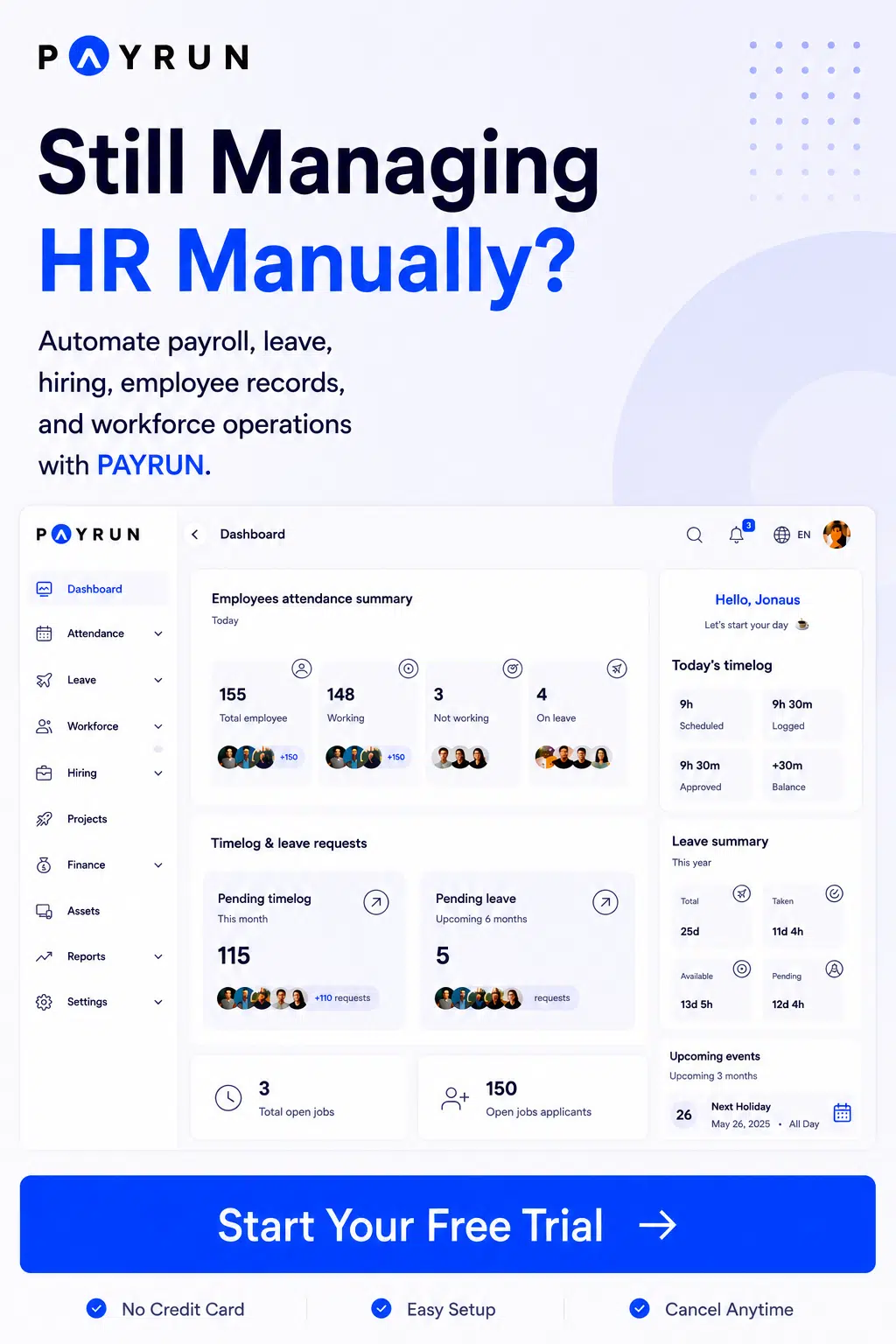
HR risk management reduces risks linked to compliance, payroll, and workforce processes. Payrun brings key HR and payroll tools into one unified system. It helps HR teams handle employee records, payroll accuracy, and administrative tasks more reliably and clearly.
Payrun has several essential features that ensure HR risk management stays focused on compliance, data accuracy, and process control. Centralized records and automation reduce manual errors and legal exposure. The platform supports HR leaders and teams with organized HR data and streamlined approval workflows from hire to payroll.
With Payrun, businesses can track employee leave, attendance, and payroll in one place. This improves transparency and compliance with employment laws and tax regulations. Employees can also access payslips and personal records, reducing HR queries and administrative burden.
By automating repetitive tasks and centralizing data, Payrun helps HR professionals focus on strategic risk management. The platform supports effective HR risk management and strengthens operational processes for long-term stability and compliance. You can enjoy all these features at a suitable price.
FAQs
Can HR Risk Management Prevent All Legal Risks?
No, HR risk management cannot remove all legal risks. It reduces legal exposure through proactive compliance and structured HR risk assessment. Strong workplace policies and continuous monitoring lower the chance of legal claims.
Is HR Risk Management Only For Large Organizations?
No, HR risk management matters for businesses of all sizes. Small companies also face compliance risks and financial risk. A simple risk management plan can protect human resources and ensure compliance early.
How Often Should HR Teams Conduct HR Risk Assessment?
HR teams should conduct HR risk assessment at least annually. Regular reviews improve risk identification and address potential risks early. Frequent checks support effective HR risk management and reduce compliance failures.
Does HR Technology Improve Risk Management?
Yes, modern HR systems strengthen human resources risk management. Workflow automation reduces payroll errors and protects sensitive employee data. Technology also supports continuous monitoring and better risk management strategy.
What Role Do HR Leaders Play In Managing HR Risk?
HR leaders guide the HR risk management framework and risk strategy. They align HR strategy with legal guidelines and operational processes. Strong leadership ensures compliance and protects the company’s reputation.
Can Poor Workplace Culture Increase HR Risks?
Yes, weak employee relations create workforce risks and legal challenges. High employee turnover and employee complaints often follow poor communication. Effective HR risk management supports a positive work environment.
Why Does HR Risk Management Matter For Business Growth?
HR risk management matters because unmanaged risks slow growth. Compliance failures and financial risk affect stability. A structured risk management process protects long term performance and reputation.