Growing a business is exciting. But when your team expands from 10 employees to 50 in under 18 months, the systems that once worked smoothly can start to crack. Nearly three-quarters of high-growth companies fail not because they lack talent or funding, but because they scale too fast without the right infrastructure.
The difference between successful scaling and organizational chaos often comes down to how well your HR systems handle rapid growth. This guide explores practical scaling strategies that help you grow effectively while keeping payroll accurate, compliance tight, and your existing team engaged throughout the process.
What Scaling A Team Means
Team scaling is more than adding headcount. It represents a strategic process of growing your workforce to meet increasing business demands without losing efficiency or company culture. According to industry research, scaling is defined as a time-limited process of exponential growth, which distinguishes it from gradual, organic expansion. For HR teams and founders, this means matching team capacity with workload while maintaining high-quality output and profitability.
The stakes are significant. When done right, scaling creates a cohesive unit where team members feel safe, roles are clear, and payroll runs without errors. When done poorly, organizations face high turnover, communication breakdowns, and diluted culture within months. The scaling process requires intentionality and acceleration, supported by systems that can handle more work without breaking down.
Why HR Systems Struggle During Rapid Team Growth
When organizations experience rapid growth, HR departments often find themselves overwhelmed. A study of fast-growing startups revealed that companies hiring rapidly without proper infrastructure see turnover rates spike and team dynamics deteriorate within six months. The challenge is not simply about doing more work but about transforming how work gets done as the team expands.
Sudden Increase In Hiring Volume
HR teams built for a 20-person company cannot process hiring for 100 new employees using the same methods. Each new hire requires onboarding documentation, payroll setup, benefits enrollment, and compliance verification. When volume increases fivefold, manual processes become bottlenecks. Product managers and department heads start making hiring decisions without proper coordination, leading to duplicated roles and unclear job description standards.
The time-to-fill metric suffers significantly during these phases. If each position takes longer to fill, organizations lose potential earnings while existing team members absorb additional workload. This creates a cycle where burnout increases, performance drops, and more hiring becomes necessary to compensate.
Limited HR Infrastructure And Tools
Many growing businesses attempt to scale while still relying on spreadsheets and manual data entry. This approach works until headcount crosses 20 to 25 employees. Beyond that point, the risk of errors in payroll calculations, leave tracking, and compliance documentation grows exponentially. Without scalable infrastructure, HR teams spend valuable time on busy work rather than strategic people operations.
Manual Processes That Do Not Scale
Contract management, tax declarations, and bank detail collection handled manually create administrative nightmares during growth phases. A single missed statutory deadline or incorrect payment can damage trust and create legal exposure. Organizations that neglect operations and compliance during scaling often face penalties and employee dissatisfaction that undermine long term success.
Compliance Risks Across Multiple Locations
As teams scale across cities and time zones, compliance requirements multiply. Different tax jurisdictions, benefits structures, and employment regulations require attention. Without centralized systems, tracking these requirements becomes nearly impossible, exposing the organization to significant risk.
How To Scale Teams Without Breaking HR
Successful scaling requires deliberate preparation and investment in the right strategies before growth accelerates. Organizations that focus on building scalable foundations early avoid the growing pains that derail their competitors.
Plan Workforce Growth Strategically
Before opening new roles, leaders should translate annual revenue targets and product roadmaps into concrete hiring plans. Map current capacity versus demand by function to identify critical hires first. Use headcount forecast tools that include salary, benefits, and payroll taxes for every planned role. This planning ensures that each new hire contributes to business goals rather than adding complexity without clear value.
Strategic planning also means gathering feedback from your existing team about where capacity constraints exist. Their actionable insights often reveal bottlenecks that hiring alone cannot solve. Regular check ins with department heads help maintain alignment between workforce growth and operational needs.
Build Scalable HR Processes Early
Every planned role needs clear documentation covering mission, core responsibilities, and success metrics for the first 90 days. Vague job titles lead to confusion and compensation disputes. Instead, use concrete examples like Senior Product Designer or Payroll Specialist that communicate expectations clearly.
Standardizing offer letters, contracts, and data collection templates before scaling creates consistency as hiring volume increases. These processes should be designed for efficiency, allowing HR teams to handle increased volume without proportional increases in administrative burden.
Automate Recruitment And Onboarding
The difference between a new hire who contributes within weeks versus one who struggles for months often comes down to onboarding quality. Design a structured 30-60-90 day onboarding plan with clear milestones for each phase. Provide access to tools, payroll systems, and policy documents on day one so new employees can self-serve answers.
Automated workflows for contract signing, bank detail collection, and tax declarations reduce HR workload significantly. When a team expands by dozens of employees monthly, these automations make all the difference between smooth operations and administrative chaos.
Standardize Payroll And Benefits Systems
Payroll is often the first process to formalize during scaling because regular, accurate payment underpins trust and legal compliance. Centralized employee records covering personal data, contracts, salary, and compliance documents prevent errors that damage team morale.
Automated payroll systems handle salary calculations, statutory deductions, and payslip generation across pay cycles without manual intervention. Self-service portals where employees access payslips and submit leave requests reduce routine questions to HR and finance teams.
Strengthen Performance Management Frameworks
As organizations grow, informal performance discussions no longer suffice. Implement performance management systems that track individual and team performance metrics aligned with overall business objectives. This creates accountability and helps identify when team members need support or development.
Leadership development becomes critical during scaling. Many problems start when skilled individual contributors become first-time managers without training. Short, practical programs on topics like one-to-ones, delegation, and feedback prepare managers to lead larger teams effectively.
Maintain Clear Internal Communication Channels
Informal communication works up to around 10 people but breaks down as teams add layers and locations. Establish simple rhythms including weekly all-hands meetings, team standups, and monthly written updates from leadership. Document decisions in shared spaces so new hires can catch up without repeated explanations.
Clear communication around pay cycles, benefits, and policy changes builds confidence during rapid growth. When team members understand expectations and have visibility into organizational direction, they support the mission more effectively.
Track HR Metrics And Workforce Data
Leaders should track a focused set of practical data points rather than dozens of vanity metrics. Monitor time-to-fill for roles, time-to-productivity for new hires, and six-month retention for each hiring cohort. These performance metrics link directly to business outcomes.
Measure employee engagement quarterly through short pulse surveys rather than lengthy annual forms. Watch payroll as a percentage of revenue to ensure cost discipline during hiring phases. Review team load and overtime patterns to spot burnout risks before they become attrition.
Common Mistakes Companies Make While Scaling Teams
Most scaling problems stem not from talent shortage but from structure, communication, and operational discipline failures. Understanding these pitfalls helps founders and HR leaders avoid costly mistakes.
Hiring Too Quickly Without Planning
The temptation to hire ahead of revenue after a funding round or large contract win is strong. However, hiring rapidly without structure creates hidden costs including extra HR work, payroll complexity, and longer ramp-up times. Use hiring gates tied to specific revenue milestones before opening new roles.
Build shared templates for job descriptions, interview scorecards, and offer letters to maintain quality consistency. Organizations that create these standards before scaling maintain better cultural fit and reduce mis-hires that burden HR departments with separation processing.
Ignoring Employee Experience During Growth
When organizations focus entirely on adding headcount, existing employees often feel neglected. This oversight damages overall performance and increases turnover among your most valuable team members. Psychological safety suffers when the human touch disappears from people operations.
Maintain regular check ins with existing staff during growth phases. Talk openly about changes and create forums where team members can share insights about what is working and what needs improvement. This feedback becomes valuable information for refining your scaling approach.
Overloading HR Teams With Manual Tasks
HR teams stretched thin by manual processes cannot provide strategic support to the organization. When HR staff spend most of their time on data entry and paperwork, they have no capacity for leadership development, culture initiatives, or proactive workforce planning.
Investing in automation frees HR professionals to focus on work that requires judgment and relationship building. This shift from administrative burden to strategic contribution makes HR a true business partner during scaling.
Failing To Maintain Company Culture
Culture can shift rapidly once a team passes 30 to 40 people. Without deliberate attention, the core values and communication norms that defined the organization dilute as new employees arrive. Document company’s values, communication norms, and decision rules in a simple culture guide shareable with new joiners.
Embed culture into hiring questions, performance reviews, and weekly rituals like Monday kickoffs and Friday wins. Transparent payroll practices including clear payslip breakdowns and consistent pay dates strengthen trust and reinforce cultural expectations around reliability and fairness.
Best Practices For Sustainable Team Scaling
Organizations that scale effectively share common practices that create stability during rapid growth. These approaches transform scaling from a chaotic sprint into a manageable, repeatable process.
Invest In Scalable HR Technology
Technology serves as a force multiplier for HR teams. Integrated tools across recruiting, HR, payroll, and time tracking prevent duplicate work and errors as headcount grows. Cloud-based platforms make it easier to pay distributed teams on time with accurate local deductions regardless of location.
Digital transformation requires selecting technology solutions aligned with team goals and growth strategy. The right platform centralizes data, automates routine tasks, and provides visibility into workforce trends that inform decisions.
Develop Clear Workforce Policies
As teams grow, manual handling of contracts, leave policies, and payroll compliance becomes risky. Create a clear ownership map for HR, finance, and legal tasks so nothing falls through the cracks. Policies should be documented, accessible, and consistently applied across the organization.
Clear policies on work hours, holidays, and payroll cut-off dates keep distributed teams aligned. When everyone operates from the same playbook, confusion decreases and efficiency improves.
Focus On Employee Engagement And Retention
A 2022 study in the International Journal of Environmental Research and Public Health found that aligning employees with company goals significantly impacts worker health and wellbeing. This alignment affects retention rates, which directly influence payroll stability and headcount planning accuracy.
Invest in training and development as resources become available during scaling. Developing employee skills helps organizations stay ahead of market trends while building loyalty that reduces costly turnover.
Use Data Driven HR Decision Making
Make informed decisions by tracking meaningful metrics consistently. Hold regular retrospectives after each growth phase to review what worked and what did not. Gather anonymous employee feedback on onboarding, communication, and workload during expansion periods.
HR and finance teams should share insights on churn, payroll errors, and absence rates to inform future hiring rounds. This continuous improvement mindset helps organizations refine their approach over time.
Align HR Strategy With Business Goals
HR strategy should directly support organizational objectives rather than operating independently. When employee development, hiring plans, and culture initiatives connect to revenue targets and product roadmaps, the entire organization moves in the same direction.
Regular communication between HR leadership and executive teams ensures alignment remains strong as the organization evolves. This partnership creates coherent workforce strategies that support sustainable growth.
How Payrun Supports Businesses In Scaling Teams Efficiently
Growing organizations need HR and payroll infrastructure that grows with them. Payrun provides modern payroll and HR management designed specifically for businesses navigating scaling challenges.
Centralized Employee Management
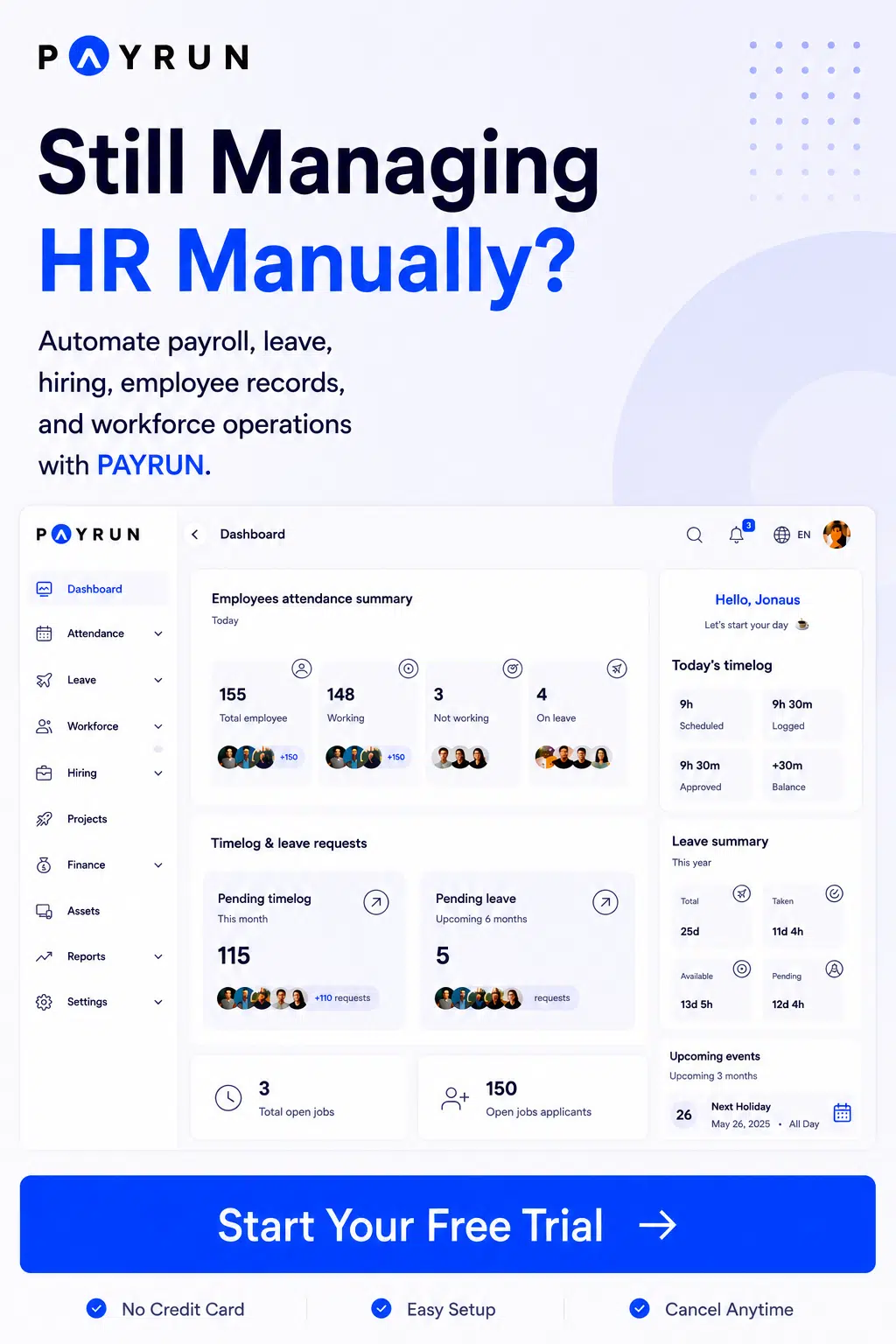
Payrun centralizes employee records, including personal data, contracts, salary information, and compliance documents in one accessible platform. This eliminates scattered spreadsheets and reduces the risk of errors that manual systems create during rapid growth. HR teams gain immediate visibility into workforce composition, making planning and reporting straightforward.
Automated Payroll Processing
Accurate, timely payroll builds trust with employees. Payrun automates salary calculations, statutory deductions, and payslip generation, removing manual work that creates bottlenecks during scaling. Each new hire can be added to the payroll system quickly, ensuring they receive correct payment from their first cycle without administrative delays.
Streamlined Onboarding Workflows
New employee onboarding becomes efficient with digital document collection and automated workflows. Payrun helps organizations collect required details securely and set up new team members in the system without creating additional burden for HR staff. This allows growing teams to maintain momentum while welcoming new members properly.
Clear Workforce Visibility
Leadership teams gain insight into payroll costs, headcount trends, and workforce data through Payrun’s reporting capabilities. This visibility supports confident decision-making about hiring waves and budget planning. Instead of scrambling to compile information during growth phases, leaders can access the data points they need to make informed decisions quickly.
Explore Payrun’s features to find the capabilities that match your current stage of growth and operational requirements.
FAQs
What Is The Biggest HR Challenge When Scaling A Team?
The biggest challenge is maintaining process quality while handling increased volume. Organizations that scale without proper infrastructure face payroll errors, compliance risks, and deteriorating employee experience. Building scalable HR systems before growth accelerates prevents these issues from compounding.
How Can HR Automation Help During Rapid Growth?
HR automation handles repetitive tasks like payroll calculations, document collection, and leave tracking without proportional increases in HR staff. This efficiency allows HR teams to focus on strategic work like culture development and leadership training while the system manages administrative volume.
When Should Companies Upgrade Their HR Systems?
Organizations should upgrade before they outgrow current systems, typically when headcount approaches 20 to 25 employees or when manual processes start causing errors and delays. Waiting until problems become severe makes transitions more difficult and costly.
How Does Scaling A Team Affect Employee Retention?
Rapid scaling can negatively impact retention if existing employees feel overlooked or overwhelmed. Organizations that maintain clear communication, preserve culture intentionally, and continue investing in current team members see better retention outcomes during growth phases.
What HR Metrics Matter Most During Team Expansion?
Time-to-fill for open positions,time-to-productivity for new hires, and six-month retention rates provide the most actionable insights during scaling. Tracking payroll as a percentage of revenue ensures cost discipline, while engagement surveys reveal potential issues before they become attrition.