Employee Burnout Signs: How To Spot And Address Them Early
Table of Contents
Employee burnout rarely starts with someone saying, “I’m burned out.” Small changes often appear first. A reliable employee starts missing deadlines. An engaged team member becomes quiet. Mistakes increase, energy drops, and everyday tasks start to feel overwhelming.
Burnout results from chronic workplace stress that has not been successfully managed. Common employee burnout signs include exhaustion, detachment from work, low motivation, irritability, absenteeism, and declining performance. The WHO also links burnout with exhaustion, cynicism toward work, and reduced professional effectiveness.
Early recognition matters for both employees and employers. Employees who frequently experience burnout are 63% more likely to take a sick day and 2.6 times more likely to seek another job. In this article, managers, HR teams, and employers will learn how to spot employee burnout signs, understand their causes, tell burnout from stress, and take practical steps to address and prevent it.

What Is Employee Burnout
Employee burnout is a work-related condition caused by chronic workplace stress that has not been successfully managed. It develops over time when constant pressure, heavy workload, or a difficult work environment drains an employee’s energy and motivation. The World Health Organization classifies burnout as an occupational phenomenon, not a medical condition.
Burnout has three main dimensions: exhaustion, growing cynicism or mental distance from the job, and reduced professional effectiveness. An employee experiencing burnout may feel overwhelmed, detached from tasks, and unable to perform with their usual focus or energy.
Burnout can also affect mental and physical health, employee engagement, and overall well-being, making it harder to sustain effective employee engagement strategies. Recognizing the early signals matters because managers and employers can address workplace causes before the problem becomes more severe.
What Are The Most Common Signs Of Employee Burnout
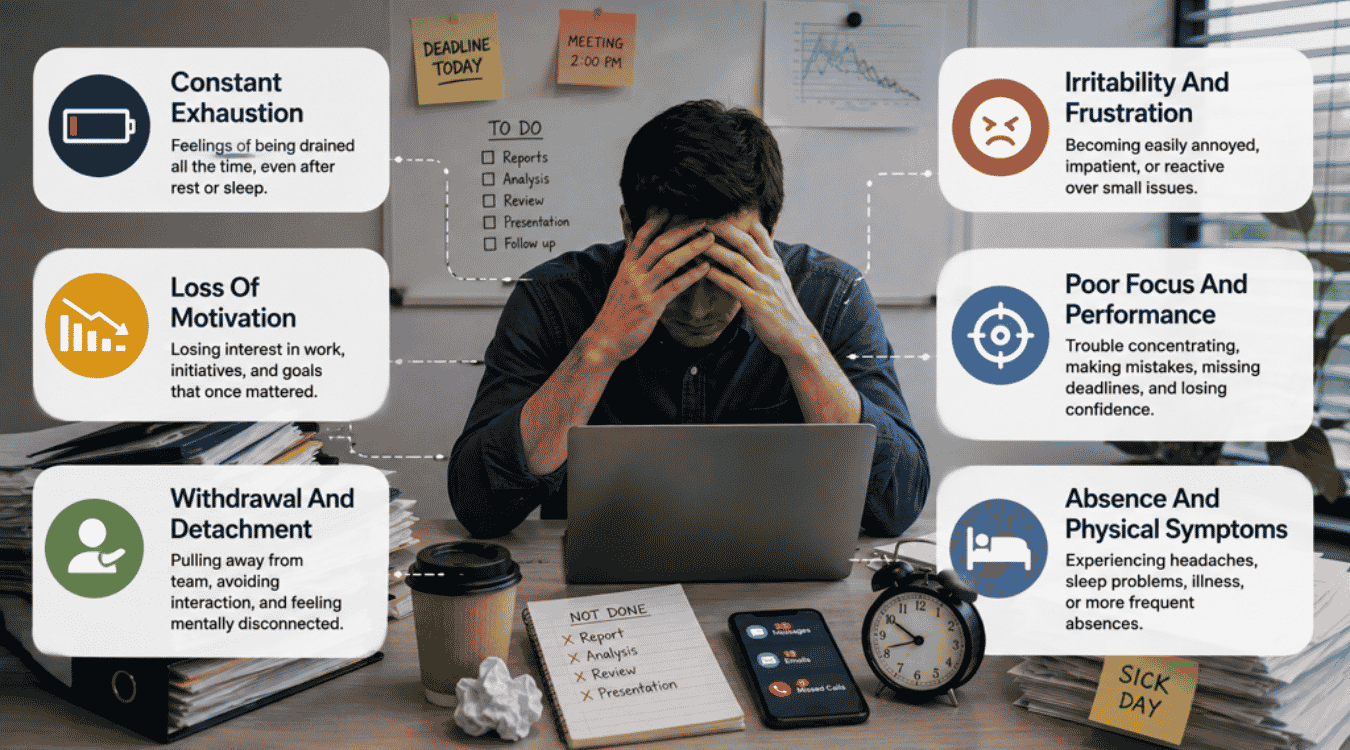
Employee burnout signs can affect behavior, emotions, physical health, and job performance. Some are easy to notice, while others appear as small changes over time. Managers should look for patterns rather than judge an employee based on one difficult day.
Constant Exhaustion
Burnout can leave an employee drained even after they rest. They may arrive at work with little energy or struggle to get through normal tasks. The WHO lists energy depletion or exhaustion as one of the three core dimensions of burnout.
The problem goes beyond feeling tired after a hard week. Spring Health's 2026 research found that 60% of burned-out employees felt emotionally drained or exhausted at work. Managers may notice slower responses, less energy in meetings, or difficulty keeping up with the usual workload.
Loss Of Motivation
A team member who once shared ideas may suddenly stop taking initiative. Tasks that used to matter can start to feel like chores. They may do only what is required and show less interest in new projects, goals, or team success.
Loss of motivation often comes with a weaker sense of purpose at work. Gallup lists it among the symptoms employees may experience with burnout. Managers should pay attention when the change lasts for weeks, especially if the employee was usually engaged and productive before.
Withdrawal And Detachment
Burnout can change how employees connect with their job and team. A social employee may become quiet. They may avoid meetings, contribute less to discussions, or pull away from coworkers. A negative attitude toward work or colleagues can also become more common.
Detachment is a core part of burnout. The WHO describes it as greater mental distance from a job or feelings of cynicism toward work. Spring Health also reports that 40% of burned-out employees felt physically present but mentally checked out.
Irritability And Frustration
Small problems can feel much bigger when someone has little energy left. An employee experiencing burnout may become more impatient, frustrated, or reactive under pressure. Managers might notice a change in tone, more conflict with coworkers, or unusual emotional outbursts.
One tense meeting does not prove that someone is burned out. The change from their usual behavior matters more. Gallup lists visible frustration and irritability among the signs managers may notice. Look for repeated changes and offer support rather than making quick assumptions.
Poor Focus And Performance
Burnout can make simple tasks harder to complete. An employee may lose focus, forget details, make unusual mistakes, or miss deadlines. Work that once took an hour may suddenly take much longer. Confidence in their own performance can fall as well.
Recent data shows how common the problem can be. Spring Health found that 46% of burned-out employees had trouble with focus or productivity. Organizations can respond with smarter employee productivity tracking that highlights bottlenecks without adding more pressure. Gallup also reports that employees who frequently experience burnout are 13% less confident in their performance.
Absence And Physical Symptoms
Burnout does not stay inside the workplace. Employees may experience headaches, sleep problems, illness, or other physical health concerns. Managers may also see more sick days, late arrivals, early departures, or unexpected absences as chronic workplace stress takes a toll, especially if systems like an attendance management system, a comprehensive attendance tracking system, or robust remote attendance tracking are missing.
Spring Health's 2026 research found that 31% of burned-out employees reported taking more sick days or personal leave, underscoring how important effective leave management for remote and hybrid teams and the right leave management software options for 2026 are for both well-being and business continuity. Gallup found an even broader risk: employees who experience burnout very often or always are 63% more likely to take a sick day.
Employee Burnout Vs Stress: Key Differences
Stress and employee burnout can look similar, but they are not the same. Stress often comes from short-term pressure and may ease when the pressure drops. Burnout develops from chronic workplace stress that has not been successfully managed. It can leave an employee exhausted, detached, and less effective at work.
Difference | Workplace Stress | Employee Burnout |
|---|---|---|
Duration | Often linked to a busy or difficult period | Develops after chronic workplace stress |
Energy | Employees may feel tired but still have energy to push through | Employees often feel deeply exhausted and drained |
Connection To Work | Employees may still care about their job despite the pressure | Employees may feel detached, cynical, or negative about work |
Work Performance | Focus may drop while pressure is high | Motivation, focus, and professional effectiveness may decline |
Recovery | Rest or reduced pressure may help employees recover | Rest alone may not address the workplace causes of burnout |
Main Response | Reduce immediate pressure and prioritize tasks | Address burnout by reviewing workload, support, expectations, and the work environment |
The WHO defines burnout specifically around exhaustion, increased mental distance or cynicism toward work, and reduced professional efficacy. Gallup also notes that stress can ease when pressure lifts, while work burnout reflects chronic stress that has progressed into exhaustion and disengagement.
What Causes Employee Burnout In The Workplace
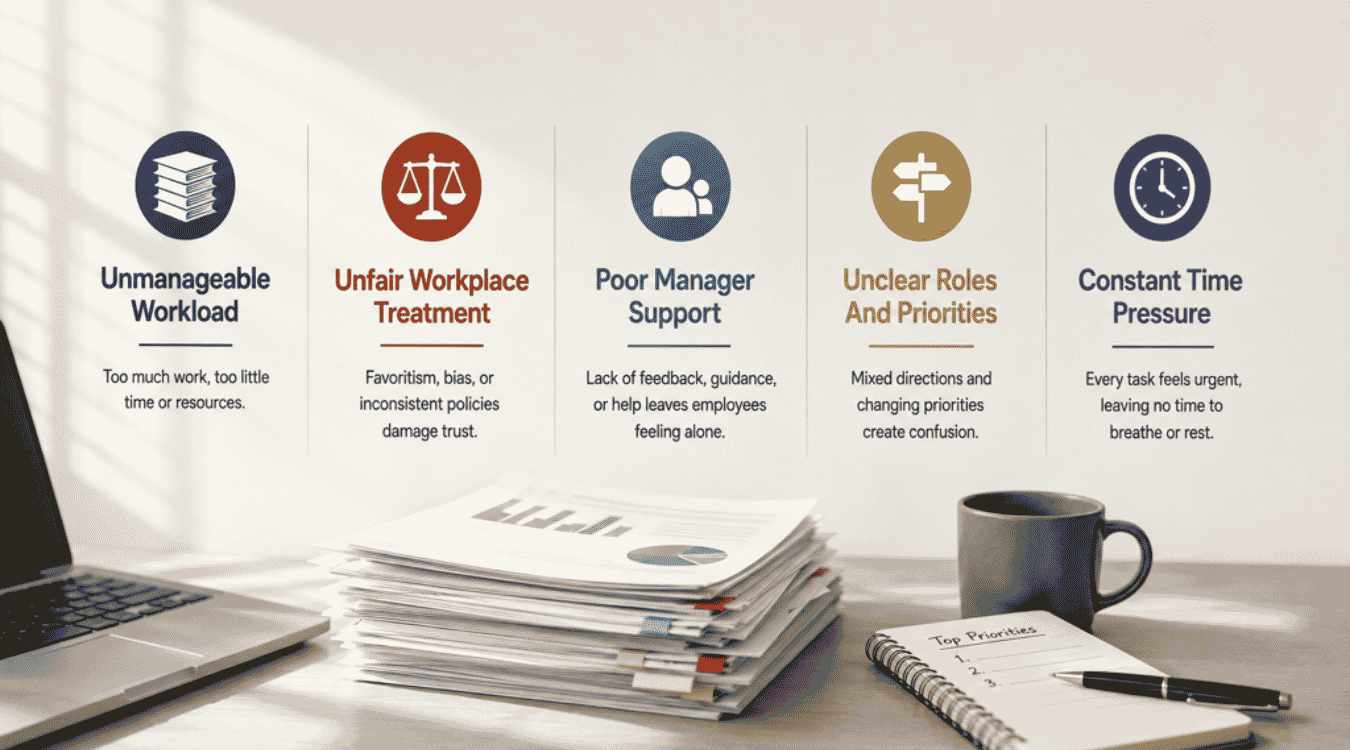
Employee burnout rarely comes from hard work alone. The bigger problem is chronic workplace stress that employees cannot successfully manage or escape. Workload, unfair treatment, weak support, unclear responsibilities, and constant pressure can all push workers toward burnout.
Unmanageable Workload
A heavy workload becomes a problem when employees rarely have enough time or resources to finish their tasks. Deadlines pile up. Priorities compete. Rest gets pushed aside. Over time, employees may feel overwhelmed and unable to keep up.
Gallup identifies unmanageable workload as one of the five workplace factors most closely linked to employee burnout. Managers should also consider how much work a team member can realistically handle, using structured workforce calendar management for scheduling and time tracking and an employee time tracking app to match capacity with demand. Constant overload can hurt mental health, work-life balance, and employee engagement rather than lead to better performance.
Unfair Workplace Treatment
Employees notice when rules, rewards, and responsibilities do not feel fair. Favoritism, bias, inconsistent policies, or unfair pay can damage trust. Once workers lose that sense of fairness, even normal workplace challenges may become harder to deal with.
Gallup found a strong link between unfair treatment and burnout. Employees who strongly agree that they are often treated unfairly are 2.3 times more likely to experience high burnout. Leaders and human resources teams need to take feedback seriously, apply workplace policies fairly across the workforce, and invest in employee retention strategies by building trust and fairness.
Poor Manager Support
Employees need more than instructions from their managers. They need clear feedback, realistic expectations, and support when challenges happen. A team member who feels alone under pressure may struggle to address problems before they grow.
Gallup found that employees who strongly feel supported by their manager are about 70% less likely to experience burnout regularly. Managers have real responsibilities here. They can help set priorities, remove barriers, and connect employees with useful resources. Burnout should not be treated only as an individual problem that self-care can solve.
Unclear Roles And Priorities
Unclear responsibilities create stress before an employee even starts the job. People may receive mixed directions, face competing priorities, or spend energy trying to understand what success should look like. Frequent changes can make the problem worse.
Gallup lists lack of role clarity among the five major factors linked with employee burnout. Clear goals help employees focus on the tasks that matter most, especially when supported by transparent employee performance tracking software and a broader employee management system to align expectations, feedback, and results. Managers can also explain priorities when workloads change. That sense of direction reduces confusion and gives workers a clearer path through demanding periods.
Constant Time Pressure
Tight deadlines happen in almost every work environment. Constant urgency is different. Employees may skip breaks, work late, or struggle to set healthy boundaries because every task feels urgent. Remote employees can face similar challenges when work and personal time start to overlap, especially if managers lack visibility from thoughtful employee timeline tracking or a reliable hybrid attendance tracking system for flexible workplaces.
Gallup found that employees who often or always have enough time to complete their work are 70% less likely to experience high burnout. Employers can reduce the risk with realistic deadlines, clear priorities, and better workload planning, including thoughtfully implementing an attendance management system to match staffing with real demand. Those prevention strategies help protect both well-being and performance.
What Should Managers Do When They Notice Employee Burnout Signs
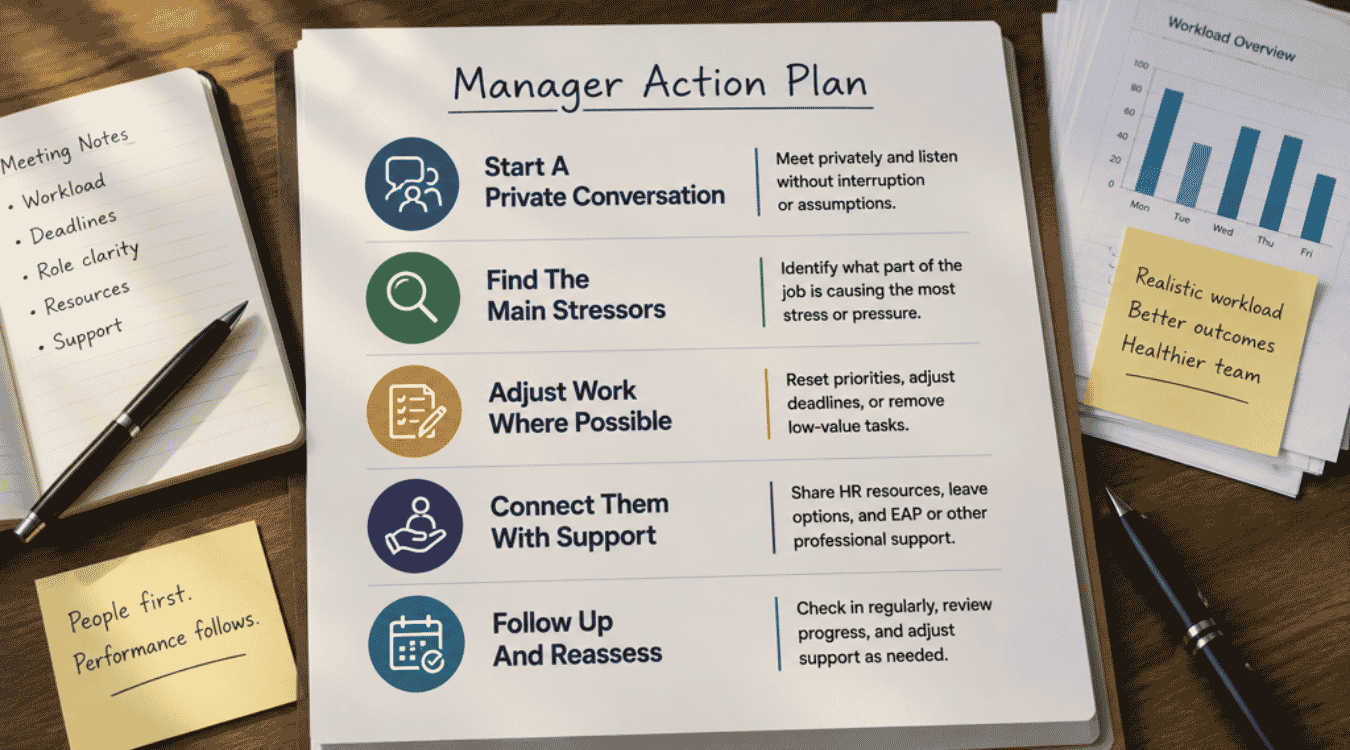
Employee burnout signs should prompt support, not quick assumptions. Managers cannot diagnose burnout from one bad day or missed deadline. The critical first step is to notice patterns, talk with the employee, and find out what support may help.
Start A Private Conversation
Set up a private one-on-one conversation with the team member. Ask how work has felt lately and give them room to talk. Avoid assuming you already know what is happening. The goal is to understand their experience, not label it as burnout.
Listen closely and ask simple questions about workload, pressure, deadlines, and support. SHRM recommends taking burnout concerns seriously and hearing employees without interruption or assumptions. Good managers create a safe space for honest feedback before they start discussing solutions.
Find The Main Stressors
Ask what part of the job feels hardest right now. Too many tasks may be the problem. Tight deadlines, unclear responsibilities, difficult relationships, or too few resources could also play a role. The answer will help managers address burnout at its source.
Burnout comes from chronic workplace stress that has not been successfully managed. It is not simply an individual problem that self-care can fix. SHRM recommends looking at both immediate stressors and deeper workplace causes before deciding what needs to change.
Adjust Work Where Possible
Look for practical changes once the main challenges are clear. A manager might reset a deadline, remove low-priority tasks, share the workload, or give the employee more control over their schedule. Even small changes can make work feel more manageable.
Time off or mental health days may provide useful rest, but they cannot fix a harmful work environment alone. CDC guidance says changes to workplace policies and practices are the best way to address worker mental health. Managers should focus on the causes as well as short-term relief.
Connect Them With Support
Managers do not need to act as therapists. Human resources can explain available support, leave options, workplace adjustments, or Employee Assistance Programs. In fact, SHRM's 2024 benefits research found that 82% of surveyed employers offered an EAP.
Professional help may also matter when an employee has serious or lasting mental health concerns. Burnout can overlap with symptoms linked to depression or anxiety, but managers should not try to diagnose either. Clear access to qualified resources gives employees another path to get appropriate support.
Follow Up And Reassess
One conversation is rarely enough. Set a time to check in again and ask whether the changes have helped. Pay attention to workload, energy, engagement, and any new concerns. Regular feedback also gives employees a chance to speak before the pressure becomes severe.
Managers should take further steps if the same problems keep happening. A repeated pattern across several workers may point to a wider workforce issue, not one employee. CDC recommends changes such as greater flexibility, better manager practices, and action against root causes like excessive demands or workplace bullying.
How Can Employers Prevent Employee Burnout
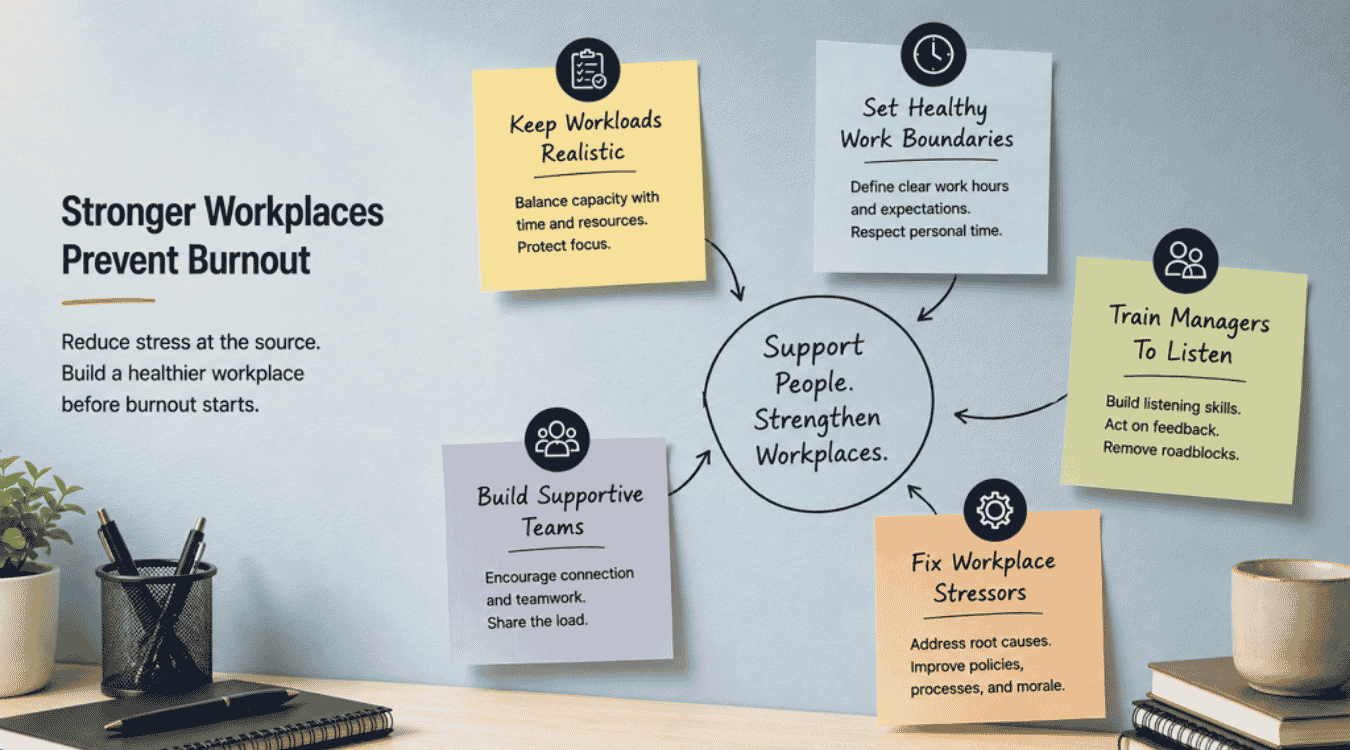
Burnout prevention starts before the first clear signs of burnout appear. Employers need to fix the work conditions that create chronic stress, not just offer short-term relief, often by simplifying HR and replacing disconnected tools that make daily work harder than it needs to be. Early action matters because workplace stress can have severe consequences for people and businesses.
Keep Workloads Realistic
A full schedule is normal. A workload that never lets up is not. Employers should check how much work each employee has and whether deadlines match the time and resources available. Extra tasks should come with clear priorities.
For example, leaders can delay a low-priority project when urgent work suddenly appears. That simple choice prevents employees from treating every task as critical. Gallup says unmanageable workloads are a major cause of burnout. Employers can reduce that pressure through better staffing, realistic deadlines, regular workload reviews, and leveraging top timesheet apps for employees to keep work hours transparent and manageable.
Set Healthy Work Boundaries
Employees need time when work truly stops. Clear rules around messages, meetings, response times, and after-hours availability can protect work-life balance. Those boundaries matter even more for remote employees, who may find it harder to separate their job from home life.
NIOSH reports that 95% of workers consider respect for boundaries between work and nonwork time important. Employers should make setting boundaries part of the work culture. Leaders also need to follow the same rules. Employees are more likely to disconnect when managers show that rest is acceptable.
Train Managers To Listen
Managers often see early changes before human resources does. Employers should teach them to recognize signs of burnout, ask about workload, and listen without judgment. Regular feedback also helps managers spot problems before stress becomes harder to manage.
Gallup found that employees whose managers are always willing to listen to work-related problems are 62% less likely to experience burnout. Managers should then take action on what they hear. Taking steps to remove barriers or reset priorities shows employees that their feedback can lead to real support.
Build Supportive Teams
A healthy work community gives employees people they can turn to when pressure rises. Employers can encourage teamwork, peer support, open communication, and a sense of belonging. Managers should also make sure one employee does not carry difficult responsibilities alone, using accurate employee time log reports and centralized leave management software to spot overload early.
Gallup recommends teamwork and peer support as key burnout prevention strategies. Strong connections can help employees deal with challenges before they feel isolated or overwhelmed. Support should also include mental health resources when needed. A strong team cannot remove every source of stress, but it can make difficult periods easier to handle.
Fix Workplace Stressors
Self-care, mental health days, and wellness resources can help, but they cannot repair a harmful work environment. Employers should look for deeper causes such as unfair treatment, poor staffing, unclear roles, constant pressure, or weak manager support. CDC guidance favors changes to workplace policies and practices, including fixing common leave management mistakes that can quietly increase stress and resentment.
The financial case is also hard to ignore. Research has linked workplace stress to about $190 billion in annual U.S. healthcare costs. Other estimates put its wider economic cost above $500 billion, with roughly 550 million workdays lost each year. Prevention should address the source, not just the symptoms.
Final Discussion
Employee burnout can start with small changes, but the effects can spread across the whole workplace. Missed deadlines, low energy, withdrawal, and other signs of burnout deserve attention. Managers should look for patterns and talk with employees before the problem leads to severe consequences.
Burnout prevention also takes more than self-care. Employers need to review workload, support, communication, and workplace culture. Clear expectations and healthy boundaries can help employees manage pressure. A strong work community also gives workers a place to ask for support when challenges build.
Small changes can matter. For example, managers can reset an unrealistic deadline or remove a low-priority task. Taking steps early can protect employee well-being, engagement, and long-term performance.