HR paperwork can eat up more than 30% of a founder's week before automation. Manual processes slow down the hiring process, payroll management, and employee onboarding. HR software for startups solves this challenge by centralizing core HR tasks in one system. Automated payroll can reduce payroll processing time by up to 87%, while better employee self-service tools improve employee satisfaction scores by more than 20%.
A modern cloud-based HR platform helps HR teams manage employees, track time, store employee data, and handle benefits administration without chaos. Strong HR technology also supports compliance tools, performance management, and scalable HR infrastructure during rapid growth. We created this guide to help you choose the right HR software for startups and build a unified HR platformthat supports long term startup’s growth.
What Is An HR Software
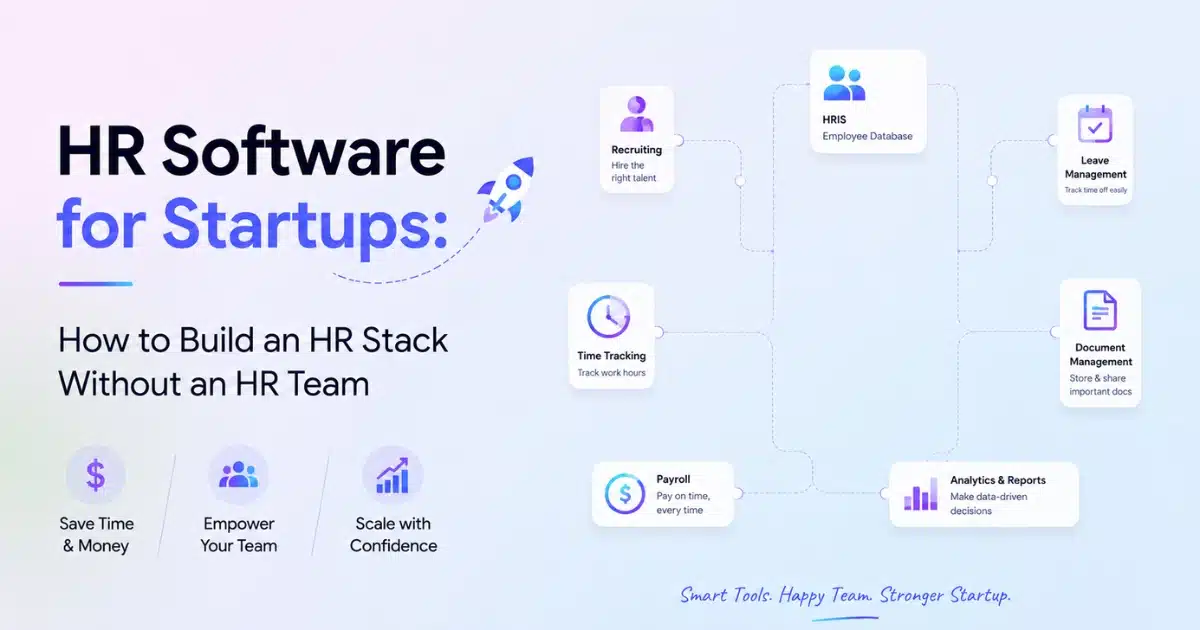
HR software is a digital solution that helps HR teams manage employees, payroll, and core HR tasks in one system. A modern cloud-based HR platform combines HR tools like payroll management, benefits administration, time tracking, and document storage. It replaces manual processes and reduces human error. HR professionals use it to manage employees, store employee data, handle tax filing, and support reliable payroll. Many all-in-one platforms also include applicant tracking systems, employee onboarding, and performance reviews.
HR software for startups supports rapid growth with a scalable HR infrastructure. Early-stage companies use it to automate payroll processes, track working hours, manage sick leave, and collect feedback. The right HR software helps HR leaders gain real-time insights and make data-driven decisions. A user-friendly interface and automation tools save time on administrative tasks. For small businesses and global teams, one unified solution simplifies global hiring and employee management.
Key Features Of An HR Software For Startups
Selecting the right hr software for startups requires understanding which capabilities matter most for your growth stage. Not all platforms offer the same depth across core hr functionality. Some excel at payroll processes while others focus on talent management. Knowing what to prioritize helps you avoid investing in tools that don't match your needs.
Payroll And Benefits Management
Payroll represents one of the most complex administrative tasks for early-stage companies. Errors create compliance issues and damage employee trust. The best hr software for startups has automated payroll systems that calculate wages, withhold taxes, and process direct deposits without manual intervention. So these systems must handle both W-2 employees and 1099 contractors naturally.
Tax filing automation removes the burden of tracking federal and state deadlines. The system files taxes and identifies tax credits you might qualify for automatically. Benefits administration connects with payroll processes. When employees enroll in health insurance or adjust their retirement contributions, the changes reflect in their paychecks right away. This eliminates the back-and-forth emails and spreadsheet updates that consume hr teams' time.
Time And Attendance Tracking
Monitoring working hours affects both payroll accuracy and productivity. A strong hr system captures clock-ins through multiple methods. Employees can log time via mobile apps, web browsers, or biometric devices. The platform calculates overtime based on your policies and flags potential compliance violations before they become problems automatically.
Automated payroll integration creates a direct flow of data. Hours worked sync with payroll systems automatically. Managers approve timecards digitally. The system handles paid time off accruals and tracks sick leave balances. This automation can reduce payroll processing time by up to 80%. Time tracking tools verify employee locations through GPS for distributed teams and ensure remote workers submit accurate hours.
Employee Onboarding And Offboarding
Hiring the right people quickly determines startup success. Startup hr software should streamline the entire hiring process from job postings through the first day. Applicant tracking systems let you post openings to multiple boards at once and track candidates through each stage. The onboarding automation begins once you select someone.
Digital onboarding eliminates paper processes. New hires complete tax forms, I-9 verifications, and direct deposit setup before their first day. Companies with strong onboarding processes improve new hire retention by 82%. The information flows into the employee record without duplicate data entry. Offboarding follows similar automation. The system disables accounts, reclaims licenses, and archives mailboxes when someone leaves instantly.
Performance Management And Reviews
Tracking employee performance helps retain top talent and identify development needs. Modern employee management tools support multiple review cycles. You can run annual reviews, quarterly check-ins, or project-based evaluations. The platform provides templates and automated workflows that guide managers through the process.
Live insights come from goals and progress tracking that work together. Employees set objectives that arrange with company targets. Managers provide continuous feedback rather than waiting for annual reviews. 360-degree feedback gathers input from peers and direct reports. AI tools summarize feedback and identify trends while reducing bias in evaluations. This data helps hr leaders make informed decisions about promotions, compensation, and development opportunities.
Compliance And Reporting Tools
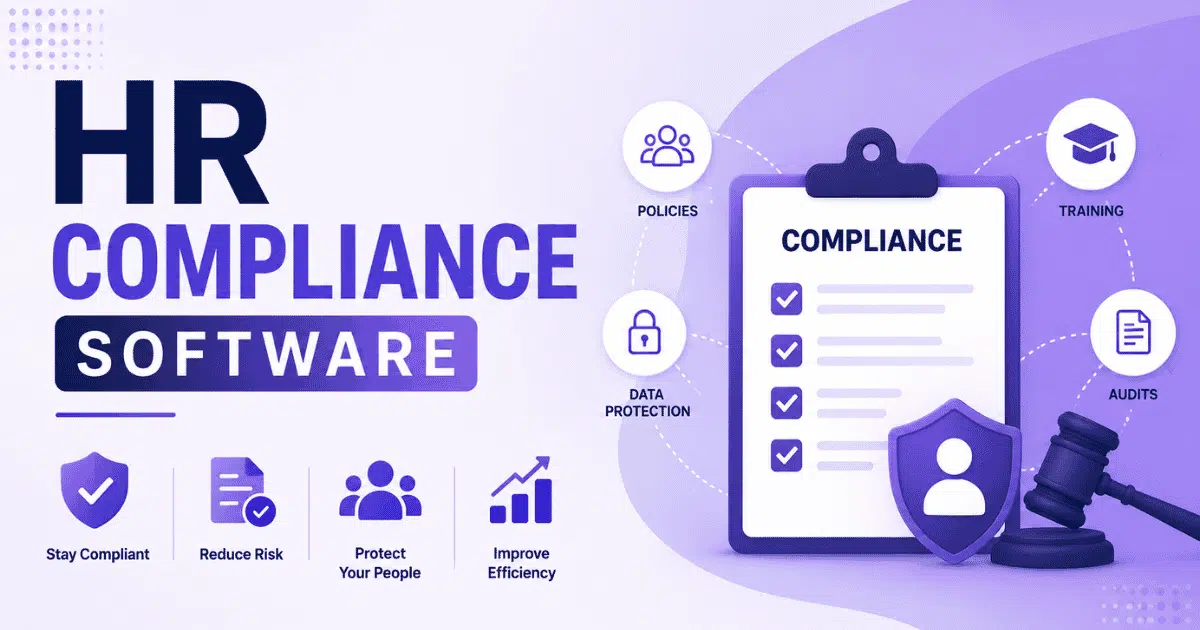
Employment laws change constantly across different jurisdictions. Compliance tools track requirements for FLSA, ACA, COBRA, and state-specific regulations. The hr platform generates reports in government-required formats automatically. You can produce EEOC reports, track leave statuses, and manage unemployment claims from one system.
Automated reminders notify you about upcoming deadlines and missing documentation. The system maintains audit logs that prove compliance during inspections. The platform adapts to regulations in multiple countries for global teams. This reduces the risk of penalties and lawsuits that can devastate small businesses.
Employee Self Service Portal
Employee self-service reduces the administrative burden on hr teams by a lot. Portal features let employees update personal information, view pay stubs, and check benefits details without contacting hr admin. They submit time off requests and see their remaining balances right away.
A well-laid-out self-service portal has 24/7 access through mobile devices. Employees get answers to common questions through AI tools. They can download tax documents, review company policies, and manage their own data. This autonomy improves employee engagement while freeing hr professionals to focus on strategic work rather than answering routine questions.
Best All-In-One HR Software For Startups
Several platforms stand out when you evaluate the best hr software for startups. Each offers distinct advantages that depend on your team size, budget and operational needs.
Gusto
Gusto delivers a complete solution designed for small businesses and early stage companies. The platform handles full service payroll, tax filings and benefits administration from one dashboard. Over 400,000 businesses use this hr software.
The Simple plan starts at USD 40.00 per month plus USD 6.00 per employee monthly. This tier has automated tax filings and unlimited payroll runs for single state operations. The Plus plan costs USD 60.00 per month plus USD 9.00 per employee. It adds multi state payroll, health insurance administration and time tracking tools. Premium tier pricing reaches USD 135.00 per month plus USD 16.50 per employee.
The platform excels at automating compliance tasks. Tax calculations happen automatically and the system files all federal and state taxes. New hire paperwork gets completed digitally through e-signature features. Employees access self service portals to view pay stubs, request sick leave and update personal information without hr admin involvement.
BambooHR
BambooHR focuses on creating intuitive interfaces for growing companies. The platform serves customers in over 150 countries. HR teams gain access to core hr functionality that has employee records, document storage and applicant tracking systems in one location.
The software emphasizes ease of use. Companies without dedicated hr professionals can manage employee onboarding, track performance reviews and run reports without extensive training. Custom workflows automate repetitive administrative tasks. E-signatures eliminate paper processes during hiring.
One verified review expresses that BambooHR has saved almost 20 hours per week and USD 20,000 over a year. Performance management tools achieve 95.5% compliance with employees and 95.25% with managers. The platform integrates with payroll systems to ensure data flows between core hr tasks and compensation management automatically.
Payrun
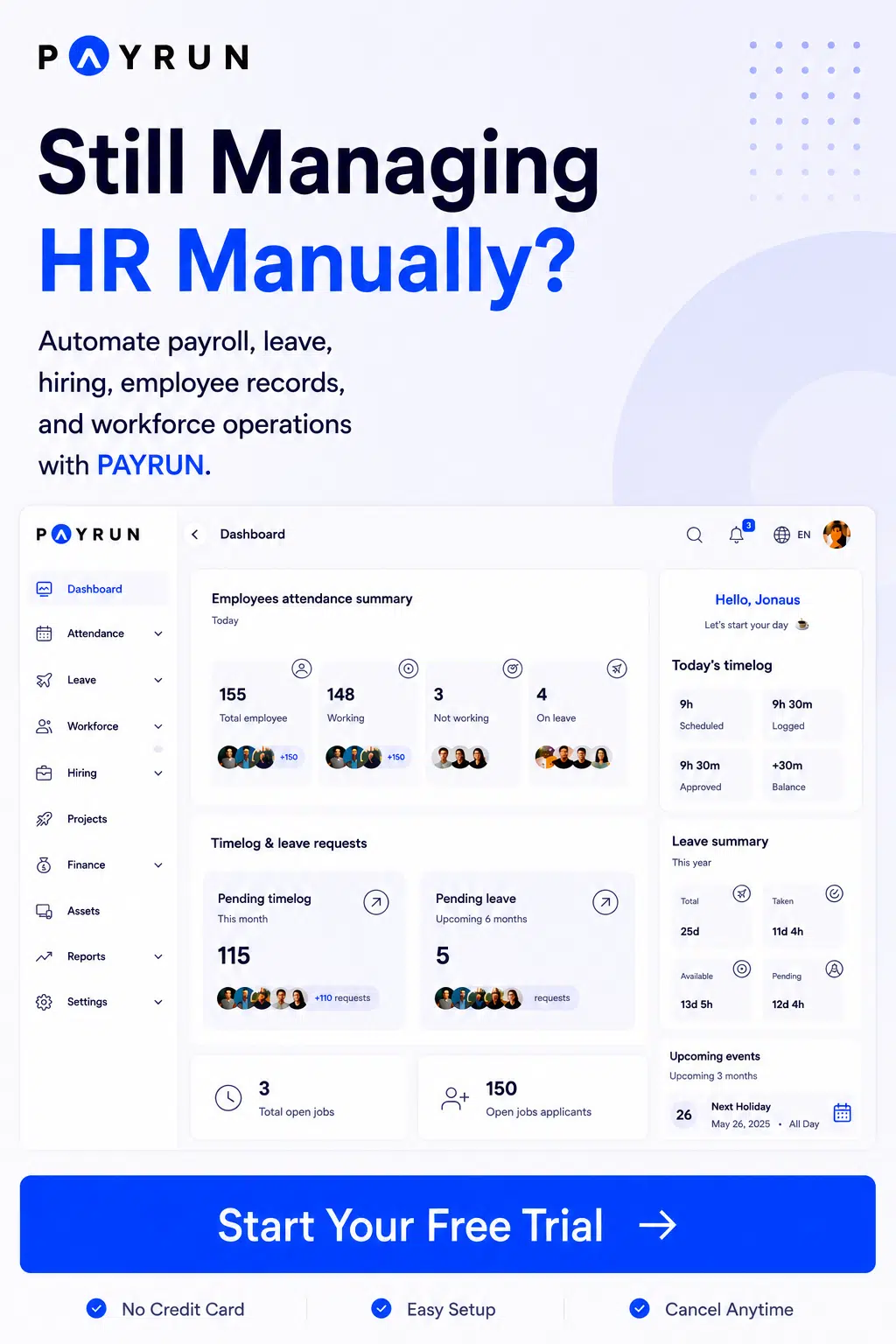
Payrun offers a complete human resource management platform designed to minimize hr headaches. The software centralizes employee management, time tracking and recruitment processes in one user-friendly system.
Pricing starts with a free plan at USD 0.00 per month. The Starter tier costs USD 29.00 monthly and Pro reaches USD 49.00. Enterprise pricing sits at USD 99.00 per month. This modular pricing lets startups scale their investment as teams grow.
AI powered resume screening tools help talent management teams identify qualified candidates faster. The platform has a job posting hub for creating and organizing openings. Timesheet management provides visual calendars and daily tracking options. Detailed dashboards offer customized insights for both employees and administrators. Leave management automates requests and approvals while maintaining accurate records for running payroll.
HiBob
HiBob combines core hr functionality with strong emphasis on employee engagement and company culture. The platform costs between USD 16.00 and USD 25.00 per employee monthly. Implementation fees run 10 to 20 percent of annual software costs typically.
Customers report an average ROI of 254% with payback in under 9 months. The system can help avoid USD 360,000 to USD 720,000 in overhead costs. Onboarding automation alone saves USD 15,000 to USD 30,000 by reducing time spent by 2 to 4 hours per hire.
The hr platform provides built in tools for performance management, compensation cycles and workforce planning. Up-to-the-minute insights flow through customizable dashboards covering 150+ metrics. The system handles payroll processes for both US and UK operations while integrating with global teams.
Remote
Remote specializes in managing distributed teams and international contractors. The platform eliminates 75% of payroll admin work. Companies using the unified solution save USD 3.2 million through consolidated hr services. Time to hire accelerates by 10x compared to traditional processes.
The cloud based hr platform handles monthly, semi monthly and hourly payroll in multiple currencies. Finance managers gain full visibility from one system across global operations. For businesses working with 460+ contractors globally, Remote reduces the need for 5 to 6 full time staff members dedicated to compliance and administrative tasks.
Benefits Of Using an All-in-One HRIS For Startups
Implementing the best hr software for startups changes how your team operates and scales. The unified solution delivers measurable improvements across efficiency, employee satisfaction, and strategic decision-making.
Reduce Manual Administrative Tasks
HR teams waste up to 40% of their time on repetitive administrative tasks like data entry, approvals, and paperwork. This burden prevents hr professionals from focusing on strategic work that gets growth. Automation through hr software eliminates this bottleneck.
Automation tools help organizations recover 30 to 50% of HR time previously lost to administrative tasks. Automated payroll pulls attendance data, applies tax rules, calculates deductions, and generates payslips without manual calculation. HR leaders save over seven hours per week when automating high volume activities such as running payroll, employee onboarding, and performance reviews.
Human error from manual processes costs time to fix. Workflow automation boosts data accuracy by as much as 88%. Therefore, hr teams change from reactive administrative roles into strategic business partners focused on talent management and company culture. Early stage companies can build scalable hr infrastructure without expanding headcount proportionally through this transition.
Improve Employee Experience And Involvement
Self service portals enable employees to manage their own data without contacting hr admin. Workers access pay stubs, update personal information, enroll in benefits administration, and request sick leave through one interface. HR asks fewer questions and transparency improves with this autonomy.
Employee involvement increases when people gain control over workplace interactions. Self service capability gives employees immediate access to documents and eliminates waiting for HR responses. Automated workflows create positive first impressions that improve retention during onboarding. Simplified processes for time off requests and schedule management boost satisfaction scores.
Ensure Compliance Across Multiple States
Distributed teams operating across multiple states face complex compliance challenges. Each state maintains different employment laws governing leave, hiring practices, and wage requirements. Remote workers subject you and your organization to the laws of their state. State income tax, unemployment insurance, worker's compensation, mandated benefits, and privacy laws all apply.
Advanced hr platforms track changing tax and labor rules across different regions. Compliance tools ensure your workforce management and payroll processes stay compliant with local regulations. The system prevents penalties and legal errors that threaten small businesses and get pricey. Automated reminders about deadlines and required forms maintain audit trails available during inspections.
Make Data-Driven HR Decisions
The HR analytics market reached USD 5.2 billion in 2024 and will grow to USD 12.4 billion by 2033. Organizations adopt these solutions to identify workforce trends and line up strategies with business goals. Resilient analytics turn complex employee data into applicable information across recruitment, performance management, and retention.
Immediate insights allow hr leaders to base decisions on concrete data rather than assumptions. Tracking performance trends helps managers identify high performers, pinpoint skill gaps, and provide targeted development opportunities. Analytics highlight involvement patterns and early disengagement signs. Predictive capabilities forecast staffing needs, succession planning, and skill requirements. The right talent occupies the right positions at the right time through this approach.
How To Choose The Right HR Tools For Startups
Finding the right hr software for startups needs a structured assessment process. The market offers hundreds of hr tools with overlapping features. You risk selecting a platform that doesn't match your operational needs or budget constraints without clear criteria.
Assess Current And Future Needs
Analyze your organization's overall objectives in terms of expansion and staffing requirements. Create a catalog of your current workforce that identifies performance levels, positions, qualifications and skills. This inventory shows your existing hr capabilities.
Forecast future workforce requirements based on strategic goals and industry trends. Think about technological advancements, market conditions and projected business growth. Compare current capabilities with future needs to identify specific skill gaps. This gap analysis reveals where you need additional training, hiring or development.
Define which features are must-haves versus nice-to-haves. Core hr functionality like employee data management, payroll processes and compliance tracking are mandatory to run daily operations. Advanced analytics or customizable dashboards improve efficiency but aren't essential at first. This prioritization prevents paying for unused capabilities.
Assess Pricing Models And Total Cost
Small businesses pay between USD 8.00 and USD 30.00 per employee monthly for hr software. Mid-sized organizations face costs ranging from USD 30.00 to USD 90.00 per person. These figures represent subscription fees only.
Calculate the total cost of ownership beyond base pricing. Include implementation expenses, employee training, ongoing maintenance, upgrades and integration costs. A lower-priced plan may seem attractive at first but a more complete solution could deliver better efficiency over time. Ask vendors about workflow customization fees upfront to identify hidden expenses. Scalable hr infrastructure requires pricing flexibility as headcount grows.
Integration Capabilities With Existing Tools
Integration quality determines how well hr software connects with your existing systems. Look for platforms that offer pre-built connectors to your current payroll systems, time tracking tools and benefits administration software. APIs enable automatic data exchange between applications. This eliminates manual data entry and reduces human error.
Hr teams spend hours entering the same information across multiple platforms without proper integration. Data synchronization issues create inconsistent reporting. Confirm the platform handles your current data volume and accommodates future growth. Check API call limits and storage capabilities before you commit.
Implementation Timeline And Support
Smaller organizations with 50 to 200 employees complete implementation in 3 to 4 months. Larger companies with complex requirements may need 6 months or more. Business size, scope of modules, existing infrastructure compatibility and customization needs affect the timeline.
Vendor support quality impacts project speed by a lot. Some providers offer hands-on implementation services that include project management, system configuration and data migration. Others rely on self-service setups that slow progress without internal expertise. Check online review sites for insights into vendor support experiences. Confirm service-level agreements outline response and resolution times for different request types.
Common Challenges When Implementing Startup HR Software
HR software for startups promises efficiency. Yet many early stage companies struggle during rollout. Budget pressure, poor employee data, and weak adoption slow results. Strong planning and the right HR software help HR teams protect core HR processes and support startup’s growth.
Budget Pressure And Cost Concerns
Startups compare tools based on price alone. Many HR platforms offer modular pricing or custom pricing. Hidden costs appear later in payroll systems or compliance tools. Poor cost planning affects scalable HR infrastructure and long-term HR services.
Solutions:
- Define core HR functionality before vendor selection
- Compare all in one platforms instead of scattered HR tools
- Evaluate payroll management and benefits administration together
- Choose a cloud-based HR platform that supports rapid growth
Poor Employee Data And Migration Errors
Employee data often sits in spreadsheets. Manual processes increase human error. IBM estimates bad data costs US businesses $3.1 trillion per year. Errors affect payroll processes, tax filing, and reliable payroll.
Solutions:
- Audit employee data before system migration
- Remove duplicates and outdated records
- Test automated payroll before running payroll
- Use document storage for secure record transfer
Low Adoption From HR Teams
HR professionals resist tools that feel complex. A weak user friendly interface increases HR admin workload. Gallup reports only 23 percent of employees feel engaged. Poor HR technology adoption reduces employee engagement further.
Solutions:
- Select an intuitive HR platform with employee self service
- Offer short training for HR teams and HR leaders
- Use automation tools to reduce time consuming tasks
- Share real time insights to show value fast
Payroll And Integration Gaps
Separate payroll systems and HR systems create delays. Deloitte reports that 38 percent of organizations struggle with system integration. Errors impact time tracking, working hours, and automated payroll.
Solutions:
- Adopt one system that combines HR and payroll management
- Sync time tracking with payroll processes
- Align HR leaders and finance team early
- Test core processes before global hiring
Compliance Risks During Rapid Growth
Global hiring and distributed teams increase legal risk. International contractors require correct tax filing and benefits administration. Non-compliance penalties cost thousands per employee in some markets.
Solutions:
- Enable compliance tools inside the HR platform
- Track workforce trends with robust analytics
- Use advanced analytics to gain insights
- Support data-driven decisions across global teams
The right HR software supports talent management, performance reviews, employee onboarding, and core HR tasks. A scalable HR infrastructure reduces manual tasks and supports small businesses during rapid growth.
Why Payrun Is A Smart Choice For HR Software For Startups
Payrun delivers a practical HR platform built for early stage companies and small businesses. It centralizes core HR tasks like employee management, payroll management, time tracking, and document storage in one system. HR teams reduce manual tasks and avoid human error during payroll processes. The cloud based HR platform supports automated payroll, benefits administration, and compliance tools without complex setup.
Startups need scalable HR infrastructure during rapid growth. Payrun supports employee onboarding, performance management, and applicant tracking systems inside a unified solution. HR leaders gain real time insights through robust analytics and clear dashboards. Employee self service reduces HR admin workload and improves employee engagement. The right HR software should grow with your team, and Payrun aligns with long term startup’s growth goals.
FAQs
Is HR Software For Startups Worth It For Teams Under 10 Employees?
Yes. Even small businesses benefit from HR software for startups. A cloud-based HR platform reduces manual tasks like running payroll, tax filing, and document storage. Early automation builds a scalable HR infrastructure before rapid growth creates complexity.
Can HR Software For Startups Support Global Hiring And International Contractors?
Yes. Many modern HR platforms manage global teams and international contractors from one system. Built-in compliance tools, multi-currency payroll systems, and automated payroll processes help reduce legal risk and simplify global hiring.
Does HR Software Help Improve Employee Engagement And Retention?
Yes. Employee self-service portals, performance management tools, and real-time insights improve transparency. HR leaders can collect feedback, track performance reviews, and use advanced analytics to make data-driven decisions that boost employee engagement.
Is It Difficult To Switch From Manual HR Processes To A Cloud Based HR Platform?
No. Most HR tools offer guided setup, data migration support, and automation tools. Structured onboarding reduces human error and protects employee data. A user-friendly interface helps HR teams adapt quickly without disrupting core HR processes.
What Is The Difference Between HR Software And An HRIS For Startups?
HR software is a broad term for HR technology that manages employee management, payroll management, and benefits administration. An HRIS for startups focuses more on core HR functionality such as employee data, reporting, and compliance tools within a unified solution.