Many businesses grow quickly without realizing that small HR gaps can become expensive problems. A missed payroll deadline, an outdated employee handbook, or inconsistent leave policies might seem minor at first. But over time, these issues compound. They create confusion among employees, invite compliance violations, and damage trust between managers and teams.
This article covers the seven most common mistakes HR departments make. It also provides tips on how to fix them. Whether you run a small business or lead human resources at a growing company, understanding these pitfalls helps you stay ahead of risk. The goal is simple: protect your organization, support your employees, and build hr processes that work without constant firefighting.
Why HR Mistakes Hurt More Than You Think
HR mistakes often appear small at first, but their impact grows quickly. Errors in payroll, compliance, or employee management affect trust, morale, and legal safety. Over time, unresolved HR issues weaken culture, increase costs, and slow business growth.
Small HR Errors Quickly Turn Into Costly Problems
A single payroll mistake might seem like a quick fix. Correct the wage, send an apology, and move on. But the data tells a different story. According to research, one in five U.S. payrolls contains errors, with an average cost of $291 per incident. Companies perform around 15 corrections per pay period. These corrections take time, delay reports, and add administrative burden.
Multiply that across months or years, and the numbers grow. Costly hr mistakes include incorrect tax withholdings, untimely payments, and misclassification of a worker as an independent contractor. Each error creates ripple effects. Employees lose trust. HR professionals spend hours fixing what should have been correct the first time. And when the federal government or state laws come into play, the stakes rise even higher.
Poor HR Decisions Damage Employee Trust
Trust takes years to build and moments to break. When pay arrives late, when leave policies change without notice, or when managers apply hour rules inconsistently, employees notice. They talk to each other. They question whether the organization values them.
Poor onboarding is a common example. Studies show that up to 20% of new hires leave within their first 45 days when onboarding falls short. That early turnover costs time and money. It also sends a message to the remaining staff. If the company cannot handle the basics for new employees, what does that say about the overall culture? Sensitive information handled carelessly or harassment concerns left unaddressed only deepen the damage. Once trust erodes, it becomes difficult to rebuild.
Compliance Mistakes Create Legal And Financial Risk
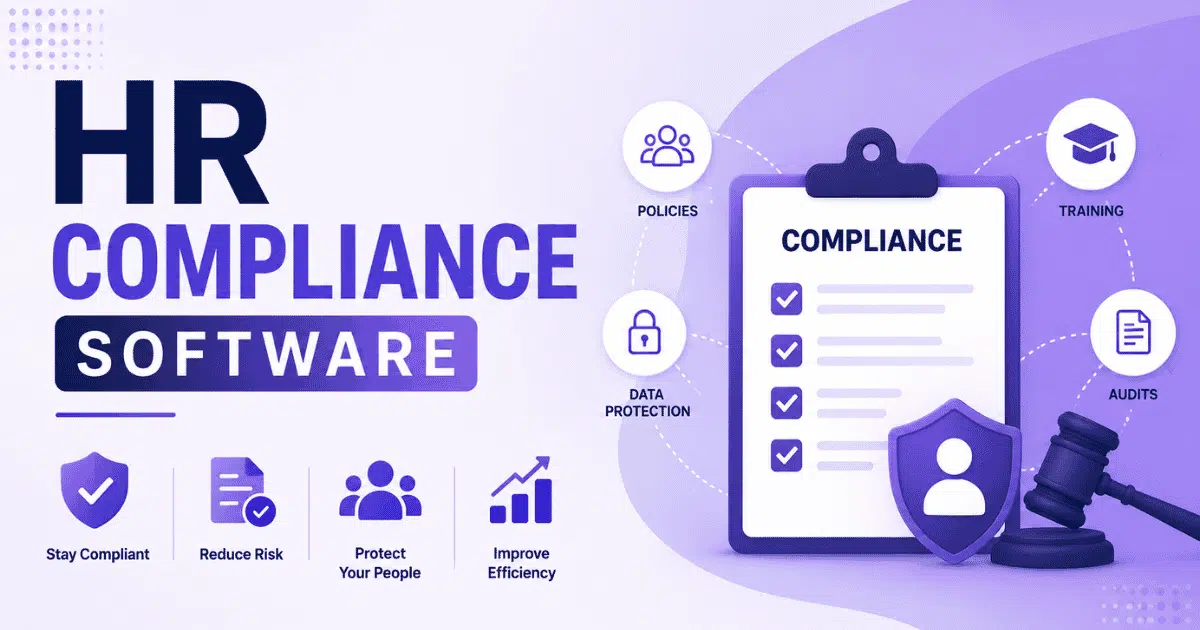
Compliance issues do not wait for convenient timing. They surface during audits, employee disputes, or when someone files a claim. Overlooking updates to employment law, failing to handle I-9 verification properly, or missing FMLA notifications can trigger serious consequences. The federal government and state laws both carry penalties for non-compliance.
Small businesses often assume regulations apply only to larger companies. That is wrong. Leave laws, workplace safety requirements, and data privacy rules apply broadly. Ignoring them does not make them go away. It creates risk that compounds over time. When a compliance violation surfaces, the business may face back wages, fines, and legal fees. The cost of prevention is almost always lower than the cost of correction.
Bad HR Practices Increase Employee Turnover
High turnover drains resources. Recruiting, hiring, and training a new employee costs time and money. When hr mistakes contribute to departures, the cycle repeats. Poor hiring practices bring in candidates who do not fit the role. Weak performance management leaves issues unaddressed until termination becomes the only option. Ignoring employee feedback signals that the organization does not care.
Research indicates that turnover rates can run 50% higher in organizations with inconsistent practices. That means not only losing people but also losing institutional knowledge, client relationships, and team morale. Each departure forces remaining staff to absorb extra work. Productivity dips. The best workers start looking elsewhere. Addressing hr processes proactively is the most effective way to break this cycle.
Inconsistent Policies Hurt Workplace Culture
When managers enforce rules differently, it sends mixed signals. One supervisor allows informal work from home requests. Another requires formal approval for every hour away. Employees see the inconsistency. They conclude favouritism, unfairness, or incompetence. None of those conclusions help the workplace.
An employee handbook should provide tips and clear guidelines for everyone. But a handbook alone is not enough. Managers need training to ensure consistency across departments. Written policies must align with day-to-day practice. When employees see that rules apply equally regardless of department or manager, culture improves. People feel respected. They understand expectations. That clarity creates a foundation for engagement and retention.
Unresolved HR Issues Slow Business Growth
Growth requires focus. It requires leaders who can pursue new opportunities, not leaders constantly responding to HR emergencies. Every hour spent fixing payroll records, responding to claims, or managing disputes takes away from strategic priorities. Unresolved HR problems become a drag on the business.
Consider the last time your team faced an HR crisis. Maybe a compliance issue surfaced during a client review. Maybe a termination went sideways because performance conversations were never documented. Each crisis consumes attention and resources. Companies that stay ahead of HR mistakes free up capacity for growth. They can hire confidently, onboard smoothly, and retain talent without constant worry about what might go wrong next.
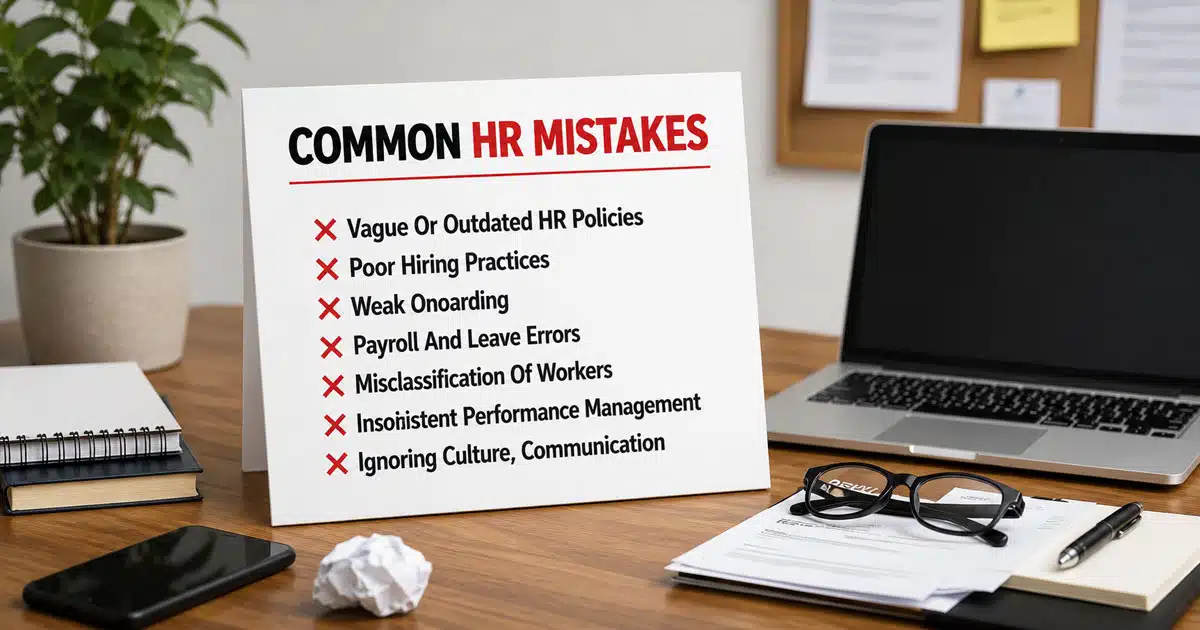
7 Most Common Mistakes HR Does Often
HR mistakes rarely happen because people do not care. They happen because small businesses grow fast, processes lag behind, and the urgent pushes out the important. Below are seven of the biggest mistakes, along with practical advice for each.
1. Vague Or Outdated HR Policies
Many businesses still operate with an employee handbook written years ago. Policies that made sense in 2017 may not address remote work, flexible hours, or recent changes to leave laws. When rules are unclear, managers improvise. That improvisation creates inconsistent practices and opens the door to disputes.
The solution starts with a full review of current policies. Map each policy to current employment law and actual working conditions. Identify gaps, especially around remote work, overtime rules, and grievance procedures. Schedule annual reviews so policies stay date relevant. Make the handbook easy to find. Store it in a single digital location. Share it during onboarding and resend whenever key updates occur. Clear writing and accessible formats help everyone stay compliant.
2. Poor Hiring Practices And Role Clarity
Rushing the hiring process creates problems that show up months later. Vague job descriptions attract the wrong candidates. Unstructured interviews fail to predict job success. Research shows that structured interviews with standardized questions predict performance at 26%, compared to just 14% for traditional methods. Skipping reference checks or background verification compounds the risk.
Poor role clarity leads to disputes about duties and burnout for employees who feel overwhelmed. The fix involves defining measurable outcomes for every role before posting a job. Create a concrete job description listing core tasks and key performance indicators. Use a consistent interview scorecard for every candidate. Run proper background checks following Fair Credit Reporting Act rules. A simple hiring checklist reduces errors and improves the quality of each hire.
3. Weak Onboarding And Non-Existent Offboarding
Onboarding often gets treated as a laptop handover rather than a structured process. Without a clear first-week schedule, new hires feel lost. Delayed payroll setup or missing access to employee benefits information starts the relationship on the wrong foot. Poor onboarding contributes to early turnover, with some studies showing 20% of new hires leave within 45 days.
Offboarding mistakes carry different risks. Forgetting to revoke system access, failing to collect equipment, or missing final pay deadlines creates legal and financial exposure. The answer is simple checklists. Create an onboarding checklist covering forms, IT setup, and role-specific training. Create an offboarding checklist with named owners for each task. Set internal deadlines and follow them. Tools like Payrun help centralize these processes so nothing falls through the cracks.
4. Payroll And Leave Errors
Payroll mistakes draw immediate attention from employees because they affect take-home pay. Miscalculating overtime, applying salary changes late, or tracking leave incorrectly erodes trust quickly. Manual spreadsheets and scattered payroll records increase risk, especially when one person manages both HR and finance.
Leave tracking problems add another layer. Mixing paid and unpaid leave in the same calendar, not tracking carryover rules, or approving time off through chat messages that never reach HR creates confusion. Centralized payroll and leave management solves most of these issues. Establish clear payroll cut-off dates. Introduce a simple approval flow where leave requests are logged, approved, and synced with payroll. Consistency in these hr processes prevents costly surprises.
5. Misclassification Of Workers And Poor Contracts
Growing companies often hire freelancers, contractors, and part-timers. But treating an independent contractor like an employee creates serious risk. The difference comes down to control over working hours, provision of equipment, and level of supervision. If someone works set hours, uses company tools, and cannot work for others, they may be classified wrong.
Misclassification triggers back-dated taxes, unpaid contributions, interest, and penalties. Contract gaps make things worse. Outdated templates, missing confidentiality clauses, or unclear intellectual property ownership invite disputes. Review all active contracts by type. Map each role to the correct classification based on local legal tests. Update templates with legal input every two to three years or whenever laws change. Protect the business by getting this right.
6. Inconsistent Performance Management And Documentation
Verbal feedback feels efficient in the moment. A quick chat about performance seems easier than writing it down. But when termination becomes necessary, the lack of employee records creates problems. A manager may describe months of underperformance, but if the file contains only one short email, the company becomes vulnerable to claims.
Documentation serves multiple purposes. It provides a fair process for the employee. It demonstrates consistency across the team. It creates evidence if an unemployment claim or legal complaint arises. The solution involves quarterly check-ins with short written summaries. Use standardized templates for warnings and improvement plans. Store performance records in a single, secure system. This protects both the organization and the employee performance improvement process.
7. Ignoring Culture, Communication, And Feedback
HR mistakes are not only legal or financial. Ignoring culture leads to quiet resignations, disengagement, and higher recruitment costs. When leadership makes changes to working hours or employee benefits with little notice, employees feel blindsided. When managers share different versions of the same rule, confusion spreads.
Feedback loops matter. Stay interviews, conducted while employees are still engaged, outperform exit interviews for identifying retention risks. Ignoring employee feedback signals indifference and breeds distrust. Simple actions help: regular all-hands updates, anonymous pulse surveys, clear routes for raising concerns, and timely follow-up on reported issues. Even short 1:1 conversations between managers and team members can transform engagement and surface problems before they escalate.
How To Start Fixing HR Mistakes In The Next 30 Days
Audit Current HR Processes And Identify Gaps
The first step is knowing where you stand. Set aside time in week one to review your current HR documentation. Pull out the employee handbook, contracts, and any written policies. Compare them against current state laws and federal regulations. Look for gaps, outdated language, and policies that no longer match how your business operates.
Document your findings in writing. Note which policies need updates, which processes are missing, and where compliance issues might exist. This audit creates a baseline for improvement. Assign ownership for each area you identify. Without a named responsible person, tasks tend to drift. A clear review at the start sets direction for the next 30 days.
Fix Payroll And Compliance Issues First
Payroll and compliance carry the highest risk and deserve immediate attention. In week two, focus on payroll records and processes. Verify that all active employees are correctly listed. Check for terminated employees still on payroll. Review wage calculations, overtime tracking, and tax withholdings.
Address compliance issues next. Confirm that I-9 documentation is complete. Verify that required postings are visible in the workplace. Check that health insurance and employee benefits enrollment processes follow regulations. Fixing these areas first reduces the chance of expensive mistakes surfacing later. If you find serious gaps, consider seeking professional advice to correct them properly.
Clarify Policies And Employee Documentation
Week three shifts focus to policies and documentation. Update the employee handbook to reflect current leave policies, remote work guidelines, and workplace safety requirements. Use clear writing that employees can understand without legal training.
Ensure that employee records are organized and accessible. Performance conversations should be documented. Warnings and improvement plans need standard templates. When records are scattered across email threads, spreadsheets, and chat messages, retrieval becomes difficult and compliance suffers. Centralize documentation in a secure location. This protects sensitive information and makes retrieval straightforward when needed.
Train Managers On Consistent HR Practices
Policies only work when managers apply them consistently. Week four is for training. Gather managers and walk through updated policies. Explain how to document performance issues. Review the correct approach to handling attendance, leave requests, and employee concerns.
Provide tips for fair and consistent enforcement. Give managers simple templates for performance notes and meeting summaries. Address common scenarios where inconsistency tends to emerge. Training does not need to be lengthy or complex. A focused session that covers the essentials helps managers feel confident and reduces the chance of inconsistent practices creating problems.
Improve Communication With Employees
Strong communication builds trust. After fixing immediate HR gaps, focus on how information flows to employees. Schedule regular updates from leadership. Use consistent channels for sharing policy changes. Create clear routes for employees to raise concerns without fear of retaliation.
Consider implementing pulse surveys a few times per year. These short surveys surface issues before they escalate. Share results and explain what actions you will take based on feedback. Employees notice when their input leads to change. That sense of being heard improves engagement and helps the organization stay ahead of emerging problems.
Track Progress And Prevent Future HR Mistakes
The work does not end after 30 days. Establish a system for ongoing review. Schedule quarterly check-ins to assess whether policies are being followed. Monitor payroll accuracy and leave tracking. Track turnover rates and identify patterns.
Use the baseline you created during week one to measure progress. Note improvements and areas that still need attention. Preventing future mistakes requires a proactive approach rather than reactive fixes. Regular audits, clear ownership, and ongoing training help your business remain compliant and protect against the costly hr mistakes that catch so many companies off guard.
How Payrun Helps HR Teams Avoid Costly Mistakes And Stay Compliant
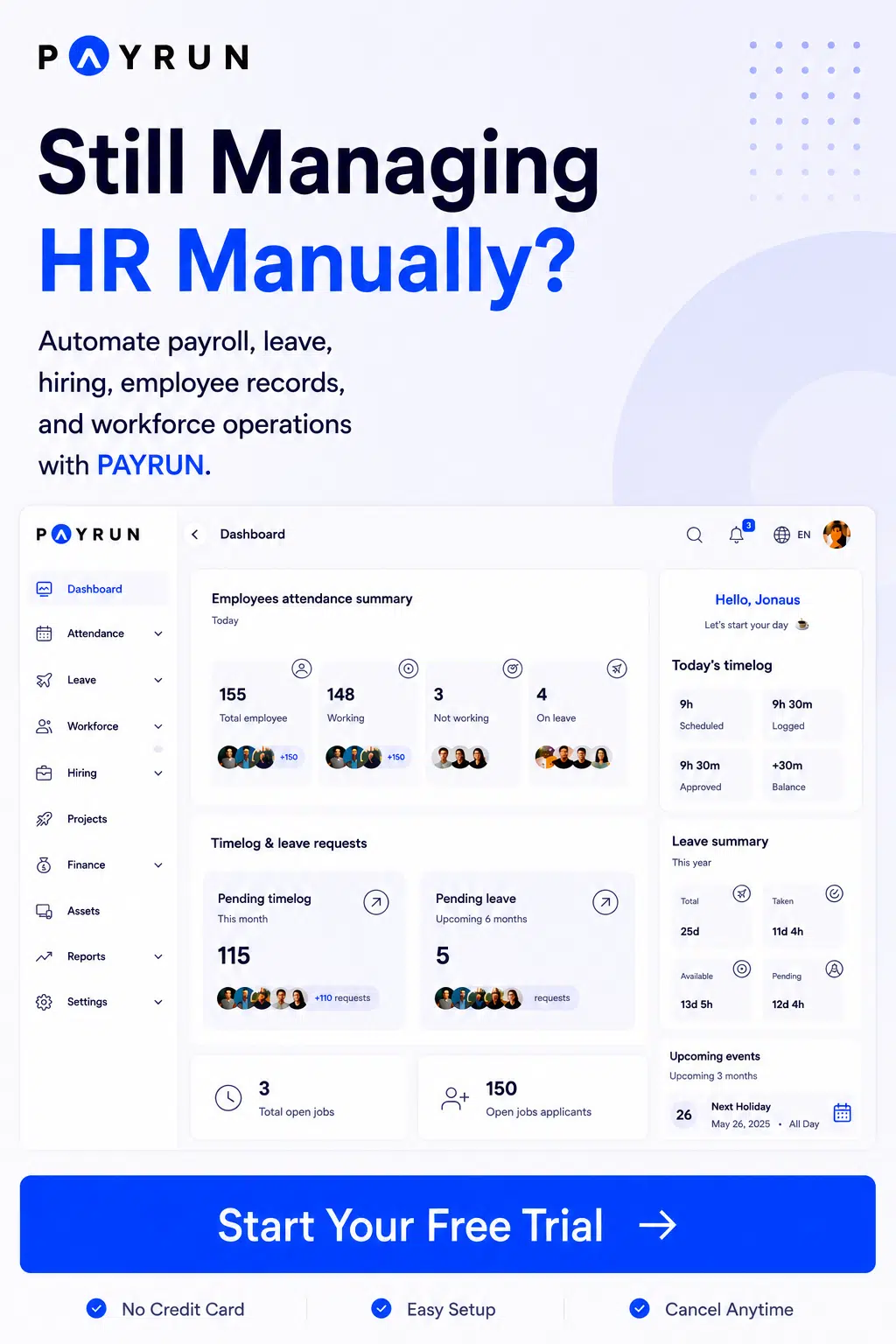
Managing HR and payroll manually introduces risk at every step. Disconnected spreadsheets, scattered employee records, and manual calculations leave room for errors that compound over time. Payrun centralizes these functions into a single platform designed for small businesses and growing teams.
Centralized Payroll And Employee Data
Payrun brings payroll management, employee profiles, and hr processes into one place. When an employee joins, their data flows directly into payroll without duplicate entry. When someone leaves, the system updates in real time. This eliminates the problem of terminated employees remaining on payroll and receiving duplicate payments.
Automated calculations reduce the risk of wage errors. Payroll records stay organized and accessible. Employees can view their payslips through self-service portals, reducing questions to HR and building transparency. Accurate, centralized data forms the foundation of compliant hr processes.
Streamlined Leave And Time Management
Leave tracking errors create frustration for employees and expose the business to compliance issues. Payrun integrates leave management directly with payroll. Requests route through an approval workflow, get logged automatically, and sync with payroll calculations. No more scattered chat approvals or manual calendar updates.
Team level visibility helps managers understand coverage and plan around absences. Holiday management becomes straightforward. Carryover rules apply consistently. The system enforces hour rules and prevents the informal practices that lead to disputes. This streamlined approach helps the organization stay compliant with leave laws while reducing administrative burden.
Hiring, Onboarding, And Administrative Control
Payrun supports the hiring process with recruitment workflows that keep candidate information organized. Once a hire is made, onboarding moves smoothly. New employees access handbooks, benefits summaries, and training materials through a self-service portal. IT setup, form completion, and role-specific training follow a structured checklist.
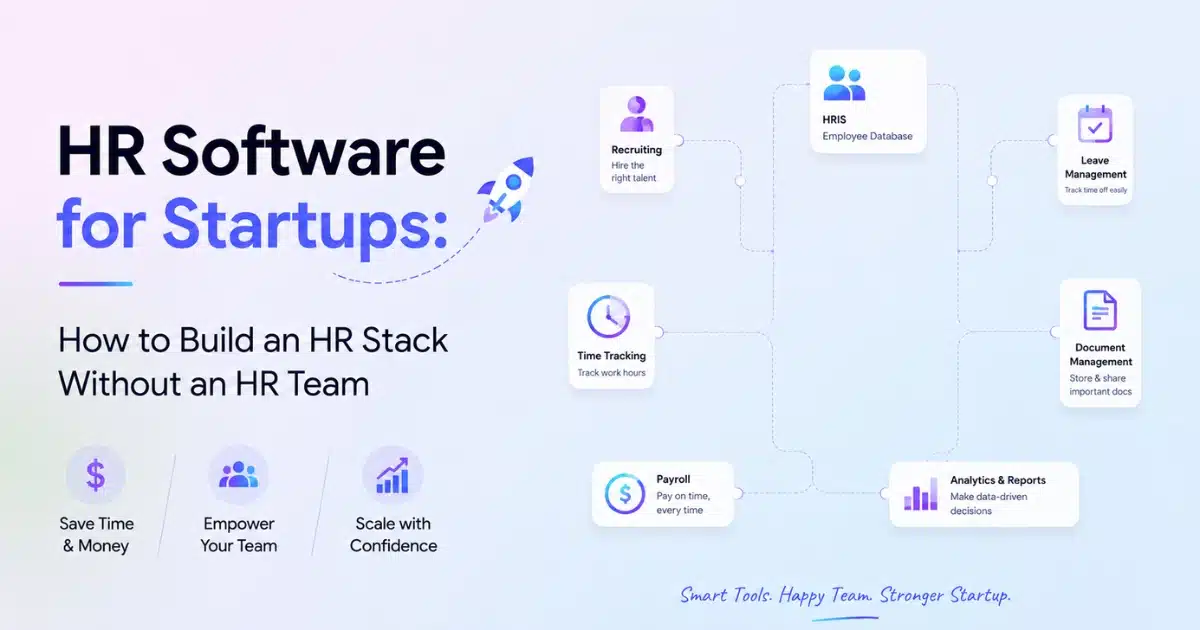
Administrative controls allow the HR department to manage access, permissions, and data securely. Expense tracking and reimbursement features round out the platform, giving teams the tools they need without switching between systems. For small businesses that need to stay ahead of hr mistakes without adding headcount, Payrun provides the clarity, accuracy, and visibility that reduce risk and support growth.
FAQ
How Often Should We Update Our Employee Handbook?
Review your employee handbook at least once per year, even when only minor updates are needed. This annual review ensures that policies stay current with changes to employment law, leave laws, and workplace expectations. Beyond the annual review, update the handbook immediately whenever significant changes occur. New regulations from the federal government or state laws affecting remote work, pay, or health insurance require prompt attention. Log each revision with a date and version number. When you make updates, communicate them clearly to all employees with a summary of what changed. This practice helps the organization remain compliant and demonstrates a commitment to transparency.
What Is The First HR Process A Small Business Should Formalize?
Start with payroll and time-off tracking. These processes directly affect employees every pay period, making errors highly visible. A single mistake in wage calculation or leave accrual damages trust and can trigger compliance issues. Create a basic written process for how hours, overtime, and leave are captured, approved, and passed to payroll each month. Document cut-off dates and approval flows. Once payroll and leave processes are stable, move on to formalizing hiring, onboarding, and performance management. Prioritizing payroll first addresses the highest risk area and builds a foundation for other hr processes.
Do We Need Dedicated HR Software To Avoid These Mistakes?
Very small teams can manage with structured documents and spreadsheets initially. But risk increases significantly as headcount grows beyond 15 to 20 employees. Manual tracking becomes harder to maintain, and errors multiply. Dedicated HR or payroll software centralizes employee records, automates calculations, and applies rules consistently. This reduces manual errors and supports compliance with regulations. Consider evaluating software when administrative work exceeds a few hours per week or when mistakes have already started appearing. The investment in proper tools often pays for itself through reduced errors and time savings.
How Can Non HR Managers Help Reduce HR Mistakes?
Managers interact with employees daily and play a critical role in consistent policy enforcement. Train them on core basics: attendance tracking, documentation of performance conversations, and following leave policies correctly. Provide simple templates for performance notes, improvement plans, and meeting summaries. When managers capture key information consistently, the organization builds the documentation needed to handle disputes or claims. Encourage regular check-ins between managers and HR to flag risks early. Issues like repeated lateness, team conflicts, or potential classification concerns surface faster when managers know what to watch for.
What Should We Document During A Performance Issue To Stay Protected?
Every significant discussion should be documented with the date, attendees, topics covered, expectations agreed upon, and timelines for improvement. Verbal feedback alone does not protect if a dispute escalates. Keep copies of written warnings, performance improvement plans, and follow-up notes in one secure location tied to the employee file. Consistency matters. When documentation follows the same format for every employee, it demonstrates fair treatment across the organization. This protects the business against claims and provides a clear record if termination becomes necessary.