Managing payroll taxes for multiple jurisdictions is complex. Payroll processing software tracks where each employee lives, works, and travels, then applies the correct tax rules at federal and state levels. Payroll compliance software helps you avoid penalties and keeps your tax calculations accurate.
We've seen businesses struggle with manual processes that eat up time and increase errors. The right payroll compliance software improves accuracy and simplifies tax handling. It cuts manual work in HR and finance.
In this article, we'll walk you through what payroll compliance software is and why it matters. You'll learn about features to look for and how to choose the best solution for your business.
What Is Payroll Compliance Software
Payroll compliance software helps businesses manage payroll while meeting tax compliance and labor compliance requirements, and modern payroll software platforms with automation and compliance features make these processes far more reliable and scalable. A reliable payroll system keeps payroll data organized and automates tax calculations, tax withholding, and tax filings. Companies use payroll software to run payroll, create payroll reports, and submit tax forms to government agencies. Many payroll providers include certified payroll reports, e-filing, and direct deposit in one platform. A user-friendly interface helps HR leaders and payroll experts ensure accuracy while managing payroll for employees and contractors.
Payroll compliance software also supports prevailing wage compliance for public works projects and certified payroll reporting for prime contractors and project owners. Many certified payroll software solutions connect with accounting software or accounting platforms to simplify the payroll process. Small businesses often choose compliance software that reduces risk, avoids back wages, and supports workers comp, benefits, and reporting requirements. Efficient payroll software solutions help small business payroll teams manage services, support compliance needs, and keep employees happy while supporting business growth.
Why Payroll Tax Compliance Software Is Important For Your Business
Payroll tax mistakes cost businesses real money. The consequences go beyond simple accounting corrections and can threaten your financial stability and reputation.
Avoiding Penalties And Legal Consequences
The IRS doesn't give second chances for payroll tax deposits. Penalties start immediately if you miss a deadline or deposit the wrong amount. The failure to deposit penalty charges you 2% of your unpaid deposit if you're 1-5 calendar days late. Wait 6-15 days and that jumps to 5%. You're looking at 10% of the unpaid deposit after 15 days. The penalty escalates to 15% if you ignore IRS notices for more than 10 days after you receive them.
These percentages add up fast. The IRS issued over $6 billion in payroll-related fines in 2023 alone. Interest compounds daily on top of these penalties and creates a snowball effect where small mistakes grow into unmanageable debt. About 18% of the U.S. tax gap comes from underreported and unpaid payroll taxes.
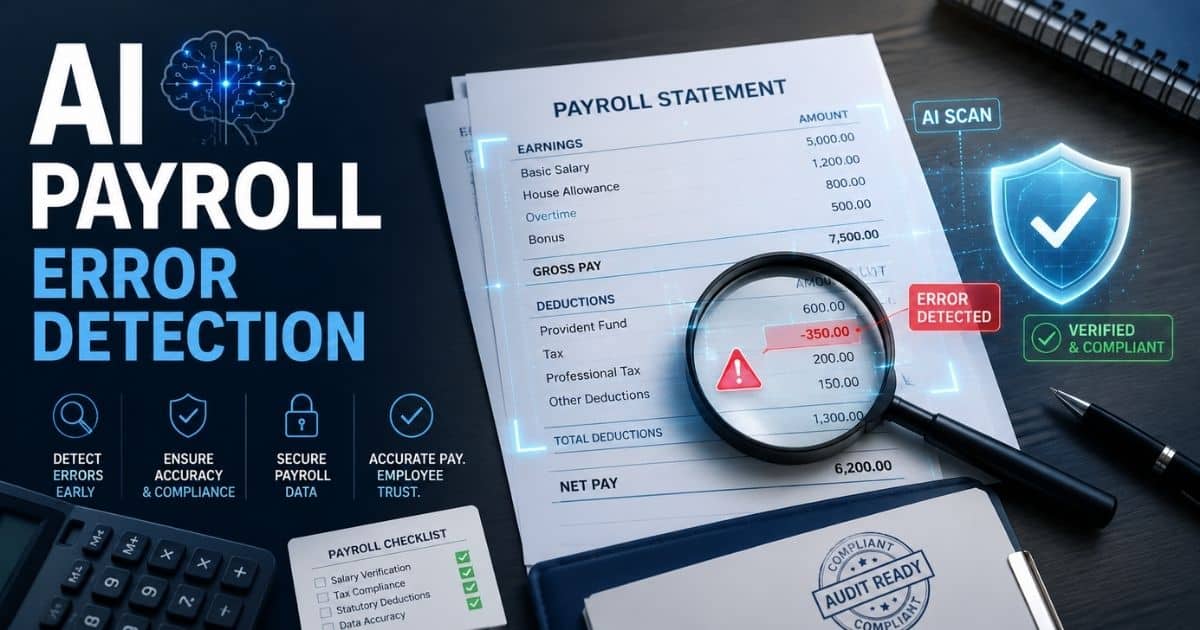
Reducing Manual Errors In Tax Calculations
Manual tax calculations leave too much room for error. Different states have different tax authorities and requirements that dictate how much and how often state taxes need to be paid. Some employees may be subject to local tax authorities with additional requirements. Local tax rates can vary by zip code. A location on one side of the train tracks might subject employees to a 0.015% higher tax rate.
The U.S. Department of Labor recovers hundreds of millions in back wages each year. Many cases begin with simple payroll mistakes. Even one error can cost your business thousands of dollars in fines. HR teams spend up to 40% of their time addressing payroll errors rather than focusing on strategic priorities like talent development.
Maintaining Employee Trust And Morale
Payroll errors don't just create compliance problems. They destroy employee trust. Nearly 49% of employees would think over leaving after just two payroll errors. That reaction makes sense because payroll isn't optional for workers. It's the foundation of the employer-employee relationship.
The cost of replacing employees ranges from 50% to 200% of their annual salary. Employees who experience two or more payroll errors are twice as likely to leave within a year, according to ADP. Payroll failures disproportionately affect vulnerable groups and widen existing inequalities. They undermine equity and inclusion goals.
Scaling Payroll Operations Across Multiple Jurisdictions
Managing payroll across multiple states or countries becomes complex. Multi-country payroll software helps companies pay staff on time in different countries while ensuring compliance with local laws, tax regulations and reporting requirements. It automates salary payments and tax calculations while helping maintain compliance with varying tax laws, benefits and reporting requirements.
Multicountry payroll solutions reduce compliance risks, reduce administrative overhead and improve payroll accuracy and timeliness by using payroll automation software for faster and accurate processing. These solutions must adapt to and integrate regulatory changes mandated by local authorities to ensure compliance with government directives. They calculate gross-to-net pay for employees, process payments and record deductions for tax filing purposes.
Essential Features Of A Payroll Compliance Software
Your payroll compliance software needs specific capabilities to handle complex requirements. Here's what separates simple payroll tools from systems that support compliance.
Multi-Jurisdiction Tax Management
Multi-state payroll processing manages payroll, taxes, and compliance for employees who live or work in more than one U.S. state. The software handles registering with state tax agencies, applying the correct withholding rules, filing state-specific taxes, and reporting new hires across multiple jurisdictions.
Your system should calculate tax withholding, update payroll records, and adjust for each state of residence automatically, following best practices from a comprehensive payroll compliance guide for small businesses. Full-service payroll in all 50 states with automatic tax filings eliminates guesswork. The software tracks changes to regulations across multiple states so you don't have to. Automatic state tax registration in select states removes another administrative burden.
Automated Tax Filing And Reporting
Automated tax filing sets up filings and deposits of federal, state, and most local payroll taxes without manual intervention. The system issues quarterly and annual reconciliation statements and prepares amended returns according to jurisdiction requirements.
Your payroll software calculates all taxes and submits tax forms and payments automatically. The platform monitors tax laws at the federal, state, and local levels to ensure total tax compliance. Payroll taxes are calculated and submitted as part of regular payroll runs once automation is enabled. Year-end responsibilities, including W-2 and 1099 preparation and filing, are handled within the same system.
Live Compliance Monitoring And Alerts
Live compliance monitoring confirms payroll activities against applicable labor laws, tax regulations, and internal policies continuously. The system flags non-compliance as it happens so errors can be corrected right away. Compliance issues trigger instant notifications that enable rapid action before problems escalate.
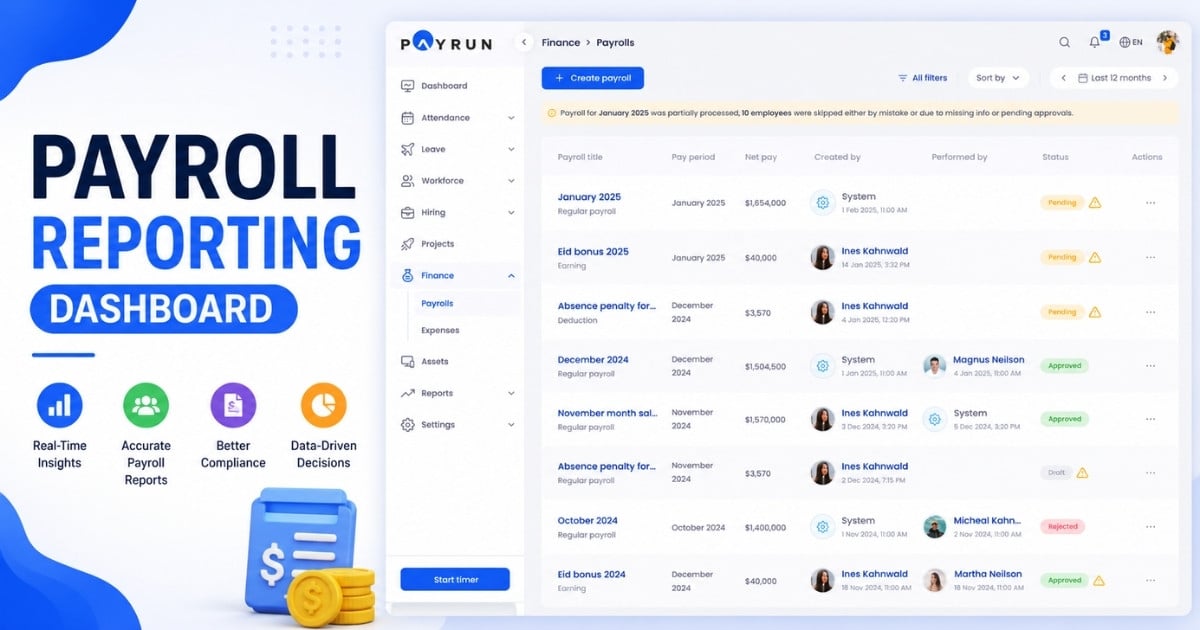
Compliance dashboards give management full visibility into payroll status, pending filings, and audit trails. The system tracks deadlines and sends reminders or automates filings before due dates. Over 60% of compliance failures stem from delayed monitoring and manual processes.
Secure Document Storage And Audit Trails
An audit trail is a time-stamped record that tracks user actions and system events related to a document, transaction, or process. Audit trails capture document access, edits, approvals, and transfers by recording the date and time, user identity, and action performed. These records provide a permanent, tamper-resistant log of all changes.
Traceability becomes a critical layer of defense since insider threats account for nearly 60% of data breaches. Payroll software stores electronic copies of all employee tax forms for reference or audit purposes. Built-in reporting capabilities make it easy to review, filter, and export audit logs as needed.
Integration With Existing HR Systems
Integrated HR and payroll solutions combine processes into a single platform, allowing you to simplify HR by replacing disconnected tools. Employee data is entered once and shared across HR, attendance, leave, and payroll modules automatically. The system keeps workforce data synced with finance continuously so you can scale headcount without extra overhead or risk. Companies with integrated systems report up to 70% reduction in payroll processing time. Integrated systems can reduce payroll errors by up to 80%. Self-service portals allow employees to view pay stubs, update personal information, and manage benefits all in one place, and a robust employee self-service portal for modern HR is now a baseline expectation for most teams.
Automated Wage Garnishment Processing
Employers face increasing risks of penalties for errors in garnishment processing with the rise in consumer debt. Approximately 7.2 percent of U.S. employees had their wages garnished in 2013, primarily for child support, tax liens, and student loans. Automated garnishment processing handles calculations, payments, and recordkeeping on your behalf.
The software completes answer sheets and additional documents the court administering the garnishment may expect. Garnishment deductions flow into payroll automatically and give employees insight while ensuring no data gets miskeyed. Your team tracks all garnishment deductions every pay period to ensure proper records.
How Compliance Payroll Software Simplifies Operations
Payroll compliance software transforms how your team handles daily operations. The change from manual processes to automation creates immediate and measurable improvements.
Eliminating Time-Consuming Manual Tax Calculations
Manual tax work drains your payroll team's energy and time, especially when you consider every step involved in end-to-end payroll processing for growing businesses. Automated payroll processing can reduce payroll processing time by as much as 50%. Some systems slash the time to run payroll by up to 90%. Tasks like importing attendance hours or applying tax tables happen instantly rather than through slow manual steps.
Your software calculates wages, tax withholdings and deductions based on fixed rules. The chance of a typo disappears. Automated systems use predefined rules and up-to-the-minute data to calculate wages, deductions and payroll taxes with precision. The system adjusts calculations to reflect new labor laws, tax rates and filing deadlines when tax laws change. You don't need to monitor every legislative update because the software does it for you.
Centralizing Payroll Data Across Departments
Centralized systems combine HR, payroll and project management tools into a unified platform, making it easier to apply HR workflow automation across your core processes. Employee hours sync with project budgets and ensure accurate assignment of labor costs to job codes. This integration can improve accuracy by up to 85%.
Payroll becomes part of your broader business system. CFOs and compliance officers gain a clear and unified view of payroll data. Discrepancies that hide in spreadsheets become visible through dashboards and reports. Sensitive data is stored securely and accessed through controlled permissions. You eliminate data duplication and transcription errors while consistency across your organization is ensured.
Reducing Compliance Review Cycles
Automated payroll systems eliminate errors and create detailed audit trails. Every payroll run is logged. Detailed reports are available to prove compliance during audits. The software simplifies audits by providing detailed reports and records. It offers audit trails for every transaction and ensures transparency in payroll processing.
Your system monitors for anomalies. Alerts go out when overtime is misclassified or tax withholding looks wrong. This prevents errors before they turn into bigger compliance issues.
Enabling Self-Service Employee Access
Employee self-service portals let workers view payslips, update personal information and manage tax forms without HR intervention, especially when paired with a mobile HR app for employee self-service that employees can access anywhere. Organizations using mobile solutions experienced a 40% decrease in payroll-related queries and disputes.
Employees enter their data once. It flows to every relevant tool in your system. Accuracy increases because employees know their information best. Workers have visibility into payroll before submission. They help find and fix errors before paychecks go out. This cuts down on manual tasks and reduces the average cost of USD 4.78 for each manual HR entry.
How To Choose The Right Payroll Compliance Solution
The right payroll compliance software selection starts with understanding your specific requirements. Every decision stems from your business needs.
Your Jurisdictional Coverage Requirements Assessment
Determine where your employees work and live first. Jurisdictional scope varies between businesses. Some operate locally while others manage teams across multiple states or countries. Your payroll software must comply with regulations in every jurisdiction where you register to pay taxes and support accurate employee payroll records management to document that compliance. Different states impose different tax rates and labor laws that affect minimum wage, paid leave, benefits and overtime. To cite an instance, 13 states use flat income tax rates while seven don't tax personal income at all. Verify your software handles multi-state tax registration and applies correct withholding rules. It should adapt to hybrid work scenarios where employees work across different local districts.
Automation Capabilities Evaluation
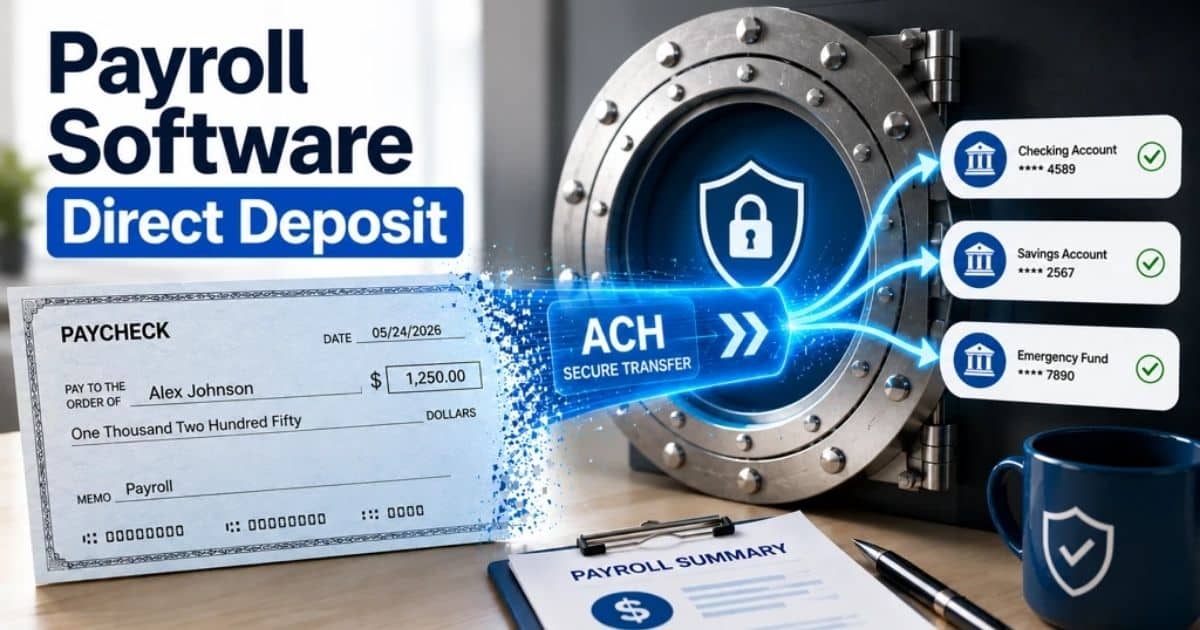
Confirm the platform handles automatic tax filing in your state and processes direct deposit reliably. It should generate payroll reports you need. Integrated time tracking eliminates double data entry if you pay hourly employees and should work seamlessly with your leave management system for HR teams so absences and time off are always current. Test how fast you complete a payroll run during free trials most providers offer.
Pricing Models And Total Cost Of Ownership Comparison
Pricing structures vary substantially, especially across HR software for small and medium businesses where modules, user counts, and support tiers influence the total bill. Subscription fees range from USD 497 monthly for 1-100 employees to USD 3,329 for 251+ employees. Watch for hidden costs like setup fees, data migration, training expenses and transaction fees. Calculate total monthly costs based on current team size and expected business growth.
Vendor Support And Implementation Services Check
Implementation failure rates range from 40-60% without external support. Look for providers that offer 24/7 support via phone, email or chat. Implementation packages should include project management, data validation, tax setup verification and team training. Ask about onboarding assistance to migrate employee data and configure tax settings so you know whether the vendor can be a long-term trustworthy partner in HR management.
Best Practices For Implementing HR Compliance Software
Buying payroll compliance software is only half the battle. Implementation determines whether your investment pays off or becomes another unused tool.
Conducting A Pre-Implementation Compliance Audit
Before you install new payroll software, identify where you're exposed. List every work location. This includes remote employees and workers who travel across state lines. Document your manual workarounds because those spreadsheet fixes and special handling processes reveal what your automation needs to support. Track exception types like missed punches, retro pay, bonuses, and reimbursements since exceptions break compliance first and often lead to the payroll mistakes businesses must avoid.
Training Your Payroll Team On New Systems
Your team needs training to use the system correctly. Laws and regulations that govern payroll taxes change often. Payroll staff who stay current close hidden compliance gaps that could lead to legal exposure. Training boosts confidence and competence. As you standardize workflows and permissions in an employee record management system for modern HR teams, your staff must understand how those controls support compliance. It reduces the time to run payroll by hours if not days.
Setting Up Automated Alerts And Notifications
Alerts should give you time to fix problems before they become penalties. Notifications for missed filing deadlines need escalation if unacknowledged. Over 83% of non-desk workers lack email access, making SMS notifications more reliable for compliance communication.
Establishing Regular Compliance Review Processes
Internal payroll audits should happen quarterly or twice a year, especially for small teams adopting a new HR software feature set for small businesses, where processes may still be maturing. These reviews uncover classification errors, over- or underpayments, and omitted taxes. Compliance health reports need monthly scheduling with exceptions, resolved items, and filing confirmations.
How Payrun Supports Payroll Compliance And HR Operations
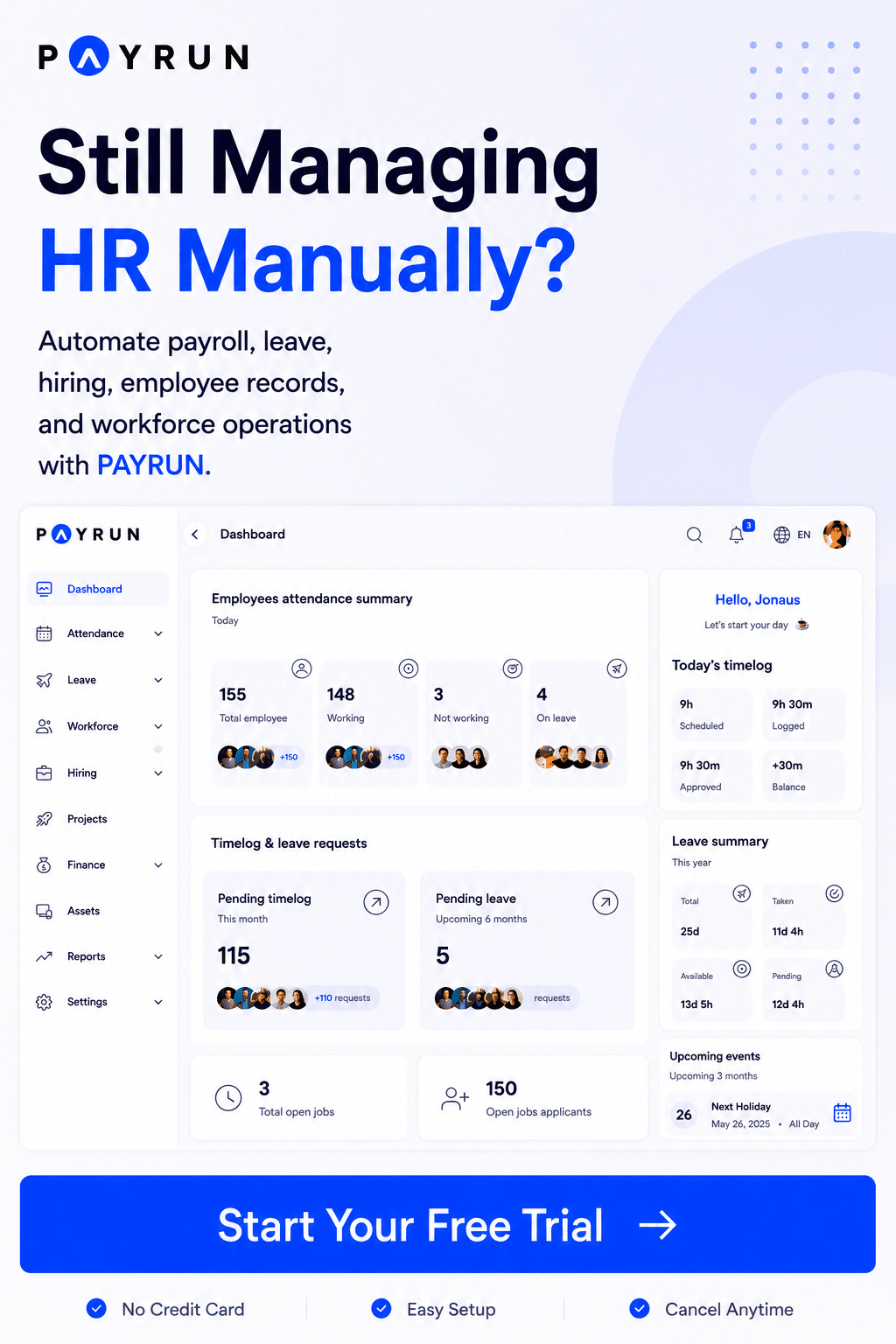
Payrun’s all-in-one HR and payroll platform helps businesses manage payroll and HR tasks from one place. The system organizes payroll data, employee records, and benefits so HR leaders can manage payroll with fewer manual steps by relying on Payrun's innovative HR management features. The payroll system supports tax calculations, tax withholding, and tax filings while generating accurate payroll reports and tax forms. A user-friendly interface helps payroll experts run payroll, manage employees, and maintain payroll compliance. Integration with accounting software and accounting platforms keeps payroll data consistent across business systems.
Payrun also supports labor compliance and prevailing wage compliance for contractors and project owners working on public works projects. The platform helps teams create certified payroll reports and meet reporting requirements for government agencies and public agencies. Payroll providers and HR teams manage services like direct deposit, workers' comp, and benefits from one platform. The software reduces risk, ensures accuracy, and helps small businesses keep employees happy while supporting business growth, which is why many consider Payrun the best HR software for small businesses.
FAQs
Does Payroll Compliance Software Work For Small Businesses With Limited HR Resources?
Yes. Payroll compliance software helps small businesses manage payroll without a large HR team, and comparisons of the best HR software for small businesses can help you choose the right fit. A user-friendly interface automates tax calculations, tax withholding, and tax filings while creating payroll reports in one platform.
Can Payroll Compliance Software Handle Certified Payroll Reporting For Public Works Projects?
Yes. Certified payroll software supports prevailing wage compliance for public works projects. The system prepares certified payroll reports, tracks wages, and meets reporting requirements for government agencies and public agencies.
How Does Payroll Compliance Software Help Contractors Meet Reporting Requirements?
Contractors working with public agencies must follow strict labor compliance and prevailing wage rules. Payroll compliance software records payroll data, prepares certified payroll reports, and supports tax compliance.
Does Payroll Compliance Software Integrate With Accounting Platforms And HR Systems?
Yes. Most payroll software solutions connect with accounting software, HR systems, and accounting platforms through one platform, which is especially useful when you manage a remote workforce with HRM software and need data to sync across tools. Integration allows payroll data, benefits, and workers' comp information to sync automatically.
What Key Features Should Businesses Expect From Certified Payroll Software Solutions?
Certified payroll software solutions usually include automated tax calculations, direct deposit, payroll reports, and tax forms generation. Many platforms offer mobile app access, compliance monitoring, and support services.