How Remote Payroll Software Reduces Administrative Tasks
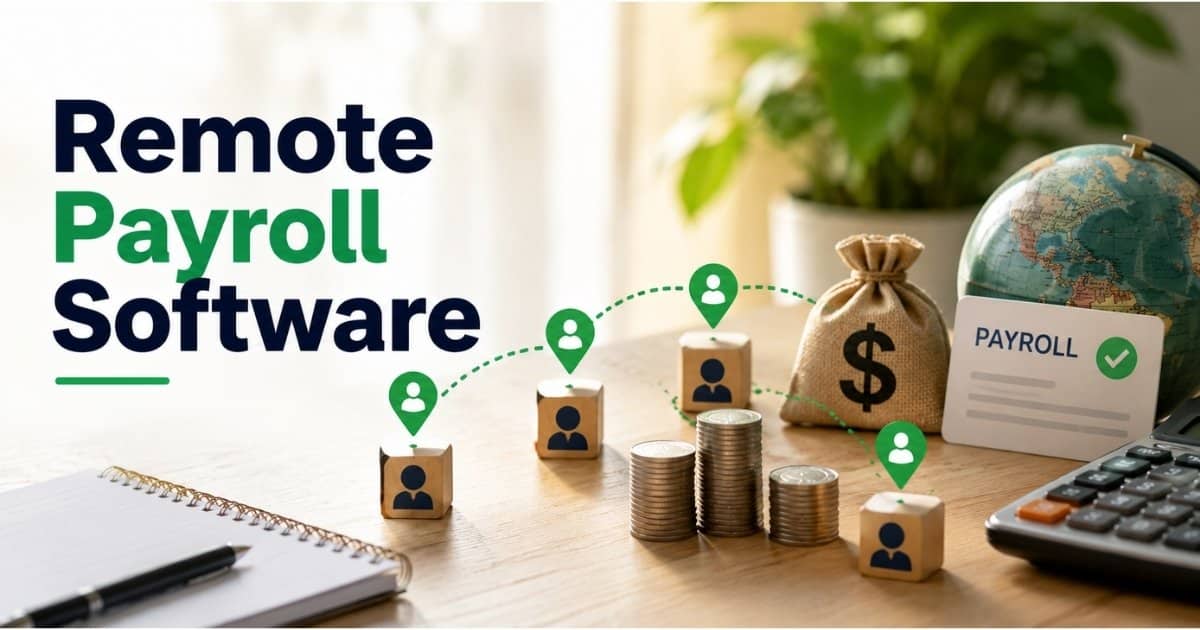
Table of Contents
Since 2020, remote and hybrid work arrangements have transformed how companies operate. What once worked with manual spreadsheets and email chains for collecting hours now creates administrative chaos when teams span multiple states or countries. Finance coordinators find themselves entering the same employee data twice into payroll and accounting, tracking different tax withholding rules for each jurisdiction, and chasing contractors for invoices through scattered email threads.
Remote payroll software centralizes global payroll, tax calculations, and payments so teams can run payroll securely from anywhere. These platforms handle everything from contractor management and automatic payments to employer of record services for companies without a local entity, mirroring the core features and benefits of automated payroll software. The rest of this article explores how remote payroll software, especially Payrun, reduces administrative tasks for growing global teams navigating the complexities of international payroll.

How Remote Payroll Software Reduces Administrative Tasks
This section breaks down six concrete ways remote payroll tools remove manual work for finance and HR teams. Each subsection focuses on one recurring administrative burden and explains how software eliminates or minimizes it for distributed and international teams. Whether paying employees across Europe and the Middle East or onboarding international contractors, these workflows transform hours of repetitive tasks into streamlined automated processes.
Data Entry Workflows That Remove Duplicate Inputs
Remote payroll software replaces manual spreadsheets by syncing employee data from HR tools, time tracking apps, and onboarding forms. When a team member updates their address, bank details, or tax elections, the change flows into every payroll run automatically. This eliminates the double data entry that costs mid-sized firms $50,000+ annually in labor according to Nucleus Research.
Consider a company expanding to five countries including the United States, United Kingdom, Germany, India, and Brazil. Without integration, staff would retype the same payroll data into multiple local systems, risking errors that affect 15% of payrolls per ADP’s 2024 data. With Payrun, changes propagate across all runs, and integrations with your accounting system create payroll journals automatically instead of requiring CSV exports.
Automated data processing eliminates manual data entry mistakes in wage and overtime calculations, reducing employee dissatisfaction and wage compliance issues. The time saved per payroll cycle adds up quickly, and fewer errors mean fewer correction cycles that consume entire days, especially when companies move from spreadsheets to modern HR software for payroll.
Tax And Compliance Tasks That Shift To The Platform
Modern platforms track local tax rates, thresholds, and filing deadlines for each country or state, updating rules centrally. Multi-country payroll compliance software helps companies ensure compliance with local labor laws, tax regulations, and reporting requirements while processing payroll for employees in different countries. The software calculates employer and employee taxes, social contributions, and statutory benefits without manual research.
Imagine hiring in Germany, the UAE, and the United States in 2026. Germany requires progressive income tax plus pension contributions, the UAE mandates end-of-service gratuity calculations, and the US requires FICA at 15.3%. Payrun handles these different tax regimes from one dashboard, distinguishing between running payroll with your own entities and using eor services when you lack a legal entity.
Regular updates to payroll systems are essential to maintain compliance with changing local tax laws and labor regulations in each country where payroll is processed. Shifting these compliance calculations to the platform removes hours of admin and eliminates the need for local spreadsheets and calendar reminders that previously tracked filing deadlines.
Payment Administration That Becomes Automatic
Automatic payments let finance teams approve payroll once and trigger payouts to employees and contractors in multiple currencies. Batch payments replace separate bank transfers for each worker, cutting down on manual file uploads to banking portals. Many payroll automation software solutions support multi-currency payments, allowing employees to be paid in their local currencies while ensuring compliance with varying tax laws.
A company paying full time employees monthly and contractors weekly across 20 countries uses Payrun to process everything in clicks. Features like payment status tracking and automatic retry for failed bank transfers avoid email back and forth with staff wondering why their deposit is late. Managing international payroll involves complexities such as fluctuating exchange rates and compliance with varying tax laws, but multi-country payroll solutions handle currency conversions internally.
This automation means finance no longer calculates FX rates externally or uploads separate payment files for each region. The platform handles everything from USD funding to local currency disbursement.
Document Collection And Contractor Management That Run In The Background
Contractor management features collect contracts, IDs, tax forms, and invoices through a self service portal. Automated reminders for missing documents and expiring contracts remove manual chasing by HR coordinators. Automated compliance features include documentation collection and approval flows to ensure payments are made in accordance with local laws and regulations.
Misclassification risk is addressed through guided questionnaires that help decide between contractors and full time employees in each country. This matters because misclassification lawsuits average $100,000+ according to US DOL data. Onboarding designers and developers as international contractors in early 2026 using Payrun workflows means guided steps rather than email chaos.
All documents stay organized in one global HR record instead of scattered email threads and shared drives. This centralization simplifies year end reporting and audits while reducing the time HR spends tracking down paperwork, particularly during HRIS migration and data transition projects.
Reporting Routines That Use AI Powered Workflows
AI powered workflows prepare recurring payroll reports for finance leaders, such as monthly cost by country or department. These systems flag anomalies like sudden salary spikes or missing bank details before payroll is finalized, catching issues that would otherwise require manual spreadsheet cross-checks at month end close, echoing the broader capabilities of modern payroll software platforms.
A CFO pulling a consolidated report for Q1 2026 directly from Payrun for the board meeting avoids hours of pivot table creation. User-friendly payroll software often includes features like centralized dashboards for managing payroll across multiple countries, which simplifies the payroll process for HR teams and reflects the strengths of dedicated payroll processing software for businesses.
Predefined and custom reports reduce back and forth between HR, finance, and local teams. Instead of requesting data exports from three different systems, stakeholders access what they need from one unified platform.
Onboarding And Offboarding Steps That Become Guided Flows
Guided onboarding flows gather bank details, tax information, and personal data from new hires without internal manual forms. When hiring remote employees in India and Spain, Payrun ensures compliant local onboarding steps specific to each location, much like simple payroll software for small businesses aims to do in more limited footprints. India requires EPF setup at 12%, while Spain has its own statutory documentation requirements.
Standardized offboarding checklists ensure final pay, unused leave payouts, and local statutory documents are issued correctly. These flows are especially useful for global employment when rules differ by location and contract type. The software must support multi-state payroll processing and automatically calculate, withhold, and file local, state, and federal taxes based on the remote employee’s physical home address.
Automation here reduces the risk of missed steps that lead to disputes, corrections, or compliance penalties. What previously required HR to track dozens of requirements per country now happens through guided workflows.
Key Features Of Remote Payroll Software That Reduce Admin
The main capabilities that cut administrative workloads for global teams fall into distinct categories. From global payroll coverage to integrations with existing systems, each feature set addresses specific pain points that distributed hiring and cross-border compliance create.
Global Payroll And Local Compliance Coverage
Remote payroll platforms support payroll across many countries with localized tax, benefits, and reporting built in. Real-time regulatory updates mean HR teams do not manually track each country’s law changes. Multi-country payroll systems automate salary payments, tax calculations, and compliance with local employment laws, streamlining payroll processing for international teams, which is especially valuable for HR and payroll software tailored to SaaS businesses.
Unified dashboards let companies see all payroll runs for their global team instead of logging into separate local systems. Support for both salary and hourly workers with rules configured per jurisdiction means one payroll platform handles diverse workforce structures. Payrun is designed to scale as teams expand into new markets without rebuilding payroll from scratch.
Employer Of Record And Global Employment Options
An employer of record (EOR) acts as the legal employer for a company’s employees in countries where the company does not have a legal entity, handling payroll, employment contracts, and compliance with local taxes. Using employer of record eor services can remove an entire category of admin when entering a new country before establishing your own legal entity.
The primary difference between multi-country payroll software and an EOR is that the former assists with payroll processing while the latter provides a more comprehensive solution by taking on legal and administrative responsibilities for global employees. A company testing a sales hire in Brazil or Saudi Arabia through an EOR avoids immediate registration while still paying employees compliantly.
Remote payroll software coordinates data between EOR hires and directly employed staff in one platform, reducing coordination workload between external providers, internal HR, and finance teams.
Contractor Management At Scale
Features tailored for contractor management include contract templates, invoice collection, and approval workflows. Centralized contractor data helps avoid scattered spreadsheets and email chains across departments. A product company managing dozens of freelancers across Europe and Asia through Payrun keeps everything organized in one system.
Misclassification guidance signals when frequent contractors should be converted to full time employees based on local employment laws. Consolidated contractor payments and records simplify year end reporting and audits, reducing the administrative burden that comes with managing an international contractor workforce.
Accounting System Integrations And Automated Journals
Integration with accounting systems like Xero, QuickBooks Online, or NetSuite eliminates exporting and importing CSV files. Automatic posting of payroll journals with proper cost center and department splits happens based on configuration. A finance manager closes monthly books faster by relying on Payrun’s synced data rather than manual journal entries.
Fewer manual entries mean fewer reconciliation tasks and correction cycles. Audit ready records support compliance with internal controls and external audit requirements, while centralized, cloud-based payroll systems use advanced encryption to safely store sensitive personal and financial data.
Security, Access Control, And Audit Trails
Role based access ensures only authorized staff can view or edit payroll data, reducing manual oversight checks. Detailed audit logs track who changed what and when, eliminating extra spreadsheets used to record approvals. Cloud-based payroll systems ensure accessibility from anywhere while providing robust data encryption for security, supported by dedicated employee role management software capabilities.
Secure document storage within the payroll platform removes the need to manage password protected files separately. Platforms aligned with standards like SOC 2 Type 2 demonstrate commitment to protecting sensitive employee data while supporting operational efficiency.
AI Powered Workflows And Alerts
AI powered workflows pre-check payroll data for anomalies before final approval, cutting hours of manual review. Automated alerts for missing timesheets, invalid bank details, or out of range bonuses notify the right person in advance. Effective remote payroll software must handle local tax differences, accurately track asynchronous work hours, and seamlessly pay workers across borders, aligning with broader payroll automation benefits for accuracy and speed.
Predictive insights can highlight upcoming cost spikes as headcount shifts across different countries. These capabilities serve as practical assistants for routine tasks, delivering clear admin time savings rather than adding complexity.
Operational Benefits For Finance, HR, And Global Teams
Beyond feature lists, remote payroll software changes how finance, HR, and managers work day to day. Reduced administrative tasks translate into measurable outcomes like faster close cycles, fewer manual errors, and better employee experience for remote workers across time zones.
Finance Team Time Savings And Cost Control
Automated calculations, journals, and reports free finance teams from repetitive spreadsheet work. According to Forrester, such tools cut admin hours by 60%. Improved forecasting accuracy follows when payroll data is timely and consolidated across all regions. Multi-country payroll software helps companies pay staff on time in different countries while ensuring compliance with local laws, tax regulations, and reporting requirements, mirroring the impact of robust business payroll processing software.
Visibility into total payroll costs by location helps evaluate expansion or consolidation decisions. The reduction in last minute corrections and re-runs saves time that finance staff would otherwise spend troubleshooting. A startup’s finance team cutting payroll processing time from several days to a few hours with Payrun represents a common outcome.
HR Efficiency Across The Global Employee Lifecycle
HR teams use remote payroll software to manage onboarding, promotions, and terminations without repeating data entry. Standardized workflows for updating salary, bonuses, and benefits keep payroll aligned with HR decisions. A single global HR and payroll record reduces time spent reconciling differences between systems.
When HR manages performance related salary changes across multiple countries, those changes flow into Payrun automatically. Streamlined HR processes improve response times to employee requests and reduce manual ticket volume for the payroll team.
Manager And Employee Self Service For Everyday Needs
Remote payroll software should provide comprehensive employee self-service portals allowing remote workers to update banking details, download pay stubs, and access tax documents without HR intervention. Manager access to limited payroll views, such as team cost summaries and approval tasks, reduces email requests to finance.
Employee self-service capabilities enhance transparency as team members can easily access pay stubs, tax documents, and benefits information on their own. This self service capability proves crucial for remote and global teams operating across time zones. Fewer routine questions about pay dates or payslip copies translate directly into less admin overhead for HR staff.
Compliance Risk Reduction And Fewer Fire Drills
Staying current with local tax and local employment laws reduces emergency admin work associated with correcting non-compliance. Automated filings and documentation give companies a structured trail when facing audits or inquiries. Using global payroll and EOR options together can simplify entry into stricter regulatory markets.
Avoiding penalties by correctly handling a new social contribution rule thanks to platform updates means fewer compliance incidents. Remote payroll software must provide integrated time tracking essential for hourly remote employees and sync data automatically to payroll, ensuring accurate calculations that stay compliant with overtime regulations, especially when combined with cloud HR tools for remote team management.
Scalability For Growing Global Teams
Remote payroll software lets companies scale from a few domestic employees to hundreds of global workers without rebuilding processes. Adding a new country becomes mostly a configuration exercise rather than a manual system implementation. Multi-country payroll software automates salary payments, tax calculations, and compliance with local employment laws, but the company remains the legal employer of the workers.
Scenarios like expanding engineering hiring across Eastern Europe or Southeast Asia in 2026 work seamlessly when plugging new hires into Payrun. Standardized processes across regions simplify training new finance or HR staff while protecting teams from sudden spikes in admin workload when headcount grows, particularly when combined with broader HRM software for managing remote workforces.
How To Choose Remote Payroll Software To Minimize Admin Work
Reducing admin depends on selecting a platform that truly fits the company’s footprint and complexity. The following criteria and questions help buyers compare remote payroll vendors to find the solution that delivers genuine time savings.
Assessing Global Coverage And Entity Strategy
Companies must confirm where each provider can run payroll, support global employment, and offer record services. Teams should map current and planned countries for 12 to 24 months and compare against vendor coverage lists. Aligning EOR versus own entity decisions with platform strengths prevents fragmented systems.
A firm planning expansion into Europe, the Middle East, and Latin America between 2024 and 2026 needs a provider covering all target markets. Mismatched coverage leads to managing multiple systems, creating extra manual admin that defeats the purpose of consolidating payroll.
Evaluating Automation Depth And AI Capabilities
Look beyond marketing terms and ask which specific workflows are automated end to end. Verify how AI powered workflows actually function, whether through anomaly detection, smart defaults, or document extraction. The importance of configurable rules means automation matches company policies rather than forcing one fixed process, especially when organizations replace disconnected HR tools with a unified platform.
Testing how much manual override is needed during a pilot payroll cycle reveals true automation depth. Genuine automation should significantly cut clicks and manual checks for each payroll cycle rather than simply moving tasks to different screens.
Checking Integrations With Existing Systems
Effective integrations with HRIS, time tracking, and accounting tools are central to reducing admin tasks. Popular systems like BambooHR, HiBob, Workday, or common accounting systems used by mid market firms should connect cleanly. Ask vendors to demonstrate a live sync of employee changes and payroll journal posting during evaluation.
Poor integrations result in continued exports, imports, and data reconciliation work. Payrun is designed to connect cleanly with core business systems to keep data flowing automatically rather than requiring manual file transfers, reflecting its broader role as an all-in-one HR and payroll platform.
Understanding Pricing Models And Hidden Fees
Pricing can be per employee, per contractor, per country, or a mix, and clarity matters for budgeting. Ask directly about additional fees such as extra charges for filings, off cycle runs, or currency conversions. Transparent pricing protects finance teams from surprise admin like manual reconciliation of unexpected invoices.
Unpredictable surcharge costs eat into the savings from automation. Payrun aims to avoid hidden fees so customers can trust that automated workflows do not generate surprise costs that complicate financial planning, which is especially valuable for small businesses choosing HR software.
Reviewing Support Quality And Implementation Services
Responsive support and structured onboarding prove essential when running the first multi country payrolls. Ask about dedicated implementation managers, training sessions, and migration assistance for historical data. Near 24 hour support coverage matters for international teams spread across time zones.
Good support avoids extra internal admin created by troubleshooting and manual workarounds. Payrun focuses on practical, expert support rather than leaving teams to figure out complex payroll processes alone, positioning itself as a trusted HR management partner.
Why Payrun Is Built To Reduce Payroll Administration
Payrun offers remote payroll solutions designed to cut administrative tasks for companies with remote and international teams. The platform provides unified payroll for both contractors and full-time employees, strong contractor management features, AI-powered workflows that flag issues before they become problems, and automatic payments in multiple currencies across your global talent pool, alongside a broader suite of innovative HR management features.
Integration with leading accounting and HR systems means data flows automatically without manual exports or duplicate entry. Payrun supports businesses of all sizes, from small businesses with their first remote hires to established organizations managing hundreds of international employees. The platform operates without hidden fees, giving finance teams predictability in their cost planning and aligning with best practices for HR software for small and medium businesses.
For companies evaluating expansion plans through 2026, Payrun delivers the payroll capabilities needed to manage employees across new countries without administrative overload. Contact the Payrun team to discuss how the platform fits your business needs and see a custom workflows demonstration, or review how it compares in Payrun vs Homerun feature and pricing guides.
FAQs
How Secure Is Remote Payroll Software For Sensitive Employee Data?
Reputable platforms use AES-256 encryption, regular security audits, and strict access controls to protect payroll information. Compliance with regulations such as GDPR for European staff demonstrates commitment to data protection. When evaluating providers like Payrun, request security documentation including certifications like SOC 2 Type 2 and role based access details to verify that sensitive payroll data stays protected.
Can Small Businesses Benefit From Remote Payroll Software Or Is It Only For Large Enterprises?
Even companies with as few as five to ten remote employees gain value once they operate across multiple states or different countries. Automation of tax calculations, payments, and reporting prevents small teams from needing extra admin hires as they grow. Payrun scales from early stage startups to larger organizations without requiring platform changes, making it suitable regardless of current team size.
How Difficult Is It To Migrate From A Legacy Payroll System?
The typical migration process includes data export, mapping of pay elements, and parallel test runs over one or two payroll cycles. Good vendors support this process with checklists and dedicated onboarding specialists so internal admin is minimized. Schedule migrations outside peak periods and avoid year end when compliance workloads are highest. Payrun’s implementation team guides customers through each step with follow up questions addressed promptly.
Can One Platform Handle Both Contractors And Full Time Employees Globally?
Modern platforms like Payrun process payroll for full time employees and manage payments for contractors in local currencies from a single platform. This unified approach reduces admin linked to running separate systems for different worker types. Centralized contractor management also supports conversion to employment when business needs change, making it easier to hire remote workers as permanent staff without switching systems.
What Happens If Tax Laws Change In A Country Where We Already Run Payroll?
Remote payroll providers monitor legislative changes and update their engines so calculations and filings remain correct. Customers typically receive advance notices and guidance when significant regulatory changes are coming. This continuous update stream prevents internal teams from tracking every law change manually across all locations, ensuring you stay compliant without dedicating staff to regulatory monitoring. Payrun remote handles these updates automatically, protecting companies from compliance gaps.