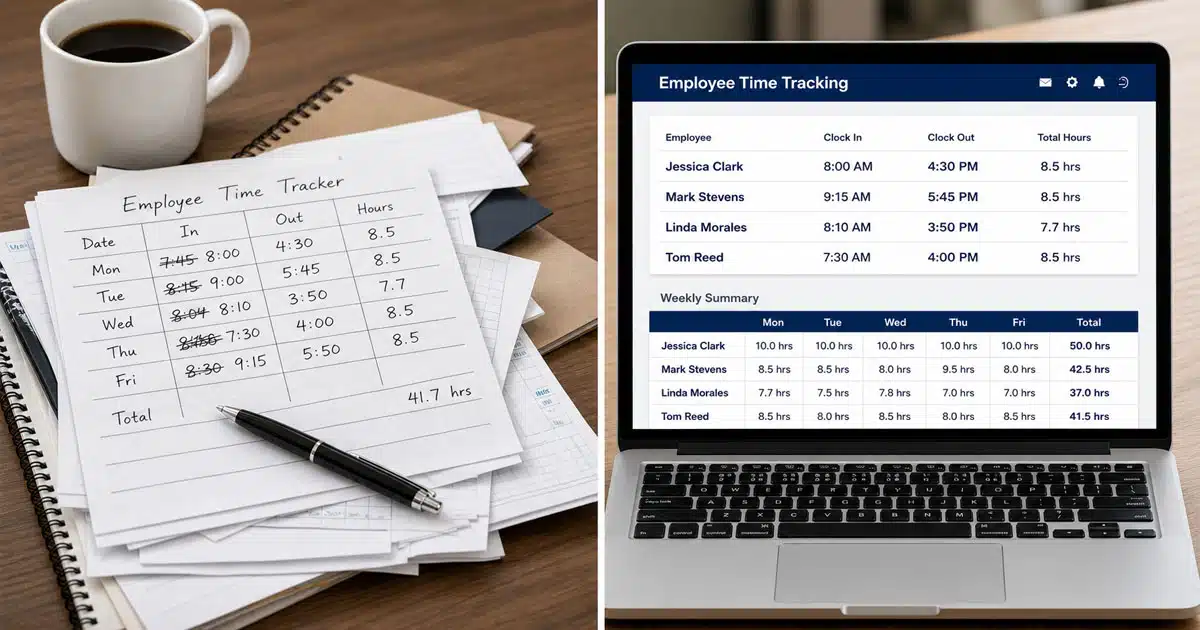
Tracking employee hours is no longer just about attendance. It plays a direct role in payroll accuracy, productivity, and overall business performance. When hours are recorded properly, teams get paid correctly, and managers gain clear visibility into how work actually happens.
Many growing businesses struggle with manual tracking, missed entries, and unclear data. A structured approach helps reduce errors, improve planning, and build accountability across teams. With the right system, companies can understand work patterns, control costs, and make better decisions every day.
What Does It Mean To Track Employee Hours
Tracking employee hours means recording the time employees spend on work tasks, shifts, or projects. It includes clock-in and clock-out times, breaks, overtime, and billable hours. Businesses use this data to understand how work hours are distributed across teams and roles. Accurate time tracking creates a reliable record of employee activity.
A clear system to track employee hours supports payroll accuracy and prevents errors in wage calculations. It also helps managers monitor productivity, manage workloads, and plan resources better. Teams can see where time goes and adjust their efforts accordingly.
Modern tools like time tracking software make the process simple with real-time tracking, automated reports, and easy access across devices. This improves transparency and keeps everyone aligned.
Why Businesses Need To Track Employee Hours Accurately
Accurate employee hour tracking helps businesses stay in control of payroll, productivity, and project outcomes. It ensures every team member gets paid correctly and every work hour is accounted for. Clear time tracking data also improves planning, reporting, and decision-making across teams.
Accurate Payroll And Fewer Errors
Accurate tracking ensures employees receive the correct pay for their work hours. It reduces mistakes in overtime, deductions, and billable hours. Businesses that track employee hours properly avoid disputes and compliance risks. Payroll becomes faster and more reliable with structured time logs.
A report by the American Payroll Association shows that payroll errors can affect up to 33% of businesses. Employee time tracking software helps prevent such issues. It connects directly with accounting software and tools like Payrun. This creates a smooth workflow from time tracking to payroll processing.
Better Project And Task Management
Time tracking helps teams understand how much time is spent on tasks and projects. It becomes easier to track project progress and manage multiple projects. Managers can allocate resources better and avoid delays. Clear time logs support better planning and execution.
Tools like Payrun and other project management software provide visibility into team activities. Businesses handling multiple clients can track billable hours more accurately. This helps run profitable projects and ensures no work goes unbilled. Project tracking becomes more data-driven and efficient.
Improved Productivity And Accountability
Tracking employee time gives clear insights into employee productivity. Managers can identify where time is spent and where improvements are needed. It builds accountability across teams without constant supervision. Employees stay more focused when work hours are visible.
A study by McKinsey & Company found that productivity can increase by 20–25% with better tracking and digital tools. Time tracking apps and employee monitoring software provide useful productivity insights. Businesses can track productivity without harming work-life balance when used transparently.
Stronger Compliance And Record Keeping
Accurate employee time tracking helps businesses stay compliant with labor laws. It creates a clear record of work hours, breaks, and overtime. This reduces legal risks and simplifies audits. Proper documentation protects both employers and employees.
Time tracking tools store employee data securely and allow easy export of reports. Many tracking software options include attendance management systems and employee scheduling features. This ensures accurate tracking across different job sites and remote teams. Compliance becomes easier with organized records.
Better Cost Control And Business Decisions
Time tracking data gives a clear picture of labor costs and resource usage. Businesses can see which projects consume more time and adjust pricing or planning. It helps control costs and improve profitability. Data-driven decisions become easier with accurate insights.
Many employee time tracking apps offer advanced features like automated time tracking and reporting. Small businesses can start with free time tracking software or a free plan. As teams grow, paid plans offer more time tracking capabilities and management features. This supports long-term growth and scalability.
Key Benefits Of Tracking Employee Hours For Growth
Clear visibility into employee hours helps businesses scale with control and confidence. It connects daily work with outcomes like revenue, efficiency, and team performance. Accurate time tracking builds a strong foundation for smarter decisions and sustainable growth.
Better Visibility Into Team Performance
Tracking employee hours gives a clear view of how work hours are spent across teams. Managers can see which team member handles tasks efficiently and where delays happen. This improves employee productivity and supports better performance reviews.
According to McKinsey & Company, companies that use productivity tracking tools can improve efficiency by up to 25%. Time tracking software provides real-time productivity insights. It helps leaders take action based on actual time tracking data instead of assumptions.
More Accurate Billing And Revenue Tracking
Accurate time tracking helps businesses capture every billable hour. This is critical for agencies and teams juggling multiple clients. Missing even small time logs can reduce revenue over time. A proper system ensures all work hours are accounted for.
Tools like Payrun allow teams to track project progress and create invoices based on time spent. This improves financial accuracy and supports profitable client projects. Businesses can also export data directly into accounting software for faster processing.
Stronger Project Planning And Resource Allocation
Time tracking data helps managers understand how long tasks actually take. This improves project management and resource scheduling. Teams can plan better and avoid overloading employees or missing deadlines.
Many project management tools now include time tracking features, including employee timeline tracking and automatic time tracking. Businesses can manage multiple projects with more confidence. Reports from tracking software help identify bottlenecks and improve task management across different job sites.
Improved Work Life Balance For Teams
Clear tracking of employee time helps prevent overwork and burnout. Managers can monitor work hours and ensure fair distribution of tasks. This supports better work-life balance and healthier team dynamics.
A report from World Health Organization highlights that long working hours increase health risks. Smarter employee productivity tracking and time tracking apps help teams stay within healthy limits. With proper employee monitoring, businesses can support both productivity and employee well-being.
Scalable Systems For Growing Businesses
As teams grow, manual tracking becomes hard to manage. Employee time tracking software provides a scalable solution. It supports unlimited users, multiple projects, and advanced features as needed.
Many tools offer a free plan for small teams and paid plans start at affordable per-user pricing. Options like Payrun provide strong time tracking capabilities and responsive customer support. Businesses can start simple and upgrade as operations expand.
Common Challenges When Businesses Track Employee Hours
Many businesses struggle to track employee hours accurately as teams grow and workflows become complex. Gaps in systems, manual processes, and lack of clarity often lead to errors. These challenges affect payroll, productivity tracking, and overall business performance.
Manual Time Tracking Errors
Manual time tracking often leads to missing or incorrect time logs. Employees may forget to log hours or enter wrong data. This creates gaps in employee time tracking and affects payroll accuracy. Small mistakes can turn into major issues over time.
According to the American Payroll Association, time theft and manual errors can cost businesses up to 7% of total payroll. Basic time tracking methods lack accuracy and reliability. A modern attendance tracking system guide shows how automated time tracking and time tracking software reduce these risks and improve accurate tracking.
Lack Of Real-Time Visibility
Many businesses do not have access to real-time time tracking data. This makes it hard to track productivity and monitor ongoing work. Managers often rely on outdated reports, which delays decision-making.
Modern employee time tracking apps and time tracking tools solve this with live dashboards and employee time log reports. Without such systems, teams struggle to track project progress across multiple projects. Lack of visibility also affects resource scheduling and project management efficiency.
Employee Resistance And Trust Issues
Employees may feel uncomfortable with employee monitoring or tracking tools. They may see time tracking as control rather than support. This can affect morale and work-life balance if not handled properly.
A survey by Gartner found that nearly 50% of employees feel uneasy about monitoring tools. Clear communication and transparency are important. Businesses should focus on productivity insights, not strict employee monitoring software practices.
Difficulty Managing Remote And Field Teams
Remote teams and employees at different job sites create tracking challenges. Lack of internet connection, device limitations, or location issues can affect time tracking accuracy. It becomes harder to track employee time across distributed teams.
Time tracking apps with mobile app support and GPS attendance systems help solve this issue. Businesses can track employee hours across different job sites and locations. Without proper tracking software, managing remote teams becomes inefficient and inconsistent.
Complex Tools And Learning Curve
Some time tracking software comes with advanced features but a steep learning curve. Teams may struggle to adopt new systems, especially in small businesses. Complex interfaces reduce adoption and slow down workflows.
Popular project management tools and time management apps should be easy to use. A simple time tracker with essential time tracking features improves adoption. Businesses should choose tools with responsive customer support and flexible paid plans to avoid usability issues.
Different Methods To Track Employee Hours Effectively
Businesses use different methods to track employee hours based on team size, work style, and complexity. Each approach offers a different level of accuracy and control. Choosing the right method helps improve productivity, payroll accuracy, and overall time tracking efficiency.
Manual Timesheets And Spreadsheets
Manual timesheets and spreadsheets are one of the oldest ways to track employee time. Employees record work hours daily or weekly. This method works for small teams with simple workflows. It does not require advanced tools or setup.
However, manual time tracking often leads to errors and missing time logs. Data entry mistakes can affect payroll and reporting, which is especially risky for growing companies and small businesses using attendance systems. A report from the American Payroll Association shows that manual tracking increases payroll inaccuracies. This method lacks real-time visibility and productivity insights.
Clock-In And Attendance Systems
Clock-in systems record employee hours when team members start and end work. These systems include biometric devices, cards, or digital attendance tracking tools. They help maintain accurate records of work hours and reduce time theft.
Attendance tracking systems work well for on-site teams and job site environments. They provide structured time tracking data and improve compliance. Many modern systems connect with employee scheduling and payroll tools. This creates a smoother workflow for businesses with fixed shifts.
Mobile And GPS-Based Tracking
Mobile app-based tracking allows employees to track time from anywhere. This method is useful for remote teams and field workers. GPS tracking and location tracking ensure accurate tracking across different job sites.
Employee time tracking apps with mobile app support help teams log hours in real time. According to Statista, mobile workforce solutions continue to grow as remote work expands, making remote attendance tracking for distributed teams increasingly important. Businesses gain better visibility into employee hours and field operations with this method.
Project And Task-Based Tracking
Project-based time tracking focuses on tracking time spent on specific tasks or client projects. It helps teams manage multiple projects and track billable hours accurately. This method is common in agencies and service-based businesses.
Project management tools and time tracking tools allow teams to track project progress and allocate resources better. Businesses handling multiple clients benefit from detailed time tracking data. It supports better invoicing and helps run profitable projects with clear insights.
Automated Time Tracking Software
Automated time tracking uses software to track employee hours with minimal manual input. Features like automatic time tracker, browser extension, and background tracking reduce effort. This method improves accuracy and saves time.
Employee time tracking software like Payrun provides advanced features and productivity tracking. Many tools offer free time tracking software options and paid plans for scaling teams. Automated tracking software delivers accurate data, better reporting, and improved decision-making.
How To Track Employee Hours In Remote And Hybrid Teams
Remote and hybrid teams need a clear system to track employee hours across locations and time zones. Without structure, gaps appear in time logs and productivity tracking. The right tools and processes ensure accurate tracking, transparency, and smooth project management.
Use Cloud-Based Time Tracking Tools
Cloud-based time tracking software helps teams track employee time from anywhere. Team members can log work hours using a mobile app or browser extension. This ensures consistent time tracking across remote teams and hybrid setups.
According to Statista, remote work adoption continues to grow worldwide. Businesses rely on employee attendance tracking and time tracking tools with real-time dashboards and reporting. These tools improve time tracking data accuracy and allow managers to monitor work without constant follow-up.
Set Clear Time Tracking Policies
Clear policies help teams understand how to track time and report work hours. Define rules for logging time, breaks, and overtime. This reduces confusion and improves consistency across teams.
Employees should know how to use time tracking apps and follow standard processes. Clear guidelines improve accurate tracking and reduce missing time logs. It also builds trust and avoids unnecessary employee monitoring concerns.
Track Work By Tasks And Projects
Task-based tracking helps teams manage multiple projects and client work. Employees can log time spent on each task or project. This provides better visibility into project tracking and billable hours.
Project management tools and employee time tracking software allow teams to track project progress easily. Understanding time tracking vs attendance tracking helps businesses handling multiple clients benefit from detailed time tracking data. It supports better planning and helps run profitable projects with clear insights.
Use Automation To Reduce Manual Work
Automated time tracking reduces the need for manual data entry. Features like automatic time tracker and background tracking capture work hours accurately. This improves efficiency and reduces errors.
Many time tracking apps offer automated time tracking and advanced features like smart attendance tracking software with real-time timeline views. According to a report by McKinsey & Company, automation can improve productivity by up to 20–30%. Businesses save time and gain reliable data for decision-making.
Balance Monitoring With Trust
Employee monitoring should focus on productivity insights, not control. Excessive tracking can affect work-life balance and team morale. A balanced approach improves accountability without creating pressure.
A study by Gartner shows that trust-based environments improve employee productivity. Businesses should use employee monitoring software carefully. Transparent communication helps teams stay aligned and motivated while tracking employee hours.
Essential Features In Employee Hour Tracking Software
The right employee time tracking software should do more than record work hours. It should provide accuracy, visibility, and control across teams. Strong features help businesses track employee hours efficiently, reduce errors, and improve productivity and project management.
Real-Time Time Tracking And Reporting
Real-time time tracking allows businesses to monitor employee hours as work happens. It gives instant access to time tracking data and helps managers make faster decisions. Teams can track time without delays or missing entries.
Reports provide clear employee time log report insights into time spent, productivity tracking, and project tracking. According to Deloitte, data-driven organizations are 23% more likely to outperform competitors. Strong reporting features help businesses track productivity and improve overall performance.
Automated Time Tracking And Time Logs
Automated time tracking reduces manual effort and improves accuracy. Features like automatic time tracker and background tracking capture employee time without constant input. This ensures accurate tracking across tasks and projects.
Time logs stay organized and easy to review. Businesses can reduce errors caused by manual logging time. Many time tracking tools also offer browser extension support for seamless tracking. Automated systems save time and improve efficiency for both small teams and large organizations.
Project And Task Tracking Integration
Project tracking features help teams manage multiple projects and client work. Employees can log time against tasks, projects, or billable hours. This improves visibility into project progress and resource usage.
Integration with project management tools and project management software makes workflows smoother. Businesses handling multiple clients can track project progress and ensure accurate billing. This helps run profitable projects and improves task management across teams.
Mobile Access And Location Tracking
Mobile app access allows employees to track time from anywhere. This is important for remote teams and field employees working across different job sites. It ensures consistent time tracking even without a fixed workspace.
Features like gps tracking and location tracking improve accuracy for on-site work. According to Statista, mobile workforce solutions continue to grow globally. Mobile-friendly time tracking apps support flexibility and improve employee time tracking across locations.
Payroll And Accounting Integration
Integration with a payroll management system and accounting software simplifies salary processing. Time tracking data flows directly into payroll systems. This reduces manual work and improves accuracy in wage calculations.
Tools like Payrun connect time tracking with accounting workflows and modern payroll software automation. Businesses can create invoices, export data, and manage employee data easily. This ensures smooth operations and helps maintain compliance while tracking employee hours.
Best Practices To Track Employee Hours With Transparency
Clear and transparent time tracking builds trust and improves accuracy across teams. Employees feel more comfortable when they understand how and why their work hours are tracked. A balanced approach helps businesses track employee hours without harming morale or productivity.
Set Clear Expectations And Policies
Clear policies help teams understand how to track employee time. Define rules for work hours, breaks, overtime, and time logs. This removes confusion and ensures consistent time tracking across all team members.
Employees should know how to use time tracking software and what data is required. According to Gallup, clarity in expectations improves employee productivity and engagement. Strong policies support accurate tracking and reduce errors in employee hours.
Use Simple And Easy Tools
Simple time tracking tools improve adoption across teams. Complex systems with a steep learning curve often lead to poor usage. A user-friendly employee time tracking app makes it easy for teams to log time without friction.
Many businesses prefer tools like Payrun HR software for small businesses because of clean interfaces and essential time tracking features. Small teams can start with free time tracking software or a free plan. Easy tools reduce resistance and improve accurate tracking.
Communicate Purpose And Benefits
Open communication helps employees understand why time tracking matters. Explain how tracking supports payroll accuracy, project tracking, and better work life balance. This reduces concerns around employee monitoring.
A study by PwC shows that transparent communication increases trust in workplace systems. Employees are more likely to adopt time tracking apps when they see clear benefits. This creates a positive and collaborative work environment.
Focus On Insights Not Surveillance
Time tracking should focus on productivity insights, not strict employee monitoring. Excessive monitoring can reduce trust and affect team morale. A balanced approach improves accountability without pressure.
Employee monitoring software should provide useful data like time spent, project tracking, and detailed employee timeline insights. Businesses can track productivity without harming work-life balance. This helps teams stay motivated while maintaining performance standards.
Review And Improve Regularly
Regular reviews help improve time tracking processes over time. Analyze time tracking data to identify gaps, delays, or inefficiencies. This ensures continuous improvement in how teams track employee hours.
Businesses can use reports from time tracking software to adjust workflows and resource scheduling. According to Deloitte, organizations that review performance data regularly see better operational outcomes. Continuous improvement leads to better accuracy and scalability.
How Payrun Helps You Track Employee Hours With Accuracy And Control
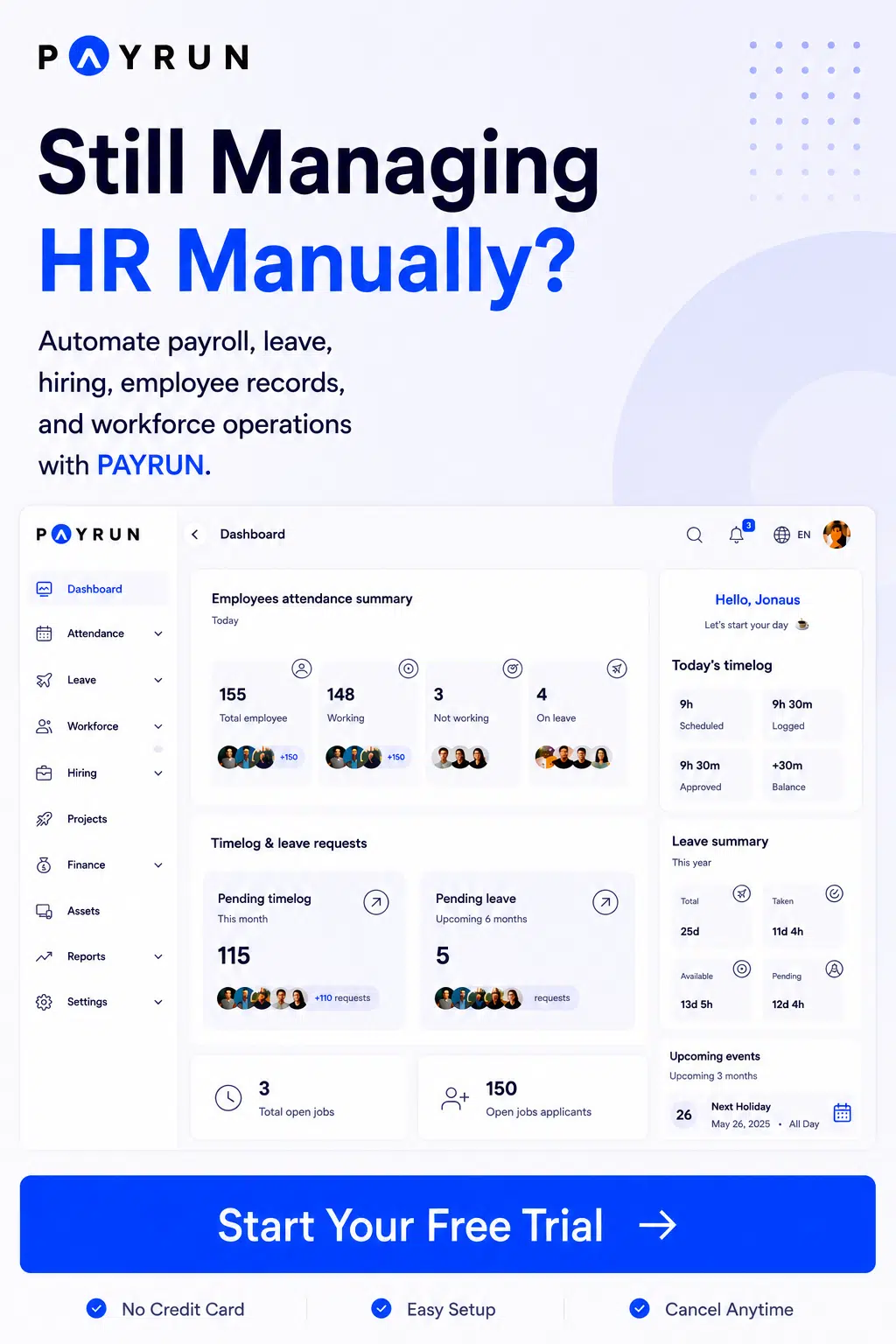
Payrun simplifies how businesses track employee hours across teams, projects, and locations. It combines employee time tracking, payroll integration, and project tracking in one HR management system. Businesses can reduce manual errors and improve accuracy with automated time tracking and real-time data.
With built-in time tracking features, Payrun helps track employee time, manage work hours, and monitor employee productivity without complexity. Teams can log time through a mobile app or browser, while managers get clear productivity insights and reports. This improves decision-making and supports better project management.
Payrun also connects time tracking data directly with payroll, leave management for HR teams, and accounting workflows. Businesses can manage employee hours, create invoices, and export data easily. This ensures accurate tracking, smoother operations, and better control as teams grow with a trustworthy HR management partner.
FAQs
How Can Businesses Track Employee Hours Across Multiple Clients Without Revenue Leakage?
Accurate time tracking is critical when handling multiple clients and projects. Even small gaps in time logs can lead to lost billable hours and reduced margins. Studies show millions of work hours go unrecorded daily, impacting revenue significantly.
Is Automated Time Tracking Reliable For Complex Project Workflows?
Yes, automated time tracking improves accuracy in complex workflows. It reduces manual errors and captures real-time time tracking data across multiple projects. Many businesses report up to 20–30% productivity gains with effective tracking systems.
Can Time Tracking Software Integrate With Advanced Project Management Tools?
Yes, modern time tracking software integrates with popular project management tools and accounting software. This helps teams manage task management, resource scheduling, and project tracking in one workflow.
How Does Time Tracking Data Help Optimize Resource Allocation In Large Teams?
Time tracking data provides deep productivity insights across teams and projects. Managers can identify workload gaps and redistribute tasks based on actual employee hours. This improves efficiency and avoids overloading team members.
Does Employee Monitoring Software Affect Work-Life Balance In Remote Teams?
No, when used correctly, employee monitoring software can support a better work-life balance. It helps track work hours and prevent overwork without constant supervision.