Everyone knows the pain of slow HR processes. HR systems with approval workflows provide a solution that creates clear pathways for requests to move smoothly through organizations. A well-laid-out HR workflow reduces stress and saves time. It standardizes regular processes and cuts down manual work for predictable, repeatable tasks.
HR workflow automation uses cloud HR software to handle routine tasks and approval workflows. This leads to quicker decisions and better processes. Companies maintain compliance and improve team coordination through automated approval workflows. An approval workflow is a structured process that gives HR-related requests consistent steps from the original submission to final approval. A clear HR workflow process ensures all team members follow identical procedures. This becomes particularly valuable when creating approval flows for new hires. In this article, we will explore how the HR approval workflow system can change your HR operations. It eliminates bottlenecks and helps teams work better with solutions like Payrun.
What Is Approval Workflow HR
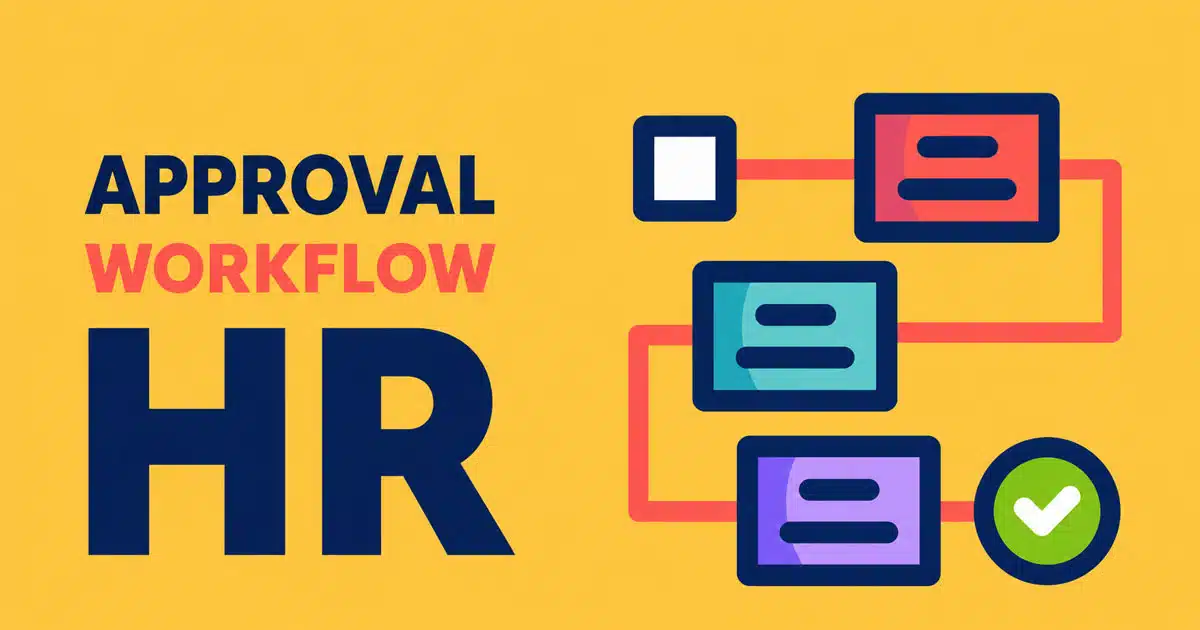
Approval workflow HR defines a structured process that guides approval requests across human resources using clear approval steps, approval levels, and multiple approvers. An effective approval workflow sets rules for initial review, automated routing, and final approval, which helps HR teams streamline approvals, reduce errors, and maintain compliance with company policies. Unlike manual methods that rely on emails and manual follow-ups, approval workflow software enables automated approval, clear approval status, and a reliable audit trail.
A modern approval process workflow uses workflow automation, conditional logic, and automated notifications to manage time off requests, vacation requests, expense report reviews, financial approvals, and new hire actions. These automated workflows reduce human error, limit manual data entry, and support quality control across complex processes.
With custom approval workflows, HR teams track progress, keep multiple parties on the same page, and improve operational efficiency for growing teams, while higher employee satisfaction comes from faster decisions and fewer missed deadlines.
Why Approval Workflow HR Is Important For Payroll And Compliance
Approval workflow HR plays a direct role in payroll accuracy and regulatory safety. A clear approval process workflow helps HR teams control approvals, reduce compliance risks, and keep payroll operations consistent, auditable, and aligned with company policies.
Ensures On-Time And Accurate Payroll
Approval workflow HR creates a structured process that keeps payroll approvals predictable and timely. Automated approval flows replace manual follow-ups, email approvals, and scattered spreadsheets with a single approval flow. Payroll data moves through defined approval steps, so managers, finance teams, and HR stay on the same page.
Approval workflow software reduces delays caused by missed deadlines or unavailable approvers. Automated routing sends approval requests to the right people at the same level or across multiple approval levels. Payroll teams can track progress in real time, confirm approval status, and move toward final sign-off without unnecessary manual intervention. This approach improves employee satisfaction and trust.
Reduces Payroll Compliance Risks
Compliance issues often start with unclear approval ownership or skipped review steps. Approval workflow HR ensures compliance by enforcing approval rules before payroll execution. Each approval process follows predefined conditions, which help limit compliance risks tied to labor laws, tax rules, and internal controls.
Automated workflows create an audit trail that records who approved what and when. This documentation supports financial approvals, regulatory audits, and internal reviews. Approval workflow software also flags exceptions that require extra review, which helps project managers and HR leaders make informed decisions while protecting the organization from penalties.
Improves Tax And Deduction Accuracy
Payroll errors frequently come from manual data entry and inconsistent review steps. Approval workflow HR minimizes errors by applying automated sequences and validation rules across tax and benefit deductions. Each expense report, allowance, or payroll adjustment follows the same approval steps.
Custom approval workflows apply conditional logic for complex payroll scenarios such as multiple parties, variable pay, or location-based tax rules. Automated checks reduce human error and ensure correct deductions for benefits, social contributions, and statutory taxes. This accuracy protects employees and prevents costly payroll corrections later.
Creates Clear Approval Accountability
Approval workflow HR defines approval levels and assigns responsibility at every stage of the approval process. Task assignments clarify who owns the initial review, who handles secondary approval, and who provides final approval. This clarity removes confusion and reduces manual intervention.
Approval workflow software allows HR teams to track approval status and see where delays occur. Automated notifications prompt approvers at the right time, which helps reduce delays and avoid stalled payroll cycles. Clear accountability also supports quality control across payroll and HR operations.
Supports Financial And Expense Controls
Payroll links closely with financial approvals such as bonuses, reimbursements, and purchase orders. Approval workflow HR connects payroll decisions with expense approvals through one approval flow. Expense reports and supplemental payments follow workflow templates that align with company policies.
Automated routing ensures that approvals reach the correct financial authority based on value thresholds. This control protects budgets, improves operational efficiency, and supports accurate financial reporting. Approval workflow HR also helps approve expenses faster without sacrificing oversight.
Strengthens Audit And Reporting Readiness
Audit readiness depends on visibility and documentation. Approval workflow HR delivers both through structured approval processes and automated tracking. Every request, approval, and sign-off becomes part of a searchable audit trail.
HR software with approval workflow automation allows teams to generate reports for payroll reviews, compliance checks, and internal audits. This transparency supports complex processes and reduces stress during inspections. Organizations gain confidence knowing approvals remain documented, consistent, and compliant.
Scales Payroll Operations For Growing Teams
Growing teams face higher approval volumes, more vacation requests, and complex payroll changes. Approval workflow HR scales with growth by replacing manual methods with automated workflows. Drag and drop builder tools help HR teams create approval flows without technical effort.
Custom approval workflows adapt to new hire onboarding, time off requests, and payroll changes without adding administrative burden. Workflow automation saves time, reduces errors, and keeps payroll processes efficient as organizations expand.
Core Stages In A Standard Approval Workflow HR Process
HR approval structures work best when you understand how requests flow through your organization. Structured approval workflows beat ad hoc processes. They ensure consistency between departments and help you retain control of documentation.
Request Submission
Every HR approval workflow starts when someone submits a request. Employees or managers fill out forms with details that help approvers make informed decisions. Modern systems let you customize forms to capture specific information for different types of requests. The first step matters a lot. Clear guidelines help people include the right documentation from the start and avoid back-and-forth later.
My experience shows that forms work better with conditional logic to collect exactly what's needed. To name just one example, job requisition approvals need budget codes, position justification, and department details. Time-off requests need completely different information. Smart request systems automatically send submissions to the right reviewers based on preset rules.
Initial Review By HR
HR personnel screen submitted requests to check if they're complete and line up with policies. This significant checkpoint serves multiple purposes:
- Checks if all needed information exists before sending to managers
- Proves it right that requests follow company policies and regulations
- Spots potential issues that might need more documentation
- Routes requests to the right approval chain
HR professionals act as gatekeepers at this stage. They either send incomplete submissions back or move properly documented requests forward. Smart systems can cut down manual work by checking submissions against preset rules.
Manager Or Department Head Approval
Requests that pass the first review move to supervisors or department heads who oversee the area. These approvers review requests in their business context. They think about team coverage, budget impact, and business priorities.
Request attributes often determine approval paths. High-value expenses might need extra approvers beyond the direct supervisor. Some workflows smartly route to backup approvers when primary reviewers aren't available. This prevents delays in important decisions.
Final Authorization And Record Keeping
The last stage needs final approval from authorized people and proper documentation. Senior leaders, finance teams, or compliance officers might give the final go-ahead depending on the request type. Projects funded by grants or contracts usually need both Principal Investigator approval and a review from Sponsored Programs Accounting.
Good record-keeping helps during audits. It shows who approved what, when it happened, and under what conditions. Strong approval systems keep complete audit trails with approval timestamps, comments, and any changes made during review.
Systems update records, send notifications, and start next steps automatically after all approvals come in. This cuts out manual data entry errors and speeds up approved requests. The detailed records also provide valuable data that helps make future approval processes better.
How Approval Workflow HR Reduces Errors And Approval Delays
HR operations become more efficient when organizations implement structured approval workflows that fix core problems in manual processes. Organizations eliminate bottlenecks and optimize operations through strategic automation - I've seen this happen firsthand.
Automated Notifications And Reminders
Approval workflow HR systems excel at automatically alerting stakeholders. These notifications change how requests move through organizations:
- Teams save hours since they don't need manual follow-ups to track down approvers
- Decision-makers get requests with specific due dates and timely reminders
- Requesters learn about decisions right away and can move forward quickly
Email-based systems often lose or overlook requests, but automated notifications prevent this. These alerts reach approvers on their messaging platforms wherever they work. No one can use the "I didn't see it" excuse that holds up important decisions anymore.
Predefined Approval Paths
HR operations improve dramatically with clear pathways for approvals. Requests automatically go to the right reviewers based on type, department, or other criteria, thanks to predefined approval paths.
Each similar request follows standardized routes in this structured process. To name just one example, expense reports first go to immediate supervisors, then to department heads if they exceed certain amounts. Each request follows the exact same path, which makes outcomes predictable and fair.
Organizations can design processes in approval workflow HR systems that match their needs. Multiple approval levels or parallel tracks let different departments review simultaneously.
Real-Time Status Tracking
Modern approval workflow HR platforms give complete transparency, unlike manual methods, where requests disappear without a trace. This visibility into approval status creates accountability throughout the organization.
Everyone stays informed with immediate tracking. Employees check their request status without sending follow-up emails. Managers spot bottlenecks before they cause issues. HR teams learn from detailed audit trails that show who did what and when.
This transparency helps develop a culture where everyone knows their responsibilities and timeframes. The collected data reveals patterns from past approvals that help improve future processes.
Elimination Of Redundant Steps
Optimized workflows remove unnecessary approvals that don't add value. Traditional processes often include extra steps that built up over time but no longer serve any business purpose. Organizations identify and remove these wasteful practices by analyzing and optimizing workflows.
Removing redundant steps increases accuracy while saving time. Each handoff between people creates room for error, so fewer steps mean fewer mistakes.
Organizations can figure out which approvals truly matter versus those that just create delays with well-designed approval workflow HR systems. Companies reduce approval cycles from weeks to days or even hours through process improvement. This leads to better employee satisfaction and operational efficiency.
Payrun's approach to approval workflow optimizes these processes by creating easy-to-use approval chains specifically designed for HR and payroll teams.
Key Features To Look For In Approval Workflow HR Software
The features you choose for your approval workflow HR systems can make or break their implementation. Your team's ability to handle approvals, stay compliant, and run smoothly depends on picking the right functionality.
Customizable Workflow Templates
Your approval workflows need to adapt to your business processes. Good software comes with templates you can adjust without being a tech expert. These templates should give you:
- A clear way to map how work flows in your organization
- The ability to add or remove approval steps based on your policies
- Visual tools to design workflows without coding
These templates save you time since you won't need to create processes from scratch. They also keep your HR approval process consistent, so requests follow the same path no matter who submits them.
Role-Based Access Control
Security is non-negotiable in approval workflow HR software. Role-based access control (RBAC) limits system access based on each user's role. This follows a simple rule - users only get permissions they need to do their jobs.
RBAC brings several advantages to approval workflows:
It keeps your data secure by restricting employee access to relevant information. New employees automatically get the right permissions based on their job. During audits, RBAC provides clear evidence of compliance.
Your organization can grow and change while RBAC adapts without needing major system changes.
Integration With Payroll And HRIS
The best approval workflow HR software works naturally with your current systems. This creates one unified system where information moves automatically between HR and other departments. It stops data silos and cuts down on duplicate entries.
Good integrations automate key tasks like:
- Tax calculations and deductions
- Benefits administration and enrollment
- Talent acquisition and onboarding
- Time tracking and attendance management
These connections help maintain accurate employee data across all systems without manual updates.
Audit Trails And Reporting Tools
Detailed audit capabilities have become vital due to stricter compliance rules. Quality HR software tracks every system action - who did what, when, and why.
Good audit trails record everything in the background. They flag unusual activities and store records securely to prevent tampering. This creates accountability and provides evidence for audits or internal reviews.
Mobile Accessibility
Mobile features are no longer optional in today's workplace. Mobile-friendly HR software lets managers approve requests from anywhere. This removes bottlenecks when decision-makers are away from their desk.
Teams can review, approve and collaborate on documents from any location. Remote and hybrid teams find this especially valuable to keep work moving. Quick approvals from anywhere prevent the delays that often slow down traditional processes.
How Approval Workflow HR Improves Manager And Employee Accountability
Accountability remains the missing piece in many HR systems. Responsibilities often get lost in the shuffle. Approval workflow HR tackles this challenge by creating structures that clarify who's responsible for what and at what time.
Clear Ownership Of Each Approval Step
Every request follows a predefined path through specific approval hierarchies in a multi-level approval system. This well-laid-out approach establishes clear authority and defined timelines at each stage of the process. The system automatically directs employee requests to their team leader who must review it before it moves to their manager's final authorization.
Nobody can point fingers when delays occur because of this clarity. Everyone knows exactly who needs to take action at any given moment. Predefined approval rules prevent favoritism since managers cannot give undue advantages to any employee requesting approval.
Transparent Tracking Of Actions Taken
Approval workflow, HR's most powerful accountability feature lets you monitor exactly what happens to each request. Documentation covers every approval action and creates a complete timeline that shows who made changes, at what time they occurred, and any relevant notes.
This transparency changes workplace dynamics in several ways:
- Employees can track their approvals through self-service portals without repeated follow-ups
- Managers gain visibility into all decisions and help maintain consistency
- HR teams receive complete audit trails showing every action taken
Trust builds throughout the organization with this level of transparency. Everyone stays arranged throughout the approval experience because they know who made specific changes and why. This visibility reduces miscommunication in the long run.
Faster Resolution Of Bottlenecks
Approval workflow HR systems excel at identifying where approvals get stuck. The system can highlight these delays when requests sit unprocessed and automatically alert relevant stakeholders to address them quickly.
Bottlenecks often occur when approvers become unavailable, like when someone takes time off or leaves the company. Advanced approval systems solve this by including contingency routes that automatically redirect approvals when someone cannot respond.
Many organizations use automated alerts and dashboards that provide immediate insights into approval efficiency. These tools help managers spot emerging bottlenecks before they become critical problems. This approach speeds up the resolution of delays that would otherwise disrupt business operations while improving accountability.
Role Of Automation In Approval Workflow HR Systems
Automation has completely transformed how HR departments work today, with research showing a staggering 599% increase in HR automations over just two years. This rapid change shows how approval workflow HR systems have evolved from simple routing to become intelligent facilitators of everyday operations.
Simplifies Repetitive Tasks
Automation handles all the routine administrative tasks that used to consume HR teams' time. These systems manage high-volume activities like payroll processing, document management, and standard approvals to free up valuable bandwidth. HR staff now save over seven hours each week by automating these mundane responsibilities. This allows them to concentrate on strategic initiatives that affect company culture and employee experience.
Reduces Human Intervention
Fewer manual touchpoints create better approval workflow HR processes. Automated systems enforce validation rules when data is entered. This significantly cuts down the corrections needed in traditional methods. The change matters because nearly 80% of paper timesheets need adjustments. Such back-and-forth wastes resources and slows down approvals.
Supports Remote And Hybrid Teams
Modern approval workflow HR automation provides vital infrastructure for distributed workforces. Employees can manage their personal information and submit requests from anywhere through self-service portals. Managers approve items on mobile interfaces without going back to their desks. These key features ensure business runs smoothly even when team members work from different locations or time zones.
Improves Data Accuracy And Compliance
The most valuable aspect is how automated approval workflow HR systems actively track regulatory changes. Organizations stay compliant without constant manual oversight. Built-in security features protect sensitive employee information as required by federal regulations like HIPAA. This adds another benefit of limiting human access to confidential data.
These automated systems turn approval workflows from bottlenecks into optimized processes that boost operational efficiency across organizations. Companies can focus their resources on employee management, inclusion initiatives, and other strategic priorities that need human involvement by eliminating repetitive manual tasks.
Common Challenges Without A Structured Approval Workflow HR
A broken HR request system creates problems that affect every part of an organization. Companies without good approval workflow systems face mounting challenges that hurt employee morale and put them at risk legally.
Delayed Approvals And Missed Deadlines
Manual HR approvals lead to inevitable delays. Studies show employees waste 4-7 hours each week just checking on their pending requests. This lost time spreads across departments and creates a chain reaction of slowdowns.
These missed deadlines hurt companies because they cause:
- Lower employee satisfaction and unexpected absences
- Mistakes in pay that break trust
- Money problems that strain vendor relationships
- Work stops when important decisions get stuck
The biggest problem comes from not having a clear chain of approval. Requests get lost in email or chat apps, making it hard for managers to set priorities. Things get stuck waiting for someone's review, usually because people are busy, swamped, or don't know they need to act.
Lack Of Visibility Into Approval Status
HR teams work blindly without centralized tracking. This visibility gap goes beyond technical issues; it points to basic governance problems. HR staff can't see past approval records, which makes audits very hard.
This lack of transparency creates several problems:
Staff members can't check their request status, so they keep asking for updates, that waste time. Managers make choices without seeing the full picture and might approve time off without knowing if there's enough coverage. HR teams waste countless hours manually checking updates instead of working on important projects.
Companies can only see about 30% of their extended workforce, leaving 70% of contingent labor out of their planning. This blind spot makes it nearly impossible to use resources well.
Inconsistent Policy Enforcement
Uneven application of workplace rules creates more than confusion; it puts companies at risk of expensive lawsuits. Employees get upset when rules seem to apply to some but not others.
Random enforcement of company policies opens the door to discrimination claims under state and federal laws. Courts look more closely at real-life practices than written policies, especially with rules that sat unused or were enforced randomly.
This happens more than you'd think: old policies stick around long after they stop making business sense. These forgotten rules become liabilities when suddenly enforced after years of being ignored. Companies must prove three things to deny benefits to fired employees: the employee knew the rule, the rule made sense, and the company enforced it fairly.
Manual Errors In Sensitive HR Tasks
Hand-entered data poses one of the biggest risks in HR work. Each manual entry or update increases the chance of mistakes. Teams often face wrong payroll math, outdated records, missed benefits sign-ups, and wrong leave calculations.
These errors grow with the company. About 80% of paper timesheets need fixes, creating needless back-and-forth that wastes time. These mistakes do more than create extra work; they shake employee faith in the company.
Bigger companies must follow more complex rules. Manual processes make it easy to miss deadlines or apply policies randomly, putting the business at financial and legal risk. HR professionals spend too much time on paperwork instead of important strategic work, without good approval systems.
How Payrun Simplifies Approval Workflow HR For Payroll And HR Teams
Payrun simplifies the approval workflow for HR by replacing manual methods with a clear approval process workflow built for payroll accuracy and compliance. Structured approval chains, automated routing, and real-time approval status help HR teams streamline approvals, reduce delays, and maintain compliance across payroll cycles. Every approval request follows defined approval steps, which support audit readiness, consistency, and stronger quality control across payroll operations. You can enjoy these features at a suitable price.
With approval workflow software at its core, Payrun connects HR and finance on the same page. Automated workflows, email notifications, and secure e-signatures remove manual intervention, minimize errors, and support financial approvals at scale. Teams track progress, manage multiple approvers, and rely on a complete audit trail to support informed decisions, reduce compliance risks, and improve employee satisfaction while saving time.
FAQs
How Long Does It Take To Set Up Approval Workflow HR?
Setup time depends on process complexity and approval levels. Most teams configure basic approval workflows within days using workflow templates and drag-and-drop tools. Larger organizations may need additional time for custom rules.
Can Approval Workflow HR Support Small And Mid-Sized Businesses?
Approval workflow HR works well for small teams and growing companies. Automated workflows replace manual follow-ups and reduce administrative load, which helps smaller HR teams improve operational efficiency without extra staff.
How Flexible Are Custom Approval Workflows?
Custom approval workflows allow rule-based approval steps, conditional logic, and multiple approvers. HR teams can adjust approval flows as company policies, teams, or approval limits change.
Does Approval Workflow HR Handle Exception Scenarios?
Approval workflow HR systems manage exceptions through automated routing and special approval paths. Requests that exceed limits or fall outside standard rules move to higher approval levels for review.
How Secure Is Approval Workflow HR Software?
Approval workflow HR software uses role-based access, encryption, and secure audit trails. These controls protect sensitive HR data and reduce compliance risks across payroll and employee records.
Can Approval Workflow HR Integrate With Other Business Tools?
Most approval workflow HR solutions integrate with HR software, accounting systems, and project management tools. Integration reduces manual data entry and keeps teams on the same page.
What Metrics Help Measure Approval Workflow HR Performance?
Key metrics include approval cycle time, missed deadlines, error rates, and approval volume by department. These insights support informed decisions and continuous process improvement.