Payroll tax filing is one of the most important parts of running a business. A small mistake can lead to penalties, late fees, or compliance problems. Many businesses struggle with tax forms, filing deadlines, and changing payroll tax rules. That is why a clear process matters.
Business owners, HR teams, and finance managers need to understand how payroll tax filing works. Accurate reporting helps avoid costly errors and keeps employee payments and tax records organized. From federal payroll taxes to state filing requirements, every detail plays a role in business compliance.
This guide covers everything you need to know about payroll tax filing. You will learn the filing process, important forms, common mistakes, deadlines, and best practices for smooth payroll tax management.
What Payroll Tax Filing Means
Payroll tax filing is the process businesses use to report and pay payroll taxes to the government. It includes federal income tax withholding, social security and medicare taxes, federal unemployment tax, and state payroll taxes. Unlike income taxes, payroll taxes come directly from employee wages and compensation paid during each calendar quarter. Most employers must report federal income tax, deposit taxes, and submit payroll tax returns on time.
Business owners must track taxable wages, withholding taxes, tax amounts, and employment tax liability carefully. Late tax payments or incorrect filing form details can lead to payroll tax penalties and costly penalties. Employers also need to prepare wage and tax statement documents like W 2s for the Social Security Administration. Many small business owners use a dedicated payroll management system or a payroll service to manage tax deposits, electronic filing, due dates, and IRS schedules across multiple jurisdictions and state and local tax requirements.
Types Of Payroll Taxes Employers Must Report And Pay
Payroll taxes cover more than employee paychecks. Employers must withhold, report, and deposit several taxes at the federal and state levels. Each tax has different rules, rates, and filing deadlines. A clear understanding helps businesses avoid penalties, late payments, and payroll compliance issues.
Federal Income Tax Withholding
Federal income tax withholding comes directly from employee wages. Employers calculate the amount based on Form W-4 details, pay frequency, and IRS tax tables. The money must be deposited on time through the Electronic Federal Tax Payment System.
The IRS reported more than $2.5 trillion in employment taxes collected during recent tax years. Missing a payment can trigger steep penalties. Accurate withholding also helps employees avoid tax surprises during annual filing season. Employers usually report the totals on Form 941 every quarter.
Social Security And Medicare Taxes
Social Security and Medicare taxes fall under FICA taxes. Employers and employees each pay 6.2% for Social Security and 1.45% for Medicare taxes. Employers must match the employee portion before making tax deposits.
For 2026, the Social Security wage base increased to $184,500. Medicare taxes still have no wage limit. Employees with higher earnings may also owe the Additional Medicare Tax. Payroll software helps businesses calculate these amounts accurately and reduce filing errors.
Federal Unemployment Tax
Federal unemployment tax supports unemployment programs for workers who lose jobs. Employers pay FUTA taxes under the Federal Unemployment Tax Act. Employees do not contribute to this tax.
Most employers pay 6% on the first $7,000 of taxable wages per employee. Many businesses qualify for credits that reduce the effective FUTA rate to 0.6%. Employers usually file Form 940 annually to report unemployment taxes and tax liability details.
State And Local Payroll Taxes
Many states require employers to manage state payroll taxes in addition to federal payroll taxes. Some cities and local governments also collect local income taxes. Rules often vary across multiple jurisdictions.
A business owner with remote teams may face different tax rates and deposit schedules in several states. Late state tax payments often lead to costly penalties and interest charges. Detailed records and payroll compliance software help employers stay compliant with state and local requirements.
Employer Paid Payroll Taxes
Some payroll taxes are paid only by the employer. FUTA taxes are one example. Employers also cover part of Social Security and Medicare taxes as part of their employment tax liability.
Small business owners often underestimate these extra payroll costs. The National Small Business Association found payroll taxes remain one of the top financial concerns for employers. A reliable payroll service, payroll compliance guide for small businesses, or tax professional can help businesses manage due dates, monthly deposits, and payroll tax returns without errors.
Payroll Tax Filing Deadlines, Forms, And Deposit Schedules
Payroll tax compliance depends heavily on timing and accurate paperwork. Employers must file the right forms, follow IRS deposit schedules, and submit tax payments before due dates. A missed deadline can quickly lead to penalties, interest charges, and serious compliance issues for businesses.
Quarterly Payroll Tax Forms
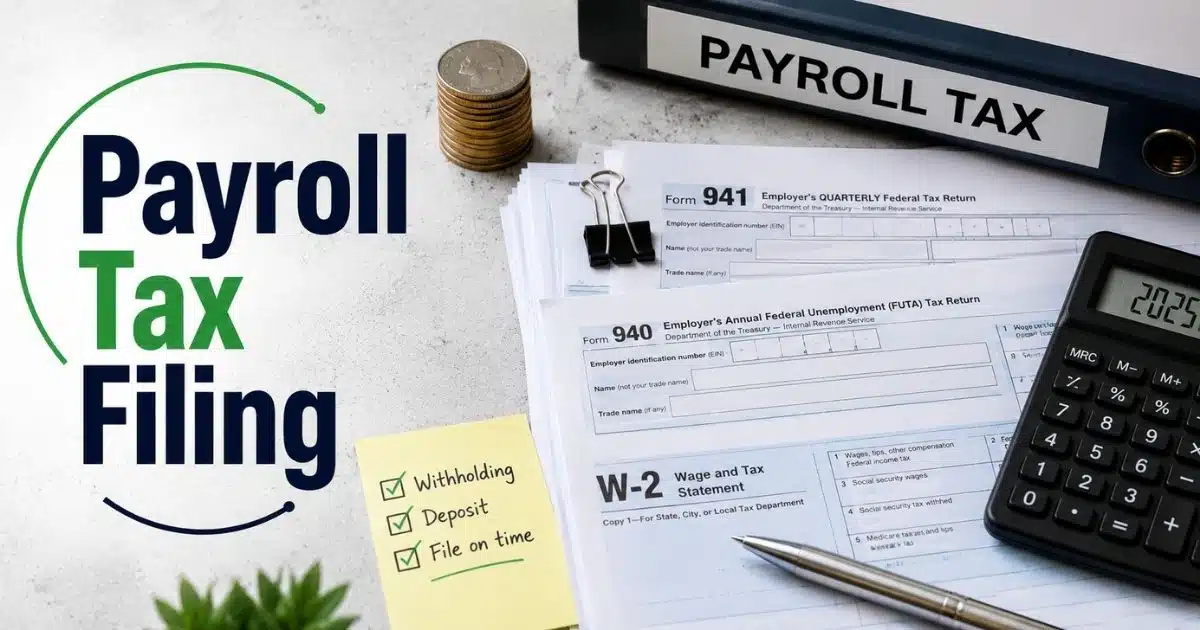
Most employers file Form 941 every calendar quarter to report federal income tax withholding, Social Security taxes, and Medicare taxes. The form covers employee wages, tax deposits, and total employment tax liability.
Quarterly due dates usually fall on April 30, July 31, October 31, and January 31. The IRS processed millions of Form 941 filings last year alone. Late payroll tax returns may trigger penalties starting at 2% of unpaid taxes. Accurate payroll software helps businesses avoid filing mistakes and missed deadlines.
Annual Employer Tax Forms
Annual payroll tax filing also includes Form 940 for FUTA taxes and W-2s for employees. Employers must send wage and tax statement copies to workers and the Social Security Administration before the annual deadline.
Most W 2 forms are due by January 31. Form 940 deadlines may extend to February 10 if all federal tax deposits were made on time. Businesses with independent contractors must also issue Form 1099-NEC for compensation paid during the tax year.
Federal Tax Deposit Schedules
The IRS assigns employers a monthly or semiweekly deposit schedule. The schedule depends on total tax liability reported during a lookback period. Businesses must deposit taxes through the Electronic Federal Tax Payment System.
Monthly deposits are usually due by the 15th day of the next month. Semiweekly schedules follow stricter business day deadlines. The IRS collected more than $4 trillion in gross taxes recently, and payroll tax deposits remain a major part of that total. Missing a tax deposit can lead to immediate penalties and interest.
State Payroll Tax Deadlines
State payroll taxes follow separate filing and payment schedules. Some states require monthly deposits, while others use quarterly or annual filing cycles. Rules also differ across multiple jurisdictions and local tax agencies.
A business owner with remote employees may face several state and local filing requirements at once. Some states now require mandatory electronic filing for most employers. Payroll services help businesses track tax amounts, due dates, and changing state payroll tax rules more efficiently.
Penalty Rules And Late Filing Costs
Late payroll tax filing often creates expensive problems for employers. IRS payroll tax penalties range from 2% to 15% depending on how late the payment arrives. Interest charges continue until the taxes are fully paid.
The agency issued billions of dollars in tax penalties across business filings in recent years. Small business owners often struggle most with deposit schedules and corrected income reporting. A tax professional or payroll software platform can reduce filing errors and help maintain accurate detailed records year-round.
Step-by-Step Payroll Tax Filing Process For Businesses
Payroll tax filing becomes much easier when businesses follow a clear process. Employers must collect employee data, calculate taxes, submit forms, and make deposits on time. A structured system reduces errors, keeps records organized, and helps businesses stay compliant with federal and state tax rules.
Step 1: Collect Employee Tax Details
Every payroll process starts with accurate employee information. Employers must collect Form W-4 details, Social Security numbers, employee addresses, and payment records before processing payroll taxes.
The IRS requires businesses to keep updated tax forms and employee records for several years. Missing or incorrect details often create filing delays and payroll tax penalties. Many companies now use an employee record management system to store employee data securely and reduce manual errors during payroll tax filing.
Step 2: Calculate Payroll Tax Amounts
Employers must calculate federal income tax withholding, Social Security taxes, Medicare taxes, and state payroll taxes from employee wages. Some employees may also qualify for Additional Medicare Tax based on earnings.
For 2026, Social Security taxes apply to wages up to $184,500. Employers also pay matching FICA taxes and federal unemployment tax under FUTA rules. Incorrect tax amounts can increase employment tax liability and create expensive correction filings later. Modern automated payroll software and payroll services often automate these calculations to improve accuracy.
Step 3: Deposit Payroll Taxes On Time
Businesses must deposit payroll taxes based on their IRS deposit schedule. Most employers follow either a monthly or semiweekly payment schedule depending on total tax liability during the lookback period.
Federal tax deposits must go through the Electronic Federal Tax Payment System. The IRS reported that late tax deposits remain one of the most common business tax violations. Even a one-day delay may trigger interest charges and costly penalties. Regular payroll audit strategies and timely tax payments help businesses maintain compliance and avoid audits.
Step 4: File Required Payroll Tax Forms
Employers must file payroll tax returns like Form 941 and Form 940 based on IRS deadlines. Businesses also prepare W 2s and wage and tax statement records for employees and the Social Security Administration.
Most quarterly payroll tax returns are due at the end of each calendar quarter. Businesses with independent contractors may also file Form 1099-NEC for compensation paid. Electronic filing helps employers submit tax forms faster and reduces paperwork mistakes.
Step 5: Review Records And Correct Errors
Accurate recordkeeping is critical after payroll tax filing. Employers should review tax deposits, taxable wages, employee payroll taxes, and withholding records regularly to catch mistakes early.
The IRS recommends businesses maintain detailed records for at least four years. Corrected income reports and amended tax returns often become necessary when errors go unnoticed. Understanding key payroll mistakes businesses must avoid in 2026 and working with a tax professional or payroll software platform can help small business owners manage reporting employment taxes and maintain long-term compliance.
Common Payroll Tax Filing Errors And How To Avoid Them
Payroll tax filing errors can create serious financial and legal problems for businesses. Even small mistakes may lead to IRS notices, penalties, delayed refunds, or compliance audits. A clear payroll process and accurate records help employers reduce risks and avoid unnecessary tax issues.
Incorrect Employee Classification
Many businesses incorrectly classify workers as independent contractors instead of employees. This mistake affects payroll taxes, withholding taxes, unemployment taxes, and employment tax liability.
The IRS continues to increase enforcement around worker classification rules. Misclassification may result in back taxes, interest charges, and payroll tax penalties. Employers should review job roles carefully and collect proper tax forms before paying compensation. A tax professional can help businesses classify workers correctly and avoid compliance problems.
Late Tax Deposits
Late payroll tax deposits remain one of the most common payroll filing mistakes. Employers must follow strict deposit schedules for federal income tax withholding, Social Security taxes, and Medicare taxes.
IRS penalties can start at 2% of unpaid taxes and increase quickly with delays. Many small business owners miss deadlines because of manual tracking systems. Payroll automation software and automated reminders help businesses make federal tax deposits on time and reduce costly penalties throughout the tax year.
Wrong Payroll Tax Calculations
Payroll tax calculations must match employee wages, tax rates, and withholding details accurately. Even small calculation errors can create problems with payroll tax returns and wage reporting.
Businesses often make mistakes with overtime pay, taxable wages, and Additional Medicare Tax calculations. Incorrect tax amounts may also affect W 2s and employee tax statements. Payroll service providers usually automate calculations to improve accuracy and reduce filing corrections later.
Missing Or Incorrect Tax Forms
Missing payroll tax forms can create delays and IRS notices. Employers must file Form 941, Form 940, W-2s, and other required tax forms before due dates.
The Social Security Administration reported millions of W 2 processing errors in recent years. Wrong employee information, incorrect employer identification numbers, or incomplete records often cause filing issues. Electronic filing systems help businesses submit accurate forms faster and reduce paperwork mistakes.
Poor Payroll Recordkeeping
Weak recordkeeping creates major payroll tax filing problems during audits or corrections. Businesses must maintain detailed records for employee wages, tax payments, tax deposits, and payroll tax returns.
The IRS recommends employers keep payroll records for at least four years. Missing documents make it difficult to verify corrected income, tax liability, and federal tax payments. A reliable payroll software system and strong employee payroll records practices help employers organize records, track due dates, and prepare for future reporting requirements more efficiently.
Federal, State, And Local Payroll Tax Compliance Requirements
Payroll tax compliance involves more than federal filing requirements. Employers must also follow state and local payroll tax laws, reporting deadlines, and payment rules. Each level of government has different expectations, and missing even one requirement can create penalties and compliance risks.
Federal Payroll Tax Rules
Federal payroll tax compliance starts with accurate withholding and timely tax payments. Employers must report federal income tax, Social Security taxes, Medicare taxes, and federal unemployment tax through IRS payroll tax returns.
Most employers file Form 941 quarterly and Form 940 annually. Federal tax deposits must follow monthly or semiweekly deposit schedules. The IRS collected more than $5 trillion in federal revenue recently, with employment taxes making up a major share. Payroll software helps businesses manage federal tax deadlines and reduce reporting mistakes.
State Payroll Tax Requirements
State payroll taxes vary across the country. Employers may need to withhold state income taxes, report taxable wages, and submit unemployment taxes to state agencies.
Some states require electronic filing for payroll tax forms and wage reports. Businesses with remote workers often face tax compliance challenges across multiple jurisdictions. Incorrect state tax payments can trigger audits and payroll tax penalties. A payroll service or tax professional can help employers manage different filing rules and state tax rates efficiently.
Local Tax Compliance Rules
Some cities and counties require employers to manage local payroll taxes in addition to federal and state obligations. Local taxes may include city income taxes, transit taxes, or school district taxes.
Businesses with employees across different locations must monitor local due dates and tax amounts carefully. Local tax rules often change faster than federal requirements. Accurate payroll software helps employers calculate local withholding taxes correctly and avoid costly filing mistakes across multiple state and local agencies.
Employee Recordkeeping Standards
Strong recordkeeping is a key part of payroll tax compliance. Employers must maintain detailed records for employee wages, tax deposits, withholding taxes, and tax forms.
The IRS recommends keeping payroll records for at least four years after taxes are paid. Missing records can create problems during audits or corrected income reporting. Businesses should also store W 2s, wage and tax statement records, and employee payment history securely to support future tax filings and compliance reviews.
Penalty Risks And Compliance Audits
Payroll tax penalties can become expensive very quickly. Late tax deposits, inaccurate payroll tax returns, or missing filings often lead to interest charges and compliance audits.
IRS data shows businesses face billions of dollars in payroll-related penalties every year. Small business owners are especially vulnerable because of limited payroll resources. A reliable payroll service and regular compliance reviews help employers reduce employment tax liability and maintain accurate reporting throughout the tax year.
How Payroll Software Simplifies Payroll Tax Filing And Reporting
Payroll tax filing becomes much easier with the right software system. Modern payroll software tools automate calculations, manage deadlines, and reduce manual work. Businesses can improve accuracy, save time, and lower the risk of payroll tax penalties through automated payroll reporting and compliance features.
Automatic Payroll Tax Calculations
Payroll software calculates federal income tax withholding, Social Security taxes, Medicare taxes, and state payroll taxes automatically. Employers no longer need to calculate tax amounts manually for every payroll cycle.
Modern payroll systems also adjust for tax rate changes and Additional Medicare Tax rules. The American Payroll Association reports that payroll error rates drop significantly when businesses automate payroll processing. Accurate calculations help employers reduce employment tax liability issues and avoid corrected payroll tax returns later.
Faster Tax Filing And Reporting
Payroll software helps businesses file payroll tax forms faster through electronic filing systems. Employers can prepare Form 941, Form 940, W-2s, and wage and tax statement records directly from payroll data.
Electronic filing reduces paperwork errors and shortens filing time. Many payroll processing software providers now support direct submission to the IRS and Social Security Administration. Businesses with multiple jurisdictions also benefit from centralized reporting tools that manage state and local tax filings more efficiently.
Better Deadline And Deposit Tracking
Late payroll tax deposits often happen because businesses miss due dates or payment schedules. Payroll software tracks deposit schedules automatically and sends reminders before tax deadlines arrive.
Most systems also connect with financial institutions for secure federal tax deposits. Simple payroll software for small businesses lets companies manage monthly deposits, semiweekly payments, and FUTA tax deadlines from one platform. Automated alerts reduce costly penalties and help employers stay compliant throughout every calendar quarter.
Accurate Employee Records
Payroll software stores employee wages, withholding taxes, compensation paid, and tax forms in one place. Employers can access detailed records quickly during audits or tax reviews.
The IRS recommends businesses maintain payroll records for at least four years. Cloud-based payroll systems help employers protect employee payroll records securely while reducing paperwork storage problems. Accurate recordkeeping also supports corrected income reporting and smooth payroll tax filing during busy tax seasons.
Multi-State Payroll Compliance
Businesses with remote employees often struggle with state payroll taxes across multiple jurisdictions. Payroll software for startups and growing teams simplifies compliance by tracking local tax rules, filing deadlines, and state tax rates automatically.
Many payroll platforms update compliance rules in real time as regulations change. Small business owners can manage federal, state, and local payroll taxes without handling every requirement manually. Reliable payroll systems reduce compliance stress and improve payroll accuracy for growing businesses.
Payroll Tax Filing Best Practices For Long-Term Business Compliance
Long-term payroll tax compliance depends on consistency, accuracy, and strong internal processes. Businesses that follow proven payroll practices reduce filing mistakes, avoid penalties, and stay prepared for audits. A reliable system also helps employers manage changing tax laws and payroll requirements with less stress.
Maintain Accurate Payroll Records
Accurate payroll records support every part of payroll tax filing. Employers should store employee wages, tax payments, withholding details, and payroll tax returns in a secure system.
The IRS recommends keeping payroll records for at least four years after taxes are paid. Missing records often create compliance problems during audits or corrected income reporting. Payroll software helps businesses organize detailed records, track tax forms, and access employee payment history quickly when needed.
Review Payroll Data Regularly
Regular payroll reviews help employers catch errors before filing deadlines arrive. Businesses should compare employee wages, tax deposits, and withholding amounts after every payroll cycle.
Small mistakes often become expensive when they remain unnoticed for several calendar quarters. The IRS continues to issue billions in payroll-related penalties each year. Internal payroll reviews reduce filing errors and improve reporting accuracy across federal, state, and local payroll taxes.
Follow Tax Deadlines Carefully
Payroll tax deadlines should never be treated casually. Employers must submit federal tax deposits, payroll tax returns, and wage reports before due dates to avoid penalties and interest charges.
Businesses often use payroll software reminders or payroll service providers to track payment schedules. Monthly deposits and semiweekly deposit schedules require careful planning. Timely filing also helps employers maintain a positive compliance history with tax agencies and financial institutions.
Stay Updated On Tax Law Changes
Payroll tax laws change regularly at the federal, state, and local levels. Tax rates, taxable wage limits, and filing requirements may change every year.
For example, the 2026 Social Security wage base increased to $184,500. Businesses that miss regulation updates often file incorrect tax forms or underpay payroll taxes. A tax professional or automated payroll platform can help employers stay current with compliance updates and reporting rules.
Use Reliable Payroll Technology
Modern payroll software improves long-term payroll compliance by automating tax calculations, electronic filing, and tax deposit tracking. Automated systems reduce manual work and lower the risk of payroll tax penalties.
Many businesses now rely on cloud-based payroll processing platforms to manage multiple jurisdictions and state payroll taxes. The American Payroll Association reports automation significantly improves payroll accuracy. Reliable payroll tools within an all-in-one HR platform also help employers prepare W 2s, manage tax liability, and maintain smooth payroll operations year-round, making them ideal HR software for small businesses.
How Payrun Supports Payroll Tax Filing And Compliance
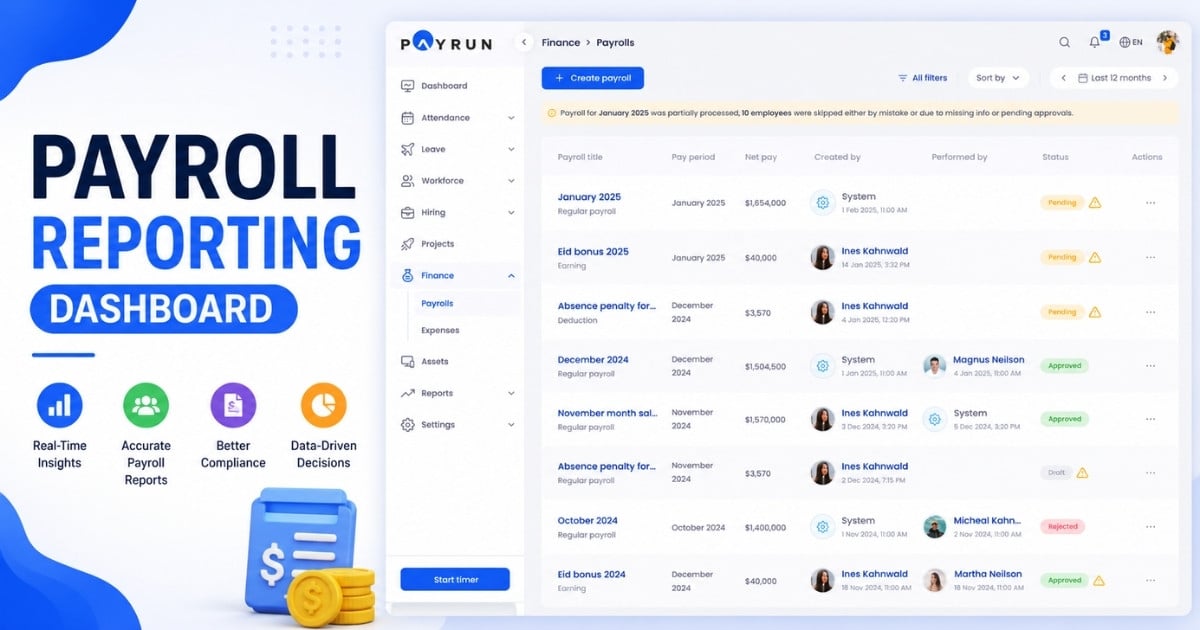
Payroll tax filing takes time and requires accuracy at every step. Small mistakes in tax calculations, payroll records, or filing deadlines can lead to penalties and compliance issues. Payrun helps businesses simplify payroll operations with automated payroll workflows, centralized employee records, and structured payroll management tools. The platform also supports accurate payroll calculations and organized payroll reporting.
Businesses can manage employee wages, tax-related payroll data, and payroll records from one all-in-one HR platform. Automated payroll software reduces manual work and lowers the risk of payroll tax filing errors. Payrun also supports innovative HR features, electronic payroll processes, detailed reporting, and payroll visibility for growing teams. The platform currently processes over 1 million payslips monthly for more than 5,000 clients, showing its growing role in modern payroll management and compliance support.
FAQs
Can Payroll Tax Filing Be Automated?
Yes, payroll software can automate payroll tax filing, tax calculations, tax deposits, and payroll tax returns. Automated systems also help businesses track due dates, employee wages, and withholding taxes more accurately. Many payroll platforms support electronic filing and reduce manual payroll errors. Automation also lowers the risk of payroll tax penalties and missed federal tax deposits.
What Happens If Payroll Taxes Are Filed Late?
Late payroll tax filing can lead to penalties, interest charges, and IRS notices. Employers may also face problems with employment tax liability and future compliance reviews. The IRS applies failure-to-deposit penalties based on how late the tax payments arrive. Penalties can range from 2% to 15% of unpaid payroll taxes.
Do Small Businesses Need To File Payroll Taxes Electronically?
No, not every small business must file electronically, but many states and federal agencies strongly encourage it. Some jurisdictions now require electronic filing once businesses reach certain payroll thresholds. Electronic filing improves payroll accuracy and reduces paperwork mistakes. It also helps employers submit tax forms, W 2s, and wage reports faster.
How Long Should Payroll Tax Records Be Kept?
Businesses should keep payroll tax records, employee wages, tax forms, and payroll tax returns for at least four years. The IRS recommends detailed records for tax payments, withholding taxes, and corrected income reports. Strong recordkeeping helps employers during audits and compliance reviews. An integrated employee record management system and payroll software also make long-term payroll record management easier and more secure.
Can A Payroll Service Help With Multi-State Payroll Taxes?
Yes, a payroll service can help businesses manage state payroll taxes across multiple jurisdictions. Remote teams often create complex state and local payroll tax requirements for employers. Payroll providers help track tax rates, deposit schedules, and filing deadlines in different states. Specialized HR and payroll software for SaaS and software businesses also reduces compliance risks and simplifies payroll reporting for growing businesses.