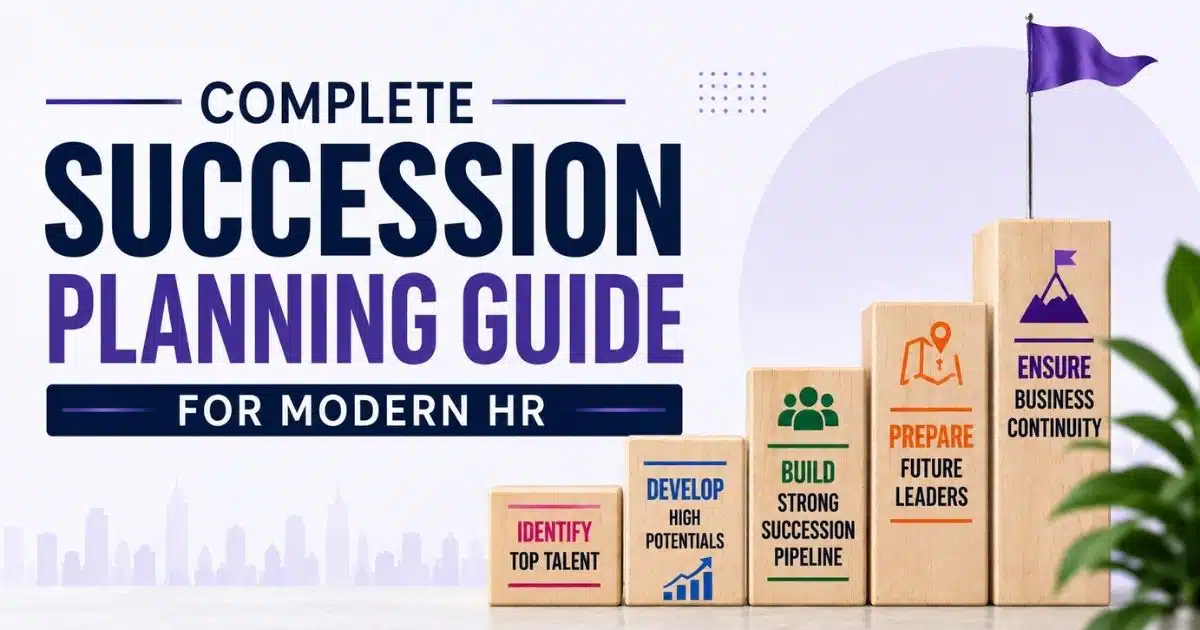
Unexpected resignations, retirements, and internal promotions can leave critical roles vacant if a business is not prepared. A strong succession planning strategy helps organizations stay ahead by preparing employees for future responsibilities before those changes happen. It also protects valuable institutional knowledge and keeps business operations running without disruption.
A well-defined succession planning process helps HR teams identify high-potential employees, create targeted development plans, and invest in continuous leadership development. Rather than reacting to talent gaps, organizations can build a reliable pipeline of future leaders who are ready to step into key positions. A practical succession planning guide provides the structure HR teams need to develop talent, strengthen workforce stability, and support long-term business success.
What Does Succession Planning Mean
Succession planning is a strategic HR process that prepares employees to take over key positions when current employees retire, resign, receive promotions, or leave unexpectedly. Rather than searching for external candidates after a vacancy occurs, organizations identify and develop internal talent in advance.
A successful succession plan focuses on more than filling leadership positions. It also protects critical knowledge, supports effective knowledge transfer, and ensures business continuity when employees in critical positions move on. HR teams typically work with managers and senior leaders to identify high-potential employees, assess their readiness, and create development opportunities that prepare them for future responsibilities. As a result, organizations can reduce disruption, strengthen their leadership pipeline, and maintain long-term stability.
Why Is Succession Planning Important For HR

Succession planning helps HR teams prepare for workforce changes before they disrupt business operations. It creates a structured approach to developing employees, protecting business continuity, and supporting long-term organizational success.
Protect Business Continuity And Reduce Workforce Risks
Unexpected resignations, retirements, or promotions can leave leadership roles and other critical jobs vacant. Succession planning helps organizations prepare for those situations before they happen. HR teams can identify employees who are ready to step into new responsibilities and reduce the time required to fill important positions.
A proactive approach also helps HR focus planning efforts on areas that have the greatest impact on daily operations. Instead of reacting to staffing challenges, organizations can respond with confidence because qualified employees are already prepared for the transition.
Build A Strong Pipeline Of Future Leaders
Every organization needs employees who are ready to take on greater responsibilities. Succession planning creates a clear path for developing future leaders by identifying employees with strong performance, leadership potential, and career aspirations.
HR teams can evaluate potential successors through performance reviews, competency assessments, and career discussions. Leadership development programs, mentoring, and hands-on learning opportunities help employees build the skills they need before moving into senior leadership or other leadership roles. As a result, organizations strengthen their internal talent pipeline and reduce their reliance on external hiring.
Align Employee Growth With Business Strategy
Succession planning becomes more effective when it supports the organization's business strategy. HR leaders can identify future workforce needs, evaluate upcoming skill requirements, and prepare employees for roles that will support long-term strategic goals.
Rather than developing employees without direction, organizations can create a succession plan that matches business priorities. This approach improves talent management by ensuring the right people are ready for the right opportunities as the business grows and changes.
Improve Employee Development And Retention
Employees are more likely to stay with an organization when they can see opportunities for career growth. Effective succession planning gives employees a clear understanding of possible career paths and the skills they need to advance.
HR teams can create personalized training and development programs that prepare employees for future responsibilities. Regular feedback, coaching, mentoring, and stretch assignments help employees build confidence while preparing for larger roles. Investing in employee growth also improves engagement, retention, and overall workforce capability.
Support Better Leadership Decisions With Data
Succession planning works best when decisions are based on reliable workforce data instead of assumptions. HR teams can assess employee performance, leadership potential, readiness levels, and skill gaps to make informed talent decisions.
Using structured succession planning strategies allows organizations to compare candidates objectively and identify the best potential successors for key positions. Data-driven planning also helps senior leadership monitor leadership readiness, evaluate development progress, and adjust succession plans as business needs evolve.
Right Time To Create A Succession Plan
The best time to create a succession plan is before your organization faces a leadership gap or an unexpected departure. Early planning gives HR teams enough time to identify key positions, assess key competencies, and prepare employees for future responsibilities. A comprehensive succession plan also strengthens business continuity by reducing disruption during leadership transitions.
Instead of reacting to change, organizations can build leadership talent pools, align employee development with career aspirations, and improve talent readiness through talent development programs. Starting early makes every succession planning effort more effective and creates an effective succession planning process that supports long-term growth.
- Before senior employees retire or announce their departure.
- During periods of rapid business growth or organizational change.
- When leadership transitions are expected within the next few years.
- After identifying business-critical roles that support business continuity.
- While launching employee development and talent development programs.
- When employees show leadership potential and clear career aspirations.
- During annual workforce planning to identify key positions and evaluate key competencies.
How To Create A Succession Planning Process In HR Step By Step

A structured succession planning process helps HR teams prepare employees for future roles before vacancies affect business operations. In addition to planning for the future, HR teams must also address common HR challenges and modern solutions that affect retention, engagement, and daily operations. Follow these seven steps to build a succession planning framework that strengthens your talent pipeline and supports long-term organizational success.
Step 1: Align Business And Talent Goals
Start by aligning succession planning with your business objectives. Every succession initiative should support future growth, workforce priorities, and long-term business operations instead of simply replacing employees.
Meet with key stakeholders to understand future workforce needs, expansion plans, and upcoming leadership changes. Their input helps HR prioritize positions that directly influence business performance.
When business goals and talent planning work together, succession planning becomes more strategic. It also ensures leadership development activities prepare employees for future roles that the organization will actually need.
Step 2: Identify Critical Business Roles
Not every position requires succession planning. Focus on every critical role that would significantly affect business operations if it became vacant.
Evaluate each department to identify positions with specialized expertise, decision-making authority, or responsibilities that are difficult to replace. Consider retirement risks, turnover trends, and future organizational needs.
Prioritizing critical roles allows HR teams to focus resources where they deliver the greatest value. It also creates a stronger succession planning framework by reducing operational risks before they occur.
Step 3: Define Success Profiles
After identifying priority roles, define what success looks like for each one. A clear success profile helps HR evaluate internal talent using consistent and objective criteria.
Document the required skills, experience, technical knowledge, leadership behaviors, and competencies for every position. Include both current responsibilities and future expectations as the role evolves.
Clear success profiles make it easier to compare candidates, identify skill gaps, and build a reliable talent pipeline. They also help HR recommend formal training and other development opportunities that prepare employees for future roles.
Step 4: Assess High-Potential Employees
After identifying promising candidates, evaluate whether they are ready for larger responsibilities. Look beyond current performance and assess leadership skills, decision-making ability, adaptability, and learning agility.
Use performance reviews, competency assessments, manager feedback, and behavioral evaluations to identify high-potential employees. This creates a fair and consistent process for selecting future leaders instead of relying on assumptions.
The assessment results help HR prioritize development efforts and strengthen succession management. A clear understanding of employee readiness also supports better succession strategies and builds a stronger talent pipeline.
Step 5: Prepare Future Successors
Once successors are identified, focus on preparing them for future leadership roles through practical development opportunities. The goal is to build confidence and capability before a transition takes place.
Create individual development plans based on each employee's strengths and skill gaps. Combine formal learning with mentoring, coaching, job shadowing, and stretch assignments that expose employees to real business challenges.
Targeted development helps key employees gain hands-on experience while improving leadership skills. Over time, organizations build a reliable next generation of leaders who are ready to take on critical responsibilities.
Step 6: Execute Leadership Transitions
Leadership transitions should follow a structured plan rather than happen unexpectedly. A gradual transition gives successors time to learn responsibilities while reducing disruption across teams.
Encourage outgoing leaders to transfer knowledge, introduce key relationships, and support successors during the transition period. This approach helps maintain operational stability and preserves business continuity.
Effective succession management continues even after the new leader takes over. Regular feedback and performance reviews help ensure the transition is successful and identify any additional support that may be needed.
Step 7: Review And Refine Plans
Succession planning is not a one-time activity. Business priorities, employee performance, and workforce needs change over time, so succession plans should evolve as well, supported by HR dashboard software that centralizes real-time workforce metrics.
Schedule regular talent reviews to reassess successor readiness, update development priorities, and identify new candidates. Review changes in business strategy and organizational structure to keep succession plans relevant.
Many organizations also use succession planning software or a modern HR management system to monitor employee progress, maintain successor data, and simplify plan updates. Regular reviews help HR create a succession process that remains effective as the organization grows.
Examples Of Successful Succession Planning

Real-world examples show that succession planning is the process of preparing future leaders before a leadership transition becomes necessary. Organizations that invest in talent development and long-term development strategies are better positioned to achieve their organizational goals while maintaining business continuity during executive changes.
Apple: Preparing Tim Cook For Leadership
Apple is one of the most recognized examples of successful succession planning. Before Steve Jobs stepped down as CEO in August 2011, Tim Cook had already spent years serving as Apple's Chief Operating Officer (COO). During Jobs' medical leaves in 2004, 2009, and early 2011, Cook assumed day-to-day leadership responsibilities, allowing him to gain first-hand executive experience before becoming CEO.
Rather than relying on a last-minute replacement, Apple gradually expanded Cook's responsibilities over many years. He worked closely with Steve Jobs, managed global operations, and developed a deep understanding of Apple's culture, strategy, and decision-making process. The board already had confidence in his leadership before the official transition.
The biggest lesson from Apple is that leadership development should begin years before a leadership transition. Strong strategic plans and continuous talent development create stability for employees, customers, investors, and the business.
Microsoft: Promoting An Internal Leader
Microsoft promoted Satya Nadella to CEO in February 2014 after more than 22 years with the company. Before becoming CEO, he successfully led several business units, including the Cloud and Enterprise division, where he played a major role in expanding Microsoft's cloud business and enterprise technologies.
Instead of hiring an external executive, Microsoft selected a leader who already understood the company's products, customers, culture, and long-term vision. His broad leadership experience allowed him to guide Microsoft's strategic shift toward cloud computing and artificial intelligence while maintaining organizational stability.
Microsoft demonstrates that succession planning is the process of aligning leadership decisions with business priorities. Organizations that invest in talent development and prepare internal leaders through meaningful executive experience are better equipped to execute future strategic plans without disrupting business operations.
IBM: Building Leaders From Within
IBM has built its reputation on developing leaders from within. Before becoming CEO in January 2012, Virginia Rometty spent more than 30 years at IBM, leading multiple business divisions across sales, consulting, and global business services. Her appointment reflected years of planned leadership development rather than an emergency replacement.
IBM prepares future executives through cross-functional assignments, global leadership opportunities, executive mentoring, and continuous leadership development. Instead of preparing employees for only one position, the company develops leadership competencies that enable executives to manage different business functions as organizational needs evolve.
IBM demonstrates that effective succession planning requires continuous investment rather than one-time decisions. Organizations can apply similar development strategies by using succession planning templates, identifying high-potential employees early, and preparing them through structured leadership development that aligns with plans and organizational goals.
Succession Planning Best Practices For HR

Strong succession planning requires more than identifying replacements for key roles. HR teams should build a structured process that develops future talent, strengthens the leadership pipeline, and keeps succession plans aligned with the organization's strategic direction.
Identify Successors Before Vacancies
Don't wait until a leadership position becomes vacant. Identify succession candidates early by evaluating performance, potential, and readiness for greater responsibility.
Focus on employees who consistently demonstrate leadership qualities and a willingness to grow. Early identification gives HR enough time to prepare employees for senior leadership roles through planned development rather than rushed decisions.
Build A Continuous Leadership Pipeline
Succession planning should be an ongoing process instead of an annual exercise. Using robust employee management software, HR can review talent regularly to identify emerging leaders and maintain a healthy leadership pipeline across departments.
As business priorities change, update talent assessments and development priorities. A continuous approach ensures future talent is always available for critical roles and reduces the risk of leadership gaps.
Create Individual Development Roadmaps
Selecting successors is only the beginning. HR should focus on developing action plans that prepare employees for larger responsibilities through practical learning experiences.
Provide mentoring, coaching, cross-functional projects, leadership training, and stretch opportunities that help employees build real leadership capabilities. Personalized development plans, supported by a centralized employee record management system, prepare succession candidates for future leadership responsibilities with greater confidence.
Involve Leaders Throughout The Process
Succession planning becomes more effective when business leaders actively participate. Managers and executives understand team capabilities and can identify employees with long-term leadership potential.
Senior leaders should help evaluate candidates, mentor future leaders, and review succession decisions regularly. Their involvement ensures succession planning supports the organization's strategic direction instead of becoming only an HR initiative.
Review And Improve Succession Plans
Business needs, employee performance, and organizational priorities change over time. Regular reviews help HR verify successor readiness, update development priorities, and replace outdated plans when necessary.
Measure promotion readiness, leadership bench strength, and employee progress to identify improvement opportunities. Continuous evaluation keeps succession planning relevant and ensures the organization always has qualified employees prepared for future leadership roles.
How Does HR Software Improve Succession Planning

HR software gives organizations a structured way to manage succession planning from one place. A comprehensive platform like Payrun’s all-in-one HR system replaces spreadsheets with real-time employee data, helping HR make faster decisions, prepare future leaders, and build succession plans that support long-term business growth.
Centralize Talent Data
Effective succession planning starts with accurate employee information. HR software with innovative HR features stores performance records, skills, certifications, career history, and development progress in one system, making it easier to evaluate employees for future opportunities.
Instead of searching through multiple files, HR and the leadership team can quickly compare candidates, review qualifications, and make informed succession decisions. Centralized data also improves consistency across the entire planning process.
Identify Skill Gaps Faster
HR software helps organizations identify skill gaps before employees move into larger responsibilities. Managers can compare current competencies with future role requirements and determine where additional development is needed.
This insight allows HR to create targeted learning plans instead of generic training programs. Closing skill gaps early improves employee readiness and increases confidence when leadership transitions occur.
Track Employee Development
Preparing future leaders requires continuous development rather than one-time training. HR software tracks learning progress, performance reviews, certifications, mentoring activities, and job rotations from a single dashboard.
Managers can monitor employee growth over time and determine whether development goals are being achieved. Continuous tracking ensures employees remain on the right path toward leadership positions, especially when combined with visual HR dashboard software that highlights readiness and gaps.
Support Better Succession Decisions
Manual succession planning often depends on opinions. HR software provides objective workforce data that helps managers compare employees based on readiness, competencies, performance, and development progress.
With reliable insights, organizations can build the best succession plans using measurable criteria instead of assumptions. Data-driven decisions also improve fairness and strengthen leadership confidence in the succession process.
Align Succession With Business Goals
Succession planning should support the organization's long-term organizational strategy rather than focus only on replacing employees. HR software connects workforce planning, performance management, and leadership development into one process.
As business priorities change, HR can update succession plans, monitor talent readiness, and prepare employees for emerging leadership needs. Replacing disconnected HR point solutions with an integrated platform that simplifies HR by unifying tools supports this alignment and helps organizations build a stronger leadership pipeline while supporting sustainable business growth.
Why HR Teams Choose Payrun For Succession Planning
Succession planning works best when employee information is accurate, organized, and easy to access. About Payrun explains how the platform helps HR teams manage workforce data from a single platform, making it easier to identify future leaders and support long-term talent development. Employee records, hiring data, attendance, leave, documents, and payroll information stay connected, giving HR better visibility when evaluating internal talent.
The platform also streamlines recruitment, with integrated recruitment management software, and improves employee onboarding software workflows and employee management, helping organizations maintain a strong leadership pipeline as the business grows. Instead of relying on scattered spreadsheets or disconnected tools, HR teams can manage employee information more efficiently and make better workforce decisions with confidence.
Frequently Asked Questions
How Often Should A Succession Plan Be Reviewed?
Most organizations should review their succession plan at least once a year. However, reviews should happen sooner after major business changes, mergers, leadership exits, or organizational restructuring. Regular updates help ensure successor readiness, reflect current business priorities, and keep development plans aligned with future workforce needs.
Should Succession Planning Guide Include Non-Leadership Roles?
Yes. Succession planning should cover any role that is critical to business continuity, not just executive positions. Technical specialists, project managers, sales leaders, and employees with unique expertise can have a significant impact on operations, so using scalable workforce management software can help track readiness for these positions. Expanding succession planning beyond leadership reduces operational risk and protects institutional knowledge.
How Do You Measure The Success Of A Succession Plan?
Organizations should evaluate succession planning using measurable outcomes instead of assumptions. Common metrics include internal promotion rates, successor readiness, time to fill critical positions, retention of high-potential employees, leadership bench strength, and the success of newly promoted leaders. Reviewing these metrics helps HR identify gaps and improve future planning decisions.
What Is The Biggest Challenge In Succession Planning?
One of the biggest challenges is identifying and developing successors early enough. Many organizations delay planning until a key employee leaves, leaving little time for knowledge transfer or leadership development. Other common obstacles include leadership bias, lack of executive support, unclear development plans, and inconsistent talent reviews, especially when managing a distributed or remote workforce with HRM software.
Can Small Businesses Benefit From Succession Planning?
Absolutely. Succession planning is valuable for organizations of every size. Small businesses and SaaS teams often depend on a few key employees, so the unexpected loss of one person can significantly affect operations. Implementing focused tools like HR and payroll software for SaaS and software businesses or dedicated small businesses alongside a simple succession plan helps prepare future leaders, reduce disruption, and support sustainable growth without requiring a large HR team or complex processes.