How To Create An Effective Internal Mobility Program For Your Workforce
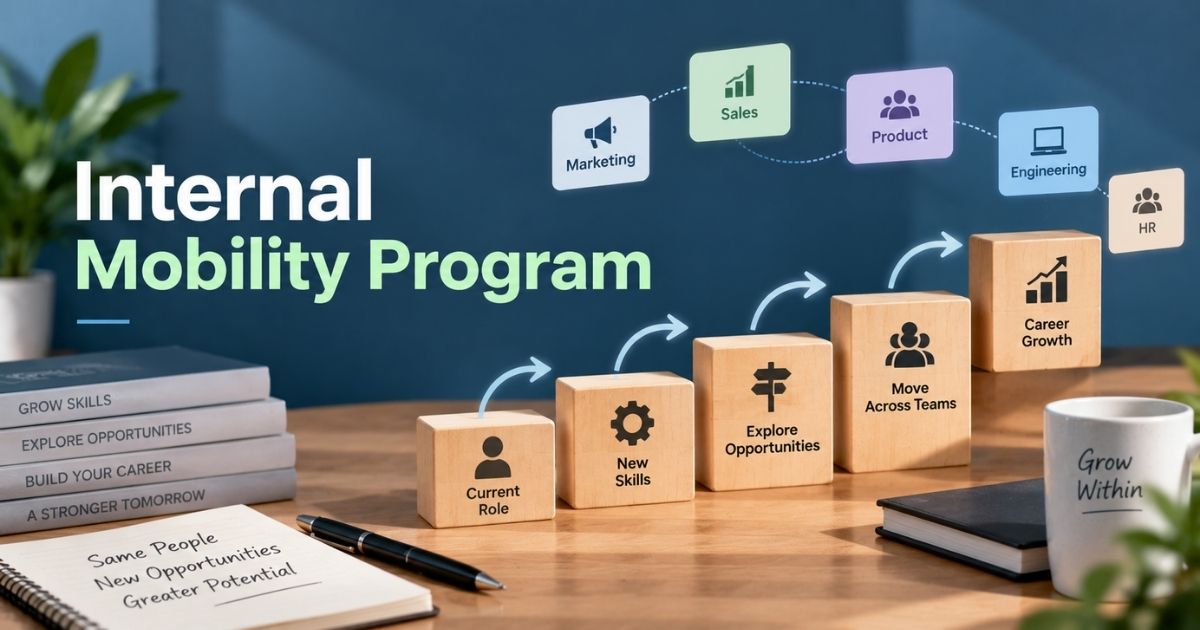
Table of Contents
Internal mobility refers to moving employees into new roles inside your own company instead of hiring from outside. A good internal mobility program turns that idea into a real process, one your team can actually see and use.
Many small businesses skip this because they assume internal mobility programs are only for giant companies with dedicated talent teams. Not true. Even a five-person HR department can build a strong internal mobility strategy using tools they already own and broader employee retention strategies that reduce turnover.
Employees notice when a company invests in career growth. Workers at companies that hire internally stay 41% longer, according to LinkedIn's 2020 Global Talent Trends report. Here's exactly how to build that kind of program without a talent marketplace platform or a massive budget.

What Is An Internal Mobility Program
Internal mobility refers to the practice of moving existing employees into new roles instead of hiring from outside. An internal mobility program turns that practice into a real system, one with clear steps for career development inside your company.
Talent mobility takes a few different shapes. Promotions move someone up to a higher role. Role-to-role mobility means a lateral move at a similar level. Transfers shift employees between departments or locations. Project-based mobility puts someone on a short-term assignment. Mentorships round things out, pairing employees with someone who can guide their growth.
People often confuse this with succession planning. Succession planning maps out who fills specific leadership roles down the road. Internal mobility is broader. It covers movement at every level, not just the top.
Small Business Benefits Of Internal Mobility
Internal mobility isn't just a nice perk for employees. It changes real business numbers, from retention to hiring costs to how fast you fill open roles. Here's what a strong internal mobility program actually delivers for a small business.
Signs Your Company Needs This Now
A few warning signs point straight at a missing internal mobility program. Turnover keeps climbing even though pay looks competitive. Good employees quietly start job hunting because they see no path up. Managers complain they can't find qualified internal candidates for open roles, so every position gets posted externally by default.
Job postings pile up while your own team stays overlooked. Skilled people leave for a title change somewhere else, one you could have offered them yourself. If any of this sounds familiar, your company needs internal mobility now, not later.
Retention And Cost Benefits
Employee retention gets a real boost when people can grow without leaving. Employees at companies hiring internally stay 41% longer, according to LinkedIn's Global Talent Trends report. That number alone justifies building a mobility program at most small businesses.
Cost savings show up fast too. Internal mobility can reduce recruitment costs by 50% to 60% compared to a full external search, since you skip job ads, agency fees, and long screening cycles. Qualified internal candidates already know your systems and your culture, so onboarding costs shrink along with the timeline. Existing talent becomes your cheapest hiring channel, not your last resort.
Faster Time To Fill Open Roles
Open roles sit empty for weeks when you only recruit externally. Job ads, screening calls, and interview rounds all take real time, and top candidates often accept another offer before you finish the process, which is where dedicated job posting software for faster hiring can help streamline external searches alongside your internal mobility efforts.
Internal mobility efforts shortcut most of that. You already know an internal candidate's skills, work ethic, and fit, so the process skips several early stages entirely, especially when supported by an all-in-one HR platform that centralizes data. Faster time to fill isn't just convenient, it protects revenue and morale on teams that are already stretched thin waiting for backup.
Closing Skill Gaps From Within
Skills gaps show up in every growing company, and hiring externally doesn't always close them fast enough. An internal mobility program lets you spot underutilized skills already sitting inside your workforce.
Someone in support might have hidden sales instincts. A junior analyst might already think like a manager. Training programs and cross-functional projects help these employees stretch into roles you'd otherwise post externally. Closing skill gaps from within also protects institutional knowledge, since the person filling the gap already understands your product, your customers, and your process.
Risks Of Skipping Internal Mobility
Skipping internal mobility carries real risk, even when it feels easier in the short term. Top talent leaves quietly, often for a role you could have created internally. Every departure also drains institutional knowledge that took years to build.
Without internal opportunities, employees stop believing in career growth at your company. Engagement drops first, then performance, then retention. Recruitment costs climb since every gap gets filled through external recruitment instead of your own bench. A business that skips internal mobility ends up paying twice, once in turnover and again in higher hiring costs, even if they invest in best-in-class recruitment software to make external hiring more efficient.
Step-by-Step Guide To Build An Internal Mobility Program
A strong internal mobility program doesn't need a big HR team or expensive software, just a clear process. Here's exactly how to assess gaps, write a policy, post roles internally, offer training, and get managers on board.
Current Mobility Gap Assessment
A gap assessment starts with honest questions. Where do critical skills gaps sit today? Which roles keep getting filled externally when someone internal could grow into them? Look at turnover data, exit interviews, and manager feedback for patterns.
Map employee skills against your existing workforce needs, ideally using a centralized employee database instead of scattered spreadsheets. Talk to human resources about where internal talent development already works and where it stalls. A clear internal mobility strategy starts with knowing exactly where the gaps are, not guessing. Skip this step and the rest of your mobility program builds on shaky ground.
Internal Mobility Policy Basics
Every internal mobility policy needs a few basic rules written down. Spell out who's eligible, how long someone must stay in a role before applying elsewhere, and how managers approve a move.
Fair access to opportunities matters most here. Every eligible employee should see the same internal job openings, not just the ones a manager happens to mention. Transparent communication keeps the whole internal mobility process credible, since employees trust a program they can actually see and understand. A short, clear policy beats a vague verbal agreement every time.
Internal Job Posting Process
Internal roles don't need a fancy talent marketplace platform to get posted well. A shared internal job board, even a simple page on your intranet or inside your HR software, an applicant tracking system, or modern recruitment software system, works fine for most small businesses.
List the role, the requirements, and the deadline just like an external post. Let existing employees apply directly instead of waiting for a manager's tap on the shoulder. Give internal candidates the same interview process as outside applicants, so the decision stays fair. A visible internal job board also signals that internal opportunities are real, not just talk.
Training And Development Options
Solid training programs turn potential into readiness. Cross-functional projects let employees test a new role before committing fully, which lowers risk for everyone involved. Mentorships pair less experienced employees with someone who's already done the job.
Professional development doesn't need to be expensive. A week of shadowing a coworker, a stretch assignment, or an online course all count as continuous learning and support broader employee engagement strategies. Employees in mentoring programs see real results too, with 25% experiencing a salary grade change within five years, according to Wharton research. Internal talent development like this costs far less than hiring and training someone brand new.
Manager Buy-In
Managers can make or break an internal mobility program. Some quietly hold onto their best people, afraid of losing a top performer to another department. Talent hoarding is the technical term for this, and it kills mobility efforts fast.
Executives must support internal mobility openly, or managers will keep protecting their own headcount instead of the business's bigger goals. Set clear expectations that releasing a strong employee to a new role counts as a win, not a loss. Recognize managers who develop internal talent well. Encourage employees to see managers as advocates for their career growth, not gatekeepers standing in the way.
Internal Mobility Challenges
No internal mobility program runs perfectly from day one. A successful internal mobility program still hits friction, and internal mobility frameworks alone can't solve every issue. Understanding internal mobility important challenges helps you enable internal mobility across all your internal mobility initiatives before they quietly stall.
The Manager Gatekeeping Problem
Talent hoarding shows up most in managers who quietly block upward mobility for their best people. A manager keeps a strong employee in place because losing them feels like a personal loss, even when the move would help the business.
Internal recruiting slows to a crawl when this happens across multiple teams. Talent acquisition teams end up posting roles externally because managers never release high-potential employees to explore career paths in different departments, even when they use robust recruitment management software. Organizations that prioritize internal mobility can fill roles 6-8 weeks faster, a gap that gatekeeping erases instantly. Fixing this needs a policy that treats internal moves as normal practice, which keeps talent acquisition honest for everyone involved.
Employee Hesitation To Apply
Many employees stay quiet about wanting a new role, even when internal mobility opportunities exist. Fear of upsetting their current manager or looking disloyal keeps good candidates from raising their hand.
Employee satisfaction drops when career aspirations go unspoken for too long. In fact, 70% of employees prefer exploring opportunities within their current organization before looking outside, which shows the hesitation isn't a lack of interest. People want to build new skills and grow, but silence looks like contentment from the outside. Employee engagement improves fast once employees see colleagues move internally without backlash. Employee growth needs visible proof that applying internally is safe, not just a policy on paper.
Pay And Level Equity Issues
Pay gaps create quiet resentment fast. An employee who moves internally sometimes ends up earning less than an external hire doing the identical job, and word travels through the office within days.
Talent management teams need clear rules for how pay adjusts during internal transitions, whether it's a promotion or a lateral move. Internal talent acquisition only works long-term if employees trust the numbers behind it. Even so, 33.4% of candidates prioritize career growth opportunities over a slightly bigger paycheck, which is exactly why fair pay policy matters alongside real advancement. Tie pay decisions to actual business needs and role scope, not loyalty discounts, to keep the agile workforce you're building.
Backfilling The Departing Role
Moving someone internally solves one problem and creates another. Their old role still needs covering, and that gap often gets ignored until it becomes urgent.
Plan the backfill before you approve the move, not after. Sometimes external hiring is genuinely the right call for the vacated seat, especially for entry-level work where external candidates are easy to find and train, and AI resume screening software can help you evaluate them quickly. Internal recruitment works better for roles that need company-specific knowledge, since internal hires reach full productivity 28 weeks faster than external hires. Prioritizing internal mobility only works long term when both your employees, the one moving up and the one filling in behind them, feel supported through the change.
Skills Visibility Gaps
Small businesses often don't know what skills already exist inside their own team, which is where a modern HR management system can help. Nobody tracks who took a certification, who mentors quietly, or who could handle a bigger role tomorrow.
Knowledge sharing surfaces this, but only if someone looks. Skip expensive internal mobility platforms, a simple skills list tied to employee records works fine at small scale. Promote knowledge sharing through regular check-ins, since employees are 5.3x more likely to feel empowered with belonging when their skills get noticed. Companies with strong internal mobility see 53% longer employee tenure, largely because visibility like this makes people feel known. Internal talent mobility depends on this, which is exactly why internal mobility matters across every type of internal mobility your team uses.
Common Program Mistakes
Even a carefully planned internal mobility program can fail in practice. Most failures come from small oversights that quietly undermine trust. Here are five mistakes that break a mobility program, and how to fix each one.
Missing Written Policy
A program without a written policy runs on guesswork. Employees don't know the types of internal mobility available to them, so they assume promotions are the only option worth chasing.
Without clear rules, managers make decisions differently on every team. One department supports career development openly, another quietly discourages it. New skills go unrecognized when nobody writes down how a move actually works. A written policy fixes this fast, giving every employee the same starting point. Skip it, and even a well-run internal mobility program looks unfair from the outside.
Weak Internal Communication
Silence kills a mobility program faster than anything else. If nobody tells employees that internal roles exist, the internal job board might as well not exist either.
Encourage employees to ask about open roles, but only if you first tell them those roles exist. Talent acquisition can't build a real pipeline internally if information stays locked inside manager conversations nobody else hears. Post updates in team meetings, email digests, or your internal job board itself, and consider using a mobile HR app for employee self-service so updates reach people wherever they work. Weak communication doesn't just slow things down, it teaches people not to bother asking again.
No Manager Accountability
Nothing changes when nobody answers for it. Without manager accountability, internal mobility becomes a nice idea that nobody actually acts on.
Tie manager performance reviews to how well they develop the existing workforce, not just to team output alone, because strong employee engagement strategies depend heavily on manager behavior. A manager who blocks every internal move should face real consequences, not a shrug from leadership. An effective internal mobility program only works when accountability sits above individual managers, not just inside a policy document nobody enforces. Numbers make this easier, since internal fill rates show exactly who's contributing and who's holding people back.
One Size Fits All Programs
A rigid program treats every employee the same, and that's exactly the problem. A parent returning from leave needs different support than a recent graduate chasing a first promotion.
Build a mobility program flexible enough to bend around real situations. Offer a lateral move for someone testing a new field, and a straight promotion path for someone who already knows exactly where they're headed. Rigid rules push people out the door instead of keeping them engaged, and they also magnify broader HR challenges organizations face. Flexibility costs nothing extra, but ignoring it costs you good employees.
No Follow-Up After The Move
A successful move doesn't end on day one in the new role. Employees who transition internally still need follow-up conversations, just like external candidates get during onboarding.
Skip the follow-up, and a promising internal move can quietly fail within months. Schedule a 30, 60, and 90-day check-in, same as you would for any new hire coming from outside. Ask what's working, what feels confusing, and what support is still missing. Real follow-up after the move is what turns a good hire into a lasting one.
Internal Mobility Success Metrics
A mobility program only proves itself with real numbers behind it. The right metrics show whether internal mobility efforts are actually working, not just looking good on paper, and good HR software for small businesses makes these analytics easier to track. Here are the numbers worth watching every quarter.
Internal Mobility Rate Formula
Every internal mobility program needs one core number: the internal mobility rate. Calculate it by dividing total internal moves by your total headcount, then multiply by 100 to get a percentage, ideally pulling accurate headcount data from integrated HR software for small and medium businesses.
A small business with 50 employees and 5 internal moves in a year sits at a 10% internal mobility rate. Track this number quarterly, not just once a year, so trends show up early. A mobility program with a rising rate proves internal talent mobility efforts are paying off, not just sitting on paper. Compare your rate against your own history first for the clearest signal.
Internal Fill Rate
Internal fill rate answers a different question than mobility rate. Fill rate measures how many open roles get filled by existing employees instead of external candidates.
Divide roles filled internally by total roles filled, then multiply by 100. A business prioritizing internal mobility usually aims for a fill rate between 30% and 50%, since going higher can start starving your talent acquisition pipeline of fresh perspective, even without a formal talent marketplace in place. A low fill rate often points straight back to weak internal communication or manager gatekeeping. Watch this number alongside your open positions list, not just at review time.
Time To Fill Internally
Time to fill internally tracks the days between posting a role and someone actually starting it. Internal transitions usually move faster than external hiring, since you skip sourcing and long background checks.
Measure this separately from your regular time-to-fill number, since mixing internal and external hires hides real patterns. A shrinking number over several quarters signals your internal job posting process and internal recruiting workflow are working well together. A growing number often means managers are slow to approve moves, or your internal mobility platforms and processes need a simpler setup.
Retention After Internal Moves
Retention after internal moves shows whether a move actually worked long term. Someone might accept a promotion and still leave within six months if the new role doesn't fit.
Track how many employees stay at least a year after an internal transition, then compare that against your average retention rate for the whole company. Strong internal mobility efforts usually show noticeably higher retention among people who moved internally versus new external hires, helping you avoid common employee turnover causes in fast-growing companies. Employee satisfaction tends to climb too, since these employees feel the company followed through on career growth promises instead of just talking about them.
Conclusion
Internal mobility isn't a bonus program for big companies with deep pockets. It's a practical way to keep your best people, cut hiring costs, and fill roles faster, even at a small business with a lean HR team using HR software built for small businesses.
A successful internal mobility program comes down to a few basics. Write a real policy. Post roles where every employee can see them. Get managers to support internal mobility instead of quietly blocking it, including for hybrid and distributed teams supported by HRM software for managing remote workforce. Track your numbers so you know what's actually working.
Internal talent is often sitting right in front of you, already trained, already trusted, already invested in your company's success, and the right innovative HR features can make it easier to see and support that talent. Prioritizing internal mobility now means fewer expensive external searches later, and a workforce that stays engaged because they can see exactly where career growth leads inside your own walls.