7 Wellness Program Ideas To Build A Healthier Workplace
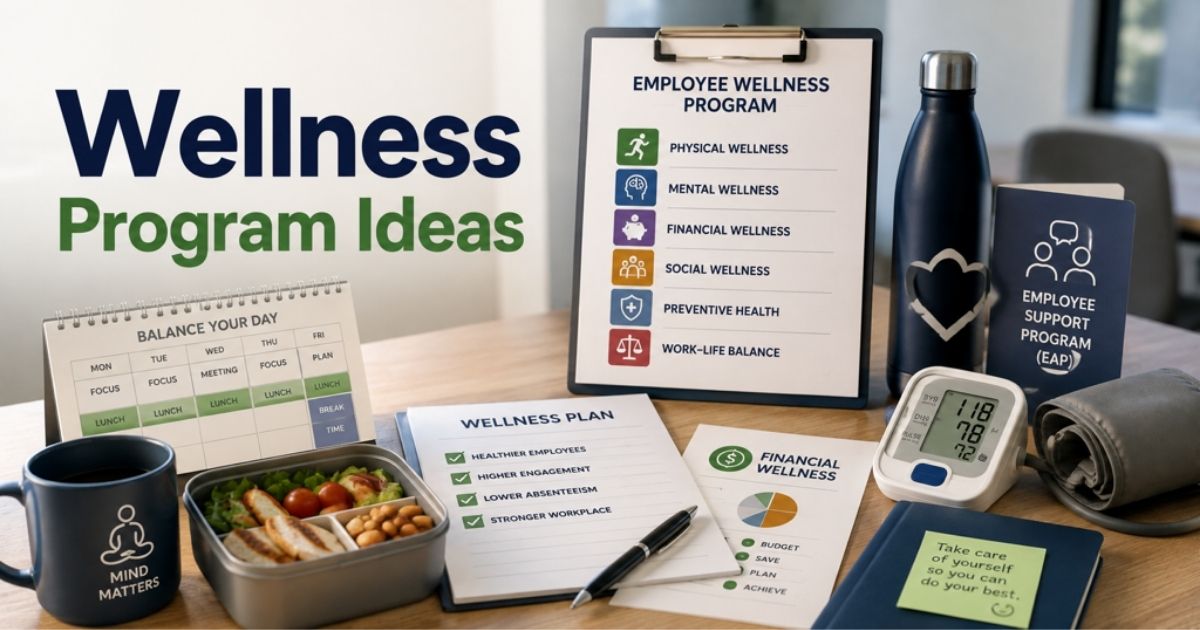
Table of Contents
A good wellness program should make employees feel better, not give them another task to complete. Yet many workplace wellness programs still rely on gym memberships, fitness challenges, or one-time events that fail to address what employees actually need or the underlying HR challenges organizations face, which modern HR software for small and medium businesses can help surface and address.
Strong employee wellness programs take a broader approach. They support physical health, mental health, financial wellness, and overall employee well-being. The CDC also describes workplace health programs as a coordinated mix of programs, policies, benefits, and workplace support rather than isolated activities.
The right wellness program ideas can help employers create healthier habits while supporting a better workplace experience. In this article, we’ll explore seven practical ideas, what makes them effective, how to introduce them, and how to measure their success.

What Is A Workplace Wellness Program?
A workplace wellness program is a set of programs, policies, benefits, and workplace supports that help improve employee health and well-being. Rather than focus only on physical health, comprehensive workplace wellness programs can support mental health, healthy behaviors, and a safer work environment. The CDC recommends a coordinated approach that fits employee needs and workplace goals.
Employee wellness can take many forms. A company’s wellness program may include fitness classes, health screenings, mental health support, employee assistance programs, health education, or other wellness initiatives. Strong programs also consider workplace stress and work-life balance. The goal is to help employees improve their physical and mental well-being while creating a company culture that supports better health over time.
7 Wellness Program Ideas To Build A Healthier Workplace
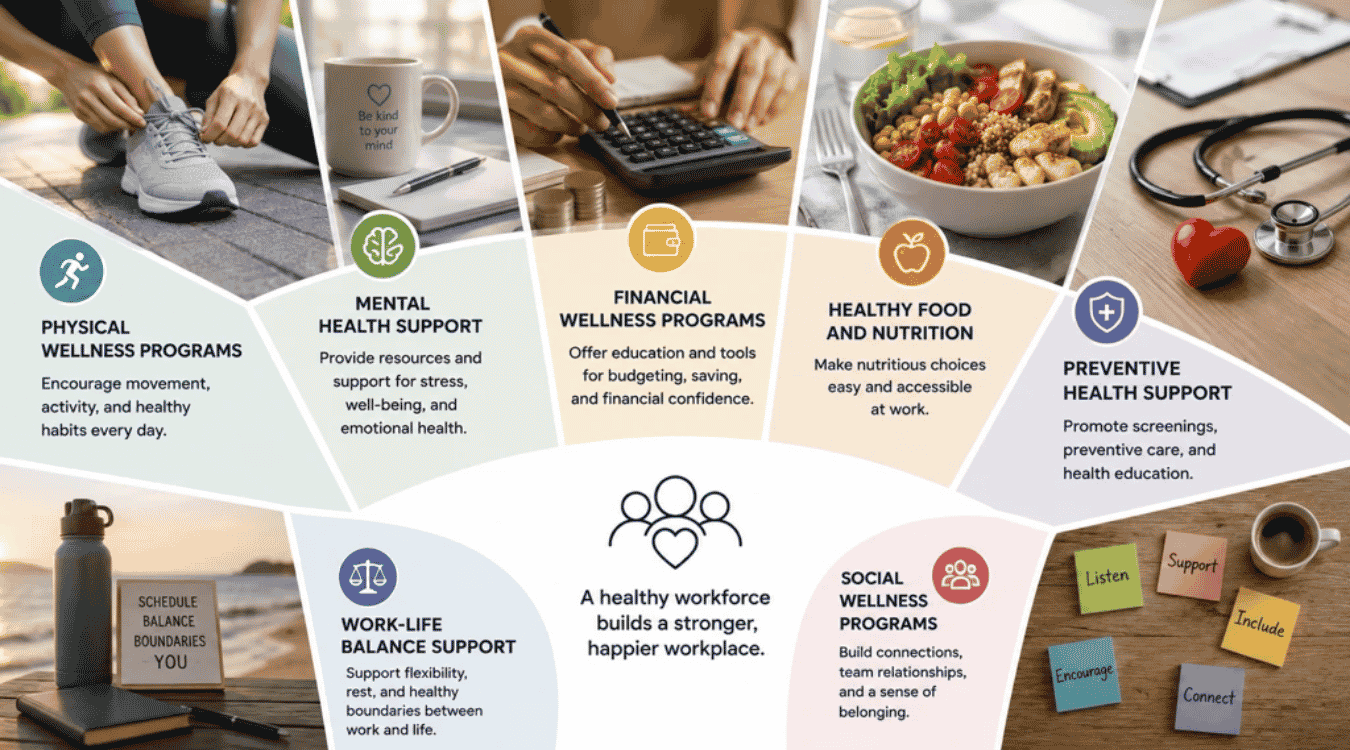
The best wellness program ideas solve real employee needs instead of adding random perks. A balanced approach can support physical health, mental health, financial health, and social connection while giving employees practical ways to build healthy behaviors, often supported by flexible workforce management software that frees time for people to actually use wellness benefits.
1. Physical Wellness Programs
Physical wellness programs help employees stay active during and outside the workday. Simple options include walking meetings, fitness classes, fitness challenges, stretch breaks, or gym memberships. Employers can also encourage employees to take active breaks instead of sitting for hours.
The CDC recommends workplace support for physical activity and notes that no single approach fits every workforce. Social support, leadership support, and activities that fit into the normal workday can help employees stay active.
2. Mental Health Support
Mental health deserves the same attention as physical well-being. Employers can offer employee assistance programs, therapy support, mental health days, mindfulness workshops, and other mental health resources. Employee Assistance Programs can also provide confidential counseling services for personal or work-related concerns.
Stress management should be practical too. Meditation, yoga, and stress reduction techniques can help employees manage stress. A broader approach should also look at workplace stress itself. Mental health benefits work best when employees can use them without fear, pressure, or stigma.
3. Financial Wellness Programs
Financial stress can follow employees into work. Financial wellness programs can help through educational resources on budgeting, debt management, emergency savings, retirement planning, and everyday money choices. Employers can also explain pay and benefits clearly so employees understand the support available to them, using HR software for small businesses to centralize information and make access easier.
A good financial wellness program should empower employees rather than tell them how to spend their money. Keep participation private and voluntary. Practical education can support financial health and give employees more confidence about decisions that affect their personal and professional life.
4. Healthy Food And Nutrition
Food choices can affect how employees feel throughout the workday. Employers can provide healthy snacks, nutrition workshops, or healthy cooking classes that teach balanced eating and simple meal prep. Small changes may feel more useful than strict diets or company-wide weight goals.
The program should make healthier food choices easier without judging employees. CDC workplace data identify nutrition and healthy eating as common areas of workplace health programs, alongside physical activity and stress management. A supportive approach makes nutrition part of employee wellness without turning food into another workplace rule.
5. Preventive Health Support
Health screenings can help identify potential health risks and connect employees with appropriate care. A company's wellness program might offer blood pressure checks, health education, vaccination information, or access to preventive care resources. Participation should remain voluntary and protect employee privacy.
Employers should also keep expectations realistic. A randomized trial involving 32,974 employees found improvements in regular exercise and active weight management after 18 months. However, it found no significant changes in healthcare spending, absenteeism, job tenure, or job performance. Successful wellness programs should focus on useful support rather than promise quick savings.
6. Work-Life Balance Support
A healthy work-life balance depends on how work is designed, not just the perks employees receive. Flexible schedules, realistic workloads, protected breaks, healthy sleep habits, and clear boundaries can help reduce workplace stress. Rest and recovery spaces may also give on-site employees room to reset, while thoughtful use of HRM software to manage remote workforces can extend similar balance to distributed teams.
Managers play a major role here. Leadership support can make wellness initiatives feel like a real part of company culture. A successful corporate wellness program should give people room to care for their mental and physical health without forcing them to choose between their well-being and their work.
7. Social Wellness Programs
Social wellness helps employees feel connected to the people around them. Team-building activities, mentorship programs, volunteer days, employee resource groups, and small wellness challenges can create stronger relationships. Remote employees should have equal ways to participate.
Keep activities optional and inclusive. Wellness challenges can encourage team collaboration and healthy competition, while volunteer days can connect people around a shared purpose. Strong company wellness initiatives should support social well-being without forcing employees to socialize. Programs that respect different personalities and needs can contribute to employee engagement, employee satisfaction, and a healthier company culture, especially when paired with thoughtful employee engagement strategies.
What Makes An Employee Wellness Program Effective?
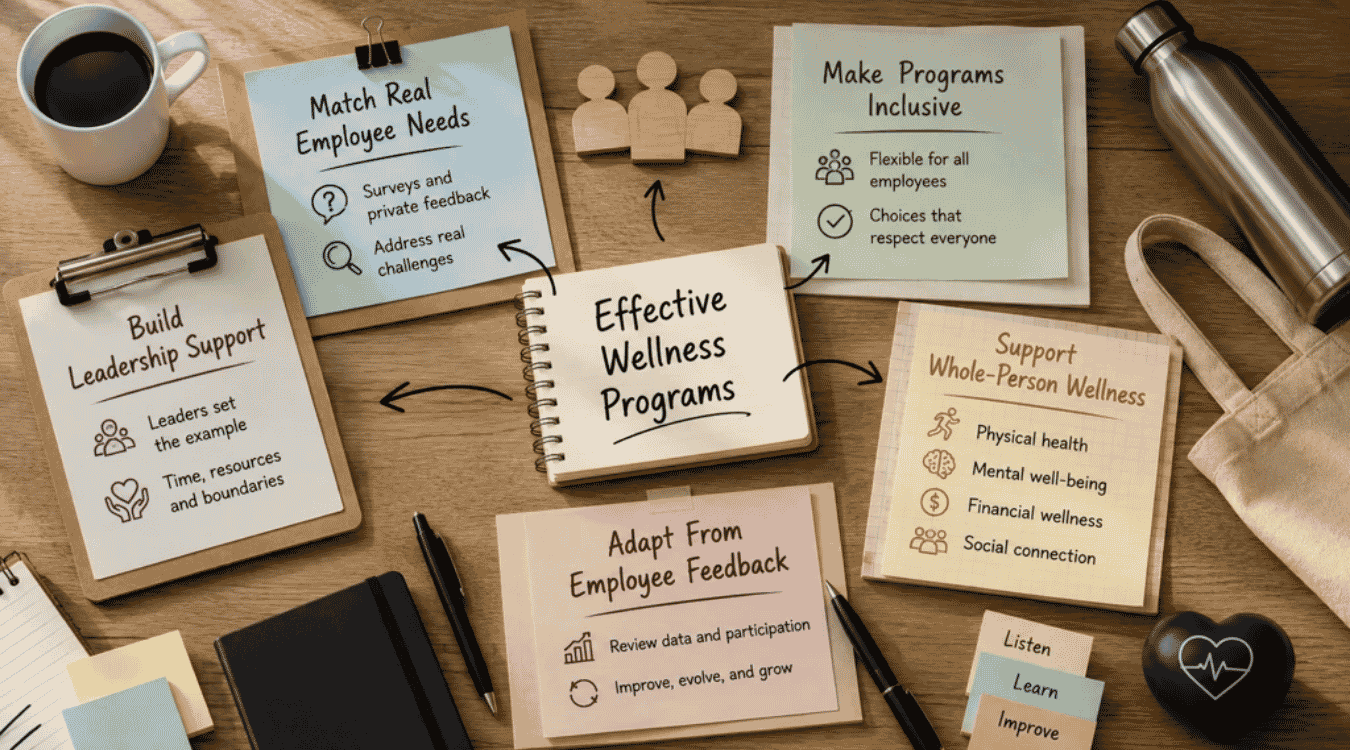
A successful wellness program does more than offer a long list of benefits. It fits real employee needs, has support from leaders, and stays easy to access. Strong programs also change over time based on employee feedback and results.
Match Real Employee Needs
Employee wellness programs work best when they address what people actually need. Ask employees about workplace stress, mental health challenges, physical well-being, financial stress, and work-life balance. Surveys and private feedback can help uncover needs that managers may not see.
The CDC recommends assessing both current health concerns and employee interests. It also advises employers to involve workers early. A wellness program built around real needs is more useful than one copied from another company. Employee feedback can also help employers choose wellness initiatives that people are more likely to use.
Build Leadership Support
Leadership support can shape how employees view a company's wellness program. Senior leaders and managers should treat employee well-being as part of the company culture. They also need to give employees enough time and support to take part.
Research reviewed by the CDC found that leadership support was one of the organizational strategies linked with better physical activity outcomes in workplace programs. Leaders can support wellness by joining activities, promoting work-life balance, and respecting healthy boundaries. Their actions show employees that wellness is more than a company message.
Make Programs Inclusive
Corporate wellness programs should work for more than one type of employee. Remote employees, shift workers, people with disabilities, and employees at different life stages may need different options. Flexible access can make wellness program participation easier.
Choice matters too. Some employees may prefer fitness classes, while others need mental health resources, financial wellness, or personal development support. Avoid pressure and protect privacy, especially around health screenings and mental health issues. NIOSH guidance also stresses active employee participation in program design and evaluation. An inclusive approach helps more employees benefit without making anyone feel left out.
Support Whole-Person Wellness
Effective employee wellness programs look beyond physical fitness. Comprehensive wellness programs can support physical, mental, emotional, and social health. Financial wellness programs can also help employees deal with money concerns that affect their daily lives.
The CDC recommends a comprehensive approach that addresses multiple health risks and conditions rather than relying on isolated activities. A balanced corporate wellness strategy may combine mental health benefits, physical wellness programs, financial wellness, social support, and a healthy work-life balance. Such variety helps employers support the different parts of employee wellbeing that shape daily life, especially when underpinned by a secure employee record management system that keeps participation data organized and protected.
Adapt From Employee Feedback
Successful wellness programs should not stay the same forever. Employee needs change, and some wellness ideas will work better than others. Regular feedback can show which benefits employees value, what barriers they face, and where the program needs to improve.
The CDC treats evaluation as part of a continuous improvement process. Employers can use results to identify gaps and strengthen existing activities. Ask for feedback at regular points and watch wellness program participation. Data from employee productivity tracking with timeline insights and detailed time log reports can also show when workload or scheduling undermines wellness goals. Small changes based on real employee experiences can make company wellness initiatives more relevant, useful, and sustainable over time.
How To Start A Wellness Program At Work
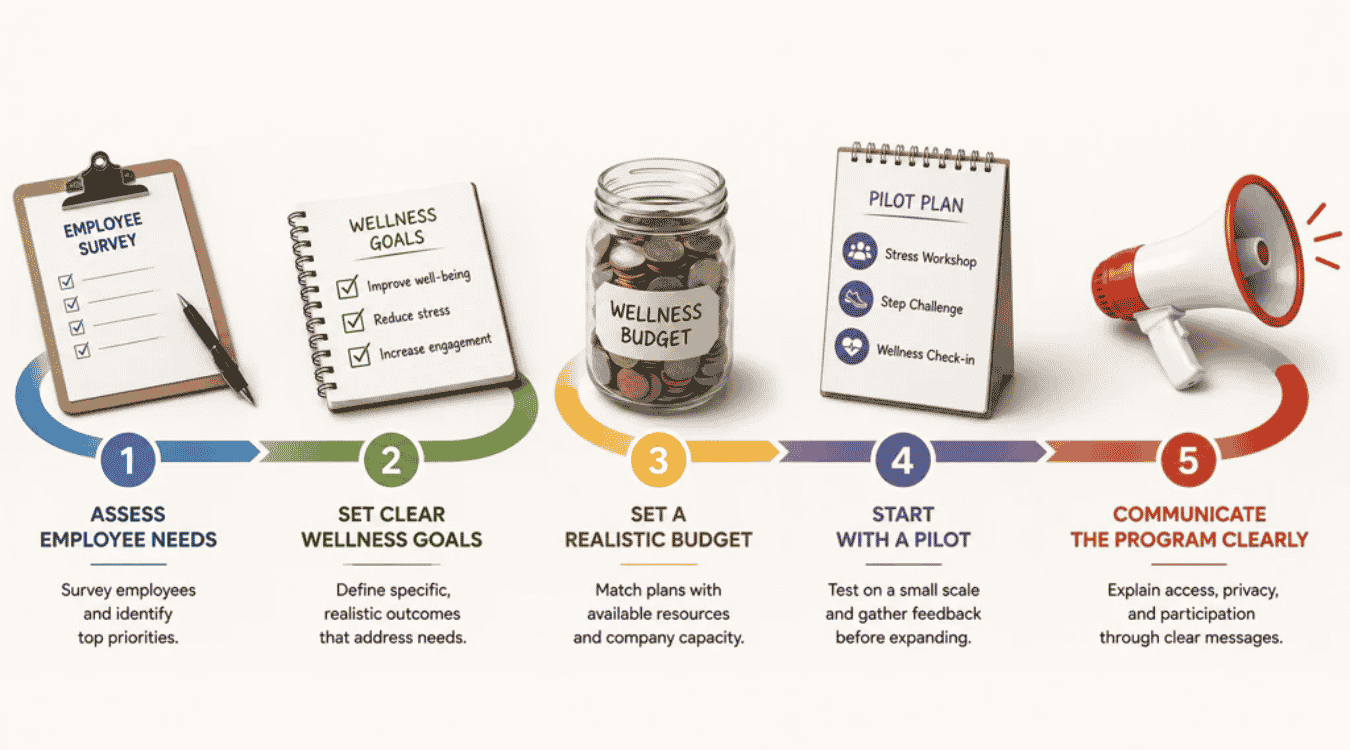
A workplace wellness program needs a clear plan before the first activity begins. Start with employee needs, choose realistic goals, and decide what your business can support. A simple process helps turn good wellness ideas into useful, lasting programs, especially when HR teams simplify HR by replacing disconnected tools that make wellness administration harder than it needs to be.
Assess Employee Needs
Start by finding out what employees actually need. Use anonymous surveys, benefit data, and voluntary feedback to identify concerns around mental health, physical health, financial stress, workplace stress, and work-life balance. Ask what support employees would use as well, and pay attention to recurring HR challenges like turnover, disengagement, and remote-work strain that broader modern HR challenge analyses often highlight.
The CDC puts assessment first in its Workplace Health Model. Employers should consider employee interests, health concerns, the work environment, and company practices. Employee input should also start early in the process. Good data helps you choose wellness initiatives based on real needs instead of assumptions.
Set Clear Wellness Goals
Decide what the wellness program should improve. A company may want to support mental well-being, encourage healthy behaviors, improve employee engagement, or help employees manage stress. Keep the first goals specific and realistic.
Connect each goal to a clear employee need. High workplace stress may call for better mental health support and changes to work conditions. Low physical activity may call for walking meetings or fitness classes. Goals around morale or commitment may benefit from structured employee engagement strategies, including proven engagement tactics that tie wellness to daily work. The CDC recommends using assessment results to set priorities and create a workplace health improvement plan.
Set A Realistic Budget
A successful corporate wellness program does not need a huge budget. Start with resources your company can sustain. Low-cost options may include wellness challenges, educational resources, walking groups, or flexible break policies. Larger budgets may support gym memberships, health screenings, or employee assistance programs, as well as investing in HR software for small businesses that streamlines administration so wellness stays manageable.
Account for more than direct costs. Staff time, communication, vendors, incentives, and program management may also require resources. CDC guidance specifically recommends considering company size and available resources. It also suggests low-cost options for small and medium-sized employers.
Start With A Pilot
A small pilot lets you test a wellness program before a company-wide launch. Choose one or two priorities and make participation easy. For example, test a stress management workshop, nutrition program, or fitness challenge with a smaller group first.
Set a timeline and decide who will manage the pilot. The CDC's workplace health checklist recommends pilot tests on a smaller scale before broader implementation. It also recommends regular feedback during the process. Early feedback can reveal problems before you invest more time or money.
Communicate The Program Clearly
Employees need to know what the program offers, why it exists, and how they can take part. Use simple messages across email, meetings, internal channels, or workplace notices. Explain whether participation is voluntary and how personal information will stay private.
Communication should continue after launch. The CDC includes clear and consistent employee communication as a core part of workplace wellness planning. Leadership support matters too. Managers can encourage employees to participate, protect time for wellness activities, and show that employee well-being is a real company priority.
Why Employee Wellness Programs Fail And How To Improve Participation
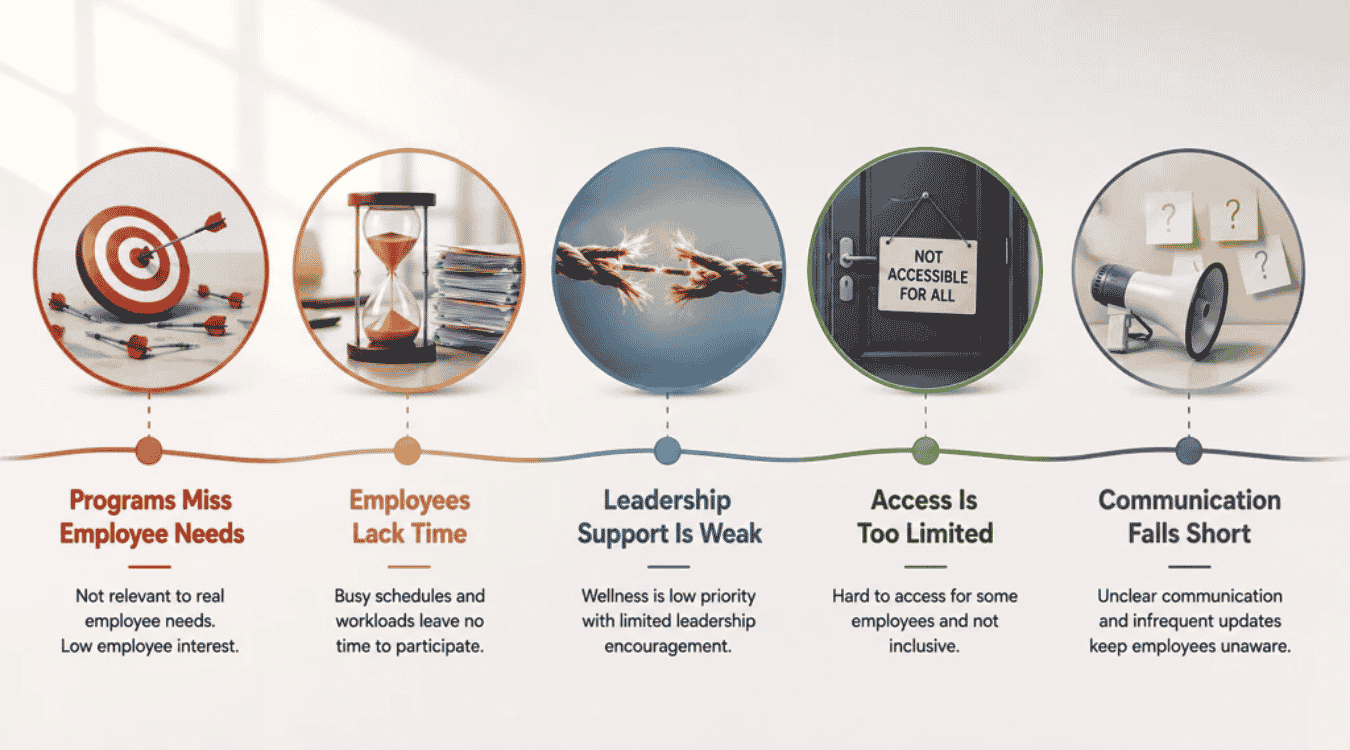
A wellness program can look great on paper and still attract little interest. Research shows that workplace wellness program participation is often below 50%. Poor fit, limited access, weak leadership, time pressure, and low trust can all keep employees away.
Programs Miss Employee Needs
Employees will rarely value wellness initiatives that do not solve problems they actually face. A fitness challenge may appeal to some people, while others may need mental health support, financial wellness, or help with workplace stress. Lack of relevance is a known barrier to participation.
Regular employee feedback can reveal what people need and what keeps them away. The goal is not to offer more wellness ideas. The goal is to offer better ones.
How to improve it:
- Ask employees what support they need.
- Use short and anonymous surveys.
- Offer choices across different wellness needs.
- Review feedback after each program.
- Remove offers that employees do not value.
Employees Lack Time
A wellness benefit is hard to use when employees have no time for it. Heavy workloads, rigid schedules, and work demands can become direct barriers to wellness program participation. Managers may support employee wellness in theory but still struggle to make room for it during busy workdays.
Employers should make participation fit naturally into work. A healthy work-life balance means employees should not have to sacrifice lunch, stay late, or finish extra work just to use a wellness benefit, and thoughtful workforce calendar management can ensure schedules leave room for wellness activities across teams and shifts.
How to improve it:
- Protect time for wellness activities.
- Offer options during different shifts.
- Keep activities short and easy to join.
- Give remote employees equal access.
- Avoid adding wellness tasks after work.
Leadership Support Is Weak
Employees notice when leaders promote wellness but never support it in practice. Leadership support affects access to resources, workplace norms, and whether employees feel comfortable taking part. Research across 812 organizations found organizational and leadership support was the strongest predictor of reported wellness participation among the practices studied.
Managers should encourage employees without creating pressure. Leaders can join activities, protect time for participation, support mental health days, and model healthy boundaries. Strong actions make employee well-being part of company culture.
How to improve it:
- Ask leaders to take part visibly.
- Train managers on available programs.
- Protect employee participation time.
- Include wellness in manager communication.
- Model healthy work-life boundaries.
Access Is Too Limited
One wellness program will not work equally well for everyone. Remote employees, shift workers, lower-wage employees, people with disabilities, and workers at different locations may face different barriers. Recent research links nonparticipation with poor access, low perceived relevance, and inequitable benefit design, and highlights the importance of HRM tools and employee productivity tracking that respect privacy while improving support.
Corporate wellness programs should offer flexible ways to participate. Employees also need privacy, especially for health screenings, mental health issues, and confidential counseling services. Better access helps company wellness initiatives reach people who might otherwise be left out.
How to improve it:
- Offer online and on-site options.
- Provide flexible participation times.
- Design activities for different abilities.
- Protect employee health information.
- Check who the program fails to reach.
Communication Falls Short
Employees cannot use benefits they do not understand. A vague launch email is rarely enough. People need to know what the company's wellness program offers, who can participate, when activities happen, and whether personal information stays private.
Clear communication also needs repetition. Earlier CDC workplace guidance found higher health assessment and biometric screening participation at organizations with strong management support, at 59% versus 41% and 53% versus 38%, respectively. Communication and visible support should therefore continue after launch.
How to improve it:
- Explain each benefit in simple language.
- Use several workplace communication channels.
- Share clear participation instructions.
- Repeat key messages throughout the year.
- Explain privacy rules before employees join.
How To Measure The Success Of Your Workplace Wellness Program
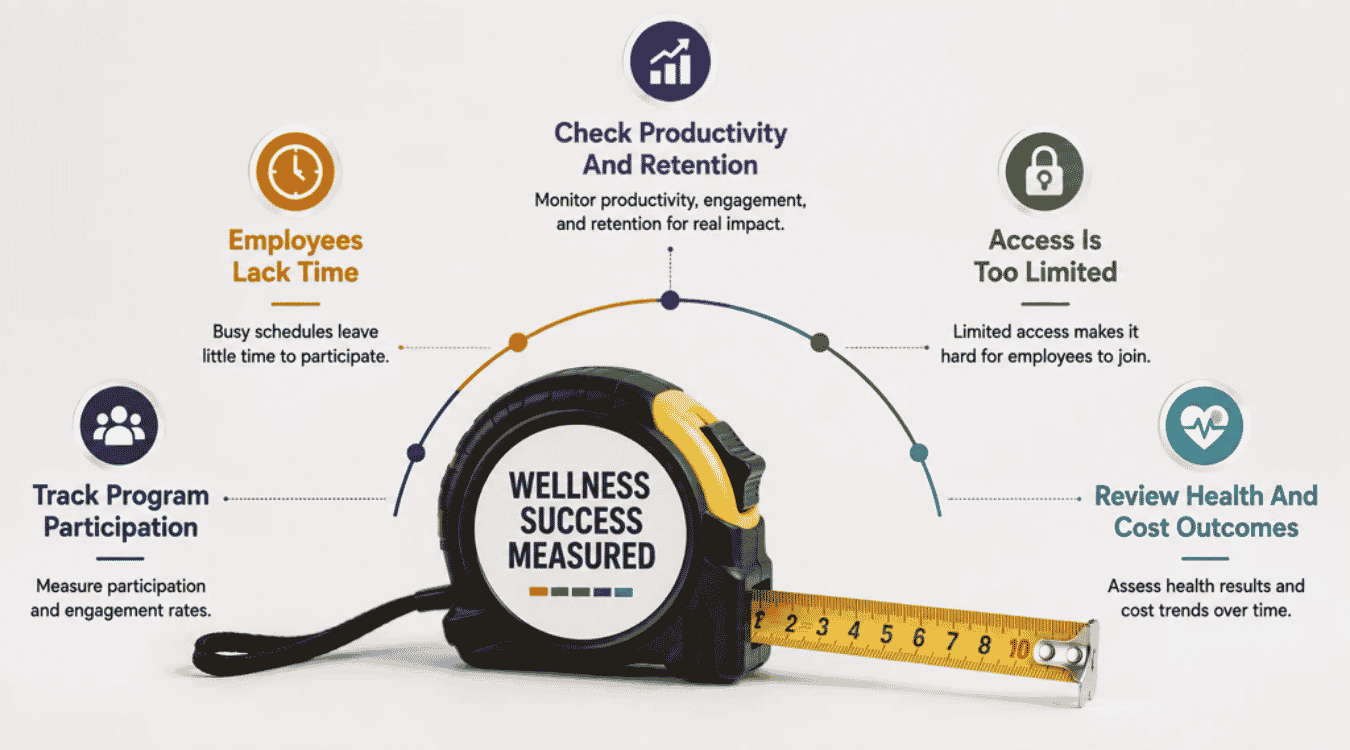
A wellness program needs more than good intentions. You need to know whether employees use it and whether it makes a difference. Track a small set of useful metrics, compare results over time, and use employee feedback to improve the program.
Track Program Participation
Start with wellness program participation. Track how many eligible employees join, how often they take part, and whether they return. Look at participation across teams, locations, shifts, and remote employees too. Low use may point to poor access, weak communication, or the wrong wellness initiatives.
Participation alone does not prove success. CDC data show the gap clearly. In one survey, only 55% of employees who were offered workplace health programs reported taking part. Pair participation rates with feedback and other outcomes for a clearer picture.
Measure Absenteeism And Sick Days
Compare sick days and absenteeism before and after your wellness program. Look for trends over several months rather than expecting a quick change. Better mental and physical health may help reduce absences, but results will depend on the program and workforce.
Older research offers a useful benchmark. A meta-analysis of 62 studies found workplace health programs were linked to an average 25% reduction in sick-leave absenteeism. Treat that figure as research evidence, not a promise that every company will see the same result.
Check Productivity And Retention
Productivity and voluntary turnover rates can show whether wellness efforts connect with broader workplace outcomes. Track absenteeism, presenteeism, job performance, performance trends with the help of employee performance tracking software, retention, and job satisfaction alongside employee engagement. Detailed employee time log reports can also clarify how work patterns affect stress and wellness outcomes. Compare trends over time and account for other workplace changes that may affect the numbers. Strong wellness programs also support broader employee retention strategies when paired with fair pay, good management, and growth opportunities.
The CDC Workplace Health Model includes worker productivity, recruitment, retention, and morale among important organizational outcomes. Avoid promising a fixed 25% drop in turnover. Evidence supports measuring retention, but the exact outcome can vary widely between employee wellness programs, and many organizations complement wellness efforts with employee performance review software to track results more systematically.
Collect Employee Feedback
Numbers cannot tell you why employees like or avoid a program. Short surveys, anonymous comments, and small group discussions can show whether employees find the benefits useful, accessible, and relevant. Ask about employee satisfaction as well as barriers to participation.
Regular employee feedback also helps you refine wellness program offerings. A successful corporate wellness program should adapt as employee needs change. Research reviews have found that successful wellness programs often share that trait. Use feedback to improve access, communication, wellness challenges, mental health benefits, and other company wellness initiatives.
Review Health And Cost Outcomes
Health outcomes can show whether wellness efforts support better health over time. Relevant measures may include health risks, physical activity, stress, or other outcomes tied to the program's goals. Employers may also review healthcare costs when suitable data is available.
Keep cost claims realistic. The CDC says workplace health programs can lower health care costs, reduce absenteeism, and support productivity. However, a 2026 systematic review found mixed effects on healthcare costs across workplace interventions. Measure reduced healthcare costs when relevant, but never assume savings are guaranteed.
Final Discussion
The best wellness program ideas are not the ones with the most perks. They are the ones employees can actually use. A strong program should support physical health, mental health, financial wellness, and a healthy work-life balance while fitting the needs of your workforce.
Start small. Ask employees what matters to them, choose a few useful wellness initiatives, and make participation simple. Leadership support also matters. The CDC recommends a comprehensive approach that combines programs, policies, benefits, environmental support, and regular evaluation.
Most importantly, treat employee wellness as an ongoing effort. Track participation, listen to feedback, and review health and workplace outcomes. Small improvements over time can help build a wellness program that employees trust, value, and want to use.