Hiring in 2026 looks nothing like it did five years ago. Remote work opened doors to global talent pools, but it also created new challenges around scheduling interviews across time zones, managing applications from multiple job boards, and keeping candidate data organized. Skills shortages in key roles mean top candidates disappear fast if your hiring process drags.
For growing companies, the real payoff comes when recruitment connects cleanly to onboarding and payroll setup. When your new sales hire moves from “candidate” to “employee,” their salary, start date, and tax details should flow straight into systems like Payrun without anyone retyping data. Recruitment pipeline management software can reduce time-to-fill for open roles by as much as 80%, leading to improved business outcomes.
Automation in recruiting ensures all candidates receive consistent, personalized communications, which helps organizations attract and retain the best candidates in a competitive job market.
What Is Recruitment Management Software
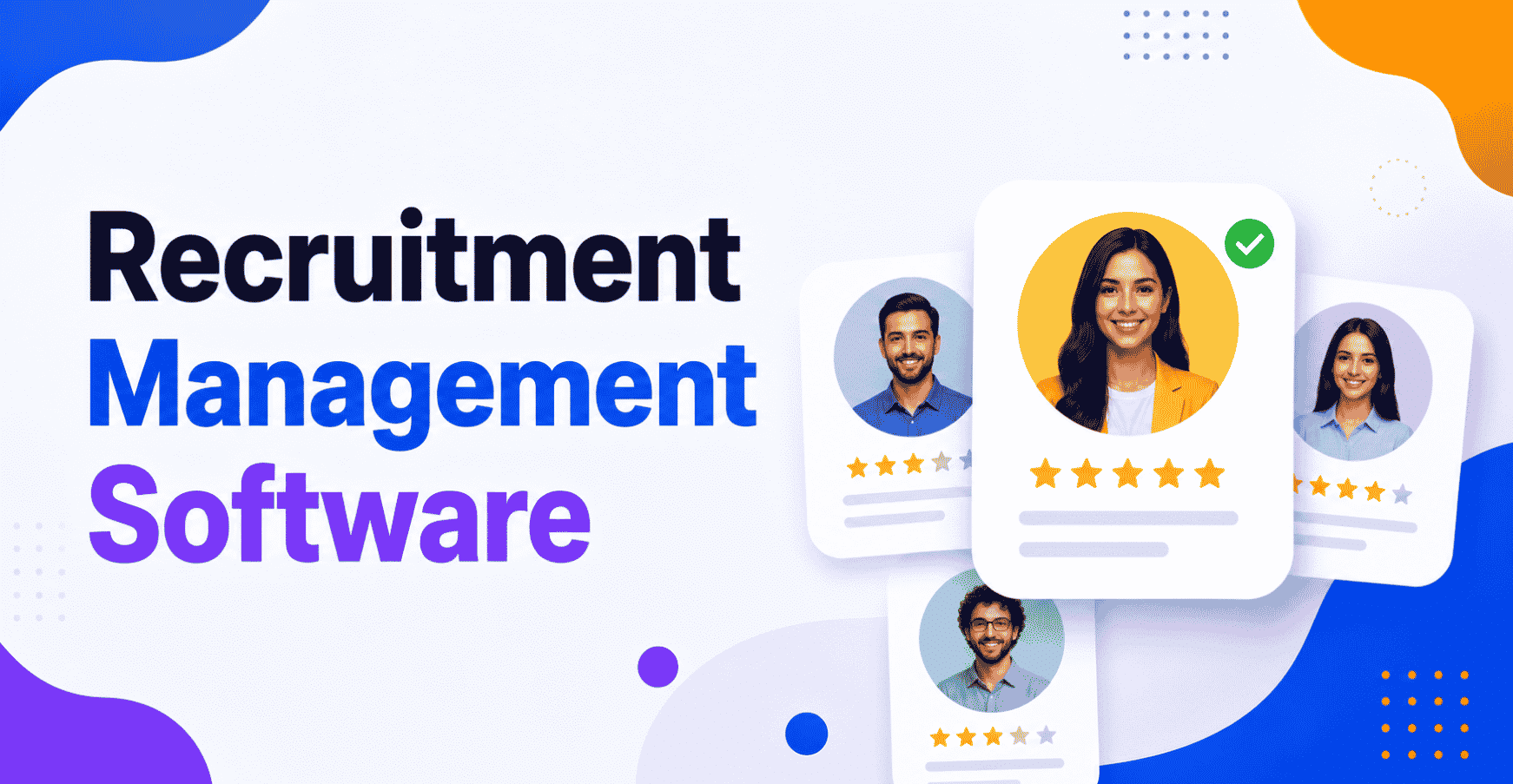
Recruitment management software is a digital platform designed to orchestrate the entire hiring lifecycle. Unlike a standalone applicant tracking system that focuses mainly on managing applications after candidates apply, recruitment software covers the full journey from planning and sourcing through selection and onboarding handoff. Modern recruitment management software often includes integrated HR tools, providing a comprehensive suite for recruitment, onboarding, performance management, and talent acquisition.
The distinction matters because your hiring needs extend beyond just tracking who applied. You need tools that help you:
- Create and approve job requisitions before posting
- Distribute job postings across career websites, job boards, and social networks simultaneously
- Build relationships with passive candidates through recruitment CRM capabilities
- Coordinate interview scheduling across busy calendars
- Collect structured feedback from your hiring team
- Generate offer letters and manage the acceptance process
- Hand off accurate candidate information to HR and payroll systems
- Streamline candidate management and candidate engagement by automating ongoing communication, relationship building, and personalized outreach to improve the candidate experience
Why Businesses Need A Centralized Recruitment System
The days of managing hiring through email chains and shared Google Sheets create problems that compound as companies grow. When candidate data lives in five different places, things fall through the cracks. Someone forgets to update a status. An interviewer’s feedback gets buried in an inbox. A strong candidate accepts another offer because nobody followed up.
A centralized recruitment process eliminates these issues by creating a single source of truth. Every team member sees the same information. Every action gets logged. Nothing disappears into the void. With recruitment pipeline management software, you can easily track candidates and monitor candidate progress at every stage, ensuring no one slips through the cracks.
The real cost of scattered hiring tools:
| Problem | Impact |
|---|---|
| Duplicate candidate records | Wasted outreach, embarrassing double-contacts |
| Lost interviewer feedback | Uninformed hiring decisions |
| Manual status updates | Hours of admin work per role |
| Inconsistent communication | Poor candidate experience, damaged employer branding |
| No visibility into the pipeline | Hiring managers are constantly asking “where are we?” |
Talent acquisition teams at growing businesses often start feeling the pain around the 10-15 employee mark. What worked when you hired two people a year breaks down when you’re filling multiple roles each quarter. Recruiting teams need systems that scale without requiring proportional increases in headcount.
Beyond efficiency, centralization improves decision quality. When you can see every candidate’s history, every interview score, and every piece of feedback in one place, you make smarter decisions about who to hire. You spot patterns in what works and what doesn’t. You build strong talent pipelines instead of starting from zero each time a position opens. Comprehensive analytics dashboards allow you to track pipeline performance, including key metrics like conversion rates and time-to-hire, which are essential for evaluating the success of your talent pipeline strategy. Segmenting candidate pipelines into groups based on shared criteria is also crucial for building more effective recruitment strategies.
How Recruitment Management Software Powers Efficient Hiring

Understanding how recruitment software works in practice helps you evaluate whether it fits your organization. The entire process typically flows through distinct stages, each supported by specific features.
The standard hiring workflow in an RMS:
- Requisition creation – A hiring manager identifies a need and submits a request with job requirements, salary range, and timeline
- Approval routing – The request moves through necessary approvals based on your configured recruiting workflows
- Job posting distribution – Once approved, the system publishes to multiple job boards, social platforms, and career websites simultaneously, integrating with multiple sourcing channels to optimize candidate sourcing
- Application collection – Candidates apply through various channels, and all applications are consolidated into one database. Recruitment software can streamline candidate applications, tracking, CV reviews, and interview scheduling, reducing time-to-hire.
- Screening and shortlisting – Automated filters and manual review identify the right candidates for further evaluation
- Interview coordination – The system handles interview scheduling, calendar syncs, and reminders
- Evaluation and decision – Structured scorecards capture feedback, and the hiring team makes a selection
- Offer management – The system generates offer letters and tracks acceptance
- Handoff to HR/payroll – Accepted candidates’ data flows to onboarding and payroll systems
Features Of Recruitment Management Software

Not every platform includes every feature, but most modern recruiting tools in 2026 share a common set of essential features. Effective candidate pipeline management plays a crucial role in maintaining a steady supply of skilled, pre-vetted talent tailored to your organization’s needs. Nurturing candidate pipelines throughout the recruitment process leads to better hiring outcomes and ensures you’re ready to fill roles quickly as needs arise.
Job Posting And Distribution
The ability to create detailed job descriptions and push them to multiple channels simultaneously saves significant time. Rather than logging into Indeed, LinkedIn, and your career site separately, you post once, and the system distributes everywhere. Top platforms integrate with dozens of sourcing channels and job boards, allowing you to leverage recruitment marketing strategies to maximize your reach and attract top talent.
Additionally, using targeted marketing campaigns within your recruitment pipeline management software helps engage candidates and build robust talent pools for future hiring needs.
Applicant Tracking And Pipeline Management
This core functionality lets you track candidates and monitor candidate progress for every applicant through your hiring funnel. Applicant tracking features provide instant access to candidate information and communication tools, making it easy to see who’s at which stage, how long they’ve been there, and what actions are needed next. Effective candidate pipeline management is essential for organizing, nurturing, and optimizing your recruitment funnel. Tracking pipeline performance through analytics helps you determine the success of your talent pipeline strategy, while segmentation of candidate pipelines allows for targeted communications based on shared criteria. Tracking candidates becomes visual and intuitive rather than buried in spreadsheet rows.
Candidate Relationship Management
Recruitment CRM capabilities help you build strong talent pipelines by maintaining relationships with candidates who weren’t right for one role but might be perfect for future openings. Candidate engagement is crucial; engaging candidates through ongoing, personalized communication ensures they remain interested and connected throughout the recruitment process. You can store resumes, tag candidates by skills, and send personalized messages when relevant opportunities arise.
Building long term relationships with candidates is essential, and nurturing candidate connections through personalized outreach campaigns transforms candidate pools into candidate pipelines. These pipelines consist of engaged, potential candidates whose skills, experience, and interests align with current or future hiring needs, giving organizations a significant competitive edge by shortening time-to-hire. Nurturing candidate pipelines throughout the process can also lead to a significant increase in hires.
Communication Tools
Email templates, automated status updates, and in-app messaging keep candidates informed throughout the application process. Automated workflows and candidate engagement features help engage candidates by ensuring consistent, personalized communication at every stage. Automation in recruiting ensures all candidates receive timely updates, enhancing the overall candidate experience. Some platforms include chatbots for initial candidate interactions and SMS integration for time-sensitive communications. Automated status updates and self-service interview scheduling further enhance the candidate experience and help build a positive employer brand.
Analytics And Reporting
Dashboards reveal metrics like time-to-fill, cost-per-hire, source effectiveness, and hiring manager response times. Comprehensive analytics provide deeper insights by tracking pipeline performance through key metrics such as conversion rates and time-to-hire, enabling teams to assess the effectiveness of their recruitment pipeline management strategy. This data helps talent leaders identify bottlenecks and make smarter decisions about where to focus recruiting efforts. Additionally, leveraging data analytics and structured interview rubrics supports evidence-based hiring decisions, ultimately improving the quality of hire and driving better business outcomes.
Collaboration Features
Task assignment, feedback collection, and shared candidate views help the entire hiring team work together effectively. Centralized dashboards in recruitment pipeline management software enable talent teams to seamlessly share feedback and track candidate progress, ensuring everyone stays aligned throughout the hiring process. End-to-end recruitment software can improve recruiter productivity by 40% and boost new hire retention by 15%, making collaboration more efficient and impactful. No more asking “did you interview them yet?” or hunting for someone’s notes.
How To Create And Publish Job Posts Effectively
The first touchpoint with potential candidates is your job posting. How you create and distribute these postings significantly impacts who you attract and how many applications you receive.
Effective job postings start with clear job requirements that help candidates self-select. Vague descriptions attract unqualified applicants who waste everyone’s time. Specific requirements that describe actual day-to-day work help the right candidates recognize themselves in the role. Including details on your DEI initiatives in job postings can also resonate with candidates from underrepresented communities and encourage a more diverse applicant pool.
Best practices for job post creation:
- Write a job description that reflects the company culture and realistic expectations
- Include salary ranges where legally required or strategically beneficial
- Highlight what makes the role and company appealing to top talent
- Use language that encourages diverse candidate pools
- Structure content for easy scanning on mobile devices
Distribution strategy matters as much as content. Posting jobs to a single job board limits your reach. Modern recruitment pipeline management software lets you leverage multiple sourcing channels—including job boards, social media, employee referrals, and your own career site—to maximize reach and diversity. Employee referral programs are especially effective for engaging internal employees to source qualified candidates and streamline recruiting.
The ability to track which sources produce qualified candidates versus just high volumes helps you optimize over time. If your engineering roles consistently get better applicants from Stack Overflow than generic job boards, you know where to focus future efforts and budget.
How Applicant Tracking Systems Work Inside Recruitment Platforms

The applicant tracking system forms the backbone of any recruitment platform. Understanding how ATS functionality works helps you leverage it effectively rather than fighting against it.
How tracking works in practice:
The system moves candidates through defined stages of your hiring funnel. Common stages include:
| Stage | Typical Actions |
|---|---|
| Applied | Application received, initial parsing |
| Screening | Resume review, basic qualification check |
| Phone Screen | Initial conversation with the recruiter |
| Interview | One or more rounds with team members |
| Assessment | Skills tests, case studies, or work samples |
| Reference Check | Verification of background and references |
| Offer | Offer letter sent and negotiation |
| Hired | Accepted and ready for onboarding |
Each stage transition gets logged with timestamps, creating a complete audit trail. This allows you to track candidates and monitor candidate progress as they move through each stage. You can also track pipeline performance using analytics such as conversion rates and time-to-hire, which are essential for evaluating the effectiveness of your recruitment pipeline management strategy. This helps you identify where candidates get stuck and where your interview process might need improvement.
Applied Stage
The Applied stage is the first entry point into the system. Every time a candidate submits an application, the ATS captures all information automatically, including resumes, cover letters, and custom form responses. Advanced parsing tools extract relevant details such as skills, job titles, experience levels, and qualifications.
EasyDesk’s recruitment pipeline management software is designed to handle high-volume candidate sourcing, seamlessly integrating with automation tools to efficiently identify, engage, and manage large applicant pools. Automation greatly enhances the HR team's ability to rapidly assess candidate qualifications and prioritize top talent.
This creates a complete, standardized candidate profile without requiring manual data entry from recruiters. It ensures every applicant is logged, searchable, and accessible for further screening, creating the foundation for an efficient, well-documented hiring process.
Screening Stage
During the Screening stage, recruiters evaluate the automated resume screening and verify whether the applicant meets the basic requirements listed in the job description. Recruitment automation software is designed to perform repetitive tasks such as CV screening, candidate communication, interview scheduling, and new hire onboarding, significantly reducing repetitive work for recruiters. The ATS displays qualifications clearly and flags missing pieces or mismatched experience. Many systems also allow recruiters to assign quick tags, ratings, or notes.
This structured review helps maintain consistency and reduces time spent evaluating candidates who are clearly not a fit. Screening also sets the tone for fairness and accuracy, ensuring decisions are based on predefined criteria rather than subjective bias.
Phone Screen Stage
The Phone Screen stage involves a short conversation to understand candidate interest, salary expectations, communication skills, and role alignment. The ATS stores call notes, recruiter observations, and any relevant follow-up tasks inside the candidate profile.
Documenting these details prevents memory gaps later in the process and gives hiring managers clear, traceable context before interviews begin. Candidate engagement features and automation in recruiting ensure all candidates receive consistent, personalized communications throughout this stage, streamlining interactions and improving the overall candidate experience. This stage also helps filter out candidates who may not be aligned culturally or practically before moving into deeper evaluations.
Interview Stage
The Interview stage is where a detailed evaluation happens. The ATS organizes interview scheduling, manages interviewer availability, and sends automated reminders. After each interview round, evaluators enter their feedback, scores, and comments directly into the system.
Centralizing this information helps teams compare insights objectively and avoids the confusion that occurs when feedback is scattered across emails or chat messages. It also strengthens collaboration among hiring managers, speeding up decision-making and reducing miscommunication. By tracking candidate progress through each interview stage and using structured interview rubrics, teams can leverage comprehensive analytics to make evidence-based hiring decisions and improve the quality of hire.
Assessment Stage
Assessments provide objective proof of a candidate’s capabilities. This may include technical tests, writing samples, case studies, or role-specific challenges. The ATS collects submissions, stores scoring sheets, and compiles reviewer comments.
Automated workflows and configurable workflows streamline the assessment process by automating repetitive pipeline management tasks, such as candidate segmentation, test assignment, and result tracking. This enhances efficiency without compromising candidate experience, allowing teams to focus on evaluating results rather than managing manual steps.
Because assessments are standardized, they bring measurable fairness to the process. The structured results help teams make informed decisions and differentiate between candidates with similar backgrounds.
Reference Check Stage
Reference checks allow recruiters to validate the accuracy of candidate information and evaluate past performance. Notes from reference calls, verification details, and risk indicators are documented inside the ATS.
By building internal talent pools and leveraging recruitment pipeline management software, businesses can decrease reliance on third-party recruiting agencies, which often serve as key partners in sourcing and managing candidate pipelines. This approach can reduce cost-per-hire by 20%–30% of a starting salary.
Capturing these insights in one place ensures compliance and make records easy to retrieve during audits or future reviews. It also adds another layer of confidence before moving toward an offer.
Offer Stage
During the Offer stage, the ATS generates offer letters, manages approval chains, and tracks communication with the candidate. Negotiation notes, agreed terms, and updated documents stay inside the system for transparency.
A single platform with automated workflows streamlines offer generation, candidate communication, and onboarding by automating repetitive tasks such as CV screening, interview scheduling, and new hire onboarding. This structure reduces mistakes and streamlines communication between HR, finance, and hiring managers.
Hired Stage
The Hired stage marks the final transition. Once accepted, candidate data is passed into onboarding or HR systems without requiring recruiters to re-enter information manually.
This smooth handoff ensures accuracy, accelerates onboarding preparation, and completes a fully traceable hiring journey from initial application to final placement. Talent management features within recruitment pipeline management software not only streamline onboarding but also support future hiring needs by maintaining candidate pipelines and managing the entire talent lifecycle—from sourcing and engagement to onboarding and development.
Managing Hiring Pipelines With Kanban Boards And Stages
Visual pipeline management has become standard in award-winning recruitment software. Rather than viewing candidates as rows in a spreadsheet, you see them as cards moving across a board representing different stages of your process. This approach is central to candidate pipeline management, which helps organizations maintain a steady supply of skilled, pre-vetted talent tailored to their needs.
Visual Clarity Across Every Stage Of The Hiring Process
Kanban-style hiring pipelines give recruiters and managers a clear visual overview of their entire recruitment workflow. Instead of navigating dense spreadsheets, users view candidates as movable cards organized by stage. This structure reduces mental load and allows teams to understand progress instantly.
With this approach, you can easily track candidates and monitor candidate progress visually at each stage of the recruitment process. A quick glance reveals how many candidates exist in each stage, where slowdowns occur, and which applicants require immediate attention. This visibility supports faster decision-making and keeps hiring teams aligned without constant back-and-forth communication.
Drag-And-Drop Movement For Faster Candidate Progression
Drag-and-drop functionality lets hiring teams move candidates between stages with a single action. This eliminates manual updates, reduces administrative effort, and ensures the pipeline always reflects real-time progress. Combined with automated workflows, these features significantly improve recruiter productivity by streamlining candidate management and reducing repetitive tasks.
Recruiters can shift candidates from Screening to Interview or from Interview to Offer simply by dragging the card, creating a smoother and more intuitive workflow. This approach minimizes errors and keeps the entire team updated automatically.
Bulk Actions That Save Time On Repetitive Tasks
Bulk actions allow teams to update multiple candidates at once, such as changing stages, sending messages, or applying tags. These features are especially valuable for high volume hiring, as they help automate busy work and streamline the management of large applicant pools during peak recruitment periods.
Instead of manual record management, recruiters complete updates quickly, freeing up time for evaluating applicants and collaborating with hiring managers. Bulk tools ensure consistency across candidate profiles and speed up operational tasks that typically slow down hiring cycles.
Stage-Specific Automation That Reduces Manual Work
Stage-specific automation triggers help streamline the hiring journey by performing actions automatically when candidates reach certain points. Examples include sending assessment links after screening or notifying managers when an interview needs scheduling. With configurable workflows and automated workflows, organizations can tailor automation to their unique hiring processes, ensuring that each stage—from candidate discovery to engagement—is optimized for efficiency and reduced manual effort.
These automated steps reduce repetitive workload and maintain a predictable hiring flow. Recruiters spend less time coordinating tasks and more time assessing talent, improving both accuracy and responsiveness.
Deadline Tracking And Alerts To Prevent Delays
Pipeline systems track deadlines associated with interviews, assessments, follow-ups, and offers. Overdue alerts notify teams when a candidate has been sitting too long in a stage or when an action requires immediate attention. By tracking candidate progress and candidate statuses, recruiters can effectively track candidates throughout each stage, ensuring pipeline health and preventing unnecessary delays.
This level of visibility prevents bottlenecks from going unnoticed and keeps the process moving efficiently. Hiring managers who balance recruitment with daily responsibilities benefit greatly from reminders that help them stay on top of their pipeline.
Support For Multiple Requisitions And Growing Teams
As companies grow, managing multiple open roles becomes increasingly complex. Kanban-based pipelines provide a unified way to monitor all active searches, giving talent leaders a high-level view while allowing individual managers to focus on their specific positions.
Talent teams rely on recruitment pipeline management software to efficiently coordinate complex talent acquisition processes at scale, ensuring seamless collaboration and optimized candidate flow across departments. This dual visibility helps organizations maintain consistency across hiring efforts and identify workload distribution across teams. Whether managing two openings or twenty, Kanban-based recruitment pipelines keep everything organized, transparent, and easy to track.
Building Strong Hiring Teams With Collaborative Tools
Hiring is rarely a solo activity. Recruiters source and screen. Hiring managers define requirements and make final calls. Team members conduct interviews and provide feedback. Finance approves headcount and salary. Each person needs visibility into the parts of the process they own.
Key collaboration features:
- Shared candidate profiles accessible to all stakeholders
- Structured feedback forms that ensure consistent evaluation
- @mentions and comments for quick questions
- Task assignment with due dates and reminders
- Role-based permissions that control who sees what
The hiring team benefits when feedback collection happens in the system rather than via email. Instead of chasing interviewers for their thoughts, the platform sends automated reminders. Responses get attached to candidate profiles where decision-makers can review them together.
This structured automation employ’s approach that also reduces bias. When everyone uses the same evaluation criteria and scorecard, decisions become more consistent. You can compare candidates objectively rather than relying on vague impressions or whoever spoke last in the debrief meeting.
Lever helps recruiters scale their collaborative hiring by making team alignment the default rather than an afterthought. When building your hiring team’s toolkit, prioritize platforms that make collaboration natural rather than adding friction.
How Automation Reduces Time-To-Hire And Manual Work

Automation represents one of the biggest value drivers in modern recruiting software. Recruitment automation software significantly reduces manual effort and automates repetitive work, such as CV screening, candidate communication, interview scheduling, and new hire onboarding.
Common Automation Capabilities:
Recruitment pipeline management software is designed to save time and reduce manual effort by automating repetitive tasks throughout the hiring process. Recruitment automation software leverages automated workflows to streamline candidate discovery, segmentation, nurturing, sourcing, and engagement. These tools integrate with applicant tracking systems (ATS) and CRM platforms, accelerating hiring timelines and improving both efficiency and candidate experience.
| Automated Task | Time Saved |
|---|---|
| Resume parsing into structured data | 2-3 minutes per application |
| Initial screening questionnaires | 5-10 minutes per candidate |
| Interview scheduling coordination | 15-30 minutes per interview round |
| Status update emails to candidates | 5 minutes per candidate per stage |
| Reminder emails to interviewers | Constant monitoring eliminated |
| Moving candidates through stages based on criteria | Manual review time |
Faster Candidate Screening Through Automated Filtering
Automated filtering reviews large volumes of applications using predefined criteria related to skills, qualifications, and experience. This removes the slow, repetitive task of manually scanning every CV and instantly highlights candidates who meet essential requirements. Integrated candidate sourcing tools further streamline the process by helping recruiters identify and prioritize qualified talent quickly, ensuring that only the most suitable candidates enter the recruitment pipeline.
Recruiters no longer waste time on irrelevant profiles and can move directly to evaluating strong matches. This accelerates shortlisting, increases accuracy, and keeps the pipeline moving even when application numbers surge.
Streamlined Interview Scheduling With Automated Coordination
Automated scheduling tools eliminate the back-and-forth emails typically required to arrange interviews. They pull availability from interviewer calendars, present open slots to candidates, and confirm meetings automatically.
Reminders and updates are sent without manual involvement, significantly reducing no-shows and miscommunication. By removing coordination overhead, teams advance candidates through interview rounds faster and with fewer administrative delays. Automated workflows further streamline the process, helping organizations move candidates faster through each stage by automating interview scheduling, follow-ups, and candidate engagement.
Automated Communication For Candidate Updates
Automation ensures candidates receive timely updates at every stage, including application confirmations, interview reminders, follow-up messages, and next-step notifications. This prevents recruitment teams from manually sending dozens of repetitive emails each day.
Consistent, well-timed communication keeps candidates engaged and reduces drop-offs caused by uncertainty or long gaps in updates. Recruitment pipeline management software with candidate engagement features enables recruiters to engage talent through personalized messaging, automated outreach, and ongoing communication, improving candidate experience and fostering stronger relationships. Recruiters benefit from improved candidate satisfaction without increasing their workload.
Workflow Automation Across Hiring Stages
Automation tools manage operational actions such as progressing candidates between stages, triggering internal tasks, requesting documents, and updating statuses across the hiring pipeline. These small tasks create major delays when handled manually, but move instantly when automated.
With configurable workflows and automated workflows, recruitment pipeline management software increases efficiency by allowing teams to customize and automate operational actions for different roles and scenarios, streamlining candidate tracking and engagement. Recruiters regain significant time to focus on evaluating applicants and collaborating with hiring managers. As routine steps become automated, the entire process becomes more predictable, structured, and efficient.
Automated Assessments And Evaluation Handling
Skills assessments, screening questions, and evaluation forms run automatically through the system. Automated workflows streamline the evaluation process by reducing repetitive work, allowing recruiters to focus on strategic decision-making rather than manual tasks. Candidate results are compiled, scored, and presented in a clean summary without requiring recruiters to review each response manually.
This speeds up comparisons between applicants and helps hiring teams identify top performers early in the process. Automated evaluation reduces delays associated with manual grading and supports faster, more informed decision-making.
Data Insights That Accelerate Hiring Decisions
Automation provides real-time visibility into hiring metrics such as stage conversion rates, source effectiveness, bottlenecks, and overall pipeline health. With comprehensive analytics, teams gain advanced data-driven insights and reporting capabilities that support better business outcomes by enabling more informed hiring decisions and aligning recruitment strategies with organizational goals. These insights allow teams to identify slowdowns immediately and adjust processes before delays grow.
Data-driven visibility enables faster approvals, quicker feedback cycles, and smoother coordination between HR and hiring managers. Decisions are supported by clear evidence rather than intuition, resulting in a more efficient hiring journey from job posting to final offer.
Improving Candidate Screening With Smarter Evaluation Tools
The screening phase determines whether you invest valuable interview time in qualified candidates or waste hours talking to people who aren’t right for the role. Better screening tools improve both efficiency and hiring outcomes.
Screening capabilities in modern platforms:
- Resume parsing that extracts skills, experience, and education into searchable fields
- Custom screening questions that filter for must-have qualifications
- Skills assessments and pre-employment tests
- Background check integrations
- AI-based candidate matching that scores fit against job requirements
Modern recruitment pipeline management software also includes candidate management features that streamline and organize the recruitment process. These tools provide candidate pipeline visualization, automated outreach, and integration with ATS and CRM systems, making it easier to track and engage candidates efficiently. Additionally, data analytics and structured interview rubrics help hiring teams make evidence-based decisions, improving the quality of hire.
Pre-employment assessments help identify top candidates based on demonstrated abilities rather than resume claims alone. A coding test shows whether a developer can actually write code. A writing sample reveals communication skills better than a phone screen.
The goal isn’t to automate human judgment out of the process. Rather, it’s to ensure humans spend their judgment on candidates who’ve already passed basic qualification thresholds. When your recruiter reviews a shortlist, they’re looking at pre-vetted candidates who meet the role’s requirements.
Integration with assessment platforms and background check services means results flow directly into candidate profiles. No separate logins, no manual data entry, no gaps in the record.
Integration Capabilities With HR, Payroll, And Collaboration Apps
Recruitment software doesn’t exist in isolation. It needs to connect with the other tools your organization uses: calendars for scheduling interviews, email for communication, HR systems for employee records, and payroll for compensation setup. Integrating HR tools within a single platform streamlines recruitment, onboarding, and talent management, ensuring seamless data flow and greater efficiency for HR professionals.
Critical integration categories:
| System Type | Integration Purpose |
|---|---|
| Calendar (Google, Outlook) | Interview scheduling syncs |
| Email platforms | Communication tracking and templates |
| Job boards and sourcing platforms | Multi-channel posting and application intake |
| Assessment tools | Skills testing and results import |
| Background check services | Verification workflows |
| HRIS platforms | Employee record creation |
| Payroll systems | Compensation and tax data handoff |
| Collaboration tools (Slack, Teams) | Notifications and quick actions |
The handoff to HR software and payroll represents a particularly important integration point. When someone accepts an offer, their data needs to flow into onboarding processes and payroll configuration. Manual re-entry introduces errors and delays first paychecks.
Modern recruitment platforms offer integrations through native connectors, APIs, or export functionality. Even simple CSV exports with structured data can bridge systems when direct integrations aren’t available.
Before selecting a recruitment platform, map out what other tools it needs to connect with. A system that works brilliantly in isolation but can’t share data with your payroll provider creates more problems than it solves.
Security, Compliance, And Data Protection In Recruitment Systems
Recruitment involves handling sensitive personal information: resumes, contact details, salary history, and sometimes background check results. Protecting candidate information isn’t just good practice; it’s often legally required.
Key security and compliance considerations:
- Data encryption in transit and at rest
- Role-based access controls limit who sees what
- Audit logs track all system actions
- GDPR compliance for EU candidates
- EEOC compliance for US hiring
- Data retention policies and candidate deletion rights
- Secure integrations with other systems
Privacy regulations vary by jurisdiction, but the trend globally moves toward giving candidates more control over their data. Systems should make it easy to fulfill data subject requests, whether that’s providing a copy of stored information or deleting records when required. Talent management and HR tools must ensure data protection and compliance across all integrated systems, safeguarding sensitive information throughout the entire employee lifecycle.
For HR teams, practical security means configuring appropriate permissions. Hiring managers might see candidates for their roles but not salary details. Recruiters see the full pipeline but can’t access final compensation decisions. Finance sees approved headcount and budgets.
When candidate data flows to other systems like CRM software or hr systems, security responsibilities extend across those connections. Ensure any integration maintains appropriate protection and doesn’t create gaps where sensitive information could leak.
How Payrun Supports Complete Recruitment Management
Payrun offers a unified HR management platform that centralizes recruitment workflows alongside employee data, leave tracking, time management, and payroll. As a single platform, Payrun supports candidate pipeline management by consolidating sourcing, engagement, and analytics tools, empowering talent teams to organize, nurture, and optimize every stage of the recruitment funnel.
Centralized Hiring And Job Post Management
Payrun provides a dedicated hiring module that helps HR teams create, publish, and manage requisitions and job posts efficiently. The platform enables teams to leverage multiple sourcing channels and recruitment marketing strategies, maximizing reach and attracting a diverse pool of candidates. Because recruitment lives inside the same system as all HR data, teams avoid inconsistencies and keep information organized in a single, reliable source.
Visual Candidate Pipeline Tracking
The platform includes a Kanban-style recruitment pipeline that allows hiring teams to view and manage candidates across every stage. Recruiters can easily track candidates and monitor candidate progress visually at each stage of the process, ensuring clear pipeline visibility from sourcing to onboarding. Recruiters can move applicants through screening, interviews, and selection quickly without relying on spreadsheets or manual tracking.
Integrated Applicant Tracking And Evaluation
Payrun offers tools to track applicants, schedule interviews, and review candidate profiles in one place. Recruiters can evaluate submissions, compare qualifications, and maintain a full history of interactions throughout the hiring cycle, improving both speed and accuracy. Candidate management features streamline the recruitment process, while comprehensive analytics provide data-driven insights that support evidence-based hiring decisions.
Seamless Transition From Hiring To Onboarding
Once a candidate is hired, Payrun connects recruitment data directly with onboarding and employee records. This removes the need for duplicate data entry and ensures new hire details flow smoothly into HR, time tracking, and payroll modules.
Integrated talent management features also support future hiring needs by maintaining a robust candidate pipeline, enabling workforce planning, and managing the entire talent lifecycle—from recruitment and onboarding to employee development and retention.
Support For HR Compliance And Reporting
Recruitment information is integrated with broader HR data, helping organizations maintain accurate records, meet compliance requirements, and generate useful hiring analytics. With comprehensive analytics, teams gain advanced data-driven insights that support compliance efforts and drive better business outcomes by aligning recruitment strategies with organizational goals. Teams can track performance metrics, hiring timelines, and workforce trends within the same platform.
Frequently Asked Questions
What's The Difference Between Recruitment Management Software And An Applicant Tracking System?
An Applicant Tracking System primarily focuses on sourcing, screening, and hiring candidates. Recruitment Management Software goes further by combining recruitment workflows, collaboration tools, and sometimes crm functionality in one platform. Many modern solutions also support onboarding and reporting, helping businesses manage the entire hiring lifecycle from one system.
How Long Does Implementation Typically Take For A Small Or Mid-Sized Business?
Implementation timelines vary depending on company size, integrations, and data migration needs. Most small and mid-sized businesses can set up their systems within a few days to several weeks. Clear planning helps keep candidates organized, configure roles open, and prepare the system for future hiring needs.
Can Recruitment Software Help With Remote And International Hiring?
Yes. Recruitment software simplifies remote hiring by supporting job postings, interview scheduling, and collaboration across locations. Recruitment agencies and internal teams can use keyword search and automation tools to identify the right people for open positions, regardless of geography.
What Metrics Should We Track To Measure Hiring Success?
Key hiring metrics include time-to-hire, cost-per-hire, offer acceptance rate, and employee retention. Businesses should also monitor candidate satisfaction and hiring quality to understand the big picture. Tracking such metrics helps teams improve recruitment processes and support innovation in talent acquisition.
How Do We Ensure Data From Our RMS Flows Correctly Into Payroll?
Successful integration requires mapping employee fields, validating workflows, and testing data transfers before going live. Connecting recruitment and payroll systems reduces manual work and improves accuracy when managing new roles, contract employees, customers, and clients across the organization.