A Complete Guide To Employer Of Record (EOR) For Global Workforce Management
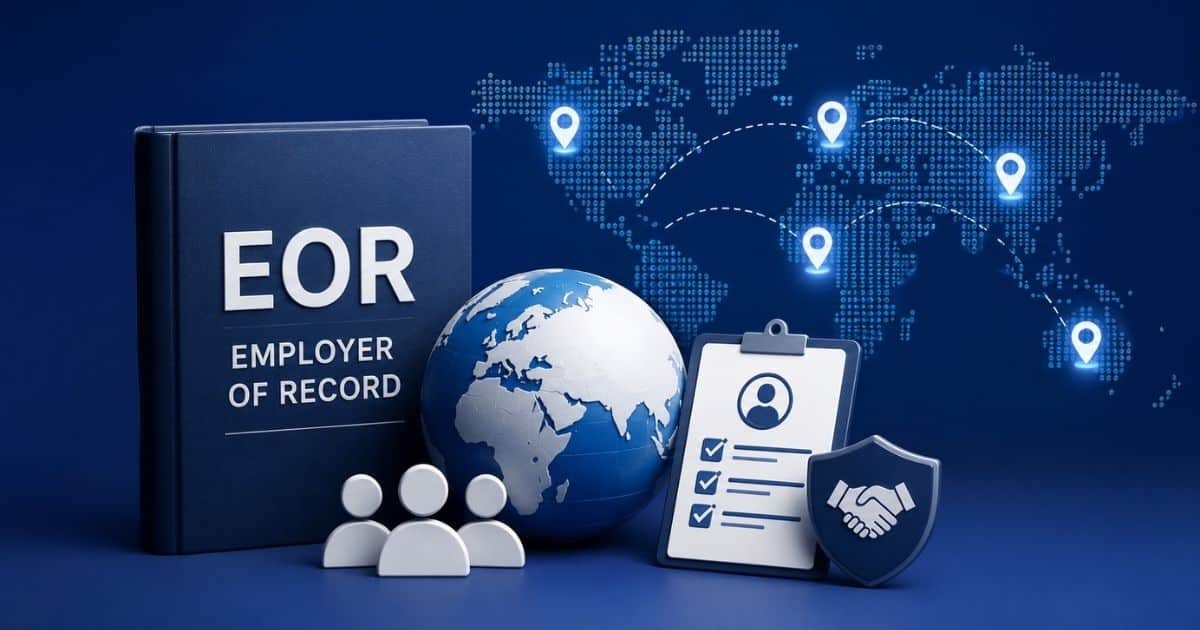
Table of Contents
Hiring talent across different countries creates exciting opportunities, but it also comes with legal, payroll, tax, and compliance challenges. Setting up a local entity in every new market takes time, increases costs, and slows business growth. An employer of record helps companies overcome those barriers by handling the legal employment responsibilities while the business continues to manage its people and day-to-day operations.
Whether you plan to hire your first international employee or build a distributed workforce across multiple countries, understanding how an employer of record works is essential. This guide explains the complete process, key responsibilities, benefits, costs, comparisons, and best practices so you can decide if an employer of record is the right solution for your global workforce management strategy.

What Is An Employer Of Record?
An employer of record (EOR) is a third-party organization that becomes the legal employer of your workers in a country where you do not have a legal entity. It manages employment contracts, payroll processing, tax withholding, benefits administration, and compliance with local employment laws. Your client company still manages the employee's daily work, performance, and business goals.
An employer of record helps businesses hire employees internationally without creating a local legal entity. The EOR takes care of the legal and administrative responsibilities, including following local labor laws, handling global payroll, and ensuring compliance with changing regulations. This approach reduces the administrative burden and makes international hiring faster and more manageable, especially when expanding into multiple countries.
How Does An Employer Of Record Work?
An employer of record creates a legal employment relationship that lets you hire talent in another country without setting up a local entity. While the EOR manages compliance and employment administration, your business stays in control of the employee's daily work and performance.
Your Company Signs A Service Agreement
The process starts when your business chooses an EOR provider and signs a service agreement. You share details such as the job role, salary, work location, and employment terms. The EOR reviews the information to ensure it follows local employment laws before moving forward. This step creates a clear partnership between your client company and the EOR, making it easier to hire employees internationally while reducing compliance risk from the beginning.
The EOR Becomes The Legal Employer
Once everything is approved, the employer of record becomes the legal employer of the worker. It prepares compliant employment contracts, registers the employee where required, and assumes legal and administrative responsibilities. Your company does not need to establish a local legal entity. Instead, you remain responsible for business goals, team management, and daily communication while the EOR handles employment-related tasks.
Employee Onboarding Begins
After the contract is signed, the EOR manages onboarding. It collects employment paperwork, verifies required documents, completes government registrations where needed, and enrolls employees in statutory and optional employee benefits. Many EOR providers also conduct background checks when requested. This structured process helps new hires start quickly while ensuring every step complies with local regulations and labor laws.
Payroll, Taxes, And Benefits Are Managed
The employer of record processes global payroll in the employee's local currency. It handles payroll processing, tax withholding, payroll tax obligations, statutory contributions, and benefits administration, including health insurance where applicable. The EOR also tracks changes in local labor laws and employment regulations to maintain ongoing compliance. Your company receives payroll reports while employees are paid accurately and on time.
Your Business Manages Daily Work
Although the EOR legally employs workers, it does not supervise their day-to-day operations. Your managers assign work, monitor performance, approve leave requests where applicable, and support employee development. If employment ends, the EOR also manages offboarding, final payroll, and legal documentation in line with local employment laws. This division of responsibilities allows businesses to focus on growth while the EOR handles compliance and employment administration.
Key Responsibilities Of An Employer Of Record
An employer of record manages the legal and administrative side of employment so businesses can hire talent in other countries without creating a local entity. While your company manages daily work, the EOR takes responsibility for payroll, compliance, and employment administration.
Ensure Compliance With Local Employment Laws
One of the biggest responsibilities of an employer of record is ensuring compliance with local employment laws and local regulations. Every country has different rules for hiring, working hours, leave, taxes, and employee termination. The EOR monitors regulatory updates and applies changes to keep your workforce compliant.
This approach helps reduce compliance risk and protects businesses from fines, penalties, and legal disputes. It also minimizes worker classification issues by making sure employees are hired under the correct employment model from the beginning.
Manage Payroll, Taxes, And Employee Benefits
An employer of record handles payroll processing from start to finish. It calculates salaries, manages tax withholding, submits tax filings, and pays employees in their local currency. This creates a smoother global payroll process for businesses with teams across multiple countries.
The EOR also manages benefits administration, including statutory and optional employee benefits such as health insurance, retirement plans, and paid time off where required. Employees receive compliant compensation while your business avoids the administrative burden of managing local payroll systems.
Handle Employment Contracts And Onboarding
Before hiring begins, the employer of record prepares compliant employment contracts that meet local labor laws. Most EOR providers require a service agreement with the client company before they legally employ workers. This creates a clear framework for employment responsibilities and legal duties.
The EOR also manages onboarding by collecting employment paperwork, verifying documents, completing registrations, and enrolling employees in benefits. When employment ends, it handles offboarding, final payroll, and required documentation in line with local employment laws.
Act As The Legal Employer
An employer of record serves as the legal employer while your client company directs day-to-day operations. The EOR assumes legal and administrative responsibilities related to employment, but it does not manage employee performance, workloads, or business objectives.
This model allows businesses to hire employees internationally without establishing a local legal entity. It also makes global expansion faster because companies can build teams in a foreign country without dealing with local business registration or creating their own legal presence.
Support Global Workforce Expansion
An employer of record helps businesses expand globally with less operational complexity. Companies can enter new markets, hire workers quickly, and test business opportunities before making a significant investment in a local entity. This flexibility is especially valuable for businesses exploring international employment for the first time.
Many EOR providers also support independent contractors, contractor onboarding, and employee conversions where permitted by local laws. By managing employment-related tasks and regulatory compliance, an EOR gives businesses more time to focus on recruitment efforts, growth, and managing their global workforce.
Why Businesses Use An Employer Of Record
An employer of record helps businesses hire talent across borders without dealing with the complexity of setting up a local entity. It reduces legal risks, speeds up international hiring, and handles employment responsibilities so companies can focus on growth and workforce management.
Expand Into New Markets Faster
Expanding into a foreign country usually requires creating a legal entity, completing registrations, and understanding local employment laws. An employer of record removes those barriers by becoming the legal employer on your behalf. This allows businesses to hire employees internationally within weeks instead of waiting months.
Many companies also use an EOR to test new markets before making a major investment. If the market performs well, they can later establish their own entity. This approach reduces upfront costs and gives businesses more flexibility during global expansion.
Reduce Compliance And Legal Risks
Every country has different labor laws, tax rules, and employment regulations. Keeping up with those requirements can be difficult, especially when hiring across multiple countries. EOR providers monitor regulatory updates and ensure every employment agreement follows local laws.
An employer of record also helps minimize compliance risk related to worker classification. Misclassifying employees or independent contractors can result in fines, back taxes, and legal disputes. Having a specialist manage legal and administrative responsibilities helps businesses avoid costly mistakes.
Simplify Global Payroll And Employee Benefits
Managing global payroll across different countries often involves multiple tax systems, currencies, and statutory requirements. An employer of record handles payroll processing, tax withholding, tax filings, and local currency payments through one streamlined process.
The EOR also manages benefits administration, including health insurance, retirement plans, paid time off, and other mandatory employee benefits. Employees receive compliant compensation packages while businesses avoid the administrative burden of managing separate payroll and HR systems in every location.
Access Global Talent Without Building Local Infrastructure
Hiring internationally becomes much easier when businesses do not need their own legal presence. An employer of record legally employs workers while the client company directs daily work, recruitment efforts, and performance management. This model gives businesses access to skilled professionals almost anywhere in the world.
Many global EOR providers operate in more than 180 countries, making it possible to build distributed teams through a single partner. Recent industry research also found that about 73% of surveyed organizations use or evaluate EOR solutions to support global workforce expansion.
Save Time And Control Employment Costs
Building an internal HR infrastructure in every country requires significant time, money, and ongoing management. An employer of record combines employment administration, compliance, payroll, and benefits into one service, allowing businesses to launch operations with fewer resources.
Although EOR providers charge ongoing service fees, they are often more cost-effective than establishing and maintaining a local legal entity for small or growing international teams. Businesses can scale hiring based on demand without making a long-term commitment to a new legal presence.
Benefits Of Using An Employer Of Record
An employer of record helps businesses hire internationally with less complexity and lower compliance risk. It takes care of employment administration while your team focuses on growth, talent management, and daily operations across multiple countries, often supported by workforce management software that centralizes attendance, time tracking, and employee records.
Hire International Talent Without A Local Entity
An employer of record lets businesses hire employees internationally without establishing a local legal entity. The EOR becomes the legal employer and manages employment responsibilities in the target country. This allows companies to enter new markets much faster than creating their own legal presence and pairs well with HRM software for managing a remote workforce to keep distributed teams aligned.
This flexibility is ideal for companies exploring global expansion or testing a new market. Instead of investing in business registration and local infrastructure, organizations can build teams quickly and decide later whether opening their own entity makes long-term business sense, often supported by an employee management system that centralizes workforce data and HR processes.
Reduce Compliance Risk And Legal Burden
Every country has different employment laws, local labor laws, and tax requirements. Keeping up with changing regulations can become challenging for businesses with an international workforce. An employer of record monitors regulatory updates and ensures compliance throughout the employment lifecycle.
The EOR also helps reduce worker classification issues that could lead to fines, back taxes, and legal disputes. By handling legal and administrative responsibilities, businesses lower compliance risk while avoiding the administrative burden of managing local employment requirements on their own, freeing HR teams to focus on solving common HR challenges with modern solutions.
Simplify Payroll And Employee Benefits
Managing global payroll across multiple countries involves different tax systems, currencies, and statutory requirements. An employer of record handles payroll processing, tax withholding, tax filings, and local currency payments through one centralized process in a similar way that automated payroll software features and benefits simplify in-house payroll operations. Employees receive accurate salaries while businesses avoid payroll complexity.
The EOR also manages benefits administration, including health insurance, retirement plans, paid time off, and other mandatory employee benefits. Offering competitive benefits helps businesses attract and retain talent without building internal HR infrastructure in every country.
Save Time And Support Faster Growth
Setting up a legal entity can take months before a company is ready to hire workers. An employer of record removes that delay by providing an established employment solution. Businesses can onboard new employees in weeks while remaining compliant with local regulations.
Recent industry research shows many organizations now rely on EOR providers to support global hiring because they reduce operational complexity and accelerate international expansion. Faster hiring allows companies to respond quickly to new business opportunities and changing workforce needs, especially when combined with HR workflow automation that removes repetitive manual tasks.
Improve Cost Efficiency For Global Hiring
Hiring through an employer of record is often more cost-effective than establishing and maintaining a local entity for a small or growing international team. Businesses avoid many incorporation, compliance, and ongoing administrative costs while accessing professional employment support.
Although EOR providers charge ongoing service fees, the overall investment is often lower than building a legal presence in every market. Companies also gain predictable employment administration and payroll support, making it easier to scale their global workforce with confidence.
Challenges And Limitations Of An Employer Of Record
An employer of record offers many advantages for global hiring, but it is not the right solution for every business. Understanding its limitations helps you choose the best employment model and avoid unexpected costs or operational challenges as your company grows, just as evaluating HR software vs spreadsheets for payroll helps you decide how to manage compensation internally.
Ongoing Service Costs Can Add Up
Most EOR providers charge a monthly fee for each employee. Pricing varies by provider, country, and service model, but many services start at around $599 per employee per month. Some providers advertise lower base fees while adding charges for onboarding, payroll, benefits, or currency conversion.
An employer of record is often more cost-effective than establishing a local legal entity for a small team. However, businesses with a large and permanent workforce in one country may find that creating their own legal entity becomes more economical over time.
Have Less Control Over Employment Administration
An employer of record becomes the legal employer, so certain employment responsibilities follow its policies and processes. While your client company directs day-to-day operations, the EOR manages employment contracts, payroll processing, and parts of benefits administration.
This arrangement may limit how much you can customize employee benefits, HR policies, or employment agreements. Companies with highly specialized workforce requirements may prefer greater control through their own internal HR infrastructure.
Long-Term Expansion May Require A Local Entity
An employer of record is ideal for entering new markets and hiring quickly. It allows businesses to employ workers without creating a legal presence and supports international hiring with minimal setup.
As your team grows in one market, maintaining ongoing EOR services may become less practical. Businesses planning a long-term presence often transition to their own local entity to reduce recurring fees and gain more operational flexibility.
Service Quality Depends On The EOR Provider
Not every employer of record delivers the same level of service. Some providers own local legal entities, while others rely on third-party partners. This difference can affect response times, compliance support, onboarding quality, and employee experience.
Choosing the right EOR can feel overwhelming because many providers offer similar services. Before signing a service agreement, review country coverage, pricing transparency, compliance expertise, and customer support to avoid hidden costs and service gaps.
Some Business Models Need More Flexibility
An employer of record works well for standard employment relationships, but it may not suit every hiring scenario. Businesses with complex compensation structures, highly regulated industries, or unique employment arrangements may need greater flexibility than an EOR can provide.
If your company plans to hire large teams in a single foreign country for many years, creating your own legal entity may offer more control over employment administration and lower long-term operating costs. Evaluating your hiring strategy before choosing an employment solution helps avoid future transitions.
EOR Vs PEO Vs Local Entity Vs Staffing Agency
Each hiring model solves a different business challenge. The right choice depends on where you hire, whether you have a legal entity, how much compliance support you need, and whether the role is temporary or permanent. Understanding the differences helps you choose the most cost-effective and compliant approach.
Feature | Employer Of Record (EOR) | Professional Employer Organization (PEO) | Local Entity | Staffing Agency |
|---|---|---|---|---|
Legal Employer | EOR is the sole legal employer | Shared through a co-employment arrangement | Your company | Staffing agency for temporary workers |
Need A Local Entity? | No | Yes | Yes | Usually no |
Best For | International hiring and global expansion | HR outsourcing for companies with an existing entity | Long-term operations in one country | Temporary, seasonal, or project-based hiring |
Employment Type | Permanent or long-term employees | Existing employees | Permanent employees | Mostly temporary workers |
Payroll Processing | Managed by the EOR | Shared with the PEO | Managed internally | Managed by the agency |
Compliance Responsibility | EOR handles employment compliance and local labor laws | Shared between your company and the PEO | Your company handles everything | Agency manages temporary employment compliance |
Employee Benefits | Managed by the EOR | Managed with the PEO | Managed internally | Limited or agency-provided benefits |
Global Hiring | Yes, across multiple countries | Limited because a local entity is required | Yes, after establishing a legal presence | Generally limited to local hiring |
Speed To Hire | Fast, often within days or weeks | Moderate | Slow because entity setup is required | Very fast for temporary roles |
Main Advantage | Hire employees internationally without establishing a local entity | Reduce HR administration for an existing business | Full operational control | Quickly fill short-term staffing needs |
Main Limitation | Monthly service fees | Cannot operate without your own legal entity | Higher setup costs and administrative burden | Not suitable for long-term international employment |
Ideal Business Scenario | Expanding into new markets or building a global workforce | Growing domestic businesses with an established entity | Companies committed to long-term operations in one country | Businesses needing temporary or seasonal workers quickly |
How Employer Of Record Supports Global Workforce Management
Managing a global workforce becomes more challenging as businesses expand into multiple countries. Different employment laws, payroll requirements, and compliance obligations increase administrative work. An employer of record simplifies workforce management by handling legal employment responsibilities while your business manages people, performance, and growth, often supported by cloud HR tools for remote team management.
Simplify International Hiring Across Multiple Countries
An employer of record allows businesses to hire employees internationally without establishing a local legal entity. The EOR becomes the legal employer and manages employment contracts, payroll, and compliance in each country. This removes many barriers that slow global expansion.
Businesses can enter new markets, recruit skilled professionals, and expand their global workforce faster. Instead of spending months setting up a legal presence, companies can focus on recruitment efforts while the EOR manages the legal and administrative side of employment.
Maintain Compliance Across Different Employment Laws
Every country has unique local employment laws, payroll tax rules, and statutory requirements. Tracking those changes internally becomes difficult as the workforce grows. An employer of record continuously monitors regulatory updates and applies them to every employment relationship.
This proactive approach reduces compliance risk and helps prevent worker classification issues that may lead to penalties or legal disputes. Businesses gain confidence that their international employment practices remain compliant without building large internal compliance teams, especially when paired with an employee record management system that keeps documentation organized and accessible.
Centralize Global Payroll And Employee Benefits
Managing payroll across several countries often means dealing with different currencies, tax systems, and reporting requirements. An employer of record centralizes global payroll by handling payroll processing, tax withholding, tax filings, and local currency payments through one coordinated service.
The EOR also manages benefits administration, including health insurance, retirement plans, paid leave, and other mandatory employee benefits. Employees receive a consistent employment experience while businesses reduce administrative responsibilities and payroll complexity, which can be further enhanced with an employee self-service portal that lets staff access their own HR information.
Support The Entire Employee Lifecycle
Global workforce management extends beyond hiring. An employer of record supports onboarding, employment administration, ongoing HR processes, and compliant offboarding. It prepares employment paperwork, maintains employment records, and manages legal duties throughout the employee lifecycle.
Your client company continues to direct day-to-day operations, assign work, and evaluate performance. Meanwhile, the EOR handles employment-related tasks that require local expertise, allowing HR teams to spend more time on workforce development and employee engagement, especially when supported by a mobile HR app for employee self-service.
Build A Scalable Global Workforce
As hiring expands across new regions, managing separate local entities can become expensive and time-consuming. An employer of record gives businesses the flexibility to scale teams without creating a legal entity in every country. Many EOR providers support hiring in more than 180 countries, making international growth much easier.
This scalable model helps businesses respond quickly to hiring needs, test new markets before major investment, and adapt workforce plans as priorities change. It creates a strong foundation for long-term global workforce management while keeping operational complexity under control.
How Much Does An Employer Of Record Cost
Employer of record pricing varies by provider, country, and service model. The total cost usually includes the EOR service fee, employee salary, statutory employer contributions, and any optional services. Understanding each cost component helps you compare providers more accurately and decide how to budget alongside an HR management system that supports your ongoing HR operations.
EOR Pricing Models
Most EOR providers use either a fixed monthly fee per employee or a percentage of the employee's salary. A flat fee offers predictable monthly costs, while percentage-based pricing changes as salaries increase. The right model depends on your hiring strategy and workforce size, as well as how you invest in HR software for small and medium businesses to manage payroll and compliance internally.
Many global providers charge a flat monthly fee, often starting around $599 per employee. However, budget-friendly options and enterprise pricing are also available, so comparing pricing models is just as important as comparing the headline fee.
Factors That Affect EOR Costs
Employer of record costs vary based on the country where you hire employees, local employment laws, salary levels, and the services included. Countries with more complex labor laws or higher statutory employer contributions generally have higher employment costs, so many smaller organizations balance these expenses with HR software features for small businesses that automate internal HR tasks.
Additional services such as visa support, benefits administration, contractor management, background checks, or custom HR outsourcing can also increase the total monthly cost. Always review what is included before comparing EOR providers.
Watch For Hidden Costs
The advertised monthly fee does not always represent the total amount you will pay. Some providers charge extra for onboarding, offboarding, payroll processing, currency conversion, benefits management, or employment paperwork.
Before signing a service agreement, ask for a complete pricing breakdown. Transparent EOR providers clearly explain every charge, making it easier to estimate your long-term employment costs and avoid unexpected expenses later.
Compare EOR Costs With Setting Up A Local Entity
An employer of record may appear expensive when viewed only as a monthly service fee. However, establishing your own local legal entity often involves incorporation costs, legal support, tax registration, payroll systems, and ongoing compliance responsibilities, similar to comparing Payrun vs Homerun for HR software where a broader feature set can offset other operational costs.
For businesses hiring only a few employees or testing a new market, EOR services are often more cost-effective than creating and maintaining a legal presence. Companies planning large, permanent teams may eventually reduce costs by establishing their own entity.
Evaluate The True Value Of An EOR
Price should never be the only factor when choosing an employer of record. A lower monthly fee may come with limited compliance support, slower onboarding, or fewer employee benefits. The overall value depends on the quality of the service provided.
When comparing EOR providers, evaluate country coverage, regulatory compliance expertise, payroll accuracy, customer support, and pricing transparency. Choosing the right partner can reduce compliance risk, simplify global payroll, and support long-term global workforce growth.
How To Choose The Right Employer Of Record
Choosing the right employer of record can feel overwhelming because many providers offer similar services. The best choice goes beyond pricing. You should evaluate compliance expertise, country coverage, support quality, and long-term scalability to find a partner that fits your global hiring strategy, just as you would when reviewing Payrun's innovative HR management features for broader HR needs.
Evaluate Country Coverage And Local Expertise
Start by confirming that the EOR provider supports every country where you plan to hire employees. Look beyond the number of countries served and ask whether the provider owns its local legal entity or works through third-party partners. Providers with direct local entities often deliver faster onboarding and stronger compliance support, much like choosing the best HR software for small businesses requires looking past basic feature lists.
A provider should also have deep knowledge of local employment laws, tax compliance, statutory benefits, and employment contracts. Strong local expertise helps reduce compliance risk and ensures your international workforce remains compliant as regulations change, especially when integrated with cloud HR software that keeps policies and data synchronized across regions.
Compare Compliance And Payroll Capabilities
An employer of record should manage payroll processing, tax withholding, benefits administration, and regulatory compliance without creating extra work for your HR team. Ask how the provider monitors changes in labor laws and how quickly it responds to new legal requirements, and consider whether you will complement it with a dedicated leave management system for HR teams.
You should also understand how payroll is processed in each country, whether employees receive payments in local currency, and how payroll tax and tax filings are managed. Reliable payroll operations help prevent costly errors and improve the employee experience.
Review Pricing And Contract Transparency
Price matters, but it should never be the only deciding factor. Some EOR providers advertise low monthly fees but charge extra for onboarding, offboarding, benefits administration, payroll services, or other employment-related tasks. Always request a complete pricing breakdown before signing a service agreement.
Review contract terms carefully, including cancellation policies, service levels, and liability clauses. Transparent pricing and flexible agreements help you avoid unexpected costs as your global workforce grows.
Assess Employee Experience And Customer Support
An employer of record becomes the legal employer, so its service quality directly affects your employees. Ask about onboarding timelines, response times, dedicated account management, and support channels for both your business and your workforce.
A provider that delivers fast support and smooth employment administration can improve employee satisfaction and reduce operational delays. Strong customer support also becomes valuable when handling compliance questions or employment changes across multiple countries.
Choose A Provider That Can Scale With Your Business
Your hiring needs may change as your business expands globally. Choose an employer of record that can support future growth instead of only meeting your current requirements. Consider its country coverage, technology platform, integration options, and ability to support larger international teams.
The right EOR provider should help you hire employees internationally today while supporting long-term global workforce management tomorrow. Selecting a scalable partner reduces future disruptions and gives your business more flexibility as it enters new markets.
How Payrun Supports Global Workforce Management
An employer of record helps businesses hire employees internationally and stay compliant with local employment laws. Once your team is in place, Payrun, your HR management partner, helps you manage everyday HR operations from one centralized platform. Together, they create a smoother experience for managing a growing global workforce.
Payrun centralizes employee records, onboarding, leave management, attendance, hiring, and workforce data in one system, making it a powerful HR and payroll platform for SaaS and software businesses. HR teams no longer need to switch between spreadsheets and disconnected tools to manage distributed employees, effectively replacing disconnected HR tools with a unified platform. A single platform improves visibility, reduces manual work, and keeps employee information organized as your business expands across locations.
With features such as hiring workflows, employee profiles, time tracking, leave approvals, and project management, Payrun’s all-in-one HR platform supports day-to-day workforce management while your employer of record handles legal employment responsibilities. This combination allows HR teams to spend less time on administration and more time building productive, engaged teams across multiple countries.
Frequently Asked Questions
Can An Employer Of Record Sponsor Work Visas?
Yes, some employer of record providers can assist with work permits and visa sponsorship where local laws allow. Visa support varies by country, so you should confirm whether the provider offers immigration services before hiring international employees.
Can An Employer Of Record Hire Independent Contractors?
An employer of record is designed for hiring employees, not independent contractors. However, many EOR providers also offer contractor management services or help businesses convert contractors into employees when worker classification rules require it.
Who Owns Intellectual Property When Using An Employer Of Record?
In most EOR arrangements, intellectual property created by employees belongs to the client company through the employment and service agreements. Ownership terms can vary by country, so review your contracts carefully before hiring.
What Happens If An Employee Leaves Or Is Terminated?
When employment ends, the employer of record manages the termination process according to local employment laws. This may include notice periods, final payroll, statutory benefits, severance payments, and required government filings while your company makes the business decision.
Can You Switch From An Employer Of Record To Your Own Local Entity?
Yes. Many businesses begin with an employer of record to enter a new market quickly and later transfer employees to their own local entity after establishing a legal presence. A reputable EOR provider can support this transition while helping maintain compliance.