Strategic workforce planning helps organizations prepare for tomorrow’s business challenges before they arrive. When business leaders lack a clear view of their current workforce capabilities and future staffing needs, they risk falling behind competitors who plan. The workforce planning process involves analyzing where your talent supply stands today and forecasting what you will need in three to five years. This approach connects human resources decisions directly to business goals. In a business environment where skill gaps grow wider and labor markets tighten, having workforce planning strategies in place becomes essential for survival and growth.
What Is Strategic Workforce Planning Today
Strategic workforce planning is a methodical, data-informed approach that synchronizes your human capital with your business strategy across immediate operational demands and extended strategic horizons. It goes beyond filling open positions. The process involves analyzing current workforce demographics, projecting future workforce requirements based on market demands and corporate direction, identifying skill gaps, and creating precise interventions for recruitment, development, and retention.
Recent workforce trends reveal significant talent shortages across industries. Organizations now compete for tech-savvy talent in areas like data engineering, cybersecurity, and AI product management. These shortages directly impact long-term business strategy because companies cannot execute growth plans without the right talent in place. The strategic workforce planning process ensures you have the right people with the right skills in the right roles at the right cost over a multi-year time frame.
Why Do Businesses Fail Without Workforce Planning

Organizations that skip workforce planning face cascading problems across operations, finances, and talent retention. Without a clear workforce strategy, businesses react to problems instead of preventing them. This reactive approach creates costly disruptions that compound over time.
Unexpected Talent Gaps That Stall Growth
When companies lack workforce planning, talent shortages hit them unexpectedly. Business priorities shift, new products launch, and teams suddenly need critical skills that do not exist internally. Finding external talent takes time. The average time to fill technical roles can stretch beyond three months, and during that period, projects stall and revenue opportunities disappear.
A company expecting 30 percent revenue growth over three years cannot achieve that target if it cannot hire account executives and customer success managers in time. Strategic planning with scenario analysis helps business leaders anticipate these needs. Without it, organizations discover their gaps only when growth has already slowed.
Rising Hiring Costs From Reactive Decisions
Reactive hiring always costs more than planned hiring. When you need someone urgently, you pay premium rates to recruiters, offer higher salaries to attract candidates quickly, and often settle for candidates who are not ideal fits. These rushed decisions lead to higher employee turnover within the first year.
Organizations with mature workforce planning strategies report optimized labor costs and fewer resource risks. They know how many employees they will need by role and location, giving them time to build pipelines through university partnerships, mentorships, and internal development programs. The difference between planned and reactive hiring can represent thousands of dollars per position.
Productivity Loss From Hidden Skill Gaps
Skill gaps do not appear overnight, but they feel sudden when they finally block progress. An aging workforce creates knowledge risks when experienced employees retire without transferring expertise. Digital transformation initiatives fail when existing employees lack the skill sets to operate new systems.
Gap analysis reveals these issues before they become emergencies. When organizations skip this step, they find teams struggling with new technologies, projects running late, and quality declining. Productivity drops because people spend time figuring things out instead of executing efficiently.
Payroll Instability And Budget Disruptions
Without workforce planning, payroll becomes unpredictable. Organizations overhire during optimistic periods and then face painful layoffs when demand shifts. They understaff during growth periods and pay excessive overtime to compensate. Neither approach supports sustainable financial health.
Effective workforce planning connects staffing needs directly to revenue forecasts. When business objectives change, the workforce plan adapts in advance. This alignment prevents the financial instability that comes from mismatched headcount and business reality.
Increasing Turnover From Lack Of Direction
Employees notice when organizations lack direction. They experience unclear career paths, unpredictable workloads, and last-minute hiring freezes or rushed layoffs. These conditions drive talented people to look elsewhere. High potential employees are often the first to leave because they have the most options.
Strategic workforce planning supports employee experience by offering clearer advancement opportunities and more predictable environments. When people see that senior management has a plan for organizational growth, they feel more confident about their own future within the company.
How Can You Identify Workforce Planning Problems Early
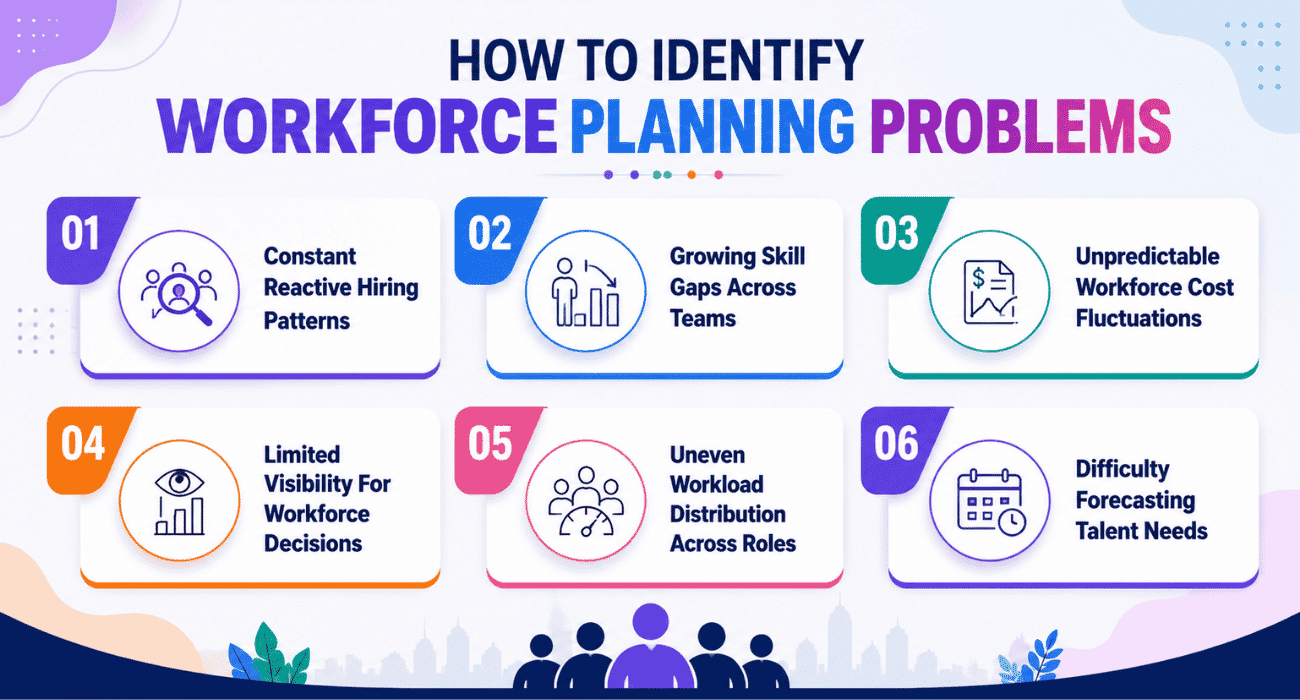
Recognizing workforce planning problems early prevents small issues from becoming major obstacles. Many warning signs appear months before a crisis, but key stakeholders often overlook them because they focus on immediate operational concerns.
Constant Reactive Hiring Patterns
If your hr team constantly posts urgent job openings to fill unexpected gaps, you have a planning problem. Reactive hiring happens when someone leaves unexpectedly or when a new project suddenly requires skills nobody anticipated. Occasional urgent hires are normal. A pattern of reactive hiring indicates that your workforce planning process needs attention.
Track how many positions you fill reactively versus through planned hiring. If reactive hires exceed 30 percent of your total, your forecasting needs improvement. Also monitor time to fill for critical roles. When these positions take longer to fill than others, you may be missing early signals about talent supply issues.
Growing Skill Gaps Across Teams
Skill mismatch shows up in project delays, quality issues, and employee frustration. Teams ask for training repeatedly. Managers complain about capability gaps. New technology implementations take longer than expected because people struggle with unfamiliar systems.
Regular skill mapping helps identify gaps before they impact operations. Compare the skill sets your current workforce has against what your organizational strategy requires over the next two to three years. This comparison reveals where upskilling investments will deliver the highest returns.
Unpredictable Workforce Cost Fluctuations
Financial surprises around staffing indicate planning gaps. You budget for a certain headcount, but overtime costs exceed projections. Contractor spending increases unexpectedly. Benefits costs rise because you hired more permanent staff than planned.
These variations happen when workforce plans disconnect from financial planning. Bringing payroll data into your planning process provides visibility into true labor costs by team, location, and employment type. This data driven approach reduces surprises and supports more accurate budgeting.
Limited Visibility For Workforce Decisions
When hr leaders and business leaders cannot answer basic questions about their workforce, planning has broken down. Questions like how many employees work in each department, what the average tenure is, or which roles have the highest turnover should have immediate answers.
This visibility gap often develops when organizations grow quickly. Systems that worked for 50 employees become inadequate at 200. Information lives in spreadsheets, different managers track their teams differently, and nobody has a complete picture. Centralizing workforce data in integrated systems restores this visibility.
Uneven Workload Distribution Across Roles
Some teams consistently work overtime while others have capacity. Some roles have backup coverage while others create risk when the single person in that role takes vacation. These imbalances indicate that workforce planning has not kept pace with how work has shifted across the organization.
Review workload distribution quarterly. Look for teams where overtime is routine rather than exceptional. Identify mission-critical roles held by only one person. These patterns reveal where natural attrition or unexpected events could create serious operational problems.
What Workforce Data Drives Strategic Decisions
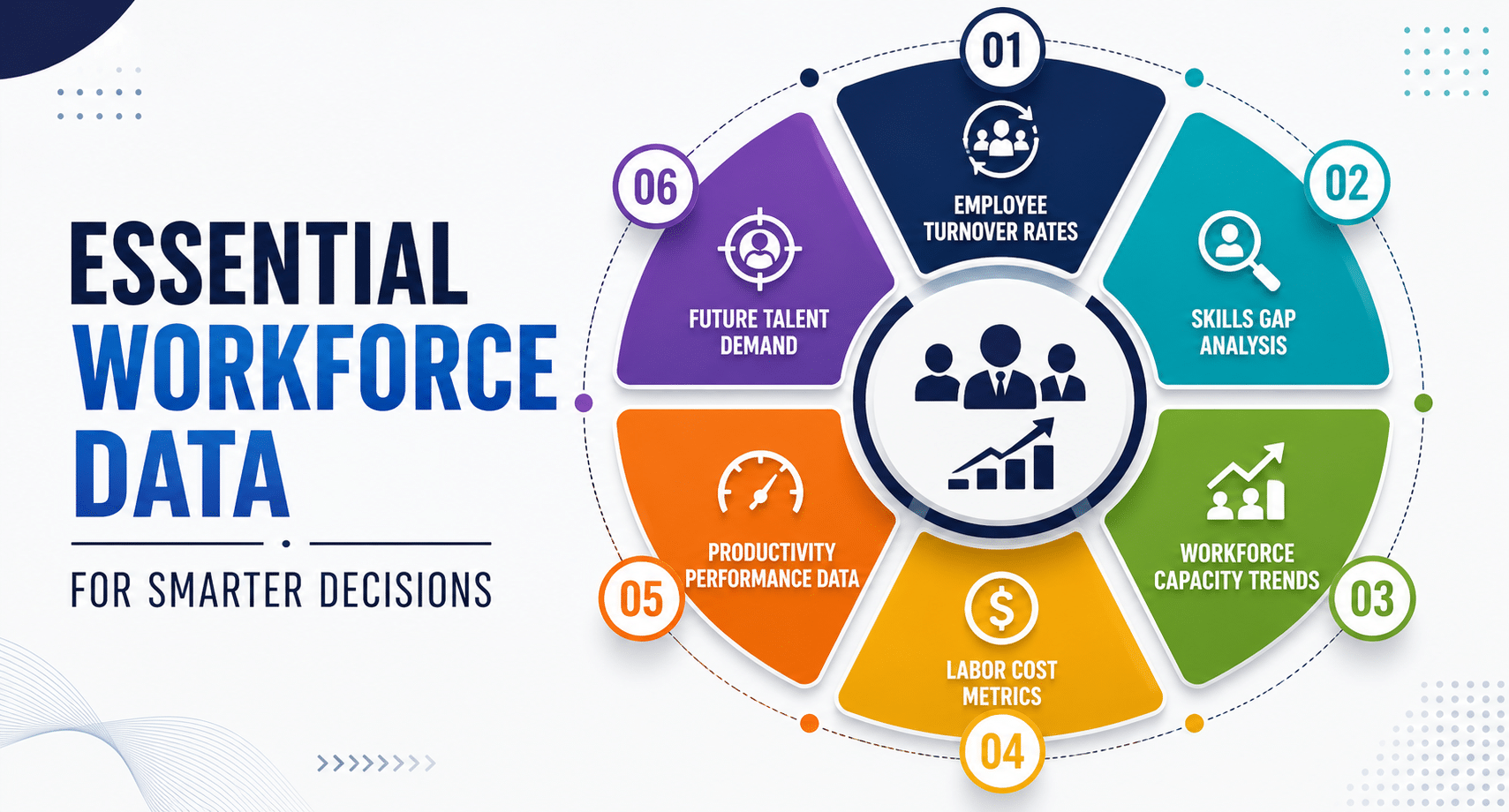
Workforce data serves as the foundation of effective business planning. Organizations that rely on accurate data driven insights can make smarter decisions about hiring, development, and resource allocation. Workforce analytics helps leaders understand workforce supply, anticipate future demand, and support future growth. A strong workforce planning approach allows businesses to align talent with organizational goals while adapting to changing market conditions.
Workforce Analytics Supports Better Planning
Workforce analytics provides valuable visibility into workforce performance, workforce size, and productivity trends. Strategic workforce planning tools help leaders evaluate current workforce supply and identify gaps that may affect business outcomes. By analyzing turnover rates, employee engagement, and workforce trends, organizations gain data analytics capabilities that support more informed decisions.
Many organizations use strategic workforce planning models to understand how talent affects business performance. Such insights help create realistic action plans that support long-term success.
Talent Data Helps Forecast Future Needs
One of the most valuable uses of workforce data is the ability to forecast future talent requirements. Businesses can analyze future demand, projected business expansion, and changing market conditions to identify future roles that will be critical to success.
A modern workforce planning strategy uses workforce analytics to forecast future talent and prepare for future growth. Organizations can assess skill shortages early and develop targeted talent acquisition initiatives. This proactive talent strategy reduces hiring risks and ensures access to top talent when demand increases.
Workforce Supply And Demand Data Improves Alignment
Successful workforce planning depends on balancing supply and demand. Workforce data helps organizations evaluate whether existing employees can meet future talent needs or whether additional hiring is required.
Strategic workforce planning models allow businesses to align talent with organizational goals while maintaining workforce flexibility. Data related to workforce size, internal mobility, and skill availability supports a more accurate workforce planning approach. Such information helps leaders make decisions that strengthen both operational planning and long-term business objectives.
Operational Workforce Planning Drives Efficiency
Operational workforce planning focuses on ensuring the right people are available at the right time. Workforce data supports decisions related to short-term staffing, workload management, and resource allocation.
Businesses operating in remote work and hybrid work environments rely heavily on workforce analytics to maintain efficiency. Data-driven insights help managers continuously monitor workforce performance and adjust staffing levels as needed. Strategic workforce planning tools also support a scalable operating model that adapts to changing business requirements.
Employee Metrics Strengthen Long-Term Strategy
Employee-related data plays a critical role in strategic decision-making. Metrics such as employee engagement, turnover rates, productivity, and retention provide a clear picture of workforce health.
Because workforce planning is an ongoing process, leaders must continuously monitor workforce trends and track progress toward key objectives. Following workforce planning best practices enables organizations to create effective action plans, address skill shortages, and strengthen talent acquisition efforts. A data-focused approach ensures businesses can secure future talent, attract top talent, and build a resilient workforce prepared for future demand.
How Workforce Planning Impacts Financial Stability
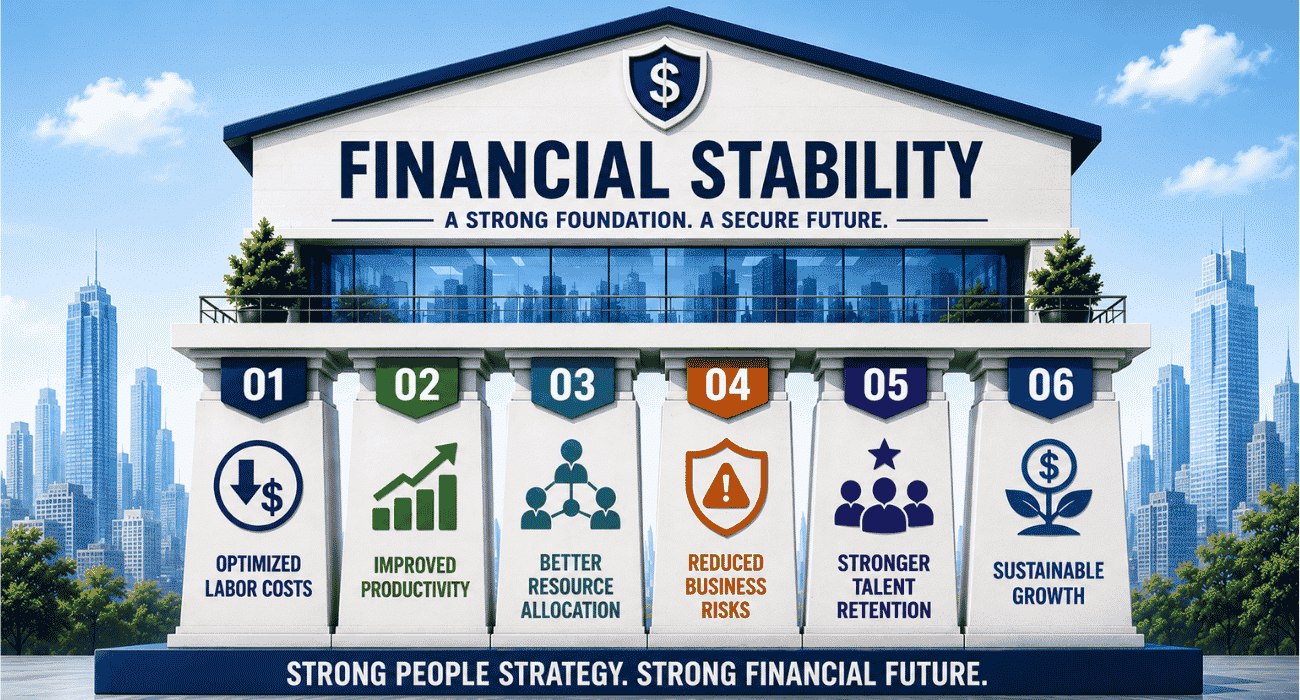
Workforce costs typically represent the largest expense for service-oriented businesses. Strategic workforce planning directly supports financial stability by bringing discipline to this major cost category.
Managing Long Term Labor Cost Balance
Long-term alignment between workforce and business needs prevents both overstaffing and understaffing. Overstaffing inflates costs during slow periods and often leads to painful layoffs that damage morale and employer reputation. Understaffing erodes operations through overwork, quality issues, and missed opportunities.
Align workforce planning with your business plan’s revenue projections. Model different future scenarios to understand the staffing implications of optimistic, realistic, and pessimistic outcomes. This scenario planning discipline ensures you can adjust quickly as actual performance unfolds.
Strengthening Payroll Forecast Accuracy
Accurate payroll forecasts require accurate workforce plans. When you know hiring timelines, planned promotions, and expected attrition, you can project payroll costs month by month with confidence. Finance teams can then incorporate these projections into cash flow planning and budget allocation.
Review forecast accuracy regularly. Compare projected payroll against actual results and investigate significant variances. This feedback loop improves future forecasting and builds credibility for workforce planning inputs into financial processes.
Reducing Overtime And Resource Waste
Overtime often signals planning failures. Consistent overtime in specific teams indicates that staffing levels have not kept pace with workload growth. Strategic workforce planning identifies these demand gaps before overtime becomes routine.
Similarly, underutilized staff represents wasted investment. If certain roles or locations consistently have excess capacity, the workforce plan should address this through redeployment, cross-training for internal mobility, or natural attrition without replacement.
Connecting Workforce Capacity To Revenue Targets
Revenue growth requires corresponding workforce growth, but the relationship is not always linear. Productivity improvements, automation, and process changes can enable revenue growth with proportionally smaller headcount increases.
Map specific revenue targets to workforce requirements. If your business plan targets 25 percent revenue growth over two years, calculate what that means for customer-facing roles, operations roles, and support functions. Challenge assumptions by considering alternatives like automation or process improvement.
Supporting Stable And Sustainable Growth
Sustainable growth means expanding capacity at a pace the organization can absorb. Hiring too quickly strains training capacity, dilutes culture, and often produces quality issues. Hiring too slowly limits growth potential and overworks existing staff.
Strategic workforce planning helps organizations find the right pace. It considers hiring numbers along with onboarding capacity, training readiness, and integration timelines. Such planning prevents growth and contraction cycles that weaken long term business stability.
How Workforce Planning Changes Across Business Stages
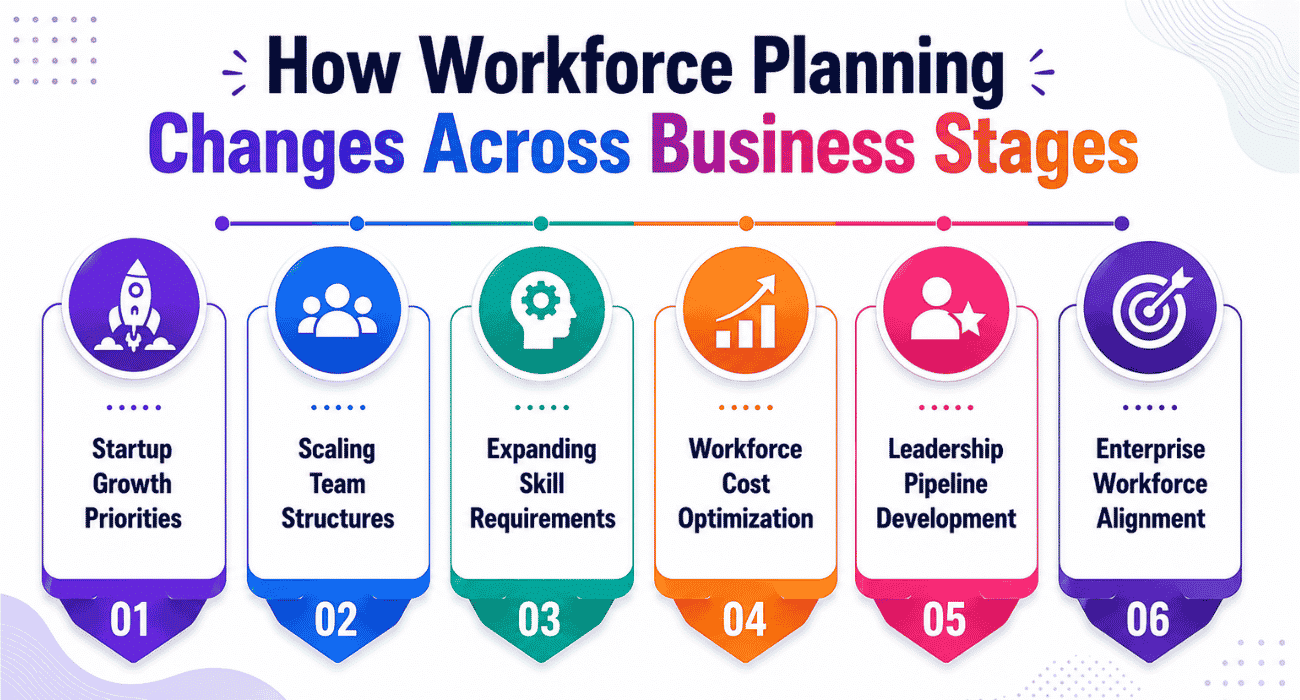
Workforce planning needs evolve as organizations mature. What works for a 20 person startup differs significantly from what a 500 person established company requires.
Workforce Planning In Early Stage Startups
Startups often skip formal workforce planning because priorities change quickly and headcount is small enough to manage informally. However, even early stage companies benefit from thinking ahead about critical skills and roles.
Focus on identifying mission critical positions that will be needed as the business scales. Build relationships with potential candidates before urgent hiring begins. Create a simple view showing current roles, anticipated roles within the next year, and key capability gaps that may affect growth.
Scaling Workforce Strategy During Rapid Growth
Growing companies face the most intense workforce planning challenges. Headcount may double in a short period, new functions appear, and informal hiring approaches begin to fail. Without structure, hiring decisions become reactive and inconsistent.
At this stage, organizations need formal workforce planning processes. Clear role definitions, systematic skill tracking, and alignment with financial budgets ensure hiring decisions support business priorities. This structured approach builds a stable foundation for continued expansion.
Optimizing Workforce In Mature Organizations
Mature companies shift focus from expansion toward optimization. Workforce planning emphasizes productivity improvements, cost efficiency, and reallocating talent as business priorities change.
Retirement projections and succession planning become essential. Knowledge transfer initiatives help preserve expertise when experienced employees leave. Such planning ensures long-term operational continuity and protects institutional knowledge.
Adapting Workforce Strategy During Market Disruptions
Market disruptions often require rapid workforce adjustments. Economic downturns may demand cost control, while competitive shifts may require new skills and capabilities. Regulatory changes can also create sudden workforce needs.
Scenario planning prepares organizations for these shifts. By modeling multiple future situations in advance, leaders can respond quickly and minimize disruption when conditions change unexpectedly.
Preparing Workforce For Future Expansion
Expanding into new markets or launching new products requires careful workforce preparation. New regions may require local expertise, language capabilities, or compliance knowledge. Emerging products may demand specialized technical skills.
Strategic workforce planning translates expansion goals into specific talent requirements. Organizations assess whether capabilities exist internally, can be developed through training, or require external hiring. This preparation ensures expansion initiatives remain sustainable and well supported.
How Technology Is Transforming Workforce Planning
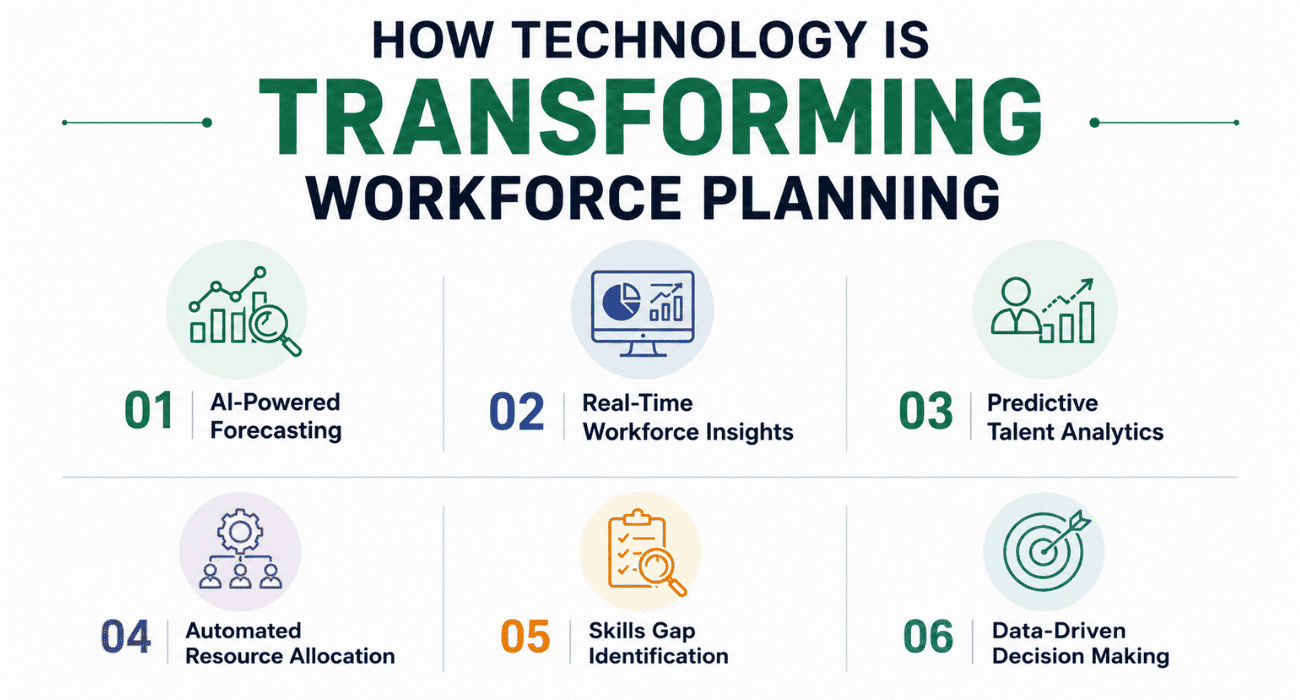
Technology advances are reshaping how organizations approach workforce planning. Tools that seemed futuristic a few years ago are now accessible to mid-sized companies.
From Dashboards To Decisions In Workforce Planning
Modern HR dashboards aggregate data from multiple sources to provide comprehensive workforce views. These tools visualize headcount trends, turnover patterns, compensation distributions, and diversity metrics. Leaders can explore data interactively rather than waiting for periodic reports.
Analytics tools also enable benchmarking against industry standards. Organizations can compare their workforce metrics against peers to identify areas of strength and opportunity. This external perspective adds context to internal data.
Predicting Talent Needs With AI Insights
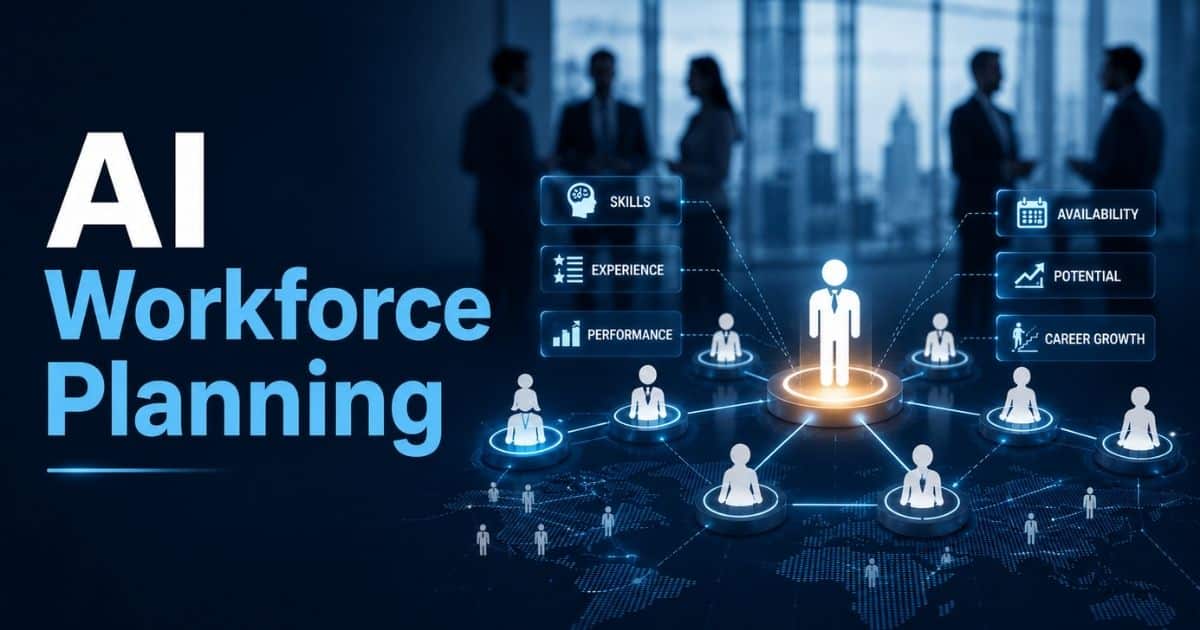
AI-driven forecasting goes beyond simple trend projection. Machine learning models can identify patterns in historical data that human analysts miss. They can incorporate market trends, economic indicators, and competitive intelligence to produce more nuanced forecasts.
Current trends for 2026 show deeper AI augmentation in workforce forecasting. These tools help anticipate hiring needs, predict turnover risks, and identify employees ready for advancement. They enable adaptive, inclusive pipelines responsive to demographic changes and global mobility.
Turning Payroll Data Into Workforce Visibility
Modern payroll systems provide far more than payment processing. They capture detailed workforce data including hours worked, compensation by component, tax status, and benefits enrollment. This data feeds directly into workforce planning when systems integrate properly.
Real-time visibility into staffing levels and labor costs supports faster decision-making. Leaders can see current workforce status immediately rather than waiting for month-end reports. This immediacy helps catch problems early and supports agile responses to changing conditions.
Automation And Its Impact On Workforce Structure
Automation changes workforce requirements in two ways. First, it reduces demand for routine tasks, shifting role requirements toward higher-value activities. Second, it creates demand for employees who can implement, manage, and improve automated systems.
Workforce planning must account for automation’s impact on both headcount needs and skill requirements. Roles may not disappear entirely, but their content changes. Existing employees may need reskilling to remain productive in automated environments.
Real Time Data For More Accurate Planning
Real-time workforce data enables continuous planning rather than periodic exercises. Organizations can monitor key metrics constantly and adjust plans when deviations appear. This responsiveness prevents small issues from becoming major problems.
Integration between HR, payroll, time tracking, and finance systems creates unified data platforms. When data flows automatically between systems, reporting becomes faster and more accurate. Decision-makers get the information they need when they need it.
How Does Payrun Support Strategic Workforce Planning
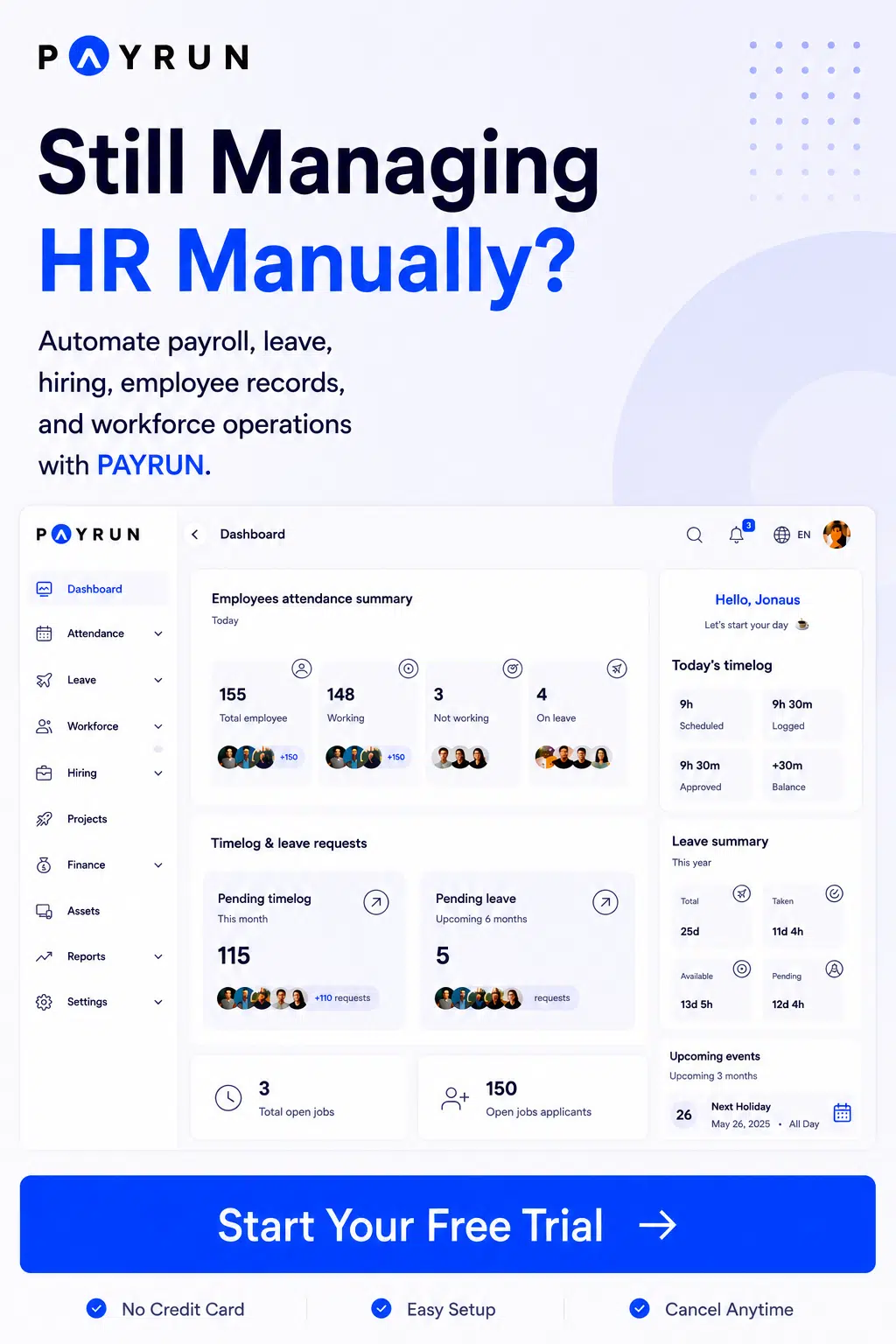
Payrun provides the real-time payroll and workforce data visibility that strategic workforce planning requires. The platform gives finance and hr professionals accurate labor cost breakdowns by team, department, and location. This data supports supply-demand modeling and helps organizations understand the true cost implications of different workforce scenarios.
With Payrun, businesses can track staffing levels, analyze overtime patterns, and monitor compliance requirements that affect workforce decisions. The platform supports demographic reporting and turnover analytics that inform succession planning and development priorities. Organizations can model hiring scenarios, project payroll costs, and make informed decisions about right-sizing their workforce without risking overstaffing or understaffing.
FAQs
What Is The Main Goal Of Strategic Workforce Planning?
The main goal is ensuring your organization’s staffing aligns with business strategy by having the right number of people with the right skills in the right roles at the right cost over time. This alignment supports operational efficiency and helps business leaders address risks while preparing for future needs. Without it, companies either overspend on unnecessary headcount or lack the capabilities required to deliver expected outcomes.
How Often Should Workforce Plans Be Updated?
Full strategic workforce plans should be refreshed annually, typically aligned with budgeting cycles. Quarterly reviews comparing actual headcount and costs against the plan help catch deviations early and consider internal and external factors affecting staffing. During major changes such as mergers or rapid growth, more frequent updates may be necessary to manage potential outcomes effectively.
Which Tools Help Workforce Planning?
Effective workforce planning relies on HR systems for demographic data, payroll platforms like Payrun for cost insights, and analytics tools for forecasting. Skills mapping platforms support gap analysis, while scenario modeling tools enable planning for workforce expansion. Together, these tools support informed decisions and provide practical workforce planning examples.
Can Small Businesses Use Workforce Planning?
Yes. Even companies with 20 to 50 employees benefit from basic planning. Start with key steps such as mapping current headcount, identifying critical roles, and projecting staffing needs over the next 12 to 24 months. Tools like Payrun help smaller businesses understand labor costs clearly while preparing for future needs.
How Does Workforce Planning Improve Retention?
Strategic workforce planning improves retention by creating clearer career paths and stable work environments. It helps identify gaps early, support internal mobility, and align development programs with business goals. Such planning also balances workloads and prepares the workforce for future needs, reducing burnout and strengthening long term engagement.