Employee leave tracking shouldn't give you headaches. Most of us know the pain of managing time-off requests with outdated systems. These systems just don't align with how modern teams work. Many HR professionals still depend on manual processes or spreadsheets. This leads to errors, compliance risks, and hours of wasted time.
Busy periods bring multiple time-off requests from employees. A robust leave management system helps prevent coverage problems before they escalate. The best leave tracking software removes the hassle of monitoring vacation time, sick leave, and time-off requests. It automates everything from start to finish. Good leave tracking does more than improve team coordination. It keeps your organization compliant and gives employees a transparent system they trust.
In this article, we will show you how the right employee leave management software can change your approach to time-off requests. Our solutions work whether you're dealing with spreadsheet struggles or need an upgrade to your current system.
What Is Employee Leave Tracking
Employee leave tracking is the process companies use to record, manage, and control employee leave accurately. It ensures employers can track leave, manage paid time, and maintain compliance while supporting a positive employee experience.
Employee leave tracking acts as the foundation of an effective leave management system. It replaces spreadsheets or an Excel spreadsheet with a single source that shows leave dates, employee time, sick leave, sick days, vacation, holidays, and other leave types in one calendar view. Managers approve requests faster, employees request time with clarity, and HR teams manage leave policies, absence management, and compliance with fewer errors.
A reliable system helps businesses plan workforce scheduling, control costs, and reduce challenges tied to manual forms and reminders. When employees see fair rules, clear balances, and timely approvals, trust improves across the team. For growing companies, structured employee leave tracking becomes a game-changer rather than an administrative burden.
How Employee Leave Tracking Works In Modern Workplaces
Employee leave tracking works through connected digital systems that replace spreadsheets, paper forms, and manual follow-ups. Modern tools help businesses manage leave, track employee time, approve requests faster, and maintain compliance while improving clarity for employees and managers.
Cloud-Based Leave Systems
Cloud-based employee leave tracking systems act as a centralized management system for absence management across the company. Teams access leave data from any location, which supports remote, hybrid, and multi-department workforces. Employers define leave policies, leave types, paid time rules, and accrual logic once, then apply them consistently.
The system tracks leave dates automatically and updates balances in real time. Unlike spreadsheets or an excel spreadsheet, cloud platforms reduce errors, prevent duplicate records, and offer a single source of truth.
HR teams gain better control, managers plan scheduling with confidence, and employees trust the leave process. This setup also supports compliance, reporting, and long-term workforce planning without heavy IT effort.
Employee Self-Service Dashboards
Employee dashboards simplify how employees manage leave and request time off. Each employee views paid time, sick leave, vacation, holidays, and remaining balances through a clear calendar interface. Self-service access reduces HR contact, cuts form handling, and improves the employee experience.
Employees submit requests, track approvals, and review leave policies without delays. Managers review requests with full context on team absence and workload. This transparency removes confusion and prevents disputes about employee leave.
Dashboards replace free PTO tracker tools and disconnected spreadsheets with structured visibility that supports fairness, accuracy, and better workforce control across departments.
Automated Request And Approval Flow
Modern employee leave tracking relies on automated workflows that move requests through the right managers instantly. Employees request time with a few clicks, managers approve or decline within the system, and notifications keep everyone informed.
Workflow automation prevents missed requests, reduces reminders, and shortens approval cycles. Managers see leave dates, leave types, and employee time conflicts before approval. This structured leave process supports scheduling, reduces absence gaps, and improves accountability.
Employers avoid manual follow-ups while employees gain clarity and speed. Automated flows also support accommodations, sick days, and urgent absence cases without breaking policy rules.
Real-Time Calendars And Visibility
Shared calendars provide teams with real-time insight into absence, vacation, and scheduling coverage. Managers track who is away, who plans leave, and how employee takes time affect team capacity. Calendar views support workforce planning and prevent overlap during critical periods. HR teams use this visibility to manage leave across departments and locations. Employees benefit from knowing team availability before submitting a request. This shared system replaces email threads and scattered tools with one connected space. Accurate calendars reduce cost, protect productivity, and help businesses plan work, resources, and deadlines more effectively.
Mobile Access And Notifications
Mobile access turns employee leave tracking into a flexible, on-the-go solution. Employees check balances, request time, and view approvals from a phone. Managers approve leave through quick actions without delays.
Push notifications and reminders keep everyone updated, which helps during sick leave, emergencies, or last-minute changes. Integration with tools such as Microsoft Teams improves communication and reduces friction. Mobile-first systems support modern work styles and improve response speed.
This access strengthens employee management system while keeping managers connected to real-time workforce data.
Reports And Compliance Control
Reporting tools convert leave data into actionable insights for HR and leadership. Teams analyze absence trends, paid time usage, sick days, and leave types across the workforce. Reports support compliance with federal rules, FMLA, and company policies.
Employers use this data to manage cost, forecast staffing needs, and improve benefits planning. Accurate records protect the business during audits and disputes. Instead of manual report writing, modern systems generate ready answers that support smarter decisions and long-term workforce stability.
Why Businesses Need Employee Leave Tracking Systems
Employee leave tracking systems provide businesses with the structure and visibility necessary to manage leave effectively without disruption. A centralized leave management system enables employers to track leave accurately, support managers, and safeguard operations as teams grow, scale, and operate across multiple locations.
Avoid Overlapping Absences
Employee leave tracking prevents teams from approving conflicting leave dates that cause staff shortages. Without a system, managers rely on memory, traditional spreadsheets, or email threads that hide approved absences. A proper management system shows employee leave, vacation, sick leave, and holidays in one shared calendar.
Managers review availability before approval and block requests during peak periods. This control protects productivity and supports fair leave policies. Clear visibility also reduces employee frustration when requests clash unexpectedly. Businesses maintain balance between employee needs and operational demands with fewer scheduling errors and less rework.
Maintain Business Continuity
Unexpected absence creates disruption, higher costs, and missed deadlines. Employee leave tracking gives managers advance notice of absence so teams plan workloads and resources properly. Leaders assign backup roles, adjust schedules, and protect client delivery.
Accurate tracking of paid time, sick days, and employee time prevents last-minute hiring or overtime expenses. HR teams also maintain reliable records that support audits and compliance. A structured leave process ensures work continues smoothly even when key employees take time off, which strengthens trust with customers and partners.
Support Remote And Hybrid Teams
Distributed teams require a single source for absence management. Employee leave tracking systems show leave across locations, time zones, and departments. Managers avoid conflicts when employees work from different regions or flexible schedules.
Cloud access replaces spreadsheets that fail in remote setups. Employees request time through one system, managers approve quickly, and teams stay informed through shared calendars. This clarity reduces communication gaps and helps remote teams plan work effectively. A unified system supports modern work models without confusion or delays.
Improve Compliance And Risk Control
Labor laws, federal rules, and FMLA requirements demand accurate leave records. Employee leave tracking systems store leave data securely and consistently. HR teams track leave types, accommodations, and absence history without manual forms. Reports provide clear answers during audits or disputes. Businesses reduce legal risk, fines, and reputation damage through reliable documentation. Automated rules also enforce leave policies equally across the company. Compliance becomes a built-in process rather than a reactive task handled after problems appear.
Reduce Administrative Workload
Manual leave tracking drains HR resources and manager time. Spreadsheets, emails, and free PTO tracker tools require constant updates and reminders. A centralized system automates requests, approvals, and balance calculations.
Employees manage leave independently, managers review requests faster, and HR avoids repetitive follow-ups. This efficiency lowers cost and frees teams to focus on people support and strategic planning. Less admin effort also improves the employee experience by removing delays and confusion from the leave process.
Strengthen Employee Trust And Experience
Transparent employee leave tracking builds fairness and confidence. Employees see accurate balances, request status, and leave policies without guesswork. Managers apply rules consistently, which reduces claims of favoritism. Clear visibility into paid time and sick leave helps employees plan life events with confidence.
This trust improves morale, engagement, and retention. A reliable system signals that the company values employee well-being while maintaining operational control. For small and medium businesses, this balance becomes a long-term benefit rather than a challenge.
Types Of Leave Does Employee Leave Tracking Cover
Leave management systems today need to track different types of absences to handle the complex workforce needs. A good employee leave tracking solution helps organizations manage everything from planned vacations to unexpected medical absences. This ensures legal compliance and keeps operations running smoothly.
Annual Leave And Vacation
Paid Time Off (PTO) is the foundation of most employee leave tracking systems. Organizations now prefer combined PTO banks instead of tracking vacation days and personal time separately. Employees can manage their time off with just a few clicks - whether they're planning summer vacations or taking long weekends.
A complete leave management system lets employees:
- Request time off by the hour or full day, which gives staff and managers more flexibility
- See their current paid and unpaid time off balances through accessible dashboards
- Know their upcoming accruals and plan future time away
Good vacation tracking helps employers prevent burnout when employees don't use their allocated time off. A survey revealed that all but one of these employees would turn down a job offer if it didn't include PTO. Clear tracking of annual leave helps both recruitment management and retention efforts.
Sick Leave And Medical Time Off
Sick leave tracking changes based on location since there's no federal requirement for paid sick leave in the United States. Many states and cities have created their own mandatory sick leave laws.
Starting January 2024, California employers must give at least 40 hours or five days of sick leave each year to most workers after 90 days of employment. These leaves cover physical and mental illness recovery, medical appointments, and preventative care. This applies both to employees and when they care for family members.
Some organizations offer unlimited sick leave, while most give a specific number of days yearly. Your tracking system needs to adapt to these different policies while following location-specific rules. Automated tracking helps avoid errors in calculations or policy applications.
Maternity, Paternity, And Adoption Leave
Family-related leaves are some of the toughest tracking challenges for HR departments. The Family and Medical Leave Act (FMLA) lets eligible employees take up to 12 weeks of unpaid, job-protected leave when they have or adopt a child. This is the minimum standard across the United States, though many organizations offer better benefits.
Tracking becomes more complex because:
- Medical leave for childbirth recovery usually starts maternity leave (typically 6-8 weeks)
- Paternity and adoption leaves might have different durations and eligibility rules
- Some companies give paid parental leave while others ask employees to use sick or vacation time
The U.S. stands out as one of only four countries worldwide without guaranteed paid maternity leave. Employee leave tracking systems must be flexible to handle company policies that often go beyond legal requirements.
Unpaid Leave And Extended Absences
Leave management systems must also track unpaid absences effectively. Leave Without Pay (LWOP) is usually a temporary, supervisor-approved absence from duty. Employees can take LWOP in certain situations, like FMLA provisions and military service duties.
Other extended absences that need tracking include:
- Bereavement leave after a family member's death
- Personal unpaid leave for situations other policies don't cover
- Emergency leave for unexpected events
- Educational leaves for professional development
These various leave types show why spreadsheets and manual tracking lead to mistakes. A good employee leave tracking system handles all these absence types while giving your organization a single source of truth.
How Accurate Employee Leave Tracking Improves Compliance
Accurate employee leave tracking helps businesses meet legal obligations while protecting employees and operations. A structured leave management system allows employers to track leave correctly, apply leave policies consistently, and respond to audits or disputes with confidence across federal, state, and local requirements.
Reduce Legal And Financial Risk
Inaccurate employee leave records expose businesses to lawsuits, penalties, and compliance failures. Laws such as FMLA require precise tracking of employee leave, eligibility, and leave dates. Without a reliable system, employers risk denying valid leave or miscalculating paid time and sick leave.
Courts often view missing or inconsistent records as employer fault, which increases liability. Accurate employee leave tracking creates a clear record that protects the company during disputes.
A centralized system also reduces human error that appears when teams rely on spreadsheets or manual forms. This level of control lowers legal risk and long-term cost.
Meet Federal And State Leave Rules
Leave regulations vary by location and change frequently. Employee leave tracking systems apply the correct rules based on federal law, state mandates, and company policy. Employers manage different leave types, paid time rules, and accommodations without confusion.
Automated rule enforcement ensures employees receive the correct leave based on eligibility and location. HR teams avoid manual calculations and policy guesswork. This consistency supports compliance across departments and regions.
A structured system helps businesses navigate complex regulations while maintaining fair and lawful leave practices.
Maintain Audit-Ready Records
Audits demand accurate and complete documentation. Employee leave tracking systems store leave requests, approvals, forms, and communication in one secure space. HR teams access reports quickly without searching through spreadsheets or email chains.
Clear records support compliance reviews, internal audits, and legal inquiries. Consistent documentation also helps managers answer employee questions with confidence.
This readiness saves time, reduces stress, and prevents gaps that auditors flag. Reliable reporting turns compliance into a routine process instead of a reactive scramble.
Protect Employee Privacy
Leave records often include sensitive employee information. A proper leave management system separates medical data from general employee files. Secure access controls limit who can view specific information. This structure supports privacy laws and builds employee trust.
Manual tracking through spreadsheets increases the risk of data exposure or accidental sharing. It can also happen during data migration. Centralized systems provide better protection while keeping records organized. Employees feel safer when their absence and health details remain confidential. Privacy protection becomes a built-in benefit of accurate employee leave tracking.
Apply Leave Policies Consistently
Consistency plays a major role in compliance. Employee leave tracking systems enforce leave policies equally for all employees. Managers follow the same approval process, deadlines, and rules without favoritism.
Employees see clear balances and fair treatment, which reduces disputes. Consistent application also protects employers from discrimination claims.
When policies apply automatically through the system, mistakes drop and trust rises. This fairness strengthens company culture while meeting legal expectations.
Support HR Efficiency And Accuracy
Manual leave tracking consumes HR resources and increases error risk. Accurate employee leave tracking automates calculations, reminders, and reporting. HR teams focus on compliance strategy instead of paperwork.
Managers approve requests with full context, and employees receive faster answers. This efficiency improves the employee experience while maintaining compliance standards. A reliable system transforms leave tracking from a legal risk into a controlled, predictable process that supports long-term business stability.
How Automation Improves Employee Leave Tracking Accuracy
HR automation has transformed leave tracking for employees by eliminating errors that manual systems create. My firsthand experience shows that a switch from spreadsheets to automated tracking yields better accuracy and streamlines processes. Tasks that once took hours now finish in seconds with a few clicks.
Immediate Sync With Calendars
Leave tracker integration with external calendars makes team coordination effortless. Teams stay updated without extra effort when approved time off syncs with Google Calendar, Outlook, or Apple Calendar. This calendar connection will give a clear picture of:
- Approved leave requests show up instantly in employees' external calendars
- All changes, approvals, cancellations, or adjustments reflect across systems
- Teams learn about staff availability patterns
Calendar synchronization benefits go beyond simple scheduling. Team members can see who's on vacation or on business trips through platforms like Slack and MS Teams. A single source of truth prevents scheduling conflicts that can derail projects and create team frustration.
Automated Leave Balances And Accruals
Employee leave management software's biggest advantage comes from automating complex calculations. Modern systems handle everything from vacation time to intricate accrual rules based on tenure or hours worked, replacing manual Excel spreadsheet calculations.
The leave management system recalculates balances, monitors attendance rates, and records requested time off continuously. This automation saves extraordinary time, reducing HR admin work by up to 70%. The system's automatic handling of calculations eliminates disputes from manual tracking errors.
Employees gain peace of mind with instant access to accurate leave balances. They can plan vacations with confidence, knowing their available time.
Reducing Human Error In Leave Calculations
Mistakes happen with manual tracking systems, wrong balances, overpayments, or miscalculated accruals create issues. Small errors can lead to major problems in payroll and compliance.
Automated leave management systems provide the solution by removing human intervention. Integration with HR records, payroll, time tracking, and scheduling systems reduces busywork and prevents errors. The system routes approvals and updates balances without manual data entry.
Managers can view immediate dashboards that display employee time off schedules. Resource planning becomes strategic, and scheduling conflicts get prevented before they occur.
Features To Look For In Employee Leave Tracking Software
Your organization's time-off management can improve with the right employee leave tracking software. You need to identify features that meet your specific needs to save time and avoid future complications.
Leave Tracker Templates Vs. Full Software
Simple spreadsheet templates might look economical at first, but they create major drawbacks later. Excel spreadsheets need extensive data entry, and even the most careful team members can make errors. Dedicated leave tracking software automates about 90% of this work.
Your team can focus on strategic tasks instead of administrative work because proper leave management systems work "out of the box" with minimal setup.
Customizable Leave Types And Policies
Organizations with unique needs must have a flexible leave management system. The best employee leave tracking software provides:
- Customizable leave types (vacation, sick leave, parental leave, etc.)
- Flexible accrual rules based on tenure, employee role, or location
- Policy variations that accommodate different employment types
- Blackout period settings that prevent requests during peak business times
Your leave tracker should adapt to your organization's processes rather than forcing changes to established methods.
Integration With HRIS And Payroll Tools
We needed the leave tracking software to merge with existing systems. The most useful integrations include:
- HRIS platforms like ADP, BambooHR, and Workday
- Payroll systems that automatically reflect leave in compensation calculations
- Calendar applications (Outlook, Google Calendar, iCal)
- Time and attendance tracking tools
These connections build a unified ecosystem where leave data moves automatically between systems, which reduces manual work and errors.
Analytics And Usage Reports
A resilient reporting system turns your leave management into a strategic tool. The system should include:
- Customizable reports that can be filtered by department, leave type, or time period
- Exportable data in multiple formats for further analysis
- Immediate dashboards showing current and upcoming absences
- Trend analysis that identifies patterns in leave usage
These analytical insights help prevent staffing shortages, improve resource planning, and maintain compliance with company policies and regulations.
Challenges Teams Face Without Employee Leave Tracking
Employee leave tracking gaps create operational blind spots, delays, and trust issues across the business. Without a centralized leave management system, teams rely on spreadsheets and email, which disrupts the leave process, weakens compliance, and damages the employee experience as organizations grow.
Data Silos Across Systems
Data silos appear when employee leave lives in spreadsheets, inboxes, and paper forms. Teams lack a single source for leave dates, absence history, and employee time. Decisions rely on outdated information, which leads to poor scheduling and coverage gaps.
Duplicate records increase storage cost and IT overhead. Inconsistent definitions of leave types create errors that spread across departments. Employees lose confidence when records conflict.
A fragmented setup prevents managers from managing leave effectively and blocks HR from reporting accurately.
Inconsistent Leave Decisions
Inconsistent approvals emerge without employee leave tracking. Two employees request the same paid time or sick leave and receive different outcomes. Managers apply rules unevenly due to missing context. Leave policies lose authority when enforcement varies by department.
Employees perceive favoritism, which harms morale and trust. A lack of structure also increases disputes and escalations to HR. Consistency requires a record management system that applies rules uniformly and records every request and decision.
Delayed Approvals And Missed Requests
Email-based requests slow approvals and cause missed messages. Employees request time and wait without clarity, which affects personal plans and satisfaction. Managers overlook requests buried in threads or forms.
HR teams handle constant follow-ups instead of strategic work. Delays also disrupt scheduling and coverage. Employee leave tracking with just a few clicks removes uncertainty, speeds approval, and keeps everyone aligned through reminders and notifications.
Limited Team Visibility
Managers struggle to see who is away without a shared calendar. Absence management suffers when leaders cannot track leave across the team. Overlaps occur during busy periods, holidays, or project deadlines. Workforce planning becomes reactive rather than proactive.
Remote and hybrid teams face added confusion across locations and time zones. A central system provides clear visibility into vacation, sick days, and accommodations, which supports smarter scheduling decisions.
Compliance And Audit Risk
Manual tracking increases compliance risk for FMLA, federal rules, and local laws. Missing forms, unclear records, and incorrect balances expose employers to fines and disputes. Audits become stressful without reliable reports.
Employee leave tracking creates accurate documentation and protects the business during reviews. Secure records also support privacy requirements. Compliance shifts from a constant challenge to a controlled process with the right system.
Higher Administrative Cost
Spreadsheets and free PTO tracker tools consume HR time and increase errors. Manual reminders, data entry, and report writing inflate cost. Managers lose productivity while managing leave manually. A proper solution automates tracking, approvals, and reporting. HR teams focus on support and workforce planning instead of paperwork. Efficiency improves, errors drop, and the business gains better control over leave management.
How Payrun Helps Businesses Manage Employee Leave Tracking Efficiently
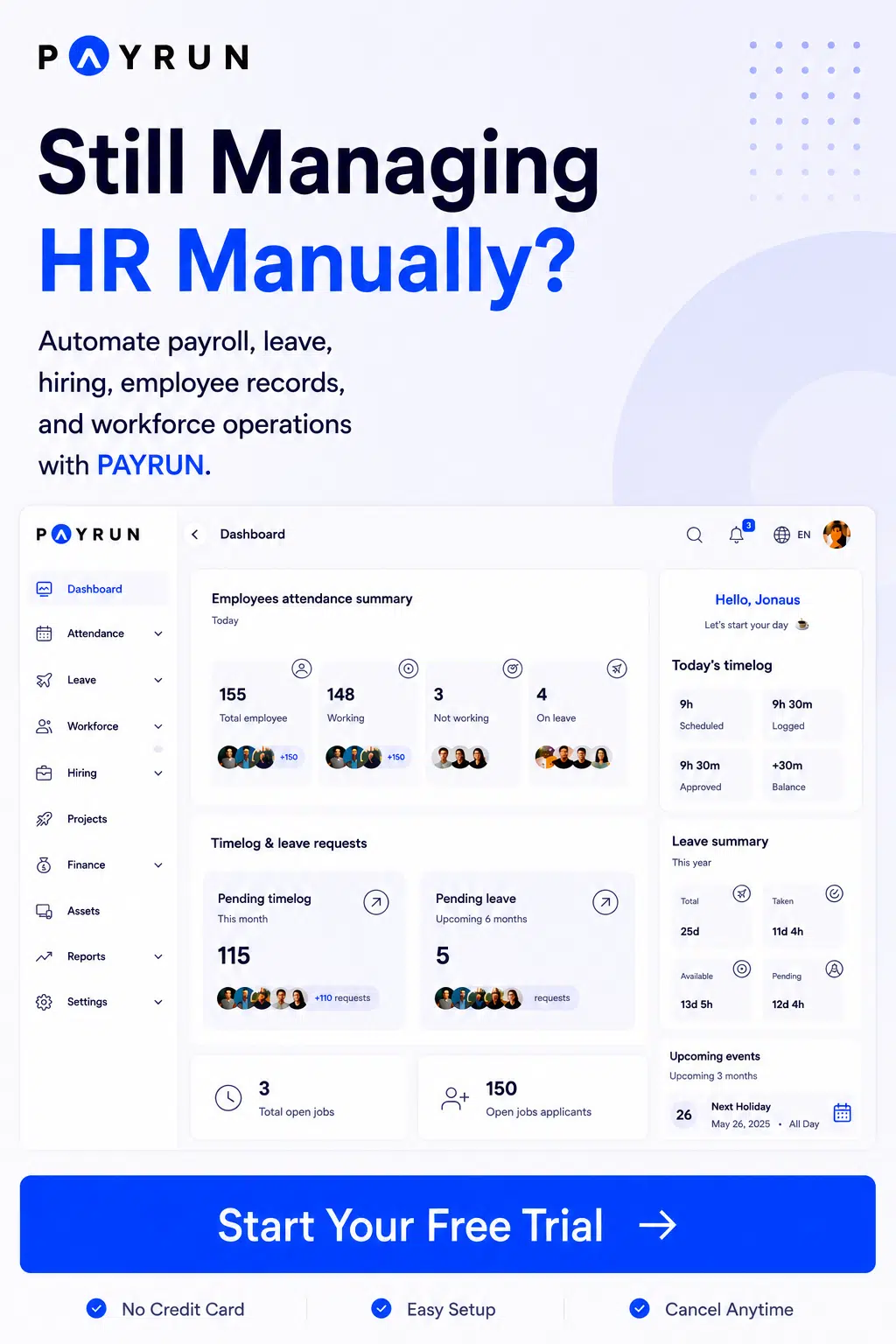
Payrun provides a practical employee leave tracking solution that simplifies how businesses manage leave, absence, and employee time. A clean interface and centralized dashboard allow managers to track leave dates, approve requests, and maintain control without relying on spreadsheets or disconnected tools.
Payrun connects employee leave tracking directly with payroll, which removes duplicate data entry and calculation errors. Approved leave updates paid time, sick leave, and vacation balances automatically. Payroll reflects accurate employee time, which improves compliance, reduces cost, and strengthens trust across teams, including remote and hybrid workforces.
HR and finance teams benefit from one unified leave management system. Payrun supports multiple leave types, clear leave policies, automated approvals, and reliable reports. You can enjoy these features at a suitable price.
This structure improves absence management, workforce planning, and employee experience. Businesses gain a scalable solution that turns leave tracking into a streamlined, low-effort process rather than an ongoing administrative challenge.
FAQs
Can Employee Leave Tracking Support Different Leave Policies?
Yes. Employee leave tracking systems support multiple leave policies, accrual rules, and leave types. Businesses configure rules for paid time, sick leave, holidays, and special accommodations based on company and legal needs.
Does Employee Leave Tracking Work For Small Businesses?
Yes. Small businesses use employee leave tracking to replace spreadsheets and manual forms. A simple system improves accuracy, saves time, and supports growth without adding administrative burden.
How Does Employee Leave Tracking Improve Workforce Planning?
Employee leave tracking gives managers real-time visibility into absence and employee time. This insight helps teams plan schedules, allocate resources, and avoid coverage gaps during busy periods.
Can Employees View Their Leave Balances Anytime?
Yes. Most systems allow employees to check leave balances, request time, and track approvals through a dashboard or mobile access. This transparency improves trust and employee experience.
Is Employee Leave Tracking Useful For Remote Teams?
Yes. Employee leave tracking provides a single source for teams across locations and time zones. Shared calendars and notifications help remote employees and managers stay aligned.
How Does Employee Leave Tracking Reduce Errors?
Automation replaces manual data entry and calculations. Accurate tracking of leave dates and balances reduces payroll mistakes, compliance risks, and approval delays.