Employee Offboarding Checklist For Every Department In 2026
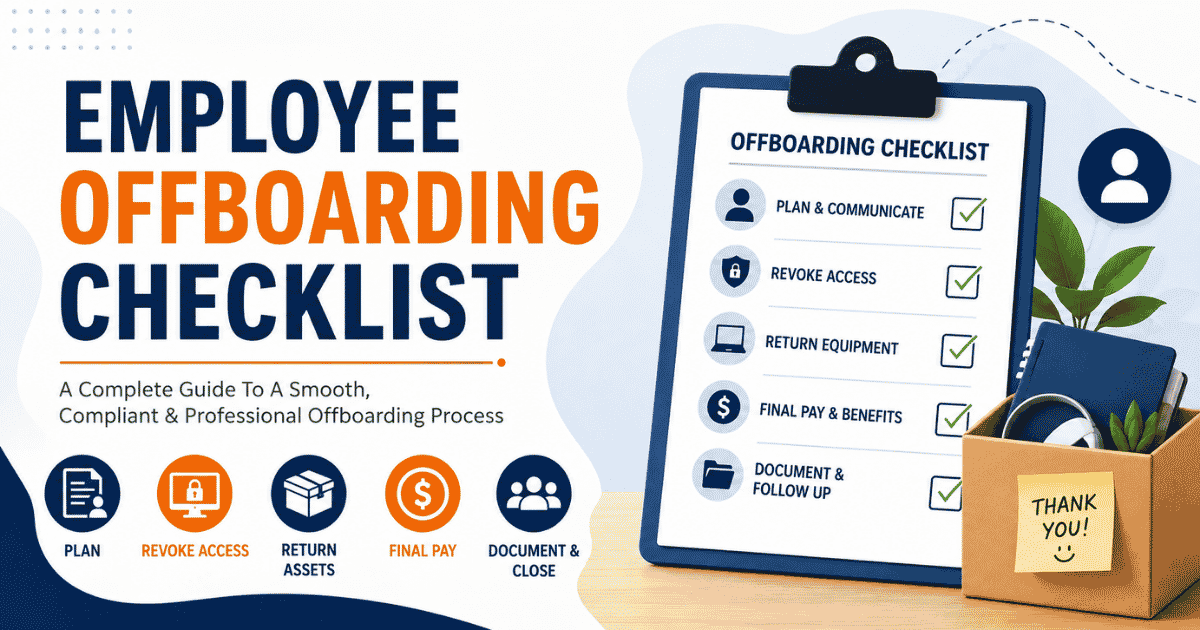
Table of Contents
Losing a team member is never just an HR task. IT has to lock down accounts. Finance has to close out the final paycheck. Managers have to catch loose threads before they turn into missed deadlines. On a small team, one person often handles all three roles at once, and that's exactly when steps get skipped.
A clear offboarding checklist fixes this. It breaks the exit into simple stages, assigns each task to a person, and makes sure nothing slips through during a busy week. Whether someone resigns, retires, or gets let go, the process should feel calm and organized, not last-minute. This guide walks through every department's role in a smooth offboarding process, plus a ready-to-use checklist template.

What An Offboarding Checklist Should Cover
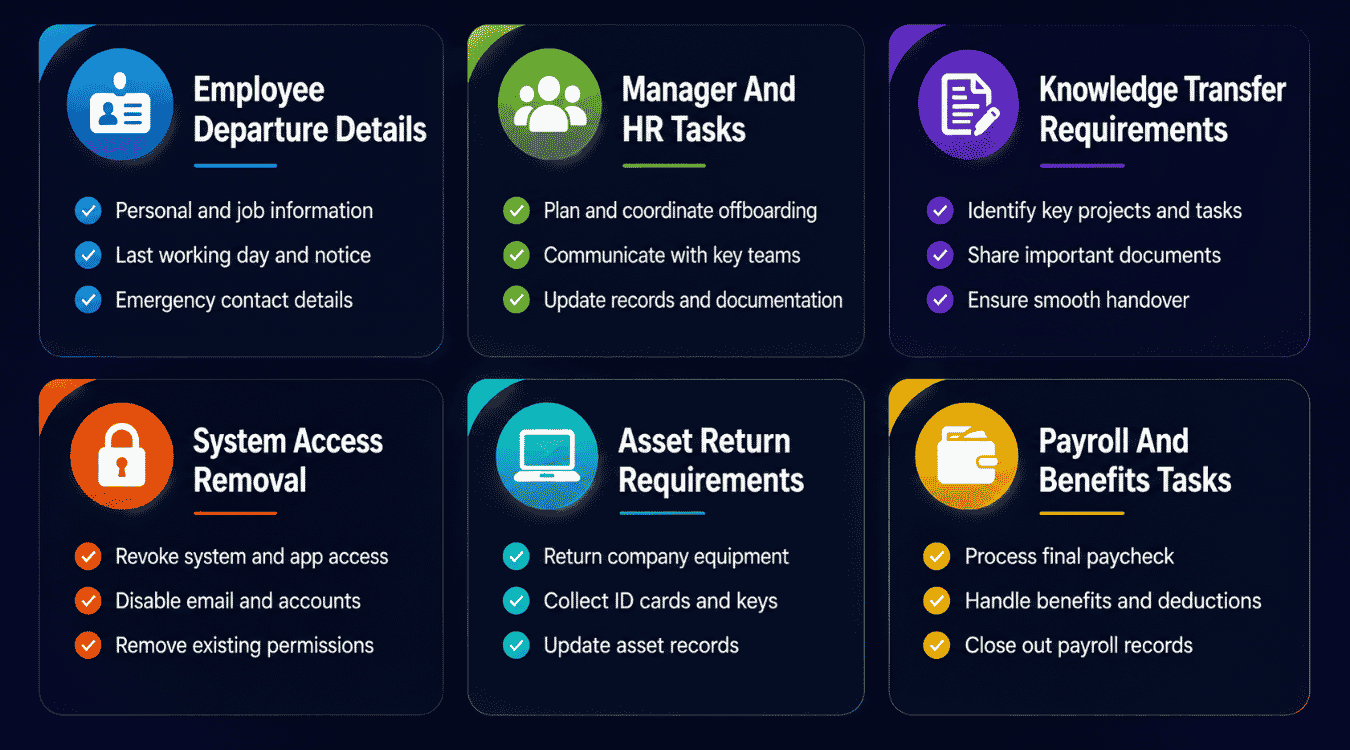
A solid offboarding process covers six areas: departure details, manager and HR duties, knowledge transfer, system access, asset return, and final payroll steps. Each one closes a gap the moment an employee leaves.
Employee Departure Details
Every offboarding process starts with the basics. HR needs the last working day, the reason for departure, and whether the exit is voluntary or involuntary. These details shape the rest of the checklist.
A departing employee should confirm their forwarding address and preferred contact method too. Small details like this prevent confusion later, especially when W-2s or final documents need to reach the right place. Getting this recorded early keeps the whole offboarding process moving without last-minute scrambling.
Manager And HR Tasks
Managers and HR share the heaviest workload during an exit. HR handles paperwork, benefits notices, and exit interviews. Managers focus on the team side, reassigning work and keeping current and future employees informed without oversharing details.
Clear communication protects company culture during a transition. Team members notice how an exit gets handled, and a respectful process reassures them that they'd be treated the same way. This visibility matters for employee retention, since people watch how their peers are treated on the way out.
Knowledge Transfer Requirements
Knowledge transfer prevents a departing employee from taking critical information with them. Before their last day, they should document ongoing projects, key contacts, and any processes only they manage.
A short handover call with the team members taking over their work catches gaps a document alone might miss. This step protects the business against disruption and gives the incoming owner a real starting point instead of a blank slate.
System Access Removal
Access removal has to happen on a fixed schedule, not whenever someone remembers. Email, shared drives, and any software tied to the role should get deactivated by the end of the last working day.
Former employees who keep access, even by accident, create a real security risk. A short list of every system the employee touched makes this step fast and complete, rather than a guessing game after the fact.
Asset Return Requirements
Company property needs a clear return process, not a verbal reminder. Laptops, badges, phones, and any other equipment should get logged as returned, with condition notes if something looks damaged.
Tracking this against an actual asset record, not just a mental checklist, closes the loop properly. It also protects the business if a dispute comes up later about what was issued and what came back.
Payroll And Benefits Tasks
Final payroll has to reflect the correct last day, any unused leave payout, and applicable deductions. Benefits continuation details, like COBRA notices, should go out on time to avoid compliance issues.
Handling this step well matters beyond the immediate exit. Former employees talk, and a smooth employee offboarding process protects the company's reputation with future employees who might hear about their experience before ever applying.
Offboarding Tasks Before The Last Day
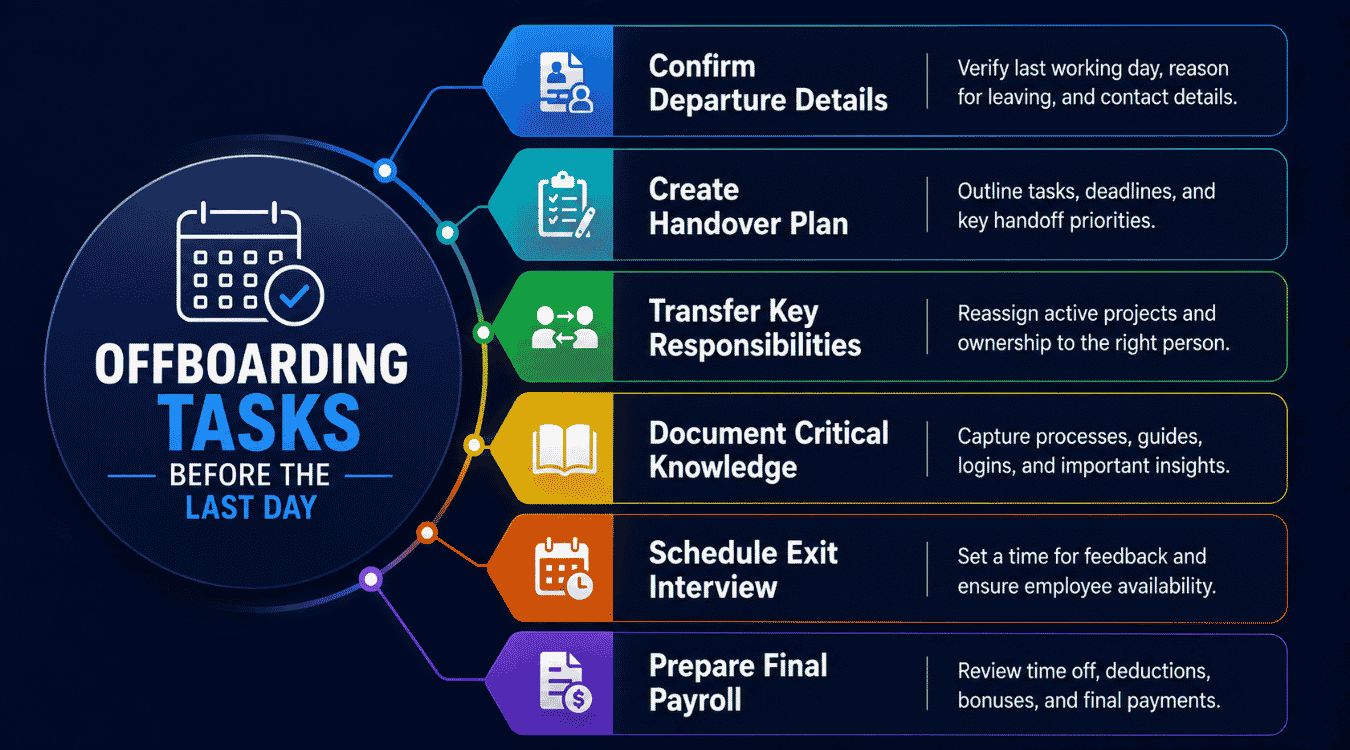
The final stretch of the employee lifecycle needs just as much planning as day one. Getting ahead of these six tasks keeps the exit process calm instead of rushed.
Confirm Departure Details
Human resources should lock in the last working day and departure reason as soon as possible. Waiting too long creates confusion for the outgoing employee and their manager alike.
A quick check on notice period requirements and any contract terms avoids surprises later. Getting this settled early gives everyone else on the checklist enough runway to actually finish their tasks instead of scrambling in the final days.
Create Handover Plan
A handover plan lists every task, project, and deadline the outgoing employee currently owns. Skipping this step is one of the fastest ways to lose momentum on active work.
Managers should sit down with the departing employee and map out priorities together. Ranking tasks by urgency helps the next person pick up where things left off, rather than guessing which fires need attention first.
Transfer Key Responsibilities
Once the handover plan exists, responsibilities need actual owners. Client accounts, recurring reports, and ongoing projects should each get assigned to a specific team member before the exit process wraps up.
Naming a successor early gives that person time to ask questions while the outgoing employee is still around. Waiting until the last day to figure this out almost always leads to dropped work.
Document Critical Knowledge
A strong knowledge transfer process depends on documentation, not memory. Passwords, workflows, and undocumented shortcuts should get written down before they leave with the employee.
Recording a short screen-share walkthrough often captures more than a written doc alone. Offboarding employees smoothly means treating this step as non-negotiable, since institutional knowledge is hard to rebuild once someone's gone.
Schedule Exit Interview
An exit interview gives human resources honest insight into what's working and what isn't. Booking it a few days ahead gives the departing employee time to think through their answers.
Feedback from this conversation often points to real gaps in employee engagement or management practices. Companies that take this seriously tend to catch retention issues before they show up in other exits.
Prepare Final Payroll
Payroll needs the exact last day, unused leave balance, and any final deductions well before the exit process closes out. Waiting until the last minute risks a late or incorrect final check.
Company property deductions, like an unreturned laptop, should get flagged here too if your policy allows it. Getting payroll squared away early keeps the whole offboarding process on schedule.
Offboarding Tasks On The Last Day
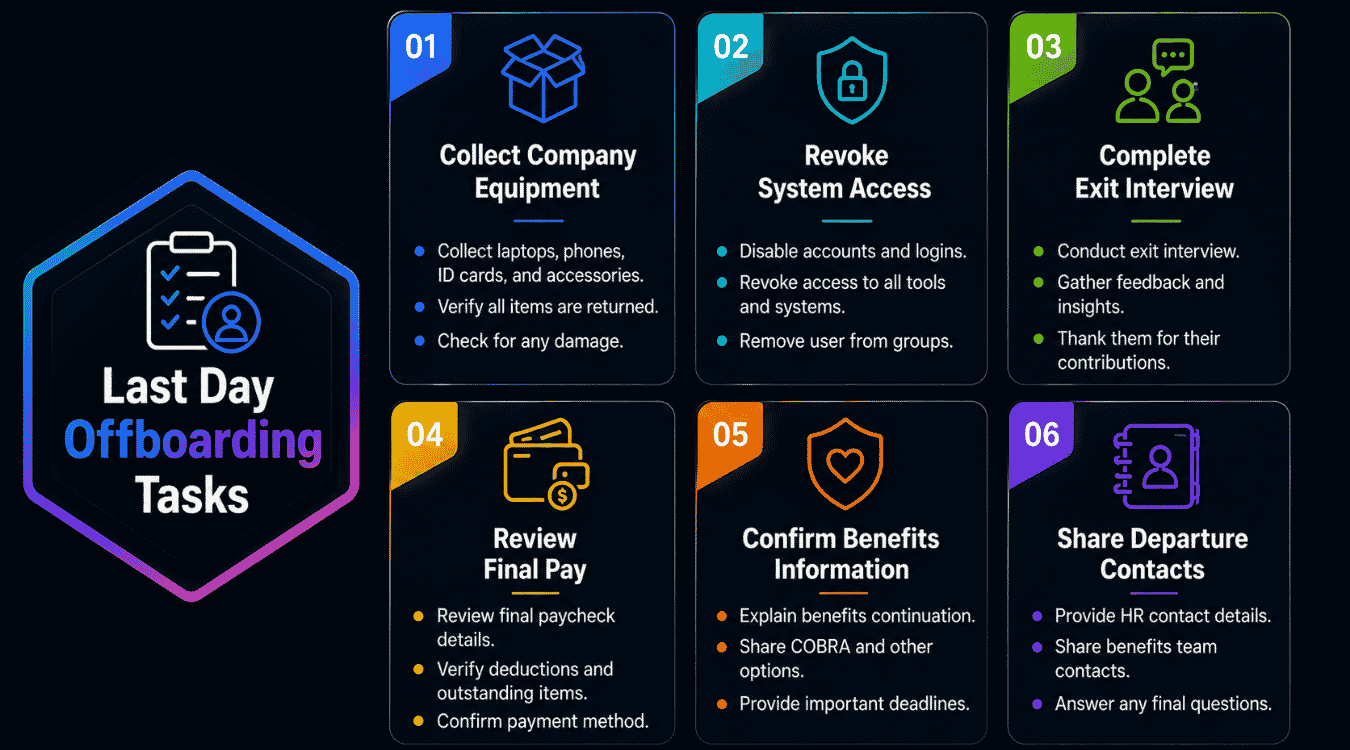
The last day sets the tone for a positive offboarding experience. These six tasks close out the exit cleanly and protect both the company and the exiting employee, especially when supported by structured employee lifecycle management software.
Collect Company Equipment
Laptops, badges, and phones should get collected and logged before the employee walks out. A quick equipment check prevents the awkward follow-up email a week later asking for a missing charger or access card.
Department managers should confirm the return list matches what was originally issued. Noting any damage or missing items on the spot avoids disputes down the line and keeps the record accurate for whoever handles asset tracking.
Revoke System Access
Access removal protects data security the moment the employee's role ends. Email, internal tools, and shared drives should get deactivated by the end of the day, not sometime next week.
A short access list built ahead of time makes this step quick rather than a scramble. Exiting employees who keep access, even briefly, create risk that's easy to avoid with a simple checklist run at the right time.
Complete Exit Interview
The exit interview captures honest employee feedback while the experience is still fresh. Someone outside the direct manager relationship often gets more candid answers than the employee's own boss would.
Notes from this conversation should go somewhere useful, not just a folder nobody opens. Patterns across several exit interviews can point to real issues affecting current employees, long before those issues show up as more resignations.
Review Final Pay
Final pay needs a last check before it goes out, covering the correct last day, unused leave, and any deductions reflected in accurate employee payroll records. A quick review here catches errors before they turn into a frustrated phone call.
State rules on final paycheck timing vary, so confirming the deadline applies correctly matters more than it seems. Getting this right the first time keeps the departure professional instead of contentious.
Confirm Benefits Information
The departing employee should leave with clear answers about health coverage, COBRA options, and retirement account next steps. Handing over a simple one-page summary beats trying to explain everything verbally on a busy last day.
Confirming this information also protects the company from compliance gaps. A little clarity here goes a long way toward a respectful, low-stress exit for everyone involved.
Share Departure Contacts
Remaining team members need to know who to contact once the employee is gone. A short note pointing to the new task owner keeps projects moving without confusion.
Sharing this information also protects institutional knowledge, since people know exactly where to redirect questions instead of guessing. A clear handoff message closes the loop and helps the team settle back into a normal rhythm faster.
Offboarding Tasks After Departure
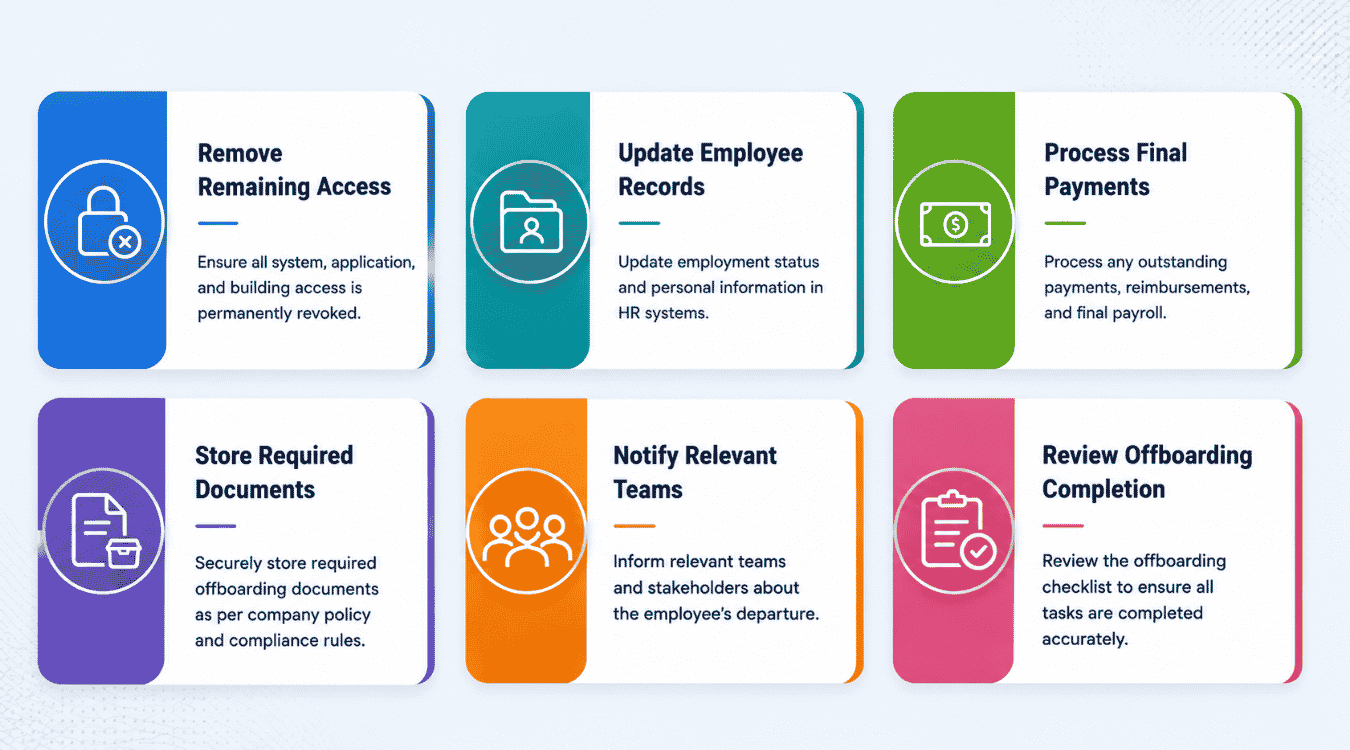
Offboarding doesn't end on the employee's final day. These six tasks close any remaining gaps and keep records clean for the weeks that follow, which is critical if you're working through an HRIS migration checklist at the same time.
Remove Remaining Access
A follow-up access check catches anything missed during the rush of the last day. Some accounts and integrations don't show up until someone actually looks for them, so a second pass matters.
Company systems tied to third-party tools or API keys are easy to overlook in the moment. Running this check a few days later closes any lingering gaps and confirms nothing was left active by mistake.
Update Employee Records
HR should update the employee's status, end date, and reason for leaving in the main system, and confirm that any digital payslip software reflects the same details. Accurate records matter later, whether for reference checks or internal reporting.
Company-owned devices and other assets should get marked as returned in the same update. Keeping this tidy now saves a lot of confusion if anyone needs to look back at the record months from now.
Process Final Payments
Final payments should get confirmed once they've actually gone out, not just scheduled. Using a modern payroll management system and a quick check that the amount, timing, and any deductions landed correctly avoids a follow-up dispute.
Any outstanding reimbursements or bonus payouts belong on this list too. Closing out payments cleanly is one of the clearest signals of a well-run offboarding process.
Store Required Documents
Resignation letters, termination notices, and signed agreements need a secure, organized home. Scattered paperwork makes it hard to find anything if a question comes up later, and the same is true for leave management records that support final-pay and compliance decisions.
Exit interview feedback should get filed here as well, ideally in a format the leadership team can actually review. Keeping documents in one place turns a pile of forms into something genuinely useful.
Notify Relevant Teams
Payroll, IT, and any teams the employee worked closely with need a clear heads-up once the departure is final. This prevents someone from accidentally looping them into a project or meeting.
A short internal note works better than letting people find out by accident. Clear communication here keeps things professional and avoids awkward moments for remaining team members.
Review Offboarding Completion
A final review confirms every step actually happened, not just that it was assigned. This is also the moment to look back at honest feedback from the exit interview and note anything worth changing, including any HR software mistakes that made the process harder than it needed to be.
Some of today's exits turn into tomorrow's boomerang employees, so ending things well keeps that door open. Whether the interview happened in person or through virtual exit interviews, closing the loop properly protects the company's reputation with anyone watching how the departure was handled.
Equipment And Asset Return Tracking
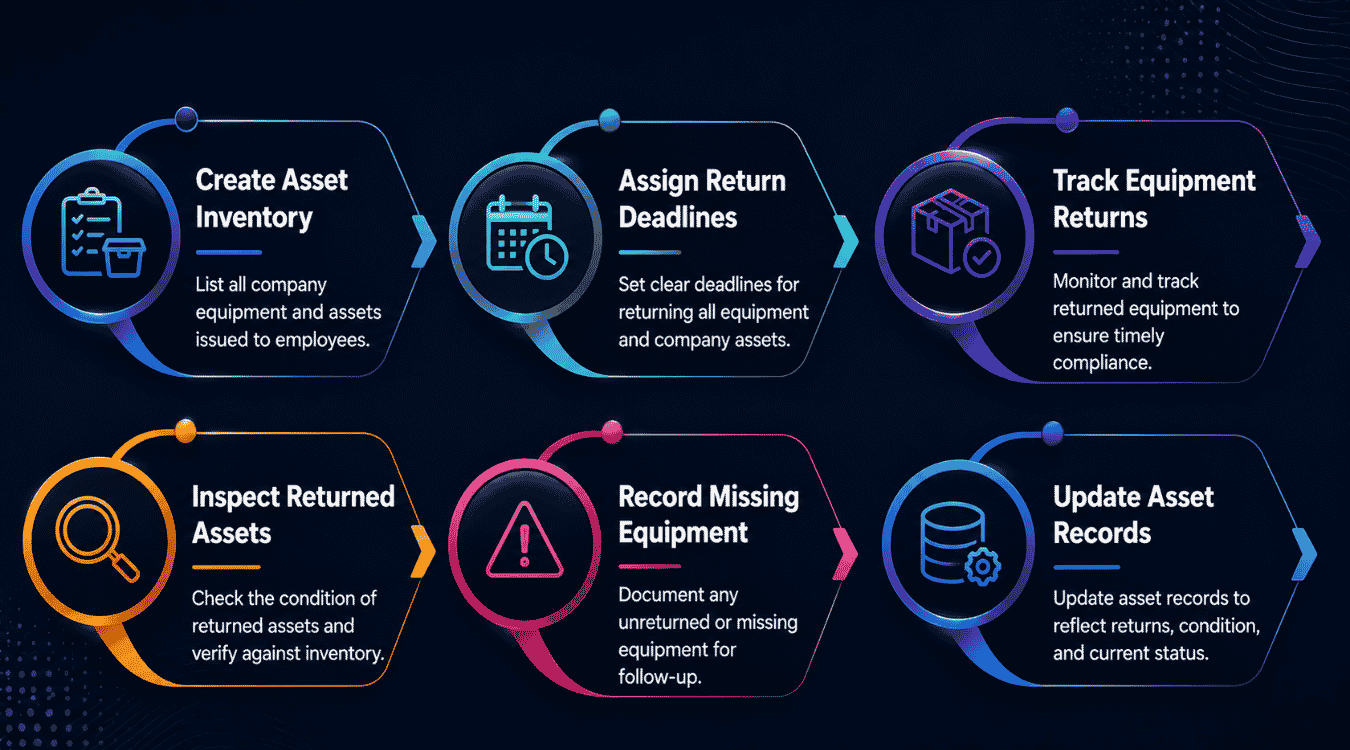
"Collect the laptop" sounds simple until it isn't tracked anywhere. A real system, not a mental note, protects the company's interests and keeps returns from turning into an outstanding task nobody follows up on.
Create Asset Inventory
Every asset issued to an employee should live in one list from day one, not get reconstructed from memory during their exit. Laptops, monitors, badges, and any other equipment belong on this record with serial numbers where possible, ideally inside an integrated all-in-one HR platform.
Building this inventory early protects the company's interests long before an offboarding process ever starts. A clean starting list turns asset return from a guessing game into a simple checklist anyone can follow.
Assign Return Deadlines
A deadline gives the return process actual structure instead of an open-ended request. Most companies set this for the employee's last day, though remote staff may need a few extra days for shipping.
Attaching the deadline to a specific date, not a vague "soon," keeps outstanding tasks from lingering. A clear timeline also supports a smooth transition for whoever inherits the equipment next.
Track Equipment Returns
Each item should get checked off against the original inventory as it comes back, not just noted verbally. A simple spreadsheet or asset system works fine, as long as someone updates it consistently.
Real-time tracking catches gaps early, while there's still time to follow up. Waiting until everything is "probably back" tends to bury small issues that surface later at the worst moment.
Inspect Returned Assets
Returned equipment needs a quick physical check, not just a checkmark. Damage, missing accessories, or unusual wear should get noted before the item goes back into circulation.
This inspection also confirms the item actually matches what the employee signed for at issuance. Catching discrepancies here, rather than months later, keeps the process fair to both sides.
Record Missing Equipment
Missing items need documentation the moment they're identified, not a mental note to follow up eventually. A short internal record covering what's missing, its estimated value, and any related communication protects legal compliance down the line and should be included during any broader HR data migration so asset history doesn’t get lost.
Internal communications with the employee should stay polite but direct. Most missing-equipment cases resolve quickly once someone actually flags them instead of letting the issue quietly disappear.
Update Asset Records
Once everything is inspected and accounted for, the asset system needs a final update marking each item's status. Returned, missing, or damaged should each get a clear label, not just a generic "closed."
Accurate records support a successful transition for HR leaders reviewing past offboarding cases later. Keeping this step consistent turns asset tracking into a reliable habit instead of a once-in-a-while cleanup task.
Final Pay Rules And State Deadlines
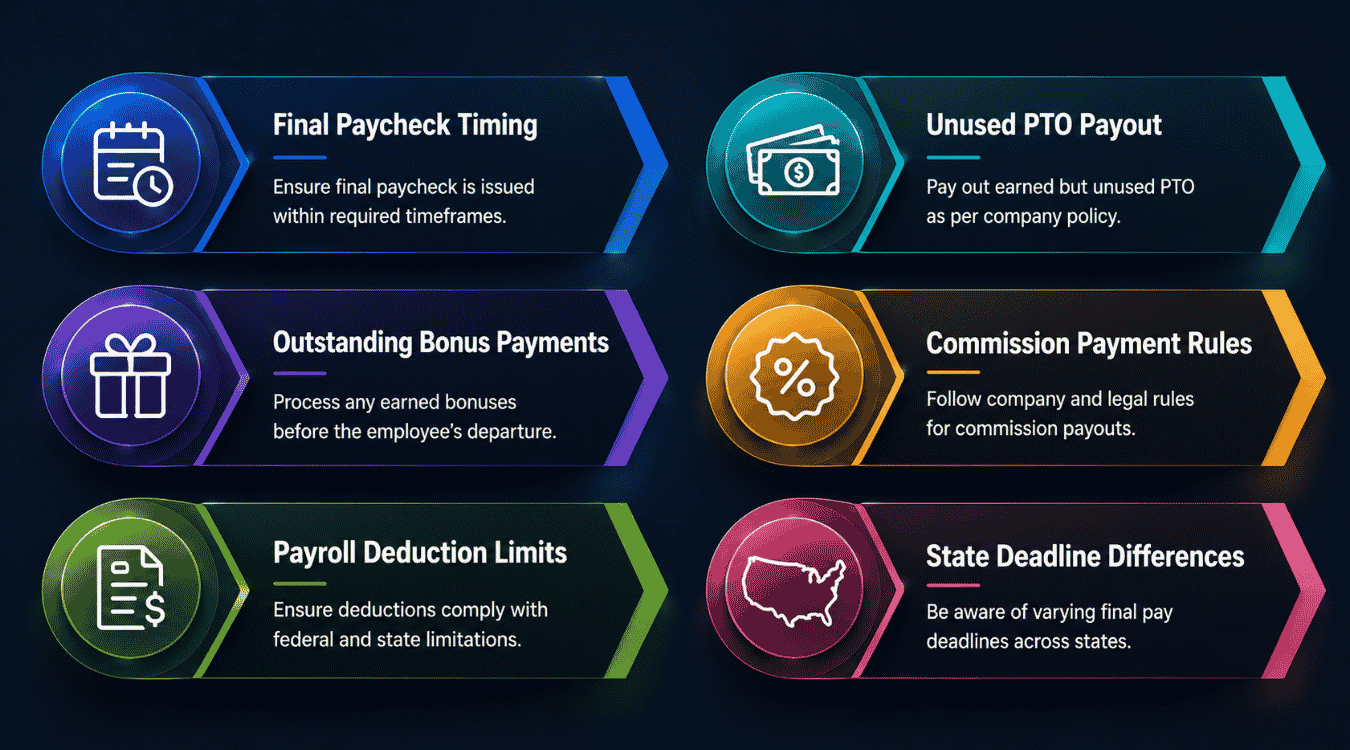
Final pay is where payroll mistakes can turn small issues into real disputes fast. Getting the timing and math right protects the company and leaves a better final impression on the way out.
Final Paycheck Timing
Every state sets its own rule for when a final paycheck is due, and the deadline often depends on whether the employee quit or was let go. Some states require payment on the last working day itself.
An HR team that tracks these deadlines ahead of time avoids last-minute scrambling. Checking the current rule for your state before the exit process starts saves a lot of stress later.
Unused PTO Payout
Unused vacation or PTO payout rules vary by state and sometimes by company policy too. A few states require payout no matter what the handbook says, while others leave it up to the employer, which makes accurate leave management software especially useful.
Confirming this rule early prevents a miscalculated final check. For distributed workforces, thoughtful leave management for remote teams and clear policies mean nobody's surprised by it on the way out.
Outstanding Bonus Payments
Any bonus already earned but not yet paid needs to go out with the final payment, not get quietly dropped. This includes performance bonuses tied to a period the employee actually completed.
Severance pay, if offered, should get calculated separately from any earned bonus. Mixing the two together tends to create confusion for both the employee and whoever processes the final numbers.
Commission Payment Rules
Commission owed on closed deals or completed sales generally still belongs to the employee, even after their last day. State law often treats earned commission the same as regular wages.
Clear documentation of what counts as "earned" avoids disagreements later. A written commission policy makes this calculation straightforward instead of a judgment call made under pressure.
Payroll Deduction Limits
Deductions for unreturned equipment or other company property have real limits in many states. Some states block employers from deducting these costs from a final paycheck altogether, no matter what the employee signed.
Checking local rules before subtracting anything protects the company from a wage claim. A quick review here is faster than untangling a legal issue after the fact.
State Deadline Differences
Deadlines shift depending on the state and the reason for departure, so one national rule doesn't cover every case. A terminated employee in one state might need payment immediately, while a resignation elsewhere allows until the next scheduled payday.
Keeping a simple reference sheet by state helps transfer knowledge across the HR team as staff changes. Getting this step right also reduces the kind of records confusion that can quietly lead to data breaches during a messy offboarding process.
Remote Employee Offboarding Checklist
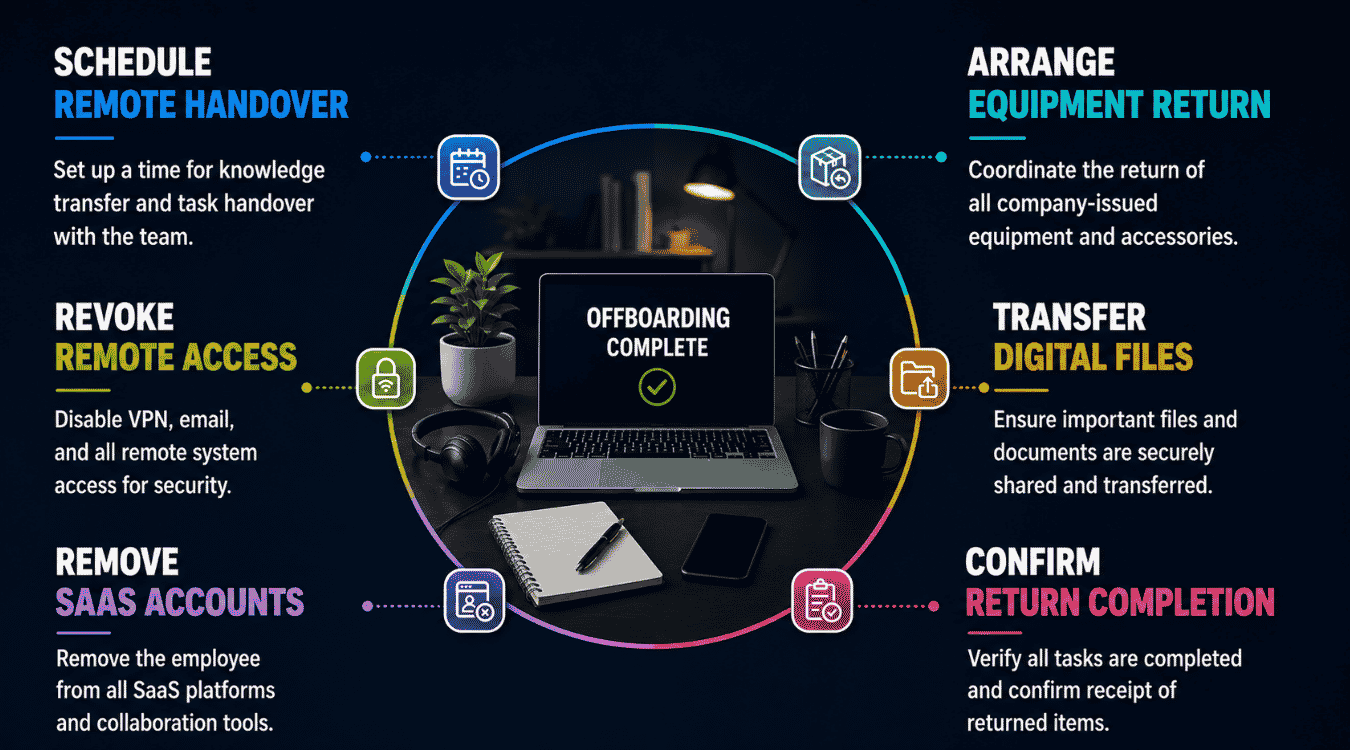
Offboarding a remote employee skips the easy parts of an in-person exit. There's no desk to clear or badge to hand back on the spot, so each step needs a deliberate plan instead of assuming it'll sort itself out.
Schedule Remote Handover
A video call works better than an email thread for handover conversations. Seeing the departing employee walk through their open work catches details a written doc alone might miss.
Setting this call early in the notice period gives both sides enough time to ask follow-up questions. Waiting until the final days leaves no room to fix gaps once they surface.
Arrange Equipment Return
Remote equipment return means shipping, not a quick handoff at the door. A prepaid shipping label sent before the last day removes the guesswork and gets the laptop moving without extra reminders.
Mobile devices and any other company hardware should get listed clearly in the return instructions. A simple checklist attached to the shipping kit helps the employee send everything back in one trip.
Revoke Remote Access
Timing matters more with remote access, since there's no physical office to fall back on if something's missed. IT should revoke access to email, internal tools, and any connected apps right at the end of the last working day.
A pre-built access list makes this step fast rather than a last-minute search. Confirming everything is off the same day keeps the process tight even without an in-person handoff.
Transfer Digital Files
Files stored in personal cloud folders or a work laptop need a clear transfer plan before access disappears. Shared drives usually survive fine, but anything saved locally needs to move first.
Good employee file management software can flag which files or records are tied to the departing employee's profile. Catching this early prevents lost documents that only turn up once someone goes looking for them weeks later.
Remove SaaS Accounts
Every SaaS tool the employee used needs a spot on the offboarding list, not just the obvious ones like email. Smaller tools tend to get forgotten, and that's exactly where access lingers the longest.
A single sign-on setup can prove valuable here, since it lets IT revoke access to several tools at once. Without SSO, each account needs a manual check to confirm it's actually closed.
Confirm Return Completion
A final check confirms every piece of equipment and every access point is fully closed out. This step matters even more for remote exits, since there's no in-person moment to catch a missed item.
A short confirmation message to the employee closes the loop professionally. Marking the offboarding as complete only once everything checks out keeps the record accurate for anyone reviewing it later.
Voluntary Departure Vs Involuntary Termination
Not every exit follows the same timeline. A voluntary departure usually comes with a notice period, giving everyone time to plan handovers, schedule the exit interview, and wrap up open work at a reasonable pace. Access typically stays active until the final shift, since the employee still needs to finish their tasks.
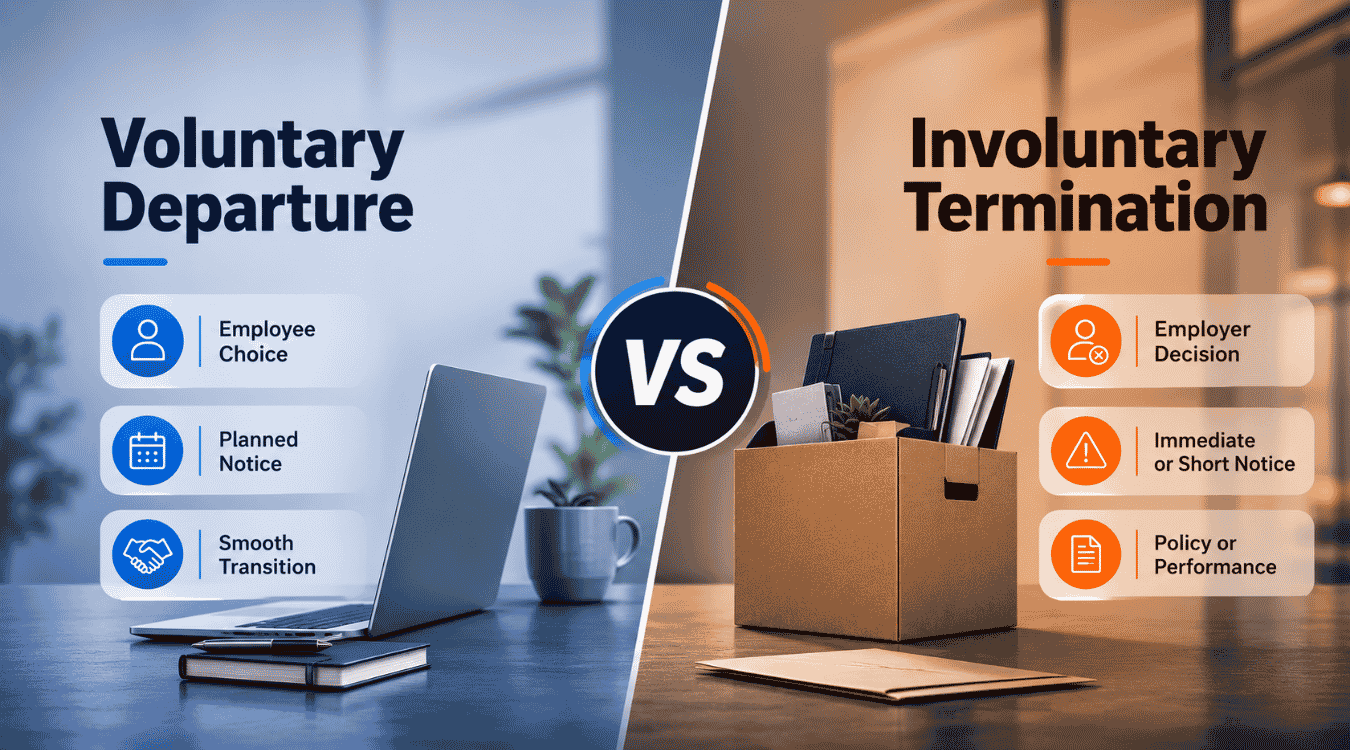
Involuntary termination moves much faster. Access often gets revoked before or during the termination conversation, and equipment collection happens the same day whenever possible. Knowledge transfer has to rely on whatever documentation already exists, since there's rarely time for a proper handover.
Both situations still need the same checklist underneath. Only the pacing and urgency change. Getting this distinction right protects the company and keeps the process fair to the departing employee, regardless of why they're leaving.
Task | Voluntary Departure | Involuntary Termination |
|---|---|---|
Notice period | Typically two weeks or more | Often immediate, no notice |
System access | Stays active until last day | Revoked same day, sometimes immediately |
Equipment return | Scheduled before last day | Collected same day or by courier |
Knowledge transfer | Structured handover sessions | Limited to existing documentation |
Exit interview | Scheduled in advance | Optional, handled carefully |
Communication timing | Announced ahead of departure | Announced after the fact |
Common Offboarding Checklist Mistakes
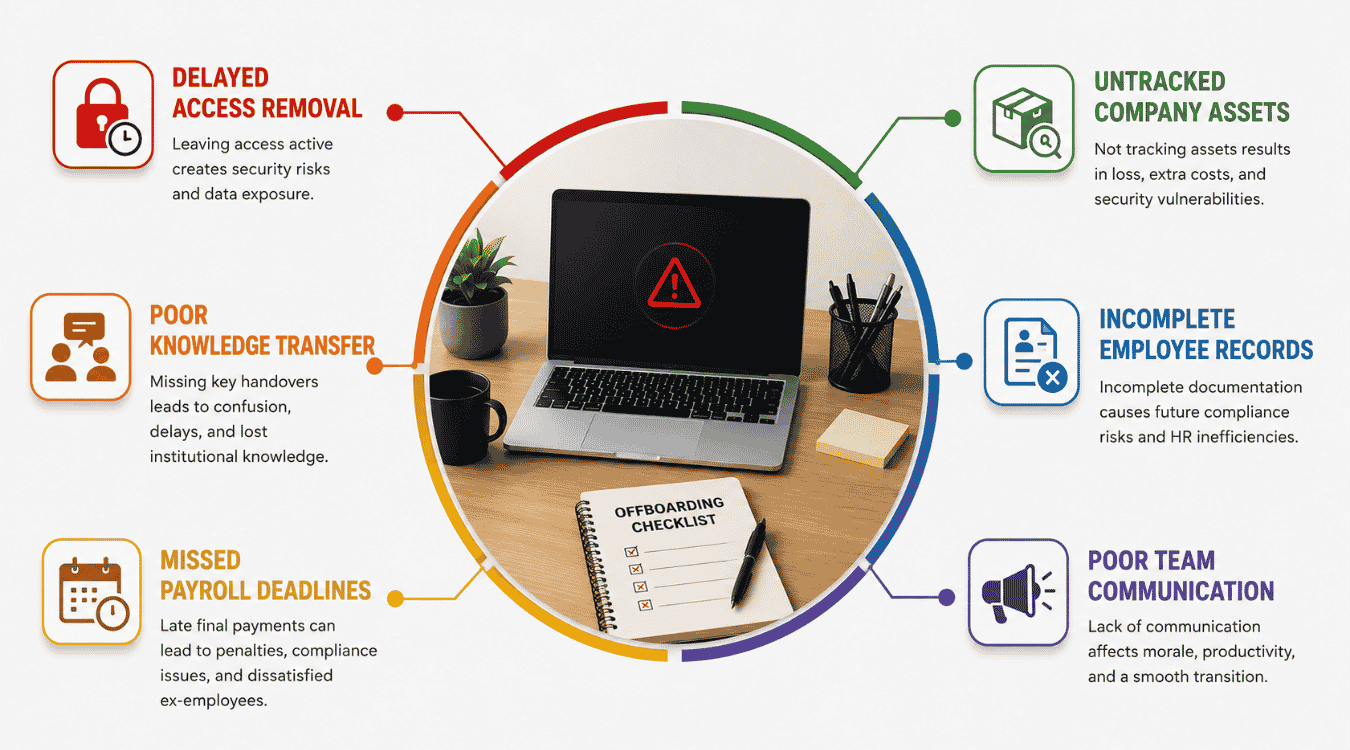
Even a solid process breaks down in the same predictable spots. These six mistakes show up again and again, and most of them are easy to fix once you know where to look.
Delayed Access Removal
Waiting a day or two to revoke access feels harmless until it isn't. Accounts left open past the last working day create real risk, especially for anything touching sensitive data or client information.
Building this step into the last day itself, not the following week, closes the gap before it becomes a problem. A pre-built access list makes same-day removal realistic instead of aspirational.
Poor Knowledge Transfer
Skipping documentation because "there's no time" almost always costs more time later. Important files, passwords, and half-finished projects get lost the moment the departing employee's access disappears.
A short handover document, even a rough one, beats starting from zero. This step protects the team picking up the work and keeps the transition from stalling out in week one.
Missed Payroll Deadlines
Final pay that goes out late or incorrect turns a routine exit into a dispute. This mistake usually traces back to payroll not getting the final day or deduction details early enough, and weak payroll audit strategies that fail to catch issues in time.
Looping payroll in before the last day, not after, prevents this. A missed deadline here also damages the employee experience right at the moment it matters most.
Untracked Company Assets
Equipment that isn't logged as returned tends to just disappear. Without a clear record, nobody notices a missing laptop until months later, when it's much harder to track down.
A simple inventory check at return time closes this gap. Skipping it might save five minutes now, but it costs a lot more chasing down assets later.
Incomplete Employee Records
Leaving an employee's status, end date, or reason for leaving blank in the system creates problems down the line. Reference checks, rehire decisions, and internal reporting all depend on accurate records.
Updating this the same week the employee leaves keeps things clean. It also matters if that person ever shows up again through an alumni network or alumni database down the road.
Poor Team Communication
Letting the rest of the team find out through the grapevine damages trust fast. A short, respectful note about the departure keeps things professional and shuts down unnecessary speculation.
Handling this well also keeps the door open for a positive relationship later. A departing employee who leaves on good terms is far more likely to stay connected, refer future talent, or even boomerang back someday.
Offboarding Checklist Template By Role
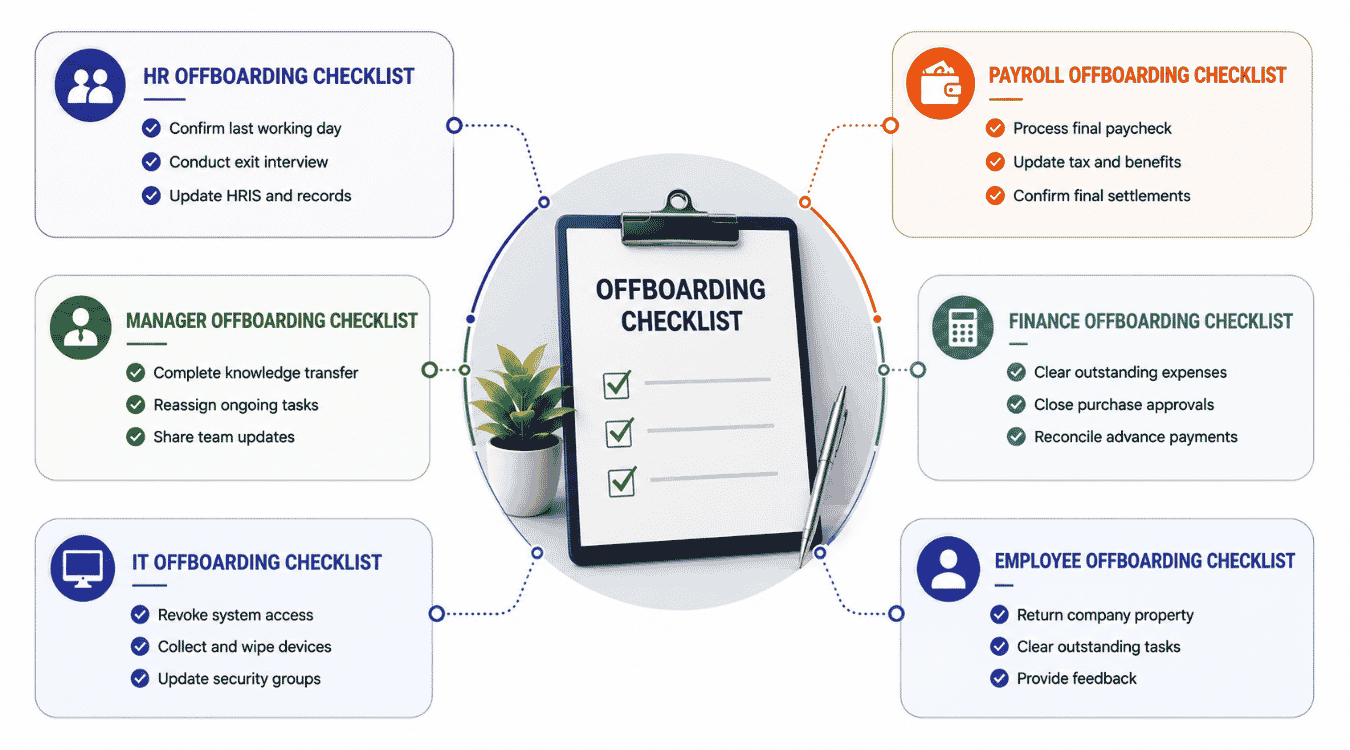
Six roles, six different checklists. Splitting the tasks this way makes formally separating an employee straightforward, even on a small team where one person covers more than one of these roles.
HR Offboarding Checklist
- Confirm last working day and departure reason
- Send benefits continuation and COBRA information
- Schedule and conduct the exit interview
- File signed agreements and termination paperwork
- Update employee status and end date in HR records
- Share departure announcement with the wider team
Manager Offboarding Checklist
- Create a handover plan for open projects
- Assign a successor for key responsibilities
- Provide feedback and thank the employee for their contributions
- Notify customer-facing contacts of the transition, if applicable
- Remove the employee from recurring meetings and approval chains
- Check in with remaining team members after the final day
IT Offboarding Checklist
- Revoke access to email, internal tools, and shared drives
- Deactivate SaaS accounts and single sign-on
- Collect company-owned devices and inspect them on return
- Transfer ownership of important files and folders
- Wipe and reset returned equipment for reissue
- Confirm all access points are fully closed
Payroll Offboarding Checklist
- Confirm final day and any unused PTO payout
- Process outstanding bonus or commission payments
- Apply deductions within legal limits, if applicable
- Issue the final paycheck by the state deadline
- Send final pay documentation to the employee
- Update payroll records to reflect the departure
Finance Offboarding Checklist
- Close out expense reports and pending reimbursements
- Cancel or reassign company credit cards
- Confirm severance payment, if part of the agreement
- Update budget forecasts to reflect the role change
- Archive financial records tied to the employee
- Flag any outstanding invoices the employee managed
Employee Offboarding Checklist
- Complete handover documentation for ongoing work
- Return all company property before or on the final day
- Provide insightful feedback during the exit interview
- Confirm forwarding address for final documents
- Ask any remaining questions about benefits or final pay
- Say goodbye to the team on good terms
Handled well, this last week sets the tone for everything after. Employees who leave with a clear, respectful process are far more likely to become brand ambassadors and potential customers down the line, not just a name in an old records file.
Final Thoughts
An offboarding checklist isn't extra paperwork. It's what keeps a departure from turning into a scramble. When every role knows their tasks and deadlines, nothing gets missed, whether the exit is planned months ahead or happens without warning.
Small businesses feel the impact of a messy exit more than most, since one dropped step can ripple across HR, IT, and payroll at once. A clear process protects the company, respects the departing employee, and keeps the door open for a future reconnection. Build the checklist once. Reuse it every time someone leaves.