Why AI Resume Screening Is a Game-Changer for Talent Acquisition
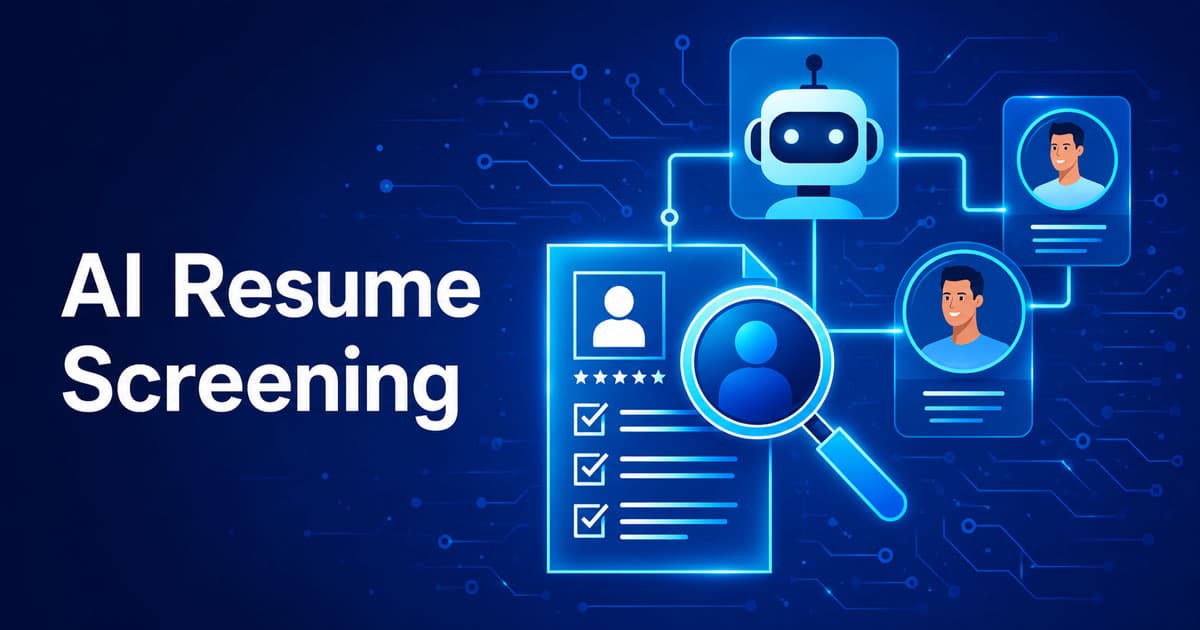
Table of Contents
Hiring teams today face growing pressure to review large volumes of job applications quickly while still identifying the right talent. Traditional methods require recruiters to screen resumes manually, which creates delays and increases the chance of overlooking strong candidates. With artificial intelligence entering the hiring process, companies now use advanced screening systems to evaluate applications faster and more accurately.
An AI resume screening tool automates the resume screening workflow by analyzing candidate profiles, comparing qualifications with the job description, and identifying relevant skills for open roles. Instead of relying on manual screening, recruiting teams can follow a step-by-step process that highlights strong matches and helps improve candidate quality.
Modern platforms also integrate with popular ATS platforms, process multiple job applications, and help organizations hire faster while protecting candidate data through end to end encryption. Transparent systems also address concerns about the black box nature of AI decisions.

What Is AI Resume Screening
AI resume screening refers to the use of machine learning algorithms and natural language processing to automate the initial stages of the hiring process. Instead of having recruiters review each resume manually, an ai resume screening tool handles the heavy lifting by parsing documents, extracting structured data, and matching candidates against job descriptions.
The technology supports various file formats, including PDFs, docx resumes, and plain-text submissions. Modern ai scanners can read these documents, identify key information like work history, job titles, education, and skills, then organize everything into a searchable format.
What sets this apart from older applicant tracking system filters is the ability to understand context. Rather than rejecting a candidate because they used “JavaScript” instead of “JS,” semantic analysis recognizes these as the same skill. This means fewer qualified candidates slip through the cracks due to minor formatting differences.
Organizations report matching accuracy in the 80 to 90 percent range for many roles, with some ai powered resume screening systems achieving even higher rates in technical positions where skills needed are clearly defined. The technology continues to improve as models learn from hiring outcomes across different industries.
Why AI Resume Screening Is A Game-Changer In Talent Acquisition
The shift toward AI screening is reshaping how recruiting teams approach every stage of candidate evaluation. From faster shortlisting to smarter hiring decisions, here is what this transformation looks like in practice.
Faster Candidate Shortlisting
Speed matters when top candidates are interviewing with multiple employers. Traditional screening methods might take days or weeks to work through a large applicant pool, but ai tools can process thousands of resumes in minutes. One documented example showed a system handling over 5,000 resumes in under ten minutes while maintaining a match score accuracy near 92 percent.
This acceleration helps talent teams reach strong candidates before competitors do. When you can identify your top candidates within hours of a job posting going live, your chances of securing the right person improve dramatically.
Consistent Resume Evaluation
Human judgment varies based on fatigue, mood, and personal preferences. A recruiter reviewing their fiftieth resume of the day might evaluate it differently than their fifth. AI eliminates this inconsistency by applying the same evaluation criteria to every application.
The screening process remains standardized regardless of when or how many applications arrive. This consistency is particularly valuable for organizations with hiring managers in different locations who need to align on what qualified candidates look like.
Reduced Recruiter Workload
Many recruiters spend a significant portion of their week on initial resume reviews. By automating this step, organizations free up their teams for higher value activities. One case study showed recruiters saving roughly one full day each week when an ai system surfaced the top 10 percent of candidates automatically.
This manual effort reduction allows recruiting teams to spend more time on phone screens, interviews, and relationship building with candidates who have already passed initial qualification checks, especially when they use comprehensive recruitment management software to automate hiring workflows.
Scalable Hiring For High Application Volumes
Seasonal hiring surges, viral job postings, and rapid company growth can overwhelm even experienced teams. AI screening scales effortlessly to handle these peaks without requiring additional headcount. Some platforms report teams saving up to 75 percent of their time when processing high volumes of applications.
The technology adapts to multiple languages, international qualifications, and various resume formats without slowing down. This scalability makes it easier to manage open positions across different regions simultaneously by relying on broader HR workflow automation that connects recruitment with downstream HR processes.
Data-Driven Hiring Decisions
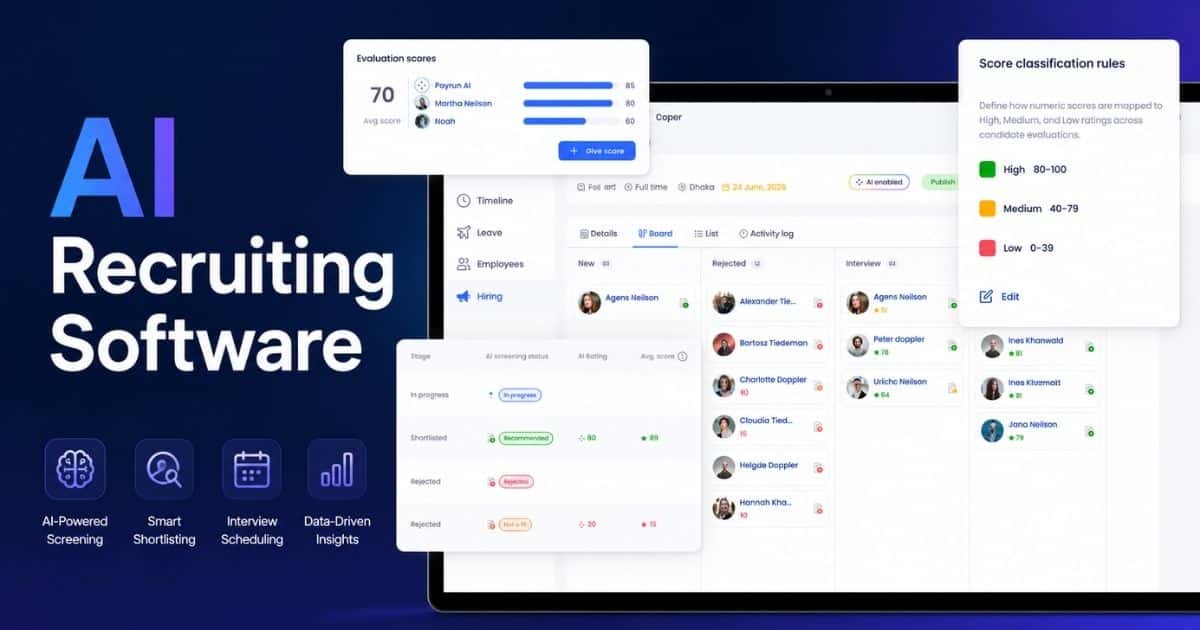
Beyond simple filtering, ai resume screening generates valuable analytics about your candidate pools. Dashboards can show where candidates are strongest, which skills appear most frequently, and how your applicant mix compares to job requirements.
These insights feed back into your hiring strategy. You might discover that your job description attracts candidates with certain backgrounds but not others, or that specific skills needed for success are rarely found in your current applicant pool. This information helps refine future recruitment efforts and highlights where an integrated HR management system for growing teams can centralize analytics across the employee lifecycle.
How AI Resume Screening Works In Hiring Systems
Understanding the technical process helps hiring managers set realistic expectations and configure these tools effectively. The journey from raw resume to ranked candidate involves several distinct stages.
Resume Parsing And Data Extraction
The process begins when a candidate submits their application. The ai system receives resumes in various file formats and converts them into structured data. Modern parsers use optical character recognition for scanned documents and named entity recognition to identify names, dates, companies, job titles, and skills.
Accuracy for data extraction typically reaches 95 to 98 percent with current technology. The system normalizes information so that different date formats, abbreviations, and layouts become comparable across all applications.
Candidate Skill And Experience Matching
Once the resume becomes structured data, the ai screening tool compares each candidate against the job description. This matching considers both hard skills like programming languages or certifications and soft skills inferred from role descriptions and responsibilities.
Context matters in this analysis. Five years of project management experience in a leadership role carries different weight than five years of supporting project managers. The ai system recognizes these distinctions and adjusts relevance accordingly.
Ranking Candidates Based On Job Requirements
After matching, candidates receive scores based on how well they align with must-have versus nice-to-have qualifications. These rankings help hiring managers quickly identify who deserves immediate attention and who might be better suited for future roles.
The scoring reflects weighted features where critical job requirements count more heavily than secondary preferences. This prioritization ensures that the best candidates rise to the top of the list.
Keyword And Competency Analysis
Traditional keyword matching looks for exact terms from the job description, but modern systems apply semantic analysis to recognize synonyms and related concepts. If your posting mentions “customer success” and a candidate lists “client relationship management,” the connection is understood.
Some tools build competency frameworks that map clusters of skills to specific roles, identifying transferable capabilities that might not be obvious from surface-level keyword scans.
Integration With Applicant Tracking Systems
Most ai resume screening tools connect directly to existing applicant tracking system platforms through APIs or built-in integrations. Summary scores and rankings appear within familiar dashboards so recruiters can review ai recommendations without switching between applications.
This seamless integration is essential for adoption. When the technology fits naturally into existing workflows, talent teams can capture benefits without major process disruptions, especially if they replace disconnected HR tools with a unified platform that connects hiring, payroll, and employee management.
Hiring Challenges Solved By AI Resume Screening
Recruitment teams face recurring obstacles that slow down hiring and compromise candidate quality. AI screening addresses several of these pain points directly.
Manual Resume Screening Delays
When hiring teams review every resume manually, delays accumulate quickly. Opening attachments, reading through work history, comparing against requirements, and making notes takes time. For roles that attract hundreds of applications, this process can extend timelines by days or weeks.
AI reduces these delays dramatically. Pilot programs have documented 80 to 95 percent reductions in time spent on the screening stage alone. What previously took a week might now happen in hours, keeping the hiring process moving forward, particularly when part of an HR software feature set tailored for small businesses.
Recruiter Bias In Early Hiring Stages
Human bias influences hiring in ways that are often invisible. Studies have shown that identical resumes receive different ratings based on candidate names, schools attended, or other factors unrelated to job performance. One research project found that language models favored white-associated names in 85 percent of cases when no bias mitigation was applied.
AI does not eliminate bias automatically, but when designed with fairness constraints and regular audits, these systems can reduce unconscious bias that would otherwise affect recruiter review. The key is thoughtful implementation with ongoing monitoring.
Difficulty Managing Large Applicant Pools
High volumes overwhelm manual processes. When a single position receives 500 applications, even experienced recruiters cannot give each one thorough attention. Important details get missed, and strong candidates may be overlooked.
AI handles scale without degradation. The five hundredth resume receives the same careful analysis as the first, ensuring that candidate quality assessment remains consistent regardless of application volume.
Inconsistent Candidate Evaluation
Different recruiters bring different standards to resume reviews. One might prioritize industry experience while another focuses on educational credentials. This inconsistency leads to unpredictable outcomes and can create friction between hiring teams.
AI applies uniform criteria to every candidate, producing comparable scores that different stakeholders can discuss using shared data. This standardization improves collaboration between hiring teams and reduces disagreements about who should advance, especially when paired with structured HR approval workflows for hiring decisions.
Limited Hiring Team Bandwidth
Recruiting teams often juggle multiple open positions while handling administrative tasks that consume valuable hours. When bandwidth is limited, screening becomes rushed, and mistakes happen.
Automating initial screening frees up this constrained resource. Teams can redirect their attention to candidate experience improvements, employer brand development, and the relationship building that closes offers with top talent, while workforce management software for small businesses keeps day-to-day HR operations running smoothly.
Impact Of AI Resume Screening On Recruiter Productivity
Productivity gains extend beyond simple time savings. The ripple effects touch nearly every aspect of how recruiting teams operate.
Reduced Time Spent On Resume Reviews
The most immediate impact is hours returned to recruiter schedules. Case studies consistently show major reductions in screening time, with some teams reporting savings of a full day per week per recruiter. This recovered time compounds across the team, creating capacity for strategic initiatives that previously fell by the wayside.
The shift also reduces overtime and burnout associated with high-volume hiring periods. When ai handles the initial sorting, recruiters avoid the exhausting marathon sessions that come with urgent requisitions.
Better Focus On Candidate Interviews
With fewer hours spent on preliminary filtering, recruiters invest more energy in interviews and candidate conversations. This deeper engagement improves both assessment quality and candidate experience.
When recruiters arrive at interviews already knowing a candidate meets core qualifications, conversations can explore cultural fit, growth potential, and the nuances that determine long-term success. Skills tests and behavioral assessments receive proper attention rather than being rushed.
Improved Collaboration Between Hiring Teams
Shared data from ai screening creates common ground for discussion. When everyone reviews the same match scores and candidate rankings, conversations become more productive. Disagreements can reference specific criteria rather than subjective impressions.
Hiring managers and recruiters align more quickly on what matters for each role. The transparency of structured candidate data helps teams calibrate their expectations and move candidates through the pipeline efficiently.
Faster Hiring Cycle Completion
Shortened screening timelines cascade into faster overall hiring cycles. When qualified candidates reach interviews sooner, offers extend sooner, and positions fill sooner. In competitive markets where talent moves quickly, this acceleration provides meaningful advantage, particularly for small teams using HR software designed for small businesses to streamline the rest of the employee journey.
Faster cycles also improve candidate experience. Applicants appreciate responsive processes and are more likely to accept offers from organizations that move decisively.
Higher Quality Candidate Pipelines
Because ai screening applies consistent standards and considers semantic relevance beyond simple keyword matching, the candidates who reach interviews tend to be better matches for the role. This improvement in pipeline quality means fewer interviews with clearly unsuitable candidates.
Recruiters spend less time explaining why someone who looked good on paper does not fit the actual position. The alignment between initial screening and eventual hiring success improves over time as systems learn from outcomes, which is especially valuable for startups that set up HR tools correctly from the beginning.
Ethical Considerations In AI Resume Screening
Automated screening brings ethical responsibilities that organizations must address proactively. Fairness, transparency, and compliance deserve careful attention.
Preventing Algorithmic Hiring Bias
AI systems can perpetuate or amplify existing biases if not designed carefully. Models trained on historical hiring data may learn patterns that disadvantage certain groups. Research has documented significant disparities in how off-the-shelf models treat candidates with different demographic indicators.
Organizations should demand bias audits from their screening tool providers and implement fairness constraints in model configuration. Techniques like masking protected attributes, adversarial debiasing, and impact ratio monitoring help reduce bias while maintaining screening effectiveness. Some jurisdictions now require these audits by law, adding another reason for small and medium businesses to adopt HR software that unifies HR and payroll for compliance.
Transparent Candidate Evaluation Criteria
Candidates deserve to understand how their applications are assessed. While organizations need not reveal proprietary algorithms, clarity about what qualifications matter and how experience is weighted builds trust.
Transparent criteria also protect organizations legally. When candidates understand that specific skills and relevant experience drive rankings, they can present their qualifications effectively. This transparency improves both candidate experience and application quality.
Responsible Use Of Candidate Data
Resume screening involves personal information that requires careful handling. Privacy regulations like GDPR and CCPA apply to candidate data, setting requirements for collection, storage, and use.
Sensitive information including gender, disability status, and ethnicity requires particular care. Some organizations use this data only for auditing purposes rather than decision making, ensuring compliance while still monitoring for adverse impact, which is easier with a centralized employee record management system for modern HR teams.
Compliance With Hiring Regulations
Employment laws prohibit discrimination based on protected characteristics. Even unintentional disparate impact can create legal exposure. Organizations using ai screening must validate that their systems produce legally defensible results.
Documentation matters. Companies should maintain records of how screening criteria relate to job requirements and business necessity. Some localities, including New York City, have enacted specific regulations requiring bias audits of automated hiring tools.
Human Oversight In Hiring Decisions
Best practice places humans in the loop for final hiring decisions. AI recommendations should inform rather than replace human judgment. This oversight catches errors and ensures that unusual candidates receive fair consideration, including when managing increasingly common remote workforce HR management challenges.
Research suggests that human reviewers often follow AI recommendations uncritically, making oversight meaningful only when reviewers actively engage with the underlying data. Training hiring managers to question and validate ai outputs strengthens this safeguard.
Future Of AI Resume Screening In Recruitment
The technology continues advancing rapidly. Several developments will shape how organizations screen candidates in the years ahead.
AI Powered Candidate Skill Matching
Future systems will move beyond matching stated skills to inferring capabilities from career progression, learning patterns, and role transitions. Graph networks mapping skill relationships will identify transferable competencies that current keyword approaches miss.
This evolution supports skills based hiring by recognizing potential rather than just past experience. Candidates with non-traditional backgrounds may receive fairer consideration as models learn to identify underlying capabilities, especially when combined with innovative HR features that manage the full employee lifecycle.
Predictive Hiring Insights
Machine learning will increasingly predict candidate success beyond initial fit. Models trained on retention rates, performance reviews, and promotion patterns can forecast which candidates are likely to thrive long term.
These predictive capabilities help organizations think beyond immediate role requirements to longer term talent development. Early experiments show promise in identifying candidates with high growth potential who might be overlooked by traditional screening.
Automated Talent Pool Analysis
Rather than treating each application independently, future systems will manage talent pools proactively. AI will monitor passive candidates, surface matches for upcoming roles before positions are posted, and maintain relationships with promising prospects.
This shift from reactive screening to proactive talent intelligence changes how organizations approach workforce planning. Recruiting becomes continuous rather than episodic, fitting naturally into an all-in-one HR platform that centralizes hiring and HR data.
Continuous Learning Recruitment Systems
Feedback loops connecting hiring outcomes to screening models will enable continuous improvement. When hires succeed or fail, that information refines future predictions. Systems adapt to organizational needs rather than relying on static algorithms.
This evolution requires organizations to track and report hiring outcomes systematically. The investment in measurement pays off through increasingly accurate candidate matching over time and dovetails with payroll automation software that tracks workforce costs and trends.
AI Assisted Hiring Strategy Development
Analytics from screening will inform broader talent strategy. Dashboards revealing skill gaps in applicant pools, misalignments between job descriptions and actual requirements, and patterns across different industries will guide executive decisions.
Recruiting teams will collaborate more closely with business leadership on workforce planning, using AI-generated insights to anticipate needs and adjust strategies accordingly, aligning hiring with payroll processing best practices for growing businesses.
How Payrun Supports AI Driven Hiring Workflows
At Payrun, we help businesses manage the critical transition from candidate to employee. As a trusted HR management partner, our platform streamlines the steps that follow hiring decisions, ensuring that new team members onboard smoothly and receive accurate, timely pay from day one.
When organizations use ai resume screening to identify and hire the right person faster, Payrun ensures that momentum continues. Our employee management features maintain centralized records, while our payroll software with built-in automation handles salary disbursement accurately without manual intervention. Leave management, expense tracking, and administrative controls work together to reduce friction during the onboarding period.
For companies using ai tools throughout their recruitment process, connecting those workflows to reliable payroll and HR operations creates end to end efficiency. Payrun helps businesses save time on administrative tasks so they can focus on welcoming new hires and supporting their success. Explore how Payrun can simplify your operations from offer acceptance through every pay period that follows.
Frequently Asked Questions
How Accurate Is AI Resume Screening
Modern ai resume screening tools typically achieve matching accuracy in the 80 to 90 percent range for roles with clearly defined requirements. Technical positions with specific skill requirements often see higher accuracy because qualifications are easier to identify and verify. Data extraction from resumes reaches 95 to 98 percent accuracy with current parsing technology. However, accuracy varies based on job complexity, resume quality, and how well organizations configure their matching criteria.
Can AI Reduce Hiring Bias In Recruitment
AI has the potential to reduce unconscious bias when implemented thoughtfully, but it is not automatic. Systems designed with fairness constraints, regular bias audits, and monitoring for adverse impact can outperform unstructured human review. However, models trained on biased historical data may replicate existing patterns. Organizations should work with providers who offer transparency about their debiasing approaches and commit to ongoing monitoring after deployment.
What Data AI Resume Screening Tools Analyze
These tools analyze work history, job titles, education credentials, certifications, skills listed directly on the resume, and employment dates. More sophisticated systems infer additional information from text, such as leadership experience, career progression patterns, and industry exposure. Some tools incorporate public profile data from professional networks. Sensitive information like age, gender, and ethnicity may be collected for auditing purposes but should not influence ranking decisions.
How Recruiters Review AI Ranked Candidates
Recruiters receive a ranked shortlist with scores and explanations for each candidate. Most systems display which requirements the candidate meets, relevant experience highlights, and potential concerns. Recruiters then conduct manual review of top ranked candidates, focusing on cultural fit, communication style, and factors that require human judgment. This combination of automated screening and human review creates efficient workflows while maintaining quality.
When Companies Should Implement AI Resume Screening
Organizations benefit most from ai screening when application volumes exceed what manual review can handle efficiently, when consistency across multiple reviewers matters, or when time to hire directly affects business outcomes. Companies should ensure they have clear job requirements defined before implementation, and they should verify that chosen tools offer transparency, bias monitoring, and compliance with local hiring regulations.