10 Reasons To Use AI Resume Screening To Transform Your Hiring Process
Table of Contents
Hiring today feels overwhelming. Recruiters handle high-volume applications for every job. Manually reviewing each resume takes time and drains focus. Many hiring managers struggle to find the right candidates fast.
AI resume screening changes the hiring process. Modern AI resume screening tools use artificial intelligence and machine learning to automatically evaluate resumes against job requirements and screening criteria. An applicant tracking system can scan multiple file formats, including docx resume files, without errors from unusual fonts.
AI screening platforms analyze candidate data, key skills, relevant experience, and quantifiable achievements using the same criteria. Human bias decreases. Recruiters save time and focus on top candidates. Companies hire faster with improved accuracy and improved quality hiring outcomes. AI resume screening helps recruitment managers make informed decisions and reach hiring goals with enhanced objectivity.

What Is AI Resume Screening
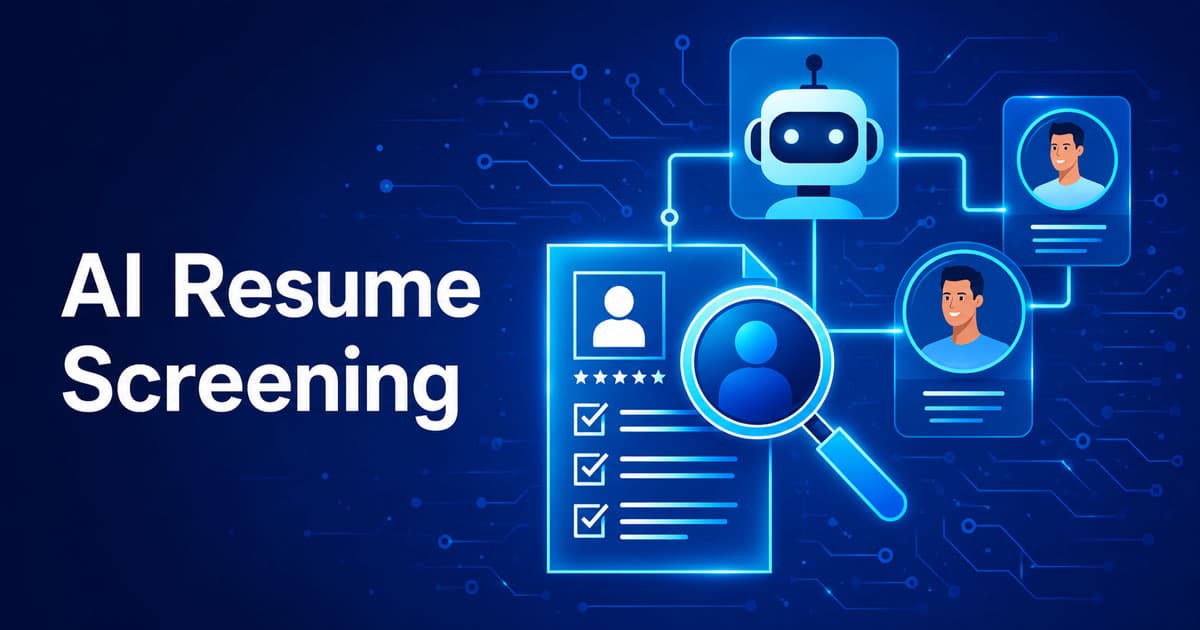
AI resume screening uses artificial intelligence to screen resumes quickly and accurately. It replaces manually reviewing every resume with smart screening tools. AI resume screening tools scan job descriptions and match candidates to job requirements. Machine learning helps the system learn from past hiring outcomes and improve results over time.
AI resume screening platforms analyze candidate data, key skills, soft skills, relevant experience, and specific terms. An applicant tracking system works with AI screening to automatically evaluate resumes across different file formats, including docx resume files. Screening criteria stay consistent for all applicants. That improves accuracy and reduces human bias in the screening process.
Recruiters and hiring managers use AI resume screening to find qualified candidates faster. The system highlights top candidates based on the same criteria. Companies make informed decisions and improve candidate experience while saving time in the recruitment process.
How AI Resume Screening Works Behind The Scenes
AI resume screening runs on structured data models and smart algorithms. It does more than scan keywords. Advanced AI resume screening tools analyze resumes against job description details and job requirements. Machine learning models compare candidate data using the same criteria for every applicant. That creates enhanced objectivity and improved accuracy. Recruiters and hiring managers receive ranked shortlists instead of raw resumes. The entire screening process becomes faster, data driven, and aligned with hiring goals.
Resume Parsing And Data Extraction
AI resume screening tools first convert every resume into structured data. The system reads multiple file formats, including docx resume files and PDF files. It removes issues caused by unusual fonts or layouts.
Artificial intelligence extracts key skills, relevant experience, quantifiable achievements, education, and specific terms from each file. Studies show resume parsing can reduce manual data entry by up to 70 percent. Recruiters save time and avoid manually reviewing each document. Clean candidate data improves match accuracy across the recruitment process.
Job Description Matching Engine
The system analyzes the job description in detail. AI screening identifies required skills, soft skills, certifications, and experience levels. Screening criteria become clear and measurable.
AI resume screening platforms compare each ai resume against job requirements. Machine learning assigns weighted scores based on match quality. Research shows skill based matching improves hiring outcomes by nearly 30 percent. Hiring managers receive ranked qualified candidates instead of random applications.
Contextual Skill Analysis
Keyword matching alone is not enough. AI resume screening evaluates context. Artificial intelligence understands skill relationships and industry terms. For example, “account reconciliation” relates to finance roles even if exact keywords differ.
Machine learning models assess depth of relevant experience and career progression. The system detects transferable skills across industries. Companies that use contextual screening tools report improved quality hires and stronger talent alignment. Recruiters focus on top talent instead of filtering resumes manually.
Candidate Scoring And Ranking
Each candidate receives a score based on match criteria. AI screening platforms use predictive models trained on past hiring outcomes. That improves accuracy over time.
Scores reflect job fit, experience relevance, and skills alignment. The same criteria apply to all candidates. Enhanced objectivity reduces human bias in early screening stages. Data from large enterprises shows AI resume screening can cut time to hire by up to 40 percent. Recruitment managers gain clear insights before final decisions.
Bias Reduction And Compliance Controls
Human reviewers may unconsciously favor certain backgrounds. AI resume screening applies structured screening criteria to every applicant. That supports fair evaluation.
Modern systems include audit trails and emerging AI regulations compliance features. End-to-end encryption protects candidate data. Continuous monitoring detects anomalies in screening results. Reports show structured AI screening can reduce bias indicators by 25 percent compared to manual shortlists. Companies improve candidate experience and protect employer reputation.
Integration With Applicant Tracking System
AI resume screening platforms connect with an applicant tracking system. Candidate data flows automatically across systems. No manual transfer is required.
Recruiters can schedule video interviews, update status, and track hiring process metrics in one dashboard by using a recruitment management system. High-volume recruitment becomes manageable. Tools support collaboration between recruitment managers and hiring managers. Companies gain time savings and focus on strategic hiring decisions.
Performance Feedback And Model Improvement
AI systems learn from outcomes. Machine learning reviews past hires, performance data, and retention metrics. That feedback refines future match accuracy.
Continuous monitoring ensures models stay aligned with hiring goals. Screening tools adjust weight for key skills based on specific data. Organizations that use feedback loops report improved quality of hire and better candidate engagement. AI resume screening evolves with company needs and market trends.
Why Traditional Resume Screening Slows Down Hiring
Traditional resume screening depends on manual effort. Recruiters read each resume one by one and compare it with the job description. High volume applications make the screening process slow and inconsistent. Human reviewers often lack enough time to evaluate every candidate fairly. Hiring managers wait longer for shortlists. Delays affect hiring outcomes and candidate experience. Companies struggle to match the right candidates to job requirements quickly.
Manual Review Takes Too Much Time
Manual resume screening consumes hours every day. Recruiters often review hundreds of resumes for one job. Studies show recruiters spend only 6 to 8 seconds on an initial resume scan. That limits careful evaluation.
High volume roles in large enterprises increase pressure. Recruitment managers rarely have enough time to assess relevant experience, soft skills, and quantifiable achievements in detail. Time savings become impossible. Hiring goals suffer when teams rely only on manually reviewing applications.
Inconsistent Screening Criteria
Traditional screening lacks structured criteria. Different recruiters interpret job requirements differently. One hiring manager may prioritize soft skills. Another may focus only on technical skills.
Inconsistent screening criteria lead to uneven hiring outcomes. Qualified applicants may be rejected because of subjective judgment. Human bias often influences early decisions. Research from Harvard Business Review highlights how unstructured resume screening reduces hiring accuracy. Companies lose top talent due to inconsistent evaluation standards.
Human Bias Affects Decisions
Human reviewers bring unconscious bias into the recruitment process. Names, educational background, or career gaps may influence judgment. That affects enhanced objectivity in candidate selection.
Studies show bias can reduce diversity in shortlists by up to 30 percent. Manual resume screening does not apply the same criteria to every job seeker. Qualified candidates may never reach final decisions. AI resume screening platforms reduce bias through data driven evaluation models.
High Error Rate In Resume Filtering
Traditional screening tools rely heavily on keyword search. Recruiters may overlook strong candidates if specific terms do not match exactly. Unusual fonts and complex file formats create additional issues.
Docx resume files or poorly structured resume layouts may cause data gaps. Important skills or achievements remain unnoticed. Manual filtering increases the risk of error. Companies miss best candidates because the screening process lacks machine learning and contextual analysis.
Delayed Communication Hurts Candidate Experience
Manual screening slows response time. Recruiters cannot reply quickly to every applicant. Candidate engagement drops when the process feels slow or unclear.
LinkedIn data shows 52 percent of job seekers lose interest if they do not receive timely updates. Slow screening reduces trust and employer brand value. AI resume screening tools help companies hire faster and improve candidate experience. Traditional resume screening struggles to keep pace with modern hiring demands.
10 Reasons AI Resume Screening Transforms Hiring
AI resume screening changes the hiring process from slow and manual to fast and data driven. AI resume screening tools use artificial intelligence and machine learning to match candidates with job requirements using the same criteria. Companies improve hiring outcomes and focus on top talent.
1. Reduce Time To Hire
AI resume screening automatically evaluates resumes within seconds. Recruiters no longer spend hours manually reviewing each resume. Screening tools scan docx resume files and other file formats instantly. Companies that use AI screening report up to 40 percent faster time to hire. Hiring managers receive qualified candidates quickly and move to final decisions sooner.
2. Improve Candidate Quality
AI resume screening platforms analyze key skills, relevant experience, and quantifiable achievements. Machine learning models compare candidate data against the job description. That improves match accuracy. Recruiters see ranked shortlists of best candidates. Improved quality hiring outcomes become possible when screening criteria stay consistent across all applicants.
3. Eliminate Manual Resume Filtering
Manual resume screening often misses specific terms or transferable skills. AI resume screening tools handle the heavy lifting. Artificial intelligence reads every ai resume without fatigue. Recruiters save time and reduce errors caused by unusual fonts or formatting. The screening process becomes structured and efficient.
4. Reduce Unconscious Bias
Human reviewers may unintentionally favor certain profiles. AI screening applies the same criteria to every job seeker. Enhanced objectivity improves fairness in the recruitment process. Studies show structured AI screening can reduce bias indicators by up to 25 percent. Companies build diverse teams and select qualified applicants based on data.
5. Increase Recruiter Productivity
Recruiters often lack enough time for strategic tasks. AI resume screening automates early screening stages. Screening platforms highlight top candidates and filter out mismatches. Recruitment managers focus on interviews and candidate engagement. Productivity improves when repetitive screening tasks disappear.
6. Improve Hiring Accuracy
AI resume screening uses machine learning to refine match models over time. Systems analyze specific data from past hiring outcomes. That improves accuracy in candidate selection. Hiring managers receive data driven insights before making final decisions. Better match quality leads to stronger long term performance.
7. Enhance Candidate Experience
Fast screening improves response time. Candidates receive quicker updates in the hiring process. AI screening tools integrate with an applicant tracking system and support video interviews. Candidate engagement increases when communication becomes timely and transparent. Positive experience strengthens employer brand.
8. Support High Volume Recruitment
High volume roles create pressure for recruiters. AI resume screening platforms handle thousands of resumes without delay. Artificial intelligence evaluates each resume against job requirements instantly. Large enterprises benefit from structured screening tools. Companies hire faster without sacrificing improved accuracy.
9. Enable Data Driven Hiring Decisions
AI screening generates measurable insights. Recruiters see match scores, skill gaps, and screening criteria performance. Data supports informed decisions instead of guesswork. Hiring managers rely on objective analysis. Companies align recruitment strategy with hiring goals using reliable metrics.
10. Scale Recruitment Without Expanding HR Teams
Business growth increases hiring demand. AI resume screening allows companies to scale without adding more recruiters. Screening platforms manage large applicant pools efficiently. Time savings and automation benefits reduce operational cost. Organizations achieve sustainable growth while maintaining improved quality in talent acquisition.
AI Resume Screening Vs Manual Screening
AI resume screening and manual resume screening follow very different approaches. One relies on artificial intelligence and machine learning. The other depends on human reviewers and manual effort. The difference directly impacts hiring outcomes, accuracy, time savings, and overall recruitment process efficiency.
| Criteria | AI Resume Screening | Manual Screening |
|---|---|---|
| Speed | Screens thousands of resumes in seconds | Takes hours or days to review high volume applications |
| Time To Hire | Reduces time to hire by up to 40% | Slower shortlisting delays final decisions |
| Consistency | Applies the same criteria to all candidates | Criteria may vary between recruiters |
| Bias Risk | Reduces human bias through structured data analysis | Higher risk of unconscious bias |
| Accuracy | Uses machine learning to improve match quality | Depends on recruiter judgment and focus level |
| Data Handling | Extracts candidate data from multiple file formats including docx resume files | Manual data entry increases error risk |
| Scalability | Handles large enterprises and high volume roles easily | Struggles with scale without expanding HR teams |
| Productivity | Automates heavy lifting for recruiters | Requires manually reviewing every resume |
| Candidate Experience | Faster updates and improved engagement | Delayed responses reduce engagement |
| Hiring Outcomes | Data-driven and measurable | Often subjective and less predictable |
Key Features Of An AI Resume Screening Software
AI resume screening software must do more than scan keywords. Modern AI resume screening tools use artificial intelligence and machine learning to improve hiring outcomes. The right screening platforms help recruiters save time, reduce human bias, and match candidates accurately to job requirements. Strong features ensure improved accuracy, enhanced objectivity, and better candidate experience across the hiring process.
Advanced Resume Parsing
AI resume screening platforms must support multiple file formats, including docx resume files and PDF files. The system should extract candidate data even from resumes with unusual fonts or complex layouts.
Advanced parsing converts every resume into structured data. Studies show automated parsing can reduce manual data entry by up to 70 percent. Recruiters avoid manually reviewing basic details. Clean data improves match quality and supports faster screening decisions.
Smart Job Description Matching
Effective AI screening compares resumes directly with the job description. The system identifies key skills, relevant experience, and specific terms. Screening criteria remain consistent for all applicants.
Machine learning assigns match scores based on job requirements. Research shows skill based matching can improve quality of hire by nearly 30 percent. Hiring managers receive ranked qualified candidates instead of unfiltered applications.
Contextual Skill Recognition
Keyword search alone is not enough. Artificial intelligence must understand context and transferable skills. AI resume screening tools analyze soft skills, certifications, and quantifiable achievements beyond simple text matches.
Contextual analysis improves improved accuracy in the recruitment process. Companies using contextual AI report stronger hiring outcomes and better alignment with hiring goals. Recruiters identify top talent even when wording differs from the job description.
Bias Reduction Controls
Bias reduction features improve fairness. AI resume screening platforms apply the same criteria to every job seeker. Enhanced objectivity supports inclusive hiring.
Modern systems include audit logs and compliance tools aligned with emerging ai regulations. Data from industry reports shows structured AI screening can reduce bias indicators by up to 25 percent. Fair evaluation improves employer brand and candidate trust.
Applicant Tracking System Integration
Seamless integration with an applicant tracking system is essential. Candidate data should flow automatically between systems. Recruiters manage screening, communication, and video interviews in one HR dashboard.
Integration reduces duplicate work and saves time. High-volume recruitment becomes manageable without extra administrative effort. Large enterprises benefit from centralized control across the entire hiring process.
Data Security And Encryption
AI resume screening software must protect sensitive candidate data. End-to-end encryption safeguards resume files and personal information. Continuous monitoring detects unusual activity.
Strong security features ensure compliance with privacy regulations. Companies reduce HR risks and maintain trust with applicants. Secure screening tools create a reliable environment for data-driven hiring decisions.
Performance Analytics And Reporting
AI resume screening platforms should provide detailed analytics. Recruiters need insights into screening criteria performance, time to hire, and candidate engagement. Specific data helps refine recruitment strategy.
Machine learning improves over time through feedback from hiring outcomes. Organizations that track metrics report up to 35 percent better hiring efficiency. Data-driven insights allow hiring managers to make informed final decisions with confidence.
How To Implement AI Resume Screening In Your Hiring Process
AI resume screening delivers strong hiring outcomes when implemented correctly. A clear structure ensures improved accuracy and time savings. AI resume screening tools must align with job requirements, screening criteria, and business hiring goals. Recruiters and hiring managers need a defined process before automation begins. Proper setup reduces human bias and improves candidate experience across the recruitment process.
Define Clear Job Requirements
Start with a detailed job description. Identify key skills, soft skills, relevant experience, and quantifiable achievements. Clear job requirements improve match accuracy. AI resume screening platforms rely on structured screening criteria to evaluate candidates.
Research shows unclear job descriptions reduce hiring success rates by up to 28 percent. Hiring managers must align on expectations before using AI screening. Well-defined criteria help artificial intelligence select qualified candidates using the same criteria for every applicant.
Standardize Screening Criteria
Create consistent evaluation standards across roles. Screening tools perform better when criteria remain measurable and structured. Avoid vague language in the job description. Use specific terms and required skills.
AI resume screening tools compare candidate data against predefined benchmarks. That improves enhanced objectivity and reduces human bias. Companies that standardize screening criteria report up to 35 percent improved hiring accuracy. Structured criteria support data driven hiring decisions.
Integrate With Applicant Tracking System
Connect AI resume screening with your applicant tracking system. Seamless integration ensures candidate data flows automatically between systems. Recruiters manage resume screening, video interviews, and communication in one place.
Integration reduces manual errors and duplicate work. High-volume recruitment becomes manageable without expanding HR teams. Large enterprises benefit from centralized visibility across the hiring process. Time savings increase when screening platforms operate inside existing tools.
Train Recruiters And Hiring Managers
Recruiters must understand how AI screening works. Artificial intelligence supports decision-making but does not replace human reviewers. Training ensures teams interpret match scores correctly. You can do it by using a smart hiring management software.
Studies show technology adoption improves by 40 percent when staff receive structured training. Recruitment managers should review how machine learning evaluates resumes and flags top candidates. Proper training increases trust in the system and improves candidate engagement.
Monitor Performance And Optimize
Track hiring outcomes after implementation. Measure time to hire, quality of hire, and candidate experience. AI resume screening platforms provide specific data for analysis. Continuous monitoring helps refine screening criteria.
Machine learning models improve with feedback from final decisions. Companies that monitor AI performance report up to 30 percent better hiring efficiency. Regular evaluation ensures alignment with hiring goals and sustained improved accuracy in the recruitment process.
Challenges Of AI Resume Screening Businesses Face
AI resume screening improves the hiring process, but challenges still exist. Businesses must address technical, legal, and operational concerns before full adoption. AI resume screening tools require clean data, clear job requirements, and structured screening criteria. Without proper oversight, hiring outcomes may suffer. Recruiters and hiring managers need awareness of potential risks to ensure improved accuracy, enhanced objectivity, and strong candidate experience.
Data Quality Issues
Poor candidate data reduces match accuracy and weakens hiring outcomes. AI resume screening depends on structured and clean information.
- Incomplete job description lowers match precision by up to 25 percent
- Unusual fonts and complex file formats affect resume parsing
- Missing key skills reduce quality of shortlisted candidates
- Inconsistent screening criteria distort evaluation results
Algorithm Bias Risks
Artificial intelligence reduces human bias, but flawed models may introduce new bias. Screening tools must rely on balanced datasets.
- Biased historical hiring data affects machine learning models
- Lack of diverse training data limits enhanced objectivity
- Emerging ai regulations demand transparent evaluation systems
- Regular audits reduce compliance risks
Over-Reliance on Automation
AI resume screening supports recruiters but should not replace human reviewers. Balanced oversight improves final decisions.
- Automated scoring may overlook soft skills context
- Recruiters must validate top candidates before interviews
- Blind trust in match scores reduces hiring judgment
- Human review improves improved quality outcomes
Integration Complexities
AI screening platforms must connect with an applicant tracking system and other HR tools. Poor integration creates workflow gaps.
- Data sync errors affect candidate engagement
- Manual data transfer reduces time savings
- Large enterprises face complex system architecture challenges
- Weak integration slows the recruitment process
Compliance And Privacy Concerns
Candidate data protection remains critical. AI resume screening platforms must follow strict privacy standards.
- End-to-end encryption protects sensitive resume file data
- Continuous monitoring prevents data breaches
- Global privacy laws require a transparent screening process
- Non-compliance may result in heavy penalties
Recruiter Resistance To Change
Technology adoption often faces internal hesitation. Recruiters may distrust artificial intelligence decisions.
- Lack of training reduces confidence in AI screening
- Fear of job displacement affects adoption rates
- Clear communication improves acceptance
- Studies show structured training increases adoption by 40 percent
Cost And ROI Uncertainty
Initial investment in AI resume screening tools may seem high. Businesses expect measurable hiring outcomes.
- Small companies question return on investment
- Poor implementation reduces improved accuracy gains
- Tracking specific data proves value over time
- Companies that optimize AI screening report up to 30 percent faster time to hire
How Payrun Integrates AI Resume Screening Into Your Hiring Workflow
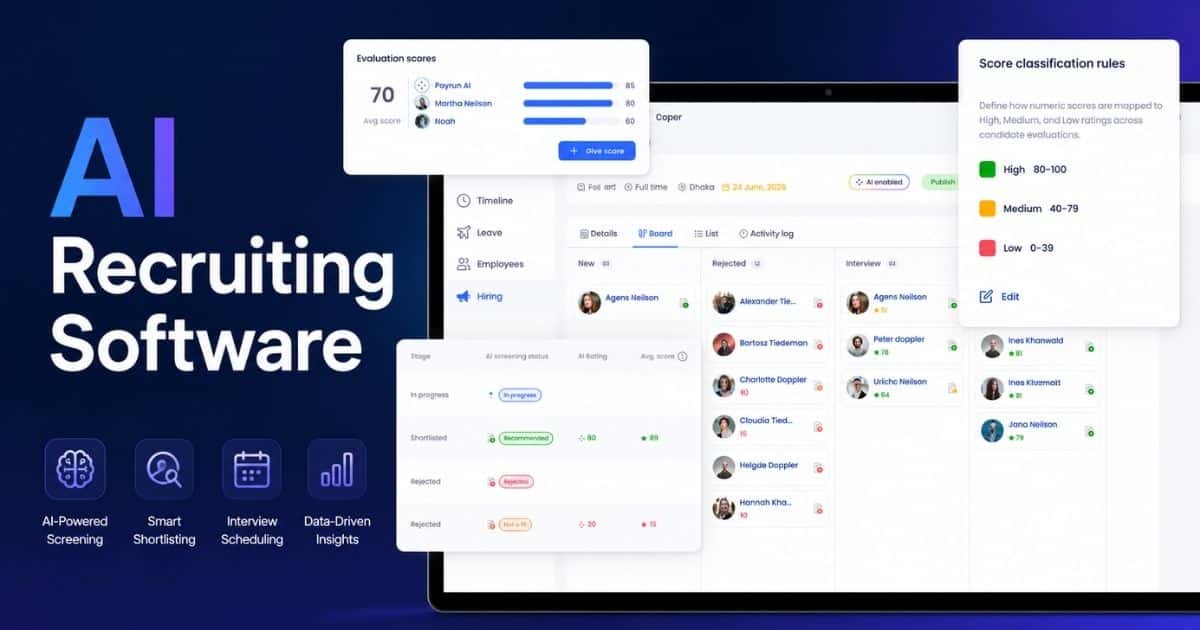
Payrun brings recruitment and hiring automation into one HR platform. The system combines AI resume screening with job posting, candidate tracking, and onboarding tools. Recruiters get a centralized hub for all recruitment tasks. Payrun connects screening results with employee data and payroll management. That reduces manual effort and ensures smooth recruitment to hire transitions.
AI resume screening tools inside Payrun automatically filter resumes based on job descriptions and screening criteria. Recruiters see ranked candidates who match required skills and relevant experience. Payrun’s hiring management features allow teams to review candidate data, schedule interviews, and keep applicant tracking system records in one place. The platform also supports notifications and updates through the workflow. Small and growing companies save time and improve candidate experience. You can enjoy these key features of Payrun at a suitable price.
FAQ
Does AI Resume Screening Replace Human Recruiters?
No, AI resume screening does not replace recruiters. AI resume screening tools automate resume screening and handle repetitive tasks. Recruiters and hiring managers still make final decisions and assess culture fit, soft skills, and overall candidate experience.
Can AI Resume Screening Work For Small Businesses?
Yes, AI resume screening platforms work for both startups and large enterprises. Small companies benefit from time savings and improved accuracy without expanding HR teams. Artificial intelligence helps manage high-volume applications with limited resources.
Is AI Resume Screening Accurate For Different Industries?
Yes, machine learning models adapt to different job requirements and industries. AI screening analyzes key skills, relevant experience, and specific terms based on the job description. Accuracy improves over time through feedback from hiring outcomes.
Does AI Resume Screening Protect Candidate Data?
Yes, most AI resume screening tools use end-to-end encryption and secure data systems. Candidate data stays protected across file formats, including docx resume files. Continuous monitoring helps reduce security risks in the screening process.
How Does AI Resume Screening Handle Career Gaps?
AI resume screening evaluates candidate data based on skills, achievements, and job requirements. The system does not automatically reject candidates for career gaps. Recruiters can review context before final decisions to ensure fairness and enhanced objectivity.
Can AI Resume Screening Improve Diversity Hiring Goals?
AI screening applies the same criteria to every job seeker. That reduces human bias in early resume screening stages. Structured evaluation supports diverse hiring goals and improves overall hiring outcomes through data-driven decisions.
What Metrics Should Companies Track After Implementing AI Resume Screening?
Companies should monitor time to hire, quality of hire, candidate engagement, and screening accuracy. Specific data from AI resume screening platforms helps refine screening criteria. Measurable results prove ROI and support long-term recruitment process optimization.