AI Attendance System For Accurate Employee Time Tracking
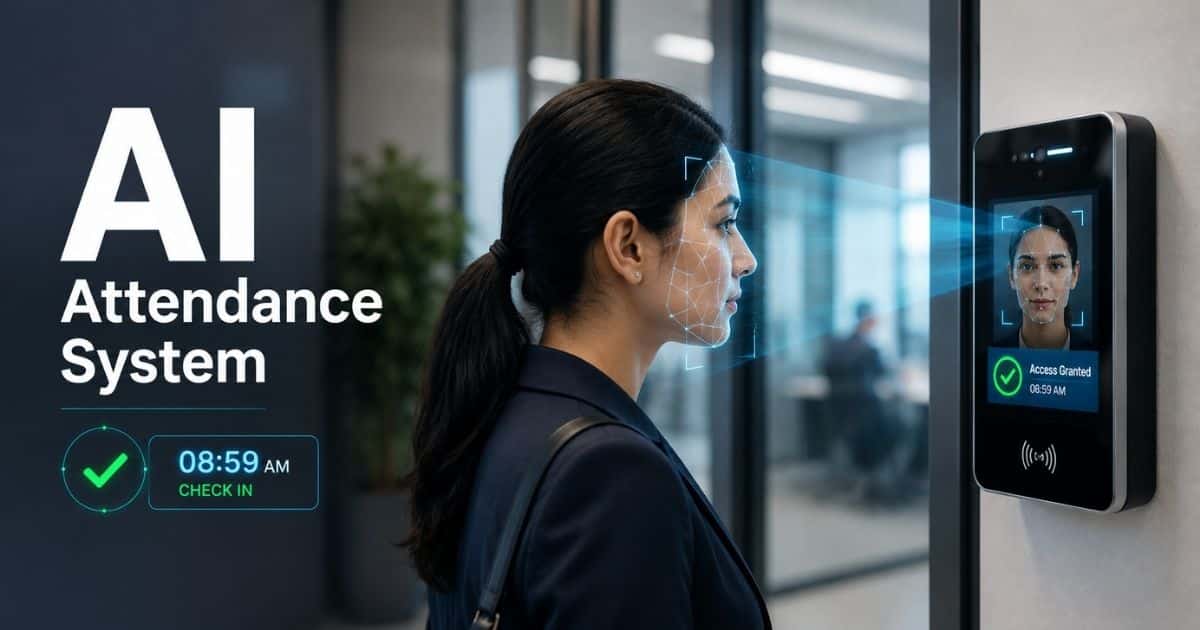
Table of Contents
Keeping attendance records should be simple. Yet many organizations still rely on spreadsheets, punch cards, manual roll calls, or separate tools that create delays and human errors. Missing entries, proxy attendance, and inaccurate reports can quickly affect payroll accuracy, compliance, and day-to-day operations.
An AI attendance system changes that process. Using facial recognition technology, machine learning, and real-time tracking, it can automatically record attendance, track employee attendance across multiple locations, and provide instant access to attendance data. Many AI-powered solutions also connect with HR software and payroll software, helping teams reduce administrative work while ensuring accurate records and seamless attendance management.
As businesses, schools, and educational institutions move toward automation, AI-based attendance systems are becoming more than a convenience. They are a practical way to improve accuracy, strengthen security, prevent fraudulent check-ins, and gain real-time insights for better decision-making. Studies and real-world implementations show that face recognition systems can automate attendance tracking and help reduce manual intervention while providing real-time attendance visibility.

What Is An AI Attendance System And How Does It Work?
An AI attendance system is a smart attendance management solution that uses artificial intelligence to automate attendance tracking. Instead of relying on manual roll calls, paper registers, or traditional methods, the system can automatically record attendance using facial recognition, QR codes made with an online QR code generator, mobile apps, or biometric data. Many organizations use an AI-based attendance system to track employee attendance across multiple locations while maintaining accurate records and attendance compliance.
The process is simple. A face recognition system captures real-time images and matches them with a stored face recognition model. Machine learning algorithms help improve accuracy over time and reduce human errors. Once verified, the system can mark attendance instantly and update attendance records in real time.
Most AI-powered attendance systems also offer seamless integration with HR software and unified workforce platforms. This gives managers easy access to attendance data, detailed reports, shift scheduling information, and real-time attendance insights for better decision-making while ensuring payroll accuracy and security.
Major Technologies Behind AI Attendance Systems
An AI attendance system does much more than mark attendance. It combines several technologies to create accurate records, automate attendance tracking, and reduce human intervention. From facial recognition to cloud storage, each component plays a role in improving attendance management and payroll accuracy while giving organizations real-time access to attendance data.
Facial Recognition Technology
Facial recognition technology is one of the most common parts of an AI based attendance system. It captures facial features and compares them with stored biometric data. Once a match is found, the system can record attendance automatically.
Many organizations use facial recognition because it helps prevent proxy attendance and reduces manual errors. Modern face recognition systems can identify employees within seconds. Computer vision and AI models have improved significantly in recent years, making face recognition more reliable than traditional methods in many workplace environments.
Machine Learning Models
Machine learning helps an attendance system become more accurate over time. The technology learns from attendance data and identifies patterns that improve attendance tracking performance, forming a core part of many modern attendance tracking systems.
A face recognition model can adapt to small changes in appearance, such as glasses, hairstyles, or facial hair. Machine learning also helps organizations identify attendance trends, late arrivals, and absenteeism patterns. This supports better decision-making and helps managers generate reports with fewer errors. AI systems rely on machine learning to recognize patterns and improve predictions based on data.
Real-Time Tracking And Analytics
Real-time attendance is a major advantage of AI-powered attendance management. Attendance records update instantly after employees mark attendance through facial recognition, QR code scans, mobile apps, or timeline-based attendance tracking software.
Managers can access real-time tracking dashboards from any location. Instant visibility helps ensure employees are on site when required and allows quick responses to attendance issues. Real-time analytics also help organizations identify patterns, improve shift scheduling, and maintain attendance compliance across multiple locations.
Cloud-Based Data Storage
Cloud technology gives organizations secure and easy access to attendance records. Instead of storing data on a local device, attendance information stays in a centralized cloud platform, which is especially useful when you implement an attendance management system in your business.
Cloud storage supports real-time synchronization between offices, branches, and remote teams. It also helps maintain accurate records and detailed reports without manual updates. Many AI attendance systems include backup and recovery features that improve data security and reduce the risk of lost attendance data.
HR And Payroll Integration
Seamless integration with HR software and payroll software turns attendance tracking into a complete workforce management process. Attendance data flows automatically between systems without duplicate entries.
HR teams can track employee attendance, manage leave requests, monitor staff attendance, and calculate payroll with greater accuracy through an integrated payroll management system. Automated data transfer reduces administrative workload and minimizes human errors. This connection also supports payroll accuracy, attendance compliance, and ensuring accurate records across the entire organization.
Key Features Of An AI Attendance System
A modern AI attendance system does more than track employee attendance. It automates routine tasks, improves accuracy, and gives teams instant access to attendance data. The right features help organizations reduce manual errors, strengthen attendance compliance, and simplify attendance management for flexible and hybrid teams across multiple locations.
Facial Recognition Attendance
Facial recognition is one of the most valuable features in an AI-based attendance system. Employees simply stand in front of a camera, and the face recognition system verifies their identity within seconds. No cards, passwords, or manual entries are needed.
This feature helps organizations record attendance accurately and reduce human intervention. Facial recognition technology also prevents proxy attendance, a common problem with traditional methods. Modern face recognition models can recognize faces even when appearance changes slightly. Computer vision and machine learning continue to improve recognition accuracy across different environments.
Real-Time Attendance Tracking
Real-time attendance gives managers instant visibility into workforce activity. Attendance records update immediately after employees mark attendance through mobile apps, facial recognition, or QR code systems.
Easy access to real-time attendance data helps managers monitor staff attendance from any location. Teams can quickly identify late arrivals, absenteeism, or scheduling gaps. Real-time tracking also supports faster decision making and better workforce management. For organizations with multiple locations, this visibility becomes even more valuable because all attendance data stays updated in one system.
Automated Alerts And Notifications
Instant alerts help organizations respond to attendance issues faster. The system can send notifications when employees miss shifts, arrive late, or fail to check in on time.
Automated attendance alerts reduce the need for constant manual monitoring. HR teams receive updates without reviewing attendance records throughout the day. Managers can take action quickly and ensure employees follow attendance policies. This feature supports attendance compliance and helps maintain accurate records across the organization.
HR And Payroll Integration
Seamless integration with HR software and payroll software eliminates duplicate work. Attendance data moves automatically between systems without manual entry.
Accurate attendance records directly improve payroll accuracy. HR teams can calculate work hours, overtime, leave balances, and shift scheduling data with fewer errors, especially when combined with payroll automation software. Automated workflows reduce administrative workload and help generate reports faster. Many organizations choose AI-powered attendance systems because they connect attendance management with broader workforce operations.
Advanced Reports And Analytics
Detailed reports transform raw attendance data into useful insights. Managers can review attendance trends, absentee rates, overtime patterns, and workforce performance from a single dashboard.
Accurate reports help organizations identify patterns that may affect productivity or compliance. Data analytics also support better planning and resource allocation by feeding into detailed employee time log reports. Artificial intelligence and machine learning can highlight unusual attendance behavior that may otherwise go unnoticed. Better insights lead to stronger decision-making and more effective attendance management across employees, students, schools, and educational institutions.
Benefits Of Using An AI Attendance System For Workforce Management
An AI attendance system does more than automate attendance tracking. It helps organizations improve accuracy, reduce manual work, and gain better control over workforce operations. Understanding how to track employee attendance with automated tools ensures these systems are configured to support real-world needs. From payroll processing to attendance compliance, the benefits extend across every part of attendance management and employee administration.
Higher Attendance Accuracy
Accuracy is one of the biggest reasons organizations switch to an AI-based attendance system. Manual attendance records often contain mistakes caused by rushed entries, missed updates, or human errors. Small mistakes can create larger issues later.
Facial recognition technology and machine learning help verify identities before employees mark attendance. This process creates accurate records and reduces disputes about work hours. Modern face recognition systems can identify people within seconds, making attendance tracking faster and more reliable than many traditional methods. AI-powered recognition systems continue to improve as machine learning models process more data.
Less Administrative Work
Attendance management can consume a significant amount of time when handled manually. HR teams often spend hours reviewing attendance records, correcting errors, and preparing reports for payroll processing.
An automated attendance system reduces that burden. Attendance data updates automatically and detailed reports become available with a few clicks. Managers no longer need manual roll calls or spreadsheets to track attendance. This allows HR teams to focus on employee support, workforce planning, and other important business tasks instead of repetitive administrative work.
Stronger Payroll Accuracy
Payroll depends on accurate attendance data. Missing entries, duplicate records, or incorrect work hours can lead to payroll mistakes that affect employee trust and business operations.
AI attendance systems connect directly with payroll software and HR software through seamless integration. Work hours, overtime, leave balances, and shift scheduling data move automatically between systems. Accurate records help improve payroll accuracy and reduce costly corrections. Automated workflows also help organizations maintain compliance with labor laws and internal attendance policies.
Better Fraud Prevention
Attendance fraud remains a challenge for many organizations. Proxy attendance, buddy punching, and false check-ins can increase labor costs and reduce accountability.
Facial recognition and biometric data verification help prevent fraudulent check-ins. A face recognition system confirms identity before attendance is recorded. Unlike ID cards or passwords, facial features are much harder to share or misuse. Research shows biometric authentication methods provide stronger identity verification compared to traditional attendance systems.
Smarter Workforce Decisions
Attendance records contain valuable workforce insights. Organizations that analyze attendance data can identify patterns that may affect productivity, staffing, and employee performance.
Real-time attendance dashboards provide easy access to reports across multiple locations. Managers can review absenteeism trends, monitor staff attendance, and receive instant alerts when issues occur. Real-time tracking also supports better decision-making by highlighting workforce trends before they become larger problems. Data-driven attendance management helps organizations allocate resources more effectively and improve overall operational efficiency.
AI Attendance System Use Cases Across Businesses, Schools, And Remote Teams
An AI attendance system can support many environments. Businesses, schools, remote teams, and field operations all face different attendance challenges. AI-powered attendance management helps solve those issues with accurate tracking, real-time attendance data, and automated processes that reduce manual work and improve accountability.
Corporate Workplaces
Large organizations often manage hundreds or thousands of employees across departments. Manual attendance tracking becomes difficult as workforce size grows. Small errors can affect payroll, compliance, and daily operations.
An AI based attendance system helps track employee attendance automatically through facial recognition, QR code check-ins, or mobile apps. Managers gain easy access to attendance records and detailed reports in real time. Automated attendance data also supports payroll software and HR software integration, making workforce management more efficient and accurate, especially in hybrid attendance tracking for flexible workplaces.
Remote And Hybrid Teams
Remote work has created new attendance challenges. Managers need visibility without relying on manual updates or constant follow-ups. Traditional attendance methods often fail when employees work from different locations, which is why dedicated remote attendance tracking for distributed teams has become so important.
AI-powered attendance systems solve this problem through mobile apps, face recognition, and real-time tracking. Employees can mark attendance from approved locations while managers monitor attendance data remotely using an employee time tracking app. Real-time attendance records help organizations maintain accountability and ensure employees follow work schedules regardless of where they work.
Schools And Universities
Educational institutions often spend valuable time on student attendance. Manual roll calls can reduce classroom time and create inaccurate records. Large schools may process thousands of attendance entries every day.
A face recognition system helps schools automate attendance management. Students can mark attendance through facial recognition technology without physical contact. Attendance records update instantly and become available to administrators, teachers, and parents. Automated systems also help educational institutions identify attendance patterns and improve student attendance monitoring.
Field And On-Site Staff
Construction companies, logistics providers, maintenance teams, and service businesses often manage employees across multiple locations. Attendance tracking becomes difficult when workers frequently move between job sites.
An AI attendance system allows employees to record attendance through mobile devices or biometric verification. GPS attendance systems for workforce tracking, along with real-time tracking, help confirm on-site presence. Managers receive accurate reports and instant alerts when attendance issues occur. This creates better visibility across distributed teams and improves workforce accountability.
Healthcare And Shift-Based Operations
Hospitals, manufacturing facilities, and customer support centers rely heavily on shift scheduling. Attendance errors can create staffing shortages and affect service quality. Accurate workforce planning is critical in these environments.
AI-based attendance systems help organizations manage rotating schedules and staff attendance more effectively. Real-time attendance data allows supervisors to identify absent employees quickly and adjust schedules when needed, especially when integrated with employee leave tracking systems. Attendance analytics also help identify patterns that affect workforce availability. Better attendance management supports compliance, payroll accuracy, and smoother daily operations across shift-based organizations.
Challenges And Limitations Of AI Attendance Systems
An AI attendance system offers many benefits, but no technology is perfect. Organizations should understand the challenges before implementation. A clear understanding of potential limitations helps businesses choose the right system, improve adoption, and avoid costly mistakes during deployment.
Complex Initial Setup
Setup can be more challenging than many organizations expect. An AI-based attendance system often requires camera installation, employee enrollment, software configuration, and integration with existing tools.
Large organizations may need additional planning for multiple locations and workforce policies. The process can take time, especially when attendance management workflows differ across departments. A successful rollout usually requires testing, employee training, and clear implementation goals. Careful planning helps reduce disruptions and improves long-term adoption.
Facial Recognition Limitations
Facial recognition technology has improved significantly, but environmental factors can still affect performance. Poor lighting, camera angles, facial coverings, or low-quality images may reduce recognition accuracy.
A face recognition system relies on biometric data and image quality to verify identities. Extreme lighting conditions can sometimes create challenges for face recognition models. While modern machine learning algorithms continue to improve performance, organizations should not assume perfect results in every environment. Regular system updates and quality hardware help improve attendance tracking accuracy, especially when deploying a broader biometric attendance system. Research from the U.S. National Institute of Standards and Technology shows that facial recognition accuracy can vary based on operating conditions and image quality.
Data Privacy Concerns
Biometric attendance systems collect sensitive information. Facial images and biometric data require careful protection to maintain employee trust and regulatory compliance.
Organizations must follow data security best practices and relevant global privacy laws. Clear consent policies, secure storage, and controlled access to attendance records are essential, just as they are when using payroll compliance software to manage sensitive pay data. Employees often want transparency about how their data is collected and used. Strong privacy policies help reduce concerns and support responsible use of AI-powered attendance systems.
Integration Challenges
Many companies already use HR software, payroll software, and workforce management platforms. Connecting a new attendance system with existing systems can sometimes be difficult.
Data formats, legacy software, and custom workflows may create technical obstacles. Poor integration can lead to duplicate records, reporting issues, and payroll errors. Seamless integration often requires support from software vendors and internal IT teams. Organizations should evaluate compatibility requirements before selecting an attendance management solution.
Employee Adoption And Training
Technology delivers value only when employees use it correctly. Resistance to change can slow adoption, especially when teams move from traditional methods to automated attendance systems.
Training helps employees understand how to mark attendance, access mobile apps, and follow attendance policies. Clear communication also reduces confusion about facial recognition, attendance data collection, and system security. Studies show that successful technology projects often depend as much on user adoption as technical performance. Organizations that invest in employee education usually experience smoother implementation and better long-term results.
Best Practices For Successful AI Attendance System Implementation
A successful AI attendance system requires more than good software. Proper planning, employee support, and system configuration play a major role in long-term success. Organizations that follow clear implementation practices often achieve better attendance accuracy, stronger adoption, and fewer operational challenges.
Set Clear Objectives
Every organization should define goals before deploying an AI-based attendance system. Some businesses focus on payroll accuracy, while others want better attendance compliance or real-time attendance visibility.
Clear objectives help teams choose the right features and performance metrics. Managers can evaluate whether the system should prioritize facial recognition, shift scheduling, mobile apps, or attendance analytics. A defined roadmap also helps measure success after implementation and keeps the project aligned with business needs.
Train Employees Early
Employee understanding is critical for successful adoption. New attendance systems often introduce unfamiliar processes that may create confusion if training is limited.
Training sessions should explain how to mark attendance, access attendance records, and use mobile apps or face recognition systems. Employees should also understand how biometric data is collected and protected. Research consistently shows that user adoption plays a major role in technology project success. Well-trained employees usually adapt faster and make fewer mistakes during daily use.
Protect Attendance Data
Attendance data often includes personal information and biometric data. Strong security controls help organizations maintain trust and comply with global privacy laws.
Data security practices should include encrypted storage, role-based access controls, and regular security reviews. Cloud-based attendance management platforms should also provide secure backup options. Clear privacy policies help employees understand how data is stored and used. Organizations that prioritize security reduce risk and strengthen compliance efforts.
Test System Integration
Seamless integration with HR software and payroll software is essential before full deployment. Problems often appear when attendance data moves between multiple systems.
Testing helps verify payroll calculations, attendance records, leave tracking, and report generation. HR teams should review data accuracy before relying on automated workflows and understand the distinction between time tracking vs attendance tracking in their setup. A pilot phase can identify technical issues early and prevent larger disruptions later. Careful testing supports accurate records and smoother workforce management.
Monitor And Improve Performance
Implementation should not end after launch. Regular reviews help organizations identify opportunities to improve attendance tracking and system performance, similar to how ongoing payroll audit strategies keep pay processes accurate and compliant.
Managers can use detailed reports and real-time attendance analytics to identify patterns and recurring issues. Employee feedback may also reveal usability concerns or training gaps. Machine learning models often improve over time as more attendance data becomes available. Continuous evaluation helps organizations maintain accuracy, reduce errors, and maximize the long-term benefits of their AI-powered attendance system.
Future Trends In AI-Powered Attendance Management
AI attendance systems continue to evolve as workplace technology advances. Organizations now expect more than simple attendance tracking. Future solutions will focus on deeper automation, stronger security, better workforce insights, and smoother user experiences that support both employees and management teams.
Smarter Predictive Analytics
Future AI attendance systems will do more than generate reports. They will analyze attendance data and predict workforce trends before problems appear.
Machine learning models can identify patterns related to absenteeism, overtime, shift coverage, and employee attendance behavior. Managers will receive early warnings instead of reacting after issues occur. Predictive analytics can help organizations improve workforce planning and resource allocation. Research shows that predictive AI tools are becoming a growing priority as businesses seek more data-driven decision-making across operations.
Advanced Facial Recognition
Facial recognition technology continues to improve every year. New face recognition models can handle changes in lighting, facial expressions, and camera positions more effectively than earlier systems.
Future face recognition systems will likely deliver faster verification and fewer manual reviews. Improved computer vision and artificial intelligence technologies will help reduce recognition errors while maintaining security. Better performance will make AI-based attendance systems more reliable across offices, schools, factories, and multiple locations where environmental conditions often vary.
Contactless Workforce Tracking
Organizations increasingly prefer contactless attendance solutions. Demand has grown for systems that allow employees to mark attendance without touching shared devices.
AI-powered attendance platforms are expected to expand support for facial recognition, mobile apps, and location-based verification. Real-time attendance data can be captured through smartphones and cloud-connected devices. Contactless attendance management improves convenience while helping organizations maintain accurate records and stronger attendance compliance across distributed workforces.
Stronger Data Protection
Data security will remain a major focus as more organizations collect biometric data. Governments worldwide continue to strengthen privacy requirements for personal information and digital records.
Future attendance systems will likely include advanced encryption, stricter access controls, and improved audit capabilities. Organizations will need tools that support compliance with global privacy laws while protecting attendance records. Greater transparency around biometric data usage may also improve employee trust and encourage wider adoption of AI attendance systems.
Deeper HR Integration
Future attendance management platforms will become more connected with workforce systems. Attendance tracking, payroll software, HR software, leave management, and performance data will work together more closely.
Seamless integration can reduce manual intervention and improve payroll accuracy across the organization. Real-time attendance records will automatically update related systems and workflows. Industry analysts expect AI-powered workforce platforms to become increasingly unified, helping organizations manage employees through a single connected system rather than multiple disconnected tools.
Conclusion
AI attendance systems have transformed how organizations manage attendance, employee accountability, and workforce operations. Unlike traditional methods, an AI-based attendance system uses facial recognition, machine learning, and real-time attendance tracking to create accurate records while reducing manual errors. From businesses and schools to remote teams and field staff, these systems help automate attendance management, improve payroll accuracy, and strengthen attendance compliance.
Success, however, depends on more than technology alone. Organizations must focus on proper implementation, employee training, data security, and seamless integration with HR software and payroll software. When deployed correctly, AI-powered attendance solutions provide real-time insights, detailed reports, and better decision-making. As artificial intelligence continues to evolve, attendance systems will become even smarter, helping organizations save time, improve accuracy, and build more efficient workforce management processes.
FAQs
Can An AI Attendance System Work Without An Internet Connection?
Yes. Many AI attendance systems support offline attendance tracking. Employees can mark attendance on site, and the attendance data automatically syncs with the system once an internet connection becomes available.
Is An AI Attendance System Suitable For Small Businesses?
Yes. An AI-based attendance system can help small businesses reduce manual errors, improve attendance management, and maintain accurate records without needing large HR teams or complex processes. A dedicated attendance management system for small businesses can be especially valuable as they scale.
Can AI Attendance Systems Help With Labor Law Compliance?
Yes. Automated attendance records, detailed reports, and real-time attendance data make it easier to maintain attendance compliance and support audits. Accurate records also help organizations follow labor laws and internal attendance policies.
What Factors Affect Facial Recognition Accuracy In Attendance Tracking?
Lighting conditions, camera quality, face positioning, and biometric data quality can all affect facial recognition performance. A well-trained face recognition model and proper system setup help improve attendance tracking accuracy and reduce errors.
How Does An AI Attendance System Support Workforce Planning?
Attendance data helps managers identify patterns related to absenteeism, shift scheduling, and employee attendance. Accurate reports and real-time tracking provide insights that support better decision-making and workforce management across multiple locations, and can also feed into leave management for remote teams to keep coverage balanced.