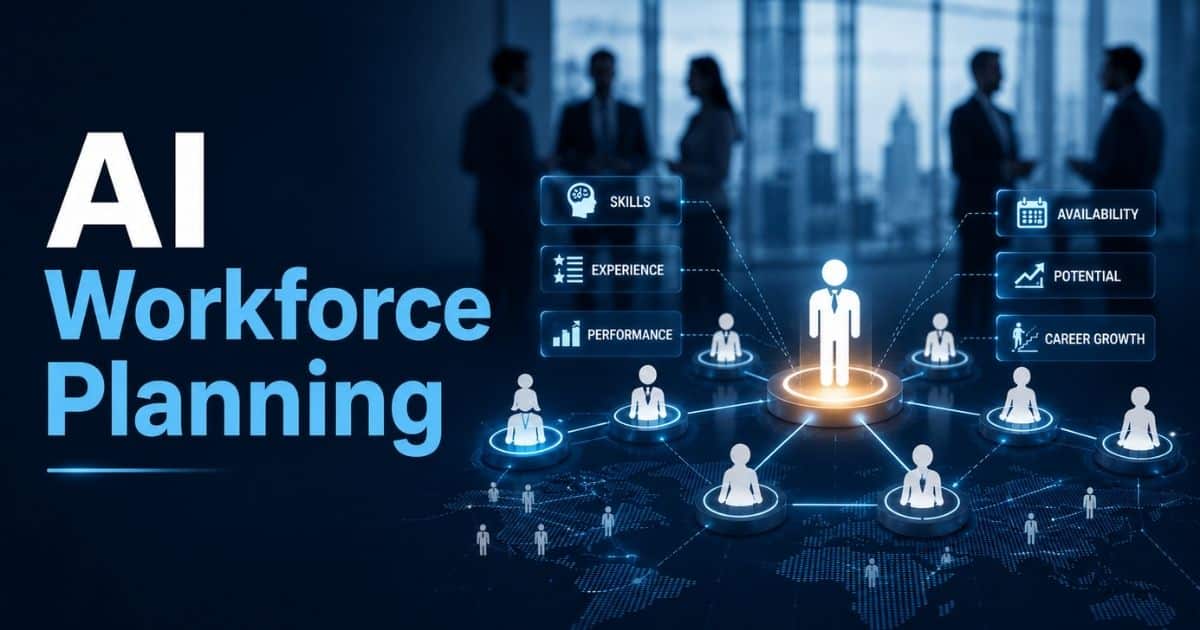
Workforce planning has never been easy. Businesses deal with changing markets, shifting skills, labor shortages, and rising costs all at once. Yet many organizations still rely on spreadsheets and guesswork to make workforce decisions. That approach no longer works in a fast-moving business environment.
AI workforce planning changes the game. It helps organizations predict talent needs, identify skill gaps, optimize staffing levels, and prepare for future changes before they happen. With more companies adopting AI-powered workforce strategies, workforce planning is becoming a key driver of business growth, agility, and resilience.
In this guide, we will explore how AI is reshaping workforce planning and what it means for the future of work.
What Is AI Workforce Planning
AI workforce planning is the use of AI tools and workforce data to help organizations make better talent decisions. Unlike traditional workforce planning methods that rely heavily on historical data, AI analyzes real-time data, employee data, and business demand to forecast staffing needs with greater accuracy. It supports strategic workforce planning by helping HR teams align talent strategy with business goals and strategic objectives.
Modern organizations face workforce challenges such as rapid technological change, talent gaps, and shifting market demands. AI workforce planning helps identify skill gaps, predict future skill requirements, and improve resource allocation across business units. By combining internal data, external talent insights, and predictive analytics, business leaders can build a future-ready workforce.
How AI supports workforce planning goes beyond automation. Human expertise, human judgment, and human oversight remain essential for workforce decisions. Together, AI solutions and human managers create a stronger workforce strategy that drives business growth and long-term competitive advantage.
Why AI Workforce Planning Is Important
Workforce planning is no longer just an HR task. Rapid market shifts, changing customer needs, and talent shortages have made it a business priority. Organizations now need better ways to align people, skills, and resources with long-term goals.
AI is changing how companies make workforce decisions. It helps leaders predict demand, close talent gaps, and respond faster to change. Replacing disconnected HR point solutions with a unified HR platform is often a key enabler. As work becomes more complex, businesses need a smarter and more flexible workforce strategy.
Workforce Planning Has Moved Beyond HR
Workforce planning once sat mainly within HR departments. Today, it involves finance, operations, and business leaders. Talent decisions now affect growth, costs, and customer experience across the organization.
Research shows that 92% of HR professionals consider workforce planning important, yet many organizations still struggle to execute it effectively. Modern workforce planning aligns talent strategy with business goals and enterprise objectives. That shift turns workforce planning into a strategic capability rather than an administrative task.
Skills Gaps Create New Business Risks
Rapid technological change is reshaping jobs across every industry. Many companies face talent gaps because existing workforce capabilities no longer match future skill requirements. Traditional workforce planning methods often fail to keep pace.
Strategic workforce planning helps organizations identify skill gaps before they become major problems. Businesses that understand emerging skills can prepare a future-ready workforce. Strong talent planning also reduces costly talent loss and supports long-term business growth.
Data Drives Better Talent Decisions
Business leaders can no longer rely only on historical data. Workforce changes happen quickly, and decisions require real-time insight. AI tools analyze workforce data, employee data, and performance metrics from multiple sources.
Internal data combined with external labor market trends creates a forward-looking view of talent supply and staffing needs. Predictive analytics helps forecast workforce demand and support smarter resource allocation across business units. This data-driven approach strengthens workforce strategy and improves business operations.
Agility Has Become A Competitive Advantage
The global market changes faster than ever. Organizations must respond quickly to new projects, customer demands, and economic shifts. A rigid workforce strategy often creates delays and missed opportunities.
Embedding strategic workforce planning into daily operations improves agility and resilience. Companies can redeploy talent faster, adjust staffing needs, and adapt to workforce changes with confidence. Organizations that align talent strategy with business strategy gain a stronger competitive advantage.
Maturity Levels Remain Surprisingly Low
Many organizations recognize the value of workforce planning, but few have reached high maturity. Workforce planning often remains reactive instead of strategic. That limits long-term growth and preparedness.
Maturity models show that only a small share of organizations have advanced workforce planning capabilities. Companies with mature workforce strategies use scenario modeling, predictive analytics, and integrated workforce data to support better decisions. Those capabilities help leaders plan smarter and prepare for future workforce challenges.
How Companies Use AI To Forecast Workforce Demand
Workforce demand can change quickly. New projects, market shifts, and skill shortages make planning harder than ever. Businesses now use AI to forecast staffing needs, prepare for future changes, and make smarter workforce decisions before problems arise.
Data Creates Better Forecasts
AI workforce planning starts with data. AI tools analyze employee data, performance reviews, attendance records, and business demand. They also pull insights from labor markets and economic trends.
Internal data and external data integration provide a forward-looking view of workforce needs. Instead of relying only on historical data, organizations use real-time data to understand workforce changes as they happen. This approach helps HR teams align workforce strategy with business goals and make better talent decisions across business units.
Predictive Analytics Spots Future Gaps
Businesses no longer wait for talent shortages to appear. Predictive analytics helps organizations identify skill gaps before they affect operations. AI can forecast staffing needs and estimate future skill requirements with high accuracy.
AI solutions analyze workforce data across multiple scenarios. Leaders can test different outcomes based on growth plans, turnover, or market shifts. This type of scenario modeling helps companies prepare for workforce challenges and build a future-ready workforce. AI shifts workforce planning from reacting to problems to preventing them.
Skills Mapping Improves Talent Allocation
Many companies already have valuable talent inside the organization. The challenge is finding it. AI platforms map employee skills, job descriptions, certifications, and project experience to uncover workforce capabilities.
This process supports internal mobility and smarter resource allocation. AI can match employees to critical tasks and open roles based on the skills needed. Businesses can close capability gaps faster and reduce reliance on external talent. Better talent planning also strengthens strategic workforce planning and supports long-term business growth.
Scenario Planning Supports Faster Decisions
Workforce planning often involves uncertainty. Economic shifts, new technologies, and customer demand can change quickly. AI agents help leaders prepare for those changes through scenario modeling.
Organizations can simulate multiple scenarios before projects begin or markets shift. AI can predict the impact of demographic changes, turnover, and talent supply shortages. This helps business leaders make faster workforce decisions while aligning talent strategy with enterprise objectives. Human judgment still matters, but AI provides the data-driven insight needed to plan smarter.
Cross-Functional Planning Drives Growth
Strategic workforce planning works best when HR, finance, and business operations collaborate. Workforce decisions affect budgets, productivity, and long-term growth. Strong alignment creates better outcomes.
Research shows that organizations using AI for workforce management can achieve up to three times higher revenue growth per employee, while AI adoption continues to rise across industries. AI workforce planning turns workforce strategy into a strategic capability that supports business operations and competitive advantage.
Where AI Finds Hidden Talent And Skills Inside Organizations
Many organizations have more talent than they realize. Valuable skills often remain hidden in resumes, projects, and daily work. AI workforce planning helps businesses uncover those strengths and use them where they create the most value.
Employee Skills Become Visible
Traditional talent management often focuses only on job titles. Yet employees usually have skills beyond their current roles. AI tools analyze job histories, certifications, performance reviews, and employee data to reveal hidden workforce capabilities.
This creates a clearer picture of the organization's workforce capabilities. HR teams can identify skill gaps and match people to the skills needed for future projects. Better visibility also supports strategic workforce planning and helps business leaders make smarter workforce decisions.
Internal Talent Gains New Opportunities
Hiring externally is not always the best answer. Many organizations already have existing employees with valuable expertise. AI workforce planning helps companies find those employees faster.
AI platforms support internal mobility by matching skills with open roles and critical tasks. Employees can move into new projects before companies search for external talent. This approach reduces hiring costs and strengthens talent strategy. Implementing a modern employee management system also helps organizations build a future-ready workforce that adapts to workforce changes.
Skill Gaps Become Easier To Spot
Rapid technological change creates new workforce challenges every year. Many organizations struggle to keep up with emerging skills and future skill requirements. AI helps solve that problem.
AI analyzes workforce data, job descriptions, and performance metrics to identify capability gaps. Leaders can forecast staffing needs and prepare talent plans before shortages occur. Research from PwC shows that skills in AI-exposed jobs are changing 66% faster than in less exposed roles, making workforce planning more important than ever.
Resources Shift Where They Matter Most
Business demand changes quickly. Teams need the flexibility to move talent where it creates the most impact. Strategic workforce planning makes that possible.
AI agents analyze multiple scenarios and recommend better resource allocation across business units. Companies can redeploy talent as projects begin or priorities shift. This improves business operations and supports strategic objectives. Real-time data also helps organizations respond faster to market changes and customer needs.
Human Expertise Remains Essential
AI solutions provide data-driven insight, but people still make the final call. Human judgment matters when workforce decisions affect careers, culture, and long-term business goals.
AI can analyze communication patterns, employee data, and talent implications at scale. Human managers and business partners add context that technology cannot provide. The strongest workforce strategy combines AI workforce planning with human oversight. Organizations that leverage AI while keeping people at the center build a stronger competitive advantage in the global market. Recent research shows AI-exposed industries now achieve three times higher revenue growth per employee than less exposed industries.
How AI Helps Teams Prepare For Future Skill Gaps
Skills are changing faster than ever. New technologies, shifting markets, and changing customer needs create new workforce demands. AI helps organizations prepare early, close talent gaps, and build a workforce that is ready for future business needs.
Future Skills Become Easier To Predict
Many organizations struggle to understand which skills will matter tomorrow. Traditional workforce planning often focuses on current roles rather than future needs. That creates gaps between business goals and workforce capabilities.
AI workforce planning uses predictive analytics and workforce data to forecast future skill requirements. It analyzes labor trends, industry changes, and business demand to identify emerging skills. According to the World Economic Forum, 39% of workers' core skills are expected to change by 2030. That makes early talent planning more important than ever.
Skill Gaps Surface Before They Grow
Organizations often discover talent shortages too late. By then, projects slow down and hiring costs rise. AI helps leaders act before capability gaps affect business operations.
AI tools analyze employee data, performance metrics, and job descriptions to identify skill gaps across teams. HR departments can compare existing workforce capabilities with future business strategy. Research from the World Economic Forum shows that skill gaps remain the biggest barrier to business transformation globally.
Upskilling Efforts Become More Targeted
Training programs work best when they focus on the right people and skills. Many organizations invest in learning without clear workforce data. That often leads to wasted resources.
A well-designed personnel management software supports this by organizing skills and learning data. AI solutions help business leaders identify employees who can move into new roles through reskilling. AI agents can recommend training paths based on career goals and strategic objectives. The World Economic Forum reports that 85% of employers plan to prioritize workforce upskilling to address future workforce challenges.
Turnover Risks Become More Visible
Losing skilled employees can create costly talent loss and disrupt business growth. Many companies fail to detect early signs of disengagement. AI offers a more proactive approach.
AI analyzes communication patterns, employee data, and performance reviews to identify turnover risks. Leaders can then improve retention strategies before valuable talent leaves. Better retention protects workforce capabilities and reduces recruitment costs. A stronger talent strategy also supports long-term workforce stability and business resilience.
Human Expertise Guides The Final Decision
AI provides data-driven insight, but workforce decisions still require people. Human managers understand culture, motivation, and team dynamics in ways technology cannot.
AI can forecast staffing needs, test multiple scenarios, and evaluate talent implications across business units. Human oversight ensures decisions remain fair and aligned with enterprise objectives. Research suggests most AI use in workplaces augments human work rather than replacing it, highlighting the value of human expertise in workforce strategy.
What Happens When Workforce Planning Moves From Reactive To Predictive
Reactive planning often means solving problems after they appear. That approach leads to skill shortages, rushed hiring, and higher costs. Predictive workforce planning helps organizations anticipate change early and make smarter decisions before challenges affect growth.
Forecasts Replace Guesswork
Traditional workforce planning methods often rely on historical data. But past trends do not always predict future business demand. Rapid technological change and market shifts require a different approach.
AI workforce planning uses predictive analytics and real-time data to forecast staffing needs with greater accuracy. AI tools analyze workforce data, employee data, and external trends to support talent decisions. Organizations can prepare for future skill requirements and align workforce strategy with business goals. This shift helps business leaders plan smarter and reduce uncertainty across business operations.
Scenario Models Improve Readiness
Business conditions can change overnight. A new market opportunity or economic slowdown may affect talent supply and resource allocation. Organizations need flexibility to respond quickly.
AI agents can test multiple scenarios before workforce changes occur. Scenario modeling allows HR teams and business units to evaluate hiring plans, budgets, and staffing levels. Leaders can see how different decisions affect strategic objectives and enterprise goals. This proactive approach strengthens strategic workforce planning and improves organizational resilience.
Labor Shortages Become Easier To Predict
Many organizations struggle when key roles remain unfilled. Delayed hiring can slow projects and hurt business growth. Predictive workforce planning helps avoid those risks.
AI solutions analyze labor markets, workforce capabilities, and internal data to identify future talent gaps. Research from the World Economic Forum shows that nearly 60% of workers will require training by 2030 due to changing job demands. Early insight helps organizations build a future-ready workforce and reduce costly talent loss.
Resources Shift Faster Across Teams
Business priorities often change as new projects begin. Organizations must move people and skills where they create the most value. Reactive planning rarely allows that level of speed.
AI workforce planning supports internal mobility and smarter resource allocation. It matches existing employees with critical tasks based on skills and performance metrics. Business partners can deploy talent across departments without relying only on external talent. This approach improves workforce capabilities while keeping operations efficient in a fast-moving global market.
People Stay At The Center
AI can process vast amounts of workforce data, but it cannot replace human expertise. Workforce decisions often involve culture, ethics, and long-term strategy. Human oversight remains essential.
Human managers use data-driven insight from AI tools to make balanced decisions. AI helps forecast staffing, identify capability gaps, and evaluate talent implications. Human judgment ensures workforce strategy aligns with business strategy and employee needs. The strongest organizations combine AI with human expertise to create a lasting competitive advantage.
Which Workforce Decisions Should Stay Human
AI can process data faster than people, but not every workforce decision should be automated. Talent choices affect careers, culture, and trust. The best organizations combine AI insights with human expertise to make fair and balanced decisions.
Culture Decisions Need People
Company culture is built on relationships, values, and trust. AI tools can analyze employee data and communication patterns, but they cannot fully understand emotions or workplace dynamics.
Human managers play a key role in shaping culture and resolving conflicts. Workforce decisions about team fit, leadership potential, and employee well-being require human judgment. AI workforce planning works best when leaders use data-driven insight while keeping people at the center of talent management.
Ethics Require Human Oversight
AI solutions rely on data, and data can carry bias. Without proper oversight, algorithms may create unfair outcomes in hiring, promotions, or workforce planning.
Human oversight helps ensure fairness and accountability. Business leaders and HR teams must review AI recommendations before making talent decisions. According to the World Economic Forum, ethical governance remains one of the biggest priorities as AI adoption grows across organizations. Human expertise protects both employees and business goals.
Leadership Calls Stay Human
AI can forecast staffing needs and identify skill gaps. It can even analyze workforce data across multiple scenarios. Yet leadership involves far more than numbers.
Business strategy often requires empathy, vision, and experience. Human employees look to leaders for guidance during workforce changes and uncertainty. Strategic workforce planning benefits from AI tools, but final decisions about promotions, succession, and organizational change should remain with people.
Career Growth Needs Context
Employees are more than job descriptions and performance metrics. Career growth depends on aspirations, strengths, and personal goals that data alone may not capture.
AI agents can recommend learning paths and internal mobility opportunities. Human managers add context through conversations and mentorship. This balance helps organizations align talent strategy with future skill requirements while supporting existing employees and reducing costly talent loss.
Automation Works Best With Balance
AI helps leaders analyze tasks for automation and efficiency. Research from McKinsey suggests that AI could automate up to 30% of current work hours by 2030. That shift may reshape workforce capabilities across industries.
Critical tasks that require creativity, ethics, and relationship building still depend on human expertise. Organizations that combine AI workforce planning with human judgment create stronger workforce strategies. That balance supports business growth, employee trust, and long-term competitive advantage.
How AI Workforce Planning Supports Hiring, Scheduling, And Growth
AI workforce planning does more than forecast demand. It helps organizations hire faster, schedule smarter, and use talent more effectively. As workforce challenges grow, companies use AI to align people, skills, and resources with business goals.
Hiring Becomes Faster
Recruitment delays can slow growth and increase costs. Traditional hiring often relies on manual reviews and long approval cycles. AI workforce planning helps organizations move faster.
AI tools analyze job descriptions, employee data, and talent supply to forecast staffing needs. They also identify qualified candidates from internal and external talent pools. Using modern recruitment software alongside AI shows organizations can reduce hiring cycles from about 42 days to less than a week in some roles. Faster hiring helps businesses respond quickly to market demand and workforce changes.
Schedules Match Business Demand
Work schedules often change based on customer needs, seasonal demand, and project timelines. Poor scheduling can increase costs and reduce employee satisfaction. AI helps solve both challenges.
AI solutions analyze real-time data, staffing levels, and business operations through smart attendance tracking software to create optimized schedules. The system matches employee skills with critical tasks and shifts. Greater schedule flexibility can improve workforce experience and productivity. Smarter scheduling also supports better resource allocation across business units and helps maintain business continuity.
Talent Moves Where It Matters
Many organizations overlook skills already present in the existing workforce. As a result, they hire externally even when internal talent is available. AI helps uncover those opportunities.
AI platforms map workforce capabilities and support internal mobility. Employees can move into new projects based on their skills and performance metrics. A centralized employee record management system makes these capabilities more visible and actionable. This approach reduces costly talent loss and strengthens talent management. Better workforce decisions also help organizations build a future-ready workforce aligned with strategic objectives.
Growth Becomes More Sustainable
Business growth requires the right people at the right time. Reactive workforce planning often creates skill shortages and hiring gaps. Strategic workforce planning takes a different path.
Modern organizations often use an all-in-one HR management system to support this shift. AI workforce planning combines predictive analytics, workforce data, and scenario modeling to forecast future needs. Organizations can test multiple scenarios before major business decisions using top workforce management software. Studies suggest companies using AI for workforce management can achieve up to three times higher revenue growth per employee than those with lower AI adoption. This creates a strong competitive advantage in the global market.
Costs Stay Under Control
Labor costs remain one of the largest business expenses. Poor workforce strategy can lead to overstaffing, understaffing, and unnecessary recruitment spending. Better planning improves outcomes.
Organizations that embed strategic workforce planning into business operations often see measurable savings. Research suggests effective workforce planning can reduce annual labor costs by around 10% while improving talent decisions. AI transforms workforce planning into a proactive function that supports business growth, enterprise objectives, and long-term resilience.
What An AI-Powered Workforce Strategy Looks Like In Practice
A successful AI workforce strategy goes beyond technology. It connects people, data, and business goals in one system. Organizations that use AI well make faster decisions, adapt quickly, and build stronger workforce capabilities for the future.
Business And HR Work Together
AI workforce planning works best when HR teams collaborate with finance and business operations. Workforce decisions affect budgets, growth plans, and productivity across the organization. A shared approach creates stronger outcomes.
Strategic workforce planning aligns talent strategy with business goals and enterprise objectives. Business leaders use workforce data to support talent decisions across departments. Research shows that organizations with integrated workforce planning are more resilient during market shifts and workforce changes. This cross-functional model turns workforce planning into a strategic capability rather than an HR task.
Data Powers Better Decisions
A strong workforce strategy depends on accurate data. AI tools collect insights from employee data, labor markets, performance reviews, and business demand. That creates a complete view of workforce capabilities.
Internal data combined with external data provides a forward-looking view of talent supply and staffing needs. AI agents analyze multiple scenarios and identify potential risks before they affect operations. This data-driven insight helps organizations forecast staffing, improve resource allocation, and plan smarter for future growth.
Skills Match Business Needs
Organizations succeed when the right people work on the right tasks. AI solutions help match employee skills with projects, teams, and business priorities. That improves efficiency and talent management.
AI platforms analyze job descriptions, existing workforce capabilities, and future skill requirements. They identify skill gaps and support internal mobility across business units. Employees gain new opportunities while organizations reduce reliance on external talent. Better talent deployment also strengthens workforce strategy and long-term business growth.
Change Happens Faster
Modern markets shift quickly. New technologies, customer demands, and economic conditions can reshape workforce needs overnight. Organizations need the ability to adapt in real time.
AI workforce planning supports rapid redeployment of resources and workforce changes as projects begin. Predictive analytics helps leaders anticipate labor shortages and changing demand. Studies suggest that organizations using AI for workforce management can achieve up to three times higher revenue growth per employee compared with slower adopters.
Human Oversight Remains Essential
AI can analyze vast datasets and recommend actions, but people still make the final call. Human judgment remains critical for ethics, culture, and long-term business strategy.
Research suggests that nearly 80% of organizations expect to use AI in workforce planning as adoption continues to grow. Yet successful organizations combine AI tools with human expertise rather than replacing people. This balance creates a future-ready workforce that supports resilience, agility, and competitive advantage in a changing global market.
How Payrun Helps Build A Smarter AI Workforce Strategy
A strong AI workforce strategy starts with reliable data and connected systems. Businesses need clear visibility into their people, skills, and operations to make better workforce decisions. That is where Payrun helps organizations turn workforce data into meaningful action.
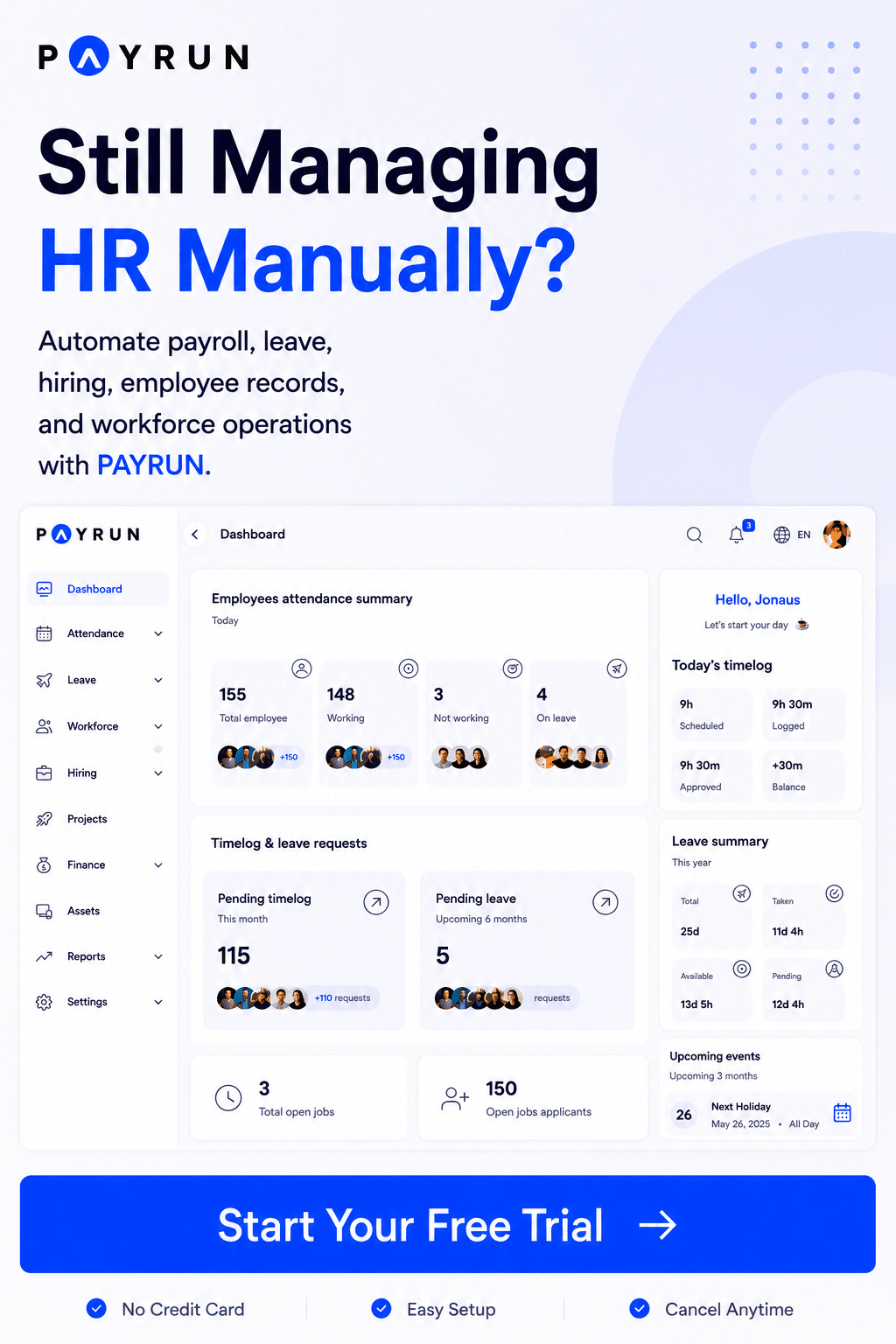
Payrun centralizes HR management in one platform, including employee records, attendance, leave, and payroll data, giving HR teams and business leaders a complete view of their workforce. With accurate and real-time information, organizations can support strategic workforce planning, improve talent management, and align workforce strategy with business goals. Better visibility also helps identify skill gaps, optimize resource allocation, and plan for future staffing needs.
As workforce demands evolve, businesses need flexible systems that grow with them. About Payrun as a strategic HR partner explains how the platform helps organizations streamline business operations, strengthen collaboration across teams, and build a future-ready workforce prepared for long-term growth.
FAQs
Can Small Businesses Benefit From AI Workforce Planning?
Yes. AI workforce planning is valuable for businesses of all sizes. Small companies can use workforce data and predictive analytics to forecast staffing needs, optimize resource allocation, and support business growth without building large HR teams, especially with HR software designed for small businesses.
Does AI Workforce Planning Replace Human Resources Teams?
No. AI tools support HR teams by automating analysis and providing data-driven insight. Human expertise, human judgment, and human oversight remain essential for talent decisions, employee experience, and workforce strategy.
How Does AI Workforce Planning Improve Employee Retention?
AI can identify turnover risks by analyzing employee data, performance metrics, and communication patterns. Organizations can then address issues early, reduce costly talent loss, and strengthen talent management for a more stable workforce.
Can AI Workforce Planning Support Remote And Global Teams?
Yes. AI workforce planning helps organizations manage a global workforce by analyzing talent supply, workforce changes, and staffing needs across locations. Combined with HRM software for remote workforce management, this enables business leaders to align workforce capabilities with strategic objectives.
What Data Is Needed For Effective AI Workforce Planning?
AI workforce planning works best when organizations combine internal data such as payroll, attendance, and performance reviews with external labor market data. Robust employee payroll records management is a key part of this foundation. This creates a complete view of workforce capabilities and helps identify skill gaps for future business goals.