Peer Recognition Examples To Appreciate Your Coworkers

Table of Contents
Somebody notices your late-night fix or your calm during a chaotic sprint. A coworker says thank you, and suddenly the day feels lighter. Peer recognition works exactly like this.
Managers can't catch everything. Day-to-day work happens between coworkers, not just under a manager's watch. Peer recognition catches what direct managers miss, and it hits different because it comes from someone who actually saw the effort.
Real workplace culture isn't built by an annual award ceremony. Small, sincere appreciation moments between team members build it, one shoutout at a time. Below, you'll find real peer recognition examples for the coworkers you sit beside every single day, not abstract HR theory.

What Is Peer Recognition?
Peer recognition is simple. Coworkers notice each other's work and say something about it, without waiting for a manager to step in first. It sits inside the bigger world of employee recognition, but the source is different. Team members give it to team members, not a boss handing down praise from above.
Direct managers can't see everything. Peer recognition captures daily contributions that often go unnoticed by leadership, since coworkers sit closer to the actual work. Top-down recognition alone can create bottlenecks, with acknowledgment stuck waiting on one person's calendar. Peer recognition skips that queue entirely.
Over time, this shapes workplace culture and company culture together. Small moments between coworkers build a positive work environment and shape employee morale far more than annual reviews ever could, especially when paired with broader employee engagement strategies to boost workplace morale.
10 Peer Recognition Examples For Different Workplace Situation
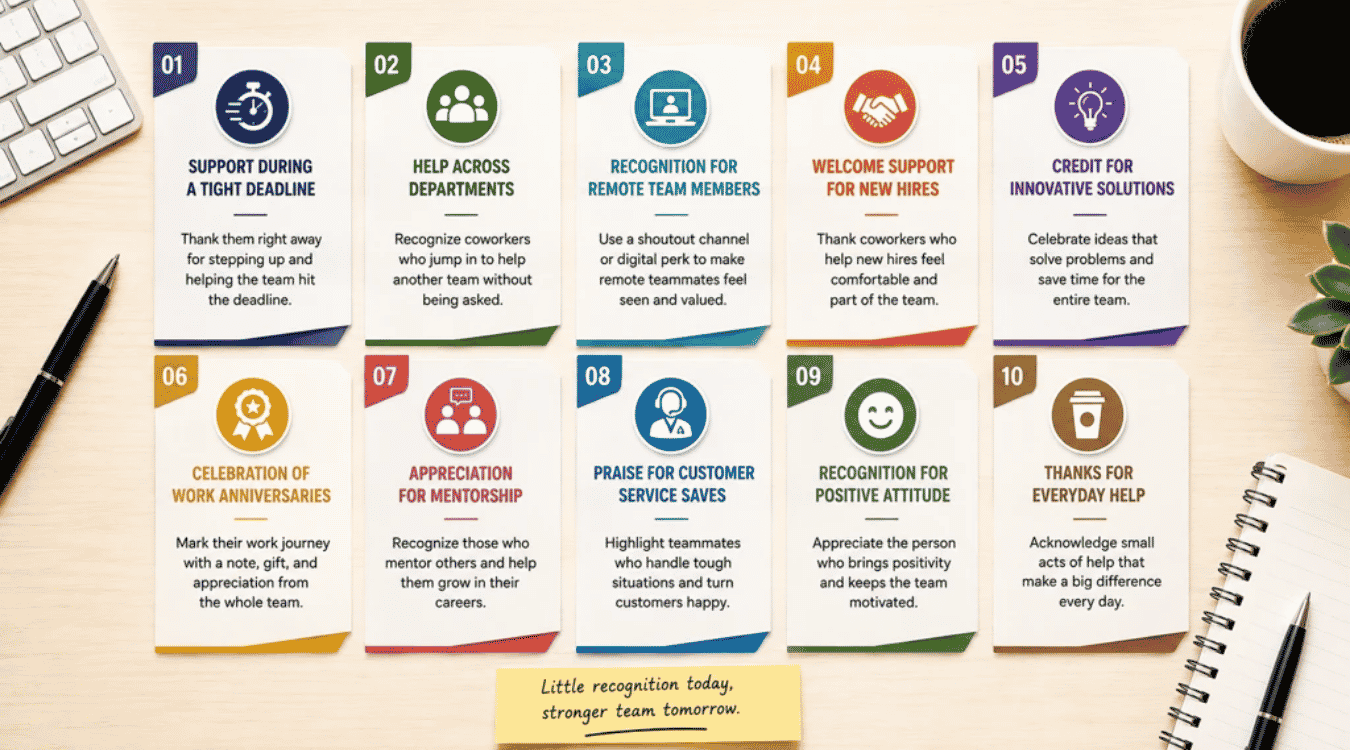
Peer recognition examples work best when they fit the moment. A shoutout for hitting a deadline looks different from thanks for training a new hire. Below are 10 peer recognition examples for real workplace situations, with simple ways to deliver each one.
1. Support During A Tight Deadline
Someone stays late to finish a report before a deadline. A coworker steps in to cover for them the next morning. Recognize this fast, right when it happens. Say thank you for always showing up when it counts. Point out the hard work and dedication behind it, not just the result. Specific praise drives lasting motivation. A quick shoutout during a team meeting works well here, and it shows the entire team that going above and beyond gets noticed.
2. Help Across Departments
Marketing needs data fast, and someone from finance jumps in without being asked. Cross-team help like this keeps projects moving. Peer recognition enhances collaboration and trust across teams, and cross-department help deserves real credit. Name the person and describe the extra effort they gave up their own time for. Digital peer badges work great here. Award one for collaboration, and let it show on a shared team profile so the whole team can see it.
3. Recognition For Remote Team Members
Remote workers miss out on hallway praise. Nobody walks by their desk to say good job. Build a specific chat channel for thanks and recognition instead. A message there reaches someone just as fast as an in-person comment. Peer recognition should be frequent, specific, and accessible, no matter where someone logs in from, and HRM software built for remote teams can support that with shared spaces and visibility. Small digital perks, like a gift card sent through Slack, help remote workers feel included in team spirit and daily wins.
4. Welcome Support For New Hires
New hires feel lost during their first weeks. A coworker who answers ten small questions without complaint deserves recognition too. Set up a physical or digital recognition wall for this. Post a quick note naming what the coworker did to help someone settle in during onboarding. Small moments like this shape workplace culture early. New hires remember who made them feel like part of the whole team, and that memory sticks around.
5. Credit For Innovative Solutions
A coworker finds a faster way to solve a recurring problem. Their unique perspective saves the team hours every week. Let employees nominate peers for recognition awards tied to this kind of thinking. A monthly peer award can recognize employees in an innovation category specifically. Credit builds professional growth too. Naming the exact idea, not just praising in general, helps the coworker see their impact clearly.
6. Celebration Of Work Anniversaries
Work anniversaries mark real history with a company. Five years, or even one, deserves more than a quiet email. Service awards fit naturally here, and a small gift adds weight to the gesture. Pair it with a note from teammates, not just HR. Recognition should celebrate team milestones and collaboration, not just individual output. Anniversaries also support employee retention, since people stay where their time is actually noticed.
7. Appreciation For Mentorship
A senior employee spends lunch breaks coaching a junior teammate through a new skill. Nobody assigned this. They chose to help. Handwritten thank-you notes leave a memorable impact here, more than a quick chat message. Mentorship supports continuous learning, and a personal note fits that effort. Exceptional leadership often looks like this, quiet and unofficial. Recognizing it encourages other coworkers to mentor without being asked.
8. Praise For Customer Service Saves
A frustrated customer calls in, and a teammate turns the situation around calmly. That kind of save rarely reaches a manager's inbox. Surprise recognition videos work well during team meetings for this. A short clip from coworkers describing what happened adds real weight to the praise. Meaningful contribution deserves visible recognition, not a quiet nod. Customer saves protect the company's reputation, and the person behind it should hear that clearly.
9. Recognition For Positive Attitude
Some coworkers bring positive energy into every meeting, even on hard weeks. Their positive attitude keeps a team from spiraling during stress. Point this out directly. Attitude rarely gets named, since it feels less measurable than output, but it shapes team morale just as much. A small gift exchange or a shared treat can mark this kind of recognition. Positive influence deserves the same visibility as any finished project.
10. Thanks For Everyday Help
Most peer recognition never involves a big win. Someone grabs coffee for a stressed teammate, or covers a call during lunch. Micro-recognitions create a more connected workplace culture over time. A handwritten note, or a small digital perk, works fine for day-to-day work like this. Sincere appreciation for small things makes all the difference. Employees feel appreciated faster through these tiny, frequent moments than through one big annual award.
How To Write Meaningful Peer Recognition
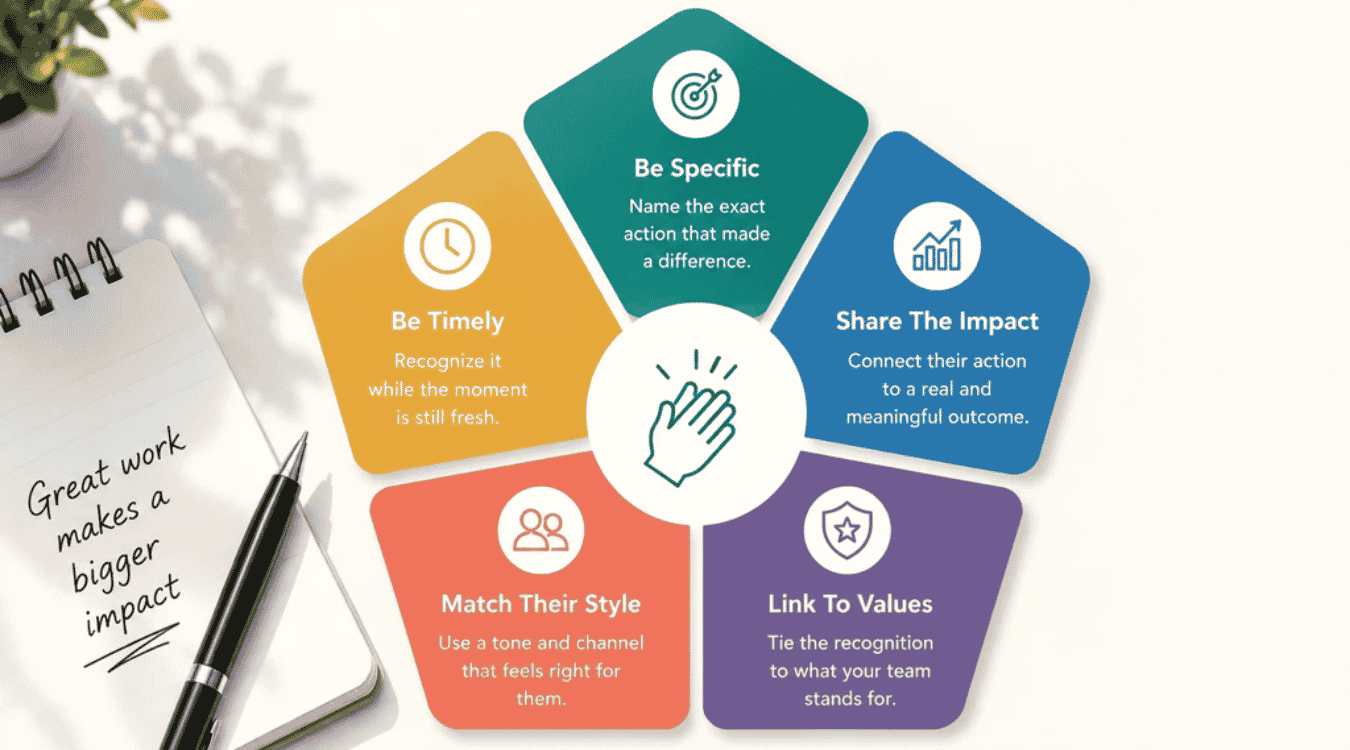
A vague "great job" fades fast. Meaningful peer recognition takes a little more effort, but it sticks with people. Here's how to write recognition that actually lands, five habits that turn generic praise into something real.
Name The Specific Action
Skip the generic praise. Say exactly what the person did. Did they stay late, catch an error, or help a struggling teammate? Name it. The most impactful recognition answers who did what and why it mattered, not just that something good happened. Vague praise feels like a template, and people notice the difference.
A specific note takes ten extra seconds to write. Those seconds matter. Employees feel appreciated when the words connect to something real they can point to, not a generic compliment anyone could receive.
Explain The Impact
Good recognition connects an action to its result. A coworker fixed a bug, but what happened because of it? Maybe a client stayed happy, or the whole team hit a deadline. Say that part out loud. Specific praise drives lasting motivation far more than a simple thanks.
Impact gives context to hard work and dedication. It shows the coworker their effort moved something forward, not just that someone was watching. This turns a small comment into proof of a meaningful contribution.
Keep It Timely
Recognition loses power the longer it waits. A shoutout three weeks late feels like an afterthought. Send it the same day, or close to it, while the moment still feels fresh to both people.
Peer recognition should be frequent, specific, and accessible, and timing plays a big part in that. A quick message right after a save or a save-the-day moment carries more weight than a delayed mention during a quarterly review. Fast recognition also reinforces positive behaviors while the memory is still sharp.
Match The Tone To The Person
Not every teammate wants public praise. Some coworkers love a shoutout during a meeting. Others prefer a quiet message instead. Pay attention to what actually feels good to the person receiving it, not what feels easiest to give.
A loud, public post can embarrass someone who prefers privacy. A private note can feel small to someone who thrives on visible recognition. Matching tone to the person shows real thought, and it builds trust between team members faster than a one-size-fits-all approach.
Tie It To Company Values
Strong recognition connects back to something bigger. If a coworker's action reflects one of the company's core values, say so directly. This helps the whole team understand what good work actually looks like day to day.
Recognition tied to company values reinforces desired behaviors across the entire team, not just for the person being praised. Cultural values can guide peer recognition practices, giving people a shared standard instead of random, disconnected praise. It also strengthens company culture over time, one specific example at a time.
How To Recognize Coworkers Across Different Channels
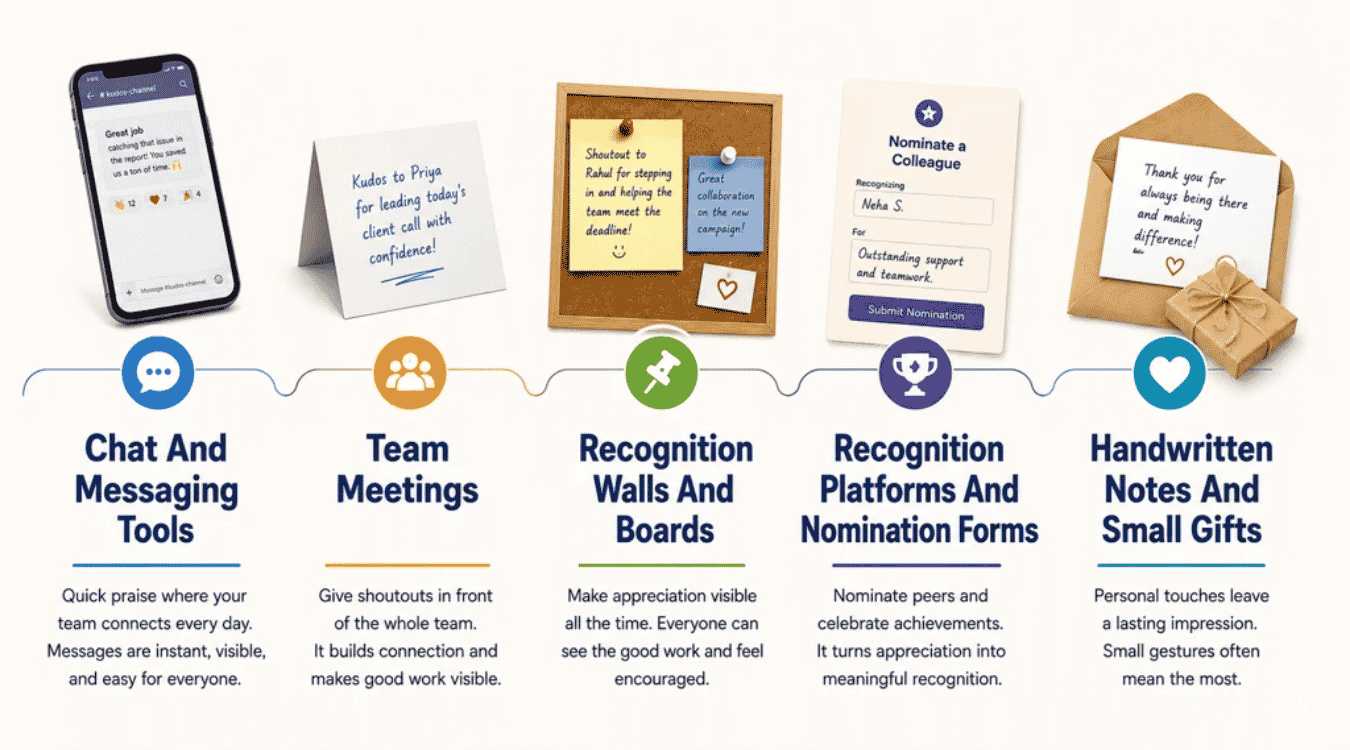
Recognition doesn't need one fixed format. Different channels fit different teams and different moments. Here's how to recognize coworkers across chat tools, meetings, walls, platforms, and small personal gestures.
Chat And Messaging Tools
Slack, Teams, or whatever your team uses daily works great for quick praise. Create a specific chat channel for thanks and recognition, separate from regular work chatter. This keeps recognition visible without cluttering project threads.
A message here takes seconds to send. That speed matters. Peer recognition should be frequent, specific, and accessible, and chat tools hit all three. Remote workers especially benefit, since a message reaches them instantly, no matter their time zone or desk location.
Team Meetings
Dedicate meeting time for peer shoutouts, even just five minutes. This gives coworkers a chance to name something good in front of the whole team. Public recognition during a meeting carries extra weight, since everyone hears it together.
Surprise recognition videos can celebrate peer achievements during meetings too. A short clip from teammates adds energy that a spoken shoutout sometimes misses. Either format works. What matters is making space for it regularly, not just during big wins.
Recognition Walls And Boards
Use a physical or digital recognition wall to make appreciation visible all the time, not just during a meeting. Peer-to-peer shoutouts can be done via bulletin boards or Slack, depending on what fits your office setup.
A wall gives recognition a permanent home. Coworkers walk by and read it, and that visibility fosters a culture of appreciation on its own. Digital versions work just as well for remote or hybrid teams, especially when paired with an employee directory for better team collaboration, keeping the same idea alive online.
Recognition Platforms And Nomination Forms
Peer recognition can be implemented through shout-out boards or nomination forms built into a shared platform. Employees can nominate peers for recognition awards this way, and monthly peer awards can recognize employees in specific categories like teamwork or innovation.
Digital peer badges can be awarded for skills and collaboration too. Recognition platforms, especially all-in-one HR management systems for growing teams, turn scattered praise into something trackable. This helps a company see recognition patterns over time, not just isolated moments.
Handwritten Notes And Small Gifts
Not every channel needs to be digital. Handwritten thank-you notes leave a memorable impact, especially in a world full of quick messages. A short note takes a few minutes but says a lot.
Peer recognition gift exchanges can foster appreciation among colleagues too. Employ small digital perks for recognition when a physical gift isn't practical. Either way, personal touches like these often mean more than any automated message ever could.
When Should Peer Recognition Be Public Or Private?
Not every moment calls for the same spotlight. Some praise belongs in front of the whole team. Some works better one-on-one. Here's how to tell the difference.
Public Recognition For Team Wins
Big, team-wide wins deserve public recognition. A finished project, a hit deadline, or a client win feels bigger when the entire team hears about it together. Public praise also shows new coworkers what good work looks like around here.
Visible recognition fosters a culture of appreciation and connection, and public moments do that best. A shoutout during a meeting, or a post on a shared channel, lets other team members celebrate alongside the person being praised, not just watch from the side.
Private Recognition For Personal Effort
Some effort feels too personal for a public post. A coworker who quietly helped someone through a rough week deserves a private thank you, not a public announcement. Public praise here can feel awkward instead of kind.
A private message respects the moment. It still counts as sincere appreciation, just without an audience. Direct managers and coworkers alike should learn to read this, since forcing public praise onto a private effort can backfire fast.
Reading What The Person Prefers
People differ. Some coworkers love public recognition and light up during a shoutout. Others shrink from it and prefer a quiet note instead. Ask, or simply watch how they react the first time.
This matters more than it sounds. Recognition ideas only work if they fit the receiver, not the giver. A team member who hates the spotlight won't feel employee satisfaction from a big public moment, even if the intent behind it was good.
Mixing Both Formats On One Team
Most teams need both formats, not just one. A public recognition wall works for visible wins. Private notes or quiet messages cover the quieter kind of contribution. Neither format replaces the other.
Micro-recognitions create a culture of gratitude and connection when mixed this way. A team that only does public praise misses quieter coworkers. A team that only does private notes loses the energy of shared celebration. Balance keeps recognition honest.
Letting The Moment Decide
Sometimes the situation itself points to the answer. A save during a client call fits a public shoutout. A personal struggle a coworker pushed through fits a private note instead. Let the moment guide the format, not a fixed rule.
Peer recognition fosters immediate and specific appreciation among employees, and immediacy often matters more than format. When in doubt, a quick private check-in works. Ask the coworker how they'd like it handled before deciding for them.
How To Make Peer Recognition Fair And Genuine
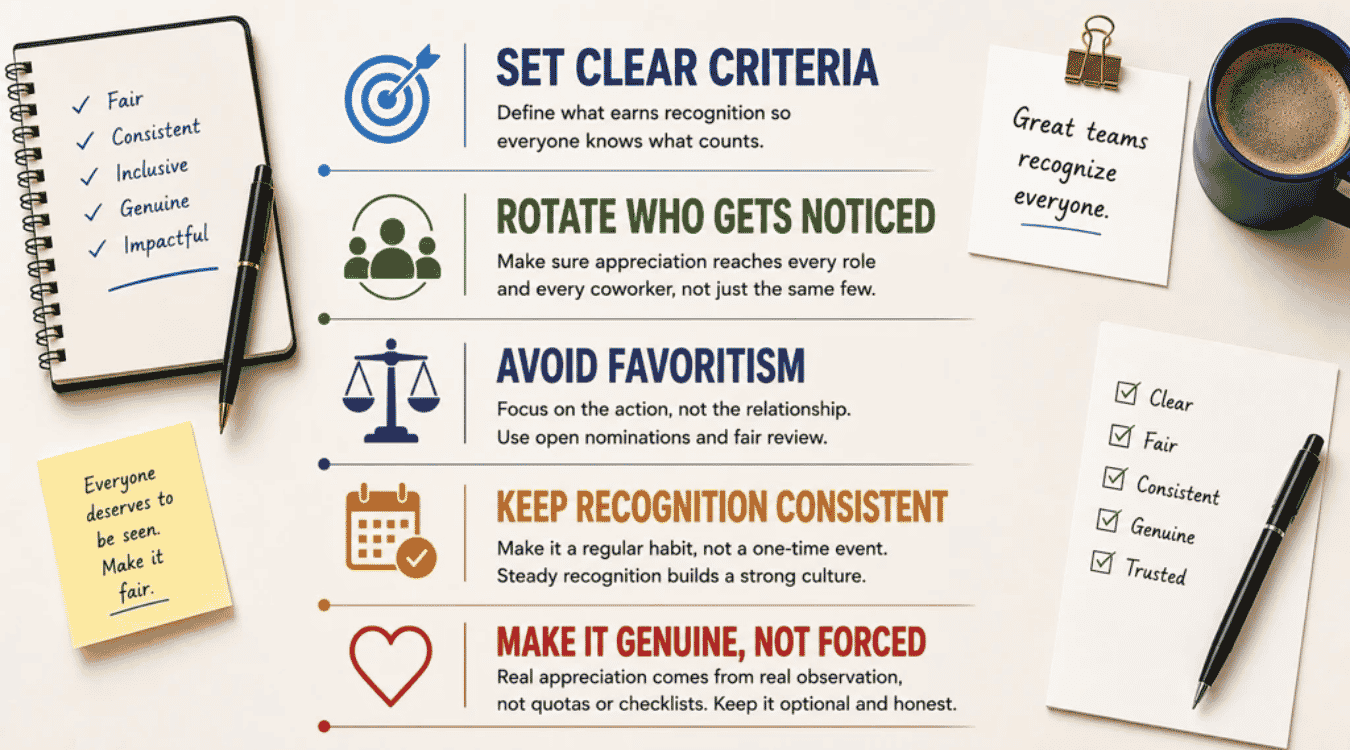
Recognition loses meaning fast when it feels rigged or forced. A fair, genuine peer recognition program takes real thought. Here's how to keep it honest and make sure every coworker gets a real shot at being seen.
Set Clear Criteria
Nobody should guess how recognition works. Expectations about recognition should be consistent and clear for employees, so everyone knows what counts. Write down what earns a shoutout, whether it's outstanding work, teamwork, or going above and beyond on a project.
Clear criteria also protects the program itself. Without it, recognition programs start to feel random, and coworkers stop trusting the process. A simple written guide, shared once, saves a lot of confusion later and keeps organizational values front and center.
Rotate Who Gets Noticed
The same few people often get all the praise. Loud personalities and visible roles tend to win recognition by default, while quiet contributors get overlooked. Watch for this pattern on purpose.
Recognition ideas should stretch across the whole team, not just top performers. Someone handling quiet, unglamorous work still makes a meaningful contribution. Rotating attention across roles builds employee satisfaction team-wide, not just for a handful of standout names.
Avoid Favoritism
Favoritism kills trust fast. If recognition always flows toward the same friend group, other coworkers notice, and morale drops. Fairness means judging the action, not the relationship behind it.
A nomination form helps here. It pulls recognition away from one person's personal picks and opens it to the whole team's input. This protects team morale and keeps peer recognition programs credible, especially on teams where cliques can quietly form over time.
Keep Recognition Consistent
A recognition program that runs hot one month and disappears the next feels unreliable. Consistency matters more than size. A small, steady habit beats one big event that happens once a year.
Make it an ongoing practice, not a one-off push tied to an employee appreciation day. Peer recognition programs enhance employee engagement and morale best when they run continuously, especially when supported by structured employee performance review software and modern employee performance tracking software that keep feedback flowing year-round. Coworkers start to expect it, and that expectation itself becomes part of workplace culture.
Make It Genuine, Not Forced
Recognition tied to a strict quota feels hollow fast. If someone must give five shoutouts a week regardless of real reasons, praise turns generic. Genuine appreciation has to stay optional at its core.
Creative peer recognition includes fun and low-cost ideas that feel real instead of mandatory. Peer recognition improves employee engagement and retention rates only when it comes from real observation, not a checklist. A short, honest note always beats a forced one.
Final Discussion
Peer-to-peer recognition isn't a nice extra. It's part of what pushes a team's success forward. When coworkers reward each other with real, specific praise, the positive impact spreads fast. It motivates employees more than a single manager ever could alone.
Small things add up. Thoughtful messages, a quick shoutout, a handwritten note. None of this takes a big budget or a formal employee recognition program to start. Even without one, these habits move the organization forward.
Collective effort builds a thriving workplace, not one big gesture. Personalized rewards help, but consistency matters more. Valuable contributions deserve to be seen, whether they come from a top performer or someone quietly doing solid work every day. Start small, and let it build. The huge difference shows up over time, not overnight.