Your workforce remains your business's most valuable asset. Scattered employee information creates inefficiencies and frustrates both HR teams and staff members because it lives across multiple spreadsheets and tools. Managing employees effectively drives business growth, regardless of your company's size.
Employee management systems unite all HR processes and create a smoother experience by centralizing data and automating administrative tasks. These detailed solutions help teams spot issues and develop action plans that improve performance. Companies can discover their employees' full potential through coaching and trust-building methods. The software streamlines everything in HR operations from both the employer and employee viewpoints. Time tracking, leave management, and employee record maintenance become easier tasks. In this article, we will explore the essential knowledge you need to select and implement a system that fits your unique business requirements.
What Is An Employee Management System
An employee management system (EMS) is software that centralizes employee data and automates core HR processes. It helps businesses manage people, improve efficiency, and make data-driven workforce decisions.
An EMS acts as a single platform for employee records, attendance, payroll, performance, and compliance. It reduces manual work by automating routine HR tasks and provides real-time insights through reports and analytics. Businesses use it to maintain accurate employee information from hiring to exit.
Different types of systems serve different needs. HRIS focuses on core HR data and payroll. HCM adds recruitment, performance, and employee self-service. HRMS supports strategic workforce planning and talent development. Workforce management tools handle scheduling and attendance.
Companies of all sizes use EMS to save time, ensure compliance, and support smarter people management.
How An Employee Management System Works
Modern businesses run on efficiency. An employee management system acts as the digital engine that powers today's HR departments. These advanced platforms do more than store information - they transform how companies handle workforce data, automate processes, and link business functions together. I've watched the right employee management software cut administrative time by up to seven hours per week for HR staff. This gives them extra time to work on strategic projects that benefit the business.
Centralized Employee Data Management
Every employee management system needs a complete database that combines all workforce information in one secure place. This central hub creates what HR professionals call a "single source of truth" for employee data. It eliminates scattered spreadsheets and the hassle of keeping multiple records.
A solid employee database management system stores this type of information:
- Personal details (contact information, emergency contacts)
- Professional information (job titles, departments, reporting structures)
- Employment history and performance records
- Payroll and compensation details
- Time and attendance records
- Benefits enrollment and eligibility
This unified approach brings clear advantages. It cuts down data redundancy and errors from duplicate entries. Reports and analytics become simpler with all information in one spot. Modern systems also use advanced security measures like multi-factor authentication and data encryption to keep sensitive employee information safe. Also, it's very important for data migration.
Automation Of HR Tasks
The most revolutionary aspect of an employee management system is how it automates manual, time-consuming HR processes. Recent studies show HR automations have grown by 599% in the last two years. HR bots now make up 39% of employee automations.
A good system automates these critical functions:
- Time and attendance tracking with automatic overtime calculations
- Leave management from request submission to approval
- Payroll processing that connects directly with attendance data
- Benefits administration, including enrollment periods and eligibility tracking
- Onboarding workflows with automatic task assignments for new hires
- Performance review scheduling and documentation
This automation reduces human error and speeds up processes. Self-service portals let employees submit time-off requests, check pay stubs, and update their information without HR help. This takes the load off HR teams. The core team can then focus on employee engagement, talent development, and organizational planning.
Integration With Other Business Tools
An employee management system's value grows through its connection with other business software. Good integration creates a smooth ecosystem where data moves naturally between systems. This removes duplicate entries and provides a clear view of operations.
Common integrations connect with:
- Applicant tracking systems (ATS) for recruitment data
- Learning management systems (LMS) for training and development
- Project management tools for workload allocation and tracking
- Accounting software for financial reporting
- CRM platforms for customer-facing activities
- Communication tools for company-wide messaging
These connections deliver real business benefits. Research shows that linking HR technology with other systems leads to 40% higher employee productivity and 38% better employee experience. When payroll systems blend with time-tracking software, businesses see 30% faster processing times and far fewer errors.
The real magic happens when all systems work together to create automation workflows across departments. Take a new hire process - an integrated system automatically sets up email accounts, schedules training, orders equipment, and starts payroll. What used to take days now happens in minutes.
Key Features Of A Modern Employee Management System
Modern businesses need more than simple employee record-keeping. A good employee management system comes with specialized features that solve specific organizational challenges and boost productivity across departments. Let's look at the essential components that make modern employee management solutions powerful tools for businesses of all sizes. These features create a cohesive ecosystem that supports both HR teams and employees and drives better business outcomes through streamlined processes and better communication between all stakeholders.
Employee Attendance Management System
Time and attendance tracking are the foundations of workforce management. Modern attendance systems have grown beyond simple time cards to offer detailed tracking capabilities that ensure accuracy and compliance. These systems help businesses track employee hours, calculate overtime, and spot attendance patterns that affect productivity.
Mobile check-in features let remote and field employees log their hours right from their smartphones, especially when you have teams working across multiple locations. Biometric verification through facial recognition or fingerprint scanning stops "buddy punching" and other time fraud that costs businesses thousands of dollars each pay period.
Real-time tracking gives immediate visibility into who's present, absent, or working remotely, which helps managers make quick staffing decisions. Automated notifications tell supervisors about unusual absence levels, so they can step in before small problems become big issues.
Employee Leave Management System
A good leave management system makes what used to be a complex, paper-heavy process much simpler. Modern systems automate everything from request submission to approval, which saves a lot of administrative time.
Employees can submit time-off requests through digital platforms while managers get real-time notifications to approve or deny them. The system then updates schedules and payroll calculations automatically, keeping accurate records without manual work.
These systems help businesses stay compliant with labor laws, including FMLA and state-specific rules. You can set up customizable rules to enforce policies based on employee eligibility, leave types, and accrual balances.
Performance Tracking And Reviews
Performance management tools have changed how organizations assess and develop talent. Unlike yearly reviews, modern systems support ongoing feedback and goal tracking throughout the year.
Pew Research Center found that employees who get frequent feedback are happier at work. Modern performance tools make this possible through real-time feedback, 360-degree reviews, and automated reminders that encourage regular check-ins between managers and team members.
These systems let organizations set measurable goals that match company objectives, track key performance indicators, and find coaching opportunities. Companies that use structured performance systems end up with 27% better goal completion rates over several years.
Payroll And Benefits Integration
Connecting payroll with your employee management system cuts out duplicate data entry and reduces processing errors by a lot. This connection ensures that attendance data, leave requests, and performance incentives flow straight into payroll calculations.
Companies using integrated payroll and scheduling systems spend 30% less time on processing. This integration also makes things more accurate; research shows 80% of manually submitted timesheets have errors that can lead to expensive payroll mistakes.
Benefits management becomes easier through integration. Automated systems handle enrollment periods, eligibility tracking, and deduction calculations while giving employees a clear view of their benefits packages. This clarity makes employees happier while keeping everything compliant with regulations.
Employee Self-Service Portals
Self-service portals enable employees to manage their own information without always asking HR. Staff can update personal details, submit time-off requests, check pay information, and handle benefits enrollment on their own.
This self-service approach works really well, cutting administrative time for HR teams by 85%. Employees can access their information anytime from any device, which gives them more control over their employment data.
Advanced portals include communication tools, document sharing, and AI assistants that answer common questions automatically. These features create a user-friendly employee experience that gets people more involved while reducing work for HR departments.
Benefits Of Using An Employee Management System For Businesses
Companies that invest in employee management systems gain advantages beyond simple administrative convenience. These powerful platforms change organizations by making operations smoother, improving workforce output, and building better company cultures. Smart business owners know good employee management will affect their profits through lower overhead costs, better talent retention, and improved operations. These complete solutions are the foundations for creating workplaces where employees and management succeed together.
Improved HR Efficiency
A well-laid-out employee management system cuts down the administrative load that burdens HR departments. Organizations that employ automation technology reduce operational costs and see productivity improvements between 15% and 20%. Teams save time by eliminating manual data entry tasks.
HR teams see major benefits when routine tasks become automated:
- Time and attendance tracking merge naturally
- Leave management runs without constant oversight
- Payroll processing connects directly with attendance data
- Benefits administration handles enrollment periods automatically
Yes, businesses using these systems indeed see an 85% reduction in administrative time for HR departments. HR professionals can now focus on strategic work like talent development and organizational planning instead of paperwork.
Better Employee Engagement
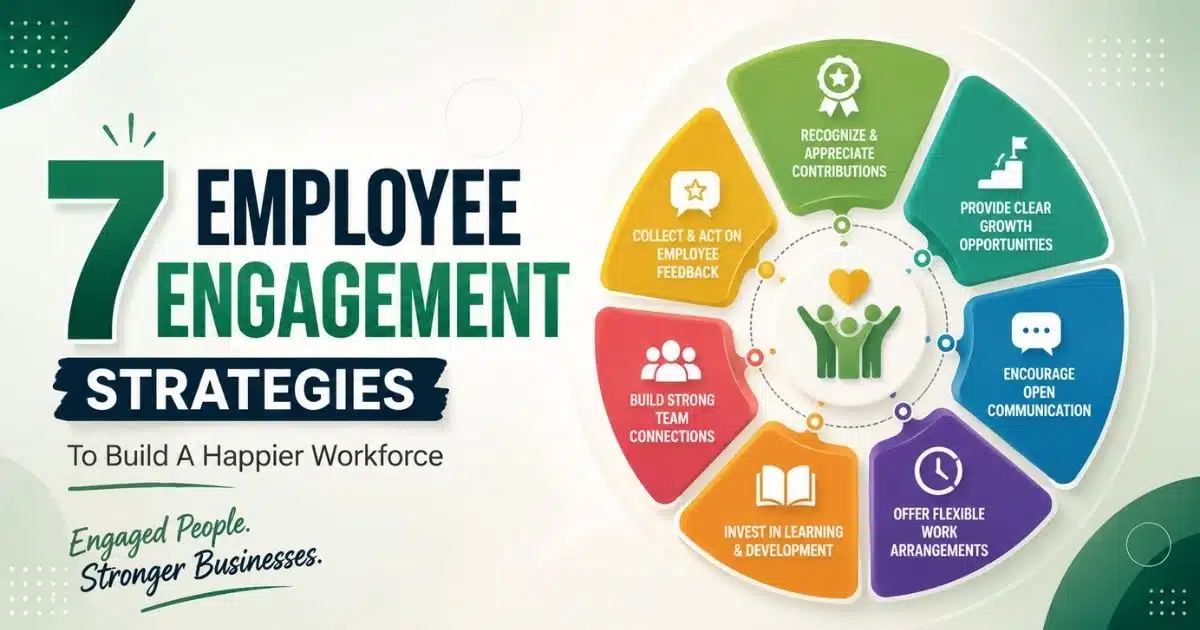
Employee engagement means more than simple satisfaction; it shows how emotionally connected and committed employees are to their organization. A good management system improves engagement through self-service options, feedback systems, and recognition programs.
Research shows that highly engaged teams are 17% more productive and have 41% less absenteeism. Employee management systems encourage this engagement with tools that keep staff connected and informed. The self-service portal enables employees to handle their information without HR help, which creates more transparency and control over their employment data.
Live feed features let employees talk to coworkers anytime, opening communication channels that create stronger workplace bonds. Employees who get regular feedback through structured systems report higher job satisfaction throughout their careers.
Data-Driven Decision Making
Modern employee management systems offer powerful analytical capabilities. Today's platforms create complete reports that provide practical workforce insights.
Forrester Research found that businesses using data management tools to make decisions are 58% more likely to reach their revenue goals than companies that don't use data. These analytics help leaders spot trends, distribute resources better, and make evidence-based decisions about hiring practices and benefits offerings.
HR analytics helps organizations learn about their workforce by exploring performance metrics, engagement factors, and productivity patterns. Companies can identify top performers, future leaders, and areas that need improvement through data analysis.
Better Compliance And Security
Labor regulations create big challenges for businesses of all sizes. Employee management systems include built-in compliance features that automatically handle local labor and taxation laws.
These systems protect sensitive employee information through strong security measures like multi-factor authentication, data encryption, and fraud detection, critical protections in today's digital world. The centralized database system approach to data management will give a business accurate records that they can quickly access during audits or reviews.
Automated compliance checks help businesses monitor employee data in real-time and stay compliant with labor laws, including overtime regulations and minimum wage requirements. This proactive approach reduces the risk of expensive penalties from accidental non-compliance.
Employee Management System Vs Manual HR Processes
Every business faces a crucial choice at some point: stick with traditional manual HR processes or welcome a modern employee management system. This choice doesn't just affect your HR department's daily operations - it shapes your entire organization's success. Manual processes might feel comfortable and familiar at first, but they hide costs that eat away at your bottom line. Let's see how these two approaches match up when it comes to time investment, accuracy, and knowing how to grow with your business needs.
Time And Cost Comparison
The financial effects of manual HR processes are way beyond the reach and influence of what you might expect. Recent EY research shows that a single manual data entry task now gets pricey at USD 4.86 on average. Over the last several years, this number jumped from USD 4.39 in 2018 to where it stands today. But this is just the beginning.
Regular HR tasks cost even more when done by hand:
- USD 9.42 each time staff look up their information
- USD 15.06 to review and approve shift swaps
- USD 17.54 to verify timecard accuracy
- USD 20.83 to create payroll
These costs add up faster across an organization. The American Payroll Association shows companies that switch to automated systems cut payroll processing costs by up to 80%. Small business owners spend about 8 hours monthly on payroll tasks alone, nearly 100 hours yearly they could use to make money instead.
Error Rates And Accuracy
Manual processes naturally lead to human errors in critical HR functions. The numbers tell the story: 94% of business spreadsheets have critical errors that throw off budgets and create payroll mistakes. These errors cost real money: the U.S. economy loses about 50 million hours yearly to timesheet errors, which means USD 7.40 billion daily.
Automated employee management systems are nowhere near as error-prone:
- Each payroll error costs USD 291 to fix
- Manual processes show error rates between 1-8%
- Automated systems are accurate 99.9% of the time
- 80% of hand-submitted timesheets contain errors that lead to expensive payroll mistakes
Better accuracy means better compliance and security. Paper records increase the risk of missed deadlines or wrong information, which can mean legal fines or compliance issues. Automated systems cut these risks by ensuring correct calculations and on-time submissions.
Scalability And Flexibility
Manual HR processes just don't work as organizations grow. A system that works for 10 people becomes a headache with 100 and impossible with 1,000. Running HR tasks manually usually means hiring more people as you grow, directly linking expansion to higher costs.
Employee management systems are adaptable:
- They handle mass onboarding, performance management, and benefits administration without needing more resources
- Cloud-based systems let businesses add users, locations, or departments with minimal changes
- Optimized workflows eliminate administrative work that typically grows with company size
This adaptability is a great way to get value, especially when you have distributed or remote teams. Manual processes fall short in these settings because managers struggle to track timesheets and coordinate across locations. Automated systems provide immediate visibility, whatever the physical location, supporting today's flexible work arrangements without losing efficiency.
Modern employee management systems help businesses adapt quickly to change, whether it's growth opportunities, new regulations, or changes in workforce distribution, without the roadblocks common in manual processes.
Role Of An Employee Management System In Payroll And Attendance
Payroll and attendance management play a vital role in employee satisfaction and operational compliance. These two essential functions often take up most resources in HR departments. Manual handling makes them prone to errors. A good employee management system fixes this problem with automation that turns complex, time-consuming tasks into efficient processes needing minimal oversight.
Automated Payroll Processing
Automation transforms how businesses run payroll within an employee management system. Modern employee management software integrates payroll processing with attendance tracking, time tracking, and employee records, removing double entry and repetitive administrative work. Hr teams gain better control over payroll accuracy while improving operational efficiency and compliance support. Companies that automate payroll often boost productivity and reduce hr tasks by relying on automated workflows instead of manual calculations.
By connecting payroll with employee data, organizations ensure accurate payments, updated tax rules, and consistent employee benefits administration. Automated systems help track attendance, manage leave requests, and run payroll on time without dependency on specific staff. This approach supports better decisions, reduces payroll errors, and allows hr professionals to focus on strategic initiatives that improve employee experience and overall workforce management.
Real-Time Attendance Tracking
Outdated attendance tracking methods slow the connection between work hours and payroll. A modern employee role management system improves attendance tracking by capturing real-time employee data and syncing it directly with payroll processing. Using employee management software, hr teams can track attendance through mobile apps, biometric tools, and digital timecards, which reduces administrative work and improves operational efficiency.
Managers gain clear visibility into hours worked, overtime, and scheduling exceptions. The system helps identify attendance issues early, supports compliance requirements, and enables better decisions across workforce management. Real-time tracking also helps manage remote employees and office-based teams while improving employee experience. By automating attendance management, organizations boost productivity, reduce payroll errors, and create a more reliable employee management solution for daily operations.
Leave And Overtime Calculations
Getting overtime right is one of HR's toughest jobs. The Fair Labor Standards Act requires employers to track hours carefully and apply the correct overtime rates. Employee management systems handle these complex calculations automatically for different pay structures.
These systems track both regular hours and manage leave balances for sick time, vacation, and parental leave. This complete approach takes the guesswork out of absence management and ensures correct balance deductions.
The system works as one unit where attendance data flows straight into payroll, capturing work hours, leaves, and overtime in seconds. This connection reduces administrative work and helps companies follow labor laws that could otherwise cause legal issues.
How An Employee Management System Improves Productivity
Outdated processes and endless paperwork often hold back workplace productivity when employees should focus on meaningful work. Your team can multiply its productivity with an employee management system that frees it from repetitive tasks and creates efficient operations. Companies have transformed their efficiency almost overnight after finding the right solution. The numbers are impressive - businesses using up-to-the-minute data analysis through these systems have improved their operational efficiency by up to 20%.
Streamlined Workflows
Employee management systems completely change how work flows through an organization. These platforms create well-laid-out digital pathways where tasks automatically move to the right people at the right time, replacing desk-to-desk paper passing and endless email chains.
Real-life applications show clear results. A mid-sized manufacturing company in Detroit switched from paper-based processes to a complete employee management system. They cut their administrative time by 70%. Companies using real-time data make decisions 30% faster, proving these efficient workflows do more than just save time.
Teams work together more effectively when all employee information stays in one available location, breaking down physical location and department boundaries.
Reduced Administrative Burden
Manual hr tasks drain time and limit productivity across the organization. A modern employee management system reduces administrative work by automating routine processes such as employee records updates, attendance tracking, leave requests, and payroll processing. With employee management software, hr teams shift focus from data entry to strategic initiatives that improve employee experience and workforce performance.
Managers spend less time on paperwork and more time on performance management and employee engagement. Employees use self-service tools to manage benefits, access employee data, and submit requests without delays. Automation boosts productivity, improves operational efficiency, and helps businesses control costs while supporting smarter employee management.
Faster Onboarding And Offboarding
Efficient employee transitions improve productivity and reduce risk. A modern employee management system simplifies onboarding and offboarding through automated workflows that replace manual coordination across human resources, IT, and finance. Using employee management software, hr teams automate form distribution, task assignments, system access, and equipment setup while maintaining compliance, support, and security.
New employees complete required steps faster through self-service tools, which improves employee experience from day one. During offboarding, automation protects employee data, ensures access removal, and completes payroll processing on time. This approach reduces administrative tasks, boosts operational efficiency, and helps organizations manage workforce transitions with confidence.
Challenges Businesses Face Without An Employee Management System
Outdated manual HR processes create more than just inefficiencies - they pose a serious business risk that quietly diminishes your company's efficiency and morale. Organizations without proper employee management systems face systemic problems that affect their profits. These issues often remain hidden until they escalate into major challenges.
Manual Errors And Data Loss
Human error in HR operations leads to staggering financial losses. Research shows that 94% of business spreadsheets have critical errors that distort budgets and create payroll inaccuracies. Each payroll mistake costs USD 291 to fix, and 20% of payrolls contain errors. A company with 1,000 employees could face roughly 2,640 errors per year, resulting in USD 768,240 spent just to correct payroll problems.
Compliance Risks
Legal compliance becomes a major challenge without automated systems. Companies face I-9 form errors in 12% of cases, with correction costs of USD 8.32 per form. Uncaught errors can trigger federal penalties ranging from USD 220 to USD 2,191 for each incorrect form. A 500-employee company with 60 faulty I-9 forms risks fines up to USD 131,460.
Low Employee Satisfaction
Manual processes take a heavy toll on HR teams and employees alike. A striking 98% of HR professionals report burnout, while 42% struggle with emotional exhaustion as their primary challenge. This burnout cascades through the workforce and creates frustration through delayed approvals, missing payslips, and poor onboarding experiences.
How Payrun Helps With Employee Management System Needs
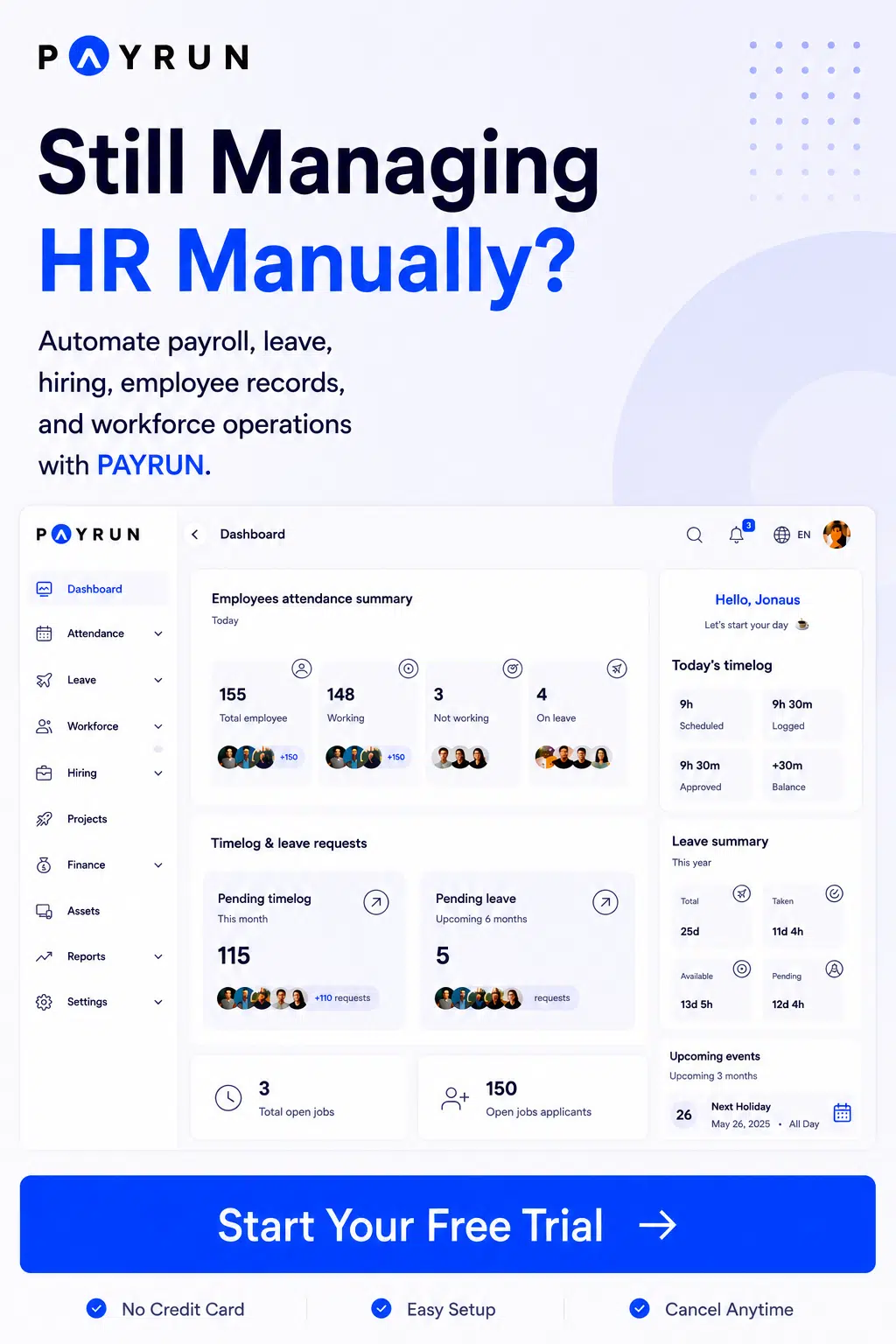
Choosing the right employee management solution can feel overwhelming, but Payrun works as a game-changer for growing businesses. This cloud-based employee management system brings core human resources, payroll, and workforce operations into a single platform. It helps hr professionals reduce administrative tasks, control costs, and boost productivity while improving the overall employee experience. By replacing manual tools like spreadsheets or Google Docs, the system supports better decisions through actionable insights, predictive analytics, and compliance support.
Payrun’s employee management software centralizes employee records, employee data, and the employee directory with strong data encryption and security. Hr teams can manage attendance tracking, time tracking, leave requests, hiring, performance management, benefits administration, and payroll processing without double entry. Automated workflows, self-service access, and built-in communication improve employee engagement, employee feedback, and well-being. Managers and individual contributors gain valuable insights to identify ways to improve operations, run payroll efficiently, and support strategic initiatives across the organization.
FAQs
What Is The Purpose Of An Employee Management System?
An employee management system centralizes workforce information and automates HR processes. It reduces administrative burdens, improves compliance, and makes informed decisions for business strategy.
Can An Employee Management System Handle Remote Teams?
Yes, modern systems like Payrun have mobile apps and remote tracking features that support distributed workforces. These tools maintain a continuous connection, regardless of the employee's location. They ensure consistent HR processes for both office and remote staff.
What Are The Key Benefits Of Implementing An Employee Management System?
An employee management system centralizes workforce data, automates HR processes, improves compliance, and provides valuable insights for strategic decision-making. It reduces administrative burdens, increases efficiency, and allows HR teams to focus on more strategic initiatives.
How Does An Employee Management System Differ From Traditional HR Software?
Unlike traditional HR software that may focus on specific tasks, an employee management system offers a comprehensive solution. It integrates various HR functions like attendance tracking, leave management, performance reviews, and payroll processing into a single platform, providing a more holistic approach to workforce management.
Can Small Businesses Benefit From An Employee Management System?
Yes, small businesses can greatly benefit from employee management systems. These systems often offer scalable solutions that can grow with the company, helping small businesses streamline HR processes, improve accuracy, and maintain compliance without the need for a large HR department.
How Does An Employee Management System Support Remote Work?
Modern employee management systems include features like mobile apps, remote time tracking, and digital communication tools. These capabilities ensure that HR processes remain consistent and efficient for both in-office and remote employees, supporting flexible work arrangements.
What Factors Should Be Considered When Choosing An Employee Management System?
When selecting an employee management system, consider your specific business needs, user-friendliness, scalability, integration capabilities with existing software, compliance features, and cost. It's also important to evaluate the vendor's customer support and the system's ability to adapt to your company's growth and changing requirements.