How An HR Chatbot Supports Better Employee Experience
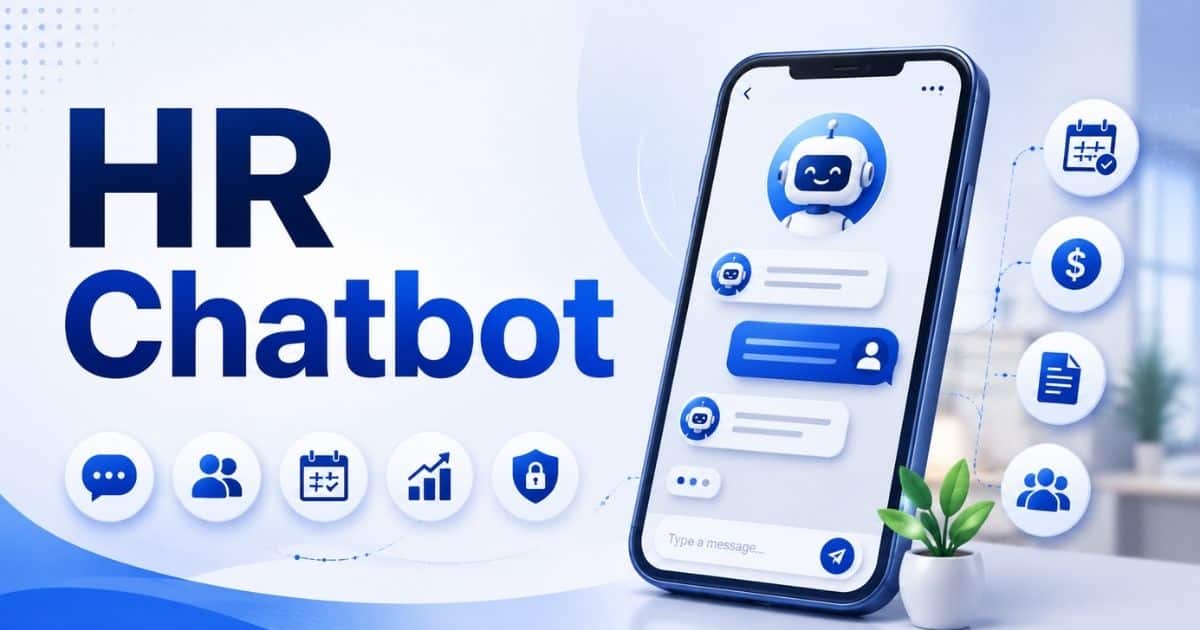
Table of Contents
HR teams handle hundreds of repetitive questions every week. Employees ask about leave balances, payroll dates, attendance policies, onboarding steps, and many other routine tasks. Manual replies take time and slow down daily operations. That is where an HR chatbot starts to make a real difference.
An HR chatbot helps businesses provide faster support without adding extra workload to HR teams. Employees get instant answers at any time, while HR professionals can focus on more important tasks. From recruitment to employee engagement, chatbot technology now plays a major role in modern workplaces.
This guide covers everything about HR chatbots, including features, benefits, use cases, challenges, and future trends.

What Is An HR Chatbot And How Does It Work
An HR chatbot is an AI-powered tool that helps HR teams manage routine HR tasks and improve employee support. It can answer questions, handle leave requests, support onboarding processes, and guide new employees through account setup. Many HR professionals now use HR chatbot solutions inside Microsoft Teams and other existing systems for faster communication. Advanced chatbots also use natural language processing and machine learning to provide accurate answers in real time.
Modern HR departments use one HR chatbot to automate employee queries, reduce support tickets, and improve operational efficiency. An HR bot connects with existing HR systems to manage HR processes like interview scheduling, scheduling interviews, employee feedback, and managing leave requests. AI-powered HR automation also helps global HR teams provide round-the-clock support across different time zones while improving employee experience and employee satisfaction.
Key Benefits Of HR Chatbot Solutions For Modern Businesses
Modern businesses need faster HR support and better operational efficiency. Manual HR processes often create delays, increase operational costs, and reduce employee satisfaction. An HR chatbot helps HR teams shift from manual to smart HR by automating repetitive tasks, supporting employees in real time, and improving employee experience across global teams.
Faster Employee Support
Employees expect quick answers to routine HR questions. Delayed replies often frustrate new hires and existing staff. An HR chatbot gives instant employee support for leave requests, company policies, payroll details, and employee queries.
Research shows AI chatbots can automate up to 70% of repetitive requests and reduce query resolution time by nearly 50%. HR professionals can also provide round-the-clock support across different time zones. This improves employee satisfaction and helps global HR teams maintain better communication.
Lower HR Workload
HR departments spend hours every week on repetitive tasks and administrative processes. Questions about benefits, onboarding processes, and interview scheduling often consume valuable time. An HR bot helps automate employee queries and reduce manual workload.
A 2025 Gartner report found HR teams spend around 9 to 14 hours each week answering common employee questions. AI-powered HR automation allows HR leaders to focus on strategic initiatives like workforce planning and employee engagement. Better task automation also improves operational efficiency during peak periods.
Better Hiring Efficiency
The hiring process involves many routine tasks. HR teams must manage scheduling interviews, candidate communication, onboarding processes, and support tickets. Guides to the best recruitment software show how an AI-powered HR chatbot simplifies many of those tasks without extra effort.
Studies show HR automation can reduce time to hire and improve recruitment processes through workflow automation. AI agents can answer questions from candidates, schedule interviews, and support new employees during onboarding. Faster communication also creates a better employee experience from the first interaction.
Stronger Employee Experience
Employees want fast and accurate answers without waiting for human intervention. Modern HR services now focus heavily on employee experience and employee engagement. One HR chatbot can support employees through multiple channels, including Microsoft Teams.
Advanced chatbots use natural language processing and machine learning to deliver personalized support. Employees can access HR policies, pulse surveys, and account setup details in seconds. Emerging HR automation trends transforming workplaces show omni-channel support also helps ensure employees receive the same experience across different platforms and devices.
Higher Cost Savings
Manual HR operations increase operational costs over time. Large support teams, delayed responses, and disconnected HR systems often create unnecessary expenses. An HR chatbot helps businesses reduce routine tasks and improve seamless integration with existing HR systems.
Reports show HR chatbots can deflect 60% to 80% of Tier 1 employee questions. That level of automation creates major cost savings for HR departments. Businesses also reduce errors in administrative processes and improve accurate answers through AI-powered automation. Many providers even offer a free trial before full implementation.
HR Chatbot Use Cases Across Recruitment, Payroll, And Employee Support
An HR chatbot now supports much more than basic employee queries. Businesses use AI-powered HR tools across recruitment processes, payroll support, employee engagement, and workforce management. Smart automation helps HR teams reduce repetitive tasks while improving employee experience and operational efficiency.
Candidate Screening And Hiring
Recruitment teams often manage hundreds of applications for one role. Manual screening slows the hiring process and increases time to hire. Modern recruitment software systems and HR chatbots help HR professionals automate candidate communication and answer questions instantly.
AI-powered chatbots can collect employee data, shortlist candidates, and support scheduling interviews. Many HR departments also use chatbots inside Microsoft Teams for faster collaboration or pair them with recruitment management software. Reports show companies that use HR automation reduce hiring delays by up to 40%. Guides to the best recruitment software echo how faster interview scheduling improves candidate experience and helps HR leaders manage recruitment processes more efficiently.
Payroll And Leave Support
Employees regularly contact HR support for payroll updates, leave requests, and company policies. Those routine tasks consume valuable time for HR teams. An HR bot can automate employee queries and provide accurate answers in seconds.
Modern AI chatbot platforms connect with existing HR systems and payroll tools through seamless integration. Employees can check salary dates, tax documents, and leave balances without human intervention. Comprehensive all-in-one HR platforms further streamline these workflows. Studies show businesses that automate administrative processes reduce operational costs significantly. Real-time support also helps global teams receive faster HR services across multiple time zones.
Employee Onboarding Support
New hires often need help with onboarding processes, account setup, and HR policies. Delayed responses create confusion during the first few weeks. One HR chatbot can guide new employees step by step without extra manual effort.
Advanced chatbots provide round-the-clock support for document submission, training schedules, and policy access. AI-powered HR automation also helps ensure employees complete important tasks on time as part of a broader employee lifecycle management strategy. Research from Gallup shows strong onboarding improves employee retention by over 80%. Better onboarding processes also improve employee satisfaction and create a smoother employee experience.
Employee Engagement And Feedback
Employee engagement remains a major priority for HR leaders. Many companies now use AI agents to collect employee feedback and support pulse surveys. Fast communication helps HR departments identify workplace concerns earlier.
An HR chatbot can answer questions, collect feedback, and support multilingual support for global HR teams. Employees often feel more comfortable sharing honest feedback through automated HR systems, which feeds into broader employee lifecycle management strategies. Reports show highly engaged employees improve productivity by nearly 21%. Better engagement also supports workforce planning and long-term operational efficiency across large organizations.
24/7 HR Help Desk Support
HR teams cannot always respond instantly during weekends, holidays, or peak periods. Delayed replies often increase support tickets and reduce employee satisfaction. AI-powered HR chatbots now provide omni-channel support across websites, mobile apps, and existing systems, delivering many of the core HR automation benefits organizations seek.
Machine learning helps advanced chatbots understand natural language processing and improve responses over time. Employees can access HR services, ask routine questions, and receive support anytime. Pairing chatbots with robust employee management software helps businesses reduce repetitive tasks and improve cost savings. Free trial options from many providers also help companies test the best HR chatbot before full deployment.
Key Features To Look For Before You Choose An HR Chatbot
Not every HR chatbot delivers the same level of performance. Some tools only answer basic employee queries, while advanced chatbots support full HR automation and workflow management. Businesses should focus on features that improve employee experience, operational efficiency, and long-term scalability.
Natural Language Understanding
Employees ask questions in different ways. A smart HR chatbot should understand human conversations without requiring exact keywords. Natural language processing helps AI-powered chatbots provide accurate answers and improve employee support.
Modern HR systems now use machine learning to understand context, employee intent, and follow-up questions. Research from IBM shows AI chatbots with advanced language models improve response accuracy by more than 85%. Better communication also reduces repetitive tasks for HR professionals. Employees receive faster support for leave requests, company policies, and onboarding processes without confusion.
Seamless System Integration
An HR bot should work smoothly with existing HR systems and business tools. Poor integration creates disconnected data and slows HR operations. Strong seamless integration improves operational efficiency and employee experience.
Many businesses now connect HR chatbot platforms with payroll software, Microsoft Teams, recruitment tools, and workforce planning systems. AI-powered HR automation also depends heavily on smooth data sharing between existing systems. Reports show companies with connected HR services reduce manual administrative processes by nearly 30%. Replacing disconnected tools with a unified HR platform further simplifies system integration. Better integration also helps global HR teams manage support across different departments and time zones.
Multi-Channel Employee Support
Employees use multiple communication platforms every day. One HR chatbot should provide omni-channel support through websites, mobile apps, email, and collaboration tools. Easy access improves employee satisfaction and HR support quality.
Advanced chatbots now support real-time support across platforms like Microsoft Teams and Slack. Employees can answer questions, submit support tickets, and access HR services from one place. Studies show businesses with strong multi-channel support improve employee engagement significantly. Pairing these channels with centralized employee management software ensures information stays consistent everywhere. Better accessibility also helps new hires and remote employees receive faster assistance during peak periods.
Automation And Workflow Tools
Routine HR tasks often consume hours every week. A good AI chatbot should support task automation, workflow automation, and automating tasks across different HR functions. Automation helps HR leaders reduce operational costs and improve productivity.
Modern AI agents can automate employee queries, interview scheduling, onboarding processes, and managing leave requests. Businesses also use HR workflow automation for employee feedback, pulse surveys, and recruitment processes. According to Deloitte, organizations that invest in AI-powered HR tools improve operational efficiency faster than competitors. Automation also allows HR departments to focus more on strategic initiatives instead of repetitive tasks.
Security And Compliance Controls
Employee data security should never become an afterthought. HR departments manage sensitive employee information every day. A secure HR chatbot must follow data privacy regulations and protect confidential records.
Businesses should check encryption standards, access controls, audit logs, and compliance certifications before choosing the best HR chatbot. Human intervention options also matter when employees need support beyond automation. Research from Cisco shows data breaches now cost companies millions each year on average. Practical guidance on employee data protection in HR systems reinforces how strong security features help ensure employees trust AI-powered HR systems and feel safe while using digital HR services.
How HR Chatbot Automation Improves Employee Experience And Productivity
Employee expectations continue to rise in modern workplaces. People want quick HR support, faster communication, and smooth workplace experiences. An HR chatbot helps businesses automate routine HR tasks, improve employee engagement, and increase productivity without adding extra pressure on HR teams.
Faster Answers For Employees
Employees often wait hours or even days for basic HR support. Questions about leave requests, payroll dates, and company policies can slow daily work. An HR chatbot provides accurate answers instantly through real-time support and is a key part of the journey from manual to smart HR.
AI-powered chatbots use natural language processing and machine learning to understand employee queries more effectively. Employees can answer questions and access HR services anytime without human intervention. Research from Salesforce shows 73% of workers expect better digital support tools at work. Faster responses improve employee satisfaction and reduce frustration across HR departments.
Less Manual Work For HR Teams
HR professionals spend a large part of their week handling repetitive tasks and administrative processes. Manual workflows reduce productivity and increase operational costs. HR automation benefits help empower HR teams by reducing unnecessary workload.
Modern AI agents can automate employee queries, onboarding processes, interview scheduling, and managing leave requests. Businesses also use workflow automation to improve recruitment processes and employee support, often guided by dedicated HR workflow automation strategies. According to Gartner, automation now handles many Tier 1 HR requests without additional staff. Better task automation allows HR leaders to focus more on workforce planning and strategic initiatives.
Better Support Across Global Teams
Global teams often work across different time zones. Traditional HR support cannot always provide round-the-clock support for every employee. One HR chatbot helps businesses deliver consistent employee support across multiple regions, aligning with broader HR automation trends.
Advanced chatbots support multilingual support and omni-channel support through mobile apps, websites, and Microsoft Teams. Employees can access HR systems and existing systems from almost anywhere. Faster communication also improves employee experience for remote workers and new hires. Better accessibility helps ensure employees receive support during peak periods without delays.
Smoother Employee Onboarding
New employees often need help during their first few weeks. Delayed onboarding processes create confusion and reduce employee engagement. An HR bot can guide new hires through account setup, policy access, and training schedules.
AI-powered HR systems also support document collection, support tickets, and answering frequently asked questions. Studies from Glassdoor show strong onboarding improves employee retention by over 80%. Better onboarding experiences improve employee satisfaction and help HR departments reduce repetitive onboarding tasks, especially when supported by dedicated employee onboarding software. Seamless integration with existing HR systems also creates smoother communication across teams.
Higher Workplace Productivity
Employees lose valuable time when they search for HR information manually. Delayed approvals and disconnected systems also affect operational efficiency. An HR chatbot helps employees complete routine tasks faster and stay focused on important work.
Businesses now use advanced chatbots for employee feedback, pulse surveys, HR policies, and HR functions. AI chatbot tools also improve cost savings by reducing support workload and operational delays. Reports from McKinsey show AI-powered workplace automation can improve productivity by up to 40% in some business operations. Structured HR process improvement alongside better HR processes creates a more efficient and productive workplace for everyone.
Common Challenges And Limitations Of HR Chatbot Implementation
An HR chatbot can improve employee support and operational efficiency, but implementation is not always simple. Many businesses struggle with integration, employee trust, and system accuracy during deployment. Clear planning helps HR teams avoid common problems and improve long term results.
Limited Human Understanding
An AI chatbot can answer many routine employee queries, but it may still struggle with emotional or sensitive conversations. Employees often expect empathy during workplace conflicts, payroll issues, or personal concerns. Human intervention remains important for complex HR support cases.
Natural language processing and machine learning continue to improve, but advanced chatbots still make mistakes with unclear questions. Research from Gartner shows nearly half of employees still prefer human interaction for sensitive HR services. HR professionals should use AI-powered HR tools as support systems instead of full replacements for human communication.
Integration Problems With Existing Systems
Many HR departments use multiple software platforms for payroll, recruitment processes, and workforce planning. Poor seamless integration between existing HR systems and one HR chatbot often creates data gaps and workflow issues.
Disconnected systems can delay leave requests, onboarding processes, and interview scheduling. HR leaders also face challenges when transferring employee data between tools. Studies show integration problems remain one of the biggest barriers to HR automation adoption. Following a structured HR software rollout guide helps businesses test compatibility with existing systems before selecting the best HR chatbot for long term HR operations.
Employee Trust And Privacy Concerns
Employees share sensitive employee data with HR systems every day. Data privacy regulations now require businesses to protect information carefully. Poor security practices can damage employee satisfaction and reduce trust in HR services.
AI-powered chatbots must include strong encryption, access control, and compliance features. Employees also want transparency about how AI agents use and store information. According to Cisco, privacy concerns continue to influence workplace technology adoption globally. HR teams should explain security policies clearly to help ensure employees feel comfortable with AI-powered HR automation.
High Setup And Training Costs
Many businesses expect instant results after deploying an HR bot. Real implementation often requires setup time, employee training, and workflow customization. Following a structured HR software rollout plan can help manage these stages effectively. Operational costs may increase during the early stages of deployment.
Global HR teams also need multilingual support, omni-channel support, and role-based permissions for different departments. Advanced chatbots may require additional customization for HR functions and administrative processes. Reports from Deloitte show many companies underestimate implementation costs during AI adoption. A free trial can help businesses test features before making large investments in HR automation tools.
Accuracy And Response Limitations
Employees expect accurate answers from HR chatbot platforms. Incorrect responses about company policies, payroll details, or employee benefits can create confusion and frustration. AI-powered systems still depend heavily on quality training data.
Routine tasks like answering frequently asked questions usually work well. Complex HR processes may still require HR professionals for final decisions. Peak periods can also affect response quality if systems are poorly optimized. Avoiding common HR software mistakes and monitoring support tickets, employee feedback, and employee engagement regularly helps improve chatbot performance over time.
Best Practices To Build A Secure And Effective HR Chatbot Strategy
A successful HR chatbot strategy needs more than basic automation features. Businesses must focus on security, employee experience, system integration, and long-term scalability. Clear planning helps HR teams improve operational efficiency while avoiding common implementation risks and compliance issues.
Set Clear HR Goals
Many businesses adopt AI-powered HR tools without clear objectives. Poor planning often creates confusion and weak results. HR leaders should define what the HR chatbot needs to achieve before implementation starts.
Some companies focus on employee support, while others prioritize recruitment processes or onboarding processes across the entire employee lifecycle management. Clear goals help HR professionals choose the right HR functions and workflow automation features. Research from Deloitte shows businesses with defined AI strategies achieve better operational efficiency and stronger employee satisfaction. Aligning those strategies with emerging HR automation trends also helps global HR teams measure cost savings and employee engagement more accurately.
Protect Employee Data
Employee data security should remain a top priority during HR automation projects. HR systems manage payroll details, leave requests, employee feedback, and sensitive personal records every day. Weak protection can damage trust and create legal risks.
Businesses should follow data privacy regulations and use encrypted AI chatbot platforms with strong access controls. Human intervention should also remain available for sensitive employee queries. According to IBM, the average global data breach cost reached $4.45 million recently. Following practical employee data protection guidelines ensures secure systems help employees feel safe while using AI-powered HR services and existing systems.
Choose Strong Integration Tools
An HR bot should connect smoothly with existing HR systems and business applications. Poor seamless integration often creates disconnected workflows and inaccurate employee data. Strong compatibility improves operational efficiency and reduces repetitive tasks.
Many companies now connect advanced chatbots with payroll software, recruitment tools, Microsoft Teams, and workforce planning systems. Better integration also supports omni-channel support across multiple platforms. Reports show businesses with connected HR processes reduce administrative processes significantly. Trying an integrated all-in-one HR platform on a free trial can help HR departments test integration performance before full implementation.
Train Employees And HR Teams
Employees may hesitate to use new AI-powered HR systems without proper guidance. Confusion often reduces adoption and lowers employee satisfaction. HR teams should explain how the HR chatbot works and where it provides the most value as part of a thoughtful HR software rollout.
Training sessions should cover routine tasks, support tickets, account setup, and answering frequently asked questions. HR professionals also need clear escalation workflows for cases that require human intervention. Studies show employee adoption improves significantly when businesses provide simple onboarding support for workplace technology. Better training helps empower HR teams and improve employee experience across global teams.
Track Performance Regularly
An HR chatbot strategy should continue improving after deployment. Businesses need regular monitoring to identify weak areas and improve support quality. Real-time insights help HR leaders optimize HR operations and employee support faster.
Companies should review response accuracy, employee feedback, support tickets, and employee engagement data regularly. Addressing common HR challenges with modern solutions alongside these reviews helps HR teams refine their approach. Machine learning also improves AI agents over time through continuous learning from employee queries. Reports from McKinsey show organizations that track AI performance closely achieve better productivity gains. Regular reviews also help businesses maintain accurate answers during peak periods and changing HR processes.
Future Trends In HR Chatbot Technology And AI-Powered HR Support
HR chatbot technology continues to evolve quickly across modern workplaces. Businesses now expect smarter automation, better employee support, and more personalized HR services. Future AI powered HR systems will focus heavily on employee experience, predictive insights, and seamless workplace communication.
Smarter Personalized Support
Employees no longer want generic responses from HR systems. Modern HR chatbot platforms now use machine learning and natural language processing to deliver more personalized employee support. Better personalization improves employee satisfaction and employee engagement.
Advanced chatbots can analyze employee data, previous employee queries, and HR processes to provide accurate answers faster. AI agents may soon recommend learning programs, career paths, and wellness support automatically. When combined with centralized employee management platforms, these capabilities become even more powerful. Research from Salesforce shows most employees now expect personalized workplace experiences. Personalized HR support also helps empower HR teams and improve workforce planning across global teams.
Predictive HR Decision Support
AI-powered HR tools are moving beyond basic task automation. Future HR chatbot systems will help HR leaders identify risks before problems grow. Predictive analytics can support recruitment processes, employee retention, and operational efficiency.
Businesses already use AI chatbot tools to monitor employee feedback, pulse surveys, and support tickets. Predictive systems may soon identify burnout risks, hiring gaps, and performance concerns automatically, informing broader HR process improvement initiatives. According to Deloitte, predictive HR technology adoption continues to grow rapidly across enterprise businesses. Better forecasting also helps HR departments improve strategic initiatives and reduce operational costs.
Voice And Multilingual Assistance
Global teams often work across different regions and time zones. Future HR services will rely more on voice-based employee support and multilingual support. Easier communication improves employee experience and accessibility for remote employees.
Many advanced chatbots already support voice commands through mobile apps and collaboration tools like Microsoft Teams. Employees can answer questions, manage leave requests, and access HR policies through voice interaction. Reports show voice AI adoption continues to increase globally across business operations. Better language support also helps ensure employees receive real-time support regardless of location.
Deeper Workflow Automation
Routine HR tasks will become even more automated over the next few years. Businesses want one HR chatbot that handles onboarding processes, interview scheduling, payroll support, and administrative processes from a single platform.
Future AI-powered HR systems will connect more deeply with existing systems and existing HR systems through seamless integration. HR workflow automation will ensure HR professionals spend less time on repetitive tasks and more time on business growth. Research from McKinsey shows AI-powered workflow automation can improve productivity significantly across HR operations. Better automation also reduces delays during peak periods and improves employee support quality.
Stronger Security And Compliance
Data privacy regulations continue to expand worldwide. Businesses must protect employee data while using AI-powered HR automation. Future HR chatbot platforms will place greater focus on compliance, transparency, and secure access controls.
Companies will likely invest more in encrypted HR systems, human intervention controls, and compliance monitoring tools. AI-powered security features may also detect unusual activity automatically. According to IBM, data security remains one of the biggest concerns during AI adoption. Practical employee data protection strategies in HR systems will be critical as stronger protection helps HR departments maintain trust while improving operational efficiency and cost savings through secure HR automation.
Final Thoughts
An HR chatbot has become more than a support tool for modern businesses. Companies now use AI-powered HR systems to improve employee experience, reduce repetitive tasks, and increase operational efficiency across daily HR operations. From recruitment processes and onboarding processes to employee support and workforce planning, chatbot technology now supports almost every major HR function and can be a catalyst for broader HR process improvement.
Businesses that choose the right HR chatbot can improve employee engagement, reduce operational costs, and provide faster HR services across global teams. Strong seamless integration, replacing disconnected tools with simplified HR platforms, secure employee data handling, and smart workflow automation also help HR professionals focus on strategic initiatives instead of routine administrative processes.
As AI-powered automation continues to evolve, HR departments will rely even more on advanced chatbots for real-time support, multilingual support, and personalized employee experiences. Companies that invest early in modern HR automation tools will likely stay ahead in employee satisfaction, productivity, and long-term business growth.
FAQs
Can An HR Chatbot Work Without Human HR Staff?
No, an HR chatbot cannot fully replace HR professionals. AI-powered HR tools handle repetitive tasks and routine employee queries, but human intervention remains important for sensitive employee support, workforce planning, and complex HR processes.
Does An HR Chatbot Support Remote And Global Teams?
Yes, modern HR chatbot platforms support global teams through multilingual support, omni-channel support, and round-the-clock support. Employees across different time zones can access HR services, leave requests, and company policies in real time.
How Long Does HR Chatbot Implementation Usually Take?
Implementation time depends on business size, existing HR systems, and workflow complexity. HR software for small teams can often be implemented within weeks, while larger HR departments often need more time for seamless integration, employee data migration, and workflow automation.
Can Small Businesses Use AI-Powered HR Chatbot Solutions?
Yes, many HR chatbot providers now offer scalable plans and free trial options for smaller companies. Small HR teams use AI chatbot tools and broader HR software feature sets for small businesses to automate employee queries, improve employee experience, and reduce operational costs without large support teams.
What Makes Advanced HR Chatbots Different From Basic Chatbots?
Advanced chatbots use natural language processing, machine learning, and AI agents to provide accurate answers and automate HR functions. Comprehensive platforms like Payrun's innovative HR features combine these capabilities with broader HR tools. Basic chatbots mainly follow fixed scripts, while advanced HR automation tools support onboarding processes, employee feedback, and recruitment processes more intelligently.