HR Service Delivery Explained: Models, Benefits, And Best Practices
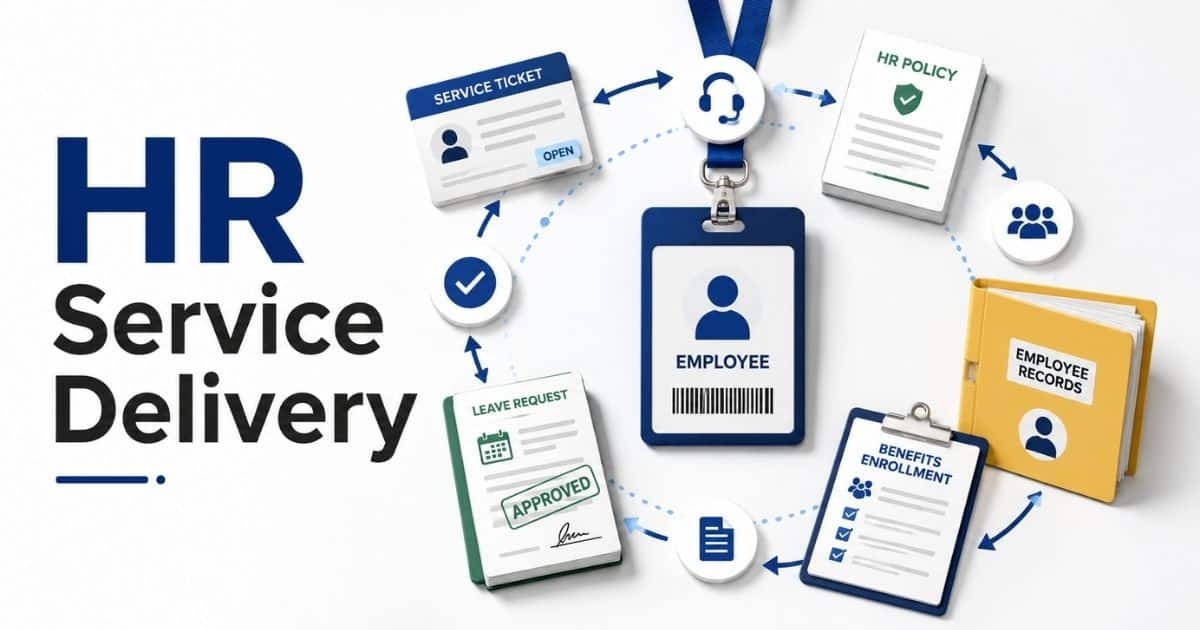
Table of Contents
HR teams today do much more than answer employee questions or process paperwork. Employees expect fast support, easy access to information, and smooth digital experiences at every stage of their journey. When HR processes are slow or confusing, frustration grows. Productivity drops. Employee satisfaction suffers. In fact, 88% of employees say a frustration-free digital experience plays a major role in their happiness and productivity at work.
That is why HR service delivery has become a strategic priority for modern organizations. A strong HR service delivery framework helps employees get the support they need quickly, whether they are joining the company, requesting leave, updating personal information, or preparing to exit. It improves employee experience, reduces administrative work, and creates more efficient HR operations.
This guide covers everything you need to know about HR service delivery, including service models, best practices, automation, self-service portals, key metrics, and emerging trends. By the end, you will understand how an effective HR service delivery strategy can improve employee engagement, increase efficiency, and support long-term business growth.

What Is HR Service Delivery
HR service delivery refers to the way organizations deliver HR services, support, and resources to employees throughout the employee lifecycle. It covers everything from hiring and benefits enrollment to performance management, employee relations, and exit processes. A strong HR service delivery model helps HR teams handle employee inquiries faster, reduce administrative tasks, and improve employee satisfaction. Modern HR service delivery focuses on making HR support accessible, efficient, and consistent across the entire organization.
Today, employee expectations are higher than ever. Employees want quick answers, simple self-service options, and personalized support when they need it. That is why many HR departments use employee self-service portals, knowledge articles, and automated HR service delivery tools. Employees can access information, complete tasks, submit employee requests, and manage employee benefits without waiting for HR staff.
Effective HR service delivery also improves HR efficiency and business success. Whether using a centralized model, shared services model, tiered service model, or hybrid delivery model, organizations can streamline HR processes, support business objectives, maintain compliance, and create a better employee experience. As a result, HR professionals spend less time on repetitive tasks and more time supporting employee engagement and strategic HR strategies.
Essential Components Of An Effective HR Service Delivery Model
A successful HR service delivery model is more than a support system. It connects people, processes, and technology to deliver fast and consistent HR services. Strong foundations help HR teams meet employee needs, improve efficiency, and create better experiences across the employee lifecycle.
Employee Self-Service Access
Employee self-service is one of the most important parts of modern HR service delivery. Employees expect quick access to information without waiting for HR staff. Self-service tools make that possible.
Employee self-service portals allow employees to access policy documents, update employee data, complete benefits enrollment, and submit employee requests at any time. This reduces routine tasks for HR professionals and helps improve employee satisfaction. Research shows that employees value simple digital experiences because they support higher productivity and engagement.
Standardized HR Processes
Clear HR processes create consistency across the entire organization. Every request follows the same path, which reduces delays and confusion. Employees know what to expect, and HR team members can work more efficiently.
Standardized workflows support benefits administration, employee relations, performance management, and compliance tasks. They also help maintain compliance with labor laws and internal policies. When HR departments use documented procedures, service performance becomes easier to measure and improve over time.
Tiered Support Structure
A tiered HR service delivery approach helps organizations manage employee inquiries based on complexity. Each support level has a specific role. This structure improves response times and reduces pressure on HR specialists.
Tier 0 includes self-service options such as knowledge articles and company intranet resources. Tier 1 handles common HR inquiries through HR representatives or helpdesks. Tier 2 and Tier 3 provide specialized support for complex employee needs. This tiered service model ensures employees receive the right support at the right time.
Automation And HR Technology
Modern HR service delivery relies heavily on technology. HR automation and automated HR service delivery reduce manual work and help HR teams focus on higher-value activities. Many repetitive tasks can now run with minimal human involvement.
HR service delivery tools automate approvals, case routing, document management, and employee communications. A strong HR service delivery platform also tracks service metrics and employee requests in one place. Thoughtful HR workflow automation improves HR efficiency, reduces administrative tasks, and creates cost savings across HR operations.
Analytics And Continuous Improvement
Data helps HR leaders make smarter decisions. Without measurement, it is difficult to know whether a service delivery model is meeting business objectives. Analytics provide visibility into performance and employee experience.
Organizations should track case volume, resolution times, employee satisfaction, and service quality. Regular feedback from employees can reveal gaps in HR support and highlight opportunities for improvement. A data-driven approach helps HR business partners align HR strategies with business success while delivering more personalized support across every business unit.
Types Of HR Service Delivery Models And How They Work
No single HR service delivery model works for every business. Company size, workforce structure, budget, and business goals all influence the right choice. Understanding the most common models helps HR leaders build a system that improves employee experience, efficiency, and service quality across the organization.
Centralized Model
A centralized model places most HR functions under one team or department. Employees access HR support through a single channel. This approach creates consistency across HR operations and helps standardize policies, processes, and service delivery.
Many organizations choose this model because it improves cost-effectiveness and reduces duplicate work. HR teams can manage employee requests, benefits administration, and employee data from one location. Research from Deloitte shows shared and centralized HR structures remain common because they improve operational efficiency and reduce service costs.
Decentralized Model
A decentralized model gives more control to individual business units or regional teams. Each team can adapt HR services based on local employee needs, regulations, and workplace culture. This flexibility often benefits large organizations with multiple locations.
HR generalists and HR representatives work closer to employees in this structure. Faster local decisions can improve employee satisfaction and employee relations. However, separate teams may follow different processes, which can increase costs and create inconsistencies across the entire organization.
Hybrid Model
A hybrid model combines elements of centralized and decentralized HR service delivery. Core HR processes stay centralized, while certain HR functions remain within local business units. Many organizations see this as a balanced approach.
This delivery model supports consistency without sacrificing flexibility. Central teams handle administrative tasks, compliance, and technology management. Local HR specialists provide personalized support for workforce-specific challenges. As organizations grow, hybrid structures often help align HR strategies with both employee expectations and business objectives.
Shared Services Model
The shared services model is one of the most widely used approaches in modern HR service delivery. A dedicated HR service center delivers standardized HR services to all employees. Employees access support through a single point of contact.
This model improves HR efficiency and creates significant cost savings. HR professionals can focus on strategic work instead of routine tasks. Shared services also support employee self-service portals, knowledge management systems, and automated workflows. Many enterprises use this model to deliver HR services at scale while maintaining service quality.
Tiered Service Model
The tiered service model organizes HR support based on issue complexity. Each support level handles a different type of employee inquiry. This structure improves service performance and reduces pressure on HR staff.
Tier 0 includes self-service tools, knowledge articles, and company intranet resources where employees access answers independently. Tier 1 handles routine employee inquiries through HR helpdesks. Tier 2 and Tier 3 provide specialized support from HR business partners and subject matter experts. This tiered HR service delivery approach helps organizations resolve issues faster while delivering a better employee journey.
Key HR Service Delivery Processes Across The Employee Lifecycle
Every employee interacts with HR at different stages of their journey. Each interaction shapes employee experience and satisfaction. A strong employee lifecycle management strategy supports employees from recruitment to offboarding while keeping HR operations efficient, compliant, and employee-focused.
Recruitment And Onboarding
Recruitment is often the first HR touchpoint for employees. A smooth hiring and onboarding process helps create a positive first impression. Delays or confusion can hurt employee engagement before work even begins.
HR teams use employee onboarding software, automated workflows, digital forms, and self-service tools to simplify onboarding. New hires can access documents, complete tasks, and review company policies online. According to research from Gallup, employees with strong onboarding experiences are far more likely to stay with their employer for longer periods. Strong onboarding also supports faster productivity and better retention.
Benefits And Payroll Support
Employees expect quick access to payroll information and employee benefits. Understanding payroll processing is essential because questions about benefits enrollment, deductions, and leave policies are among the most common HR inquiries in many organizations.
Employee self-service portals allow employees to access pay slips, update personal details, and manage benefits without contacting HR staff. This reduces administrative tasks for HR professionals. Automated payroll software and automated HR service delivery also improve accuracy and response times. Faster support helps improve employee satisfaction while giving HR departments more time to focus on strategic priorities.
Performance And Career Development
Performance management plays a major role in employee growth. Employees want regular feedback, career opportunities, and clear expectations. HR service delivery helps make those processes consistent and accessible.
Modern HR service delivery platforms support goal tracking, performance reviews, training programs, and development plans. As more organizations shift from manual to smart HR, HR business partners and managers can use employee data to support career growth discussions. Research from LinkedIn shows employees are more likely to stay with organizations that invest in learning and development opportunities. Strong career support strengthens employee engagement and long-term retention.
Employee Relations And Support
Employee relations issues require fast and reliable HR support. Employees may need help with workplace concerns, policy questions, conflict resolution, or compliance matters. A clear process helps build trust and confidence.
Many organizations use a tiered service model to manage employee inquiries efficiently. Routine questions go to Tier 1 support, while complex issues move to HR specialists. Knowledge articles and self-service options also help employees find answers quickly. Better support experiences often lead to stronger workplace relationships and higher employee productivity.
Offboarding And Exit Management
The employee lifecycle does not end with resignation. A structured exit process protects company information and creates a positive final experience. Former employees can become future customers, referrals, or even rehires.
HR teams manage final payroll, benefits transitions, compliance requirements, and exit interviews during this stage. Standardized HR processes help maintain compliance and reduce risk. Employee feedback collected during offboarding can also reveal gaps in HR service delivery. Those insights help HR leaders improve future employee experiences across the entire organization.
HR Service Delivery Technology And Tools That Improve Efficiency
Technology plays a major role in modern HR service delivery. Employees expect fast answers, simple access to information, and smooth digital experiences. The right HR tools help reduce manual work, improve service quality, and support HR teams as organizations grow.
Employee Self-Service Portals
Employee self-service portals are now a core part of HR service delivery. They give employees direct access to HR information without contacting HR staff. This improves convenience and reduces routine employee inquiries.
Employees can access pay information, benefits enrollment, leave requests, and company policies through one platform. Integrated employee record management systems and self-service portals also support knowledge management by making knowledge articles available anytime. Research shows that employees increasingly prefer digital self-service options because they provide faster support and better user experiences.
HR Case Management Systems
HR case management software helps HR teams track, manage, and resolve employee requests from a single location. Every case follows a structured workflow, which improves visibility and accountability.
HR representatives can prioritize requests, monitor response times, and assign complex issues to HR specialists when needed. Tracking HR cases also provides valuable analytics. HR leaders can identify common issues, measure service performance, and improve HR support processes. Better visibility often leads to faster resolutions and higher employee satisfaction.
Workflow Automation Tools
Automation has become a major driver of HR efficiency. Many HR departments use automation to reduce repetitive tasks and improve service delivery. Tasks that once required manual work can now happen automatically.
Automated HR service delivery supports approvals, onboarding, document routing, notifications, and employee data updates. Industry research shows automation can significantly reduce administrative workloads while improving response times. Faster processes allow HR professionals to spend more time on employee relations, workforce planning, and strategic HR functions.
AI-Powered HR Solutions
Artificial intelligence is changing how organizations deliver HR services. AI-powered tools can answer common employee questions, recommend resources, and guide employees through HR processes. This creates a more responsive support experience.
Many organizations now use AI chatbots as part of their HR service delivery platform. According to research from IBM, AI assistants can handle a large share of routine employee inquiries before human intervention becomes necessary. This reduces workload for HR staff while helping employees receive support around the clock.
Mobile HR Platforms
Mobile access has become essential for modern workforces. Employees expect HR services to be available wherever they work. Mobile HR tools help meet those expectations.
Employees can submit requests, review benefits, access employee data, and complete tasks directly from their phones. A mobile HR app for employee self-service also improves employee engagement because support is available when needed. For organizations with remote or distributed teams, mobile access helps maintain consistent HR service delivery across the entire employee lifecycle.
Employee Self-Service And Manager Self-Service In Modern HR
Self-service has become a key part of modern HR service delivery. Employees and managers expect quick access to information without waiting for HR support. The right self-service tools reduce workload, improve response times, and create a better employee experience across the organization.
Employee Self-Service Portals
Employee self-service portals give employees direct access to HR information and services. Instead of contacting HR staff for every request, employees can find answers on their own. This creates a faster and more convenient experience.
Employees can access pay slips, update personal details, request leave, manage benefits enrollment, and review company policies. Dedicated leave management systems and self-service portals also provide knowledge articles and forms in one place. Research shows that employees increasingly prefer digital HR experiences because they save time and reduce frustration. A smooth experience often leads to higher employee satisfaction and engagement.
Manager Self-Service Tools
Manager self-service tools help supervisors handle common workforce tasks without relying on HR departments. This improves decision-making and reduces delays across teams.
Managers can approve leave requests, review employee performance data, track attendance, and initiate personnel changes from one platform. Access to real-time employee data allows managers to respond quickly to team needs. As a result, HR professionals spend less time on administrative tasks and more time supporting business objectives and workforce strategy.
Faster Access To HR Information
Speed matters when employees need support. Long wait times often lead to frustration and lower productivity. Self-service options help employees access information whenever they need it.
Most modern HR service delivery platforms provide 24/7 access through desktop and mobile devices. This is especially critical for organizations managing a remote workforce with HRM software. Employees can review policies, track requests, and complete routine tasks without contacting HR representatives. Industry studies show that digital workplace experiences have a direct impact on employee productivity. Quick access to information helps employees stay focused on their work.
Reduced HR Workload
Many HR inquiries involve routine questions about payroll, benefits, policies, and leave balances. Self-service tools handle a large portion of those requests before they reach HR teams.
Employees can find answers through searchable knowledge bases, company intranets, and automated support systems. This reduces repetitive tasks for HR staff and improves HR efficiency. Fewer routine inquiries also allow HR specialists to focus on employee relations, compliance, and strategic HR functions that create greater business value. Effective HR service delivery can boost revenue growth by up to 50%.
Better Employee Experience
A strong employee experience depends on convenience and accessibility. Employees expect workplace tools to be as simple as the technology they use every day. Self-service plays an important role in meeting those expectations.
Modern HR service delivery combines employee self-service, manager self-service, automation, and mobile access into a single experience. Employees receive faster support, while managers gain better visibility into workforce information. Organizations that prioritize easy access to HR services often see improvements in employee satisfaction, employee engagement, and overall service performance.
HR Service Delivery Metrics And KPIs To Measure Performance
You cannot improve what you do not measure. HR service delivery metrics help organizations understand service quality, efficiency, and employee satisfaction. The right KPIs reveal gaps, highlight trends, and support better decisions across HR operations and employee support programs.
Employee Satisfaction Score
Employee satisfaction is one of the most important indicators of HR service quality. Employees interact with HR throughout the employee lifecycle. Their feedback shows whether services meet expectations.
Most organizations collect feedback through surveys after resolving employee inquiries or completing HR requests. Satisfaction scores help HR leaders understand employee needs and identify areas for improvement. Research consistently shows that positive employee experiences contribute to higher engagement, stronger retention, and better workplace performance.
Case Resolution Time
Resolution time measures how quickly HR teams solve employee requests and HR inquiries. Employees expect fast support, especially for payroll, benefits, and workplace issues. Long delays often create frustration.
Tracking average resolution times helps HR departments evaluate service performance and identify bottlenecks. A strong HR service delivery platform provides visibility into every case from submission to closure. Faster resolutions improve employee experience while reducing the workload caused by repeated follow-ups and unresolved requests.
Case Volume Trends
Case volume tracks the number of employee requests submitted over a specific period. This metric helps HR teams understand workload patterns and allocate resources more effectively.
High case volumes may reveal process gaps, unclear policies, or insufficient self-service options. Tracking HR cases also helps measure the impact of automation and knowledge management initiatives. When employee self-service portals become more effective, routine inquiries often decrease, allowing HR professionals to focus on higher-value HR functions.
Self-Service Adoption Rate
Self-service adoption measures how often employees use self-service tools instead of contacting HR support. A high adoption rate usually indicates that employees can easily find information and complete tasks independently.
Employees access knowledge articles, policy documents, benefits information, and forms through self-service portals. This reduces administrative tasks and improves HR efficiency. Organizations that encourage self-service often experience lower support costs, faster service delivery, and better employee satisfaction across the entire organization.
First Contact Resolution Rate
First contact resolution measures how often employee issues are resolved during the first interaction. This KPI reflects both service quality and operational efficiency. Higher rates usually indicate effective HR support processes.
A strong first-contact resolution rate means HR representatives have access to accurate employee data, knowledge resources, and service tools. Employees receive answers faster, which improves trust and satisfaction. Combined with analytics and regular feedback, this metric helps HR leaders strengthen service delivery and align HR operations with business objectives.
Common HR Service Delivery Challenges And How To Overcome Them
Even the best HR service delivery model faces obstacles. Employee expectations continue to rise, while HR teams often work with limited resources and growing workloads. Understanding common HR challenges and modern solutions helps organizations improve service quality, employee satisfaction, and overall HR efficiency.
Heavy Administrative Workloads
Many HR departments spend too much time on repetitive tasks and manual processes. Payroll updates, employee requests, document handling, and routine HR tasks can consume valuable time. This often prevents HR professionals from focusing on strategic priorities.
Self-service tools and automated HR service delivery can solve this problem. Replacing disconnected tools with a unified HR platform simplifies management and improves visibility. Employee self-service portals allow employees to complete tasks without contacting HR staff. Integrated HR platforms and automation also reduce administrative tasks and improve response times. As a result, HR teams can focus more on employee relations, workforce planning, and business objectives.
Poor Employee Access To Information
Employees become frustrated when they cannot quickly find answers. Delayed responses often lead to lower employee satisfaction and weaker employee engagement. Many employee inquiries involve simple questions that should not require direct HR support.
Knowledge management systems help solve this issue. Knowledge articles, self-service options, and a company intranet give employees access to information at any time. Employees log into self-service platforms to review policies, manage employee benefits, and access employee data. This approach supports employee productivity while enabling employees to solve routine issues independently.
Inconsistent Service Across Teams
Service quality often varies between locations, departments, or business units. Different HR generalists may follow different processes. This creates confusion and affects the employee journey.
A centralized model, shared services model, or tiered service model can create greater consistency. Standardized HR processes help deliver HR services the same way across the entire organization. Clear procedures also support maintaining compliance and improve service performance. Consistency helps build trust and creates a better employee experience.
Limited Support For Complex Issues
Not all employee needs are simple. Workplace disputes, compliance concerns, and benefits administration questions often require specialized expertise. Without the right structure, handling employee inquiries can become slow and inefficient.
A tiered HR service delivery framework provides a solution. Tier 1 HR representatives manage routine requests, while Tier 2 and Tier 3 HR specialists address more complex issues. HR business partners can also provide personalized support when needed. This service model improves resolution quality while supporting cost-effectiveness and business success.
Slow Adoption Of Modern Technology
Some organizations still rely on outdated systems and manual workflows. This limits HR efficiency and makes it harder to meet modern employee expectations. Employees now expect digital experiences similar to consumer applications.
Modern HR service delivery depends on technology, analytics, and automation. HR service delivery tools and a strong HR service delivery platform help empower employees through self-service and mobile access. Many organizations also use AI-powered solutions as part of HR service delivery HRSD strategies. The benefits of HR service include faster support, cost savings, stronger employee experience, and better outcomes across the employee lifecycle.
Best Practices For Building A High-Performing HR Service Delivery Framework
A successful HR service delivery framework does not happen by accident. It requires the right processes, technology, and strategy. Organizations that follow proven best practices often achieve higher employee satisfaction, better service performance, and stronger business outcomes across the employee lifecycle.
Create Clear Standard Processes
Consistency is the foundation of effective HR service delivery. Employees expect the same level of support regardless of department, location, or business unit. Clear processes help eliminate confusion and reduce delays.
Documented workflows guide HR staff through employee requests, benefits administration, employee relations, and compliance activities. Standardization also supports maintaining compliance with labor regulations and company policies. When HR teams follow the same procedures, service quality improves and employees receive a more reliable experience across the entire organization.
Expand Self-Service Capabilities
Modern employees prefer quick and independent access to information. Strong self-service options help meet those expectations while reducing pressure on HR departments. Self-service also supports faster issue resolution.
Employee self-service portals provide access to knowledge articles, policy documents, employee benefits, and HR forms. Employees can update records, complete tasks, and find answers without waiting for HR support. Organizations that invest in self-service tools often see improvements in employee satisfaction, employee engagement, and overall HR efficiency.
Use Automation Strategically
Automation helps HR teams manage growing workloads without sacrificing service quality. Many repetitive tasks can be completed automatically, which reduces errors and improves operational efficiency.
Automated workflows support onboarding, benefits enrollment, approvals, notifications, and employee data management. Automated HR service delivery also allows HR professionals to focus on higher-value work instead of manual administration. Industry studies continue to show that automation improves response times while reducing operational costs and resource demands.
Measure And Improve Performance
High-performing organizations track results regularly. Data helps HR leaders identify strengths, uncover gaps, and improve service delivery over time. Without measurement, improvement becomes difficult.
Key metrics include employee satisfaction, case resolution times, service performance, and self-service adoption rates. Regular feedback also reveals employee needs and service challenges. Tracking performance helps HR leaders align HR strategies with business objectives while ensuring HR services continue to support organizational growth.
Build For Future Growth
A strong delivery model must support change. Workforce growth, new regulations, and evolving employee expectations can quickly strain outdated systems and processes. Scalability should always be part of long-term planning.
Modern HR service delivery platforms, flexible workflows, and knowledge management systems help organizations adapt more easily. Purpose-built HR and payroll software for SaaS and software businesses is one example of a scalable framework that supports personalized support and consistent service quality as the workforce expands. Organizations that prepare for growth are better positioned to deliver HR services efficiently while supporting long-term business success.
Future Trends Shaping HR Service Delivery In 2026 And Beyond
HR service delivery continues to evolve as employee expectations, workplace technology, and business needs change. Organizations that adapt early can improve employee experience, increase efficiency, and stay competitive. Several key trends are already reshaping how HR teams deliver support and services.
AI-Powered HR Support
Artificial intelligence is becoming a core part of modern HR service delivery. AI tools can answer employee inquiries, recommend knowledge articles, and guide employees through HR processes without human intervention.
Research from IBM suggests AI assistants can resolve a large share of routine employee requests before they reach HR staff. This helps reduce repetitive tasks and improve response times. AI-powered support also gives employees faster access to information while allowing HR professionals to focus on more complex employee needs.
Hyper-Personalized Employee Experiences
Employees increasingly expect personalized support rather than one-size-fits-all services. Modern HR service delivery platforms use employee data and analytics to provide more relevant experiences.
Personalized recommendations can help employees find benefits information, training opportunities, and workplace resources faster. HR leaders also use workforce insights to better understand employee expectations and preferences. Strong personalization often leads to higher employee satisfaction, stronger employee engagement, and a more positive employee journey.
Mobile-First HR Services
Mobile access is becoming a standard requirement for HR service delivery. Many employees now prefer smartphones over desktop computers for workplace interactions. Organizations must adapt to this shift.
Modern HR service platforms allow employees access to HR services from anywhere. Employees can review policies, submit employee requests, complete benefits enrollment, and manage employee benefits directly from mobile devices. Mobile-first experiences support employee productivity and make HR support more accessible for distributed and frontline workforces.
Advanced Workforce Analytics
Data-driven decision-making continues to gain importance in HR operations. Advanced analytics helps organizations understand service performance, workforce trends, and employee behavior more accurately.
HR departments increasingly use analytics to track case volume, employee satisfaction, and resolution times. Predictive insights can also help identify future workforce challenges before they become larger issues. Better data allows HR strategies to align more closely with business objectives while improving overall service delivery quality.
Integrated Digital HR Ecosystems
Future HR environments will rely on connected systems rather than separate tools. HR service delivery tools, payroll systems, talent management software, and employee self-service platforms will work together through a single ecosystem.
Integrated systems improve knowledge management, reduce duplicate work, and create a more seamless employee experience. Employees can move between services without switching platforms. Organizations that build connected digital ecosystems often achieve greater HR efficiency, stronger cost effectiveness, and better long-term business success across the entire employee lifecycle.
How Payrun Strengthens HR Service Delivery Across The Employee Lifecycle
Modern HR service delivery requires more than manual processes and disconnected tools. Organizations need a platform that simplifies HR operations, supports employee self-service, and helps HR teams respond faster to employee needs. Payrun’s all-in-one HR platform brings these capabilities together in one centralized system.
With Payrun, employees can access HR information, manage employee benefits, submit employee requests, and complete routine tasks through self-service tools. HR staff gain better visibility into employee data, case management, and service performance. Automated workflows reduce administrative tasks and improve HR efficiency across the employee lifecycle.
Payrun also supports modern HR service delivery through workflow automation, mobile accessibility, knowledge management, and analytics. HR leaders can track key metrics, improve employee satisfaction, and align HR strategies with business objectives by leveraging Payrun’s innovative HR features. Whether your organization uses a centralized model, shared services model, or tiered service model, Payrun helps deliver HR services more efficiently while creating a better employee experience for the entire organization.
FAQs
How Does HR Service Delivery Impact Employee Retention?
Yes, effective HR service delivery can improve employee retention. Employees who receive timely HR support, easy access to information, and positive service experiences are more likely to stay engaged and satisfied. Strong employee experience throughout the employee lifecycle often leads to lower turnover rates.
Can Small Businesses Benefit From Modern HR Service Delivery?
Yes, small businesses can benefit significantly from modern HR service delivery. HR software for small businesses, self-service tools, employee self-service portals, and automated HR service delivery help reduce administrative tasks while allowing lean HR teams to deliver HR services more efficiently and consistently.
What Role Does Knowledge Management Play In HR Service Delivery?
Knowledge management helps employees find answers without contacting HR staff. Knowledge articles, FAQs, and company intranet resources support self-service and reduce employee inquiries. This approach improves HR efficiency while helping employees access information faster.
Does HR Service Delivery Support Regulatory Compliance?
No organization can rely solely on manual processes for compliance. Modern HR software for small and medium businesses and a structured service model support maintaining compliance through standardized HR processes, documented workflows, employee data management, and consistent handling of employee requests across the entire organization.
How Can Organizations Increase Adoption Of Self-Service Tools?
Organizations can increase adoption by making self-service options simple and accessible. Clear navigation, mobile access, employee training, and relevant content help empower employees. Partnering with an HR management provider like Payrun can also support change management and user education. When employees can easily complete tasks and find support, employee satisfaction and employee engagement often improve.