Workforce Data For Operations For Faster And More Accurate Planning
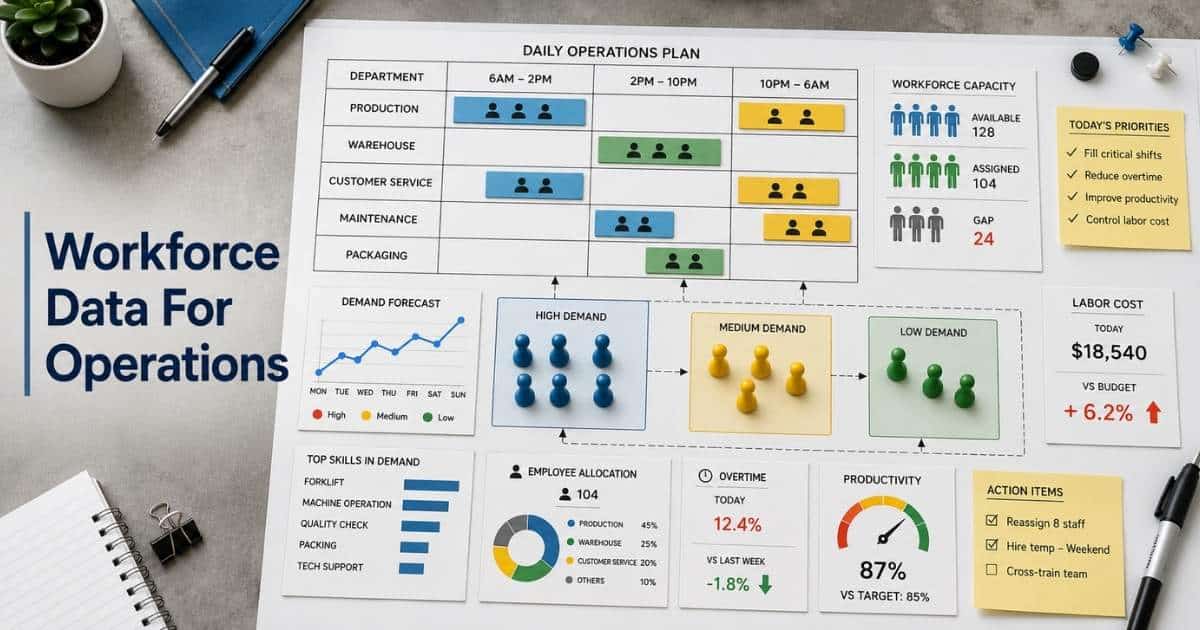
Table of Contents
Workforce data is no longer just an HR resource. Operations leaders now rely on workforce data to make smarter staffing, scheduling, productivity, and labor cost decisions. Every shift, task, overtime hour, absence, and performance metric creates valuable information that can reveal what is helping or hurting operational performance. Organizations that use workforce analytics effectively can optimize staffing levels, reduce unnecessary labor costs, improve employee retention, and respond faster to changing business demands. Workforce management platforms increasingly combine scheduling, attendance, labor forecasting, and analytics to support these decisions.
Yet many organizations still struggle to turn workforce data into meaningful action. Rising labor costs, high turnover, absenteeism, skills gaps, and workforce shortages create challenges that cannot be solved through intuition alone. The ability to analyze workforce trends, predict future needs, and align labor resources with operational goals has become a competitive advantage.
This guide explains everything you need to know about workforce data for operations, including the metrics to track, the insights to uncover, and the strategies that help businesses improve productivity, control costs, and build a more resilient workforce.

What Is Workforce Data For Operations?
Workforce data for operations is the collection and analysis of employee, scheduling, productivity, attendance, and labor cost data that helps businesses improve daily operations. Instead of relying on assumptions, organizations use a data-driven approach to understand workforce performance, identify trends, and make better decisions. Workforce data provides a full picture of how employees, resources, and processes contribute to business goals.
Modern workforce management systems combine real-time data from multiple sources, including employee performance, staffing levels, turnover rates, overtime, and labor market data. Workforce analytics transforms this raw data into actionable insights that help employers address staffing challenges, reduce costs, and improve operational efficiency. Managers can monitor key metrics, spot performance trends, and gain real-time visibility into workforce dynamics across teams and locations.
Workforce data also supports workforce planning, employee engagement, and future workforce strategies. By combining workforce analytics, predictive analytics, labor market insights, and human judgment, businesses can anticipate staffing needs, identify skills gaps, improve employee experience, and respond to market shifts. The result is more informed decision-making, stronger workforce performance, and better outcomes for both employees and operations.
Why Workforce Data Is Important In Operational Performance
Workforce data helps businesses understand what is really happening across teams, shifts, and locations. It connects employee activity with operational outcomes, making it easier to improve productivity, control labor costs, and support business goals. Organizations that use workforce analytics can make faster and more informed decisions based on facts rather than assumptions.
Better Staffing Decisions
Workforce data helps managers match staffing levels with actual demand. This reduces both understaffing and overstaffing. Teams can allocate resources where they are needed most and respond quickly to workload changes.
Real-time visibility into schedules, attendance, and workload patterns helps businesses plan ahead. Workforce analytics also supports workforce planning during seasonal demand spikes, staffing shortages, and market shifts. As a result, operations stay productive without unnecessary labor expenses.
Lower Labor Costs
Labor costs are one of the largest expenses for many businesses. Workforce data helps identify where money is being spent and whether that spending produces results. Managers can compare labor costs against workforce performance and productivity output.
Analytics can also reveal unauthorized overtime, scheduling inefficiencies, and under-utilized workers. AI-powered workforce analytics solutions have been shown to reduce labor costs by up to 15% through better scheduling and workforce optimization. Organizations gain actionable insights that support smarter budgeting and resource allocation.
Stronger Employee Retention
High turnover creates disruption across daily operations. It increases recruiting costs, training expenses, and productivity losses. Workforce data helps employers understand why employees leave and what factors affect employee satisfaction.
Metrics such as turnover rates, absenteeism patterns, employee engagement scores, and Employee Net Promoter Scores provide valuable insights into workforce dynamics. Businesses can identify early signs of disengagement and take action before employees decide to leave. This creates a better employee experience and supports long-term retention.
Higher Productivity Levels
Workforce analytics helps organizations measure how work gets done. Data on task completion times, attendance patterns, and employee performance reveals where productivity slows down. Managers can identify operational bottlenecks and remove barriers that affect output.
Workforce data also shows how workers spend their time during the workday. This creates a full picture of workforce performance across departments. A data-driven approach helps leaders compare results against key metrics and establish more effective workforce strategies.
More Strategic Workforce Planning
Business conditions change quickly. Labor market shifts, talent availability, and growing demand can affect staffing needs without warning. Workforce data gives organizations the information needed to prepare for future workforce challenges.
Predictive analytics helps forecast workforce demand, employee turnover, and skills gaps before they become serious problems. Labor market data and labor statistics provide additional context about qualified candidates, unemployment rates, and workforce trends. According to industry research, 71% of HR executives consider people analytics essential to their overall strategy, highlighting the growing workforce analytics impact across multiple industries.
Types Of Workforce Data Operations Teams Should Track
Strong decisions depend on the quality of workforce data available. Operations teams need more than headcount reports or attendance records. A complete view of workforce performance requires data from multiple sources. When the right workforce metrics are tracked consistently, businesses gain valuable insights that improve workforce planning, operational efficiency, and daily decision-making.
Attendance And Availability Data
Attendance data shows when employees are present, absent, late, or unavailable for work. It provides real-time visibility into workforce reliability and staffing needs. Frequent absences can disrupt operations and increase pressure on other workers.
High absenteeism rates often point to deeper issues. They may signal burnout, low employee satisfaction, scheduling problems, or operational bottlenecks. Modern attendance management systems for flexible teams and workforce analytics help identify trends before they become costly problems. Operations teams can use this data to improve workforce management and maintain service levels across departments.
Productivity And Performance Data
Employee performance data measures output, efficiency, and work quality. Common workforce metrics include task completion time, productivity rates, goal achievement, and error rates. Modern employee performance tracking software turns this information into insights that help managers understand how work gets done across teams.
Performance trends reveal where employees excel and where support may be needed. Workforce analytics can compare workforce performance against established benchmarks. Businesses gain actionable insights that support data-driven decisions, improve operational efficiency, and align employee efforts with business goals.
Scheduling And Labor Cost Data
Scheduling data tracks shifts, overtime, labor hours, and workforce utilization. Timesheet apps and calendar-based scheduling tools help capture this information accurately. Labor costs represent a major business expense, so accurate workforce data is critical. Companies need to know whether staffing levels match actual demand, which is where robust workforce calendar management for scheduling and time tracking becomes essential.
Workforce analytics helps uncover unauthorized overtime, scheduling gaps, and costly overstaffing. By matching staffing needs with workload forecasts, organizations can reduce costs and improve resource allocation. Research shows AI-powered workforce analytics can reduce labor costs by up to 15% through better scheduling and workforce optimization. This creates measurable workforce analytics impact across operations.
Engagement And Retention Data
Employee engagement data helps employers understand how workers feel about their jobs and workplace culture. Surveys, feedback scores, Employee Net Promoter Scores, and turnover rates provide useful signals about workforce health.
High turnover creates recruiting costs, training expenses, and productivity losses. Workforce data helps identify trends linked to employee experience and retention. Organizations can spot early signs of disengagement and take action before valuable employees leave. Better engagement often leads to stronger workforce performance and improved customer satisfaction.
Skills And Labor Market Data
Skills data helps businesses understand workforce capabilities and future talent needs. It highlights skills gaps, training opportunities, and career development opportunities across teams. Analytics can reveal whether employees have the skills required to support future business growth.
Labor market data adds an external perspective. Labor market insights show talent availability, wage trends, unemployment rates, and demand for qualified candidates. Labor market analysis and HRM software for managing remote workforce help organizations respond to staffing shortages, market shifts, and the future of work. Businesses can build stronger workforce strategies by combining internal workforce data with external labor statistics and industry trends.
Key Workforce Metrics And KPIs That Drive Better Decisions
Workforce data becomes valuable when teams track the right metrics. The best workforce KPIs reveal what is happening across operations, where problems exist, and where opportunities can be found. When measured consistently, these metrics help businesses improve workforce performance, control labor costs, and make data-driven decisions with confidence.
Labor Cost Per Output
Labor cost per output measures how much labor is required to produce a product, complete a service, or achieve a business result. It helps operations teams understand whether workforce resources are being used efficiently.
Workforce analytics connects labor costs with productivity data to uncover inefficiencies. A department may have high labor spending but low output. That gap often reveals scheduling issues, workforce shortages, or poor resource allocation. This metric gives leaders actionable insights that support operational efficiency and cost control.
Employee Productivity Rate
Productivity rate measures how much work employees complete within a specific period. It helps managers evaluate workforce performance using measurable results rather than assumptions. Common examples include completed orders, resolved tickets, or units produced.
Workforce analytics tracks task completion times and performance trends across teams. Managers can compare results against workforce goals and identify operational choke points. Productivity data also helps organizations improve workforce planning and allocate resources more effectively during periods of growing demand.
Absenteeism Rate
Absenteeism rate tracks how often employees miss scheduled work. It is one of the most important workforce metrics because attendance directly affects daily operations, customer service, and team productivity.
High absenteeism rates often signal deeper workforce challenges. Common causes include burnout, low employee engagement, workplace culture issues, or scheduling conflicts. Workforce data helps identify trends early and provides real-time insights into workforce dynamics. Operations teams can then take corrective action before performance suffers.
Employee Turnover Rate
Turnover rate measures the percentage of employees who leave during a specific period. High turnover disrupts operations and creates significant recruiting, onboarding, and training costs. It can also affect employee morale and customer satisfaction.
Workforce analytics helps employers understand why employees leave. Exit interview data, engagement surveys, and workforce performance metrics provide valuable insights into retention risks. Organizations that monitor turnover rates closely can develop stronger workforce strategies and improve employee experience before high turnover becomes a long-term problem.
Employee Net Promoter Score
Employee Net Promoter Score, or eNPS, measures how likely employees are to recommend their workplace to others. It provides a simple way to evaluate employee satisfaction and overall workforce health.
Strong eNPS scores often correlate with higher retention and better workforce performance. Survey data can reveal concerns related to leadership, career development opportunities, workload, or workplace culture. Workforce analytics transforms this feedback into actionable recommendations that help employers improve engagement, retain top talent, and support long-term business goals.
How Workforce Data Supports Workforce Planning And Resource Allocation
Effective workforce planning depends on accurate workforce data. Operations teams need to know who is available, what skills exist, and where resources are needed most. Workforce analytics helps businesses align staffing levels with demand, reduce waste, and make better use of workforce resources across daily operations.
Demand Forecasting
Workforce data helps businesses predict future staffing needs with greater accuracy. Historical trends, seasonal patterns, sales activity, and operational data provide a strong foundation for workforce planning. Organizations can prepare for busy periods before demand increases.
Predictive analytics takes forecasting a step further. It helps managers anticipate workforce requirements weeks or months in advance. Labor market insights and market shifts also provide useful context. Better forecasts help businesses avoid staffing shortages while maintaining operational efficiency and customer satisfaction.
Staffing Level Optimization
The right number of employees can make a major difference in performance and labor costs. Workforce analytics helps organizations align staffing levels with actual workload requirements rather than assumptions.
Data-driven scheduling helps prevent both understaffing and overstaffing. Companies can adjust schedules based on demand, workforce availability, and business goals. Optimized scheduling eliminates unnecessary labor expenses while ensuring enough workers are available to meet customer needs. This balance improves workforce performance and resource utilization across operations.
Skills-Based Resource Allocation
Not every employee has the same skills, experience, or certifications. Workforce data helps managers understand workforce capabilities and allocate resources more effectively. Teams can place the right employees in the right roles at the right time.
Skills data also helps identify skills gaps before they affect operations. Organizations can invest in targeted training programs and create career development opportunities. This approach strengthens workforce strategies and ensures employees have the skills needed to support future business growth.
Capacity Planning
Capacity planning helps businesses determine whether workforce resources can support future demand. Workforce analytics combines staffing data, productivity metrics, and workload forecasts to create a realistic view of workforce capacity.
Managers can identify areas where additional hiring may be necessary. They can also uncover under-utilized resources that can be reassigned. Effective workforce calendar management for scheduling and time tracking and real-time visibility into workforce capacity support data-driven decision making and help organizations remain flexible during periods of growing demand or operational change.
Labor Market Planning
Internal workforce data tells part of the story. Labor market data adds another layer of insight that helps organizations prepare for future workforce challenges. Information about talent availability, wage trends, unemployment rates, and qualified candidates supports long-term workforce planning.
Labor market analysis helps employers understand workforce dynamics within specific industries and regions. Businesses can respond to labor shortages, adjust compensation strategies, and plan recruitment efforts more effectively. This broader view supports smarter resource allocation and improves the ability to secure top talent in competitive labor markets.
How To Use Workforce Data To Improve Productivity, Efficiency, And Labor Costs
Collecting workforce data is only the first step. Real value comes from using that data to improve operations. Workforce analytics helps businesses uncover inefficiencies, optimize resources, and make smarter workforce decisions. When used correctly, workforce data can increase productivity, improve efficiency, and reduce unnecessary labor costs across the organization.
Optimize Staff Scheduling
Scheduling decisions have a direct impact on labor costs and workforce performance. Workforce data helps managers understand demand patterns, peak business hours, and workforce availability. This allows teams to create schedules that better match actual workload requirements.
Data-driven scheduling reduces unnecessary labor expenses and prevents costly overstaffing. It also lowers the risk of understaffing during busy periods. Retail organizations that align staffing with customer demand often see improvements in customer satisfaction and operational efficiency because the right number of employees are available when needed.
Control Overtime Expenses
Overtime can quickly increase labor costs when it is not monitored closely. Workforce analytics and smart attendance tracking software with real-time timeline views provide real-time visibility into overtime patterns across departments, teams, and locations. Managers can identify where overtime is necessary and where it may be avoidable.
Workforce data also helps detect unauthorized overtime and scheduling inefficiencies. Early intervention prevents costs from escalating over time. AI-powered workforce analytics solutions have been shown to reduce labor costs by up to 15% through smarter workforce management and scheduling decisions. Businesses gain actionable insights that support better budget control.
Improve Workforce Productivity
Productivity improves when organizations understand how work is completed. Workforce analytics tracks employee performance, task completion times, and output levels. This information helps managers identify performance trends and operational bottlenecks.
Data reveals where employees spend most of their time and where delays occur. Robust employee attendance tracking helps teams remove barriers, improve workflows, and allocate resources more effectively. A data-driven approach helps businesses increase workforce productivity without increasing headcount or labor spending.
Address Skills Gaps
Skills gaps often reduce efficiency and limit workforce performance. Workforce data helps organizations identify areas where employees need additional training or support. Implementing an automated attendance management system is often a key step, giving managers a clearer view of workforce capabilities across departments.
Skills analysis also helps businesses prepare for future workforce needs. Targeted training programs and a modern employee record management system improve employee performance while creating career development opportunities. This strategy strengthens workforce planning and helps organizations remain competitive as workforce dynamics and business requirements continue to evolve.
Reduce Employee Turnover
Employee turnover creates direct and indirect costs for businesses. Recruiting, onboarding, and training new employees require time and resources. High turnover can also affect productivity, morale, and customer experience.
Workforce analytics helps predict turnover risks before employees leave. Employee engagement surveys, absenteeism trends, and workforce metrics often reveal early warning signs. Organizations can use these valuable insights to improve employee satisfaction, strengthen employee retention strategies that reduce turnover, and reduce workforce disruption. Lower turnover supports long-term operational efficiency and more stable business performance.
Common Workforce Data Challenges And How To Overcome Them
Workforce data can deliver powerful insights, but many organizations struggle to use it effectively. Poor data quality, disconnected systems, and adoption issues often prevent teams from getting the full value of workforce analytics. Understanding these challenges is the first step toward building a more data-driven workforce strategy.
Data Silos Across Systems
Workforce data often sits in separate systems. Attendance records may be stored in one platform, while scheduling, payroll, and performance data exist elsewhere. This creates data silos that make workforce analysis difficult.
Operations teams need a complete view of workforce performance. When information is fragmented, valuable insights can be missed. Enterprise workforce management platforms help centralize data and improve visibility. A unified system, such as those that replace multiple disconnected HR tools with an all‑in‑one platform, supports better decision-making and creates a stronger foundation for workforce analytics.
Poor Data Quality
Analytics is only as reliable as the data behind it. Missing records, duplicate entries, and outdated information can lead to inaccurate workforce metrics. Poor data quality often results in flawed workforce planning and resource allocation decisions.
Clear data standards help solve this problem. Regular audits and automated data validation can improve accuracy. Businesses that maintain clean workforce data gain more trustworthy insights and can make data-driven decisions with greater confidence. Reliable data also improves forecasting and operational efficiency.
Limited Analytics Skills
Many organizations collect workforce data but struggle to turn it into actionable insights. According to industry research, only about 22% of HR professionals believe they are highly effective at maximizing the value of people analytics. This gap limits the workforce analytics impact across operations.
Training and education can help close this gap. Managers need to understand workforce metrics, performance trends, and predictive analytics concepts. Better analytics knowledge helps teams identify opportunities, solve problems faster, and support business goals through informed decisions.
Employee Resistance
Data-driven workforce strategies often require changes in how decisions are made. Some employees and managers may feel uncomfortable when workforce performance, attendance, or productivity metrics become more visible. Resistance can slow adoption and reduce the value of workforce analytics.
Open communication helps build trust. Employees should understand how workforce data supports fairness, career development opportunities, and operational improvement. When people see the benefits, adoption becomes easier. Strong leadership also helps create a culture that values evidence-based decision-making.
Privacy And Compliance Concerns
Workforce data contains sensitive employee information. Attendance records, performance data, payroll details, and engagement survey results must be managed carefully. Poor data governance can create legal and compliance risks.
Clear policies help protect employee privacy while maintaining access to valuable insights. Organizations should define who can access data and how it can be used. Strong security practices build employee trust and support responsible workforce management. A balanced approach allows businesses to benefit from workforce analytics without compromising compliance or employee confidence.
How To Build A Workforce Data Strategy For Operations Success
A workforce data strategy helps organizations turn information into action. Without a clear plan, even large amounts of workforce data can create confusion instead of value. A structured approach helps operations teams align workforce analytics with business goals, improve decision-making, and drive measurable operational improvements.
Define Clear Business Goals
Every workforce data strategy should start with a specific objective. Organizations need to identify the business challenges they want to solve. Common goals include reducing labor costs, improving workforce productivity, lowering employee turnover, or strengthening workforce planning.
Clear goals help teams focus on the workforce metrics that matter most. Data collection becomes more purposeful when leaders know what outcomes they want to achieve. A focused strategy also makes it easier to measure workforce analytics impact and demonstrate business value over time.
Track The Right Metrics
Not all workforce data delivers equal value. Businesses should prioritize key metrics that directly support operational performance and workforce management objectives. Labor costs, productivity rates, absenteeism, turnover rates, and employee engagement scores often provide the most actionable insights.
Too many metrics can create unnecessary complexity. A smaller set of meaningful KPIs often produces better results. Organizations should review workforce metrics regularly and adjust them as business needs, workforce dynamics, and operational priorities change.
Unify Workforce Data Sources
Workforce data often exists across payroll, scheduling, attendance, performance, and HR systems. Separate systems create data silos that limit visibility and reduce the quality of workforce analysis. Teams need a complete view of workforce operations.
A centralized employee management system helps connect data across departments. Unified workforce data improves reporting accuracy and provides real-time visibility into workforce performance. Better data integration also supports more effective workforce planning and resource allocation decisions.
Use Predictive Analytics
Historical reports explain what happened. Predictive analytics helps businesses understand what may happen next. This shift allows organizations to move from reactive decision-making to proactive workforce management.
Predictive workforce analytics can forecast staffing needs, turnover risks, absenteeism trends, and future labor demands. Managers gain valuable insights before problems affect operations. This forward-looking approach helps businesses prepare for demand changes, workforce shortages, and future workforce challenges more effectively.
Create A Data-Driven Culture
Technology alone does not guarantee success. Employees and managers must trust workforce data and use it consistently during decision-making. Partnering with a strategic HR management platform like Payrun can reinforce a strong data-driven culture that encourages teams to rely on facts rather than assumptions.
Leadership support plays a critical role. Managers should share workforce insights, explain the benefits of analytics, and encourage evidence-based discussions. Research shows that 71% of HR executives consider people analytics essential to their strategy, highlighting the growing role of workforce data in modern operations. A culture built around data-driven decisions helps organizations gain the most value from workforce analytics investments.
How Payrun Supports Workforce Data Management And Operational Performance
Workforce data is most valuable when teams can access, understand, and act on it quickly. Payrun helps businesses bring workforce management, attendance, leave, payroll, and employee records together in one all-in-one HR platform. This creates a single source of truth that supports faster and more accurate operational decisions.
With real-time workforce data and reporting tools, managers gain visibility into attendance patterns, labor costs, workforce availability, and employee performance. Payrun's innovative HR features help identify workforce trends, monitor key metrics, and support workforce planning with reliable data. Teams can reduce manual work, improve resource allocation, and make data-driven decisions with greater confidence.
By turning workforce data into actionable insights, Payrun helps organizations improve productivity, strengthen operational efficiency, control labor costs, and build a more agile workforce that can adapt to changing business demands.
FAQs
Can Small Businesses Benefit From Workforce Data For Operations?
Yes. Small businesses can use workforce data to improve workforce planning, monitor labor costs, and optimize staffing needs. Even basic workforce analytics can provide valuable insights that support better resource allocation and data-driven decisions.
What Is The Difference Between Workforce Data And Workforce Analytics?
Workforce data refers to the raw data collected from employees, schedules, attendance, payroll processing workflows, and performance records. Workforce analytics uses that data to identify trends, uncover actionable insights, and support operational decision-making.
Can Workforce Data Help During Economic Uncertainty?
Yes. Workforce data helps businesses respond to market shifts, changing demand, and labor market conditions. Real-time insights allow employers to adjust workforce strategies, control costs, and maintain operational efficiency during uncertain periods.
How Often Should Businesses Review Workforce Metrics?
Most organizations should review key metrics regularly. Daily or weekly reviews help monitor workforce performance and staffing needs, while monthly and quarterly analysis can reveal long-term trends and workforce dynamics that affect business goals.
Does Workforce Data Support Long-Term Talent Development?
No, workforce data is not limited to operational reporting. It can also identify skills gaps, track employee performance, and highlight career development opportunities. This helps employers strengthen their workforce, retain top talent, and prepare for future workforce needs.