The Role Of Workforce Planning Software In Talent Management
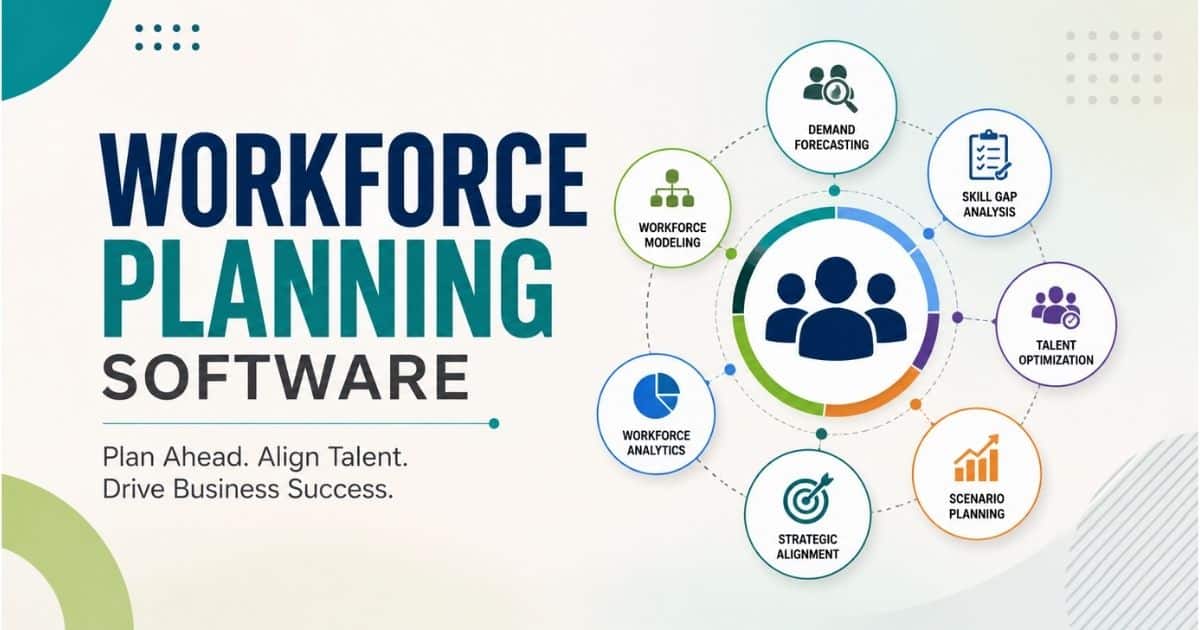
Table of Contents
Workforce planning has moved from annual spreadsheet work to a continuous, data-driven discipline. In 2026, human resources, finance teams, and business units need connected information on headcount, workforce skills, labor costs, employee scheduling, and future workforce trends.
This matters because talent management is no longer only about recruitment. It includes the hiring process, internal mobility, succession planning, employee engagement, benefits administration, payroll management, and resource allocation. When those areas are disconnected, teams struggle to identify trends, analyze employee turnover, and make data-driven workforce decisions.

What Is Workforce Planning Software In Talent Management
Workforce planning software is a digital tool that helps organizations forecast, model, and manage the people they need to meet business needs. In talent management, it connects hiring plans, skills data, labor costs, payroll data, and headcount forecasting so HR teams can plan for both today’s work and the future workforce.
Traditional HR systems often record what has already happened, such as who was hired, who left, and what was paid. Planning software looks ahead. It helps human resources and human capital management teams compare future needs against current workforce capabilities, analyze turnover trends, and identify workforce gaps before they affect performance.
Strategic workforce planning aligns workforce with long-term business objectives. It includes forecasting labor demand and analyzing turnover rates, to prevent labor shortages or overstaffing. The 7 Rs of workforce planning include the right people and right skills, along with the right size, shape, place, time, and cost of the workforce.
Typically workforce planning software pulls data from payroll systems, HR records, time tracking, recruiting tools, and reporting tools. It enables businesses to align workforce planning with strategic planning, business initiatives, and long-term business goals.
Role Of Workforce Planning Software In Talent Management
The role of workforce planning software in talent management can be understood through six practical dimensions. It helps business leaders connect people decisions to business objectives, while giving HR and finance teams a shared view of workforce costs, skills, and capacity. According to McKinsey’s HR Monitor 2025, 73% of organizations conduct operational workforce planning, but only a small share take a three-to-five-year strategic view. That gap is where better planning creates measurable value.
Workforce Strategy Alignment With Business Objectives
Strategic workforce planning aligns workforce with long-term business objectives by translating company plans into hiring, redeployment, and development roadmaps. If a company wants to launch a new product line, open a new region, or expand a service team, workforce planning tools help estimate how many people are needed, which skills are required, and when roles must be filled.
Organizations with strategic workforce planning can better align talent with business goals. They can also mitigate labor shortages by seeing demand earlier and choosing between external hiring, internal mobility, or upskilling. Workforce planning helps align employee skills with business goals, which makes talent management more connected to growth rather than reactive backfilling.
Data Driven Talent Acquisition Decisions
Workforce planning software supports data driven workforce planning by using historical hiring data, time-to-fill, workforce metrics, and turnover trends. It helps talent teams decide which roles to prioritize and when recruitment should begin.
For example, time-to-fill benchmarks often range from 50 to 65 days in technology and 55 to 75 days in healthcare for specialized roles, based on industry benchmark reporting. When those timelines are built into workforce forecasting, HR can show how delayed hiring affects revenue, delivery, and customer service.
Data-driven decision making in workforce planning uses real-time analytics. It allows teams to compare the cost of hiring externally with the time and cost of training existing employees. This supports stronger data driven decisions and gives finance teams better visibility into workforce costs before budgets are committed.
Internal Mobility And Succession Planning
Workforce planning software improves employee retention by mapping growth paths. It can combine performance history, skills records, learning data, and role requirements to identify employees who may be ready for promotion or lateral movement.
LinkedIn has reported that only 33% of companies have formal internal mobility programs, while companies with high internal mobility see employees stay significantly longer. Workforce planning tools help identify areas for employee development, identify talent gaps, and support skill gap analysis across teams.
A practical example is a company with senior engineers nearing retirement. The software can show which mid-level employees have related workforce skills, where development is needed, and how long readiness may take. This turns succession planning into an active process rather than a last-minute search.
Labor Cost Control Without Sacrificing Talent Quality
Labor costs are often one of the largest expenses for an organization. Workforce planning software gives HR and finance teams a consolidated view of labor costs by department, location, role, and contract type.
Accurate forecasting through software reduces expenses related to overtime and overstaffing. It also helps leaders decide where investment is needed. Cost control should not mean cutting valuable roles. It means reducing low-value spend, such as chronic overtime or unnecessary backfills, while protecting leadership development, learning, and critical hiring.
Workday Adaptive Planning links workforce plans to financial models, and 70% shorter planning cycle times are achieved with Workday Adaptive Planning. Workday Adaptive Planning improves productivity by 50%. These market benchmarks show why connected planning matters, although each organization should assess tools based on its own needs, systems, and maturity.
Employee Engagement And Experience
Effective workforce planning can improve employee engagement and retention because it reduces chronic understaffing, unclear responsibilities, and last-minute schedule pressure. Employee engagement is linked to improved operational efficiency and satisfaction.
Gallup reported that in 2022, only 23% of employees reported feeling engaged. That makes workforce capacity planning a direct talent priority, not just an operational concern. When teams have enough people with the right skills, managers can distribute work more fairly and reduce burnout.
Employee self-service portals enhance staff control over their schedules. Automated scheduling features help fill shifts based on employee availability, while shift scheduling and employee scheduling data help leaders spot recurring pressure points before they damage morale.
Diversity Equity And Inclusion Outcomes
Workforce planning software can include demographic data, pay equity information, and promotion pipeline visibility. This helps organizations assess whether hiring, development, and succession decisions are fair and aligned with stated goals.
The World Economic Forum Future of Jobs Report 2025 notes that 63% of employers see skills gaps as a major barrier to transformation, and 39% of workers' core skills are expected to change by 2030. That makes equitable access to development more important.
Scenario planning can also prevent unintended setbacks. For example, if a hiring freeze affects entry-level roles more than leadership roles, workforce analytics can show whether future leadership diversity may be weakened. This embeds inclusion into workforce strategies instead of treating it as a separate HR activity.
Key Features Of Workforce Planning Software For Talent Management
The best workforce planning software should help teams move from static spreadsheets to clear, repeatable planning. The goal is not feature volume. The goal is better hiring, development, retention, resource management, and workforce productivity.
Advanced Headcount And Capacity Forecasting
Headcount forecasting connects hiring plans, attrition assumptions, promotions, transfers, and workforce capacity planning in one model. Multi-year views are useful for graduate hiring, leadership programs, and expansion planning.
If attrition rises by 5% in a critical role family, the model should show the impact on workforce gaps, hiring needs, payroll data, and delivery timelines. Forecasting is stronger when it uses live workforce data from HR systems, payroll systems, time tracking, and leave records instead of outdated spreadsheets.
Scenario Modeling And What If Analysis
Scenario planning helps HR and finance compare different workforce strategies. Leaders can test a new office location, a remote-first structure, automation, or a different mix of permanent and contingent staff.
Anaplan supports real-time collaboration across departments, which reflects a wider market need for shared planning views. Visier uses AI for predictive workforce analytics, showing how the market is moving toward earlier risk detection. The right workforce planning software should help teams ask practical questions: which roles are urgent, where should we build skills, and what happens if demand changes?
Integrated Skills And Role Taxonomies
Talent management depends on clear role and skills structures. Integrated taxonomies connect roles, competencies, proficiency levels, and learning needs.
Skills gap analysis matches current team skills with future organizational needs. This helps HR identify skill gaps, identify talent gaps, and decide whether internal training is faster or more cost-effective than external hiring. As work changes, skills-based workforce strategies also help teams form project groups around capabilities rather than fixed job titles.
Real Time Analytics And Workforce Dashboards
Workforce dashboards should show vacancy rates, internal fill rates, labor costs, turnover, and critical role coverage. HR dashboard reporting tools should serve different users: executives need summary views, HR needs talent detail, and finance needs cost assumptions.
Productive offers over 50 customizable reporting templates, which is one example of how market tools are responding to demand for flexible reporting. In workforce planning, the priority is clear visibility. Teams need to analyze workforce data, identify trends, and use HR dashboard metrics to support timely decisions.
Automation And Workflow Management
Automation reduces repetitive work such as data refreshes, approvals, and version control. Automated HR processes free up time for strategic initiatives, and over 60% of finance teams spend time on tasks that can be automated.
Workflow management can also connect approvals for new roles to budgets and business cases. Task management, interactive organizational charts, and alerts can help keep planning cycles moving. Compliance tracking automates adherence to labor laws and regulations, which is especially important when teams operate across locations.
Benefits Of Workforce Planning Software For Human Resources Teams
For HR teams, workforce planning software creates value in daily operations and strategic conversations. It helps reduce manual work, improve workforce management, and give leaders the evidence they need to act with confidence.
Strategic Influence For Human Resources
When HR can explain workforce trends, cost scenarios, and talent gaps in numbers, it earns a stronger role in business planning. Workforce planning software helps CHROs and HR managers show how hiring, retention, and development decisions affect business goals.
This strengthens human resources management because the conversation shifts from “How many vacancies do we have?” to “Which workforce choices best support our next phase of growth?”
Manual Reporting And Data Reconciliation Reduction
Manual processes slow HR teams down and create inconsistent definitions of headcount, vacancy, FTE, and cost. A connected platform reduces spreadsheet reconciliation by centralizing payroll data, employee information, time tracking, and leave data.
This is where workforce management software depends on clean inputs and consistent definitions. The right workforce management software should reduce duplicate data entry and help teams trust the numbers in every planning cycle.
Workforce Agility And Scenario Response
Markets shift quickly. Regulations change, demand rises or falls, and new technologies reshape work. Workforce planning tools allow HR to remodel hiring, redeployment, contractor use, and workforce skills without rebuilding every report manually.
Organizations using strategic workforce planning can mitigate labor shortages because they see risk earlier. Effective workforce planning improves operational efficiency and employee retention by helping teams adjust before pressure becomes a crisis.
Finance And Operations Collaboration
A shared planning model helps HR, finance, and operations work from the same assumptions. HR can show the talent impact of adding roles, while finance can validate salary, benefits, and workforce costs.
ADP Workforce Now integrates payroll and workforce management in one platform, and adp workforce discussions often highlight how payroll and planning data are becoming more connected. For Payrun users and other HR and payroll software for SaaS businesses, the same principle matters: payroll accuracy and centralized employee records are essential to confident planning.
Compliance And Risk Management
Workforce planning software can help track contractor ratios, working hours, role locations, and regulatory requirements. Accurate employee payroll records are also essential here. Deel manages compliance for international workforce planning in 150+ countries, which reflects the growing complexity of cross-border workforce management.
Complex legacy systems hinder effective workforce planning software adoption, especially when payroll, HR, and finance data sit in disconnected systems. Compliance visibility helps reduce legal, operational, and reputational risk.
How Workforce Planning Software Controls Labor Costs And Resource Management
Labor costs need careful planning because they directly affect cash flow, margins, and service quality. Good resource management is not about reducing people investment. It is about placing the right skills in the right work at the right time.
Headcount Plans Linked To Financial Models
Planning tools translate roles, salary bands, benefits, bonuses, and contractor rates into cost forecasts. Workday Adaptive Planning links workforce plans to financial models, showing why payroll processing and HR and finance integration is now central to workforce planning.
A company can compare the short-term savings from delaying a hire with the revenue risk of delaying a project. This makes budgeting more realistic and reduces sudden mid-year cuts.
Overtime Temporary Labor And Scheduling Management
Comprehensive time and attendance tools manage clocking in and out, overtime, and absence patterns. When combined with planning software, this data can show whether one additional full-time hire would cost less than repeated overtime or agency labor.
Accurate forecasting through software and reliable employee time log reports reduce expenses related to overtime and overstaffing. It also supports better employee scheduling, fairer shift scheduling, and lower burnout risk by aligning staffing with leave management processes.
Centralization And Local Flexibility Balance
Large organizations need control, but local managers need flexibility. Workforce planning software can set central budget rules while allowing business units to adjust timing, roles, and hiring priorities.
This balance helps companies protect cost discipline while responding to local business needs. Approval workflows also keep decisions visible and accountable.
Utilization In Project Based Environments
Consulting, IT services, agencies, and similar teams depend on utilization. Workforce planning tools and employee time log reports help match people to project demand and spot overbooking or idle capacity.
If demand for a skill is expected to rise next quarter, managers can train employees or recruit earlier. This improves workforce productivity and protects revenue.
Long Term Cost Sustainability
Short-term fixes can create long-term cost pressure. Heavy contractor use, repeated overtime, and reactive hiring may solve today’s problem but raise future costs.
Strategic workforce planning helps leaders model pay increases, benefits changes, workforce mix, and future needs over several years. It supports sustainable investment in development, retention, and future workforce readiness.
Software Evaluation For Strategic Talent Management
The right workforce planning software should fit the organization’s maturity, size, and goals. A tool may look advanced, but if users face a steep learning curve or cannot connect it to payroll and HR data, adoption will suffer.
Talent Management Outcomes And Use Cases
Start with the talent problem. Is the goal to reduce turnover, improve succession planning, close workforce gaps, or build skills for business initiatives?
Clear use cases help teams compare vendors. A modern personnel management software approach also supports measurable outcomes, such as better internal fill rates, shorter hiring timelines, or stronger leadership coverage.
Ease Of Use For HR And Business Leaders
HR teams should be able to run scenarios, change assumptions, and understand outputs without constant technical support. Implementation of workforce planning software often requires extensive training, so usability matters from day one.
70% of organizations face challenges with workforce planning software implementation. A pilot with HR business partners and line managers can reveal whether the platform is practical for real planning work.
HCM Payroll And Finance Integration
Planning value depends on accurate data. Key sources include HCM, payroll systems, benefits administration, time tracking, learning data, finance forecasts, and hiring workflows.
Human capital management integration helps connect workforce planning with performance, skills, compensation, and payroll. Strong integration reduces manual work and improves confidence in outputs.
Scalability And Flexibility
The platform should scale as the company grows across teams, regions, currencies, and workforce types. This is especially important for managing a remote workforce. Only 16% of executives feel ready for blended workforce management, while 84% of executives say managing a blended workforce is crucial.
That means tools must handle full-time employees, contractors, part-time teams, and distributed work. Future workforce trends will require more flexible planning models, not less.
Vendor Expertise Support And Roadmap
A good evaluation should review support, implementation experience, security, and roadmap. Look for evidence that the vendor understands talent management, not just financial modeling.
Market examples show different strengths. Productive offers over 50 customizable reporting templates. Anaplan supports real-time collaboration across departments. Visier uses AI for predictive workforce analytics. Deel manages compliance for international workforce planning in 150+ countries. ADP Workforce Now integrates payroll and workforce management in one platform. These examples can help frame evaluation questions, but the final decision should reflect your own workforce planning process and business needs.
Payrun Workforce Planning And Talent Management
Payrun’s perspective on workforce planning is grounded in accuracy, simplicity, and practical HR operations. Strong workforce planning starts with reliable payroll data, clear employee records, leave visibility, timesheet tracking, and hiring information that HR and finance teams can trust.
Payrun supports payroll management, expense tracking and reimbursement, timeline and timesheet tracking, leave management, hiring and recruitment workflows, employee management, and administrative controls. These innovative HR features help teams move away from scattered spreadsheets and toward a more connected view of people, roles, time, and labor costs.
For a growing business, this can support practical planning questions: What will a new hiring wave cost? How do leave patterns affect capacity? Which teams are carrying too much work? How do salary changes affect payroll? Where can administrative effort be reduced?
Payrun does not turn workforce planning into unnecessary complexity. It helps organizations improve visibility, reduce manual effort, and make clearer decisions about people and growth. If your team wants a dependable HR and payroll foundation for better talent management, Payrun HR software for small businesses can support the workforce planning strategy behind it.
Frequently Asked Questions
Who Should Own Workforce Planning Software Inside The Organization?
Ownership typically sits between HR or talent management and finance. HR owns people assumptions such as attrition, skills, mobility, and hiring needs, while finance validates costs, budgets, and financial impact. Many organizations also involve business leaders, FP&A, operations, and IT for integration and security.
How Long Does It Take To Implement Workforce Planning Software?
Implementation timelines vary by company size and data complexity. A mid-market organization may complete an initial rollout in 8 to 16 weeks, especially if it starts with core headcount, payroll, and hiring data. Larger organizations with complex legacy systems may need phased deployment and more extensive training.
What Data Is Needed To Get Value From Workforce Planning Software?
Useful starting data includes current headcount, role details, compensation, payroll data, employee record management, hiring history, turnover, time and attendance, leave patterns, and financial forecasts. Advanced models can later include workforce skills, engagement scores, performance data, and succession readiness.
How Does Workforce Planning Software Work With Existing HR Analytics Tools?
Workforce analytics tools often explain what has happened, such as turnover drivers or engagement changes. Workforce planning software uses those insights to model what may happen next and what actions are needed. Together, they help teams move from reporting to forward-looking planning.
Can Smaller Organizations Benefit From Workforce Planning Software?
Yes. Smaller organizations can benefit from workforce planning when they are growing, restructuring, or managing tight budgets. They often start with simple models for labor costs, hiring plans, time tracking, and critical roles, then add more advanced workforce forecasting as business needs expand.