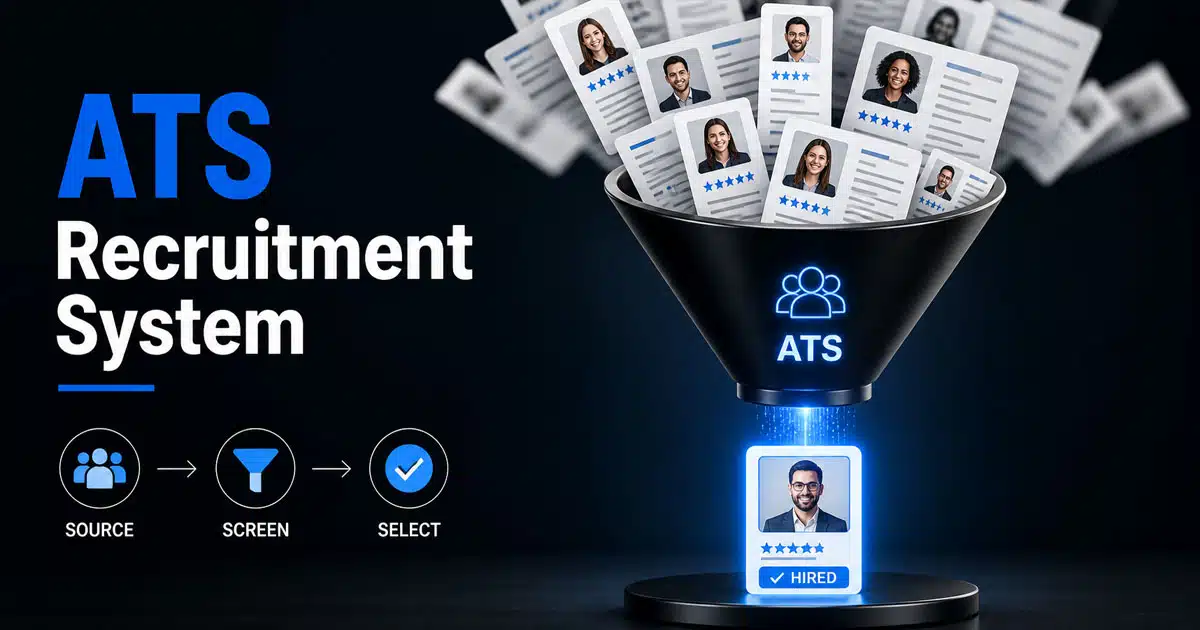
Hiring today moves fast, but many teams still struggle with slow and messy processes. Resumes pile up. Communication breaks. Great candidates slip through the cracks. A better system can change everything. That is where an ATS recruitment system comes in.
An ATS recruitment system brings structure, speed, and clarity to hiring. It helps teams manage applications, track candidates, and make smarter decisions without extra effort. From job posting to final offer, every step becomes more organized and efficient.
This guide covers everything you need to know. You will learn how it works, what features matter, and how it improves hiring outcomes. Whether you manage a growing team or scale recruitment, this guide gives you a clear path forward.
What Is An ATS Recruitment System
An ATS recruitment system, also known as an applicant tracking system ATS, is recruiting software that helps hiring managers and recruiting teams manage the entire recruitment process in one place. It simplifies job posting across multiple job boards, organizes job applicants, and keeps all candidate information structured. From job requisitions to job description creation, the system supports a smooth hiring process for both small teams and large companies.
An ATS system helps track candidates through every stage of the hiring funnel. It handles candidate sourcing, candidate screening, scheduling interviews, and candidate communication. Recruiters can quickly find candidates, compare qualified candidates, and move top candidates forward. It also improves candidate engagement and delivers a better candidate experience through a clear candidate journey and updated application status.
Modern ATS platforms include key features like candidate portals, career sites, background checks, and even payroll integration. Many organizations use an ATS solution to reduce manual tasks, ensure structured hiring, and achieve cost savings. It helps talent acquisition teams attract top talent, manage high-volume hiring, and build a strong employer brand while ensuring compliance and reducing time spent on repetitive work.
How The ATS Recruitment System Works Step By Step
A modern ATS recruitment system brings structure to every stage of the hiring process. It connects job posting, candidate tracking, and communication in one flow. Each step reduces manual tasks and helps hiring teams move faster while keeping candidate information organized and accessible.
Step 1: Job Posting
Hiring managers create job requisitions with a clear job description inside the ATS recruitment system. The system then publishes job openings across multiple job boards and career sites in one go. Around 70% of job seekers rely on job boards, so wide reach improves visibility.
Recruiting teams strengthen recruitment marketing and attract talent faster. The ATS system keeps listings aligned with the hiring cycle. It also supports employer brand consistency across channels. This step builds a strong base for candidate sourcing and ensures better quality job applicants.
Step 2: Application Capture
The ATS applicant tracking system collects job applicants from multiple sources into one candidate portal. It stores candidate information, resumes, and application status in a structured format. Recruiters avoid scattered data and reduce manual tasks.
ATS platforms support high-volume hiring with ease. Reports show recruiters save up to 40% time spent on admin work with ATS software. Talent acquisition teams can view candidates based on role fit and experience. This improves control over the entire recruitment process and keeps applicant information accessible.
Step 3: Candidate Screening
Candidate screening becomes faster with AI resume screening software and applicant tracking software. The system filters candidates based on skills, keywords, and job requirements. Recruiters can quickly find candidates who match the role.
ATS enhances structured hiring and helps reduce unconscious bias when configured well. Recruiting teams compare qualified candidates side by side and identify top candidates efficiently. Around 75% of resumes never reach hiring managers without ATS filters, which highlights the importance of this step in selecting the best candidates.
Step 4: Interview Management
The ATS system helps with scheduling interviews and allows hiring teams to coordinate interviews without delays. Recruiters and hiring managers collaborate effectively and share feedback in one platform. This keeps the hiring funnel organized.
Strong candidate communication improves candidate engagement and creates a positive experience. Studies show companies with clear communication see up to 50% better candidate experience. The system tracks the candidate journey and keeps active candidates updated at each stage.
Step 5: Offer And Onboarding
Recruiters move top candidates to final stages and complete background checks within the ATS solution. The system supports offer management and transitions candidates into the onboarding process smoothly.
ATS recruitment system helps ensure compliance and secure data migration into employee records. It also connects with payroll integration systems like Payrun. Many organizations report cost savings and faster hiring decisions with ATS platforms, making this step crucial for closing the hiring cycle.
Key Features Of ATS Recruitment System
An ATS recruitment system brings multiple tools into one platform to simplify the hiring process. It helps hiring teams manage job applicants, track candidates, and improve decision making. Each feature reduces manual tasks and improves the overall candidate experience across the hiring funnel.
Resume Parsing
Resume parsing is one of the core features of any applicant tracking system ATS. It extracts applicant information from resumes and stores it in a structured format. Recruiters can quickly search and filter candidates based on skills, experience, and job requirements.
ATS software reduces time spent on manual data entry by up to 60%, according to industry reports. This helps recruiting teams handle high volume hiring without delays. It also ensures accurate candidate information, which supports better candidate screening and faster shortlisting of qualified candidates.
Job Distribution
Job distribution allows hiring managers to post job openings across multiple job boards and career sites with one click. The ATS recruitment system connects with popular job boards to expand reach and attract talent faster.
Studies show that companies using ATS platforms increase job visibility by over 50%. This improves recruitment marketing and helps find candidates from diverse sources, especially when combined with dedicated job posting software. It also keeps job postings consistent, which strengthens employer brand and improves candidate engagement from the initial application stage.
Candidate Tracking
Candidate tracking is the backbone of any ATS system. It allows recruiters to track candidates across every stage of the hiring cycle. From initial application to final selection, every action stays recorded in the system.
Applicant tracking software provides real-time updates on application status and candidate journey. Hiring teams can move candidates through the hiring funnel with ease. This improves coordination and ensures no top talent gets missed during the recruitment process.
Interview Management
Interview management helps teams schedule interviews and coordinate interviews without confusion. The ATS solution offers shared calendars and automated reminders to keep the hiring process on track.
Recruiters and hiring managers can collaborate effectively and share feedback in one place. Reports show structured interview processes can improve hiring quality by up to 35%. Clear candidate communication also creates a positive experience and keeps active candidates engaged throughout the process.
Analytics And Reporting
Analytics and reporting give talent acquisition teams clear insights into hiring performance. The ATS recruitment system tracks key metrics like time to hire, source of hire, and conversion rates.
Data-driven hiring helps many organizations improve efficiency and reduce cost per hire. Companies that use analytics in ATS platforms report up to 20% better hiring outcomes. These insights help refine the recruitment process, improve candidate sourcing, and ensure the selection of best candidates consistently.
Benefits Of Using ATS Recruitment System For Businesses
An ATS recruitment system helps businesses streamline the hiring process and improve results at every stage. It reduces manual tasks, improves candidate tracking, and supports faster decisions. Many organizations rely on ATS software and broader recruitment software systems to build efficient, scalable, and data-driven recruitment workflows.
Faster Hiring
An ATS recruitment system speeds up the entire recruitment process. It automates job posting, candidate screening, and scheduling interviews. Hiring managers can move candidates through the hiring funnel without delays. This reduces time to fill open roles.
Reports show companies using ATS platforms reduce time to hire by up to 40%. Recruiters spend less time on repetitive tasks and more time engaging with top candidates. Faster hiring helps businesses secure qualified candidates before competitors do in high-demand markets.
Better Candidate Quality
ATS applicant tracking systems help recruiting teams find candidates that match job requirements more accurately. The system filters job applicants based on skills, experience, and keywords from the job description. This improves candidate sourcing and shortlisting.
Structured hiring also reduces unconscious bias and improves selection quality. Many organizations report up to 30% improvement in hiring outcomes with ATS solutions. Recruiters can focus on best candidates instead of sorting through irrelevant profiles manually.
Improved Candidate Experience
A smooth candidate journey improves how job seekers view a company. The ATS system keeps candidates informed about application status and next steps. Clear candidate communication builds trust and keeps active candidates engaged.
Studies show 60% of candidates expect regular updates during the hiring process. ATS enhances candidate engagement through automated messages and candidate portals. A positive experience helps strengthen employer brand and attracts top talent in competitive markets.
Reduced Hiring Costs
An ATS recruitment system helps reduce cost per hire by cutting manual tasks and improving efficiency. It eliminates the need for multiple tools and reduces reliance on external agencies. Recruiting software centralizes the entire recruitment process.
Many organizations report up to 20% cost savings after adopting ATS platforms. Better recruitment marketing and improved candidate sourcing also reduce spending on job boards. Efficient hiring cycles help businesses allocate resources more effectively.
Stronger Team Collaboration
ATS software allows hiring teams to collaborate effectively in one platform. Recruiters and hiring managers can share feedback, review candidate information, and coordinate interviews without confusion. This improves decision-making.
Data shows collaborative hiring processes improve hiring success rates by over 25%. ATS enhances transparency across the hiring cycle and ensures alignment among stakeholders. This leads to better hiring decisions and a more consistent recruitment process.
ATS Recruitment System Vs Traditional Hiring Methods
An ATS recruitment system transforms how companies handle the hiring process compared to traditional methods. It replaces manual tasks with automation and data. This shift improves speed, accuracy, and candidate experience while helping hiring teams make better decisions at scale, as outlined in our broader guide to applicant tracking system.
Aspect | ATS Recruitment System | Traditional Hiring Methods |
|---|---|---|
Process Speed | Automated workflows reduce time to hire by up to 40–50% | Manual steps slow down the hiring cycle and delay decisions |
Candidate Management | Centralized applicant tracking and structured candidate information | Spreadsheets, emails, and scattered data across systems |
Candidate Screening | AI and keyword filters quickly identify qualified candidates | Manual resume review increases time spent and errors |
Reach And Sourcing | Job posting across multiple job boards and career sites increases reach | Limited visibility and fewer candidate sourcing channels |
Candidate Experience | Automated updates improve candidate engagement and communication | Delayed responses lead to poor candidate experience |
Data And Analytics | Real-time insights on hiring metrics and performance tracking | No structured data or reporting for improvement |
Cost Efficiency | Reduced hiring costs through automation and fewer tools | Higher costs due to manual work and external dependencies |
Collaboration | Hiring teams collaborate effectively in one ATS platform | Communication gaps across emails and documents |
Scalability | Handles high-volume hiring and multiple job openings easily | Difficult to scale for large companies or growing teams |
Compliance And Accuracy | Ensures compliance and reduces human error with structured hiring | Higher risk of errors and compliance issues |
Types Of ATS Recruitment System Available In The Market
An ATS recruitment system comes in different types based on business needs, size, and hiring complexity. Each ATS platform offers unique features and flexibility. Choosing the right ATS helps hiring teams manage the entire recruitment process more efficiently and scale hiring operations with ease.
Cloud-Based ATS
Cloud-based ATS platforms are the most popular today. They run online and do not need installation. Hiring teams can access the ATS system from anywhere. This makes it ideal for remote recruiting teams and global hiring, mirroring the advantages seen when comparing cloud HR vs on-premise HR systems.
Reports show over 70% of companies now prefer cloud ATS software due to flexibility and lower setup costs. These systems support job posting, candidate tracking, and integrations with HR and payroll tools, much like modern cloud HR software. Many organizations choose this type for faster deployment and easier data migration across systems.
On-Premise ATS
On-premises ATS systems are installed on company servers. Businesses control data storage, security, and system updates. This type suits large companies with strict compliance and data policies, similar to how some organizations still lean toward traditional setups in the cloud HRMS vs traditional HR software debate.
However, on-premises ATS requires higher upfront cost and IT support. It also takes more time to set up compared to cloud solutions. Still, some enterprises prefer it for full control over candidate information and internal workflows across the hiring cycle.
Enterprise ATS
Enterprise ATS solutions are built for large companies with complex hiring needs. These systems handle high-volume hiring, multiple job openings, and global recruitment operations. They support advanced workflows and large recruiting teams.
Enterprise ATS platforms offer deep analytics, automation, and structured hiring tools. Research shows large organizations using enterprise ATS improve hiring efficiency significantly due to centralized systems. These tools help coordinate interviews, manage candidate sourcing, and maintain consistency across departments, often alongside the best recruitment software solutions tailored for complex hiring needs.
SMB ATS
SMB ATS systems are designed for small teams and growing businesses. They focus on simplicity, affordability, and ease of use. Startups and mid-sized companies often choose this type to manage hiring without heavy investment.
These ATS solutions reduce manual tasks and help recruiters track candidates efficiently. Many SMB tools offer essential features like candidate screening, job posting, and candidate communication, similar to broader recruitment management software. This type helps businesses build a strong hiring process while keeping costs under control.
AI-Powered ATS
AI-powered ATS systems use automation and machine learning to improve the recruitment process. They analyze resumes, rank candidates based on job requirements, and support better decision-making, much like Payrun's recruitment system.
Modern ATS software with AI can reduce time spent on screening by up to 75%.
These platforms also improve candidate experience through smarter communication and recommendations. AI-driven ATS enhances candidate sourcing, reduces unconscious bias, and helps hiring teams find top talent faster in high-demand markets.
How To Choose The Right ATS Recruitment System
Choosing the right ATS recruitment system can directly impact your hiring success. Not every ATS platform fits every business. You need a system that matches your hiring process, team size, and growth plans while improving efficiency and candidate experience.
Define Hiring Needs
Start with a clear understanding of your hiring process. Identify how many job openings you manage and whether you deal with high-volume hiring. Small teams and large companies have different needs, so the ATS system should match your scale.
Studies show 62% of teams using ATS find better quality candidates compared to manual methods.
A clear requirement list helps you avoid overpaying for features you will not use. It also ensures your ATS solution supports your recruitment process from start to finish.
Check Core Features
Focus on key features like job posting, candidate tracking, candidate screening, and scheduling interviews. A strong applicant tracking system ATS should also support candidate communication and structured hiring.
Most ATS software includes resume parsing, job distribution, and analytics tools that improve efficiency. These features reduce manual tasks and help recruiters track candidates across the hiring funnel. The right ATS enhances the entire recruitment process and improves hiring outcomes.
Evaluate Ease Of Use
Ease of use matters more than complex features. Hiring managers and recruiters should navigate the ATS platform without heavy training. A simple interface improves adoption across the hiring team.
Research shows over 86% of recruiters say ATS improves hiring speed when used effectively. An easy system helps teams collaborate effectively, move candidates faster, and reduce time spent on repetitive work. This leads to better productivity and smoother hiring cycles.
Look For Integrations
An ATS recruitment system should connect with other tools like HR, CRM, and payroll integration platforms. Integration ensures smooth data migration and reduces duplicate work across systems, especially when paired with an all‑in‑one HR management system.
Modern ATS platforms connect with job boards, career sites, and onboarding systems to create a unified workflow. This helps talent acquisition teams manage candidate information and transition candidates into the onboarding process without errors or delays, particularly when using dedicated employee onboarding software for modern HR teams.
Consider Scalability
Choose an ATS solution that can grow with your business. Your hiring needs will change over time, so the system must handle more candidates and job openings without performance issues, and integrate smoothly with broader employee lifecycle management software.
ATS can reduce hiring cycle time by up to 60%, which shows its impact on scaling recruitment.
Scalable ATS platforms support long-term growth, improve cost savings, and help attract top talent consistently. This ensures your hiring strategy stays competitive in high-demand markets.
Common Challenges In ATS Recruitment System And Solutions
An ATS recruitment system improves the hiring process, but it is not perfect. Many organizations face issues with setup, data, and candidate experience. The good news is each challenge has a clear fix when the ATS system is configured and used properly.
Poor Candidate Experience
A complex application process can frustrate job seekers. Long forms, slow portals, and unclear application status reduce candidate engagement. Research shows many candidates drop off when the process feels difficult or confusing.
A simple fix is to optimize the candidate journey. Use a clean candidate portal, short forms, and clear updates. Strong candidate communication improves trust and keeps active candidates engaged. A smooth experience also strengthens employer brand and helps attract top talent in competitive markets.
Resume Screening Errors
ATS applicant tracking systems rely on keywords and filters. Strong candidates can get rejected if resumes do not match job description terms. Reports show up to 75% of resumes never reach hiring managers due to ATS filters.
Recruiters should refine candidate screening rules and review shortlisted profiles manually. Use structured hiring and balanced filters. This helps find candidates based on real skills instead of only keywords. A better setup ensures qualified candidates are not missed during the hiring process.
Data Migration Issues
Data migration is a common problem when teams switch ATS platforms. Around 65% of companies face issues transferring candidate information into a new system.
Clean data before migration and use standardized formats. Choose an ATS solution that supports smooth integration with HR and payroll systems. Proper setup reduces errors and keeps applicant information accurate, following many of the same principles outlined in effective HR data migration best practices. This ensures the entire recruitment process runs without delays.
Limited Customization
Some ATS software does not match unique hiring workflows. Fixed pipelines can slow down recruiting teams and reduce flexibility. Every hiring team has different needs, especially across small teams and large companies.
Select the right ATS that allows custom workflows, job requisitions, and hiring stages. Flexible ATS platforms help teams collaborate effectively and move candidates faster. Customization also improves structured hiring and ensures the system fits your hiring cycle.
Integration Gaps
Many organizations struggle when ATS systems do not connect with other tools. Lack of integration with job boards, CRM, or payroll integration systems creates extra manual tasks. This slows down the hiring funnel.
Choose ATS software that connects with your existing tech stack. Integration with career sites, onboarding process, and background checks creates a smooth workflow. This improves efficiency, reduces time spent, and helps talent acquisition teams manage the entire recruitment process in one place.
ATS Recruitment System Integration With HR And Payroll Software
An ATS recruitment system works best when connected with HR and payroll software. Integration creates a smooth flow of candidate information across systems. It reduces manual tasks, improves accuracy, and helps hiring teams manage the entire recruitment process more efficiently.
Unified Data Flow
Integration allows candidate information to move directly from the ATS system into HR and payroll software. Recruiters no longer need to enter the same data multiple times. This reduces errors and saves time spent on repetitive work, especially when you simplify HR by replacing disconnected tools.
Research shows integrated systems help avoid duplicate data entry and keep all applicant information in one place.
A unified system ensures accuracy across the hiring cycle. It also helps talent acquisition teams manage candidate records and employee data without confusion.
Faster Onboarding
An integrated ATS solution speeds up the onboarding process. Once candidates accept an offer, their details transfer automatically into HR systems and payroll integration tools. This removes delays between hiring and employee setup.
Companies with strong onboarding processes see up to 82% higher retention and 70% better productivity. A faster onboarding experience improves candidate experience and keeps new hires engaged from day one. It also helps recruiters focus on hiring instead of admin tasks.
Improved Efficiency
Integration reduces manual tasks across the entire recruitment process. The ATS recruitment system handles candidate sourcing, scheduling interviews, and candidate communication, while HR and payroll systems manage employee records and payments.
Studies show integration saves time for both recruiters and candidates by reducing system switching. This improves workflow efficiency and allows hiring teams to collaborate effectively. It also helps manage high-volume hiring without slowing down operations, particularly when combined with robust employee management software.
Better Compliance
A connected ATS system helps ensure compliance across hiring and payroll processes. It keeps accurate records of candidate information, background checks, and employee data. This is critical for audits and legal requirements.
Integration also supports consistent data tracking and reporting. Structured systems reduce risks related to data errors and missing records. Many organizations rely on integrated ATS platforms to maintain compliance and transparency throughout the hiring funnel.
Enhanced Insights
Integration improves analytics and reporting across HR and recruitment. The ATS recruitment system tracks hiring metrics, while payroll systems provide cost and workforce data. Together, they give a complete view of performance.
Integrated systems help teams analyze hiring trends, employee costs, and recruitment efficiency, and they benefit from following a structured HRIS migration checklist when upgrading underlying platforms.
These insights support better decision-making and workforce planning. Businesses can attract top talent, control costs, and improve hiring strategies using data from a connected ecosystem.
Metrics You Can Track Using ATS Recruitment System
An ATS recruitment system gives clear visibility into your hiring process through data. It tracks performance across every stage of the hiring funnel. These metrics help hiring teams improve efficiency, reduce costs, and make smarter decisions based on real insights.
Time To Hire
Time to hire measures how fast candidates move from initial application to final selection. It reflects the speed of your hiring process and how quickly recruiters can fill job openings.
Studies show an ATS can reduce hiring cycle time by up to 60%, which directly improves this metric. A shorter hiring cycle helps secure top candidates before competitors. It also improves candidate experience and reduces time spent on open roles, which impacts productivity, especially for distributed teams supported by cloud HR tools.
Cost Per Hire
Cost per hire tracks total recruitment expenses divided by the number of hires. It includes job posting costs, tools, recruiter time, and onboarding expenses.
An ATS recruitment system helps reduce cost per hire by automating manual tasks and improving candidate sourcing efficiency. Industry benchmarks show average hiring costs can reach thousands per role, so tracking this metric helps control budgets and improve ROI across the entire recruitment process.
Quality Of Hire
Quality of hire measures how well new hires perform and stay in the organization. It reflects the success of your candidate screening and selection process.
Companies using ATS platforms report 2–3 times better hiring outcomes in quality and retention. This metric helps recruiting teams focus on selecting the best candidates, not just filling roles. It also improves long-term workforce performance and supports better talent acquisition strategies.
Source Of Hire
Source of hire tracks where successful candidates come from, such as job boards, career sites, or referrals. It helps identify which channels bring the best candidates.
ATS platforms provide detailed reports on candidate sourcing performance. Recruiters can invest more in high-performing channels and reduce spending on low-performing ones. This improves recruitment marketing and ensures better cost savings across hiring campaigns.
Conversion Rates
Conversion rates measure how candidates move through each stage of the hiring funnel. It includes application-to-interview and interview-to-hire ratios.
Data shows hiring funnel metrics help identify drop-offs and improve efficiency. Tracking conversion rates helps hiring teams optimize the candidate journey and improve candidate engagement. It also ensures smoother hiring cycles and better alignment across recruiting teams.
Final Thoughts
An ATS recruitment system changes how businesses approach hiring. It brings structure, speed, and clarity to the entire recruitment process. Hiring teams can track candidates, reduce manual tasks, and make better decisions with real data.
The right ATS system helps attract top talent, improve candidate experience, and support structured hiring at scale. It also connects smoothly with HR and payroll systems, which makes the hiring cycle more efficient and reliable.
Many organizations now rely on ATS platforms to stay competitive in high-demand markets. A well-chosen ATS solution not only improves hiring outcomes but also strengthens employer brand and long-term growth.
FAQs
How Does ATS Handle Passive Candidates In Recruitment?
Yes, an ATS recruitment system helps engage passive candidates through talent pools and candidate sourcing tools. Around 73% of job seekers are passive, so ATS platforms support outreach and candidate engagement effectively.
Can ATS Systems Reject Qualified Candidates By Mistake?
Yes, ATS applicant tracking systems can filter out qualified candidates if resumes do not match keywords or job description terms. Studies show many resumes never reach hiring managers due to ATS screening rules.
Does ATS Support Diversity Hiring Goals?
An ATS system can support structured hiring and reduce unconscious bias when configured properly. It standardizes candidate evaluation and tracks candidates based on skills and experience instead of subjective judgment.
Is ATS Useful For Internal Hiring And Promotions?
Yes, ATS platforms can manage internal hiring by tracking employee applications and job openings within the company. Recruiters can use the same applicant tracking system to move candidates internally.
How Secure Is Candidate Data In ATS Systems?
Yes, modern ATS software includes data security and compliance features to protect applicant information. Systems store candidate information in centralized databases with controlled access.