HR software implementation can feel complex at first. Many HR professionals and HR managers face challenges with current HR systems and incompatible systems. A clear implementation process helps HR teams avoid scope creep and protect data integrity. A strong HRIS implementation process supports data migration, system configuration, and smooth transition from existing systems to a new HR system.
Implementing HR software requires careful project management and a defined project scope. An experienced implementation team and HR software partner work closely with the internal team and different user groups. Proper training, onboarding support, and post implementation support encourage employees and system users to adopt the new software. With proactive support and clear decision-making, HR departments can benefit employees, improve employee experience, and deliver services across the full employee lifecycle.
What Is HR Software Implementation
HR software implementation is the process of setting up and launching a new HR system in your organization. It covers planning, system setup, data migration, and system configuration. HR professionals work with an implementation team and a system provider to replace current HR systems with a new HR software or HRIS solution. The goal is a smooth transition without data loss or disruption to HR processes.
A strong HRIS implementation process also includes project management, change management, and proper training for different user groups. HR managers focus on data integrity, employee data, and report generation. With the right implementation approach and ongoing support, HR teams can improve employee experience, support performance management, and manage the full employee lifecycle through an integrated HR platform.
Key Factors Of HR Software Implementation
HR software implementation depends on more than just choosing a good HRIS system. Clear planning, strong project management, and the right HR software partner make a big difference. HR teams must focus on data integrity, user adoption, and a realistic implementation timeline. Each factor shapes the outcome of your HR system implementation.
Clear Project Scope And Goals
A defined project scope sets the foundation for successful implementation. HR managers and the internal team must agree on goals early. Lack of clarity often leads to scope creep. Studies show that 45% of software implementation projects exceed their budget due to poor planning.
Clear goals help HR departments align the HRIS implementation process with business needs. The implementation team should document HR processes, report generation needs, and system configuration requirements. A strong implementation approach reduces risk and keeps the project team focused.
Data Migration And Data Integrity
HR data is the core of any human resource information system. Poor data migration can delay the implementation process. Research shows that bad data costs companies an average of $12.9 million per year.
HR professionals must review employee records before migrating data from existing systems. Incompatible systems often create errors. A structured HRIS implementation plan ensures accurate employee data transfer. Clean data improves decision making and supports performance management and benefits administration.
Strong Implementation Team And Partner
A skilled implementation team drives better results. HR software implementation requires close coordination between HR staff, the system provider, and the HR software partner. According to McKinsey, projects with strong leadership are 2.4 times more likely to succeed.
The project team should include HR managers, IT experts, and representatives from different user groups. Clear team structure improves communication. When teams work closely, they resolve issues faster and maintain progress within the implementation timeline.
Change Management And User Adoption
Change management plays a critical role in HR system implementation. Employees often resist a new HR system. Gartner reports that 70% of digital transformation projects fail due to poor user adoption.
HR teams must encourage employees and system users through proper training and onboarding support. Training sessions for multiple departments build confidence. A pilot team can gather feedback before full rollout. Strong change management improves employee engagement and ensures a smooth transition.
Training And Ongoing Support
Proper training ensures that HR departments and employees alike use the new HR software effectively. Without training, even the best HRIS solution fails. Studies show that companies with structured training programs see 218% higher income per employee.
Post-implementation support is equally important. Ongoing support and proactive support from the system provider help solve issues quickly. Continuous support strengthens user adoption and protects the long term value of your HR platform.
The Complete HRIS Implementation Steps And Process
Successful hr software implementation follows a structured approach that arranges your systems, people and strategy. The implementation process moves through distinct phases. Each builds on the previous one to make sure your new HR management system delivers the expected value.
Discovery And Needs Assessment
The discovery phase establishes the foundation for your entire hr system implementation. You work with stakeholders during this stage to define what your organization needs from the new system. This involves more than listing features. You assess current hr processes, identify bottlenecks and document where inefficiencies exist in different departments.
Your governance team should include representatives from HR, Finance, IT and Operations. This cross-functional group will give alignment and accountability throughout the hris implementation process. Define decision-making rights and escalation paths for resolving conflicts. Establish specific KPIs to measure success, such as time to approve offers, data accuracy rates or processing speed for compensation cycles.
Vendor Selection And Contract Negotiation
The vendor selection process begins once you understand your requirements. Create a detailed request for proposal that outlines your organization's needs, budgetary constraints and targeted implementation timeline. Send RFPs to at least four vendors because some may be unable to meet specific needs in certain areas.
Schedule demonstrations with three to four finalists. These demos should reflect real-world scenarios your organization faces. Develop scripts based on your most significant requirements. Ask vendors to demonstrate exactly how their system handles multistate tax compliance if that's significant.
Contract negotiation requires careful attention to specific clauses that can save thousands of dollars over time. Annual rate increases often become a contentious point. Vendors may propose increases of 5% or higher, but there's rarely legitimate justification for anything above 3%. Demand transparency. Ask vendors to explain the cost drivers behind proposed increases.
System Configuration And Setup
Configuration transforms the software into a system that works for your specific organization. Set up modules for employee data, compensation bands, organizational structure and headcount forecasting. Establish connectivity with related platforms. These include payroll systems, equity tools and compensation planning software.
Work with your system provider during this phase. Their representatives guide you through designing workflows, configuring security settings and customizing forms. This collaboration takes several months for most organizations, though timelines vary based on complexity. Your service agreement outlines expected duration.
Data Migration And Validation
Data migration represents one of the most significant parts of hr software implementation. Studies show 60% of data migration projects run into delays or exceed budgets. Poor data migration creates problems like system outages, data loss and reporting errors that undermine the entire implementation.
Start by auditing your current datasets. Review employee records, pay bands, performance ratings and other hr data for accuracy. Remove duplicates, correct outdated entries and fill missing fields. This data cleaning step prevents bad data from contaminating your new system. Standardize formats across fields because different systems may store information in different ways.
Set up dual maintenance during the migration period. Continue updating both old and new systems at the same time to maintain business continuity and avoid disruption. This approach makes sure payroll and other functions continue operating while the migration progresses. That's why your company needs to replace current HR systems.
Testing And Quality Assurance
Testing verifies that your new hr software works as intended before launching to the entire organization. Conduct testing in three phases: unit testing, integration testing and user acceptance testing.
Unit testing examines individual components and modules. Integration testing confirms that data flows between the hris system and third-party platforms like payroll and benefits administration software. User acceptance testing involves actual end users who validate the system with realistic, end to end scenarios.
Go-Live And Rollout
The rollout approach you choose influences adoption and success by a lot. Phased rollouts introduce functionality over time. Teams get time to adjust and you can resolve issues before adding complexity. Start with core employee data and payroll functions, then expand to performance management and other modules. Full-scale implementation launches all essential features at once. This delivers benefits faster but risks overwhelming staff.
Timing matters. Avoid launching during high-stress HR periods like performance reviews, benefits enrollment or year end processing. Choose a quiet day that gives people time to explore the new system without competing pressures.
How To Build Your HRIS Implementation Plan
Building your HRIS implementation plan needs four foundational elements that determine whether your HR software implementation succeeds or stumbles. A structured implementation approach sets clear expectations, assigns accountability and creates the framework your project team needs to deliver results.
Define Project Scope And Objectives
Project scope definition starts by asking specific questions about what you need from the new HR system. Are you digitizing administrative tasks? Do you need a solution that emphasizes user adoption through a simple interface, or do you require complex functionality for specialized HR processes? These questions shape your implementation approach and prevent scope creep later.
Your scope should balance present requirements with future growth. Think over what you need today and what capabilities you might need as your organization evolves. The HR software partner you select should offer functionality from each category according to your business strategy and long-term goals.
Assemble Your Implementation Team
Your implementation team structure affects project success. This team oversees the HR system implementation from planning through post-implementation support and prevents delays caused by inconsistent communication or unclear decision-making.
Effective teams include representatives from multiple departments. You need:
- Project Lead: An internal person who owns the HRIS implementation process and keeps all team members arranged. This role requires someone who can make decisions quickly and rally people around shared objectives. They help communication between your organization and the software implementation vendor.
- IT/Tech Expert: Someone familiar with your current HR systems and existing infrastructure. They map realistic implementation timelines, handle technical integration with incompatible systems and confirm the new system works with your HR platform ecosystem.
- HR Professional: A mid to senior level person who understands your HR processes, employee lifecycle workflows and specific pain points. They design workflows, conduct testing and confirm that the system configuration will benefit employees and HR staff alike.
- HRIS Consultant: An expert from your software provider who guides your internal team through HR system setup and shares best practices from other successful implementations while offering support.
Create A Realistic Implementation Timeline
Implementation timelines must reflect actual capacity, not wishful thinking. Rushing the process creates problems that delay go-live dates further than a realistic schedule would have. Your timeline should account for system configuration, data migration, training sessions and the time needed for employees to learn the new HR software.
Work with your HR software partner to establish achievable dates. Vendors understand how long each implementation phase requires based on your organization's size and complexity. Strong collaboration during timeline creation keeps everyone arranged on expectations.
Establish Clear Milestones And Deliverables
Milestones create accountability and provide checkpoints to measure progress. Break your implementation process into specific phases with defined deliverables for each stage. These markers help your project team track advancement and identify issues early.
Key milestones include functional specifications approval, data migration completion, system configuration sign-off, user acceptance testing completion and training program delivery. Each milestone should have explicit success criteria that determine whether you can proceed to the next phase.
Common Challenges During HR Software Implementation
HR software implementation often looks simple on paper. Reality feels different. Many HR teams face delays, data issues, and low user adoption during the HRIS implementation process. Research shows that nearly 70% of digital transformation projects fail due to people and process gaps. Clear planning reduces risk.
Unclear Project Scope
A vague project scope creates confusion. HR managers may add new features mid-project. Scope creep increases cost and delays the implementation timeline. PMI reports that 52% of projects experience scope changes.
Solutions:
- Define clear HR system implementation goals
- Document HR processes early
- Align project team and stakeholders
- Approve changes through formal review
Poor Data Migration
HR data errors damage trust. Migrating data from existing systems to a new HR system often reveals missing employee records. Gartner estimates poor data quality costs organizations $12.9 million annually.
Solutions:
- Audit employee data before migration
- Clean duplicate or outdated records
- Test data migration in phases
- Assign data integrity checks to HR staff
Low User Adoption
Employees resist a new system. Lack of proper training reduces confidence. Gartner states that 70% of transformation failures link to poor change management.
Solutions:
- Conduct structured training sessions
- Create a pilot team for early feedback
- Offer employee onboarding support for different user groups
- Encourage employees with clear communication
Weak Change Management
HR departments often focus on system setup but ignore change management. A new HRIS system affects the entire employee lifecycle. Without a clear plan, employee engagement drops.
Solutions:
- Build a change management roadmap
- Involve HR professionals early
- Share benefits of the HR solution
- Collect feedback and adjust quickly
Limited Internal Resources
Many HR teams work with limited resources. Daily HR functions continue during software implementation. McKinsey reports that resource gaps increase project failure rates by 30%.
Solutions:
- Assign a dedicated implementation team
- Work closely with an HR software partner
- Set a realistic implementation timeline
- Reduce non-essential tasks during rollout
Integration Issues With Existing Systems
Incompatible systems create technical delays. Payroll, benefits administration, and performance management tools must connect with the new HR platform. Integration errors affect report generation and decision-making.
Solutions:
- Review current HR systems before selection
- Confirm integration capability with the system provider
- Test system configuration before go live
- Use an integrated system approach
Lack Of Ongoing Support
Post-implementation support often gets overlooked. After launch, system users face questions. Without proactive support, user adoption slows and frustration grows.
Solutions:
- Secure post-implementation support in contract
- Schedule regular system reviews
- Offer ongoing support for HR departments
- Monitor user feedback and system performance
Best Practices For Successful HR System Implementation
HR software implementation requires more than technical setup. A clear plan, strong change management, and active vendor support increase success rates. Research from McKinsey shows that projects with structured governance are 2.4 times more likely to succeed. The right approach helps HR teams avoid delays and maximize value from their HR system implementation.
Define Clear Goals Early
Clear goals guide the entire HRIS implementation process. HR managers must align with Payroll, Benefits, Recruiting, and leadership before system setup begins. A defined project scope reduces confusion and prevents scope creep. PMI reports that poor requirements management causes 37% of project failures.
The HR system should address both current HR processes and future growth. Document must have features, compliance needs, and scalability expectations. A focused implementation approach keeps the project team aligned and improves decision-making throughout the implementation timeline.
Build Strong Change Management
Change management directly affects user adoption. Gartner states that 70% of digital transformation failures link to employee resistance. HR professionals must communicate how the new HR system benefits employees and managers.
Executive sponsors should support the HR software implementation publicly. Use clear communication channels and structured training sessions for different user groups. Early involvement of the core team builds trust. Strong communication increases employee engagement and improves long-term HRIS system success.
Use Phased Rollout Strategy
A phased rollout reduces pressure on HR departments. Many organizations start with Payroll and core HR functions before expanding to benefits administration or performance management. Deloitte research shows phased software implementation improves adoption rates by over 30%.
Core components required for go-live should receive priority. Later phases can include advanced modules. This structured rollout supports smooth transition and protects daily HR operations. It also allows time to test system configuration and data integrity before full deployment.
Collaborate Closely With Vendor
Strong collaboration with your HR software partner ensures smoother HR system implementation. Clear communication with the system provider reduces technical gaps and integration issues. Studies show vendor collaboration improves project delivery timelines by up to 25%.
Your HRIS solution should integrate with existing systems and payroll platforms. Regular progress reviews keep the implementation team aligned. A responsive vendor offers proactive support and reduces pressure on internal IT teams during critical stages.
Plan Ongoing Training And Support
Post implementation support determines long-term success. Employees need structured onboarding support and refresher training. Research from IBM shows that companies with strong training programs see 218% higher income per employee.
Evaluate the vendor’s support model before go live. Ensure the HR platform can adapt to workforce changes and compliance updates. Continuous training strengthens user adoption and protects employee data accuracy. Ongoing support keeps your HR solution effective across the full employee lifecycle.
How Payrun Makes HR Software Implementation Easier
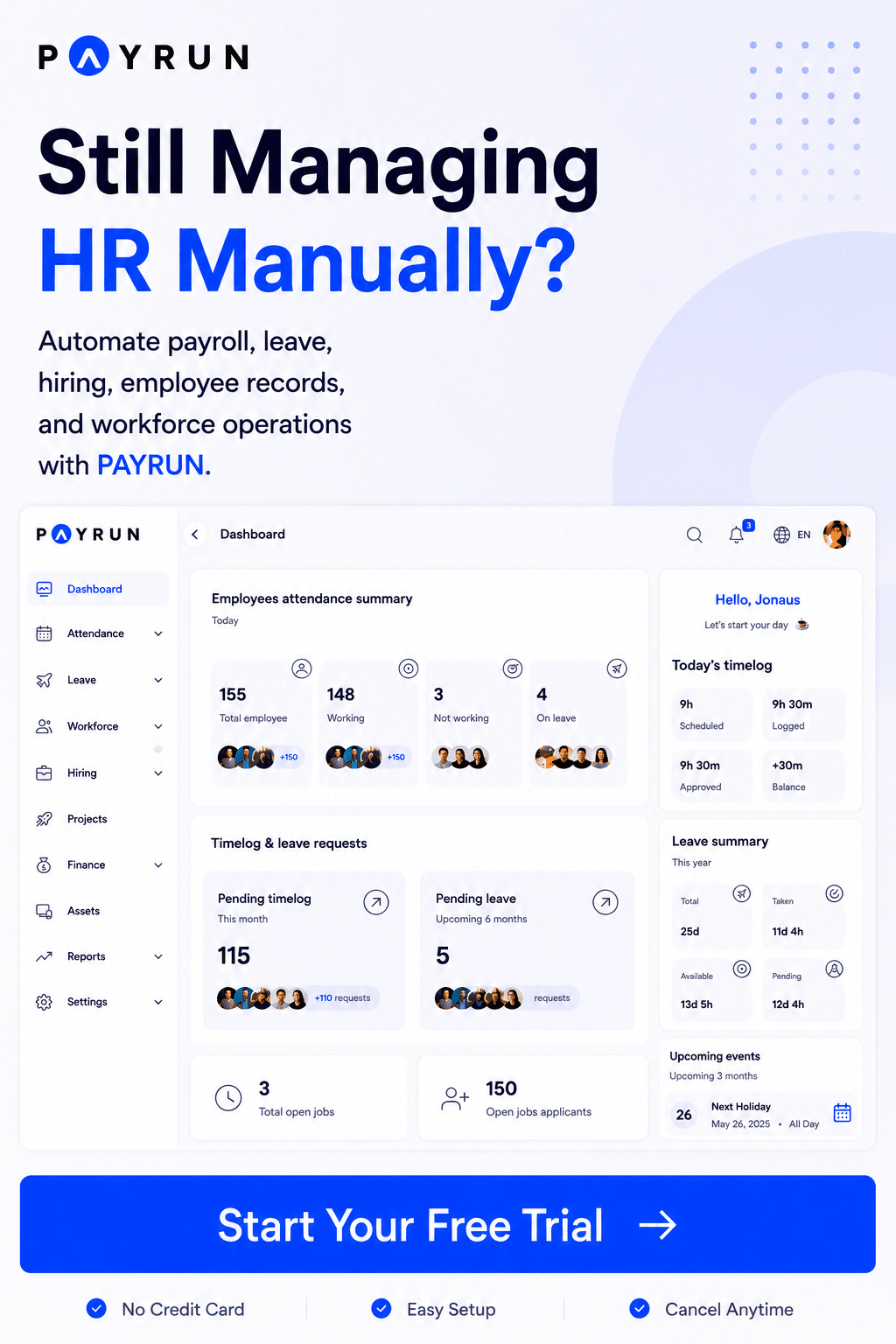
Payrun simplifies HR software implementation with an all-in-one HR platform. HR teams can manage payroll, employee data, leave, and performance management in one integrated system. This reduces reliance on incompatible systems and supports a smooth transition from existing systems. A clear implementation process and guided system configuration help HR professionals set up the new HR system faster.
Payrun supports the full HRIS implementation process, from data migration to post-implementation support. The implementation team works closely with your internal team and different user groups. Proper training and onboarding support improve user adoption. With proactive support and automated workflows, HR departments protect data integrity and improve employee experience across the full employee lifecycle. You can enjoy Payrun at a suitable price.
FAQs
Does HR Software Implementation Improve Compliance For Multi Location Companies?
Yes. A structured HR software implementation helps standardize HR processes across locations. A modern HRIS system centralizes employee data, tax rules, and policy updates. This reduces compliance risk and improves reporting accuracy across multiple companies.
Can Small Businesses Handle HRIS Implementation With Limited Resources?
Yes. Small HR teams can manage HRIS implementation with a clear project scope and the right HR software partner. Cloud-based HR solutions reduce IT burden. Phased rollout and vendor support also help manage limited internal resources.
Is HR Software Implementation Worth The Investment For Growing Teams?
Yes. A well-planned HR system implementation improves employee experience and decision-making. Automated workflows reduce manual tasks. Over time, better data integrity and performance management tools increase productivity and ROI.
Do You Need IT Support During HR System Implementation?
Yes. IT support ensures system configuration, security settings, and integration with existing systems work properly. An integrated HR platform connects payroll, benefits administration, and other tools. Technical oversight reduces errors and protects employee data.
How Long Does HR Software Implementation Take For Mid Size Companies?
Most mid size companies complete the HRIS implementation process within three to six months. Timeline depends on data migration complexity, number of user groups, and system customization. Clear goals and strong vendor collaboration keep the implementation timeline on track.