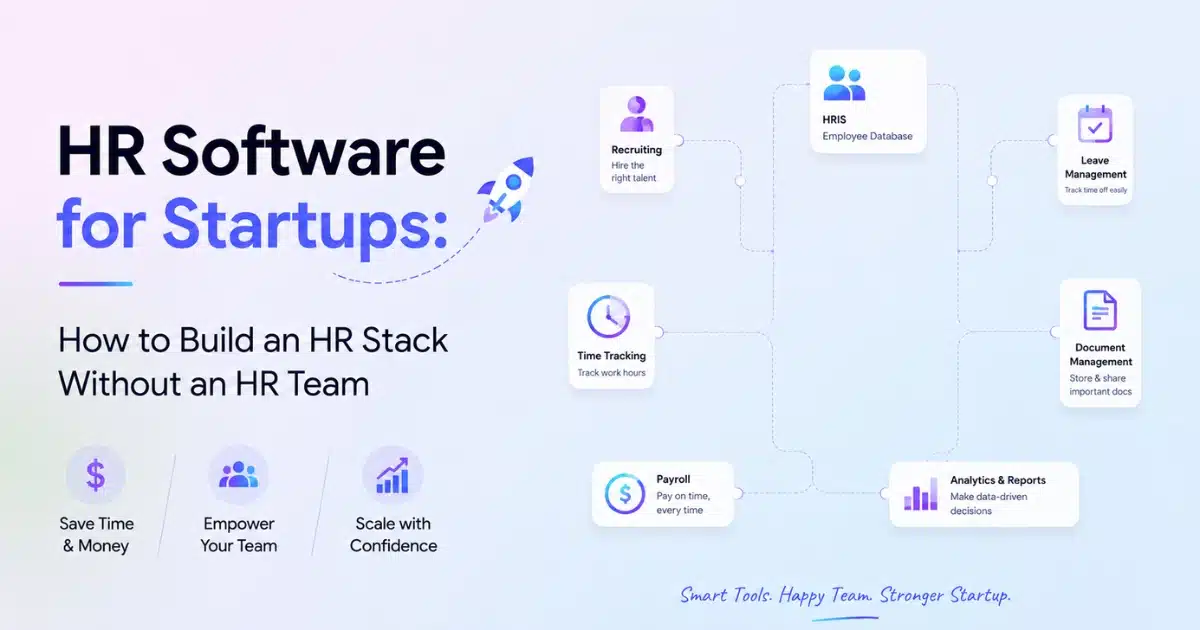
Startups move fast. One month you are hiring your first employee, and the next month your team has doubled. Amid product launches, customer acquisition, and fundraising efforts, people operations often become an afterthought. Yet, many founders quickly realize that managing employees without the right systems creates unnecessary complexity.
At Payrun, we have worked closely with growing companies and observed a common pattern. Teams often rely on spreadsheets, emails, and disconnected business tools during the early days. While this approach may work temporarily, it rarely scales as organizations expand.
The reality is simple: every company, regardless of size, needs effective human resource management. The challenge is that most startups cannot afford dedicated HR departments or large hr teams during their early stages.
Fortunately, modern hr software for startups has changed the game. Today, startups can automate critical hr tasks, improve compliance, and create exceptional employee experiences without building a large HR department.
In this guide, we will explain how founders and operators can build an efficient HR stack, choose the right hr software, and establish structured hr processes that support sustainable growth.
Why Startups Need HR Software Earlier Than They Think
Many founders assume that HR becomes important after reaching 50 or 100 employees. In reality, people operations become critical much earlier.
Even very early stage startups face responsibilities such as:
- Hiring employees
- Processing payroll
- Managing leave requests
- Storing contracts
- Tracking attendance
- Maintaining compliance records
Without proper systems, small administrative issues quickly become larger operational risks.
Modern hr software allows founders to automate repetitive work and create consistency from the beginning. This is particularly important for early stage startups that must operate efficiently with limited resources.
As organizations experience rapid growth, manual processes become increasingly difficult to maintain. What works for five employees often breaks at twenty.
For startups with ambitious growth plans, investing in software for startups is no longer optional. It is operational infrastructure.
Expert Insight: We often tell founders that HR software is not simply an administrative expense. It is a growth enabler that creates repeatable systems before operational chaos appears.
Common HR Challenges Without Dedicated HR Teams
Many startups underestimate the hidden costs of weak people operations.
Common hr challenges include:
- Employee information spread across spreadsheets
- Delayed payroll calculations
- Inconsistent onboarding
- Poor visibility into attendance
- Difficulty maintaining compliance records
- Lack of performance documentation
Without dedicated hr teams, founders and managers often become accidental HR administrators.
This creates two problems:
First, leaders spend time on administrative work rather than strategic initiatives.
Second, inconsistent hr processes create risks that become harder to fix later.
Effective hr management starts with creating systems that reduce manual work while improving accuracy.
Early Stage Startups Need Scalable Systems From Day One
Founders often believe sophisticated systems can wait until later stages. However, early stage startups benefit significantly from establishing scalable operations early.
As companies grow, hiring accelerates, new departments emerge, and organizational complexity increases.
Startups building remote organizations or distributed teams face even greater challenges because employee information, communication, and approvals occur across multiple locations.
Companies planning for global hiring or managing global teams must also consider additional compliance and payroll complexities.
A scalable hr platform helps startups:
- Centralize employee information
- Standardize workflows
- Support remote work
- Maintain compliance
- Improve visibility into workforce operations
Strong systems today reduce friction tomorrow, especially for organizations using HRM software to manage and support a remote workforce.
What Is An HR Stack?
An HR stack refers to the collection of tools and technologies used to manage people operations throughout the employee lifecycle.
A typical startup HR stack may include:
- Recruitment software
- Payroll systems
- Attendance software
- Performance solutions
- Benefits tools
- Employee databases
- Communication systems
Some companies use multiple hr tools, while others prefer a unified hr platform.
For startups, simplicity usually wins.
A centralized hr system reduces duplication, improves efficiency, and supports better decision-making.
Many modern startups increasingly adopt a human resource information system that combines several functions into a single platform.
This approach simplifies administration and creates stronger operational consistency.
Employee Data: The Foundation Of Every HR System
Every company generates information about its workforce. Managing that information effectively is essential.
Accurate employee data enables organizations to make informed decisions regarding hiring, compensation, retention, and workforce planning.
Important categories of employee data include:
- Personal information
- Employment records
- Compensation history
- Leave balances
- Tax information
- Emergency contacts
- Benefits details
Without centralized storage, employee data often becomes fragmented across spreadsheets and emails.
A modern hr system provides secure access controls while ensuring that sensitive information remains protected.
For startups, effective data management begins with a single source of truth.
HR Data Drives Better Business Decisions
Many founders underestimate the strategic value of hr data.
Well-organized hr data can reveal:
- Hiring trends
- Employee retention patterns
- Workforce costs
- Productivity insights
- Leave utilization
As businesses scale, leadership teams rely increasingly on advanced analytics and workforce insights to guide decisions.
Modern hr software generates valuable hr reports that help leaders evaluate team performance and resource allocation, particularly when underpinned by robust HR workflow automation.
Data-driven companies often make better workforce decisions because they have visibility into the metrics that matter.
Data Management Becomes Critical As Teams Grow
Good data management is no longer optional for startups.
As organizations scale, data volume grows rapidly. Employee records, payroll information, attendance logs, and compliance documents accumulate quickly.
Poor data management creates risks such as:
- Missing documentation
- Payroll errors
- Compliance issues
- Security vulnerabilities
A strong hr platform centralizes information and reduces operational friction.
At Payrun, we believe startups should establish good data practices early because replacing fragmented, disconnected HR tools with a unified platform later becomes significantly more expensive.
Core HR Functions Every Startup Should Prioritize
Building an effective HR stack does not require dozens of applications.
Most startups should focus on essential core hr functions first, often by adopting an all-in-one HR management system for growing teams.
Key core hr capabilities include:
Employee Records Management
Maintaining accurate employee records ensures organizations have access to critical information whenever needed.
Centralized records simplify audits and support better compliance.
Payroll Management
Reliable payroll management is one of the most important responsibilities for any employer.
Employees expect timely salaries, accurate deductions, and accessible pay stubs.
Mistakes in payroll directly impact trust.
Attendance And Time Tracking
Effective time tracking allows organizations to understand productivity, attendance, and work patterns, especially when supported by specialized time tracking software.
For startups with flexible work environments, robust time tracking and modern attendance tracking systems help managers maintain visibility without creating unnecessary oversight.
Leave Administration
Leave management supports employee well-being while improving operational planning.
Accurate leave tracking also strengthens labor law compliance, especially when supported by modern employee leave tracking systems.
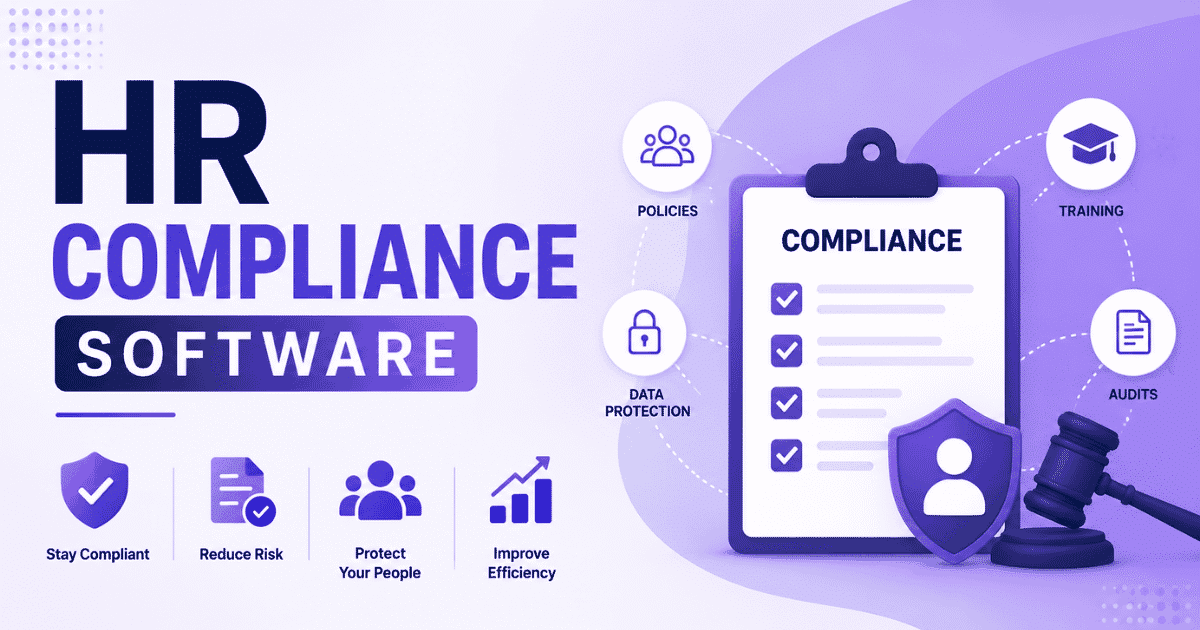
Compliance Support
Companies must maintain proper records and follow applicable employment regulations.
Integrated compliance tools help startups reduce administrative burdens while supporting legal compliance requirements.
Benefits Administration Helps Build Stronger Teams
Employee benefits have become increasingly important in attracting and retaining talent.
Effective benefits administration allows startups to manage:
- Health benefits
- Insurance plans
- Leave policies
- Allowances
- Reimbursement programs
Strong benefits administration improves employee satisfaction while supporting retention efforts.
The best hr software often includes tools that support benefits administration through centralized workflows and reporting.
As startups grow, efficient benefits administration becomes a competitive advantage.
Benefits Management Supports Workforce Growth
Modern employees expect transparency around compensation and benefits.
Effective benefits management creates consistency and fairness across the organization.
Strong benefits management also reduces manual work for administrators and improves the employee experience.
As startups scale globally, benefits management becomes increasingly complex, especially when supporting employees across multiple regions.
Companies with global workforce strategies often rely on specialized systems to manage benefits efficiently.
Why Payroll Management Deserves Special Attention
Few functions are more critical than payroll management.
Employees expect accurate and timely compensation every pay cycle.
An effective payroll system should help companies manage:
- Salary calculations
- Deductions
- Taxes
- Benefits
- Reimbursements
Maintaining accurate payroll data is essential for reporting and compliance.
Modern automated payroll solutions, such as a dedicated payroll management system, significantly reduce errors while improving operational efficiency.
For startups expanding internationally, global payroll capabilities become increasingly important, making payroll software for startups and growing teams a critical part of the HR stack.
Managing compensation across countries introduces additional compliance considerations that require specialized systems.
At Payrun, we often see startups move from spreadsheets to dedicated payroll software once manual processes begin slowing growth.
The earlier companies establish reliable payroll operations, the easier future scaling becomes.
Time Tracking Supports Productivity And Compliance
Many startups underestimate the importance of time tracking.
However, strong time tracking processes support:
- Attendance management
- Overtime calculations
- Leave planning
- Workforce reporting
For remote organizations and distributed teams, accurate time tracking improves visibility while maintaining flexibility.
Reliable systems also help companies meet labor law compliance requirements.
When integrated into an hr system, time tracking data becomes part of broader workforce analytics and reporting.
Strong foundations today create operational resilience tomorrow.
Applicant Tracking Simplifies Hiring At Scale
Hiring is one of the most important activities for growing companies. Yet many startups still manage recruitment through spreadsheets and email threads.
As headcount increases, the hiring process becomes harder to manage manually. Job applications get lost, interview feedback becomes inconsistent, and communication slows down.
This is where applicant tracking becomes valuable, and a dedicated applicant tracking system can transform how startups manage hiring at scale.
Modern applicant tracking systems help startups organize recruitment activities from the first application to the final offer.
A strong applicant tracking solution typically includes:
- Resume management
- Interview scheduling
- Candidate pipelines
- Collaboration features
- Reporting dashboards
Startups posting roles across multiple platforms can also centralize job postings in one place, improving hiring efficiency.
For founders who are scaling quickly, applicant tracking creates a more structured recruitment experience and reduces administrative work.
As companies grow, strong hiring practices become a competitive advantage.
Employee Self Service Creates Better Employee Experiences
Employees increasingly expect workplace systems that are simple and accessible.
Traditional HR models often force employees to rely on administrators for routine requests. Modern companies are moving toward employee self service capabilities that empower employees to manage information independently.
With employee self service, employees can:
- Update personal information
- Access documents
- Submit leave requests
- View attendance records
- Download payroll information
Effective employee self service reduces administrative burdens while improving transparency.
The best hr software often provides intuitive interfaces that make HR interactions simple for everyone.
When evaluating solutions, startups should prioritize a user friendly interface because employee adoption plays a major role in long-term success.
Employee Self Service Portals Improve Operational Efficiency
Many organizations now rely on dedicated employee self service portals to simplify everyday interactions.
Modern employee self service portals allow teams to access information anytime and from anywhere.
This is particularly useful for startups with remote employees and global teams.
A centralized hr platform with self-service capabilities reduces repetitive requests and enables managers to focus on strategic work rather than administrative tasks.
Companies that invest in accessible systems often experience higher satisfaction and stronger operational efficiency.
Employee Engagement Drives Startup Growth
One of the biggest misconceptions in startup culture is that employee experience can wait until later stages.
In reality, employee engagement directly affects productivity, retention, and company culture.
High levels of employee engagement often lead to:
- Better collaboration
- Higher retention rates
- Improved performance
- Stronger innovation
Modern hr software supports employee engagement through feedback systems, recognition programs, and transparent communication.
Organizations with strong employee engagement practices frequently outperform competitors because employees feel connected to the company's mission.
As startups scale, maintaining culture becomes more difficult. Strong systems help preserve consistency across growing teams.
Performance Management Should Start Early
Many founders postpone performance management until their companies become larger. However, startups benefit significantly from early performance structures.
Effective performance management creates clarity around expectations, growth opportunities, and accountability.
Strong performance management practices include:
- Goal setting
- Regular feedback
- Career development
- Recognition programs
Companies often use performance management tools to simplify evaluations and support employee development.
Rather than relying solely on annual reviews, many organizations adopt continuous feedback models.
When implemented correctly, performance management strengthens retention and helps teams align around shared objectives.
Performance Reviews Create Accountability And Growth
Regular performance reviews provide valuable opportunities for feedback and development.
Well-designed performance reviews help organizations:
- Identify strengths
- Address challenges
- Support career growth
- Improve productivity
Leaders can also use key performance indicators to measure outcomes objectively.
Tracking performance metrics enables organizations to make more informed talent decisions and support long-term development.
For growing startups, structured reviews create transparency and encourage continuous improvement.
HR Challenges Increase As Companies Scale
As organizations expand, new hr challenges emerge.
Common challenges include:
- Multi-location workforces
- Compliance complexity
- Cross-border payroll
- Hiring at scale
- Managing remote employees
Startups that delay HR investments often face operational bottlenecks later.
This is why many founders begin evaluating hr software earlier than expected.
The right systems reduce risk while supporting sustainable growth.
Best HR Software Features Startups Should Prioritize
Choosing the best hr software requires more than comparing pricing pages.
Founders should evaluate whether solutions support current needs and future growth.
The best hr software for startups usually includes:
Core HR Capabilities
Effective core hr functions remain the foundation of every people operation.
A strong solution should provide:
- Employee records
- Attendance management
- Leave administration
- Payroll support
Reliable core hr capabilities create operational consistency as businesses grow.
Payroll And Global Expansion Support
Companies planning international growth should evaluate global payroll capabilities.
Managing compensation across countries introduces additional complexity related to taxes, currencies, and regulations.
Organizations with global hiring strategies often require systems capable of supporting both local and international teams.
Reliable global payroll tools help companies scale with confidence.
Automation And Workflow Management
Modern organizations increasingly rely on automated workflows to reduce manual work.
Examples include:
- Leave approvals
- Onboarding sequences
- Document requests
- Payroll approvals
Efficient automated workflows improve productivity and reduce errors.
Strong hr workflows also ensure consistency across departments.
Compliance And Reporting
Employment regulations continue to evolve across regions.
Integrated compliance tools help organizations maintain documentation, improve reporting, and support regulatory obligations.
Access to hr reports provides leadership with valuable workforce insights.
For startups, compliance becomes easier when systems are built into daily operations.
What Makes The Best HR Software Different?
Not all solutions are created equal.
The best hr software combines functionality, usability, and scalability.
When evaluating hr software, founders should consider:
- Ease of implementation
- Integration capabilities
- Security standards
- Customer support
- Long-term scalability
A user friendly interface often determines whether employees actually adopt the platform.
Another important factor is ongoing support quality. Responsive vendors help companies resolve issues quickly and maintain operational continuity.
Many startups also look for a free plan when exploring options during early growth stages, making Payrun one of the best HR software options for small businesses.
However, founders should evaluate long-term value rather than price alone.
How Modern HR Software Supports Growing Companies
Today's modern hr software does much more than digitize paperwork.
A strong hr platform can centralize operations, automate repetitive work, and improve workforce visibility.
Leading providers now offer:
- Payroll automation
- Attendance systems
- Performance tracking
- Recruitment tools
- Benefits management
- Reporting dashboards
As organizations scale, integrated systems become increasingly valuable.
Companies using fragmented tools often encounter duplicate data, inconsistent records, and operational inefficiencies.
This is why many businesses transition to a unified cloud based hr platform that supports long-term growth.
Why Small Businesses Need Scalable HR Infrastructure
Many founders assume enterprise-grade systems are only relevant for large companies.
In reality, small businesses often benefit the most from automation.
As small businesses grow, administrative complexity increases rapidly.
Investing in scalable hr infrastructure early helps companies avoid costly transitions later.
Strong systems support:
- Hiring growth
- Payroll accuracy
- Compliance
- Workforce management
Whether companies employ ten people or one hundred, adopting feature-rich HR software for small businesses and other effective hr software for startups creates operational consistency.
The goal is not simply to manage HR. The goal is to build systems that grow alongside the business.
How To Choose The Right HR Software For Startups
Selecting the right hr software can feel overwhelming because there are hundreds of solutions available in the market. The challenge is not finding software. The challenge is finding software that aligns with your company's current needs and future ambitions.
When evaluating hr software, startups should avoid chasing long feature lists. Instead, focus on the problems that need immediate solutions and use frameworks that set up HR tools right for startup growth.
Ask questions such as:
- Does the platform support payroll?
- Can employees access information independently?
- Does it scale with future hiring?
- Does it support compliance requirements?
- Is the interface easy to use?
The best software for startups simplifies work rather than adding complexity.
For many founders, the ideal solution combines core hr, payroll, attendance, and employee management within a single hr platform.
Why HR Teams Benefit From Automation
Even companies with dedicated hr teams rely heavily on automation.
Administrative work consumes significant time. Tasks such as leave approvals, attendance updates, document collection, and payroll calculations can quickly overwhelm small teams.
Automation helps organizations reduce manual effort across various daily hr processes, and the broader benefits of HR automation for modern businesses extend to accuracy, compliance, and employee experience.
Examples include:
- Automated leave approvals
- Attendance synchronization
- Document storage
- Payroll processing
- Employee notifications
Efficient systems allow hr professionals to focus on strategy rather than repetitive work.
This becomes even more important for startups operating without dedicated hr teams.
How Employee Onboarding Shapes Early Experiences
A new hire's first few weeks often determine their long-term success.
Strong employee onboarding helps employees understand expectations, company culture, and responsibilities from day one.
Without structured onboarding, companies often experience:
- Delayed productivity
- Inconsistent training
- Poor employee experiences
- Higher turnover rates
Modern hr software supports onboarding through automated checklists, digital documentation, and workflow management, and dedicated employee onboarding software makes these processes even more consistent.
Organizations with strong onboarding practices often see higher retention and stronger employee engagement.
Why Communication Tools Matter In Distributed Workplaces
Communication is one of the most overlooked areas of HR technology.
As startups expand and support remote work, effective communication tools become essential.
Teams rely on communication tools to:
- Share updates
- Coordinate projects
- Deliver announcements
- Support collaboration
Startups with remote employees or distributed teams especially benefit from centralized systems that connect people across locations.
Integrated communication tools also improve transparency and strengthen workplace culture.
Managing Payroll Across Borders
International growth creates exciting opportunities, but it also introduces complexity.
Companies hiring internationally often face challenges related to:
- Local regulations
- Tax requirements
- Currency conversions
- Benefits structures
This is where global payroll becomes essential.
A reliable global payroll solution helps companies maintain compliance while ensuring accurate payments to employees across different countries.
Organizations planning global hiring should evaluate whether their systems can support expansion into new markets.
Startups building international operations require solutions capable of handling increasingly complex payroll environments.
How Payroll Processes Affect Employee Trust
Employees rarely think about payroll until something goes wrong.
Delayed salaries or calculation errors can damage trust quickly.
Efficient payroll processes ensure employees receive compensation accurately and on time.
Strong payroll processes also help businesses maintain compliance and improve operational efficiency.
Modern automated payroll systems reduce human error and simplify administration.
For founders responsible for managing payroll, automation often saves significant time each month.
At Payrun, we believe payroll is more than an administrative task. It is a trust-building function that directly impacts employee satisfaction.
The Role Of HR Platforms In Startup Growth
A modern hr platform serves as the operational backbone of people management.
Rather than relying on disconnected applications, startups increasingly prefer unified systems.
An integrated hr platform allows organizations to manage:
- Employee records
- Attendance
- Leave
- Payroll
- Performance
- Reporting
The best hr platforms create seamless experiences for both employees and administrators.
As startups scale, centralized systems reduce complexity and improve visibility.
This is especially valuable for small businesses that need enterprise-grade functionality without enterprise-level complexity.
How Payrun Supports Growing Startups
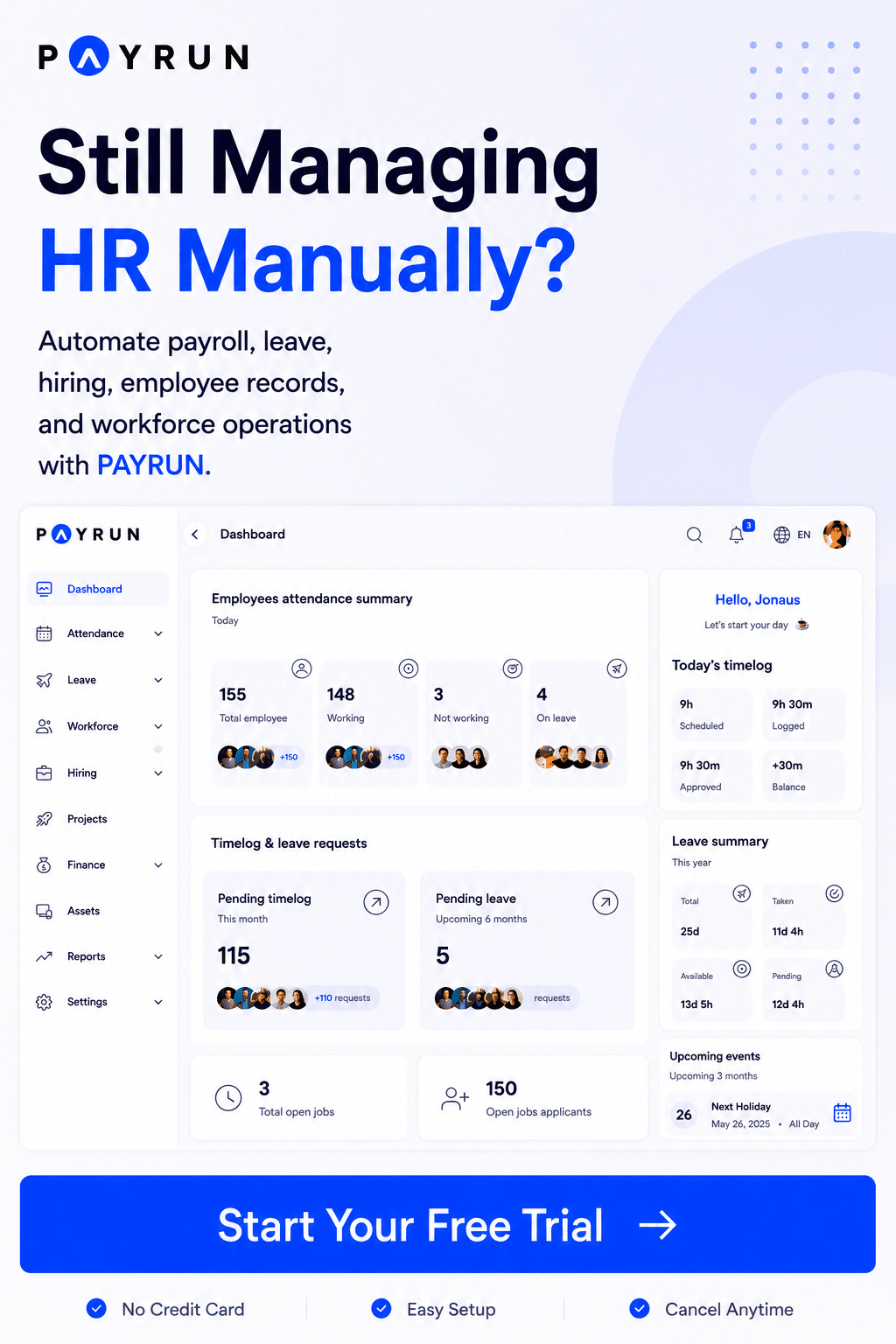
At Payrun, we understand the realities startups face because people operations become increasingly complex as teams grow, which is why we continue to innovate our HR management features.
Our goal is simple: help companies manage HR efficiently without building large administrative departments.
As an all-in-one hr platform, Payrun supports essential core hr activities, including:
- Employee information management
- Attendance tracking
- Leave management
- Payroll administration
- Workforce visibility
By centralizing operations, startups can reduce manual work and establish scalable processes early.
Whether organizations are local businesses, small and medium-sized businesses adopting HR and payroll software, or SaaS companies needing specialized HR and payroll software for software businesses and a trustworthy HR management partner like Payrun, strong systems create stronger foundations.
For startups seeking practical software for startups, the focus should always remain on scalability, simplicity, and operational efficiency.
Explore how Payrun can support your growth journey at https://payrun.app/.
Why Best HR Platforms Focus On User Experience
Technology adoption often depends on usability.
Even powerful systems fail when employees find them difficult to navigate.
The best hr platforms prioritize simplicity, accessibility, and intuitive design.
Features such as employee self service, mobile access, and streamlined workflows improve adoption rates across the organization.
Organizations should also look for platforms that provide strong reporting capabilities, automation, and flexibility.
As companies evolve, systems should evolve with them.
Human Resource Information System Versus Standalone Tools
Many founders ask whether they should purchase multiple applications or invest in a centralized solution.
A human resource information system consolidates multiple functions into a unified environment.
Instead of managing separate applications for payroll, attendance, and recruitment, companies can centralize operations.
Benefits include:
- Improved efficiency
- Better reporting
- Stronger security
- Easier compliance
- Reduced duplication
A centralized human resource information system often provides better long-term value than maintaining numerous disconnected applications.
For small businesses, simplicity frequently delivers better outcomes than complexity.
Leading HR Software Helps Companies Scale Faster
The market offers countless solutions, but leading hr software providers share common characteristics.
They typically deliver:
- Automation capabilities
- Reporting features
- Scalable infrastructure
- Security controls
- Integration support
The best hr software does not simply manage data. It enables growth.
Founders should select systems that align with long-term growth plans rather than immediate requirements alone.
Investing in scalable systems today prevents expensive migrations tomorrow.
Final Thoughts
Strong people operations are no longer reserved for large enterprises.
Today's hr software for startups enables founders to build efficient operations without hiring large HR departments.
Whether you are among very early stage startups making your first hire or growing companies preparing for international expansion, investing in the right systems creates long-term advantages.
The future belongs to organizations that combine agility with operational excellence.
The best hr software for startups supports employees, reduces administrative burdens, strengthens compliance, and creates better workplace experiences.
As companies continue to grow, strong systems become a competitive advantage rather than a back-office function.
At Payrun, we believe startups deserve modern tools that help them focus less on administration and more on building exceptional businesses.
When people operations run smoothly, growth becomes easier to manage.
Frequently Asked Questions About HR Software For Startups
What Is The Best HR Software For Startups?
The best hr software for startups depends on company size, hiring needs, and expansion plans. Founders should look for solutions that combine core hr functions, payroll, attendance, and reporting in one system.
The best hr software often balances ease of use with scalability. Startups should avoid tools that solve only one problem while creating new operational silos.
Many small businesses prefer integrated platforms because they simplify administration and reduce software costs.
Why Do Startups Need HR Software Early?
Many founders believe HR systems become necessary only after reaching dozens of employees. In reality, hr software for startups delivers value from the first few hires.
Startups handle employment contracts, leave approvals, payroll, and compliance much earlier than expected. Effective hr software helps create consistency while reducing administrative burdens.
Organizations that establish strong systems early often avoid costly operational issues later.
How Does HR Software Improve Employee Experience?
Modern hr software improves employee experiences by providing easier access to information and reducing delays.
Features such as employee self service allow employees to:
- Access records
- Request leave
- Review payroll information
- Update personal details
When employees can complete routine activities independently, satisfaction often increases.
Strong employee experiences contribute directly to higher employee engagement and stronger retention.
What Should Startups Consider When Evaluating HR Software?
When evaluating hr software, founders should consider:
- Scalability
- Security
- Ease of implementation
- Reporting capabilities
- Payroll support
- Compliance functionality
The goal is to choose software that supports current operations while accommodating future growth plans.
The right hr software should grow alongside the business rather than require replacement after a few years.
Can HR Software Support International Expansion?
Yes. Many platforms now support global payroll, international compliance, and workforce management.
Companies expanding into multiple countries should evaluate whether their chosen hr platform can support:
- International employees
- Local regulations
- Currency management
- Benefits administration
Organizations managing global teams require systems that simplify cross-border operations.
Is HR Software Useful For Small Businesses?
Absolutely.
Many small businesses face the same operational challenges as larger organizations but often have fewer resources.
The right hr software allows small businesses to automate administrative work, improve compliance, and enhance employee experiences without hiring additional staff.
This is why software for startups and growing companies continues to evolve rapidly.
Startup HR Software Checklist
Before selecting an HR solution, use this checklist:
✓ Centralized employee database
✓ Payroll and payroll management capabilities
✓ Leave and attendance tracking
✓ Time tracking functionality
✓ Recruitment and applicant tracking
✓ Performance review features
✓ Reporting and analytics
✓ Compliance support
✓ Employee self-service capabilities
✓ Mobile accessibility
✓ Scalability for future growth
✓ Security controls for sensitive data
A solution that checks most of these boxes will likely support growth more effectively.
Signs Your Startup Has Outgrown Manual Processes
Many companies realize they need better systems only after problems begin affecting employees.
Common signs include:
- Payroll requires several hours every month
- Employee information exists across multiple spreadsheets
- Managers struggle to locate documents
- Leave requests arrive through email or chat
- Compliance records are difficult to maintain
- Recruitment workflows lack structure
At this stage, investing in hr software for startups often delivers immediate value.
Strong systems free founders and managers from repetitive work while improving accuracy.
The Future Of HR Technology For Startups
The next generation of modern hr software is becoming more intelligent, connected, and data-driven.
Emerging trends include:
- Automation across HR workflows
- Advanced workforce analytics
- AI-powered recruitment
- Predictive reporting
- Integrated employee experiences
As startup ecosystems become increasingly global, companies require systems capable of supporting distributed workforces and international operations.
The future of HR is not simply digitization. It is about creating efficient systems that help businesses scale sustainably.
Companies that invest early in strong people operations are often better positioned for long-term success.
Final Takeaway
Building an HR function without dedicated HR staff may seem challenging, but it is entirely achievable with the right technology.
Strong people operations begin with reliable systems.
The most successful startups treat HR as strategic infrastructure rather than administrative overhead.
By investing in scalable solutions early, founders can create better employee experiences, strengthen compliance, and support sustainable growth.
At Payrun, we have seen firsthand how startups transform their operations by moving away from spreadsheets and disconnected workflows.
Whether your company is hiring its first employee or preparing for international expansion, the right HR foundation can make growth easier to manage.
The goal is not simply to automate work.
The goal is to build a company where people, processes, and technology work together seamlessly.
In a world where talent remains a key competitive advantage, investing in HR is ultimately an investment in growth.