Workforce Forecasting Guide For HR Leaders And Growing Companies
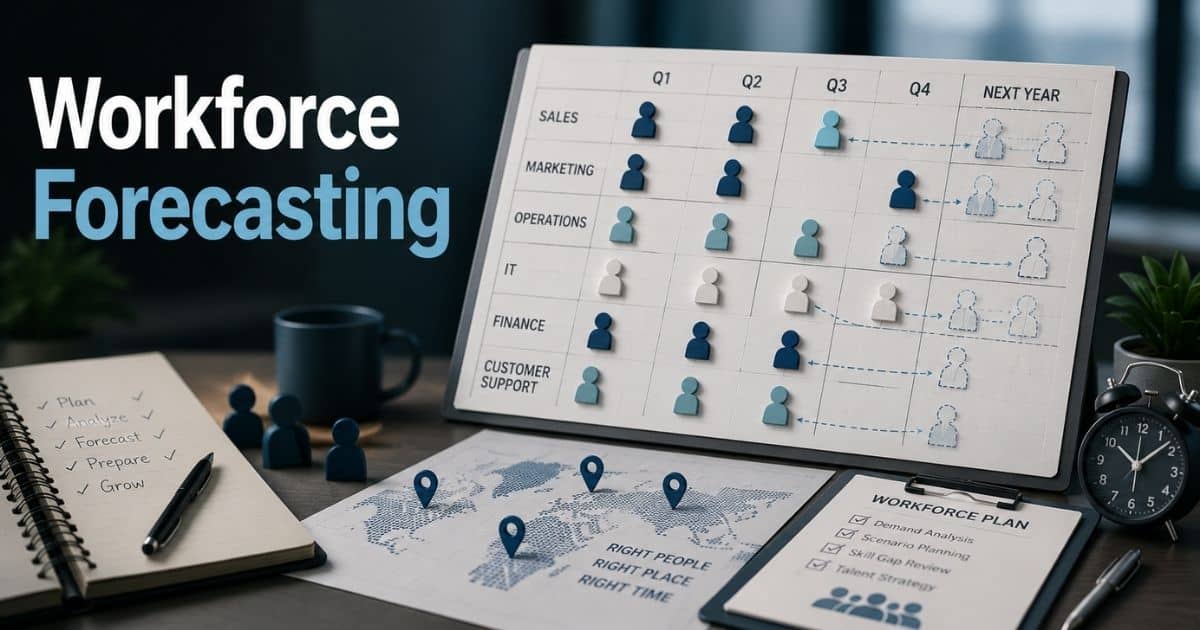
Table of Contents
Workforce planning has become harder than ever. Markets shift fast. Employee expectations change quickly. One wrong hiring decision can increase costs, reduce productivity, and slow business growth. Many companies still react to staffing problems after they happen. That approach no longer works.
Workforce forecasting helps businesses stay prepared before problems appear. It gives HR teams and business leaders a clear view of future hiring needs, skill gaps, labor costs, and workforce trends. With the right forecasting strategy, companies can make smarter decisions, improve workforce efficiency, and build stronger teams for long-term growth.
This guide covers everything you need to know about workforce forecasting, from methods and tools to best practices and future trends.

What Is Workforce Forecasting And Why It Is Important
Workforce forecasting helps businesses predict future staffing needs based on business goals, market trends, and workforce data. It uses historical data, data analysis, and labor market trends to estimate how many employees a company may need in the future. Effective workforce forecasting also helps workforce managers identify skill gaps, manage labor costs, and improve resource allocation across teams.
Accurate workforce forecasting supports strategic workforce planning and workforce management. It helps organizations prepare for seasonal demand, business growth, and economic shifts before problems appear. Many companies now use workforce forecasting tools, workforce planning software, and predictive analytics tools to improve forecasting accuracy.
The workforce forecasting process combines quantitative and qualitative methods like regression analysis, trend analysis, and scenario planning. Accurate forecasting enables organizations to align workforce planning with future workforce requirements and build flexible workforce plans with the right skills in place.
How Workforce Forecasting Works In Modern Businesses
Modern businesses use workforce forecasting to prepare for future staffing needs before problems appear. Companies no longer rely only on guesswork or old reports. Data analytics, predictive analytics, and workforce planning software now help HR teams make faster and smarter decisions.
Accurate workforce forecasting improves operational efficiency, controls labor costs, and supports business growth. It also helps organizations align workforce planning with business objectives and changing market trends.
Historical Data Shapes Workforce Plans
Historical data is the foundation of the workforce forecasting process. Companies review past hiring trends, employee turnover, absenteeism, and staffing levels to understand workforce patterns. This helps workforce managers forecast future workforce requirements with better accuracy.
Many organizations also study seasonal workforce fluctuations and customer demand trends. Retail and logistics companies often increase staffing during holiday seasons. Workforce forecasting tools help businesses allocate resources at the right time and avoid workforce gaps.
Research shows predictive HR analytics improves workforce planning accuracy and reduces talent shortages through data-driven forecasting models.
Predictive Analytics Improves Forecast Accuracy
Modern workforce forecasting focuses heavily on predictive analytics and data analysis. Companies use AI-powered workforce forecasting software to predict future demand, labor shortages, and employee retention risks. This helps businesses build flexible workforce plans before issues affect operations.
Predictive analytics tools also support scenario planning. HR teams can test different hiring strategies based on economic shifts, labor market trends, and industry trends. Around 40% of HR leaders plan to increase investment in HR analytics and workforce forecasting technology.
Business Goals Drive Staffing Decisions
Effective workforce forecasting always aligns with business goals. Companies forecast future staffing requirements based on expansion plans, new projects, and revenue targets. This approach helps businesses align workforce forecasting with long-term workforce strategies.
Organizations also review current workforce capabilities before hiring new employees. Skill gaps often appear during rapid business growth or digital transformation. Strategic workforce planning helps companies secure workers with the right skills at the right time.
Modern workforce planning trends now focus more on predictive planning instead of reactive hiring methods.
Workforce Software Supports Better Planning
Workforce planning software has changed how companies manage workforce forecasting efforts. Modern tools collect workforce data from payroll systems, scheduling platforms, and HR software. This gives workforce managers a complete view of staffing and scheduling patterns.
Many workforce forecasting methods now combine quantitative and qualitative methods. Regression analysis, trend analysis, and AI models help businesses refine workforce forecasting decisions. Companies that use workforce analytics also report better decision-making and lower labor costs.
More than 70% of organizations now use workforce analytics to improve workforce management and reduce operational costs.
Real-Time Data Helps Businesses Adapt
Modern businesses face constant market changes. Economic shifts, labor forecasting challenges, and future workforce demands can change quickly. Real-time workforce data helps organizations respond faster and maintain operational stability.
Workforce forecasting differ from traditional workforce planning because it focuses on future needs instead of only current staffing requirements. Businesses now use real-time dashboards and predictive analytics tools to identify workforce patterns and forecast workforce needs more accurately.
Companies that align workforce forecasting with strategic workforce planning often improve employee retention, customer service, and overall business performance.
Core Workforce Forecasting Methods And Models Explained
Businesses use different workforce forecasting methods to predict future staffing needs and prepare for workforce changes. Each forecasting model serves a different purpose. Some focus on historical trends, while others rely on predictive analytics and real-time workforce data.
The right workforce forecasting process helps organizations improve resource allocation, reduce labor costs, and align workforce planning with business goals. Modern companies often combine multiple forecasting methods for better accuracy.
Trend Analysis Method
Trend analysis is one of the most common workforce forecasting methods. Companies study historical data, staffing levels, employee turnover, and seasonal demand to identify workforce patterns. This method helps businesses forecast future workforce requirements based on past workforce behavior.
Retail, healthcare, and logistics companies often use trend analysis for workforce planning and forecasting. Seasonal workforce fluctuations can increase staffing requirements during busy periods. Labor market reports show nearly 60% of companies now use historical trends and workforce analytics for staffing decisions.
Regression Analysis Model
Regression analysis uses workforce data and statistical relationships to forecast future staffing needs. This forecasting method studies how factors like sales growth, customer demand, and labor market trends affect staffing levels. Businesses use regression models to improve accurate workforce forecasting and operational efficiency.
Large organizations often use workforce forecasting software to automate complex data analysis. Predictive analytics tools also help HR teams test future demand scenarios. Research shows companies that use advanced workforce analytics improve forecast accuracy and workforce planning decisions faster than traditional methods.
Scenario Planning Approach
Scenario planning helps businesses prepare for economic shifts and uncertain market conditions. Workforce managers create multiple workforce strategies based on possible future outcomes. This method supports flexible workforce plans and stronger strategic workforce planning.
Companies often use scenario planning during rapid business growth, labor shortages, or industry disruptions. Workforce forecasting efforts become more reliable when businesses compare different staffing and scheduling patterns. A recent Deloitte workforce study found organizations with scenario-based workforce planning respond faster to labor market changes and skill gaps.
Delphi Forecasting Method
The Delphi method relies on expert opinions instead of only historical data. HR leaders, department heads, and workforce managers share insights about future workforce requirements and business objectives. Multiple review rounds help teams refine workforce forecasting decisions over time.
This workforce forecasting process works well when workforce data is limited or market conditions change quickly. Technology and healthcare sectors often use this approach to forecast future workforce needs and identify right skills for emerging roles. Expert-driven labor forecasting also helps businesses align workforce forecasting with long-term business goals.
Predictive Analytics Models
Predictive analytics models now play a major role in workforce management forecasting. AI-powered workforce forecasting tools process workforce data, employee retention patterns, labor costs, and current workforce capabilities in real time. This helps businesses forecast future staffing requirements with greater accuracy.
Many workforce planning software platforms now include predictive analytics and automated forecasting features. Gartner reports nearly 65% of HR leaders plan to increase investment in workforce analytics and predictive workforce planning tools by 2026.
Step-by-Step Workforce Forecasting Process For HR Teams
A structured workforce forecasting process helps HR teams prepare for future staffing needs with more confidence. It reduces hiring delays, improves resource allocation, and supports long-term business goals. Modern businesses now rely on workforce data, predictive analytics, and workforce planning software to make smarter staffing decisions.
Each step plays a key role in accurate workforce forecasting and stronger workforce management.
Step 1: Review Current Workforce Data
HR teams start the workforce forecasting process by reviewing the current workforce. They analyze workforce data like employee count, turnover rates, absenteeism, productivity, and staffing levels. Historical data also helps teams identify workforce patterns and labor forecasting trends.
This step gives businesses a clear picture of current workforce capabilities and workforce gaps. Companies that regularly review workforce metrics often improve operational efficiency faster. Recent HR studies show businesses using workforce analytics reduce staffing shortages by nearly 25%.
Step 2: Analyze Business Goals And Future Demand
Business objectives directly affect future workforce requirements. HR teams must understand company expansion plans, revenue targets, and operational priorities before forecasting workforce needs. Future demand often changes based on economic shifts, customer behavior, and market trends.
Workforce forecasting enables organizations to align workforce planning with long-term business growth. Retail and healthcare companies also study seasonal demand and staffing and scheduling patterns to prepare for busy periods. This approach supports flexible workforce plans and better resource allocation.
Step 3: Identify Workforce Gaps And Skill Needs
After reviewing workforce data, HR teams compare current staffing capabilities with future staffing requirements. This step helps businesses identify skill gaps, staffing shortages, and roles that may become critical later.
Strategic workforce planning also focuses on the right skills needed for future business success. Technology adoption, automation, and labor market trends continue to reshape workforce strategies across industries. Reports show nearly 44% of employee skills may change within the next five years due to digital transformation and AI adoption.
Step 4: Apply Workforce Forecasting Methods
HR teams use workforce forecasting methods to predict staffing requirements more accurately. Many organizations combine quantitative and qualitative methods like trend analysis, regression analysis, scenario planning, and predictive analytics.
Modern workforce forecasting software can process complex data analysis faster than manual methods. Predictive analytics tools also help businesses forecast future workforce requirements under different market conditions. Companies that use data-driven workforce planning often improve hiring accuracy and reduce labor costs significantly.
Step 5: Monitor Results And Refine Forecasts
Workforce forecasting is not a one-time task. HR teams must monitor hiring outcomes, employee retention, labor costs, and workforce performance regularly. Accurate forecasting improves over time when businesses refine workforce forecasting models using updated workforce data.
Market conditions and workforce trends can shift quickly. Organizations that align workforce forecasting with real-time business changes respond faster to staffing challenges. Recent workforce planning reports show agile workforce management strategies improve workforce stability and employee retention across growing businesses.
Workforce Forecasting Tools And Technologies That Improve Accuracy
Modern workforce forecasting depends heavily on technology and data analytics. Businesses now use advanced workforce management software to predict staffing needs, reduce labor costs, and improve workforce planning decisions. Manual forecasting methods no longer provide enough accuracy for fast-changing business environments.
Smart technologies help organizations analyze workforce data faster and align workforce forecasting with business objectives. An integrated HR management system also supports better resource allocation and long-term workforce management.
AI-Powered Workforce Forecasting Software
AI-powered workforce forecasting software helps businesses forecast future workforce requirements with greater accuracy. These platforms analyze historical data, staffing levels, employee retention, and labor market trends in real time. HR teams can quickly identify workforce gaps and future staffing needs without manual calculations.
Modern workforce planning software also improves operational efficiency through automation. Many platforms now include predictive analytics and scenario planning features. Research shows over 65% of HR leaders plan to increase investment in AI-driven workforce management tools by 2026 due to rising workforce complexity.
Predictive Analytics Tools
Predictive analytics tools play a major role in accurate workforce forecasting. These systems use data analysis and forecasting models to estimate future demand, seasonal workforce fluctuations, and staffing requirements. Businesses can make faster decisions based on workforce trends instead of assumptions.
Workforce forecasting enables organizations to test different workforce strategies before making hiring decisions. Predictive models also help companies reduce labor forecasting errors and control workforce costs. Businesses that use predictive workforce analytics often improve hiring accuracy and workforce planning outcomes significantly.
Cloud-Based Workforce Platforms
Cloud-based workforce management platforms give HR teams access to real-time workforce data from any location. These systems connect payroll, scheduling, attendance tracking, and workforce planning into one platform. Centralized workforce data helps organizations align workforce planning with business growth plans, especially when they adopt modern cloud HR software.
Cloud workforce forecasting tools also support faster collaboration between departments. Companies can adjust staffing and scheduling patterns quickly during economic shifts or seasonal demand changes. Reports show cloud HR vs on-premise HR systems offer different levels of workforce visibility and decision-making benefits across growing businesses.
Business Intelligence Dashboards
Business intelligence dashboards help workforce managers understand workforce forecasting efforts through visual reports and live workforce metrics. Dedicated HR dashboard software lets HR teams monitor staffing levels, labor costs, employee turnover, and workforce performance in one place.
Dashboards simplify complex data analysis and help businesses refine workforce forecasting decisions faster. Organizations also use trend analysis to identify future workforce requirements and workforce gaps early. Companies that rely on workforce analytics dashboards often improve strategic workforce planning and workforce management forecasting accuracy.
Automation And Scheduling Tools
Automation tools improve workforce management by reducing manual tasks and improving scheduling accuracy. Modern workforce calendar management and scheduling platforms use workforce forecasting methods to match staffing requirements with future demand and customer activity levels.
Automated workforce planning systems also help businesses allocate resources more efficiently. Retail, healthcare, and hospitality industries rely heavily on workforce scheduling software during seasonal demand periods. Industry reports show automated workforce planning tools can reduce scheduling errors and overtime costs by nearly 30%.
Common Workforce Forecasting Challenges And How To Solve Them
Workforce forecasting helps businesses prepare for future staffing needs, but the process is not always simple. Many organizations struggle with inaccurate workforce data, changing market trends, and unexpected labor shortages. Small forecasting mistakes can lead to higher labor costs and workforce gaps.
Modern businesses now use workforce forecasting tools, predictive analytics, and workforce planning strategies to solve these problems faster. A proactive approach improves workforce management and long-term business stability.
Poor Workforce Data Accuracy
Accurate workforce forecasting depends heavily on reliable workforce data. Many companies still use outdated spreadsheets or disconnected systems. Incomplete workforce records often create forecasting errors and weak staffing decisions.
Businesses can solve this problem with workforce planning software and centralized workforce management systems. A modern employee record management system with automated data collection improves data analysis and forecasting accuracy. HR reports show companies with integrated workforce data systems reduce planning errors and improve operational efficiency much faster than manual forecasting methods.
Rapid Market Changes
Economic shifts and labor market trends can change future staffing requirements very quickly. Businesses often struggle to forecast future workforce needs during inflation, labor shortages, or sudden industry changes. Traditional workforce forecasting methods may fail in unstable conditions.
Scenario planning and predictive analytics tools help businesses prepare for multiple workforce outcomes. Flexible workforce plans also allow organizations to adjust staffing levels faster. Companies that regularly refine workforce forecasting strategies respond better to future demand and workforce challenges.
Skill Gaps And Talent Shortages
Many organizations face workforce gaps because current workforce capabilities no longer match future business needs. Technology changes, automation, and digital transformation continue to reshape staffing requirements across industries.
Strategic workforce planning helps businesses identify skill gaps early and build long-term workforce strategies. Workforce forecasting enables organizations to align workforce planning with future workforce requirements, employee performance tracking, and employee development plans. Recent workforce studies show nearly 75% of employers struggle to find workers with the right skills for modern roles.
Weak Collaboration Between Teams
Workforce forecasting efforts often fail when HR, finance, and operations teams work separately. Poor communication can create inaccurate staffing projections and resource allocation problems. Business goals may also change without proper workforce planning updates.
Cross-functional workforce planning improves forecasting accuracy and workforce management forecasting decisions. Shared workforce data and real-time dashboards help teams align workforce forecasting with company objectives. Businesses that simplify HR by replacing disconnected tools with integrated platforms usually make faster and more accurate staffing decisions.
Over-Reliance On Manual Forecasting
Manual forecasting methods take time and increase the risk of human error. Many businesses still rely on guesswork instead of predictive analytics and workforce forecasting software. This limits accurate forecasting and slows workforce planning decisions.
Modern workforce forecasting tools simplify complex data analysis and automate labor forecasting tasks. AI-powered platforms also help workforce managers forecast future staffing requirements with greater precision. Industry reports show businesses using workforce analytics and automation reduce labor forecasting errors by nearly 30%.
Best Practices To Build A Data-Driven Workforce Forecasting Strategy
A strong workforce forecasting strategy helps businesses make smarter staffing decisions with less risk. Companies that rely on workforce data and predictive analytics often improve workforce planning accuracy, reduce labor costs, and respond faster to business changes.
Modern workforce forecasting also supports long-term business growth and operational efficiency. Clear processes, reliable workforce data, and flexible workforce strategies are now essential for accurate workforce forecasting.
Use Reliable Workforce Data
Reliable workforce data is the foundation of effective workforce forecasting. HR teams should collect accurate records on employee turnover, staffing levels, absenteeism, labor costs, and workforce performance. Poor data quality often creates forecasting errors and weak workforce planning decisions.
Modern workforce planning software helps organizations centralize workforce data and simplify data analysis. Automated reporting tools also improve forecasting accuracy and workforce management forecasting. Recent HR reports show companies using real-time workforce analytics make faster staffing decisions and improve operational efficiency significantly.
Align Forecasting With Business Goals
Workforce forecasting should always support business objectives and future workforce requirements. HR teams need clear visibility into expansion plans, future demand, and workforce strategies before forecasting staffing needs.
Businesses that align workforce planning with long-term goals often improve resource allocation and workforce stability. Strategic workforce planning also helps organizations forecast future staffing requirements during market changes and business growth periods. Companies with goal-based workforce planning processes usually respond faster to workforce gaps and labor forecasting challenges.
Combine Multiple Forecasting Methods
Accurate workforce forecasting rarely depends on one method alone. Businesses often combine quantitative and qualitative methods like trend analysis, regression analysis, predictive analytics, and scenario planning for better results.
Different workforce forecasting methods help organizations manage future staffing needs under changing conditions. Historical trends may predict staffing patterns, while predictive analytics tools estimate future workforce demand more accurately. Research shows businesses using blended forecasting methods improve hiring accuracy and reduce workforce planning risks.
Monitor Workforce Trends Regularly
Labor market trends, economic shifts, and seasonal demand can change workforce requirements quickly. HR teams should review workforce forecasting efforts regularly instead of relying on outdated assumptions. Continuous workforce analysis helps businesses refine workforce forecasting strategies over time.
Organizations also need to monitor employee retention, workforce gaps, and current workforce capabilities consistently. Real-time workforce management tools simplify workforce planning and forecasting adjustments. Businesses that track workforce trends frequently often maintain stronger staffing levels and better workforce flexibility.
Invest In Modern Forecasting Technology
Modern workforce forecasting tools improve accuracy and reduce manual workload. AI-powered workforce forecasting software can process large workforce datasets faster than traditional methods. Emerging HR automation trends and predictive analytics tools also support complex data analysis and future workforce planning decisions.
Automation helps workforce managers forecast future staffing requirements with greater precision. Cloud-based, SaaS HR solutions and workforce planning systems also improve collaboration across HR, finance, and operations teams. Industry studies show companies using advanced workforce analytics tools reduce labor forecasting errors and improve workforce management outcomes significantly.
Future Workforce Forecasting Trends Shaping HR And Business Growth
Workforce forecasting continues to evolve as businesses face rapid workforce changes, labor shortages, and digital transformation. Modern HR teams now rely more on predictive analytics, automation, and workforce data to improve staffing decisions and long-term workforce planning.
Future workforce forecasting trends will focus heavily on flexibility, real-time insights, and strategic workforce planning. Businesses that adapt early can improve operational efficiency, employee retention, and future business growth.
AI-Driven Workforce Forecasting
AI-driven workforce forecasting is becoming a major part of workforce management forecasting. Modern workforce forecasting software now analyzes historical data, labor market trends, and staffing levels in real time. This helps businesses forecast future workforce requirements faster and with better accuracy.
Predictive analytics tools also help workforce managers identify workforce gaps and future staffing needs before problems appear. Many organizations now use AI for scenario planning and labor forecasting decisions. Industry reports show AI adoption in HR operations continues to rise as businesses seek more accurate forecasting and workforce efficiency.
Real Time Workforce Analytics
Real-time workforce data is changing how organizations manage workforce planning and forecasting. Businesses no longer rely only on quarterly reports or static workforce analysis. Modern HR dashboard tools and workforce forecasting platforms now provide live updates on employee retention, staffing requirements, and workforce performance.
Real-time analytics also improve resource allocation and operational efficiency during sudden market changes. HR teams can quickly adjust workforce strategies based on economic shifts or future demand patterns, especially when they use employee timeline tracking for deeper visibility. Companies with advanced workforce analytics systems often respond faster to staffing and scheduling challenges.
Skills-Based Workforce Planning
Future workforce forecasting focuses more on skills than job titles alone. Businesses now prioritize current workforce capabilities and future skill needs when building workforce strategies, often supported by integrated employee management software. Rapid automation and digital transformation continue to reshape staffing requirements across industries.
Strategic workforce planning helps organizations forecast future workforce requirements based on skill gaps and future business goals. Many companies also invest heavily in employee development and internal mobility programs. Workforce research suggests nearly half of all employees will require new skills within the next few years due to technology changes.
Flexible Workforce Models
Flexible workforce plans are becoming more common across modern businesses. Hybrid work, remote teams, contract staffing, and gig workers now play a larger role in workforce management, making cloud HR tools for remote teams increasingly important. Traditional staffing models often struggle to support changing business needs and seasonal workforce fluctuations.
Workforce forecasting enables organizations to align workforce planning with changing workforce trends and customer demand. Flexible workforce strategies also help businesses control labor costs and improve staffing levels during uncertain conditions. Companies with adaptable workforce planning processes usually maintain stronger workforce stability during economic shifts.
Integrated Workforce Planning Platforms
Integrated workforce planning software is becoming essential for accurate workforce forecasting. Businesses now connect payroll, scheduling, HR analytics, and workforce management systems into one platform, often choosing between cloud HRMS and traditional HR software. Centralized workforce data improves forecasting accuracy and simplifies complex data analysis.
Modern workforce forecasting methods also rely more on automation and cloud-based collaboration tools. Cross-functional workforce planning helps HR, finance, and operations teams align workforce forecasting with business objectives, especially when they must manage a remote workforce with HRM software. Industry studies show integrated workforce management platforms improve workforce visibility and long-term workforce planning decisions across growing organizations.
Final Thoughts
Workforce forecasting is no longer optional for modern businesses. Companies that rely only on reactive hiring often struggle with staffing gaps, rising labor costs, and skill shortages. A clear workforce forecasting strategy helps organizations stay prepared for future workforce demands and changing market conditions.
Accurate workforce forecasting improves workforce planning, resource allocation, and long-term business growth. It also helps HR teams align workforce strategies with business objectives and future staffing requirements. Modern workforce forecasting tools, predictive analytics, and workforce planning software now make the process faster and more reliable than ever.
Businesses that invest in strategic workforce planning can respond faster to workforce changes, improve employee retention, and build stronger teams with the right skills. As workforce trends continue to evolve, data-driven workforce forecasting will become one of the most important parts of successful workforce management.
FAQs
How Often Should Businesses Update Workforce Forecasting Plans?
Businesses should review workforce forecasting plans at least every quarter. Fast-changing market trends, labor costs, and future staffing needs can quickly affect workforce planning decisions.
Can Small Businesses Benefit From Workforce Forecasting?
Yes, small businesses can benefit greatly from workforce forecasting. Even simple workforce planning methods help companies manage staffing levels, labor costs, and future workforce requirements more effectively.
Does Workforce Forecasting Help Reduce Employee Turnover?
Yes, effective workforce forecasting can improve employee retention and workforce stability. Businesses can identify workforce gaps, skill shortages, and staffing pressure before they create burnout or dissatisfaction.
What Industries Use Workforce Forecasting The Most?
Healthcare, retail, manufacturing, logistics, hospitality, and technology industries rely heavily on workforce forecasting. Seasonal demand, staffing and scheduling patterns, and labor forecasting challenges make workforce planning critical in these sectors.
Can Workforce Forecasting Improve Hiring Accuracy?
Accurate forecasting improves hiring decisions by helping businesses forecast future workforce requirements based on workforce data, historical trends, and business goals. HR teams can identify the right skills needed before staffing shortages appear.