Managing employees is not as simple as it used to be. Teams work across different locations, shifts change quickly, and labor costs keep rising. Many businesses still rely on spreadsheets or disconnected tools to handle scheduling, attendance, and workforce planning. That often leads to errors, wasted time, and poor visibility.
A workforce management system helps bring everything into one place. It helps businesses track employee time, manage schedules, forecast labor needs, and improve productivity without adding extra complexity. HR teams, managers, and business owners can make faster decisions with accurate workforce data.
This guide covers everything you need to know about workforce management systems. You will learn how they work, which features matter most, the benefits they offer, common challenges, and how to choose the right solution for your business.
What Is A Workforce Management System And Why Is It Important
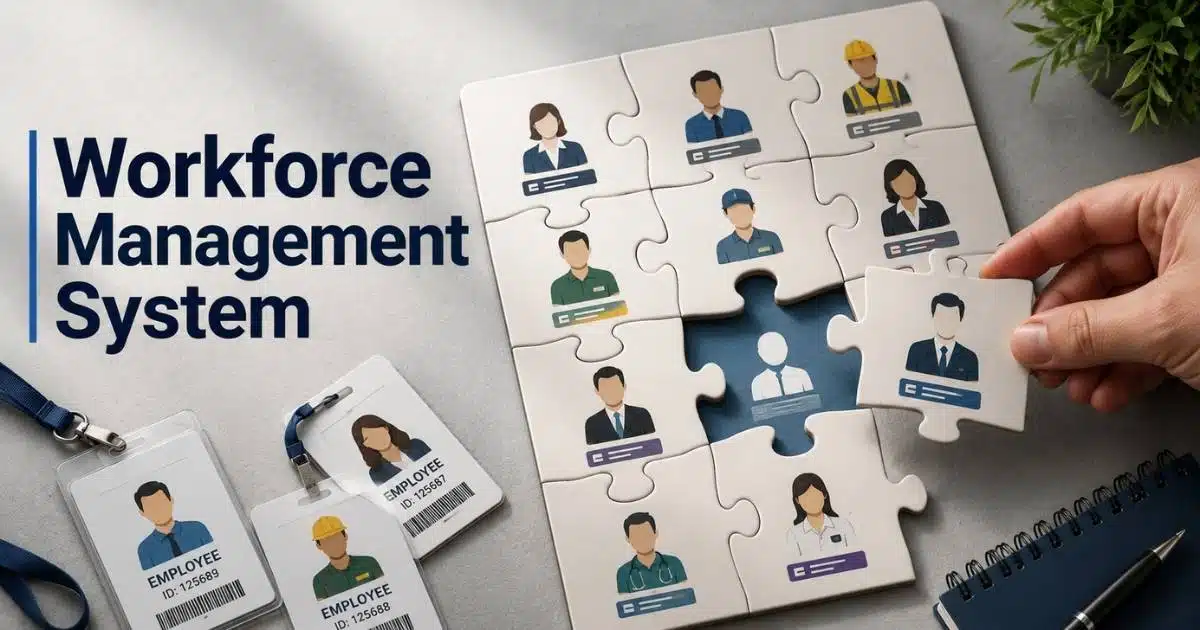
A workforce management system helps businesses manage employee scheduling, time and attendance, workforce planning, and daily workforce operations from one place. Modern workforce management software replaces manual processes with automated workforce management tools that improve accuracy and save time. Businesses use a workforce management solution to track employee availability, manage absence management, monitor attendance data, and reduce administrative workload. Many WFM software platforms also integrate with payroll systems and other business systems to streamline operations and support regulatory compliance.
Effective workforce management helps organizations optimize schedules, control labor costs, and boost productivity. With real-time analytics, historical data, and workforce management data, managers can predict future staffing needs and improve resource allocation. Integrated workforce management technology also supports remote workforce management, contingent workforce management, and mobile workforce management through mobile devices. As workforce strategies evolve, businesses use workforce management WFM solutions to improve employee satisfaction, employee engagement, work-life balance, and overall workforce productivity.
How A Workforce Management System Works In Modern Businesses
A workforce management system connects employee scheduling, time tracking, attendance data, workforce planning, and labor management in one platform. Modern businesses use workforce management software to reduce manual work, improve visibility, and make faster decisions. The global workforce management market reached more than $11.6 billion in 2025 as companies focused on productivity, compliance, and workforce efficiency.
Employee Time And Attendance Control
Time and attendance management is one of the core functions of a workforce management solution. Employees clock in through mobile devices, kiosks, or web portals. The system records attendance data in real time and reduces errors from manual processes.
Managers can track employee availability, overtime, leave management, and attendance tracking from one dashboard. Automated records also support payroll systems and regulatory compliance. Nearly 68% of businesses now use automated attendance tracking tools to improve workforce visibility and accuracy.
Smart Employee Scheduling
Employee scheduling becomes easier with WFM software. Managers can create schedules based on staffing needs, labor demand, employee skills, and customer demand. Flexible scheduling also helps support work-life balance and employee satisfaction.
Modern workforce management tools use historical data and workforce management data to optimize schedules. Understanding the difference between time tracking and attendance tracking helps businesses choose the right mix of tools to support accurate scheduling. Automated scheduling also helps hourly workers receive fair shift distribution while supporting operational efficiency.
Workforce Planning And Forecasting
Workforce planning helps businesses prepare for future staffing needs. A workforce management system analyzes key performance indicators, labor trends, and attendance data to predict workforce requirements.
Managers can forecast labor needs and improve resource allocation before demand changes. This supports effective workforce management and helps organizations maximize productivity. Real-time analytics also help teams respond quickly to seasonal demand, business growth, or workforce changes without disrupting operations.
Compliance And Labor Management
Labor laws continue to change across industries and regions. Workforce management software helps businesses stay compliant by automating policy checks, overtime rules, and leave management processes.
Integrated workforce management technology keeps accurate workforce records and reduces administrative workload. Businesses can monitor labor costs, maintain attendance records, and ensure regulatory compliance without relying on spreadsheets. Growing compliance requirements remain one of the biggest reasons companies invest in workforce management systems today.
Data Analytics And Performance Insights
Modern workforce management WFM platforms provide detailed reports and real-time analytics. Managers can review workforce productivity, employee performance, labor costs, and scheduling efficiency from one system.
Data analytics helps businesses identify trends and improve workforce strategies. Teams can optimize productivity, reduce costs, and streamline operations with accurate workforce insights. Many workforce management solutions now use AI and automation to support better decision-making and total workforce management across multiple locations.
Essential Components Of A Workforce Management System
A workforce management system combines several tools that help businesses manage employees, schedules, attendance, labor costs, and workforce productivity. Each component supports better workforce planning and operational efficiency. Modern workforce management software also connects with payroll systems, HR platforms, and other business systems to streamline daily operations.
Time And Attendance Management
Time and attendance management is one of the most important parts of a workforce management solution. It tracks employee time, attendance data, overtime, breaks, and leave records from a single platform, often generating detailed employee time log reports for productivity and compliance tracking. Businesses use modern attendance tracking systems to reduce payroll errors and improve workforce visibility.
Modern WFM software supports biometric devices, mobile devices, and cloud-based access. Managers can monitor employee availability and workforce operations in real time by using dedicated time tracking software that feeds accurate data into payroll. Recent reports show businesses can reduce payroll processing errors by up to 30% with automated attendance management systems for small businesses.
Employee Scheduling Tools
Employee scheduling helps businesses assign the right employees to the right shifts, and effective workforce calendar management keeps those schedules visible and conflict-free across teams. Workforce management tools use employee skills, labor needs, customer demand, and staffing needs to create accurate schedules.
Flexible scheduling also supports employee satisfaction and work-life balance. Managers can optimize schedules without spending hours on manual processes. Many workforce management WFM platforms now use AI-based forecasting to improve schedule accuracy and reduce labor costs. Studies show automated scheduling can lower scheduling time by nearly 70%.
Workforce Planning And Forecasting
Workforce planning helps businesses prepare for future staffing needs and labor demand. A workforce management system uses historical data, attendance data, and workforce management data to predict workforce requirements.
Managers can adjust workforce strategies before labor shortages affect operations. Real-time analytics also help businesses improve resource allocation and maximize productivity. Forecasting tools support effective workforce management by aligning staffing levels with business objectives. Organizations that use workforce planning technology often achieve stronger workforce productivity and lower workforce-related costs.
Compliance And Leave Control
Labor laws continue to become more complex across industries, making it essential to use specialized leave management software. Workforce management software helps businesses maintain compliance through automated policy rules, leave management, and absence management features.
The system stores attendance records, overtime details, and employee schedules in one place. This helps organizations ensure regulatory compliance and reduce administrative workload. Businesses also avoid costly penalties caused by manual recordkeeping. Compliance automation remains a major reason companies invest in integrated workforce management technology and total workforce management systems.
Analytics And Performance Insights
Data analytics gives businesses a clearer view of workforce performance. Modern management systems track key performance indicators, labor costs, attendance trends, and employee performance through real-time dashboards.
Managers can identify productivity gaps and make faster decisions with accurate workforce management data. A modern employee management system brings these analytics together with core HR data in one place, and dedicated employee management software for HR teams can further streamline onboarding, performance, and payroll workflows. Many of the best workforce management solution providers now include AI-powered reporting that helps organizations optimize productivity, streamline operations, and improve workforce engagement across different teams and locations.
Key Features Every Workforce Management System Should Include
A workforce management system does much more than track employee hours. Modern workforce management software helps businesses manage schedules, labor costs, compliance, productivity, and workforce planning from one platform. The right features improve workforce operations, reduce manual work, and support long-term business growth.
Real-Time Time Tracking
Time tracking helps businesses monitor employee hours, attendance data, overtime, and breaks with better accuracy. A workforce management solution records employee activity in real time and reduces errors caused by manual processes.
Modern workforce management tools support biometric devices, mobile devices, and cloud access. Managers can track employee time across multiple locations without extra administrative tasks. Research shows automated attendance management systems for flexible and hybrid teams can reduce payroll errors by up to 44% and improve workforce efficiency.
Smart Employee Scheduling
Employee scheduling remains one of the most important workforce management features. Businesses need tools that match employee availability, labor needs, and customer demand without creating scheduling conflicts.
Advanced WFM software uses historical data and workforce management data to optimize schedules automatically. Many organizations rely on a dedicated employee time tracking app alongside scheduling to gain deeper productivity insights. Companies that use automated scheduling tools often reduce scheduling time by more than 60% while improving workforce productivity and shift coverage, especially when combined with timesheet apps for employees that capture actual working hours.
Workforce Analytics And Reporting
Workforce management software should provide clear reporting and real-time analytics. Businesses need access to workforce management data, employee performance metrics, attendance trends, and labor costs from one dashboard.
Analytics tools help managers identify productivity gaps and improve workforce strategies. Key performance indicators also support better workforce planning and resource allocation. Recent studies show organizations that use workforce analytics achieve stronger operational efficiency and faster decision-making compared to companies that rely on manual reports.
Compliance And Leave Management
Labor laws continue to change across industries. A strong workforce management system helps businesses maintain compliance through automated employee leave tracking, absence management, and policy enforcement tools.
The platform stores attendance records, overtime details, and workforce data in one place. This helps organizations ensure regulatory compliance and reduce administrative workload. Automated compliance tools also lower the risk of payroll disputes and labor violations. Compliance management remains one of the key considerations when selecting the best workforce management solution.
System Integration Capabilities
A workforce management system should connect easily with payroll systems, human capital management platforms, and other business systems. Strong integration prevents duplicate data entry and improves data accuracy across departments.
Integrated workforce management technology helps streamline operations and reduce administrative tasks. Replacing disconnected tools with a unified platform simplifies HR and workforce processes and reduces errors. Reports show companies that use connected business systems improve workforce visibility and reduce operational inefficiencies significantly.
Major Benefits Of Workforce Management System
A workforce management system helps businesses improve productivity, reduce labor costs, and manage employees more effectively. Modern workforce management software gives managers better control over scheduling, attendance, compliance, and workforce planning. The result is stronger workforce performance, better employee experiences, and more efficient daily operations.
Higher Workforce Productivity
A workforce management solution helps teams work more efficiently. Managers can track employee time, monitor workforce performance, and identify productivity gaps with real-time workforce management data.
Workforce management tools also reduce delays caused by manual processes and scheduling issues. Employees receive clearer schedules and faster updates, which supports a more productive workforce. Research shows companies that use workforce management software often improve workforce productivity by more than 20% through automation and better workforce visibility.
Lower Labor Costs
Labor costs remain one of the largest business expenses. Workforce management WFM platforms help businesses optimize schedules, control overtime, and align staffing levels with customer demand.
Historical data and workforce planning tools help managers predict labor needs more accurately. This reduces overstaffing and understaffing problems. Many organizations also use workforce management systems to improve resource allocation and reduce unnecessary payroll expenses. Studies show workforce optimization tools can lower labor-related costs by up to 15%.
Better Employee Experience
Employee satisfaction often improves when schedules become more predictable and fair. Workforce management software supports flexible scheduling, leave management, and employee availability tracking from one platform.
Employees can access schedules, request time off, and review attendance records through HR mobile apps on their devices, and the best mobile HR apps for self-service further enhance engagement and responsiveness. This creates a better work-life balance and stronger employee engagement. Businesses that prioritize workforce flexibility often experience lower turnover rates and higher workforce retention across different departments.
Stronger Compliance Control
Labor laws continue to change across industries and regions. Workforce management systems help businesses maintain compliance through automated attendance tracking, leave management, and overtime monitoring.
The system stores workforce management data, attendance records, and employee schedules in one location. This reduces compliance risks and administrative workload. Automated compliance tools also help organizations ensure regulatory compliance without relying on spreadsheets or disconnected business systems. Many companies adopt integrated workforce management technology primarily to reduce legal and payroll risks.
Faster Business Decisions
Modern workforce management solutions provide real-time analytics and workforce insights. Managers can review key performance indicators, attendance data, labor costs, and employee performance without waiting for manual reports.
Data analytics helps businesses respond faster to workforce changes and future staffing needs. Managers can predict future staffing demand, adjust workforce strategies, and maximize productivity with better visibility. Access to accurate workforce data also supports stronger business objectives and long-term workforce planning decisions.
Workforce Management System Challenges And How To Overcome Them
A workforce management system improves productivity and workforce operations, but implementation is not always smooth. Many businesses face challenges with adoption, compliance, scheduling, and data accuracy. The right workforce management strategy helps reduce these issues and improves long-term workforce performance.
Employee Resistance To New Systems
Many employees feel uncomfortable when businesses replace traditional workforce management solutions with new workforce management software. Some workers worry about extra monitoring, while others struggle to learn new tools.
Clear communication helps reduce resistance. Managers should explain how the workforce management solution improves employee scheduling, work-life balance, and workforce productivity. Proper training also increases employee engagement and confidence. Research shows organizations with structured software training programs achieve up to 70% higher adoption rates.
Inaccurate Workforce Data
A workforce management system depends on accurate workforce management data. Poor attendance data, incorrect employee records, and duplicate data entry often create reporting errors and payroll issues.
Businesses should connect WFM software with payroll systems, HR platforms, and existing systems, ideally through a centralized employee record management system that keeps data consistent and secure. Using automated tools to track employee attendance with real-time updates improves data accuracy. Regular audits also help maintain reliable workforce records. Accurate workforce data supports workforce planning, staffing decisions, and stronger operational efficiency across departments.
Scheduling And Staffing Gaps
Employee scheduling becomes difficult when labor demand changes quickly. Businesses often struggle with employee availability, shift coverage, and future staffing needs.
Workforce management tools help managers optimize schedules using historical data, workforce planning insights, and customer demand forecasts. Flexible scheduling also supports employee satisfaction and reduces scheduling conflicts. Organizations that use workforce forecasting tools often improve workforce coverage and reduce labor costs significantly.
Compliance And Labor Risks
Labor laws continue to change across industries. Manual workforce processes increase the risk of payroll errors, missed breaks, overtime violations, and compliance problems.
Integrated workforce management technology helps businesses ensure regulatory compliance through automated tracking and policy controls. Managers can monitor attendance records, leave management, and labor rules from one platform. Automated compliance tools also reduce administrative workload and lower legal risks related to workforce operations.
Limited Workforce Visibility
Many businesses struggle to track workforce performance across multiple teams or locations. Limited visibility makes it harder to control labor costs, measure employee performance, and maximize productivity.
Modern workforce management WFM platforms provide real-time analytics and key performance indicators through centralized dashboards. Managers can review workforce productivity, staffing needs, and attendance trends instantly. Better visibility supports faster decisions, stronger resource allocation, and more effective workforce management across the organization.
Workforce Management System Use Cases Across Different Industries
A workforce management system supports different business needs across industries. Companies use workforce management software to manage employee scheduling, workforce planning, labor costs, and compliance more effectively. Industry-specific workforce strategies help organizations improve productivity, workforce visibility, and operational efficiency in daily operations.
Retail Workforce Management
Retail businesses face constant changes in customer demand and staffing needs. A workforce management solution helps store managers create schedules based on sales patterns, employee availability, and peak shopping hours.
Workforce management tools also help reduce labor costs by matching staffing levels with customer traffic. Real-time analytics and attendance tracking improve workforce productivity across multiple store locations. Retailers that use workforce planning technology often see better schedule accuracy and stronger employee satisfaction.
Healthcare Staff Scheduling
Healthcare organizations manage complex schedules, labor laws, and shift coverage requirements. Workforce management WFM platforms help hospitals track employee skills, certifications, attendance data, and staffing levels in real time.
Managers can optimize schedules while maintaining compliance and patient care standards. Workforce management software also supports absence management and future staffing needs. Healthcare providers that use automated workforce planning tools often improve workforce coverage and reduce scheduling conflicts significantly.
Manufacturing Workforce Control
Manufacturing companies rely on workforce management systems to manage hourly workers, shift rotations, and production schedules. Accurate time tracking helps businesses monitor employee performance and labor costs across production facilities.
Workforce management data also supports workforce planning and resource allocation during demand fluctuations. Managers can predict labor needs using historical data and production forecasts. Strong workforce visibility helps manufacturers streamline operations and maintain productivity targets more effectively.
Field Service Workforce Management
Field service businesses often manage remote teams across multiple locations. A GPS attendance system within mobile workforce management tools helps employees access schedules, update job status, and track employee time through mobile devices.
Managers receive real-time workforce updates without relying on manual reports. Integrated workforce management technology also helps improve customer service and workforce coordination. Companies that use mobile workforce management solutions often reduce travel inefficiencies and improve workforce operations across distributed teams.
Hospitality And Service Operations
Hotels, restaurants, and service businesses depend on flexible scheduling and fast workforce adjustments. Customer demand often changes by season, day, or even hour.
A workforce management system helps managers predict future staffing needs, optimize schedules, and maintain service quality. Attendance tracking, leave management, and workforce analytics also improve labor management. Hospitality businesses that use workforce management software often reduce overtime costs while improving employee engagement and customer satisfaction.
Workforce Management System Vs HRMS Vs HCM: Key Differences Explained
Many businesses use workforce management systems, HRMS platforms, and HCM software, but each serves a different purpose. A workforce management system focuses on scheduling, attendance, and labor management. HRMS handles core HR tasks, while HCM supports broader talent and workforce strategies. Understanding the differences helps businesses choose the right solution for their workforce goals.
Feature | Workforce Management System (WFM) | Human Resource Management System (HRMS) | Human Capital Management (HCM) |
|---|---|---|---|
Primary Focus | Workforce productivity, scheduling, and labor management | Employee records and HR administration | Employee lifecycle and talent management |
Time And Attendance | Yes | Limited or basic | Yes |
Employee Scheduling | Core feature | Usually not included | Available in some platforms |
Workforce Planning | Strong focus | Limited | Advanced workforce planning |
Payroll Integration | Yes | Yes | Yes |
Attendance Tracking | Yes | Basic | Yes |
Leave Management | Yes | Yes | Yes |
Talent Management | Limited | Basic | Advanced |
Employee Performance Management | Limited | Moderate | Strong focus |
Recruitment And Onboarding | Rare | Available | Core feature |
Learning And Development | No | Limited | Yes |
Compliance Management | Strong labor compliance tools | HR compliance tools | Enterprise-wide compliance support |
Workforce Analytics | Real-time workforce data and labor insights | HR reporting | Advanced people analytics |
Best For | Managing hourly workers, schedules, labor costs, and workforce operations | Managing employee records and HR processes | Managing workforce strategy, employee growth, and business performance |
Common Users | Operations managers, workforce planners, shift-based businesses | HR teams and administrators | HR leaders, enterprises, and talent management teams |
In simple terms, workforce management software helps businesses optimize schedules, control labor costs, and improve workforce operations. HRMS platforms focus on employee administration and HR processes. HCM systems provide a broader approach that combines workforce management, talent management, employee engagement, and long-term workforce planning.
How To Choose The Right Workforce Management System For Your Business
Choosing the right workforce management system affects productivity, workforce planning, labor costs, and daily operations, so reviewing the top workforce management software options can be a helpful starting point. Every business has different workforce needs, so the best workforce management solution should match company goals, workforce size, and operational requirements. A careful evaluation helps avoid costly implementation mistakes.
Business Needs And Workforce Size
Every workforce management solution should fit the structure of your business, including complementary tools like an HR leave management system for tracking time off and approvals. Small businesses often need simple HR and workforce management tools, while larger organizations require advanced workforce planning, compliance, and workforce analytics features.
Managers should evaluate staffing needs, workforce operations, and employee scheduling requirements before selecting a platform. Businesses with hourly workers, remote teams, or contingent workforce management needs often require more flexible workforce management software. Clear business objectives make the selection process easier and more effective.
Integration With Existing Systems
A workforce management system should connect smoothly with payroll systems, human capital management platforms, and other business systems. Poor integration often creates duplicate data entry and extra administrative tasks.
Integrated workforce management technology improves data accuracy and workforce visibility across departments. Businesses can share attendance data, employee records, and workforce management data without manual updates. Recent reports show companies with connected business systems achieve stronger operational efficiency and lower administrative workload.
Scheduling And Workforce Planning Features
Employee scheduling remains one of the most valuable workforce management functions. Businesses should look for WFM software that supports employee availability tracking, flexible scheduling, workforce planning, and future staffing needs.
Advanced workforce management systems use historical data, customer demand patterns, and workforce analytics to optimize schedules. These tools help managers reduce labor costs and improve workforce productivity. Accurate scheduling also supports employee satisfaction and stronger workforce performance across teams.
Compliance And Reporting Capabilities
Labor laws continue to change across industries and regions. A workforce management solution should provide compliance monitoring, attendance tracking, leave management, and workforce reporting tools.
Real-time analytics and workforce management data help managers monitor labor costs, employee performance, and key performance indicators. Automated reporting also reduces compliance risks and manual recordkeeping. Businesses that prioritize compliance features often avoid costly labor violations and payroll errors.
Scalability And User Experience
Business needs change over time, especially in fast-growing sectors like SaaS that benefit from HR and payroll software for software companies. A workforce management system should support future growth without requiring a complete software replacement. Scalability remains one of the most important key considerations during software selection.
The platform should also provide a simple user experience for managers and employees. Mobile workforce management access, intuitive dashboards, and self-service features improve employee engagement and adoption rates. Research shows employees are more likely to use workforce management software when the interface is simple and accessible across mobile devices.
Future Trends Of Workforce Management Systems
Workforce management systems continue to evolve as businesses face new workforce challenges and changing employee expectations. Modern workforce management software now combines automation, data analytics, AI, and mobile access to improve workforce productivity. Future workforce strategies will focus more on flexibility, real-time decision-making, and employee experience.
AI-Powered Workforce Planning
Artificial intelligence is becoming a major part of workforce management solutions. Businesses now use AI tools to analyze workforce management data, forecast labor needs, and predict future staffing requirements with greater accuracy.
AI also helps managers optimize schedules based on employee availability, customer demand, and workforce productivity trends. Companies that use AI-driven workforce planning often improve resource allocation and reduce labor costs faster than businesses that rely on manual workforce planning methods.
Mobile Workforce Management Growth
Mobile workforce management continues to expand across industries, particularly in flexible workplaces that depend on hybrid attendance tracking. Employees now expect access to schedules, attendance records, leave requests, and workforce updates through mobile devices.
Modern workforce management software provides self-service features that improve employee engagement and flexibility. Managers can track employee time and workforce operations from any location using smart attendance tracking software with real-time, visual timelines. Recent workforce studies show mobile workforce tools improve employee response times and support better workforce communication across remote and field-based teams.
Advanced Workforce Analytics
Data analytics plays a larger role in workforce management WFM platforms every year. Businesses want deeper workforce insights instead of basic attendance tracking and reporting.
Real-time analytics helps managers monitor key performance indicators, employee performance, labor costs, and workforce productivity from centralized dashboards. Predictive workforce analytics also helps organizations identify future staffing needs before operational issues appear. Better workforce visibility supports faster decisions and stronger operational efficiency across departments.
Flexible And Hybrid Workforce Models
Hybrid work remains a long-term workforce trend across many industries. Businesses need workforce management systems that support remote workforce management, contingent workforce management, and flexible scheduling models.
Workforce management tools now help managers coordinate employees across multiple locations and work environments. Purpose-built HRM software for remote teams supports communication, performance tracking, and remote workforce management. Flexible workforce strategies also improve employee satisfaction and work-life balance. Research shows flexibility remains one of the top factors that influence employee retention and workforce engagement.
Deeper System Integration
Future workforce management software will rely more on connected business systems. Organizations want workforce management solutions that integrate smoothly with payroll systems, human capital management platforms, and other business systems.
Integrated workforce management technology reduces duplicate data entry and improves workforce data accuracy. Businesses also gain stronger workforce visibility through shared reporting and real-time updates. As workforce operations become more complex, seamless integration will remain one of the most important features in the best workforce management solution platforms.
How Payrun’s all-in-one HR platform Helps Businesses Optimize Workforce Performance
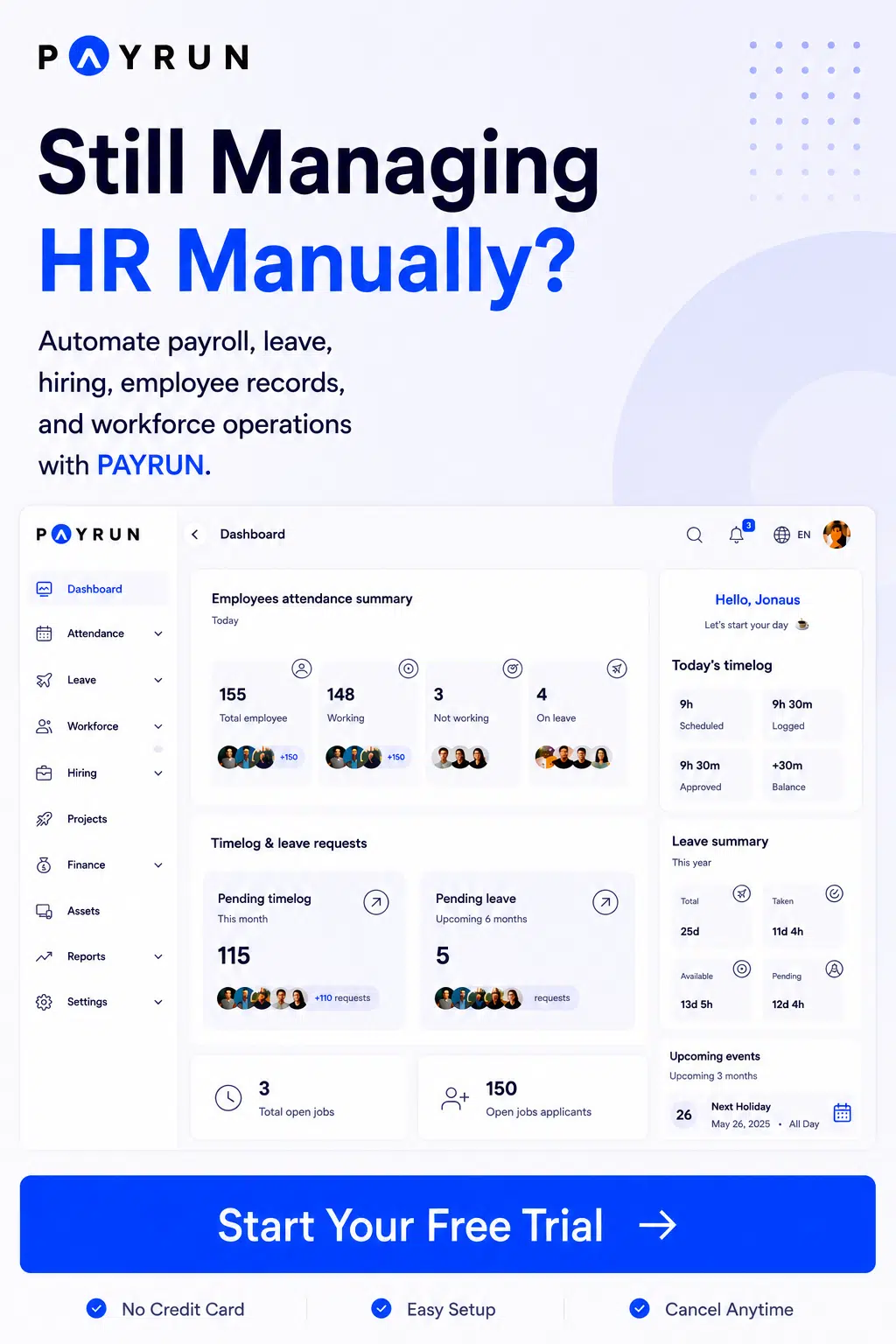
Payrun helps businesses manage workforce operations more efficiently through a centralized HR and payroll platform. It combines attendance tracking, leave management, employee records, automated payroll and HR management features, and workforce visibility tools in one system. This reduces manual processes and helps teams spend less time on administrative work.
Managers can track employee time, monitor attendance data, and manage workforce planning with better accuracy. As a strategic HR management partner, Payrun also helps businesses streamline operations through automated workflows and integrated workforce management features. Real-time workforce data supports faster decisions, stronger resource allocation, and improved workforce productivity across teams. Employees can access schedules, attendance records, and leave requests through self-service tools, which improves employee satisfaction and engagement. Payrun also offers clear guidance on implementing an attendance management system so businesses can control labor costs, optimize productivity, and support long-term workforce performance goals.
FAQs
Can A Small Business Use A Workforce Management System?
Yes, a workforce management system works well for small businesses, especially when paired with HR software designed for small businesses. Modern workforce management software helps manage employee scheduling, attendance tracking, leave management, and workforce planning without large HR teams.
Does A Workforce Management System Improve Employee Satisfaction?
Yes, a workforce management solution can improve employee satisfaction. Features like flexible scheduling, self-service access, attendance tracking, and leave management help employees manage their work schedules more easily.
Is Workforce Management Software Useful For Remote Teams?
Yes, remote workforce management becomes easier with workforce management software and cloud HR tools for remote teams. Managers can track employee time, monitor workforce performance, and manage workforce operations across different locations.
What Industries Benefit Most From Workforce Management Systems?
Retail, healthcare, manufacturing, hospitality, logistics, and field service businesses often gain the most value from workforce management systems. These industries rely heavily on workforce planning, employee scheduling, attendance tracking, and labor management.
How Does A Workforce Management System Support Payroll Accuracy?
A workforce management system connects attendance data, time tracking, employee schedules, and leave records with payroll systems. This reduces duplicate data entry and lowers the risk of payroll errors.