Job offer letter template: what to include, with free samples (PDF)
Table of Contents
A 12-person agency agrees a salary with its new account manager on a call, then sends a two-line email: "Great to have you on board, see you on the 4th." The new hire turns up expecting two days a week from home, a bonus that was mentioned once, and a start date a week earlier than the manager had in mind.
None of that is anyone being difficult. It's what happens when the only written record of a job offer is a friendly email. A short offer letter fixes it, because it's the first place both sides see the deal in writing.
Quick overview
A job offer letter confirms in writing that you're offering someone a job. It sets out the job title, pay, hours, start date, location, any conditions and how to accept. Below are three free printable PDF templates (full-time, conditional and an offer email) plus a filled-in sample. Payrun HR software (payrun.app) tracks candidates through Offer and Negotiation stages and keeps every email with the candidate's profile.
Rules last checked against Acas, GOV.UK, USCIS and the FTC on 29 November 2026.
Key takeaways
- A job offer letter should state the job title, pay, hours, start date, location, any conditions, how to accept and who to contact.
- Make the offer conditional if you still need references, a background check or proof of right to work. In the UK, withdrawing an unconditional offer could be against the law (Acas).
- In the US, you need the candidate's written permission, after a standalone written disclosure, before a screening company runs a background check (FTC and EEOC).
- New US hires complete Section 1 of Form I-9 by their first day, and the employer completes Section 2 within 3 business days (USCIS).
- UK employers check right to work before employment starts and give a written statement of terms on or before the first day.
- Ask for written acceptance and give a reply-by date, usually 3 to 7 days.
This guide covers what a job offer letter is, which of the three free templates to use, what every offer letter should include, how to write one (with a filled-in sample), conditional offers and when you can withdraw them, the main US and UK rules, and what to do once the candidate says yes.

What is a job offer letter?
A job offer letter is a short document that confirms you're offering a candidate a job and sets out the main terms. Most employers send it after a verbal offer on the phone, so the candidate has the details in writing before they resign from their current job.
It isn't the same as an employment contract. The offer letter summarises the deal and asks the candidate to accept it; the contract (or, in the UK, the written statement of employment particulars) sets out the full terms of the job. Some small businesses combine the two, which is fine as long as the letter covers everything the contract would.
The offer is the last stage of the hiring process. If you track candidates in an applicant tracking system or a recruitment Kanban board, the offer letter is what moves someone from "Offer" to "Hired". Before that comes the advert and the job application; our guide to job posting software covers the start of the process.
Which job offer letter template do you need?
Pick the template that matches the job and how sure you are that it will go ahead. All three are in one free printable PDF with no sign-up, and the last page is a filled-in sample.
Template | Best for | What's in it | Download |
|---|---|---|---|
Full-time job offer letter (US) | Salaried or hourly full-time roles | Job title, manager, start date, exempt or non-exempt status, location, hours, salary and pay frequency, bonus, benefits, PTO, conditions, at-will statement, Form I-9 reminder, how to accept, signature lines | |
Conditional job offer letter (UK) | Offers that depend on references, right to work, a health check or a DBS check | The contents Acas recommends: job title, salary, hours, place of work, holiday, pension, benefits, probation, a conditions checklist, how to accept or decline, contact | |
Job offer email | Sending the letter | A short email to attach the letter to, with the role, start date, salary and a reply-by date |
Once the candidate signs, the letter becomes the first document in their file. Keep it with the rest of their new hire paperwork and work through your employee onboarding checklist from there.
What should a job offer letter include?
A job offer letter should include enough for the candidate to decide without a follow-up call, and nothing you haven't actually agreed. Acas lists the core contents for the UK; US letters usually add pay frequency and exempt status. In practice that's 10 things:
- Job title and who the person reports to.
- Confirmation of the offer, and whether it's conditional.
- Start date, plus any probation period.
- Pay: the base salary or hourly rate, and how often it's paid.
- Employment type: full-time or part-time, and in the US whether the role is exempt or non-exempt from overtime.
- Hours and normal working days.
- Location, including any agreed days from home.
- Benefits, pension and holiday: what starts when.
- Conditions: references, background check, right to work, health check.
- How to accept, the reply-by date and who to contact with questions.
Write numbers exactly as agreed, and leave out anything that isn't decided yet. These are the phrases that cause most disputes later:
Say this | Avoid this | Why |
|---|---|---|
"$62,000 a year, paid every two weeks" | "Competitive salary" or a salary with no pay period | The candidate needs the exact figure, and payroll needs the pay frequency |
"Eligible for the annual bonus scheme, at the company's discretion" | "You'll get a bonus of around 10%" | A vague promise in writing can be read as a commitment |
"Two days a week from home, reviewed after probation" | "Flexible working" | Undefined flexibility is the most common mismatch after day one |
"This offer depends on satisfactory references" | Mentioning checks only after the candidate has accepted | Conditions have to be in the offer to rely on them later |
"Please reply by 16 December" | "Let us know when you can" | Without a date, you can't move to your second choice |
Before you put a figure in writing, check it against the market with salary benchmarking, and record it from day one with employee compensation tracking. If benefits are part of the pitch, our employee benefits package template helps you describe them in one line each.
How do you write a job offer letter?
Write the letter after the verbal offer, while the details are fresh. Six steps cover it:
- Make the verbal offer. Call the candidate, give the headline terms and ask if they're ready for the letter. Check: you both agree on salary and start date.
- Confirm the numbers internally. Get sign-off on pay, title and benefits from whoever approves budget. Check: the figures match your pay range.
- Fill in the template. Use the full-time or conditional version and delete anything that doesn't apply. Check: no blanks or placeholder text left.
- Add the conditions. List every check the offer depends on. Check: each condition is something you'll actually do before day one.
- Send it with a reply-by date. Attach the letter as a PDF to a short email. Check: the date gives them 3 to 7 days.
- Record the acceptance. File the signed copy and start onboarding. Check: the signed letter is saved with the new hire's records.
Worked example: a full-time offer
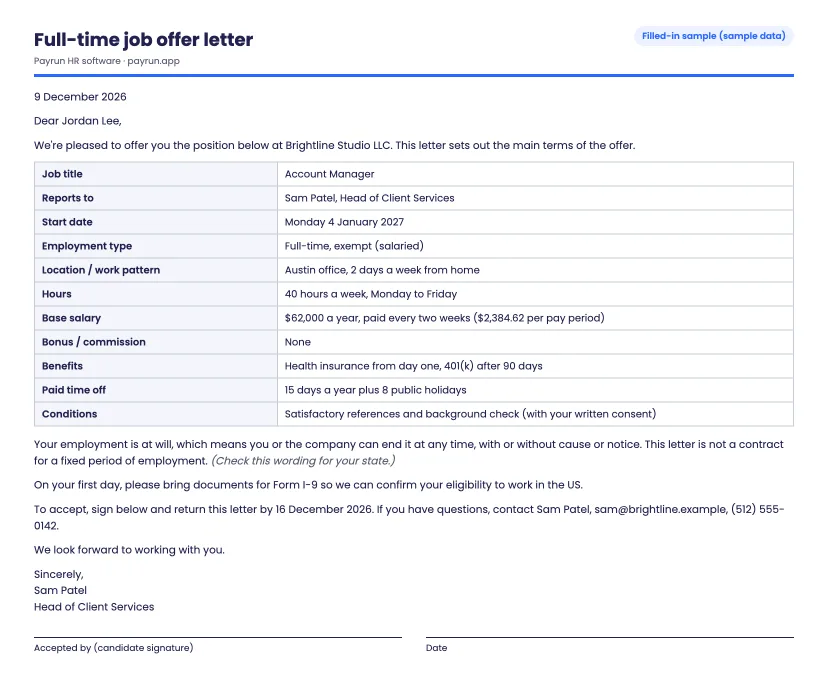
An agency offers Jordan the role of Account Manager on $62,000 a year, paid every two weeks, starting 4 January 2027 (sample data). Paid every two weeks, that's 26 pay periods: $62,000 ÷ 26 = $2,384.62 per pay period. The letter states both figures, lists references and a background check as conditions, says the role is exempt, gives Jordan until 16 December to reply, and asks Jordan to bring Form I-9 documents on day one. The sample page of the PDF shows this exact letter.
The offer letter should match what you discussed in the interviews. If you used structured interview questions or skills-based hiring, the job title and responsibilities in the letter should match the role you assessed.
What is a conditional job offer, and when can you withdraw it?
A conditional job offer depends on the candidate meeting conditions you set out in the letter, such as satisfactory references, a criminal record check, a health check or proof of their right to work. An unconditional offer has no conditions.
In the UK, Acas says you can withdraw a conditional offer if the candidate doesn't meet a condition, and you should tell them why. Withdrawing an unconditional offer could be against the law. That's why the conditions belong in the offer letter, not in a later email.
In the US, background checks have their own process when a screening company runs them. The FTC and EEOC say you must tell the candidate in writing, in a standalone document, that you may use the report for the hiring decision, and get their written permission first. If something in the report makes you reconsider, you give them a copy of the report and a summary of their rights before deciding. Our guide to background check laws covers state rules, and the glossary entry on background checks explains the types.
What rules apply to job offers in the US and UK?
A few rules apply as soon as someone accepts. These are the main ones for small employers.
Rule | United States | United Kingdom |
|---|---|---|
Right to work | Form I-9: the employee completes Section 1 by their first day; the employer completes Section 2 within 3 business days of the start date (USCIS) | Check the candidate's right to work before they start; you could be fined if you don't (GOV.UK, Acas) |
Background checks | Standalone written disclosure and written permission before a screening company runs a check; notices before and after any adverse decision (FTC, EEOC) | Make checks such as references or a DBS check a condition of the offer |
Written terms | No federal requirement for an offer letter; many employers include an at-will statement (check the wording for your state) | A written statement of employment particulars on or before the first day; the wider statement within 2 months (GOV.UK) |
Withdrawing an offer | Depends on state law and what the letter promised | A conditional offer can be withdrawn if conditions aren't met; withdrawing an unconditional offer could be against the law (Acas) |
Classification | Decide employee or contractor before you write the offer | Employment status decides which rights apply |
Sources: Acas, offering someone a job, GOV.UK, check a job applicant's right to work, GOV.UK, written statement of employment particulars, USCIS, completing Form I-9 Section 2 and EEOC and FTC, background checks: what employers need to know, checked 29 November 2026. State and local rules can add to these. This is a summary, not legal advice.
If the person will invoice you rather than join payroll, an offer letter is the wrong document. Read our guide to employee vs contractor classification and the glossary entry on independent contractors first.
Should you send a job offer by email or as a letter?
Send the offer letter as a PDF attached to a short email. That gives the candidate something quick to read and a formal document to sign and keep.
Method | Good for | Watch out for |
|---|---|---|
Email only | Speed, informal roles | Terms get lost in a thread; hard to show what was accepted |
PDF letter attached to an email | Most small businesses | Ask for a signed copy back, not just "sounds good" |
Printed and signed in person | Local hires, senior roles | Slower; keep a scanned copy |
If you hire often, recruiting software for small businesses keeps every message with the candidate. Our list of the best recruitment software compares the options.
How Payrun handles the offer stage
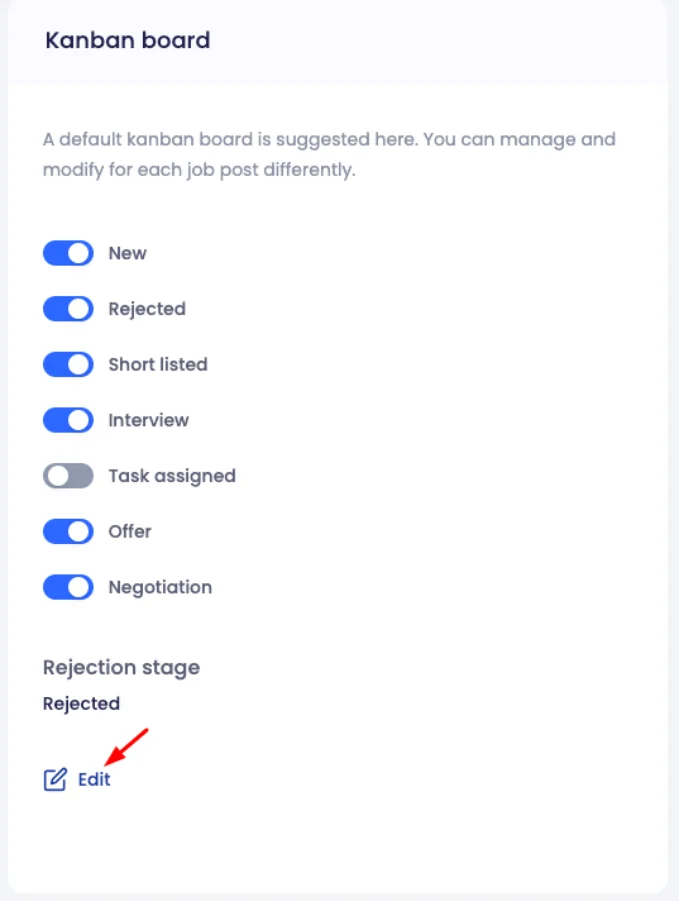
Payrun HR software includes hiring on every plan, with a career page, job posts and a candidate pipeline. Under Settings, then Employees, then Hiring, the Kanban board has default stages including Offer and Negotiation, and you can rename, reorder, add or remove stages to match your process.
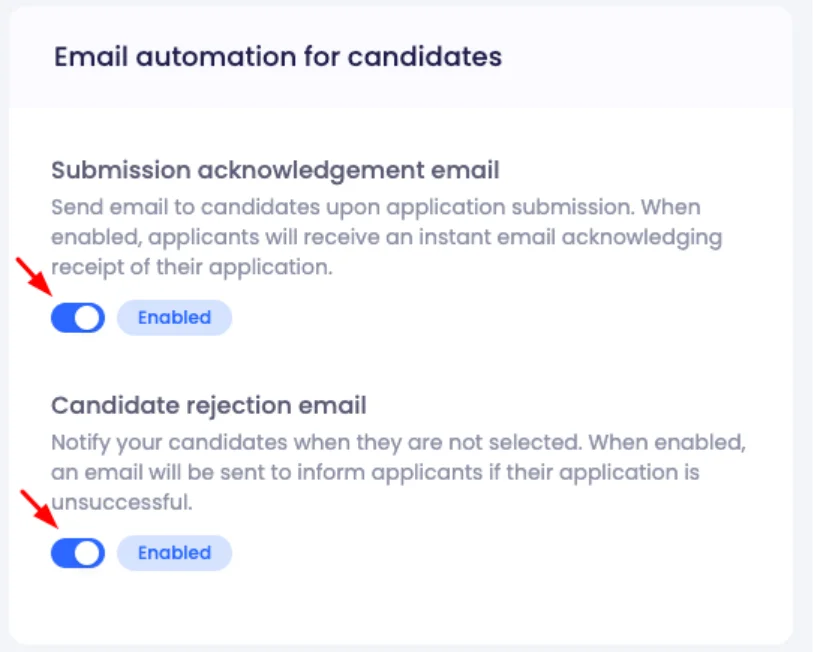
Each candidate's profile has an Inbox tab where you compose and send emails and see past messages, alongside AI assessment results, recruiter notes, scores and an activity log. You can also switch on automatic emails that acknowledge applications and tell unsuccessful candidates, so nobody is left waiting.
Payrun doesn't write offer letters or collect e-signatures, so use the PDF template, attach it to an email, and save the signed copy in the new hire's files. Once they've accepted, add them from the Employees page with the New invitation form. See the hiring and recruitment feature page and the AI resume screening page, and our guides to hiring management software and employee records management.
5 job offer letter mistakes small businesses make
- Leaving conditions out of the letter, then trying to rely on a reference or check the candidate never agreed to.
- Stating a salary without the pay period, so "60k" turns into a debate about monthly versus annual figures.
- Promising a "permanent" role or a guaranteed bonus that the business can't stand behind.
- No reply-by date, so your second-choice candidate takes another job while you wait.
- Starting a US background check before the candidate has signed the standalone disclosure and permission.
Most of these come from rushing the last step of a long process. A clear pipeline in your recruitment management software makes the offer stage as structured as the interviews, and an onboarding buddy keeps the new hire engaged between acceptance and day one.
How to send a job offer in 5 steps
- Agree the headline terms on a call and confirm the numbers internally.
- Fill in the full-time or conditional template, listing every condition.
- Attach the PDF to the offer email with a reply-by date.
- File the signed copy and complete your right-to-work or I-9 checks.
- Invite the new hire into your HR system and start onboarding.
For the first weeks after acceptance, our guide to employee onboarding software covers the tools, and the glossary entry on new hire orientation covers day one. Put the offer and onboarding rules in your employee handbook so every hiring manager uses the same process.
If you'd rather keep candidates, emails and new hires in one place, hiring and a career page are included on every Payrun plan, including Free for up to 5 users with 1 active job listing. The Pro plan adds the AI Hiring Assistant and 5 active job listings for $9.95 per user per month billed annually ($16.58 billed monthly). The 14-day free trial covers up to 10 users with no card and no contract. After the trial, features are turned off until you choose a plan, and nothing moves you onto the Free plan (up to 5 employees) automatically, so choose it if you want to stay on it. See all plans on the pricing page.