Payroll Accrual Explained: Methods, Examples, And Best Practices
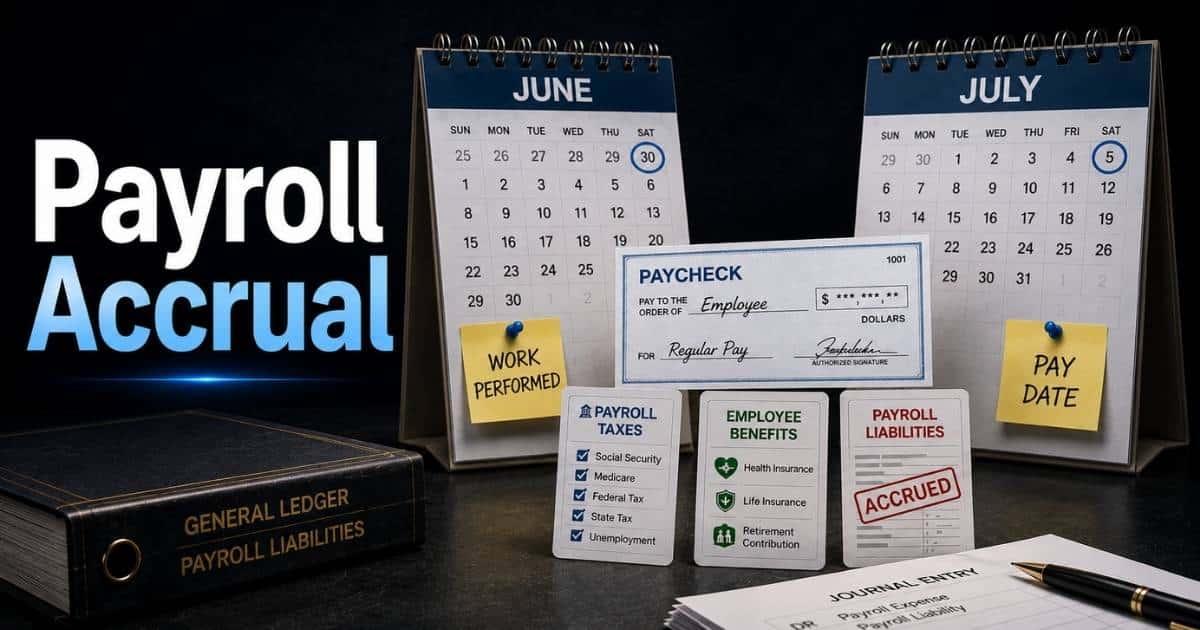
Table of Contents
Payroll expenses do not always align perfectly with paydays. Employees may earn wages in one accounting period, but the actual payment may happen in the next. That gap can create inaccurate financial records if businesses fail to account for those unpaid wages properly. Payroll accrual helps solve this problem.
Many business owners and finance teams struggle with payroll accrual because it involves accounting entries, liabilities, taxes, and reporting requirements. A small mistake can affect financial statements, cash flow planning, and compliance.
This guide explains everything you need to know about payroll accrual. You will learn how it works, how to calculate it, how to record journal entries, common mistakes to avoid, and best practices for maintaining accurate payroll and accounting records, whether you run payroll manually or use payroll software for startups and growing teams.

What Is Payroll Accrual
Payroll accrual is an accounting method used to record payroll expenses before employees are paid. It helps businesses track amounts owed for work performed during a pay period, even when the pay date falls in the next accounting period. In accrual accounting, companies record accrued wages, payroll taxes, employee benefits, and other related expenses as liabilities on the balance sheet until payment is made.
Understanding accrued payroll is important for accurate financial reporting and financial planning. Employees earn compensation every day they work, including hourly wages, overtime pay, bonuses, and paid time. A payroll accrual ensures those payroll costs appear in the correct period on income statements. Many employers also include employer payroll taxes, health insurance, unemployment insurance, employer contributions, and social security obligations when they calculate payroll accrual. This approach helps reduce errors and gives a clearer view of a company’s financial position.
How Payroll Accrual Works In Real Business Scenarios
Payroll accrual becomes easier to understand when you see it in real situations. Businesses of every size use accrued payroll to record wages, taxes, and benefits earned by employees before the actual pay date. Accurate payroll accrual helps maintain reliable financial statements and supports better decision-making, especially when combined with structured payroll audit strategies to ensure accuracy and compliance.
Biweekly Payroll Across Month-End
Many businesses pay employees every two weeks. A common issue happens when a pay period ends after month end. Employees may work several days in one month but receive payment in the next month.
In this case, the company must record accrued wages for the days already worked. Payroll expenses appear in the correct accounting period, even though the payment has not been made. This approach keeps the balance sheet and income statements accurate.
Hourly Employees With Unpaid Workdays
Hourly employees earn compensation based on hours worked. Suppose a company closes its books on June 30, but employees still have three unpaid workdays before the next pay date.
The employer must calculate accrued payroll using the total hours worked and hourly wages earned during that period. The accrued payroll journal entry records the amounts owed. This prevents payroll costs from shifting into the wrong month.
Salaried Staff Awaiting Payday
Employees with an annual salary earn wages every day they work. Even when payday falls in the following month, the company still owes compensation for completed work.
Accrual accounting requires businesses to record accrued payroll costs before payment. Gross pay, employer payroll taxes, and employee benefits may all be included. This provides a more accurate view of liabilities and labor costs.
Bonuses And Overtime Obligations
Many employers offer bonuses and overtime pay. Employees may earn those amounts during one accounting period while payment happens later.
A payroll accrual captures those additional expenses when they occur. The company records accrued payroll entries for overtime wages, incentive payments, and related employer taxes. This helps reduce errors in payroll reports and financial records.
Payroll Taxes And Benefit Contributions
Payroll obligations extend beyond employee wages. Employers must also account for payroll taxes, social security, unemployment insurance, health insurance, and other employer contributions, often tracking and approving these items through mobile HR apps with employee self-service.
When businesses record accrued payroll, they often include those related expenses in a single journal entry. This creates a complete picture of total accrued payroll. Accurate records also help companies meet requirements from government agencies and maintain compliance on a regular basis.
Payroll Accrual Calculation Methods With Step-By-Step Examples
A payroll accrual calculation helps businesses record payroll expenses before employees receive payment. The process is straightforward when broken into clear steps. Accurate calculations improve financial reporting, reduce errors, and ensure accrued payroll appears in the correct accounting period.
Step 1: Identify The Unpaid Work Period
First, determine the dates employees worked but have not yet been paid. Compare the pay period with the month-end or accounting period close date.
For example, a company pays employees every two weeks. The pay date falls on July 5, but the accounting period ends on June 30. Any hours worked between June 24 and June 30 belong in the current period. Those unpaid days form the basis of the payroll accrual calculation.
Step 2: Calculate Employee Earnings
Next, calculate gross wages earned during the unpaid period. Use hourly wages, annual salary amounts, overtime pay, commissions, or bonuses where applicable.
Suppose an employee works 40 hours at $25 per hour during the accrual period. Gross pay equals $1,000. If five employees earn the same amount, total accrued payroll for wages becomes $5,000. Accurate payroll calculations ensure labor costs appear correctly in financial records.
Step 3: Add Payroll Taxes And Benefits
Payroll expenses include more than wages. Employers must also account for payroll taxes, employee benefits, and employer contributions.
Add employer payroll taxes such as Social Security, Medicare, unemployment insurance, and health insurance contributions. According to the U.S. Bureau of Labor Statistics, benefits account for roughly 30% of total employee compensation in many industries. Including those related expenses creates a more complete accrued payroll figure.
Step 4: Determine Total Accrued Payroll
Combine employee compensation, employer taxes, and benefit costs to calculate payroll accrual. This amount represents the company's liability at the end of the accounting period.
For example, accrued wages total $5,000, employer payroll taxes equal $400, and benefit contributions equal $600. The total accrued payroll becomes $6,000. This figure reflects the amounts owed to employees and government agencies before payment occurs.
Step 5: Record The Accrued Payroll Entry
The final step is to record accrued payroll through a journal entry. The entry recognizes payroll costs in the correct period and records liabilities on the balance sheet.
A simple accrued payroll journal entry debits payroll expenses and credits accrued payroll liabilities. When the actual pay date arrives, the company pays employees and reverse accrued payroll entries if needed. This process keeps payroll reports accurate and supports better decision-making throughout the business.
Payroll Accrual Journal Entries Explained For Accurate Reporting
Payroll accrual journal entries help businesses record payroll expenses before employees receive payment. They ensure wages, payroll taxes, and related liabilities appear in the correct accounting period. Accurate entries improve financial reporting and provide a clearer picture of a company's financial position.
Accrued Payroll Entry Basics
An accrued payroll journal entry records compensation earned by employees but not yet paid. Under accrual accounting, expenses must appear in the period when employees perform the work, not when payment occurs.
The entry usually debits payroll expenses and credits accrued payroll liabilities. This approach helps businesses match labor costs with the revenue generated during the same period. Accurate records also improve payroll reports and month-end accounting accuracy.
Record Employee Wage Expenses
Employee wages are usually the largest part of accrued payroll. The company must calculate gross wages earned before the pay date and record them as an expense.
For example, employees may work the final five days of a month but receive payment the following week. Those amounts owed become accrued wages. The journal entry ensures payroll costs appear correctly on income statements and the balance sheet.
Include Taxes And Benefits
Payroll accrual extends beyond wages. Employers must also record payroll taxes, health insurance contributions, retirement contributions, and other employee benefits.
According to the U.S. Bureau of Labor Statistics, benefits account for nearly 30% of total employee compensation in many sectors. Including employer payroll taxes and related expenses creates a more accurate total accrued payroll figure. This helps businesses avoid understating liabilities.
Reverse The Accrual Entry
Many accounting teams reverse accrued payroll entries at the start of the next accounting period. A reversing entry prevents duplicate payroll expenses when the actual payroll is processed and is easier to manage within a centralized simple payroll software solution for small businesses or broader payroll management system.
After payroll is paid, the accounting system records the real transaction. The reversal offsets the previous accrual. This method simplifies payroll calculations and reduces errors during month-end reconciliation.
Review Entries For Accuracy
A payroll accrual is only useful when the numbers are accurate. Companies should compare accrued payroll entries with employee payroll records, payroll registers, timesheets, and payroll reports, ideally pulling that data from workforce management software with integrated time and attendance, before closing the books.
Many businesses now use payroll automation software to automate calculations and journal entries. Recent industry surveys show payroll errors can cost employers hundreds of dollars per employee each year. Regular reviews help reduce errors, improve compliance, and support better financial decision-making.
Types Of Payroll Accruals Businesses Must Track
Payroll accrual covers more than unpaid wages. Businesses must track several payroll-related liabilities to maintain accurate financial records. Each accrual type affects payroll expenses, compliance, and financial reporting. Understanding these categories helps employers avoid costly accounting mistakes.
Accrued Employee Wages
Accrued wages represent compensation employees have earned but have not yet received. This is the most common type of payroll accrual. It applies when employees work before the pay date but after the accounting period ends and must be handled in line with small-business payroll compliance guidelines and HR software designed specifically for small businesses.
For example, a company may close its books on June 30 while employees receive payment on July 5. Those unpaid earnings become accrued payroll liabilities. Proper recording ensures payroll expenses appear in the correct period and keeps income statements accurate.
Accrued Payroll Taxes
Payroll taxes create another major accrual category. Employers must account for taxes linked to employee compensation, even if payment to government agencies happens later, often relying on payroll compliance software to keep calculations and filings accurate.
Accrued payroll taxes may include Social Security, Medicare, federal unemployment taxes, state unemployment insurance, and other employer taxes. According to the IRS, employers remain responsible for accurate payroll tax reporting regardless of payroll frequency. Proper accrual entries help businesses avoid penalties and maintain compliance.
Accrued Employee Benefits
Employee benefits often create payroll liabilities before actual payment occurs. Health insurance premiums, retirement plan contributions, paid leave obligations, and wellness benefits can all require accrual accounting treatment.
The U.S. Bureau of Labor Statistics reports that benefits account for nearly one-third of total employee compensation costs in many industries. Recording these accrued payroll costs provides a more complete view of labor expenses and helps companies manage future obligations effectively.
Accrued Overtime And Bonuses
Many employees qualify for overtime pay, commissions, incentive payments, or performance bonuses. Those amounts may be earned during one accounting period but paid in the next.
A payroll accrual ensures those compensation costs appear when the work occurs. This prevents payroll expenses from shifting between reporting periods. Accurate tracking also supports better budgeting and creates more reliable financial statements throughout the year, especially when supported by automated payroll software features and benefits.
Accrued Paid Time Off
Paid time off can create substantial liabilities for many employers. Vacation days, sick leave, and personal leave often accumulate over time before employees use them.
Some businesses must recognize those future obligations as accrued payroll liabilities. The amount depends on company policy, employee tenure, and applicable regulations. Regular reviews help organizations estimate future costs more accurately and strengthen long-term financial planning.
Payroll Accrual Vs Cash Accounting: Key Differences And Impacts
Payroll accrual and cash accounting record payroll expenses at different times. One recognizes expenses when employees earn compensation, while the other records them when payment occurs. Understanding the differences helps businesses improve financial reporting, compliance, budgeting, and decision-making.
Factor | Payroll Accrual (Accrual Accounting) | Cash Accounting |
|---|---|---|
Expense Recognition | Records payroll expenses when employees earn wages | Records payroll expenses when employees are paid |
Payroll Timing | Matches costs to the correct accounting period | Depends on the actual pay date |
Financial Accuracy | Provides a more accurate picture of liabilities and labor costs | May delay expense recognition |
Accrued Wages | Includes accrued wages and unpaid employee compensation | Does not record accrued wages |
Payroll Taxes | Records employer payroll taxes when obligations arise | Records taxes when payment is made |
Balance Sheet Impact | Shows accrued payroll liabilities and amounts owed | Usually shows fewer payroll-related liabilities |
Income Statement Accuracy | Matches revenue and related expenses in the same period | Expenses may appear in a later period |
Month-End Reporting | Improves month-end and year-end financial reporting | Can distort period-end results |
Financial Planning | Supports forecasting and budgeting with real payroll costs | Provides less visibility into upcoming obligations |
Compliance And Audits | Preferred by larger businesses and generally required under GAAP | Often used by small businesses with simple accounting needs |
Decision-Making | Offers a clearer view of company performance | May provide an incomplete financial picture |
Example | Employees work the last week of June and receive payment in July. Payroll expense is recorded in June. | Employees work the last week of June and receive payment in July. Payroll expense is recorded in July. |
Common Payroll Accrual Mistakes And How To Avoid Them
Payroll accrual helps maintain accurate financial records, but even small mistakes can create reporting issues. Incorrect payroll calculations may affect liabilities, expenses, taxes, and compliance. Understanding the most common errors can help businesses improve accuracy and avoid costly corrections.
Missed Unpaid Workdays
Many employers forget to include the final unpaid workdays before month-end. This often happens when the pay period extends into the next accounting period.
As a result, accrued wages and payroll expenses appear lower than they should. The balance sheet may also understate liabilities. A simple review of timesheets, payroll registers, and pay dates before closing the books can prevent this issue and improve financial accuracy.
Incomplete Payroll Tax Accruals
Some businesses focus only on employee wages and overlook payroll taxes. This creates an incomplete payroll accrual and can distort financial statements.
Employer payroll taxes, Social Security contributions, Medicare taxes, and unemployment insurance should all be included. According to IRS compliance data, payroll tax errors remain one of the most common payroll-related issues for employers. A detailed payroll checklist helps reduce this risk.
Incorrect Benefit Calculations
Employee benefits are often excluded from accrued payroll costs. Health insurance, retirement contributions, paid time off, and other employer contributions can represent a significant portion of labor costs.
The U.S. Bureau of Labor Statistics reports that benefits account for nearly 30% of total employee compensation. Businesses that fail to include those related expenses may underestimate liabilities and payroll costs. Regular benefit reviews help maintain accurate accrual records.
Duplicate Journal Entries
Duplicate accrued payroll entries can inflate expenses and liabilities. This problem often occurs when companies record an accrual at month-end and then process payroll without reversing the original entry.
The result is overstated payroll expenses on income statements. A clear month-end process helps prevent duplicate transactions. Many accounting teams use automatic reverse accrued payroll entries to eliminate this issue and simplify reconciliation.
Weak Record Verification
Payroll accrual calculations rely on accurate payroll data. Errors in hours worked, overtime pay, bonuses, or employee compensation can affect the entire accrual amount.
A final review before posting the journal entry is essential. Compare payroll reports, timesheets, payroll registers, and employee records to confirm accuracy, and consider using modern timesheet apps for employees to improve the quality of time data feeding your accruals. Recent payroll industry studies show that payroll mistakes cost businesses billions of dollars each year through corrections, penalties, and administrative work. Strong verification processes help reduce errors and support better decision-making.
Payroll Accrual Best Practices For Compliance, Forecasting, And Financial Accuracy
Accurate payroll accrual is not just an accounting requirement. It also supports compliance, forecasting, budgeting, and financial accuracy. Strong integrated HR and payroll software for small and medium businesses and payroll processes help businesses reduce errors, manage liabilities, and maintain reliable financial records throughout the year by aligning with small-business payroll compliance guidance.
Review Payroll Data Regularly
Accurate payroll accrual starts with reliable data. Employers should review timesheets, payroll registers, overtime records, bonuses, and employee compensation, and ensure leave management systems are tightly integrated, before closing each accounting period.
Regular reviews help identify missing hours worked, incorrect wage calculations, and payroll discrepancies. Many payroll professionals recommend monthly reconciliation because small errors and avoidable payroll mistakes can grow into larger reporting issues over time. Consistent reviews improve payroll accuracy and strengthen financial reporting.
Include All Payroll Liabilities
A complete payroll accrual should include more than employee wages. Payroll taxes, health insurance, retirement contributions, paid leave obligations, and other employer contributions must also be considered.
The U.S. Bureau of Labor Statistics reports that benefits account for nearly 30% of total compensation costs in many industries. Businesses that track all payroll-related liabilities create more accurate balance sheets and avoid understating future financial obligations, especially when supported by robust employee record management systems and payroll compliance software.
Automate Payroll Calculations
Manual payroll calculations increase the risk of mistakes. Automated payroll software can calculate accrued wages, payroll taxes, employee benefits, and related expenses with greater consistency, and modern HR automation tools for growing businesses and payroll automation software can also streamline approvals, auditing, and compliance.
Recent payroll industry surveys show that automation and dedicated payroll processing software significantly reduce payroll processing errors and administrative workload. Automated payroll software for startups and growing teams also simplifies payroll reports, journal entries, and compliance tasks. Dedicated payroll processing software for business payroll allows finance teams to focus more on analysis and forecasting rather than corrections.
Maintain Clear Documentation
Strong documentation supports both compliance and audit readiness. Every accrued payroll entry should have supporting records, including payroll reports, timesheets, benefit calculations, and tax estimates, whether you rely on HR software or spreadsheets; understanding how to move payroll from Excel to dedicated software and HR software vs spreadsheets for payroll can guide that choice.
Clear documentation creates transparency across payroll and accounting functions. It also helps businesses explain accrual figures during audits or financial reviews. Well-organized records make month-end and year-end closing processes faster and more reliable.
Monitor Accrual Trends Over Time
Payroll accrual data can provide valuable business insights. Regular analysis helps employers identify labor cost trends, seasonal workforce changes, overtime patterns, and future payroll obligations.
Forecasting becomes more accurate when businesses review historical payroll expenses and accrued payroll costs on a regular basis. A structured payroll processing workflow, especially when supported by an all-in-one HR platform that replaces disconnected tools, also supports budgeting, workforce planning, and strategic decision-making. This helps companies stay financially prepared as they grow.
How Payrun Helps Automate Payroll Accrual And Reporting
Payroll accrual can become difficult when businesses manage multiple employees, pay periods, taxes, and benefit contributions. Manual calculations often lead to errors and delayed reporting. Modern cloud HR software for integrated payroll and Payrun’s all-in-one HR platform simplify the process by automating payroll calculations, accrual tracking, and payroll reporting from a single platform.
Payrun helps businesses calculate accrued payroll based on employee compensation, hours worked, overtime pay, bonuses, and payroll schedules, making it especially useful as HR and payroll software for SaaS and software teams and as a cloud HR tool for distributed and remote teams. The system also tracks employer payroll taxes, employee benefits, and other related expenses to improve financial accuracy. Automated payroll reports provide a clear view of payroll costs, liabilities, and accrued wages across every accounting period, building on the broader payroll software features and automation Payrun offers.
With centralized payroll data and real-time reporting, finance teams can reduce manual work, improve compliance, and maintain accurate financial records. The same platform also delivers innovative HR features for broader management, reflecting Payrun’s role as a trustworthy HR management partner and helping businesses make better decisions while keeping payroll operations efficient and organized.
FAQs
Can Small Businesses Use Payroll Accrual Accounting?
Yes, small businesses can use payroll accrual accounting to track payroll expenses before employees are paid. This method improves financial reporting and helps business owners understand accrued payroll liabilities, labor costs, and future payment obligations more accurately.
Does Payroll Accrual Affect Cash Flow?
Yes, payroll accrual can affect cash flow planning because it records amounts owed before the actual pay date. Businesses gain better visibility into upcoming payroll costs, employer taxes, and employee compensation, which supports stronger budgeting and financial forecasting.
How Often Should Businesses Calculate Payroll Accrual?
Most businesses calculate payroll accrual at the end of every accounting period, especially during month-end and year-end closing. Regular payroll accrual calculations help maintain accurate payroll reports, journal entries, and financial statements.
Can Payroll Software Automate Accrued Payroll Entries?
Yes, modern payroll software can automate accrued payroll calculations, payroll taxes, employee benefits, and journal entries. Automation helps reduce errors, improves reporting accuracy, and saves time for payroll and accounting teams.
What Happens If A Company Does Not Record Accrued Payroll?
Failure to record accrued payroll can understate payroll expenses and liabilities on financial statements. This may create inaccurate income statements, poor financial reporting, compliance issues, and weaker decision-making for the business.

.jpg)